

How Costa Rica plans to bring chess into the classroom
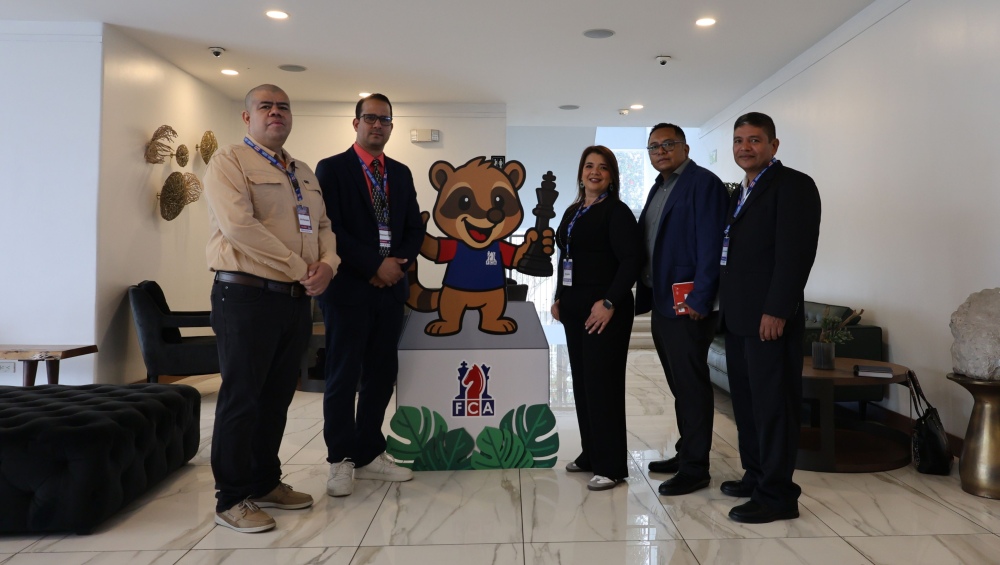
At the Chess and Education Summit in San Jose – taking place on 20 and 21 March – Costa Rican officials, educators and chess leaders set out a practical question: how can chess move from being respected as a game to being used as a classroom tool across the public school system? The two-day event, held at the historic Costa Rica Tennis Club, forms part of FIDE’s Year of Chess in Education 2026 and brings together national authorities and regional partners around a pilot programme that is due to begin in ten Costa Rican schools as early as April 2026. Educational councilors from all 27 regions of Costa Rica attended to understand how chess can help in their local schools. The summit is not framed as an agora to exchange ideas and plans. It is being presented as a policy meeting and a working session on implementation. Organisers say the focus is on practical models for integrating chess into school systems, with emphasis on inclusion, student well-being and ease of use for teachers. The official programme reflects that structure. Day one was built around official remarks, the formalisation of the Costa Rica pilot plan, and keynote talks on policy, curriculum, teacher training, inclusion, executive functions and emotional well-being. Day two will focus on workshops and practical training. From public interest to public policy Costa Rica is not starting from scratch. In 2022, the country enacted Law No. 10187, which declared the promotion of chess teaching in the Costa Rican educational system to be in the public interest. The law recognises chess both as a sport and as a pedagogical tool aimed at the integral development of students. That legal basis has since been followed by institutional work between the Ministry of Public Education, Ministry of Sports and the Costa Rican Chess Federation. That is the background to the summit’s main institutional objective: to get chess into the classrooms and make it a part of a healthy lifestyle of every Costa Rican. The project will start with a classroom-based pilot project in ten public schools, developed jointly by FIDE, the Confederation of Chess for the Americas, the Costa Rican Chess Federation and the Ministry of Public Education. This initiative will be a test case for how chess can be inserted into schools in a way that is structured, measurable and manageable for teachers. A small chess country with a big ambition Costa Rica is a relatively small chess country. According to local federation figures, it has about 1,200 active players, though many more people know the game and view it positively. That gap matters to the organisers. While not widely player, chess enjoys a high reputation in Costa Rica, especially among parents who see it as good for children. Luis Eduardo Quirós Rojas, president of the Costa Rican Chess Federation, said the purpose of the summit was to help decision-makers understand what chess can do inside the education system. In his remarks, Rojas stressed that the federation was not approaching the issue mainly as a matter of competition or elite performance. “We are promoting a sport as an educational tool. For us, that is very important,” he said. Quirós Rojas described the summit as a way to give officials and educators practical tools and perspective that they can later apply in the classroom. As he noted, the point is not to convince people that chess is valuable in the abstract, but to help local authorities understand how it can be used and what conditions are needed for it to work. That helps explain why the summit has drawn education officials rather than only chess administrators. The organisers want people involved in curriculum decisions and regional implementation to hear the case directly, assess what is realistic, and then help open space for the programme inside schools. The political aim is simple enough: if chess is to function as an educational tool, it must be understood and backed by the people who shape policy and school practice. “The power in our hands” The scale of the Costa Rican education system is one reason the pilot matters. Ministry of Public Education material refers to more than one million primary and secondary students nationwide, and recent ministry reporting points to a public system that reaches thousands of education centres across the country. For supporters of the initiative, that means even a small pilot can carry policy significance if it shows that the model is workable. Nancy Aguirre Araya is a PE teacher from San Jose. She is currently educational councillor for the Ministry of Education and her role is to propose and advise the teachers on integrating new tools and approaches in schools. “The key thing I hope all of the councillors will take from this meeting is the power we have in our hands to do great work in our communities using chess”, Araya says. When it comes to challenges, Araya notes the lack of chess knowledge among teachers to effectively use the game. But this was taken into account by the specially designed programme. Not about producing champions That distinction came through clearly in the remarks of Mauricio Arias, who presented the Costa Rican plan as a broad educational effort rather than a search for future champions. As he explained, the goal is to give children an opportunity and to build a wider base of talent, not to create a small professional elite. “It is difficult to find out whether something works if you do not test it,” Arias said, explaining why Costa Rica is beginning with a pilot before considering any wider rollout. He also made clear that the programme is meant to proceed carefully. According to his remarks, Costa Rica wants to start with a technical alliance, train 25 professionals, measure results and make sure that teachers feel comfortable using the method before moving beyond the initial phase. “It is one more step toward the country we want to build: children who are capable, educated, and prepared for life,” he
Latin America at the forefront of chess in education policy
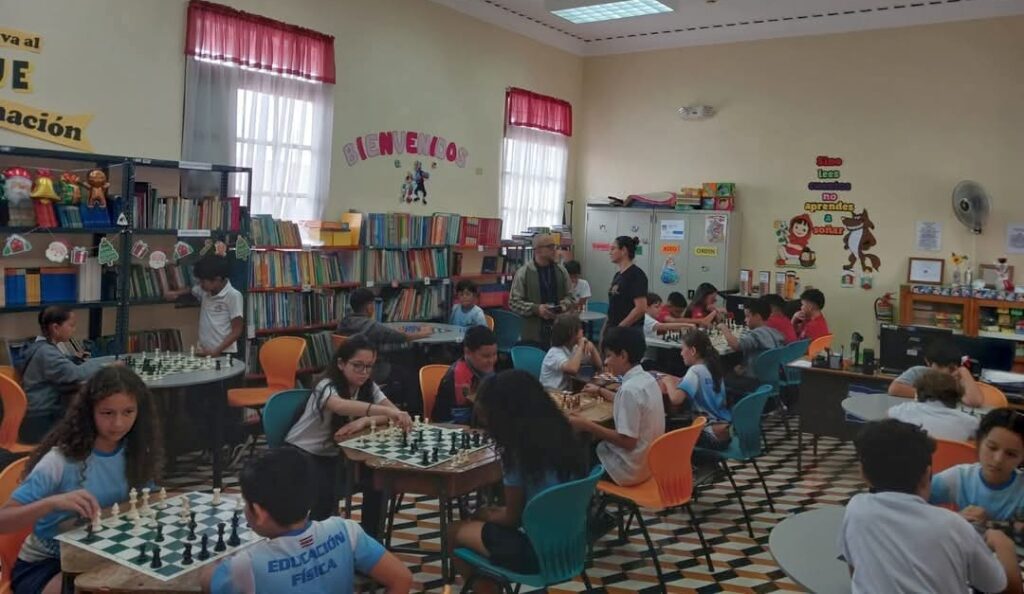
The Summit on Chess and Education, held in Costa Rica on 20 and 21 March, brought together experts from across Latin America to discuss how chess can support learning. In an article for the summit, FIDE President Arkady Dvorkovich wrote about Latin America’s growing role in shaping chess education policy worldwide. Since I became President of FIDE in 2018, one of the key goals has been to develop chess as a tool for engagement, inclusion and education. This idea has found support not only in the chess world but also among teachers, psychologists, clinicians, scientists, social workers, humanitarian organisations, governments and many others. As part of this work, FIDE named 2025 the Year of Social Chess. Building on the efforts led by FIDE Deputy Chair Dana Reizniece, we declared 2026 the Year of Chess in Education. For us, social chess and chess in education are not slogans. Together with international organisations and state institutions, we have held events, seminars, conferences and competitions across the world, promoting the concept and inviting all interested parties to provide ideas, questions and solutions. In each place, we showed how chess can become part of daily life, regardless of background or circumstance. We already know that full integration is possible. In Armenia, chess has been a mandatory subject in primary schools since 2011. The program has been successful, which is also reflected in the number of highly rated players from the country. Latin America is at the heart of this project. Several essays on the region, published by the FIDE Chess in Education Commission in 2023, describe a strong wish to use chess as an educational innovation. They also point to gaps in coverage and limited institutional backing. Long term programmes begin when school leaders and classroom teachers see chess as part of learning, not as a hobby on the side. Political engagement in the region is growing. In 2024, federations in Honduras, Trinidad and Tobago and Costa Rica invited Jerry Nash, chair of the FIDE Education Commission, to visit schools and meet ministers to discuss large scale plans. His visit helped local teams prepare proposals for national or regional programmes and raised awareness of chess as an educational tool, not only as a sport. Later visits across the Americas by Victor Bologan, focused on chess in education and youth development, continued this work of linking chess projects with finance, sport and education authorities. In August 2025, at the Smart Moves Summit in Washington D.C., the Costa Rican Minister of Sport and Recreation, Donald Rojas Fernandez, presented results from pilot projects in schools. The data showed that classroom chess can support better academic performance and stronger social skills. It is therefore natural that the second global conference on chess in education is now taking place in Costa Rica, a country that is setting standards for how chess can serve society. The Summit on Chess and Education in Costa Rica will launch a national pilot that brings classroom, based chess to ten public schools. The programme is built around inclusion, student wellbeing and simple implementation for teachers. This project will be continuously observed and – pending successful evaluation – the plan is to extend it nationwide. Thus, the successful project can turn into a national strategy, written into education plans and budgets, so that a child in a rural public school has the same chance to learn through chess as a child in a capital city. These projects are possible thanks to the hard work and support of people in FIDE and the community, such as Pepe Carillo and Mauricio Arias whose involvement has brought the projects to life. For Latin America and the Caribbean, the Year of Chess in Education provides a clear moment and a common goal. My team at FIDE and I are fully committed to supporting and promoting this goal and we are looking forward to the conclusion and recommendation from the Summit on Chess and Education. Arkady Dvorkovich, FIDE President Photos: Costa Rica Chess Federation
FIDE World Cadets Cup U8-U12: Registration deadline approaching
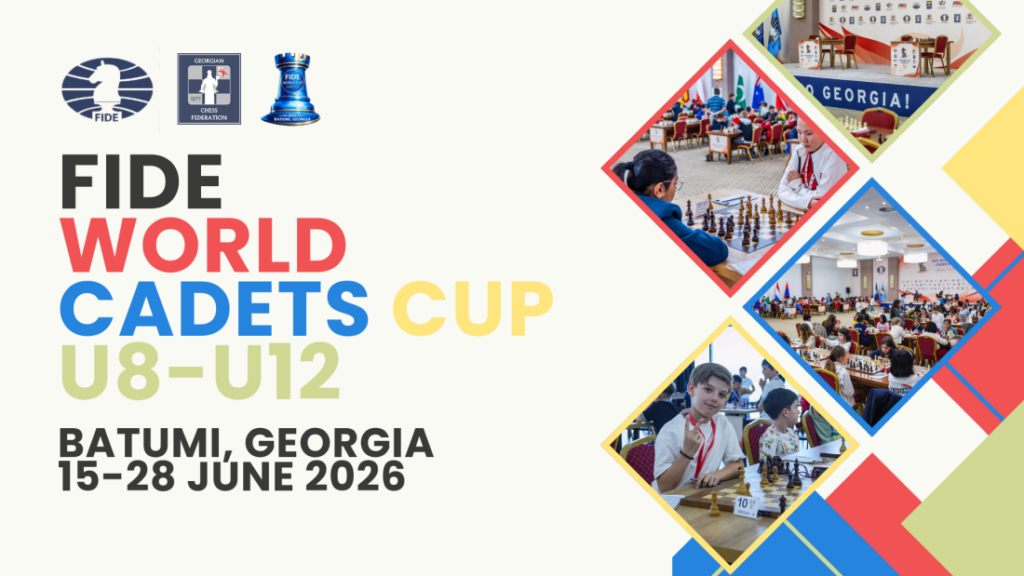
Starting in 2026, FIDE introduced a new and exciting championship cycle for the Under 8, Under 10, and Under 12 age categories, with the aim of strengthening the global pathway for young players and increasing the clarity and prestige of FIDE youth competitions. Under this new structure, the FIDE World Cadets Cup U8-U12 serves as a unique and qualifying event of the cycle, while the FIDE World Cadets Championships U8, U10, and U12, held later in the year, represent the final stage where world titles are decided. This distinction is central to the updated cycle and ensures greater clarity for federations, players, and parents. As part of this update, the event previously known as the World Cadet Championship U8-U12 has been renamed the FIDE World Cadets Cup U8-U12. While the competitive format and playing conditions remain unchanged, the new name reflects the event’s role as a global, merit-based competition that brings together the strongest young players from around the world and acts as a gateway to the World Cadets Championships later in the year. The inaugural edition of the FIDE World Cadets Cup will take place from June 15-28, 2026 in Batumi, Georgia, and will follow the same proven system used in recent editions of the World Cadet Championships, with separate tournaments for boys and girls in the U8, U10, and U12 categories. Who can play? Each national federation is entitled to nominate one invited player per age category and gender, for a total of up to six players, along with one head of delegation holding a valid FIDE ID. In addition to these federation nominations, invited players also include those who finished in first to third place at the previous World Cadets Championships and World Cadets Cup, as well as the champions of the most recent Continental Cadet Championships. National federations may also register additional players and accompanying persons, subject to confirmation by the Organizing Committee, with all related costs covered by the federation, while FIDE-affiliated organizations may register players too and FIDE-endorsed chess academies may do so through their respective national federations. Venue Batumi provides an ideal setting for this global youth event. The city has a strong track record of hosting major international competitions, including the 2018 Chess Olympiad and recent top-level FIDE events, and benefits from Georgia’s deep-rooted chess culture and extensive organisational experience. The proven ability of Georgian Chess Federation and local organisers to deliver world-class events makes Batumi a trusted and familiar destination for federations and players alike. FIDE member federations are kindly reminded that the registration deadline for the FIDE World Cup U8-U12 is April 15, 2026. Official website: https://wcc2026.fide.com/ Invitation letter and regulations (PDF)
Road to the crown: 2026 Candidates Tournament begins in Cyprus

World-class players, expert predictions, and a festival of chess await as the battle for a shot at the world title unfolds at Cap St Georges Resort With just one week to go before the start of the 2026 Candidates Tournament, excitement for the event is building at full speed. The sixteen players (eight men and eight women) who will compete for the right to challenge the world champion will soon travel with their respective teams to the island of Cyprus. As in previous editions, the organizing team has planned various parallel activities to ensure a complete experience for all fans eager to attend their first Candidates as spectators. The venue Cap St Georges Hotel & Resort is an award-winning luxury destination on the unspoiled coastline of Peyia, Paphos, Cyprus, offering an inspiring setting where elegance, tranquillity, and excellence come together. Surrounded by landscaped gardens with centuries-old olive trees, the resort reflects the island’s character through refined architecture and well-designed spaces, with a strong focus on privacy, comfort, and attentive service. Guests enjoy exceptional facilities, including Olive Tree Beach and Kafizis Beach, a beachfront framed by the resort’s natural surroundings, outdoor and heated indoor swimming pools, a spa and wellness centre, fully equipped fitness facilities, and a diverse collection of ten restaurants and bars offering refined international and local cuisine The side events The Pafos Municipality & Pafos Chess Club are hosting the 4th International Open Tournament, from April 13-19 (overlapping the Candidates’ final week). The event will be a 9-round classical Swiss with a €5,000 prize fund – ideal for international norm and title seekers! The event has already attracted 10 GM’s and many other titled players. Check out the line-up here. The tournament fan-zone, hosted by Angelika Valkova, will feature master-classes, simultaneous displays, lectures and Q&A during the event, with legendary players such as Vishy Anand, Nigel Short, Boris Gelfand, Victor Bologan and Alexandra Kosteniuk. In addition, each game day two or three players will join the fans after their games for interviews and photo opportunities. The line-up and schedule is evolving continuously and can be found here. Standard ticket holders can watch the games live from the viewing area inside the playing hall and have access to the fan zone. VIP ticket holders enjoy an enhanced experience, including access to the VIP lounge, live viewing from VIP seats inside the playing hall, preferential seating in the fan zone, all-day catering service, and a unique opportunity to play a chess game with a Grandmaster. Tickets are available here https://tickets.fide.com/ with special limited-time offers and multi-day discounts available. Expert forecasts Over the past few days, many experts have shared their opinions about the tournament, indicating who has the greatest chances of winning and who could be the surprise player of the event. As a five-time World Champion, Vishy Anand has taken part in this event multiple times, giving him some of the most valuable insight to draw upon. “The Candidates is one of the great competitions in chess. People are very-highly motivated, and they have a chance to play for the world title, which is obviously the big prize.” “We have four people who are new and four who have played the Candidates before, with a few unexpected names. Bluebaum is a bit of a surprise; while with Wei Yi and Esipenko you sort of think that they could be in there. Also, Fabiano and Hikaru are getting on in age: it doesn’t show but in a long event you never know. Obviously, they remain very strong and very competitive, but I think youngsters almost always have more energy.” Breaking down the tournament on the Perpetual Chess Podcast, Jan Gustafsson (one of the onsite commentators) outlined the most likely approach. “I think that the good-old game after game strategy does apply. It’s good to score points at any moment but the players will start taking more risks when they are at plus one and there’s not that much tournament to go. You can’t really pace yourself in the Candidates, but sometimes when a player gets to plus three they freeze a little bit or stop taking risks and wait for the moment to score against a lower-rated opponent.” Gustafsson’s co-host is once again none other than Peter Svidler, an eight-time national champion and three-time Candidates contender. Although he acknowledged that all the players have a reasonable chance, one stands above the rest. “For me this has always been the most exciting tournament of the year, and definitely one of my highlights of the year. I don’t think there is a clear favourite but if I had to pick a player with a gun to my head I would go with Fabiano Caruana. He is so consistent and has a fantastic record playing in the Candidates However, it’s a very interesting field this year – Praggnanandhaa also has a decent shot.” Official website: https://candidates2026.fide.com/ Written by IM Michael Rahal – FIDE press Officer (Barcelona, Spain) Photos: Michal Walusza