

Latin America’s long game in chess

Latin America is trying to do something different in chess. Instead of spending money on new grand tournaments and spectacles for the elite, it is investing in chess as an educational tool, banking on a wider social impact reaching well beyond the chessboard. “Of course, competitive chess is important to us. But by investing in chess as a tool to empower society, we can make it part of our culture and our future. As chess becomes more deeply rooted in society, more people will play, so it will bring about more competition and more Latin American players in the chess world,” argues José Antonio Carrillo Pujol, the president of the Confederation of Chess for the Americas. At the two-day conference in San Jose (20 and 21 March), the central event was not a chess tournament but the signing of The Memorandum of understanding, where a foundation was laid for formally incorporating chess in the educational system. The Memorandum of understanding signed in San Jose brings together Costa Rica’s Ministry of Education, the Ministry of Sports, FIDE, the Confederation of Chess for the Americas, and the Costa Rica Chess Federation around a 2026 pilot project in selected schools. In the document all signatories express their intention “to cooperate in promoting and implementing Chess in Education initiatives in the Republic of Costa Rica, while contributing to broader international and continental strategies”. In practical terms FIDE will provide the government of Costa Rica with mentorship, technical guidance, pedagogical methodologies and support for teacher training to integrate chess into curricular or extracurricular school programmes. “This is the first memorandum of cooperation signed during the Year of Chess in Education and we very much hope that many others will follow”, said Dana Reizniece, Deputy Chair of the FIDE Management Board who thanked the government of Costa Rica “for becoming the leaders in the continent and in the world” in a new model for introducing chess in education. The Minister of Sport of Costa Rica, Donald Rojas Fernandez said that his country wants chess to teach students not how to compete, but “how to live”. “This is a journey we will take step by step. You have my commitment, and the commitment of my colleagues, to ensure this becomes a snowball effect – growing and growing. We are not doing this for ourselves; we are doing it for our children and our youth,” said Rojas. The fact that Costa Rica was the first to sign such a document is not surprising. In 2022 the country adapted Law No. 10187, which declared the promotion of chess teaching in the education system to be in the public interest and authorised cooperation agreements with the national federation. Drivers of the change The central figure in this regional push is José Antonio Carrillo Pujol. Known across the continent as Pepe, he is the president of the Confederation of Chess for the Americas and the leading force behind FIDE America’s educational turn. “As a player, I love chess. When you love something, you try to promote it. When you learn chess, you can instantly see the benefits it can have for society. So, I set to work on promoting this”. In Panama, where Carrillo was heading the chess federation for eight years, he persuaded the government to adopt legislation introducing chess as an extracurricular project in schools. To achieve this, his strategy was based on two principles: bringing in experts in the field to strengthen the argument and going not just to elected officials but also administrators and those responsible for policy implementation who stay in their roles regardless of whether there is a change in government. And this is where Mauricio Arias Santana has become essential. Arias, an International Master from Costa Rica, is the president of the Education Commission for FIDE America who has been spearheading the practical implementations of strategies and projects focused on using chess as an educational tool. Critics may argue that by focusing on education, not enough attention is being paid to promoting chess competitions, but Arias rejects this. “Chess is still extremely important to us as a competition. But by making chess more inclusive and more open to everyone, more people will be interested, and more will go into competitive chess.” He argued that the broader approach makes chess more accessible to children and the youth, “where most won’t become professional chess players”. “Players prepare for competitions, but most kids are not interested in that. But when you promote chess in the way we are now – little by little, through various programmes touching different aspects of life and life skills – a wider pool of people can relate to that, and the game is likely to grow faster”, Arias said. Planting the seeds To achieve their goals for chess, Carrillo and Arias are implementing a strategy which is focused more on administrators and officials tasked with implementing policies, who remain in government regardless who is in power. “We deliberately focused on the branch of the administration that executes policy. Not the politicians who come and go, but on the administrators who drive the changes.” The two-day conference in San Jose was attended by advisors to the Ministry of Education from all 27 regions of the country. Almost none of them play chess or have any experience with the game. “This is exactly what we wanted,” notes Arias – “professionals in the field of education who will approach chess not as fans or players, but as experts who can assess and implement the best tools for empowering the future generations”. Even before the conference in San Jose, educational events in Argentina and Cuba helped spread the word in the Americas about the new approach. As Carrillo notes, the response has been strikingly positive. “Every country we reached,” he said, mentioning places such as St Kitts and Nevis, Barbados, Colombia, Peru, Argentina and Chile, “was very keen on this.” The key to success – Carillo and Arias argue – is to help national chess
In memory of Viktor Korchnoi on the 95th anniversary of his birth
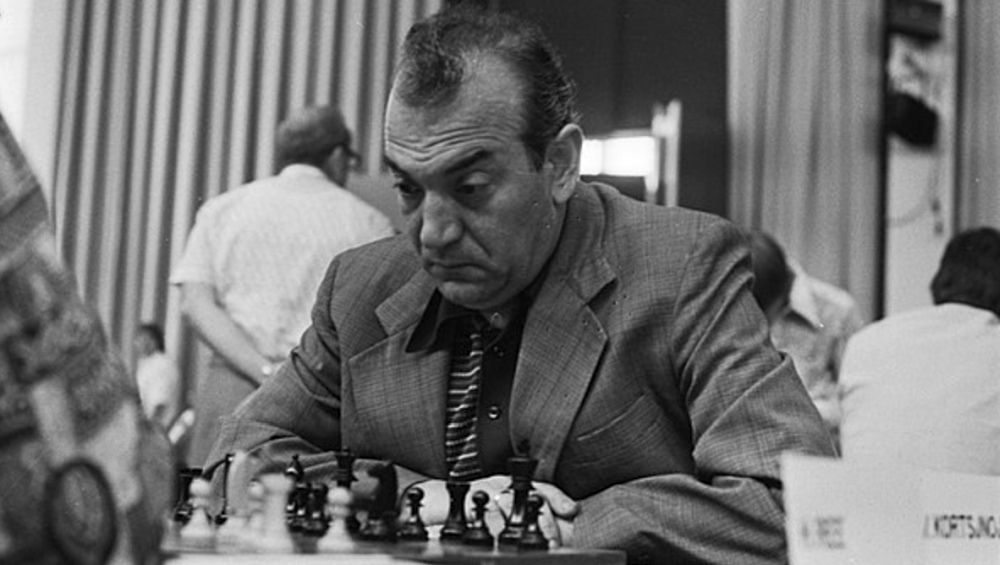
Photo: Anefo / Rob Bogaerts Viktor Lvovich Korchnoi would have turned 95 today. He is one of those monumental figures one returns to time and again when writing about chess. What would most people know about Korchnoi nowadays? A strong player, an incredible fighter, a cranky guy. These traits can’t be argued, and they are well-known; I would like to offer nuances and details about a character that were more hidden from the world. First and foremost, Korchnoi’s attitude towards chess. It was strikingly different from the approach of the majority of his colleagues, even the greatest ones. Arguably, Korchnoi became the first one to make “Fighting to the last bullet” his chess motto. He kept this aggression burning throughout his long career and probably was the best chess player in history when it comes to fighting spirit and resilience. Korchnoi was one of the few (perhaps along with Geller, Polugaevsky, and Fischer) who toiled over chess incessantly. It helped him to permanently stay in shape. Quite funny was to hear the young players lament exhaustion after working with the seventy-year-old Korchnoi at a training camp. Photo source: http://gahetn.nl Viktor Lvovich (simply Viktor back then) grabbed material in a way that was later to be labeled “computer-like,” but still was ready to fend off his opponent’s attacks (please note, that despite his pawn-grabbing propensity, Korchnoi rarely came under a crushing attack). The word “dangerous” was not in his vocabulary. He neither guessed nor made rough estimations; he just diligently calculated numerous variations. This, incidentally, explains his overwhelming record against Tal. It was Korchnoi who, 40-50 years ago, long before Carlsen was born, became a great (probably the best in the world) master of a complex endgame. He was particularly strong in rook endings. Striving for a real fight and for opportunities to overtake the initiative over the chessboard throughout his career, Korchnoi frequently used difficult openings (French Defense, Pirc Defense). But he also had great opening intuition – in a letter, written in 1972 (published in the excellent book Russians vs. Fischer), Viktor Lvovich advised Spassky in preparation for his match with Fischer: “From the play-to-equalize standpoint, I suggest paying attention to the Petroff Defense and 3…Nf6 in the Ruy Lopez”. Nowadays these continuations (along with the Marshall counterattack and the Sveshnikov variation of the Sicilian Defense) are Black’s most solid response to 1.e4 – but back then both the Petroff Defense and the Berlin Variation of Ruy Lopez were on the fringes of opening theory! In fact, Korchnoi was the first and only one for decades to use the Open variation of the Ruy Lopez – currently, the majority of the best players have this line in their opening repertoire. Photo: Anefo / Croes, R.C. Korchnoi was never an easy man, and, drawing parallels to the present day, was a great master of trash-talking, so popular among the leading young chess players nowadays. On the other hand, “Viktor the Terrible” won over chess fans with his unfailing love of chess, ever-burning fighting spirit, and desire to give it all on the battlefield. Elegantly dressed, distinguished-looking, and always eloquent, but he could be different each time you met him – from prickly and caustic to charming or infectiously laughing. Korchnoi was invariably gallant in female society but often irritable and scathing with his colleagues. Ready to talk endlessly about chess and chess-related topics, he had tenacious memory. Viktor often quoted the classics of literature (Pushkin for example) and chess players of the past (“but Levenfisch said…”). At times Korchnoi was unexpectedly respectful and open with young colleagues outside the tournament hall, but one could see him nervous and at times aggressive during and immediately after a game. From Korchnoi’s personal archive, via ruchess Usually, Viktor showed mercy to his defeated opponents, but once he remarked immediately after the game we played, in which I intuitively sacrificed a piece in a position with a huge advantage, but was unfortunately left high and dry: “Do you think you’re Tal? Even Tal didn’t sacrifice me a piece without calculating variations. And you are not Tal.” He was admired by many, but it was hard to imagine a person who could tolerate the irascible Viktor Lvovich. Frau Petra managed it, although not without difficulty – perhaps because their life together was based on mutual respect. Today you cannot imagine married couples who address each other exclusively as “You”. Another reason might be that she went through a school of hard knocks and became just as tough a fighter herself. Korchnoi as a chess player was treated with fearful respect, but an even greater number of people found his behavior during/after a game unacceptable. Yet, the Greats are forgiven more sins than mere mortals. He was forgiven not only for his magnificent play but also for his dedication to chess, for that genuine commitment over the board. Karpov once said: “Chess is my life. But my life is not just chess”. Korchnoi could have easily discarded the second half of that quote. Photo: John Saunders Viktor Lvovich pushed every conceivable boundary, surpassing even Lasker. At 70 he won a super-tournament in Biel finishing ahead Gelfand, Grischuk, Svidler, and others, and at 80 he put in a good performance in Gibraltar, defeating, among others, Caruana, who had already begun his meteoric rise… And yet Korchnoi’s best period is the 1970s. His epic duels with Karpov are still talked about. But there were so many other remarkable battles: the matches with Spassky, Petrosian, Polugaevsky… Even in the match against Kasparov (1983), for the most part, he was fighting on equal ground. We often talk about the most interesting unplayed matches – one of the most interesting for me would have been the Candidates final between Korchnoi and Fischer (1971). But Korchnoi lost to Petrosian in a very strange semi-final. The duel with the American genius did not take place. It is a pity because Viktor Lvovich was effective against Fischer; he controlled the proceedings in their