From chessboards to classrooms: How AI is transforming education

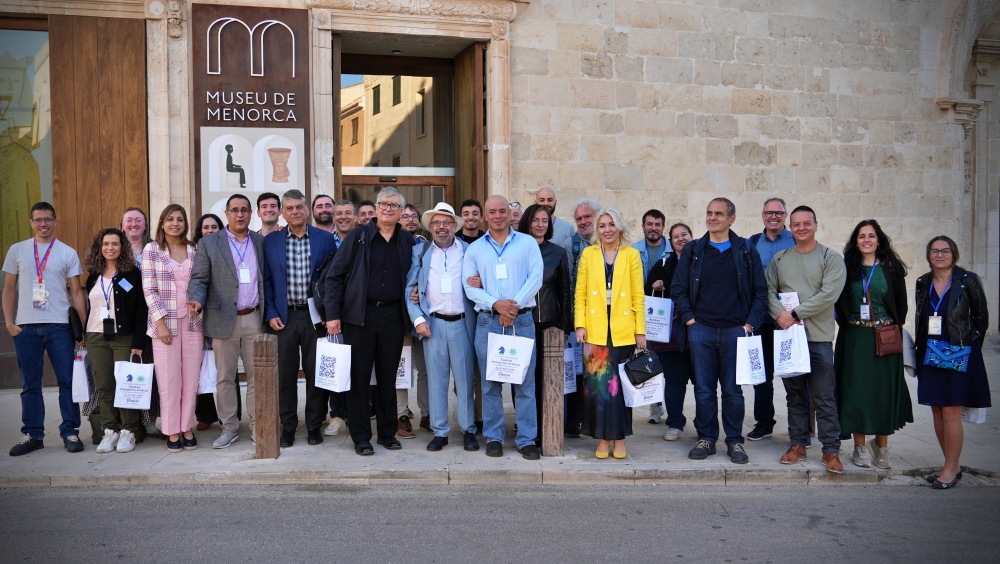
From April 24–26, international experts in education, technology, and chess gathered in Menorca, Spain, for the “Chess & AI in Education” Congress, organized under the framework of the FIDE. The event brought together leading voices to explore how artificial intelligence (AI) is reshaping the way chess is taught, learned, and applied—both inside and beyond the classroom. AI in education: Enhancing, not replacing The congress opened with a keynote by Dr. Mario Antonio Ramírez Barajas, a specialist in chess and education focused on how AI can enhance learning, coach training, and educational program development. His presentation highlighted the growing role of data-driven tools and personalized learning environments. Following this, Rita Atkins addressed one of the most pressing issues in modern education: the overuse and misunderstanding of AI. “They overuse it – they think they are obliged to use it because there is so much hype about AI… keep using yourself as the main instrument in the classroom and slowly introduce AI as a tool.” Atkins emphasized that AI should support – not replace – teachers, particularly highlighting its potential in special education: “AI is not replacing teachers… The chess classroom is mostly about playing with each other, and AI will never replace human interaction.” Bridging theory and practice in schools Practical applications were presented by Mauricio Arias, a key figure in educational chess within FIDE America, who shared his experience implementing chess programs in schools using digital tools. Dilda Nauryzbayeva examined how AI can enhance Chess in Education (CIE) through personalized learning and real-time feedback, while also acknowledging a critical gap between technological potential and measurable classroom impact. A unique intersection of chess and neuroscience One of the most compelling and memorable presentations came from Dr. Cristóbal Blanco, who shared a unique real-life case demonstrating the powerful connection between chess and brain function. During an awake brain surgery, the patient remained fully conscious while playing chess without sight of the board, announcing moves verbally throughout the procedure. This allowed the surgical team to monitor essential cognitive functions such as memory, concentration, and decision-making in real time. The operation was considered a success, and the patient was able to return to daily life, living two additional years with a good quality of life. Dr. Blanco emphasized that chess is far more than a game—it is a powerful tool for strengthening and evaluating cognitive abilities, even in the most critical medical situations. Inclusion through technology and chess The congress also highlighted chess as a tool for social inclusion and accessibility. Susana Gonçalves and Miguel Gonçalves presented Chess2Mind, a platform designed to make chess accessible for people with diverse needs. Their innovations include: Real-time voice interaction systems Tools reducing cognitive load Adaptive interfaces for users with speech or physical limitations These efforts reflect a broader vision of chess as a tool for community transformation and equal opportunity. The augmented teacher and digital innovation Mădălina-Maria Lejean-Anușca, leader of Romania’s national program “Education through Chess,” demonstrated how AI can enhance teaching through innovative pedagogy, combining chess with digital tools, creativity, and structured teacher training. Meanwhile, Fran Otero showcased technological solutions aimed at modernizing chess education and management. Dr. Isaac Lozano explored how artificial intelligence can be applied to game analysis, algorithm-assisted training, and data-driven learning tools, reinforcing chess as a testing ground for AI innovation. Beñat Lomas introduced practical approaches to using AI and digital systems to optimize clubs, tournaments, and educational programs, bringing efficiency into the organizational side of chess. Chess as a laboratory for innovation The congress also featured contributions from Dr. Jonathon Quest, founder of the first undergraduate chess degree program in the United States, and Andrea Manzo, who emphasized the need to move beyond using AI purely as a calculation tool and instead leverage it as a true educational resource. Educational experts Eloi Nortes Mesas and Ramón Pérez Rodríguez reinforced the importance of chess as a tool for holistic student development, integrating cognitive, social, and emotional learning. A shared vision for the future The event concluded with reflections from organizer Pep Suárez, who highlighted the transformative potential of AI: “Artificial intelligence is changing everything… and chess has always been a laboratory for innovation.” He also emphasized the importance of the international community gathered in Menorca: “These are top-level professionals from around the world… bringing strong energy and very good vibrations about the future.” The Menorca Congress demonstrated that the convergence of chess, artificial intelligence, and education is already shaping the future of learning. From AI-powered classrooms to neuroscience applications and inclusive technologies, chess continues to evolve as a powerful educational and social tool. The message was clear: The future lies in collaboration – between teachers, technology, and human creativity.

FIDE World Team Rapid and Blitz Chess Championships 2026: Top teams already confirmed for Hong Kong

The fourth edition of the FIDE World Team Rapid and Blitz Chess Championships will take place from 16 to 22 June in Hong Kong, marking the event’s first appearance in East Asia. Since its inaugural edition in Düsseldorf in 2023, this championship has grown into one of the most anticipated events on the calendar, bringing together world-class grandmasters and rising talents in a format unlike any other in competitive chess. It is one of the rare occasions in international chess where world-class players can be seen forming their own squads and playing as a team, something that is almost never seen outside of the Chess Olympiad. Top teams have already confirmed their participation, featuring some of the biggest names in the game, including world number one Magnus Carlsen, alongside the most recent FIDE Candidates and Women’s Candidates winners, Javokhir Sindarov and Vaishali Rameshbabu. The Rapid Championship will be played as a 12-round Swiss tournament across three days, with four rounds per day and a time control of 15 minutes plus a 10-second increment. The Blitz Championship follows on 20 and 21 June, beginning with pool stages before moving to a knockout format for the top 16 teams, with a time control of 3 minutes plus a 2-second increment. The total prize fund across both championships is €500,000, with the Rapid champion team receiving €110,000 and the Blitz champion team taking home €75,000. Registration is well underway, and a number of formidable teams have already confirmed their participation. WR Chess return as defending Blitz champions with a stellar lineup: Magnus Carlsen, Fabiano Caruana, Maxime Vachier-Lagrave, Wesley So, Jan-Krzysztof Duda, Andrey Esipenko, Alexandra Kosteniuk, and Hou Yifan. Carlsen and Caruana playing on the same team is a rare sight, and WR Chess will once again be the team to beat. Uzbekistan, captained by former FIDE World Champion Rustam Kasimdzhanov, bring Nodirbek Abdusattorov, Javokhir Sindarov, Nodirbek Yakubboev, Shamsiddin Vokhidov, Mukhiddin Madaminov, alongside Afruza Khamdamova and Umida Omonova. Sindarov arrives in exceptional form after winning the 2026 FIDE Candidates Tournament with a round to spare. Seeing him compete alongside Abdusattorov and his Uzbek teammates offers a preview ahead of the 46th Chess Olympiad in Samarkand later this year, where Uzbekistan will be amongst the favourites on home soil. Dragon Chilling bring together former World Champion Ding Liren and reigning Women’s World Champion Ju Wenjun in a powerhouse Chinese squad that also features Wei Yi, Yu Yangyi, Lu Shanglei, Bai Jinshi, and Lei Tingjie. The team name itself is a playful nod to the viral “Ding Chilling” moment during the 2024 World Championship match. Hexamind Chess Team return after an impressive second-place finish in the Rapid at last year’s edition in London. This time, their lineup includes Alireza Firouzja, Anish Giri, Levon Aronian, Volodar Murzin, and Kateryna Lagno. Chessgurukul feature Vaishali Rameshbabu, fresh from her historic victory at the 2026 FIDE Women’s Candidates, playing alongside her brother Praggnanandhaa, Aravindh Chithambaram, Pranesh Munirethinam, and Karthikeyan Murali. Vaishali became the first Indian woman to win the Candidates and will challenge Ju Wenjun for the Women’s World Championship, meaning both challenger and champion will be competing in Hong Kong on rival teams. Chess United bring five-time World Champion Viswanathan Anand together with former Women’s World Rapid Champion Humpy Koneru, Jorden van Foreest, and Jose Eduardo Martinez Alcantara. Their roster also includes Roman Shogdzhiev, the youngest International Master in history at the age of 10, and Tunde Onakaya, the founder of Chess in Slums Africa and Guinness World Record holder for the longest marathon chess game. Several other strong teams have also registered, including Chessnut Nova (featuring Raunak Sadhwani, Daniel Dardha, and MarcAndria Maurizzi), Global Ramblers (with Alexei Shirov and Alexander Motylev), and the Farm – Valera Chess Training team (with the legendary Vasyl Ivanchuk). Teams representing Indonesia, Malaysia, Mongolia, the Philippines, Spain, Australia, and many more regions are also set to compete, reinforcing truly international scope of this event. Register your team The registration deadline is May 15,  2026, 12:00 pm Lausanne time. The playing venue capacity is limited to 42 teams, with places allocated based on the highest team ratings and earliest registration, alongside six wildcard entries from the organisers. The entry fee is €1,000 per team. Each team must consist of a minimum of six and a maximum of nine players, including at least one female player and at least one recreational player. Full regulations and the registration form are available on the official event website. Registration form: https://formdesigner.pro/form/view/243338 Regulations (PDF) Contact: hkchessevent@gmail.com Photos: Rafal Oleksiewicz and Michal Walusza

Sérgio Pereira and Ariete Almeida crowned São Tomé and Príncipe chess champions

The São Tomé and Príncipe Chess Federation (FEXASTP) is pleased to announce the successful conclusion of the 2026 National Absolute Chess Championship and Women’s National Chess Championship, held at Hotel Miramar in São Tomé. The open tournament was played over 11 rounds and brought together the country’s top players in a highly competitive field. The rating favorite Sérgio Pereira lived up to his top billing and emerged as the winner, scoring 8.5 points out of 11. Waldyr Espírito Santo finished in second place with 8 points, maintaining an unbeaten record throughout the tournament. Jeremias Costa placed third with 6.5 points and achieved the title of National Master. Final standings – Absolute National Championship In the Women’s Championship, a seven-player round-robin, Ariete Almeida delivered a dominant performance, winning all six of her games. Emelisa Malone and Carla Taraveira claimed silver and bronze, respectively. Final standings – Women’s National Championship The Federation congratulates all participants for their commitment, sportsmanship, and contribution to the continued development of chess in São Tomé and Príncipe. The overall level of play reflects the steady progress of national chess and reinforces FEXASTP’s mission to promote the sport both locally and internationally. FEXASTP extends its appreciation to Abnildo Oliveira, President of Parliament, and all partners, organizers, and the venue, Hotel Miramar, for their support in ensuring the success of the championships. Photos: CST and São Tomé and Príncipe Chess Federation Facebook