Arkady Dvorkovich advances chess development across Central America and the Caribbean

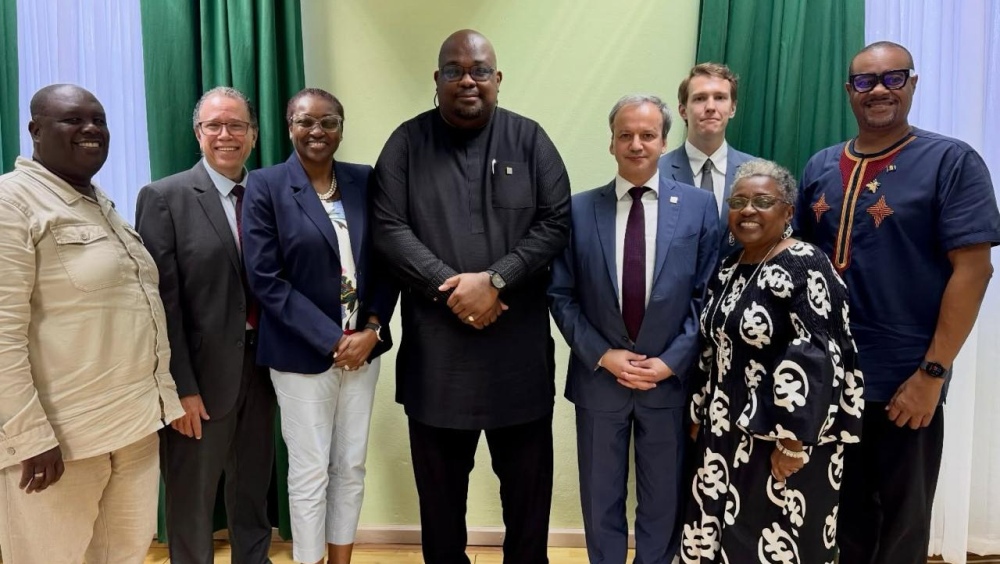
President of FIDE, Arkady Dvorkovich, recently completed a multi-stop visit across the Caribbean and Central America, reinforcing FIDE’s commitment to expanding chess through education, institutional partnerships, and competitive opportunities. In Barbados, Dvorkovich met with key officials, including the Minister of Educational Transformation, Chad Blackman, and the Chief Education Officer, Dr. Ramona Archer-Bradshaw, to discuss integrating chess into the national education system. Talks focused on using the game to enhance critical thinking and student development. He also engaged with the President of the Barbados Chess Federation, Allan Herbert, exploring opportunities to grow the sport locally. The FIDE President also met with the President of Barbados, Lieutenant Colonel Jeffrey Davidson Bostic, underscoring the importance of chess at the national level. Their discussions also covered social and educational initiatives in the country, including how chess could be integrated into them. The timing of the visit coincided with the 2026 Heroes Day Challengers Cup, hosted at the Central Bank of Barbados, further emphasizing the country’s active role in regional chess development. The International Conference on Education and New Learning Technologies, organized by World Research Society, is scheduled for October 03, 2026 in Bridgetown, Barbados. FIDE representatives were invited to participate. In Saint Lucia, the visit centered on institutional development. Meetings with the Saint Lucia National Olympic Committee addressed closer cooperation and the federation’s potential integration into the Olympic structure, alongside broader collaboration with the International Olympic Committee. In Panama, Dvorkovich marked chess’s debut in the South American Youth Games, symbolizing FIDE’s push to integrate chess into multi-sport events. He also held a series of meetings – both in person and online – with federations across the region. Summing up the tour, the FIDE President emphasized strong alignment across countries: “Following 25 in-person and online conversations… we share key priorities – from bringing chess to schools to training young talents and organizing events, including under the Olympic umbrella. Huge program ahead for FIDE AMERICA. Together!” The visit highlights growing momentum for chess across Central America and the Caribbean, with a clear focus on sustainable development and regional cooperation.

FIDE Open Aid Project returns in 2026

FIDE Open Aid Project returns in 2026 The FIDE Open Aid Project was launched during the pandemic to help tournaments stay afloat and to support chess professionals through a difficult period. Over four editions, the programme has grown into one of FIDE’s most consistent forms of direct support for the open circuit, reinforcing the value of classical tournaments as the backbone of competitive chess. Following numerous requests from around the world, FIDE announces the return of the Open Aid Package Project in 2026. The programme is run by FIDE with the support of Freedom Holding Corp, official Partner of FIDE for chess development programmes in 2026. Open tournaments held from June to December 2026 are eligible. Tournament organizers are now invited to submit their applications for the Aid Package. Applicants must accept the conditions, meet the requirements listed below, and complete the application form.  Conditions & Requirements An application for the Aid Package shall be sent to gsc@fide.com by May 15, 2026 The Aid Package cannot exceed 20% of the initially planned prize fund and 10% of the total budget indicated in the application form; it cannot exceed €5,000 At least 10% of the total prize fund shall be allocated for women’s prizes and at least 5% of the total prize fund shall be allocated for veterans’ prizes FIDE may require the tournament to establish the lower fees (or absence of fees) for the agreed categories of participants (veterans, youth, women, representatives of developing countries) Mention “Financially supported by FIDE Open Aid Project” shall be visible on the tournament’s media resources (e. g. webpage, social media pages) FIDE may require that FIDE and its sponsors be reasonably represented at the tournament Application form The Organiser is requested to fill out the following APPLICATION FORM. All provided data will remain confidential.  Selection criteria Events with classical time control will be prioritised Event’s history Event’s strength Geographical location Amount of the prize fund and its distribution Fair Play measures The list of selected Open tournaments will be announced by June 1, 2026. For any questions, organisers may contact gsc@fide.com.

Schackfyran: Sweden’s chess-in-education initiative bringing thousands of children together

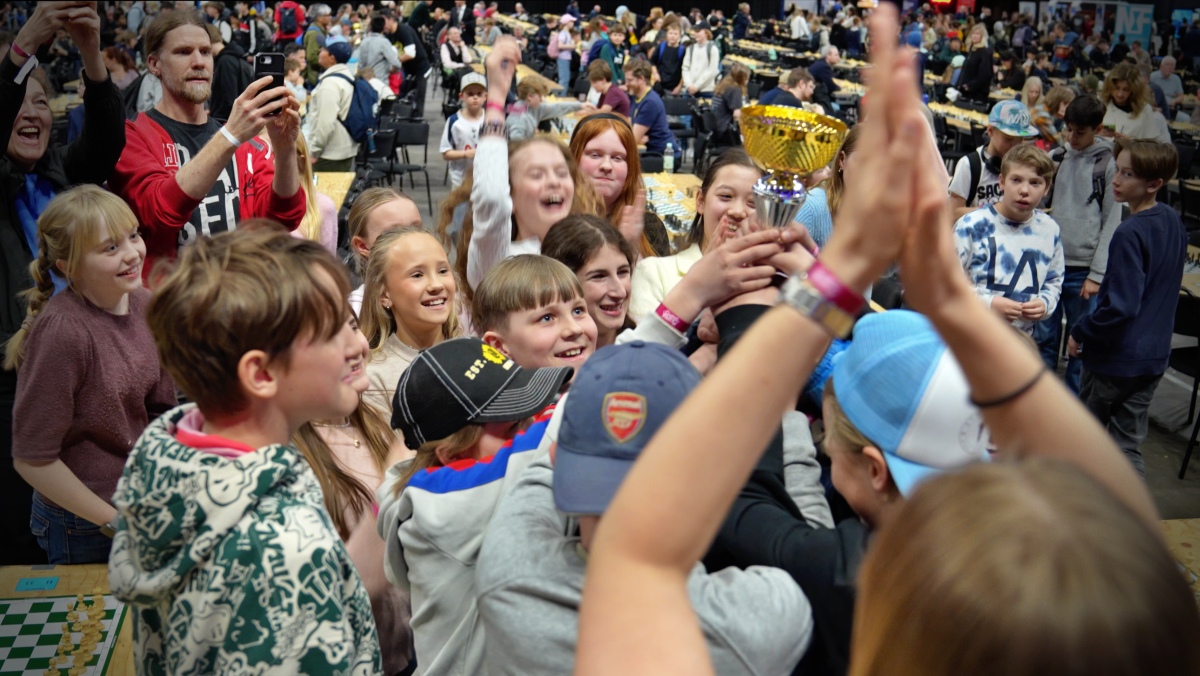
In Sweden, chess is not just a game – it is a powerful tool for education, inclusion, and community building. One of the most remarkable examples of this approach is Schackfyran, a nationwide school project that brings tens of thousands of children to the chessboard every year. Developed in 1978, Schackfyran has introduced more than half a million students to chess. Today, around 25,000 fourth-grade students from over 1,000 classes participate annually, making it one of the largest chess competitions in the world. But Schackfyran is far more than a competition. “This is a social project. We don’t care if the children become great chess players – the idea is to strengthen the group,” explains Jesper Hall, one of the key figures behind the initiative. Unlike traditional tournaments, Schackfyran focuses on participation rather than performance. Each student contributes to their class’s result: one point for playing, two for a draw, and three for a win. This system encourages full class involvement, where stronger players support and motivate their classmates. “It’s not about having a few strong players – it’s about the whole class. The strongest support the others, they teach and encourage them,” Hall adds. The project emphasizes teamwork, inclusion, and shared experience. Every participant receives a medal, reinforcing the idea that everyone plays an important role. The 2026 national final, held during the Chess Party in Stockholm, brought together more than 3,000 children in a vibrant celebration of chess. The atmosphere was closer to a festival than a traditional tournament, with students cheering for their classmates and celebrating achievements together. The impact of Schackfyran goes far beyond the chessboard. “Chess is not just about competition – it’s a powerful tool for education,” says Dana Reizniece, Deputy Chair of the FIDE Management Board. “It helps develop thinking, creativity, and social skills. You don’t have to be a champion to enjoy chess – it’s a game for everyone.” As part of the Year of Chess in Education 2026, Schackfyran stands out as a leading example of how chess can be integrated into schools not only as a cognitive tool, but also as a way to foster communication, teamwork, and a sense of community. By encouraging participation over results, Schackfyran teaches children valuable life skills – from structured thinking to collaboration and mutual support. More importantly, it creates an environment where every child feels included. With its unique format and growing impact, Schackfyran continues to inspire educators and chess organizations worldwide, proving that chess can be much more than just a game – it can be a bridge between students, a tool for learning, and a celebration of togetherness. Photos: KNZO Photography https://youtu.be/OQgj8KkUPtU?si=aiT-pyYV_GUXCHNh