Preparing the next generation to think: Chess in Education conference in Mongolia

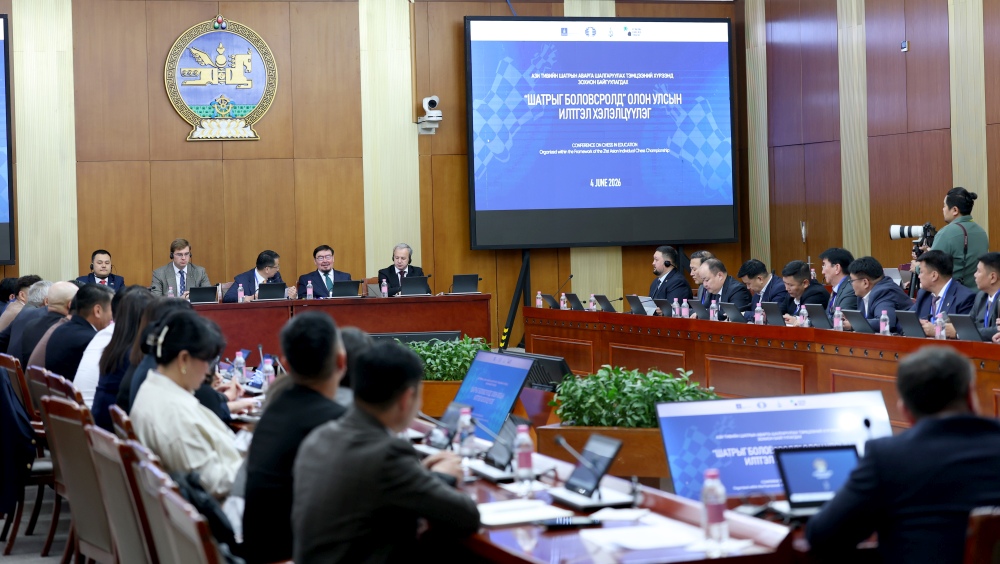
By Milan Dinic On 4 June, Mongolia hosted its first Chess in Education conference, which took place alongside the 21st Asian Continental Chess Championship in Ulaanbaatar. The conference focused on ways chess can be implemented in the education system of Mongolia, as well as assessing international experiences to inform future policy directions. The participants included chess and educational experts, as well as the Minister of Education of Mongolia, President of the International Chess Federation (FIDE), President of the Mongolian Chess Federation, President of the International School Chess Federation (ISCF) and others. Gombojav Zandanshatar – the President of the Mongolian Chess Federation, a former Prime Minister and former Speaker of Parliament – noted the role chess has in helping children and young adults find focus at a time of growing distractions from modern technology and social media. “I asked the kids playing in one of our chess events – what does chess give them? They said patience and focus. Modern kids are not focused. Too many distractions – gaming, social media, television, entertainment… They are lost in this digital environment. That’s where chess can help. They recognise it gives them patience, discipline, focus, and empathy. I think chess is a modern board game that can help education progress in this time of technological advancements. It gives a lot of opportunities and hope,” Zandanshatar said. The participants of the conference agreed that current technological progress and innovations mean children will find it harder to stay focused but also struggle with information overload, which also poses challenges to the educational system. “The question is no longer how much children know, but whether they can think,” FIDE President Arkady Dvorkovich said. He suggested that chess can play a role in addressing this question: “Chess helps children develop their thinking and reasoning capabilities, evaluate consequences, and make reasonable decisions before taking action.” Noting that the future economy increasingly rewards critical thinking, adaptability, creativity, and effective judgment, Dvorkovich said that “chess is one of the few activities where children practice decision-making under uncertainty every single minute.” Artificial intelligence and its impact on everyday life and education were also discussed. The participants agreed that the new social circumstances require a structured approach. “Most people now understand that the quality of the AI answer is determined by the quality of the prompt. Artificial intelligence can give answers. Chess teaches children how to ask questions, analyse options, and think independently,” Dvorkovich said. ISCF President and the head of the Kazakh chess federation, Timur Turlov, echoed the remarks by other speakers, framing chess as an investment in human capital and not just a sport. In a detailed presentation given at the conference, Turlov argued that countries’ future competitiveness will depend increasingly on education, talent, independent thinking and decision-making – with chess presented as an accessible way to develop those skills in children. “We believe chess is one of the most accessible tools to help children develop concentration, analytical thinking, discipline, resilience, and decision-making skills from an early age,” Turlov said. The work of the ISCF was cited as a good example. Since being introduced at the FIDE General Assembly during the 45th Chess Olympiad in Budapest in 2024, the International School Chess Federation has developed into a platform connecting educators, federations, governments, researchers, schools, and international partners. ISCF became FIDE’s key partner in chess education in October 2025 and helped launch the global initiative declaring 2026 the Year of Chess in Education. This includes masterclasses, school events, conferences and continental competitions. In assessing international experiences, Kazakhstan was presented as a strong national model for chess in schools. The programme now covers more than 1,500 schools, 60,000 pupils and 3,500 trained teachers, exceeding the original target of 1,400 schools by 2027. Government support was described as essential for long-term success, Turlov said, noting that ministries, universities, and national institutions are needed to embed chess into curricula, teacher training, and public education systems. “Chess in education is no longer an isolated initiative of individual enthusiasts. Step by step, it is becoming part of a much larger international conversation about the future of education, human capital, and the development of the next generation,” said Turlov. The conference concluded with the signing of the Memorandum of Understanding between the Mongolian Chess Federation and the Ministry of Education of Mongolia. “What begins in Mongolia can inspire many other countries. Today’s discussion is not only about chess; it is about how we prepare the next generation to think, learn, and succeed,” said Arkady Dvorkovich in his closing remarks. Photos: Mongolian Chess Federation

Registration opens for American Continental Stage of FIDE ISCF World Schools Team Championship 2026

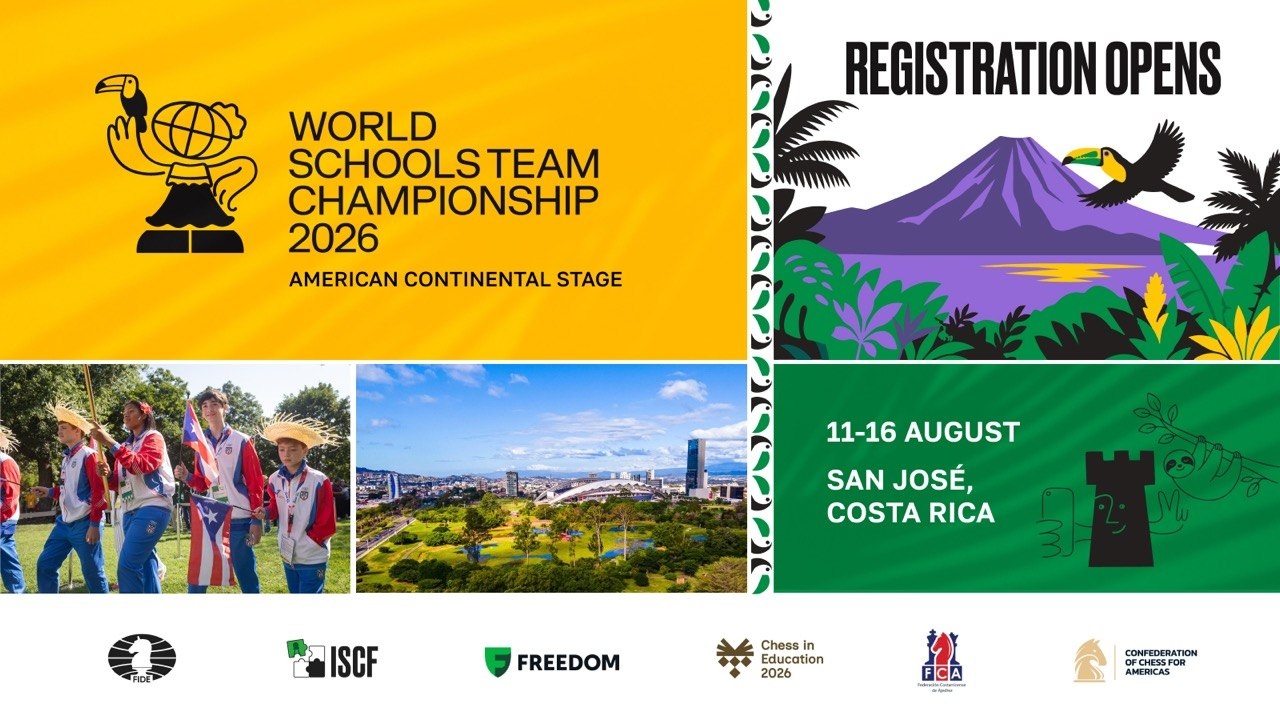
FIDE and the International School Chess Federation (ISCF), with the support of its general partner Freedom Holding Corp., invite all FIDE member federations from the Americas to participate in the American Continental Stage of the FIDE ISCF World Schools Team Championship 2026 (WSTC 2026). Organized by ISCF and FIDE jointly with the Federación Costarricense de Ajedrez and the Confederation of Chess for America, the event will be held in San José, Costa Rica, from August 11 (arrival) to August 16 (departure), 2026. The American Continental Stage will become one of the continental qualifiers of the new World Schools Team Championship cycle held within the framework of the Year of Chess in Education 2026 initiative. The best teams will qualify directly for the WSTC 2026 Grand Final, where the continental champions will compete for the title of FIDE ISCF World Schools Team Champion 2026. Team composition and eligibility Each team shall consist of: four main players; one reserve player; one non-playing captain. Each team must include at least one boy and at least one girl, except in specific cases provided for in the Regulations for single-gender educational institutions. Players eligible to participate must be born between January 1, 2012 and  December 31, 2018. National federations are responsible for confirming that all players are officially enrolled in the educational institution they represent during the 2025–2026 academic year. The tournament will be played over eight rounds using the Swiss system. Participation conditions and organizer support Within the framework of the Championship, selected teams will receive organizer support, including: full-board accommodation; airport and local transfers; economy-class flight tickets for designated eligible delegations Detailed participation conditions are outlined in the official Invitation Letter and General Regulations. Educational and cultural programme In addition to the tournament itself, participants and guests will take part in a special educational and cultural programme organized in line with the Year of Chess in Education 2026 initiative. The programme will include: masterclasses and lectures by leading chess players and educators; interactive workshops; side activities promoting educational exchange and intercultural dialogue The Championship aims not only to identify the strongest school team on the continent but also to promote chess as a powerful educational and social development tool. Registration The registration deadline is July 16. National federations are kindly encouraged to complete the registration process at the earliest opportunity, as the number of places in the tournament is limited. Organizer support conditions outlined in the Regulations are available only for the first 20 teams fully registered in compliance with the official requirements. Teams may register only through their respective FIDE member federations using the official online registration form. Registration form: http://worldschoolteam2026.fide.com/registration-stage-america/  Contact e-mail: worldschoolteam@fide.com Official website: https://worldschoolteam2026.fide.com/  Invitation Letter: http://worldschoolteam2026.fide.com/files/WSTC_2026_Invitation_Letter_American_Stage.pdf