Chess, concentration, and community: An interview with Timur Turlov

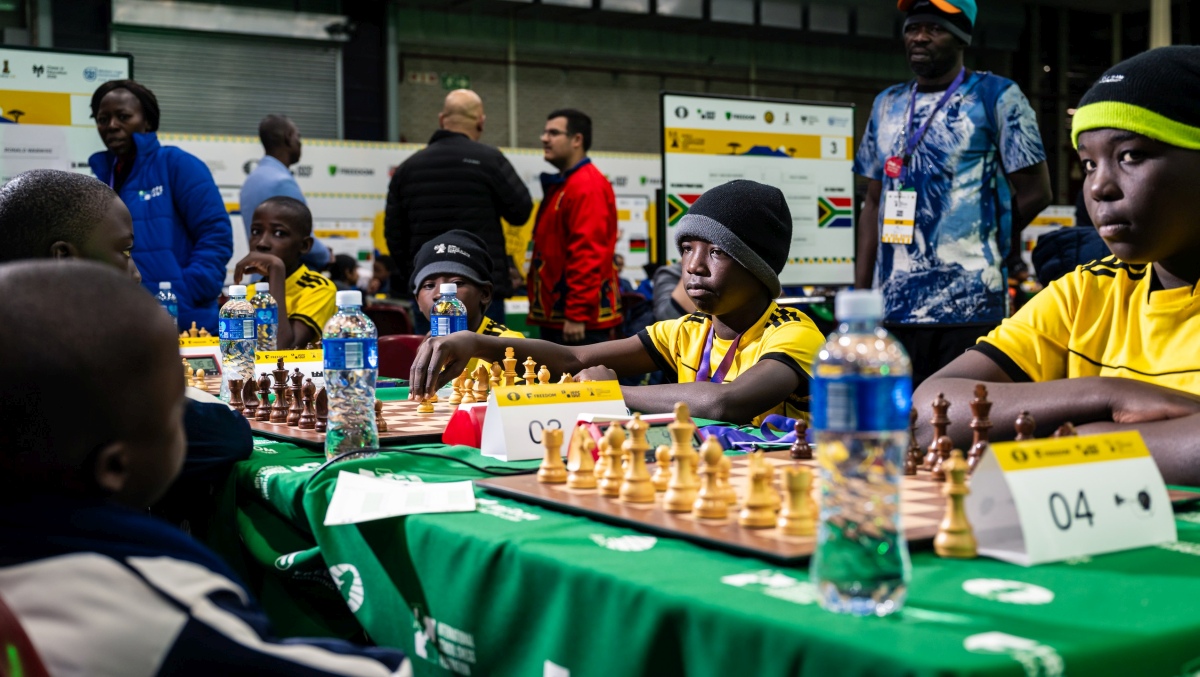
The FIDE ISCF World Schools Team Championship has grown rapidly since its pilot edition in Aktau in 2023, developing into a global cycle spanning four continents. During the African Continental Stage in Stellenbosch, South Africa, ISCF President Timur Turlov reflected on the championship’s expansion, the importance of school teams, and the broader role chess can play in education. He also discussed the recently launched Chess in Education grant programme and the value of chess in helping young people develop concentration, strategic thinking, and stronger decision-making skills in an increasingly fast-paced digital world. The World Schools Team Championship began with a pilot event in Aktau in 2023 and has now developed into a four-continent cycle. Did you imagine it growing this quickly? Timur Turlov: That was our dream: to build a great competition for schools. It has now become a reality, and I am very proud of what we have achieved together. One of the most striking aspects of the championship is the camaraderie among the teams. Why was it important to focus on school teams rather than individual players? What can a team format teach that individual chess cannot? I think it is very human to come together as a team. It is only as a community that we can build great things. All major institutions and enterprises are made up of teams of people. When you have a strong team, you can achieve great results, build something meaningful and create something special. That is why I believe it is important to develop communities. It is not only about having one outstanding individual. When the whole team, and even the whole school, is strong, it creates much greater opportunities for development. You can rely on your teammates, and together you can create something truly unique. Chess remains an individual game at the board, but we are seeing a great deal of teamwork and mutual support away from it. Have you noticed that during the championship? Absolutely. The event itself is a wonderful opportunity to make friends, discover new countries and find new opportunities. When you have a strong team, you know that you can rely on it. Even when you lose your own game, the team can still succeed because your teammates may win theirs. You can also help one another through advice, encouragement and your own performance. You do not have to rely only on yourself. You can rely on your teammates, and together you are much stronger than when you stand alone. FIDE has designated 2026 as the Year of Chess in Education. What is your vision for this initiative? Chess in schools is one of the most impactful educational initiatives, while remaining relatively affordable and accessible to almost everyone. It does not only help children play chess better. It can help them learn more effectively, improve their concentration, develop strategic thinking and navigate a rapidly changing digital world. You have spoken about the speed of modern life and the constant presence of phones and digital content. Can chess help children slow down and think more carefully? Absolutely. I truly believe chess is a way to understand more clearly how you think, what influences your decisions and how you can improve the quality of your decision-making. It also trains the ability to concentrate for long periods of time. In today’s world, I think chess is one of the few enjoyable ways for young people to develop that level of focus. ISCF recently launched its Chess in Education grant programme. What is the idea behind it? We know how impactful chess in education can be. Through these grants, we can help create more equal access to development and give more countries the opportunity to experience its benefits. Sometimes, we simply need to provide an example and help a programme take its first steps. I am confident that these projects can become sustainable and continue under the leadership of national federations even after the initial grant period has ended, because they will see the impact for themselves. As President of the ISCF, what are you most proud of achieving? I am proud that we have brought together such a large and dedicated organising team. We work closely with FIDE and many national federations, and we have built a strong network of people who support this initiative. The programme has also received support from government representatives, and thousands of young players from countries around the world are already taking part. That growing community is something we can all be proud of. Photos: Arlan Olzhabai