Serbia Open officially starts in Belgrade

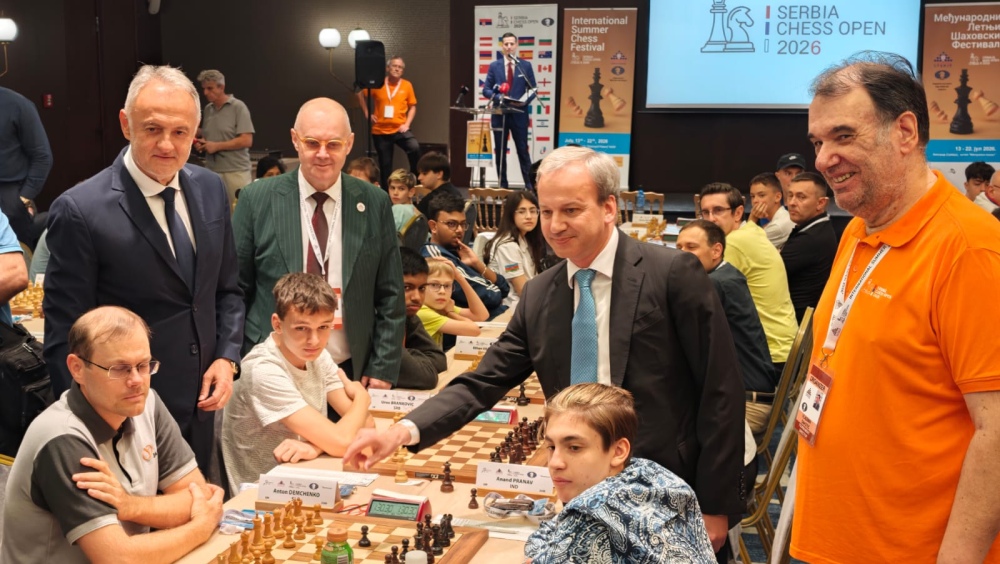
The Serbia Open 2026 was officially declared open today at the Metropol Palace Hotel in Belgrade, marking the beginning of one of Europe’s most established and internationally diverse summer chess festivals. Organized by the Chess Federation of Serbia under the patronage of the Ministry of Sports of the Republic of Serbia, this year’s edition has brought together around 550 players representing 38 national federations, ranging from world-class grandmasters and experienced professionals to ambitious young talents taking their first steps on the international stage. Over the next ten days, Belgrade will once again become a meeting point for the global chess community, where players from every continent will compete, exchange ideas, and share a passion for the game that transcends borders, cultures, and generations. The official opening ceremony was attended by numerous distinguished guests, including FIDE President Arkady Dvorkovich; Minister of Sports of the Republic of Serbia Zoran Gajić; President of the Chess Federation of Serbia Andrija Jorgić; President of the Olympic Committee of Serbia Dejan Tomašević; Secretary General of the Olympic Committee of Serbia Dejan Bojović; Secretary General of the Sports Association of Serbia Goran Marinković; Provincial Secretary for Sports and Youth Dane Basta; Manager of the City of Belgrade Miroslav Čučković, as well as representatives of state institutions, sponsors, and partners. Welcoming the participants, the President of the Serbian Chess Federation, Andrija Jorgić reflected on the remarkable growth of Serbia Open since its establishment and thanked everyone whose commitment has helped shape the tournament into one of the leading international opens in the region. “This festival was created as a unique opportunity for talented young Serbian players to gain valuable experience by competing against strong international opponents. The fact that more than 20 medalists from the Serbian Chess Federation Youth Festival are participating in this tournament is clear evidence that we have achieved that objective. For us at the Serbian Chess Federation, the months ahead are of exceptional importance. Our performances in the upcoming official team competitions will show where we stand in comparison with the strongest teams in Europe and the world. In just a few weeks, our junior national teams will travel to the Czech Republic for the European Youth Team Championship, and in mid-September, our national teams will proudly represent Serbia at the Chess Olympiad in Uzbekistan,” said Andrija Jorgić Speaking on behalf of the Olympic Committee of Serbia, Dejan Tomašević highlighted chess as a sport that embodies discipline, education, responsibility, and strategic thinking. He praised the organizers for building an event that strengthens Serbia’s reputation as a reliable host of major international competitions and wished all participants a successful tournament. In his address, FIDE President Arkady Dvorkovich congratulated the Chess Federation of Serbia for the continued development of the tournament, noting that Serbia Open has become a respected fixture on the international chess calendar. He welcomed the participants from around the world and expressed his confidence that the tournament would once again be well remembered. “FIDE has always regarded Serbia as a strong partner and a true supporter of chess. Not only has your country hosted many historic chess events, but in recent years you have also organised the inaugural Chess Olympiad for People with Disabilities and the memorable match between two outstanding grandmasters, Hans Niemann and Ian Nepomniachtchi. On behalf of FIDE, I would like to thank Serbia for its continued support of chess and of our shared mission. Personally, I am deeply grateful for your friendship and cooperation, and I look forward to strengthening our partnership and bringing even more international chess events to Serbia in the years ahead,” said Arkady Dvorkovich. As part of the FIDE President’s visit to Belgrade, he held a meeting with the key officials of the Ministry of Sports of the Republic of Serbia and the Serbian Chess Federation. The parties discussed the various avenues of mutual cooperation and the possible inclusion of chess into the program of Expo 2027 in Belgrade. Concluding the ceremony, Minister of Sports Zoran Gajić reaffirmed the government’s commitment to supporting chess and recognized the role that events such as the Serbia Open play in promoting Serbia internationally while creating opportunities for future generations of players. “I am especially pleased that this year’s edition is the most numerous in the history of the tournament and also the largest chess tournament in Europe this year. More than 550 chess players from 38 national federations have gathered in Belgrade to showcase their knowledge, skill, patience, and sportsmanship over the next ten days. This is the best confirmation that Serbia is recognized as a reliable host of major international sporting events. Chess is much more than a game. It is a school of thinking, discipline, responsibility, and respect for one’s opponent. It teaches us that every move carries weight, that success comes through patience, knowledge, and persistence. These are precisely the values we wish to cultivate in younger generations and which sport, in all its forms, conveys to society,” said Zoran Gajić With the official addresses concluded, Minister of Sports Zoran Gajić formally declared Serbia Open 2026 open. The ceremony was followed by the traditional ceremonial first moves on the top board of the Masters Tournament, officially launching nine days of world-class chess competition and welcoming the first games of this year’s festival. The Opening Ceremony drew broad media interest, with coverage provided by leading national and international television broadcastersand online media platforms. Their presence highlighted the increasing prominence of Serbia Open as an internationally recognized chess festival and an important fixture on the FIDE tournament calendar. Competition continues until July 22, with live broadcasts of the games, daily reports, and complete results available through the tournament’s official communication channels. Links: https://serbiachessopen.com/index.php/en/ https://lichess.org/broadcast/serbia-open-2026-masters/round-1/9hUY5sN7
FIDE Council approves new format for 2027 World Cup and Women’s World Cup

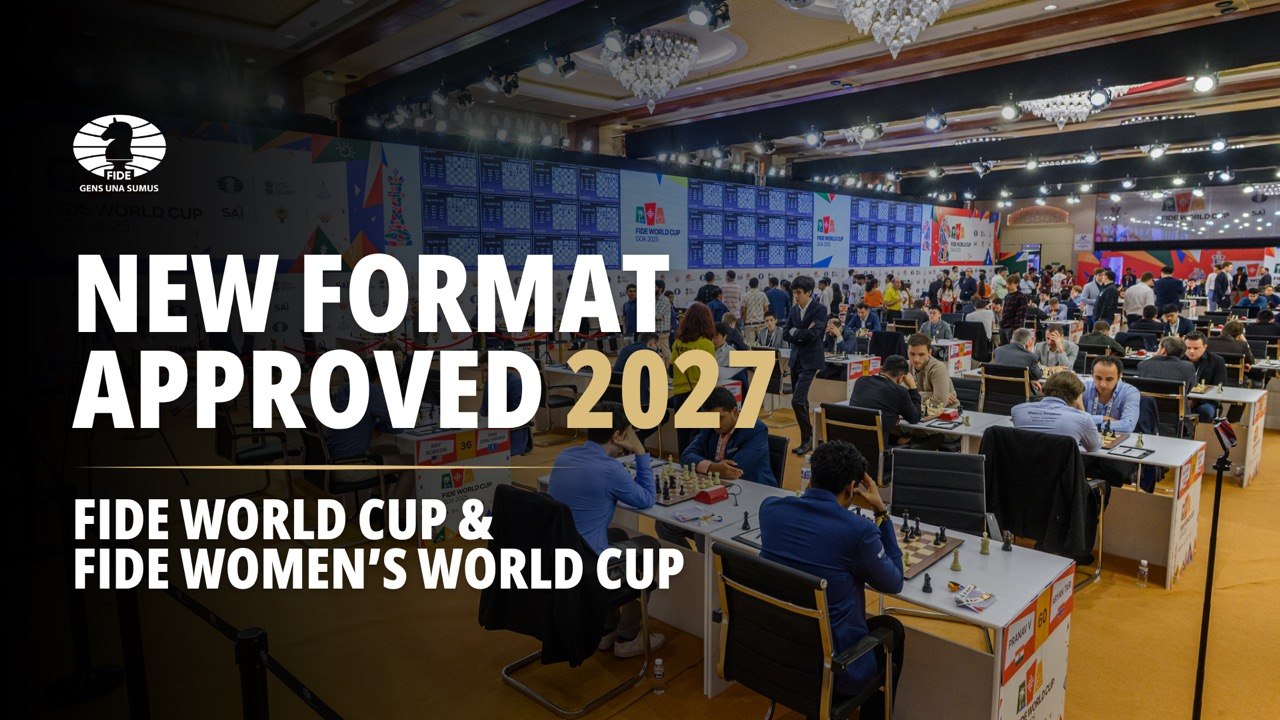
The FIDE Council has approved a series of significant changes to the format of the 2027 FIDE World Cup and the 2027 FIDE Women’s World Cup, following recommendations from the Global Strategy Commission. They aim to make the competitions more inclusive, improve the experience for players, reduce the overall duration of the events, and ensure the World Cups remain one of the flagship competitions in the World Championship cycle. Since adopting the knockout format in 2005, the FIDE World Cups have become one of the most prestigious events on the international calendar. Over the past two decades, the tournaments have expanded considerably, growing from 128 to 206 players in the Open and from 64 to 103 players in the Women’s event. At the same time, the expansion has presented new challenges. By 2025, the Open World Cup had reached 27 days in duration, making it increasingly difficult to fit into the international chess calendar. A new two-stage format Beginning in 2027, both World Cups will be played over 19 days and will consist of two distinct stages. Stage 1: Swiss qualification The opening stage will consist of Swiss-system tournaments played with a Fast Classical time control of 45 minutes plus a 30-second increment per move. The Open World Cup will feature four Swiss pools, while the Women’s World Cup will be divided into two Swiss pools. Each Swiss tournament will be played over nine rounds across five days, with the pools balanced to ensure comparable playing strength. The leading players from each pool will advance to the knockout stage: Open World Cup: Top four players from each of the four pools (16 players total) Women’s World Cup: Top eight players from each of the two pools (16 players total) Stage 2: Knockout finals The second stage will retain the traditional knockout. The Round of 16, quarterfinals, semifinals, and final will be played using the existing World Cup format and classical time controls. A rest day will separate the Swiss and knockout stages, with two additional rest days scheduled during the knockout phase. By combining a Swiss qualification stage with the traditional knockout finals, FIDE preserves the excitement and prestige of the World Cup while providing every participant with significantly more games and a better overall tournament experience. Expanded participation The approved format also increased the size of both competitions: Open World Cup: from 206 to 224 players Women’s World Cup: from 103 to 128 players The additional places will make the tournaments even more inclusive while creating greater opportunities for players from all regions of the world. Several new qualification pathways have also been introduced: The top four finishers in the most recent FIDE Grand Swiss and FIDE Women’s Grand Swiss will qualify directly for their respective World Cups. The winner of the 2026 Total Chess World Championship will qualify for the World Cup. Qualification through the FIDE Circuit has been introduced for both the Open and Women’s World Cups. The number of qualification places allocated to continents has been increased to seven spots per continent, strengthening continental representation. A new qualification place has been introduced for the highest-rated senior player. Enhanced value for participants The cumulative prize fund for the two events has been significantly increased, rising from USD 2.67 million in 2025 to USD 3.3 million in 2027. This substantial increase reflects FIDE’s commitment to further enhancing the value of the World Cups for players at every level of the competition. Prize money will continue to be awarded to every participant, with increased prizes for players finishing in the lower places compared to the 2025 editions. While the winner’s first prize remains unchanged, the new format allows players competing for the title to earn the same top prize over a significantly shorter event, improving the overall balance between tournament duration and financial rewards. Preserving tradition while preparing for the future “The new format has been designed to preserve the unique identity of the FIDE World Cup while adapting it to the evolving needs of modern chess. We believe that the combination of Swiss qualification and knockout finals will offer a more engaging experience for both players and fans,” said FIDE President Arkady Dvorkovich. “At the same time, we are making the FIDE World Cups more inclusive than ever before. The increased number of places, including additional qualification spots for Africa and the Americas, will provide more opportunities for talented players from every continent to compete on one of the biggest stages in world chess. With these changes, the FIDE World Cup and FIDE Women’s World Cup will remain among the most watched competitions in international chess while continuing to serve as key gateways to the World Championship cycle for players from every corner of the world,” he added.
Daniel Dardha and Hanne Goossens crowned Belgian chess champions

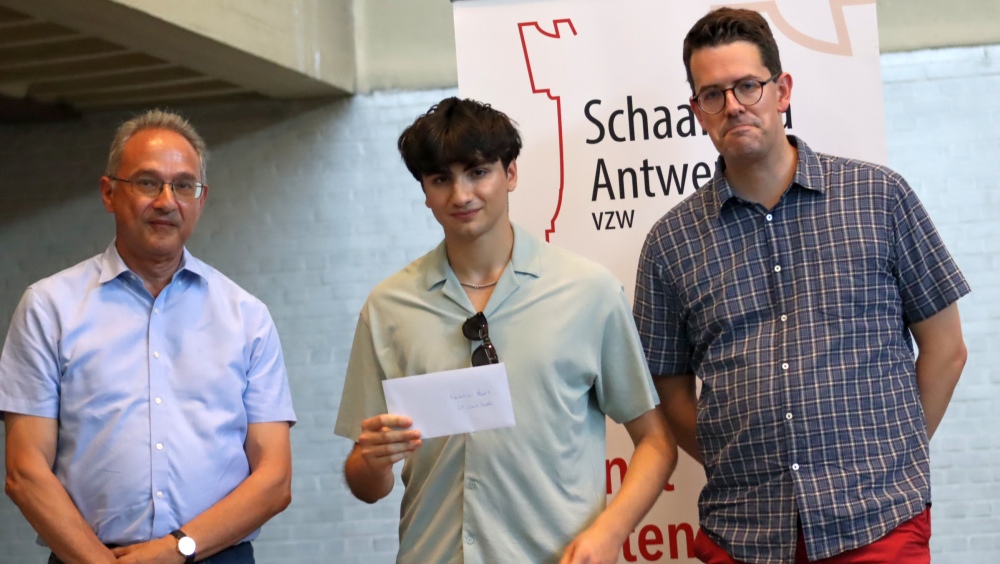
GM Daniel Dardha and WIM Hanne Goossens are newly crowned Belgian Chess Champions, claiming their fourth and fifth national titles, respectively. The 2026 edition of the Belgian Chess Championships was held from July 4-12 at the Xaverius College in Borgerhout, Antwerp, the Xaverius College in Borgerhout, Antwerp, celebrating the 75th anniversary of the local Borgerhoutse Chess Club. The event featured 10-player round-robin invitational sections for Experts and Ladies, alongside a large Open tournament for players of all levels. Somewhat unexpectedly, the open event developed into a close race between the top-seeded Dardha and IM Elias Ruzhansky, rated 164 points lower. Ruzhansky defeated Dardha in Round 3 and took the lead but then slowed down making several draws and allowing his main rival to catch up. It all came down to the ninth and final round, which Ruzhansky and Dardha entered as joint leaders on 5.5/8. Ruzhansky managed only a draw against FM Amir Zouaghi, while Dardha scored a crucial victory over FM Maxime Hauchamps to clinch the title. Mher Hovhannisyan completed the podium after edging out GM Alexandre Dgebuadze thanks to a superior Buchholz tiebreak. Final standings – Experts Hanne Goossens, representing Borgerhout district of Antwerp, dominated the women’s tournament, securing the title with a perfect score of 9/9. Diana Musabayeva enjoyed a strong run but lost to the eventual champion in the penultimate round and had to settle for silver with 7.5/9, while Radoslawa Lascar finished third with 7/9. Final standings – Ladies Arne Nemegeer triumphed in the Open event, edging out Olivier Verheyen on the Bucholz tiebreak. Final standings – Open Photos: Official website Official website: https://bk.schaakliga-antwerpen.be/en/main-event/