

FIDE launches first digital museum dedicated to chess history

A first-of-its-kind digital museum dedicated to chess provides global access to FIDE’s archive, offering researchers and chess fans a curated look into the game’s evolution As part of its 2024 centenary celebrations, FIDE has unveiled an online museum tracing chess history from ancient times to modern tournaments. The Open Chess Museum endorsed by FIDE aims to become the world’s largest repository of chess artifacts, showcasing valuable items from every corner of the world and every era of chess history. For the first time, a full historical record of chess is freely available online—featuring rare, never-before-seen materials ranging from hand-annotated scoresheets to championship medals and personal artifacts of top players. The project also aims to highlight lesser-known facts and stories from the game’s past. FIDE President Arkady Dvorkovich said the project offers “a closer, in-depth perspective on chess” and reflects “FIDE’s broader push towards digital engagement with the public.” “Chess is one of the oldest and richest sports in history. Over centuries, countless books have been written about the game, the players, the events. Much of this is now available online—but what’s missing is a central, official reference point telling the full story of chess. The FIDE Online Chess Museum is exactly that: a place where you can find key information about the most significant events and the people who shaped the game,” said Dvorkovich. “We hope the chess community—and those curious about the game—see the value in the resources now freely available to explore and enrich the sport,” he added. Visitors navigate the museum through five thematic sections. The “Collection” segment includes photographs, handwritten letters, Olympiad posters, commemorative pins, and personal belongings from famous players—alongside historical documents and autographs. The history section begins with a visual timeline showing all the key stages in the history of chess, up to 1913 and the first steps to create an international chess organization. A dedicated segment traces FIDE’s history from early international efforts in 1913 to its evolution into the sport’s global authority. This part features high-quality photos and scans of documents based on which the chess world is organized and governed. The “World Champions” part includes detailed biographies, annotated games, and key publications chronicling the careers and legacies of the game’s greatest players. The project marks a milestone in chess historiography and signals FIDE’s renewed commitment to public engagement. Following up on FIDE’s slogan – the game is just beginning – the Open Online Chess Museum aims to be a constantly evolving project. FIDE is inviting other collectors, galleries, national federations, clubs and players to join in and have their collections and artifacts also featured on the museum’s website. The museum is free to access via the website museum.fide.com.
FIDE Candidates: Sindarov dominates at the halfway mark, Muzychuk retains the lead
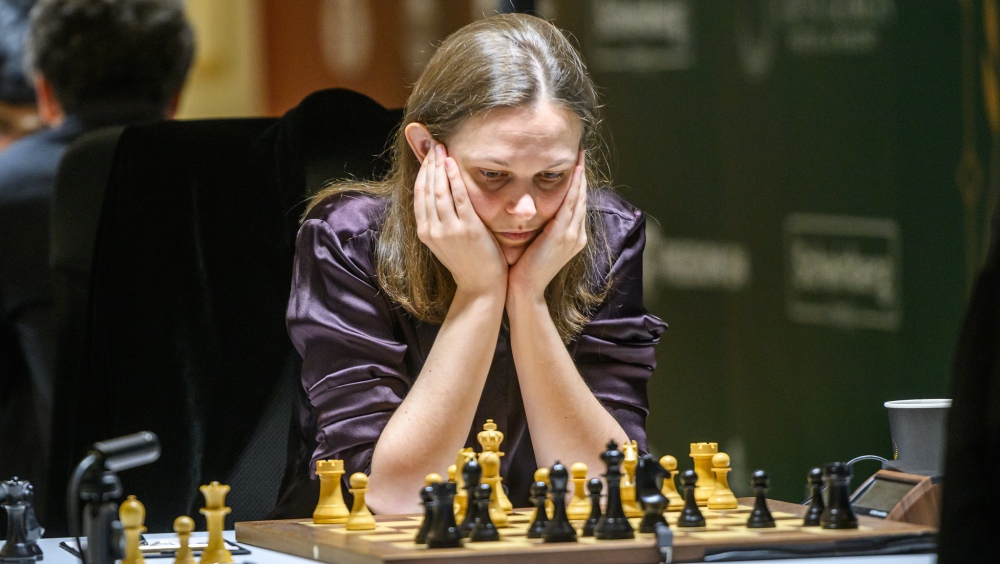
After drawing his game this afternoon against Anish Giri, Javokhir Sindarov finished the first half of the FIDE Candidates Tournament in the lead with an impressive 6/7, holding a clear 1½ point advantage over Fabiano Caruana. Wei Yi scored his first win of the tournament in a fantastic attacking game with Andrey Esipenko. In the Women’s FIDE Candidates, Vaishali defeated Tan Zhongyi and now sits just a half-point behind Anna Muzychuk, who continues to lead the standings with 4½/7. Let’s take a closer look at this afternoon’s action in the Cap St. Georges Hotel & Resort. For the highlights and analysis video with GM Peter Svidler, see the video below: https://www.youtube.com/watch?v=zCas2rsPaMA The ceremonial opening moves were carried out by distinguished guests. Mohammed Al Mudahka, President of the Qatar Chess Federation, made the first move for Javokhir Sindarov in his game against Anish Giri, while Zhu Chen, 9th Women’s World Champion and FIDE Treasurer, performed the opening move for Anna Muzychuk against Bibisara Assaubayeva. In the FIDE Candidates Tournament, much of the attention was focused on Sindarov vs Giri. Could Sindarov continue his impressive run? At the same time, the clash between Fabiano Caruana and R Praggnanandhaa carried major implications for second place. However, the spotlight ultimately fell on Wei Yi. Wei Yi took full advantage of Andrey Esipenko’s questionable opening choices, producing a brilliant attacking game reminiscent of the style that first brought him global fame. At this moment, Black is practically playing with an extra rook due to the terrible placement of White’s rook on a1. The key question: how to break through? Wei Yi found a stunning solution: 22…Rc4! An incredible exchange sacrifice. Esipenko could not accept it, as opening the b-file would have led to immediate disaster. A few moves later, the pressure became unbearable. There was no thought of retreat, Wei Yi continued energetically with: 26…Bb5! After: 27.bxc4 Bxc4 28.Bc2 Bd3! White’s position is beyond repair. Esipenko soon resigned after: 29.Bc3 bxc3 30.Nc1 Rb8+ with a forced mate incoming. A beautiful finishing line: 31.Nb3 Qa3! 32.Bxd3 Rxb3+ 33.axb3 Qxb3+ 34.Kc1 Bf4+ 35.Qd2 Bxd2# In the press conference, Wei Yi revealed his preparation: “In Goa I played him twice in the Petrov, and he showed interesting ideas in the 5.Nc3 variation. Today 4.Qe2 was a surprise: it has ideas with long castling and a kingside attack, so I needed to be careful. I chose safe moves. After 14…Qe8!, I didn’t see any good options for White, I think he underestimated that move.” https://www.youtube.com/watch?v=sMND_AWgK8A Javokhir Sindarov pushed hard to create winning chances against Anish Giri in a well-known Ragozin variation of the Queen’s Gambit. Despite Sindarov’s efforts, Giri’s defensive technique proved impeccable. Both players steered clear of major inaccuracies, and in the endgame, Giri demonstrated his deep understanding by constructing a fortress, even while an exchange down, comfortably holding the position to a draw. https://www.youtube.com/watch?v=J7LOgjIxWR8 Facing R Praggnanandhaa with the black pieces, Fabiano Caruana opted for the ever-reliable Slav Defence, a choice that appeared to catch his opponent off guard. Praggnanandhaa spent significant time navigating the resulting complications, but once again showed remarkable composure and class. Caruana managed to obtain a small initiative, highlighted by a strong knight planted on d3, yet the Indian grandmaster neutralized all threats efficiently and secured a solid draw. In the final game of the FIDE Candidates Tournament round, Matthias Bluebaum unveiled excellent opening preparation against Hikaru Nakamura. By move twenty, Bluebaum had built a significant advantage on the clock, nearly an hour ahead, while Nakamura was forced to calculate precisely just to stay in the game. Despite the pressure, Nakamura showed exceptional resilience and accuracy, reportedly playing at a remarkable 99% precision. His performance served as a reminder that, even if the tournament standings may not favor him, he remains one of the most formidable players in the world. After Round 7 of the FIDE Candidates Tournament (half-way mark) Sindarov is the clear leader, with Caruana trailing by 1.5 points and three pursuers further down. The first game to finish in the FIDE Women’s Candidates Tournament was a relatively short affair. Playing with the black pieces, Bibisara Assaubayeva equalised comfortably in the Rossolimo Attack against Anna Muzychuk. In fact, coming out of the opening, Assaubayeva not only achieved full equality but also held a slight advantage on the clock. A draw was agreed by threefold repetition on move 26. The result suited both players: Muzychuk completed the first half of the tournament as the sole leader, while Assaubayeva halted a difficult run and picked up an important half-point after two consecutive losses. The remaining games stretched much longer, such as the battle between Aleksandra Goryachkina and Zhu Jiner. Their open Ruy Lopez battle lasted an impressive 70 moves and was marked by extraordinary precision from both sides. The accuracy evaluation hovered at an astonishing 99% throughout the game, highlighting the near-flawless quality of play. In the end, neither player was able to break through, and the game concluded in a well-earned draw, an outstanding display of elite-level chess. Contrary to the earlier games, Tan Zhongyi was pushing hard for a win against R Vaishali and achieved an overwhelming advantage, but let it slip away with one imprudent move. She kept pressing when disaster suddenly struck. At this moment, almost any reasonable move would have left Tan with a healthy extra pawn. Engines suggest that Vaishali could still aim for a draw, but practically speaking, being a pawn down always carries risk at this level. There was, however, one critical mistake to avoid: 37…Ra1?? which allowed 38.Rxf6! 38…Kxf6 39.Bd4+ winning a piece and turning the game decisively in White’s favour. https://www.youtube.com/watch?v=s9Y8lGUjTEI The final game of the round became one of the longest in the history of the FIDE Women’s Candidates Tournament. Divya Deshmukh and Kateryna Lagno battled all the way to move 135 before finally agreeing to a draw. Divya held the upper hand for much of the game, pressing persistently for a win. However, Lagno’s defensive resilience proved extraordinary, and she
Malagasy Chess Federation elects new Executive Board for 2026–2030

The Malagasy Chess Federation (FMJE) has announced the election of a new Executive Board to lead the federation for the 2026-2030 mandate. The new board was elected at the General Assembly held on 28 March 2026. Mrs. Johanna Rakotonianina Tiana has been elected as the new President and Delegate of the Madagascar Chess Federation. See the complete directory of new board members, including their roles and contact details, below: Madagascar Chess Federation – New Board Members (PDF) FMJE also shared its new official headquarters address: Lot IBF 16 Ter A – Tour SAHAVOLA 2ème étage – Porte 202 Antsahavola – Antananarivo – Madagascar. The official certificate of conformity from the Ministry of Sports is currently being finalized and will be forwarded to FIDE shortly to complete the federation’s records. Malagasy Chess Federation looks forward to strengthening its ties with the FIDE, the African Chess Confederation, and the entire international chess community. Photo: Fédération Malagasy de Jeu d’Echecs
Candidates clash: Sindarov breaks away, Caruana falls behind
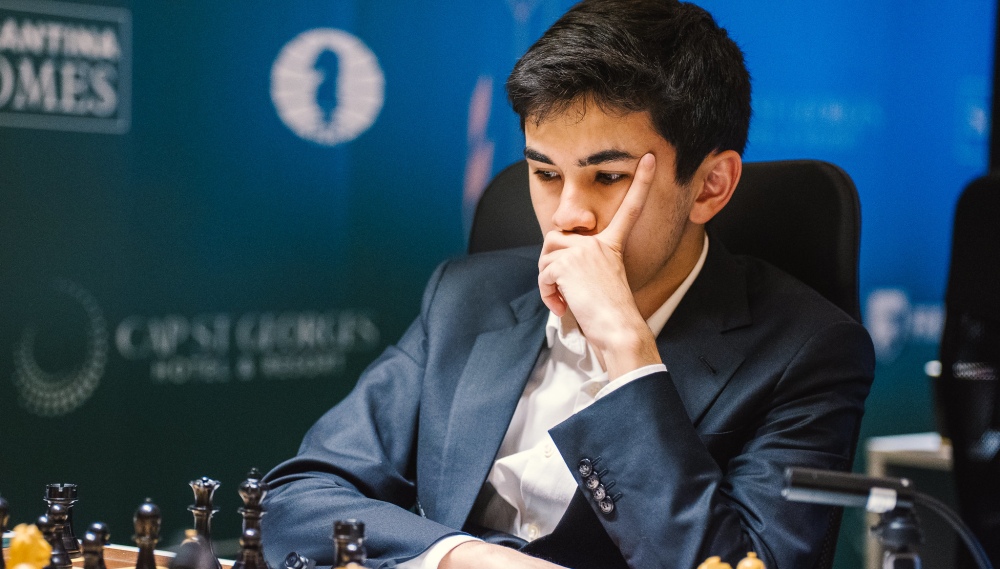
Javokhir Sindarov has now scored an incredible five wins from six games, defeating Wei Yi to further extend his lead in the FIDE Candidates Tournament 2026. Meanwhile, Fabiano Caruana could only manage a draw and now trails by one and a half points. In the FIDE Women’s Candidates Tournament 2026, last-minute replacement Anna Muzychuk continues her remarkable run, beating Zhu Jiner with the black pieces to become the sole leader on 4 out of 6. Let’s take a closer look at this afternoon’s action in the playing venue at Cap St. Georges Hotel and Resort. Two ceremonial opening moves took place today. Demetris Skourides, Chief Scientist of the Republic of Cyprus, made the first move for Wei Yi in his game against Sindarov. Meanwhile, the game between Caruana and Esipenko featured young talents at the board: 12-year-old WCM Aida Paunescu, the current Women’s Champion of Cyprus and the youngest national chess champion, played the opening move for Caruana, while 18-year-old FM Rafail Antoniou, the reigning Champion of Cyprus, opened for Esipenko. What began as a Vienna Game in the clash between Wei Yi and Javokhir Sindarov quickly transposed into a classical Bishop’s Opening, an excellent practical decision by the Chinese grandmaster, steering the game away from heavily memorized lines. In the post-game press conference, Wei Yi explained his opening choice: “My team found this interesting idea and I liked it and wanted to try it (5.a3). I knew that the position was not easy to play for both sides, but my opponent played some very strong moves.” Sindarov responded ambitiously, quickly securing the bishop pair, though at the cost of certain weaknesses on his kingside. Reflecting on the early phase, he said: “This move 5.a3 surprised me and I was pretty much out of the book. But if I get a chance to play a dynamic position from either side, I will always be very happy.” https://youtu.be/01WD3HInkFg?si=p3x–S-WIpoghCtb The tournament leader gradually equalised before ultimately taking control, capitalising on his opponent’s time trouble. Sindarov was candid about his approach: “I played very solidly. I think I was a bit worse, but I started to like my position when my bishop landed on d4. I also had a big clock advantage, and I could press. I took advantage of his mistakes in time trouble.” Asked about his performance, Wei Yi admitted: “My opponent is in good shape, but today I had White and tried to fight for the win. However, I made some mistakes in time trouble.” Considering the tournament situation, Fabiano Caruana was always likely to apply early pressure against Andrey Esipenko, a player known for his classical and principled style. Accordingly, he opted for the Reti Opening, aiming to steer the game into flexible and less predictable territory. “As Garry Kasparov once did in a must-win game, this setup has entered chess lore,” explained commentator Jan Gustafsson during the live broadcast. “If you want to win, play Nf3–g3–b3 and go from there.” However, this time the strategy yielded little. Esipenko handled the symmetrical position with remarkable precision, reportedly playing at a 98% accuracy rate and leaving Caruana with no real winning chances. The draw means the American now trails the tournament leader by 1.5 points, though his overall score of +2 remains solid. In another key encounter, Hikaru Nakamura faced Praggnanandhaa R, against whom he holds a favourable head-to-head record, with two wins and four draws. For the first time in the tournament, the Nimzo-Indian Defence appeared on the board. Nakamura seemed slightly surprised by the choice, spending considerable time navigating the theoretical lines, albeit within one of the many available side-lines. In contrast, Praggnanandhaa looked entirely comfortable, equalising smoothly. Both players appeared satisfied with the outcome and soon steered the game toward a threefold repetition, agreeing to a draw on move 23. Reflecting afterwards, Nakamura noted: “The final position is hard to judge—probably equal. But I was surprised my opponent didn’t decide to play on, given that his tournament situation is better than mine.” https://youtu.be/S-tVbYpuRMQ?si=lo5VfrtEcedQzz8p An intriguing matchup saw Anish Giri face Matthias Bluebaum. Their only previous encounter, in Tata Steel Chess Tournament earlier this year, ended in dramatic fashion, as Giri overpressed with the black pieces and was convincingly defeated in a miniature. Today’s game, however, followed a completely different course. A classical Carlsbad structure arose from the Queen’s Gambit Declined, with queens exchanged early. While theory holds that Black can hold such positions, it often comes at the cost of defending long-term structural weaknesses: a pair of doubled isolated pawns. Bluebaum rose to the challenge admirably, defending with precision for a full 84 moves to secure the draw. Meanwhile, in the FIDE Women’s Candidates Tournament, Anna Muzychuk emerged as the sole leader after an important victory with the black pieces against co-leader Zhu Jiner. Combined with a loss by Bibisara Assaubayeva, Muzychuk now leads the standings by a full point. Zhu opted for a quiet Italian Game, choosing the relatively rare 5.Be3. Muzychuk equalised comfortably before gradually seizing the initiative. In a bold turn, she sacrificed material to launch a powerful attack, which ultimately proved decisive. Reflecting on the game, Muzychuk said: “It was a very stressful game. I did expect the Italian but not this line, so I was trying to figure it out over the board. Zhu Jiner is a very strong player – the highest rated – and she had won the last two, so it was a dangerous game for me.” https://www.youtube.com/watch?v=vtujvBDxM1Y Aleksandra Goryachkina essayed the Two Knights Defence against Tan Zhongyi, who arrived exceptionally well-prepared, confidently blitzing out her opening moves. Out of the opening, Tan secured an extra pawn heading into the middlegame, but the tactical complications ultimately favoured Goryachkina. With a well-calculated combination, she managed to win her opponent’s queen. However, Tan demonstrated remarkable defensive resilience, constructing a fortress that Goryachkina could not break down, thus denying her a first victory in the event. In another dramatic encounter, Vaishali R scored her first win of the tournament against Kateryna
FIDE Candidates: Sindarov shines, Caruana keeps pace; Drama builds in Women’s Candidates
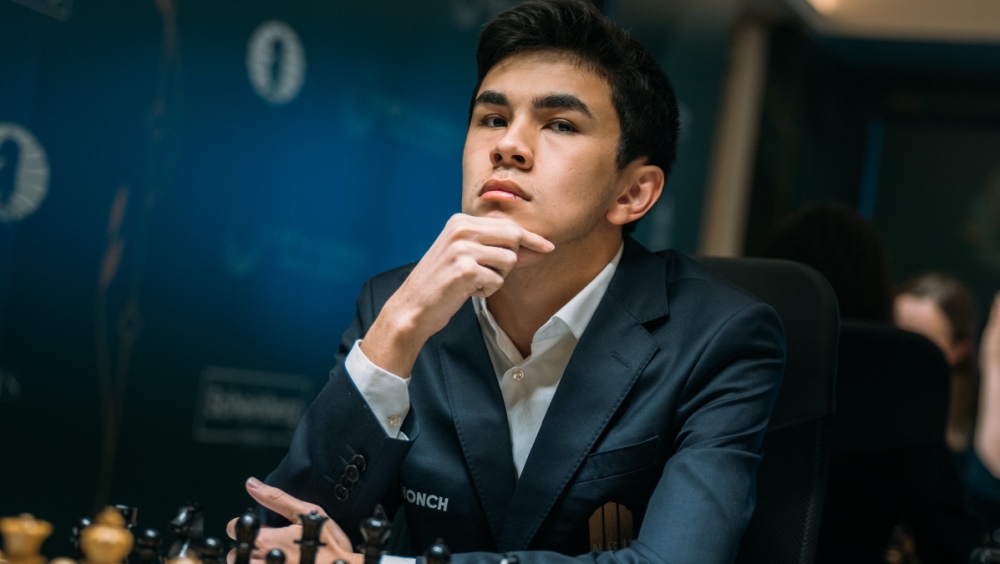
Javokhir Sindarov defeated Hikaru Nakamura this afternoon in the fifth round of the FIDE Candidates, reaching a score of +4 after five rounds. Fabiano Caruana also secured a win against Matthias Bluebaum, keeping the pressure on. In the FIDE Women’s Candidates, Kateryna Lagno won over the leader Bibisara Assaubayeva and is back in contention, while Zhu Jiner scored a brilliant victory against Vaishali and now shares the lead. Let’s take a closer look at how the action unfolded this afternoon. The ceremonial first move was played on the board between Nakamura and Sindarov by José Carrillo Pujol, FIDE Continental President for the Americas. After yesterday’s rest day, most expected the players to arrive with fresh ideas, theoretical novelties, and plenty of energy – and the round did not disappoint. In his pre-game conversation with GM Peter Svidler, commentator GM Jan Gustafsson joked, “I just hope they won’t ‘hallouminate’ on the chessboard today,” a clear reference to yesterday’s Halloumi cheese workshop. Without a doubt, the most important game of the day was Hikaru Nakamura, playing White, against tournament leader Javokhir Sindarov. Nakamura had expressed the view that this was his last real chance to fight for first place. “It might be an overstatement, but it’s less absurd than you might think,” opined Svidler on the broadcast. Sindarov opted for the Triangle System, but Nakamura came well prepared, entering the main line that ultimately involves sacrificing two pawns. “The compensation is self-evident, even two pawns down, White is very much in the game here,” explained Svidler. “Yesterday I had a lot of time to prepare due to the rest day,” said Sindarov. “This gambit is very tricky, and you can lose immediately if you forget one of your lines, but I checked it thoroughly yesterday.” Both players blitzed out their opening moves, following a high-level game between Nodirbek Abdusattorov (2716) and Arjun Erigaisi (2712). Notably, Abdusattorov is Sindarov’s teammate on the Uzbekistan national team. It is difficult to pinpoint exactly when Hikaru Nakamura left known theory, but before long he was forced to give up another pawn to maintain the initiative. In this position, Nakamura, already very low on time, chose 20.Kh1, and after 20…Nd4! the end was near. Instead, his best chance would have been 20.Bxc6 bxc6, followed by 21.Qg3, with ideas such as Be5, h5–h6, and Kh2/Rg1, keeping the fight alive. However, Javokhir Sindarov remained in full control of the defence. With precise calculation, he neutralized all of Nakamura’s attacking chances and simplified into a completely winning opposite-coloured bishop endgame. Reflecting on his score, Sindarov attributed it to both preparation and form: “I am just lucky to get into lines that I have prepared beforehand. Also, I am really playing well.” https://www.youtube.com/watch?v=qr8LV1aS5b8 Today’s game against Matthias Bluebaum was a key encounter for Fabiano Caruana, who needed to raise his level to stay within striking distance of the leader. He prepared a sideline in the Petroff Defence that proved highly effective. “The fact that Caruana goes for 4.Nc4 is a pretty clear illustration of how devoid of ideas people are in the main line these days. I think Caruana is simply trying to reach a position that Bluebaum hasn’t examined in detail and then just play chess,” explained Peter Svidler. In the game itself, Caruana obtained a promising position out of the opening, and Bluebaum eventually collapsed under sustained pressure. “The win is very important, it felt like I had the initiative throughout,” said Caruana in his post-game interview. Bluebaum, on the other hand, was clearly dissatisfied with his performance: “I didn’t really know the line. I feel like every move I played in the game was terrible today.” Asked whether he had saved this opening idea specifically for this matchup, Caruana offered insight into elite-level Candidates preparation: “It wasn’t something specific. I was considering several options for both games and decided to switch back to 1.e4 and play more directly. Usually, I don’t try to save ideas: if I think I have something playable, I go for it, because you never know if you’ll get another chance. Also, I don’t know if the idea will work, so I try not to overthink these things.” https://www.youtube.com/watch?v=GN2wyrqJO24 The final two games in the FIDE Candidates ended in draws, with neither side managing to obtain a tangible advantage. The encounter between R Praggnanandhaa and Andrey Esipenko featured a solid Zukertort System, nothing ground-breaking from a theoretical standpoint, but safe and reliable. A draw by repetition was agreed with most of the pieces still on the board. Meanwhile, Wei Yi introduced a highly unusual novelty (9…c5) in a well-known position of the Catalan Opening against Anish Giri. The Chinese grandmaster sacrificed a pawn based on deep home preparation. “A fresh and completely new approach – somewhat of a gamble, though,” remarked Peter Svidler. A few moves later, Wei Yi had already regained the pawn and reached a completely satisfactory position: his preparation proved accurate, and a draw was soon agreed. In the FIDE Women’s Candidates, two decisive outcomes in this round have kept the standings tight, with three players now tied for first place. Kateryna Lagno scored a crucial victory against Bibisara Assaubayeva in a sideline of the Classical Sicilian Dragon. On move 14, Assaubayeva made a questionable positional decision (14…e5?!) and soon embarked on a risky plan, sacrificing both a pawn and the exchange in search of tactical compensation. Although she generated some chances, Lagno ultimately converted her material advantage with confidence. https://www.youtube.com/watch?v=N8HDPNYRlJ8 Also joining Anna Muzychuk at the top of the standings is Zhu Jiner, who produced a positional masterpiece against R Vaishali. Handling an Italian Opening with great finesse, Zhu outplayed her opponent on both wings and secured a superior middlegame pawn structure. Vaishali did her best to contain her weaknesses, but as the game approached the second time control, mounting time pressure and a deteriorating position proved decisive. “I was under pressure for a long time and it became very unpleasant. Even so, I was trying to find a
Travel subsidies for participants of Olympiad and delegates of FIDE Congress 2026

Travel Subsidies – Eligibility FIDE will subsidize travel to Samarkand, Uzbekistan for eligible federations as follows. Olympiad – Main Event Development Levels 3, 4 and 5 federations are eligible for travel subsidies up to the following limits:– for federations in Africa – 1,200 euros per person (14,400 euros for full team*)– for federations in Americas – 1,800 euros per person (21,600 euros for full team*)– for federations in Asia – 700 euros per person (8,400 euros for full team*)– for federations in Europe – 900 euros per person (10,800 euros for full team*)– for federations in Oceania – 1,800 euros per person (21,600 euros for full team*)FIDE Treasurer may at her sole discretion decide to increase the amount of travel subsidy for certain federations taking into account their particular circumstances.* Note: Full teams means 12 persons – Open and Women teams each comprised 5 players and a captain. In exceptional circumstances, Development Level 1 and 2 federations may apply for travel subsidies. Valid reasons for such applications may be remote location (and therefore very expensive tickets), poor economic situation in a country (as evidenced by per capita GDP significantly lower than the world’s average and other relevant economic indicators), etc. FIDE Treasurer will review such applications on a case-by-case basis taking into consideration particular circumstances of the federations in question, and decide on the amount of travel subsidy (if any) at her sole discretion. Chess Olympiad for People with Disabilities All invited teams are eligible for travel subsidies. Each team comprises up to 7 invited participants (4 players, 1 reserve player / captain and up to 2 accompanying persons). The limits per person by continents are the same as stipulated in paragraph 1 of the “Olympiad – Main Competition” section. Congress Delegates of FIDE Congress are eligible for travel subsidy on the same principles as described in paragraphs 1 and 2 of the “Olympiad – Main Competition” section. Travel Subsidies – Procedural Issues Expenses covered by travel subsidy: economy class air tickets and other essential expenses related to international travel (visas, etc.). Discretionary expenses (including meals) will not be reimbursed. FIDE may buy tickets for eligible national chess federations in lieu of paying travel subsidy. Prior to making any travel arrangements, national chess federations shall consult with FIDE. If FIDE advises that national chess federations make travel arrangements on their own, requests for the travel subsidy payments together with relevant supporting documents (tickets / receipts / invoices / etc.) shall be sent to FIDE Office no later than 31 October 2026. Applications for travel subsidy received by FIDE Office after 31 October 2026 will not be accepted. Travel subsidy will be paid within 6 weeks after the Olympiad completion taking into account the actual number of persons who attended the Olympiad. Expenses incurred with respect to persons who did not attend the Olympiad will not be reimbursed. For the avoidance of doubt, if actual travel expenses are lower than the limits stated above, only actual expenses will be reimbursed. In exceptional cases, federations may apply to receive travel subsidy prior to the event. FIDE Treasurer will review such applications and decide on the amount of prepayment (if any) on a case-by-case basis. All communications on this matter (applications for travel subsidies, expense reports, etc.) shall be sent to the FIDE Office email.
FIDE Chess in Education Commission (EDU) courses April 2026

Dear Chess Friends, FIDE’s Chess in Education Commission continues to accelerate its provision of training for Lecturers and Teachers of Educational Chess, offering a series of high-level online and in-person opportunities in spring 2026. The Preparation of Lecturers (PoL) course leads to the FIDE title of Lead School Instructor (LSI). It is intended primarily for those who will train teachers, helping to expand the global community of educators capable of teaching chess in an educational way. The Preparation of Teachers (PoT) course leads to the FIDE title of School Instructor (SI). This 3-day (15-hour) training equips participants with pedagogical methods, digital tools, and practical strategies for teaching chess as an educational tool. The schedule of the FIDE EDU upcoming courses is below: To join, please register via the following links: 3rd Arabic PoT online course – April 3-5Register: https://cloud.fide.com/s/6rMJGDNzFAMxkPP 7th Russian PoT course in Kazakhstan, Astana – April 7-9Register: +7 777 1688 188 (WhatsApp) 12th POL online course – April 11-12Register: https://cloud.fide.com/s/i5HX9QeY5JwHD39 36th PoT online course – April 17-19Register: https://cloud.fide.com/s/AeoT8Bp3TNDMSHT 2nd Vietnamese PoT course in Vietnam, Ho Chi Minh – April 25-26Register: tungchessvn@gmail.com Our dedicated Chess in Education website has further details: edu.fide.com/
Rest day activities at the FIDE Candidates Tournament 2026
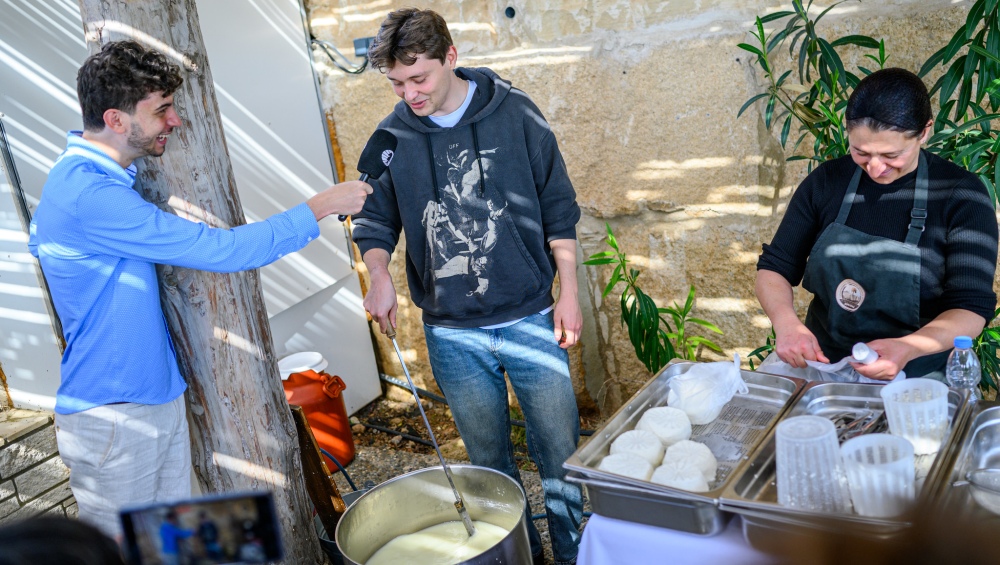
During the first rest day the intensity of the competition gave way to a more relaxed atmosphere. Top contenders took the opportunity to step away from the board and recharge by means of a variety of activities. Among the most distinctive experiences was that of GM Andrey Esipenko, who, joined by his family, participated in a hands-on workshop to learn how to prepare traditional Cypriot halloumi cheese. Alongside him was GM Anna Muzychuk, who also took part in the activity. Guided by local artisans, they explored the intricate process of curdling, shaping, and cooking the cheese, gaining insight into a culinary tradition deeply rooted in Cypriot culture. Meanwhile, other players opted for more familiar forms of relaxation. Some headed to the courts for friendly games of paddle, while others maintained their routines with gym sessions or enjoyed peaceful strolls along the Mediterranean coastline. https://youtu.be/W2bLIm9k574?is=–3pGPPllAX3wA5X Round 5 will be played tomorrow April 3, at 3.30 pm local time. Round 5 pairings – FIDE Candidates Tournament: Praggnanandhaa R – Andrey EsipenkoFabiano Caruana – Matthias BluebaumHikaru Nakamura – Javokhir SindarovAnish Giri – Wei Yi Round 5 pairings – FIDE Women’s Candidates Tournament: Aleksandra Goryachkina – Anna MuzychukZhu Jiner – Vaishali RameshbabuTan Zhongyi – Divya DeshmukhKateryna Lagno – Bibisara Assaubayeva Official website: https://candidates2026.fide.com/ Event photo gallery: https://www.flickr.com/photos/fide/ Live daily broadcast with GM commentary: https://www.youtube.com/@FIDE_chess Written by IM Michael A. Rahal (Cyprus) Photos: Michal Walusza, Yoav Nis
FIDE publishes Technical Commission Manual

FIDE is pleased to announce the publication of the FIDE Technical Commission Manual (FTM), now available on the official website of the FIDE Technical Commission. The publication provides a dedicated reference point for the technical framework governing FIDE competitions and related activities. The importance of the Manual is reflected in the current General Regulations under C.02. Chess Equipment Technical Specifications, Rules and Regulations, effective March 1, 2026. Those regulations state that, complementary to the FIDE Handbook, the FIDE Technical Commission has compiled the TEC Manual containing comprehensive information, including definitions, processes and clarifications essential for understanding and implementing FIDE technical regulations. In practical terms, the Manual supports stakeholders by bringing together guidance connected to the implementation of current rules on chess equipment, certified and endorsed equipment, Tournament Handler Programs, Swiss pairing systems, and tie-break procedures. The current Handbook sections expressly cover these areas, including endorsed Tournament Handler Programs and the latest play-off and tie-break regulations. FIDE invites federations, arbiters, organisers, manufacturers, service providers and software developers to consult the FIDE Technical Commission Manual alongside the current FIDE Handbook. By consolidating key technical guidance in one place, the Manual strengthens clarity, consistency and transparency in the application of FIDE regulations worldwide. For any inquiries or further information, please contact Hendrik du Toit at secretary.tec@fide.com.
FIDE Candidates: Javokhir Sindarov records third win as Anna Muzychuk moves into joint lead
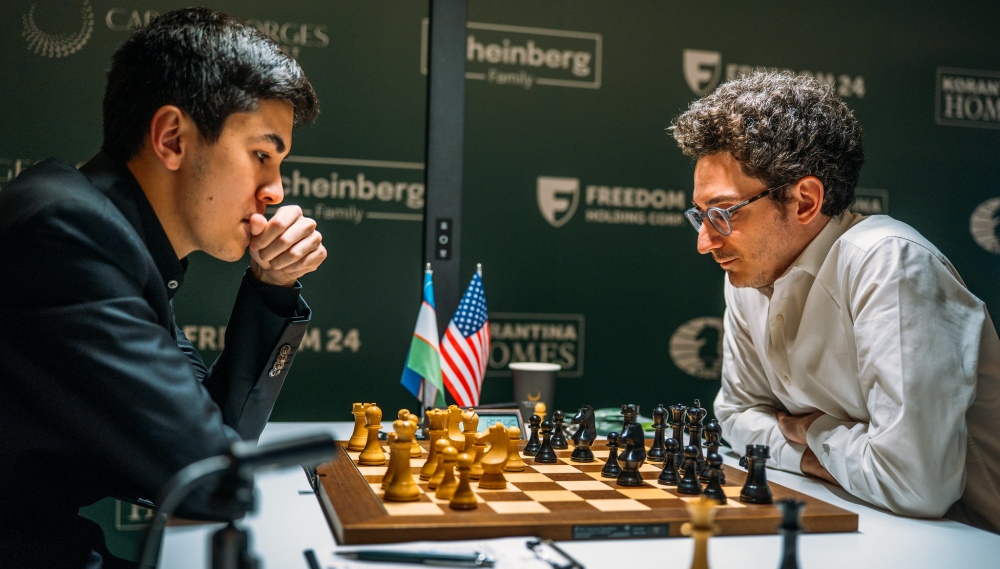
Javokhir Sindarov scored his third win of the tournament this afternoon, taking a major step toward winning the FIDE Candidates after defeating Fabiano Caruana with impressive opening preparation. In the FIDE Women’s Candidates, Zhu Jiner and Anna Muzychuk regained momentum with important victories. Muzychuk now shares the tournament lead with Bibisara Assaubayeva. Let’s take a closer look on how the action unfolded this afternoon at the Cap St Georges Hotel & Resort Roman Dubov, Chairman of Total Sports Investments, opened the game this afternoon for Sindarov in his game against Caruana while Tshepiso Lopang, Continental FIDE President for Africa played the ceremonial first move for Assaubayeva in her game against Tan Zhongyi. The game between the two tournament leaders was, as expected, the highlight of the round. Playing with the black pieces, Fabiano Caruana opted for the solid Queen’s Gambit Accepted, but was caught off guard by Javokhir Sindarov’s move order and emerged from the opening with a slightly inferior position. Playing at a brisk pace – Sindarov notably spending much of his time pacing along the playing hall – the Uzbek prodigy confidently followed his home preparation, quickly building a significant advantage on the clock. The critical moment came on move 17, when Caruana played 17…f5. Reflecting in the post-game press conference, Sindarov explained: “I remembered that in my opening files the pawn on d4 had to be taken, but I wasn’t sure about the exact lines. After 18.Bc4, Black’s position is already very unpleasant.” By around move 20, Caruana was already under serious pressure. “I kind of got caught in the opening with 16…Rg8, and I went wrong,” he admitted. Commentator Jan Gustafsson added: “He is in serious time trouble and also has a bad position.” Sindarov continued energetically, converting his advantage with a direct attacking approach. He expressed satisfaction with his play afterward: “Maybe I made some mistakes in the middlegame, I’m not sure, but I think I played a very good game. I was lucky to get this opening,” he said, before leaving to sign autographs for the many fans in attendance. In his game against Anish Giri, Andrey Esipenko adopted an uncompromising approach, choosing a secondary line against the Najdorf Sicilian, perhaps in an attempt to catch his opponent off guard. However, Giri proved well prepared and responded with an ambitious king march across the board following Esipenko’s striking 10.Nf5. In the commentary booth, Peter Svidler praised the concept: “Esipenko is using the geometry of the board to continue the attack.” Giri later explained the idea behind his opening choice: “Black has a million ways to handle this line, but I was hoping no opponent would think I am bold enough to go for this variation. My king is in greater danger, but I have some long-term assets.” Although Esipenko appeared to be playing in the right spirit, he went astray with 18.Qxd3. Instead, 18.Rxd3 would have preserved dynamic chances and likely led to a more balanced position with attacking possibilities. Reflecting on this moment, Esipenko was candid: “I saw 18…Ba4, but I thought I would find something, as 18.Qd3 looks more logical than 18.Rd3. I didn’t think it was a critical moment, and I was surprised that I couldn’t find anything afterward.” Giri did not take long to consolidate his advantage and ultimately converted with his extra material. He expressed satisfaction after the game: “I am happy to win today and to reach 50% after four rounds–lately I haven’t been starting very well.” https://www.youtube.com/watch?v=hTivLbanAXA The contrast in Hikaru Nakamura’s time management is striking: a player renowned for completing high-accuracy games in a matter of minutes spent nearly forty-five minutes on the opening phase. The game against Wei Yi ultimately featured the offbeat Dragondorf Sicilian, a variation that neither player likely anticipated in their pre-game preparation. Nakamura appeared satisfied with the outcome of the opening, obtaining a sound position with the black pieces while maintaining a time advantage heading into the middlegame. The game remained relatively balanced until the critical moment on move 40, when Wei Yi committed what could have been a decisive error. However, Nakamura was unable to find the most precise continuation in a double-rook endgame despite being a pawn up, allowing the game to eventually simplify into a draw. In his post-game interview with Charlize van Zyl, Nakamura reflected on the missed opportunity: “It was a very interesting game. I took some liberties in the opening, and around the time control it should have been a draw, but it seems that there was a winning opportunity which I missed.” The fourth game of the round was a solid and uneventful affair. Playing with the black pieces, R Praggnanandhaa opted for the reliable Semi-Slav Defence, which soon transposed into an isolated queen’s pawn structure. Matthias Bluebaum responded by simplifying along the c-file, initiating a series of exchanges. Although he carried the bishop pair into the endgame, Praggnanandhaa’s well-placed knight on e4 ensured that the position remained comfortably balanced. Following further simplifications, the players agreed to a draw by threefold repetition on move 37. In the Women’s Candidates, two games ended decisively. Anna Muzychuk defeated Kateryna Lagno in a finely played positional game that ultimately culminated in tactical complications. “I chose this line to avoid some concrete variations,” Muzychuk explained after the game. Lagno defended resourcefully under pressure for much of the encounter but faltered on move 28. At this point, Muzychuk had sacrificed a piece for two pawns and a strong initiative. Lagno could have opted to exchange queens, entering a slightly worse but defensible endgame, even if it required returning the extra material. Instead, she chose to continue with 28…exd4, after which 29.Qxd4 left White with a decisive attack, and the game concluded just three moves later. The other decisive result saw Zhu Jiner prevail with the black pieces over Divya Deshmukh – an important victory that keeps her within reach of the tournament leaders. It is difficult to pinpoint a single decisive mistake, but Divya’s position gradually deteriorated from
Qualifiers confirmed for FIDE Women’s Grand Prix 2026-2027
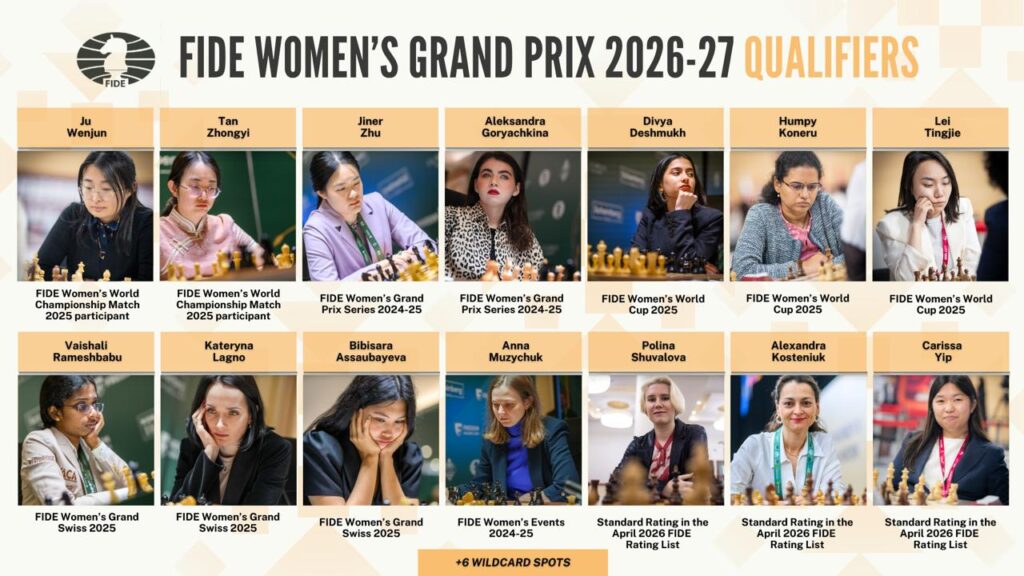
The new FIDE Women’s Grand Prix season will see 20 top women players, each playing in three out of six tournaments, each featuring a 10-player round robin, fighting for the top two places leading to the 2028 Women’s Candidates Tournament. With final standings determined on cumulative series of points and not just raw scores, the qualification model mixes merit and consistency. The 20 players are selected via several routes, with many names already known: – FIDE Women’s World Championship Match 2025 participants: GMs Ju Wenjun and Tan Zhongyi – Top two from the FIDE Women’s Grand Prix Series 2024-25: GMs Zhu Jiner and Aleksandra Goryachkina – Top three from the FIDE Women’s World Cup 2025: GMs Divya Deshmukh, Humpy Koneru, Lei Tingjie. – Top three from the FIDE Women’s Grand Swiss 2025: GMs Vaishali R, Kateryna Lagno, and Bibissara Assaubayeva. – One spot for the FIDE Women’s Events 2024-25 (the highest ranked player excluding those who have qualified for WGP Series via other paths): GM Anna Muzychuk – Three spots via Standard Rating in the April 2026 FIDE Rating List: IM Polina Shuvalova, GM Alexandra Kosteniuk, and IM Carissa Yip – Six nominations by organisers of each of the events in the series (to be determined) Polina Shuvalova, Alexandra Kosteniuk, and Carissa Yip are the newest qualifiers, based on the FIDE April rating list. The three rating qualifiers reached the spots not just by having the highest rating available, but by playing in at least three events, including at least two individual, from a specified series of competitions between May 2025 and April 2026. Changes compared to the 2024-2025 edition The most significant change in the new circuit compared to the 2024-2025 edition is in qualification pathways: event-based performance is given more prominence than pure rating. While the 2024-2025 cycle saw four rating spots, the new edition has three and includes a stricter and more structured event-performance pathway than before. Consistency with the prize fund The tournament prize table and WGP points are unchanged. Each tournament features a minimum prize fund of 80,000 EUR, with a series-end pot of 120,000 EUR, funded by 20,000 EUR from each of the six organisers. The winner of each tournament gets 130 WGP points as well as 18,000 EUR, followed by 13,000 EUR for second and down to 3,500 EUR for 10th place. FIDE President Dvorkovich: A flagship project promoting women’s chess “The Women’s Grand Prix is very popular with women players as it gives them more opportunities to play in serious competitive events and promote themselves. The Grand Prix series has been one of the flagship projects for FIDE in promoting top-level women’s chess,” FIDE President Arkady Dvorkovich said. “With six tournaments taking place around the world, this helps spread the word about women’s chess and its importance, and we’re very proud of the work we’ve done on this and plan to do more in the future,” Dvorkovich added. The FIDE Women’s Grand Prix began in 2009 as one of the most significant events in the world championship qualification cycle. Initially launched as a six-tournament circuit, the number of tournaments was later reduced to five and then four before returning to six events in 2024–2025. China’s Hou Yifan dominated the first three seasons, before being succeeded by Ju Wenjun (the current women’s world champion), then Aleksandra Goryachkina and Kateryna Lagno. The 2024–2025 edition was again won by a Chinese player, with Zhu Jiner taking the crown. The dates and venues for the 2026-2027 tournaments will be announced in due course. Regulations for FIDE Women’s Grand Prix 2026-2027 (PDF)