

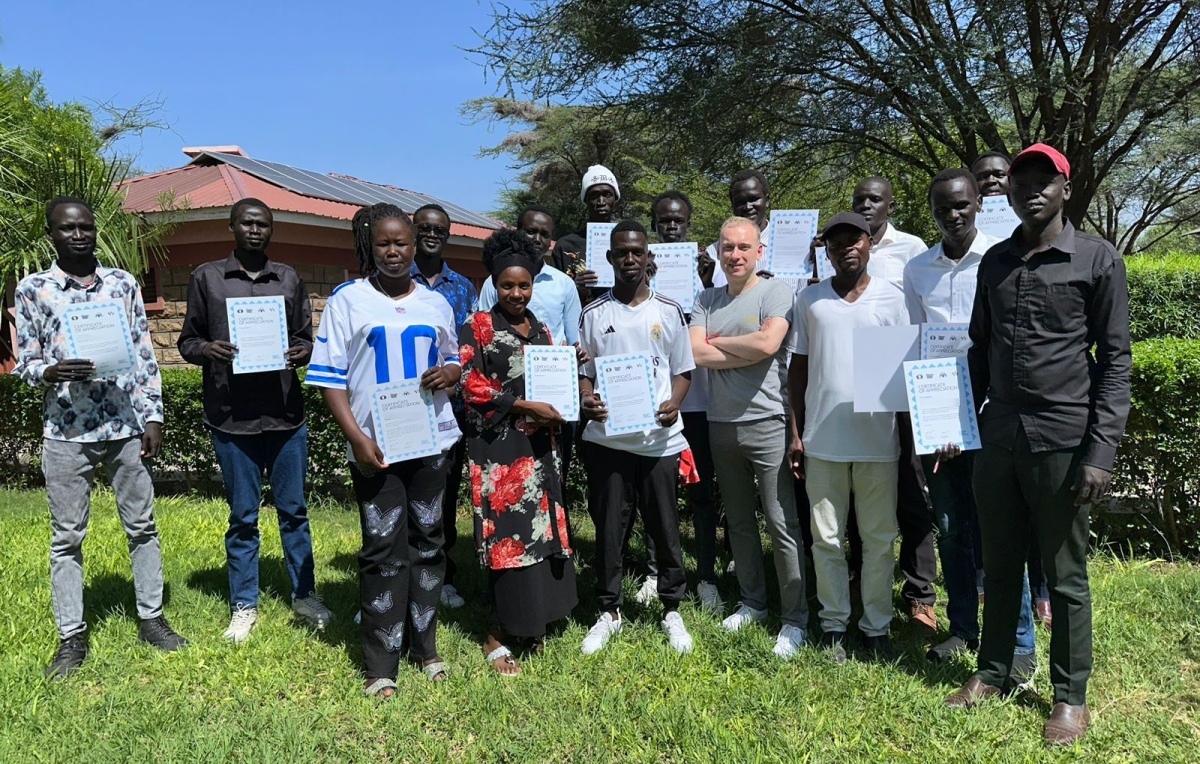
In 2025, the Kakuma Chess Club, supported by FIDE and project partners, successfully delivered structured chess training, girls’ empowerment sessions, and competitive tournaments across the Kakuma and Kalobeyei refugee camps. The program reached over 2,300 children and youth this year, providing life skills, safe recreation, exposure to national events, and pathways toward long-term chess excellence.
The Kakuma and Kalobeyei refugee camps host diverse populations facing significant psychosocial and educational challenges. The Kakuma Chess Club uses chess as a low-cost and culturally inclusive tool to strengthen cognitive abilities, promote peaceful coexistence, and offer meaningful alternatives for youth engagement.
In collaboration with FIDE, Chess Kenya, UNHCR, and LWF, the program continues to grow into one of the most respected youth development initiatives in the camps.
“As the leader of the Chess for Protection project, who has been involved since its very beginning four years ago, I am truly happy with the progress we have achieved. We have built a strong and well-structured foundation, and the number of people interested in learning chess continues to grow. However, it is very important to remember that in this community we speak about chess in a social context — as a form of support, a tool that helps people express themselves, and a way to overcome painful life experiences. I am very glad that chess is not only a sport, but also a powerful means of helping people around the world who find themselves in difficult circumstances. We have achieved all of this together with our partners — UNHCR, Chess Kenya, Lutheran, DGT, and Gift of Chess,” said Anastasia Sorokina, leader of the Chess for Protection project.
Project milestones
Girls’ Chess Club: January–December 2025, with weekly Saturday sessions held at four schools: Bear-El-Naam Girls Primary School, Angelina Jolie Girls Primary School, Lifeworks Tumaini Girls Secondary School, and The Big Heart Foundation Girls Secondary School. The Big Heart Foundation Girls Secondary School joined the program in June, and with FIDE’s support, received all necessary equipment to hold weekly lessons. The program created a supportive, girl-centered environment to encourage confidence, skill development, and long-term participation.
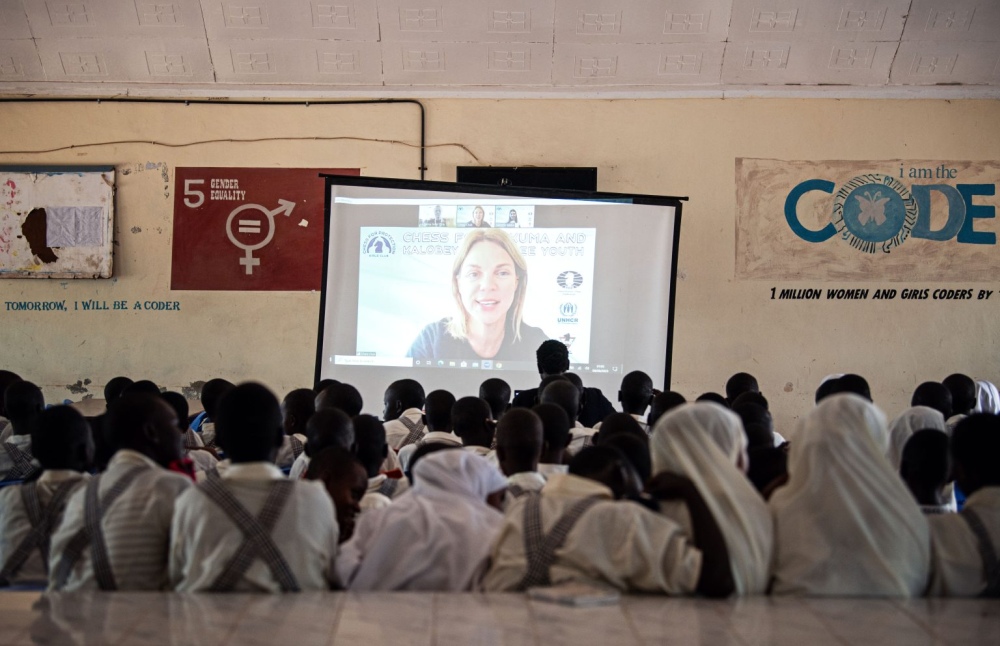
Anastasiya Karlovych and Salome Melia, trainers of the Girls’ Club:
“We’re proud of everything our girls accomplished this year! Their progress, determination, and unity made this season truly special. We grew from three schools to four, and it’s wonderful to see our community continue to grow and inspire even more young girls!”
Main program activities:
February–October 2025. Led by trained Local Chess Facilitators, activities were conducted in 37 learning institutions and more than 20 community clubs across Kakuma and Kalobeyei.
2025 Tournament participation
- Kenya National Youths & Cadets Championship– Mangu High School
- A major national event exposing youth to high-level competition.
- World Refugee Day Chess Tournament– Kakuma
- Second official edition.
- Featured Open and Female categories with cash prizes.
- Kitale National Youths & Cadets Championship– Kitale Polytechnic
- Enhanced exposure to competitions outside the camp setting.
- Victoria East Africa U21 Championship– Kisumu (Sarova Imperial Hotel)
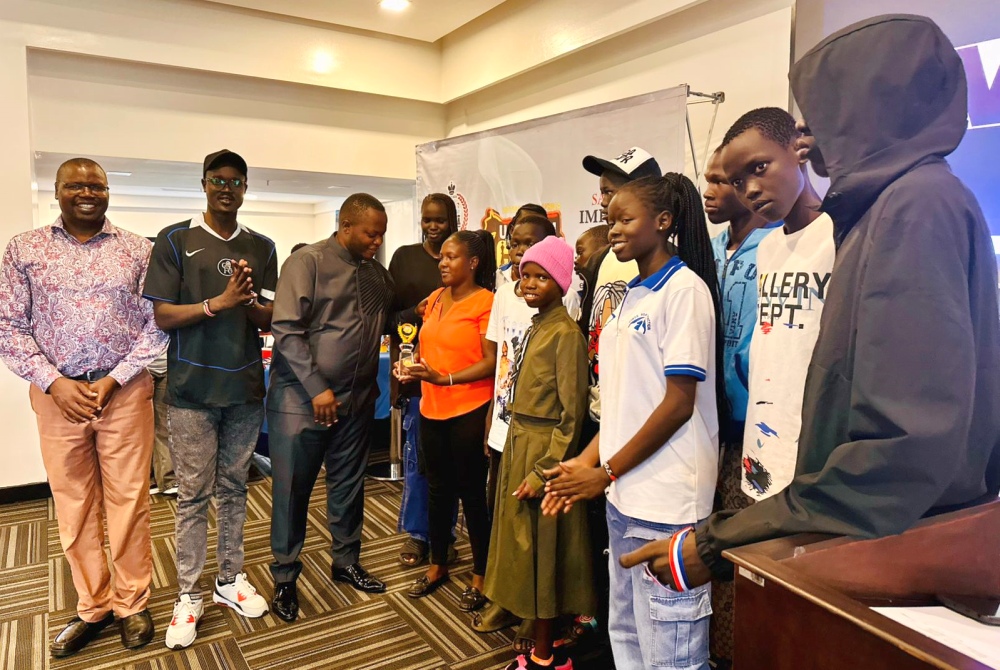
Results and achievements
- Development of local chess experts who now serve as facilitators.
- Increased participation in national and regional tournaments.
- Improved life skills: strategic thinking, resilience, patience, and emotional control.
- Strengthened networks and friendships through external travel.
- Girls’ participation increased significantly through dedicated training spaces.
- Youths received recognition and cash awards during World Refugee Day activities.
Material support
- FIDE:Since the project’s inception, FIDE has provided over 600 chess materials to support its operations.
- Gift of Chess:100 boards for competitions, plus over 20 boards for community clubs.
- DGT:100 digital chess clocks.
Sergejs Klimakovs’ visits to Kakuma
FM Sergejs Klimakovs has provided in-person coaching in Kakuma. Following his first session in March, he conducted a second offline training camp for the teams from November 21 to December 3, 2025, as part of the preparation process for the Chess Olympiad.
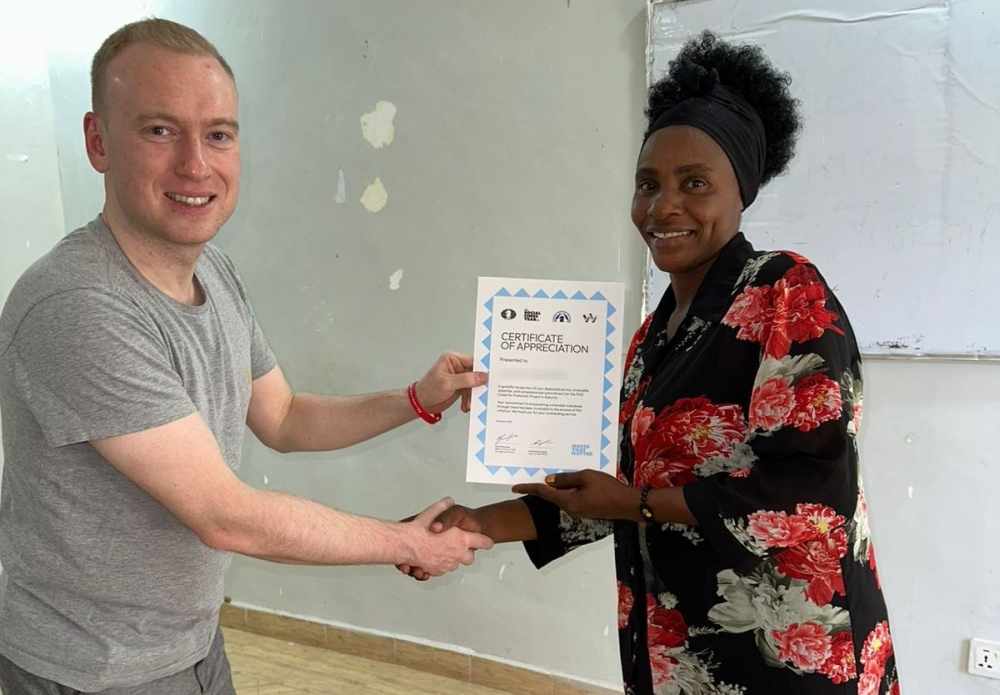
The training camp in Kakuma began with a facilitators’ awards ceremony, where certificates of appreciation were presented for their significant contribution to the development of chess culture in Kakuma, Kalobeyei, and the surrounding areas. Following the ceremony, Sergejs Klimakovs also held a seminar for facilitators on effective exercises and practices, offering tips for developing chess players of all ages, from beginner to master.
On the second day, the camp began for the most talented young chess players from Kakuma and the surrounding area. In the morning, girls worked on the basic principles of thinking in various types of positions. In the afternoon, boys learned to understand the main types of basic rook endgames and explored the nuanced topic of “balancing activity, piece coordination, and material.”
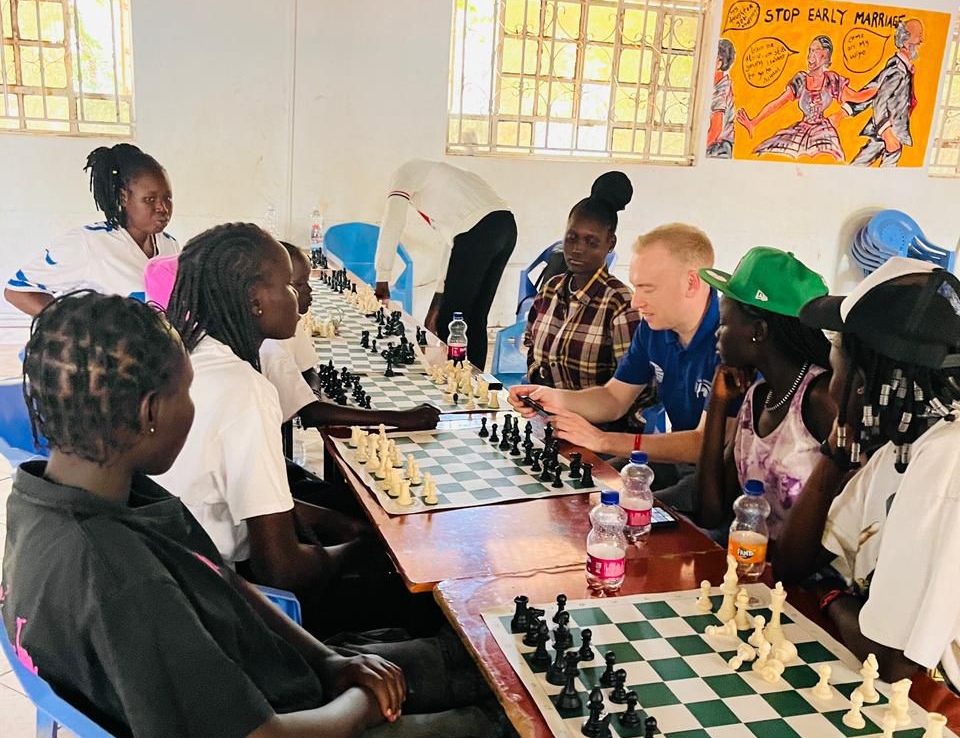
Over the next two weeks, the young talents of Kakuma learned many new and interesting concepts in chess. In the final days of the camp, they faced a major test: a round-robin tournament. This in-person training also served as a preparation process for the 2026 Chess Olympiad, including team qualification and training.
The next training visit is planned for February 2026, followed by a FIDE team visit in May 2026.
From December 15-17, 2025, Dana Reizniece, Anastasia Sorokina, and Andre Voegtlin will represent FIDE and the Chess for Protection project at the UNHCR Global Refugee Forum: unhcr.org/about-unhcr/overview/global-compact-refugees/global-refugee-forum.
Looking ahead
The Kakuma Chess Club continues to be a vital force for youth empowerment, education, and social cohesion within Kakuma and Kalobeyei. In 2025, the program expanded its reach, nurtured new talent, and offered transformative experiences despite challenging conditions.
With sustained donor support, the project is well-positioned to grow into an even stronger platform for protection, learning, and community development.