

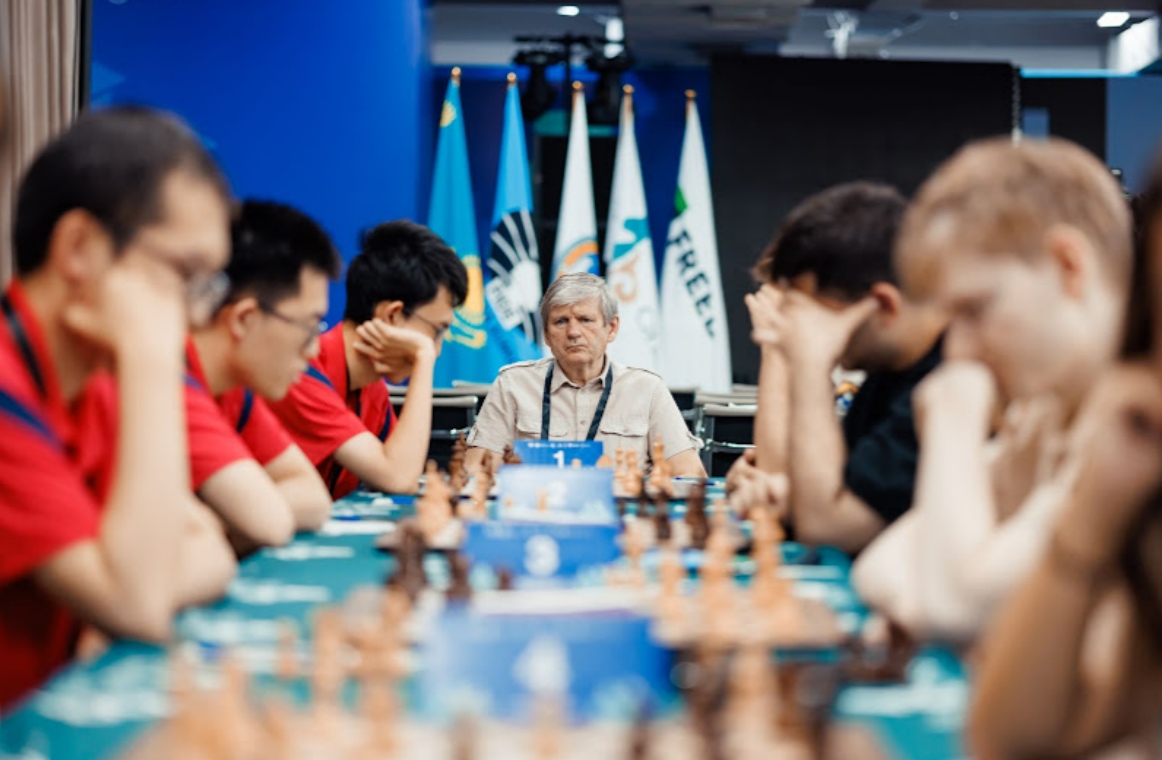
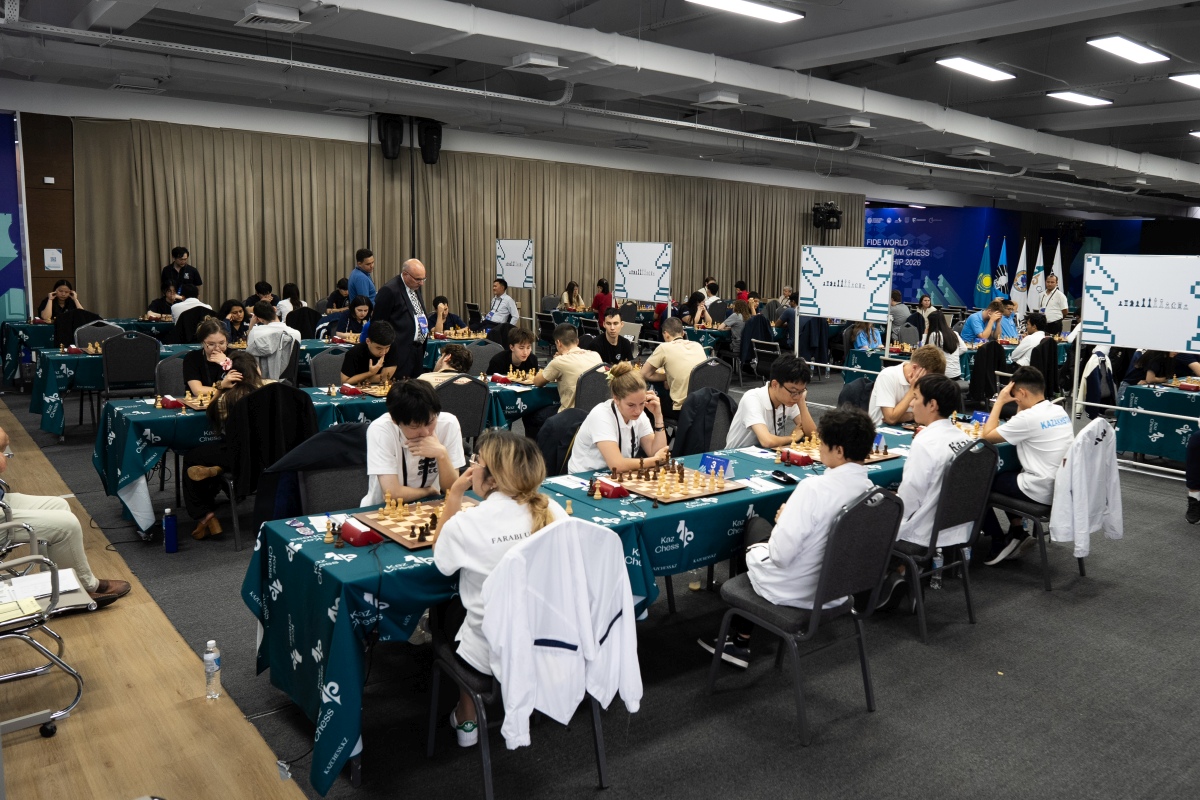
History was made in Almaty, Kazakhstan, as the inaugural FIDE World University Team Chess Championship officially began, bringing together university teams from across the globe for the first-ever edition of the competition.
Hosted by Al-Farabi Kazakh National University as part of FIDE’s Year of Chess in Education 2026, the championship celebrates not only sporting excellence but also the growing role of chess in higher education. The event provides a unique platform where students from leading universities combine academic achievement with international competition, fostering friendships and cultural exchange through the game of chess.
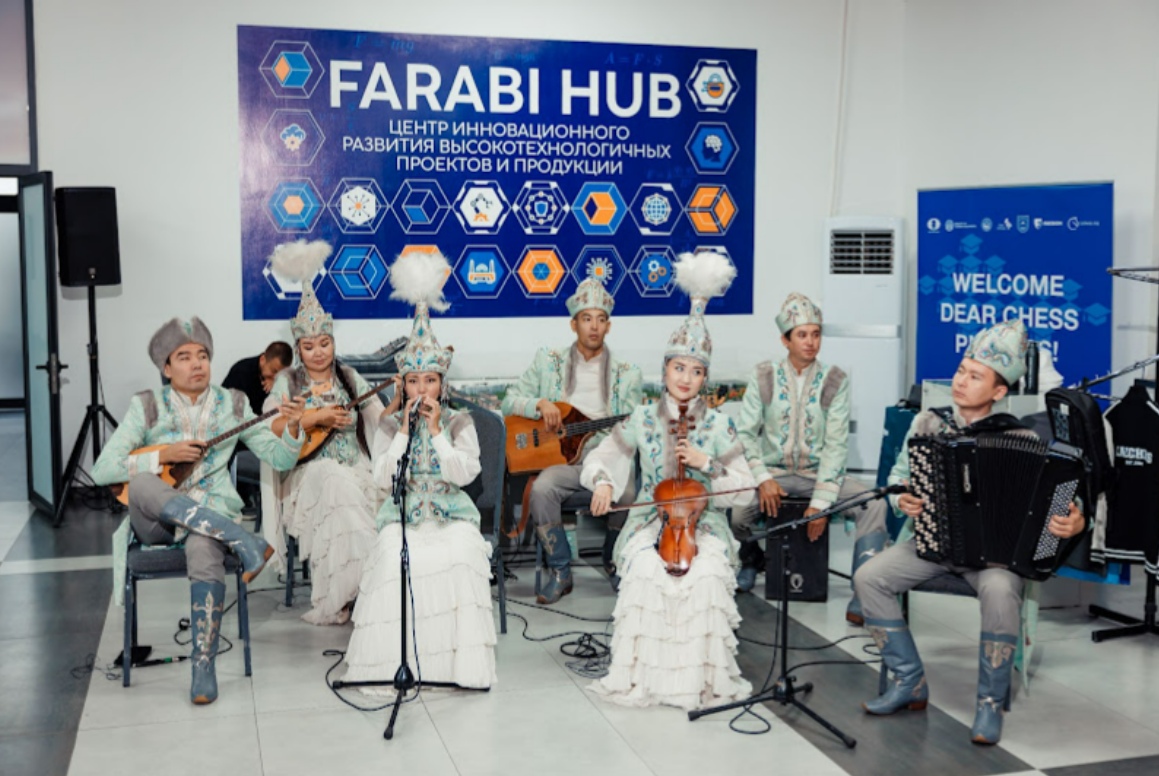
From the moment the delegations arrived in Almaty, participants were welcomed with Kazakhstan’s renowned hospitality. Traditional music, national cuisine and cultural performances introduced visiting teams to the country’s rich heritage, creating a warm atmosphere before the tournament officially began.
Grand opening
The championship officially opened at the Farabi Hub of Al-Farabi Kazakh National University with a vibrant ceremony celebrating Kazakhstan’s culture and commitment to chess and education. The event featured traditional performances before welcome addresses from representatives of the Government of Kazakhstan, Al-Farabi Kazakh National University and the Kazakhstan Chess Federation.

President of the Kazakhstan Chess Federation Timur Turlov welcomed participants to Almaty, describing the championship as a milestone for both Kazakhstan and university chess worldwide.
“We are very happy to finally host this long-awaited tournament. It is a great responsibility for us to organize the first event of this size in our country, and we are honored to welcome outstanding universities from all over the world,” he said.
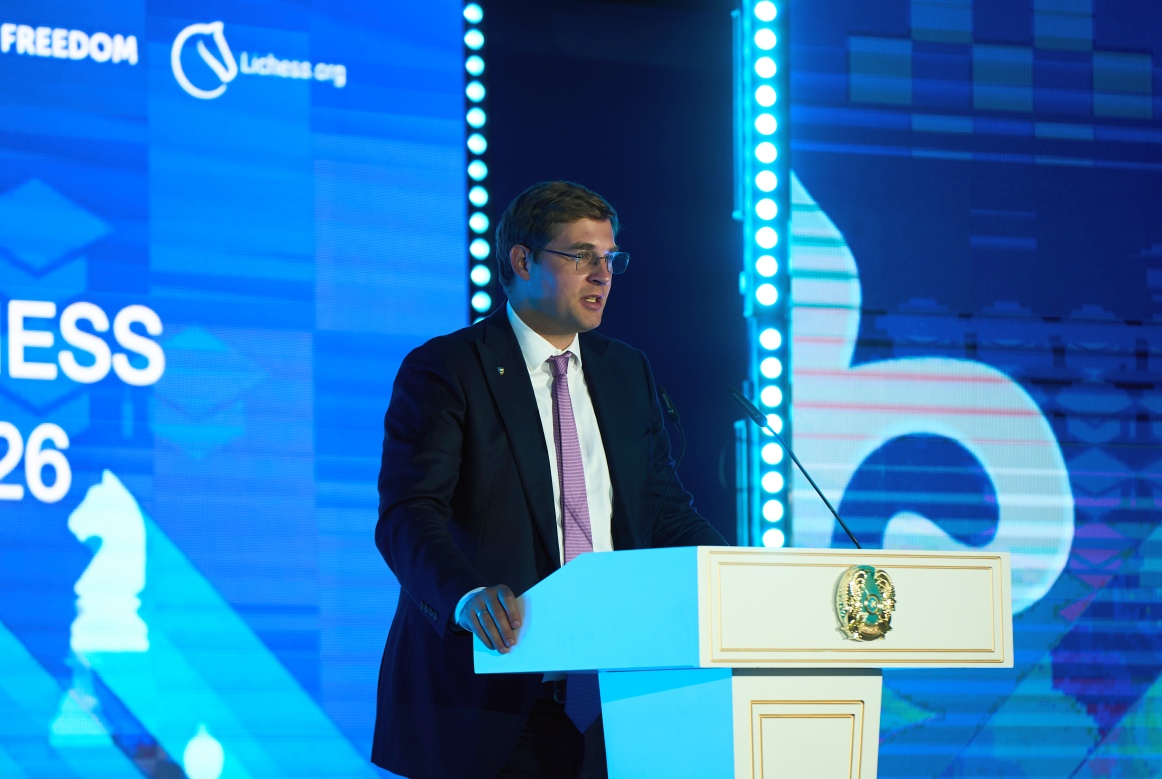
Turlov emphasized that the inaugural championship is about much more than competition. He noted that it provides students with an opportunity to build international friendships, discover Kazakhstan’s culture and hospitality, and strengthen ties that extend beyond the chessboard. He also highlighted the country’s commitment to chess in education, pointing to the rapid growth of school and university chess programmes across Kazakhstan.
Chess beyond the board
While medals are at stake in Almaty, the championship is equally a celebration of the educational values of chess and the opportunities it creates for students around the world.
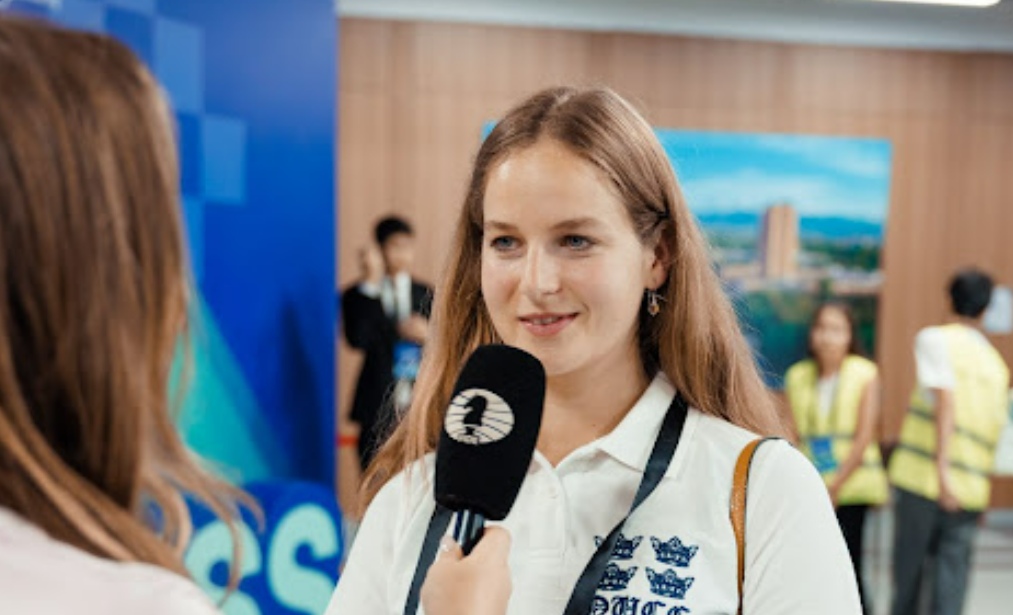
Representing the University of Oxford, Andrea Henderson de La Fuente, a PhD student in astrophysics, described competing in Kazakhstan as a memorable opportunity. Although her demanding research leaves limited time for competitive chess, she believes the game continues to shape her academic life.
“Growing up playing chess, the biggest thing I’ve noticed is my concentration. I can concentrate for a long period of time without getting distracted.”
Andrea also spoke about Oxford’s long chess tradition, where students regularly meet to play and compete together. Despite entering the tournament as one of the lower-seeded teams in their group, expectations remain realistic.
“We’re here to have a good time and do the best we can. If we manage to get to the knockout stage, great – but we’re really here for the experience.”
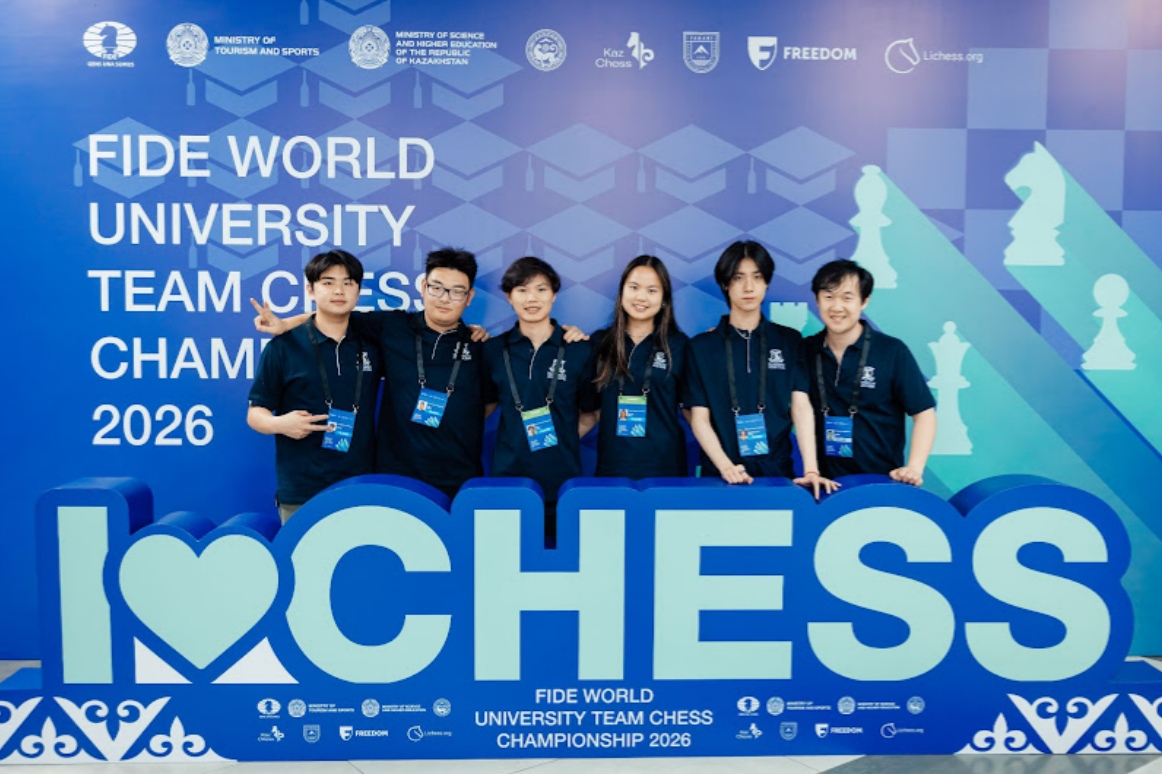
Students from the University of Melbourne shared a similar passion for combining academics with competitive chess. Chloe and Ryan, both Bachelor of Science students, first discovered chess through school clubs when they were six or seven years old.
For Chloe, the attraction of chess has never faded: “Every game is different. No matter how many games you play, every game is different, and it’s very exciting to keep learning new things.”
Ryan explained what fascinates him most about the game: “I really enjoy the pattern recognition aspect. You can apply certain ideas in completely different positions, and it just works out. I think it’s really cool.”
Balancing university studies with tournament preparation requires commitment, but Ryan described chess as her reward after a productive day: “As soon as I finish my work, it’s chess. I go online, prepare openings, prepare lines. It’s a reward for me after studying, and that keeps me motivated.”
The students also highlighted the welcoming atmosphere of the University of Melbourne Chess Club, which has experienced significant growth over the past year: “Everyone can play. If people don’t know how to play, we teach them.”
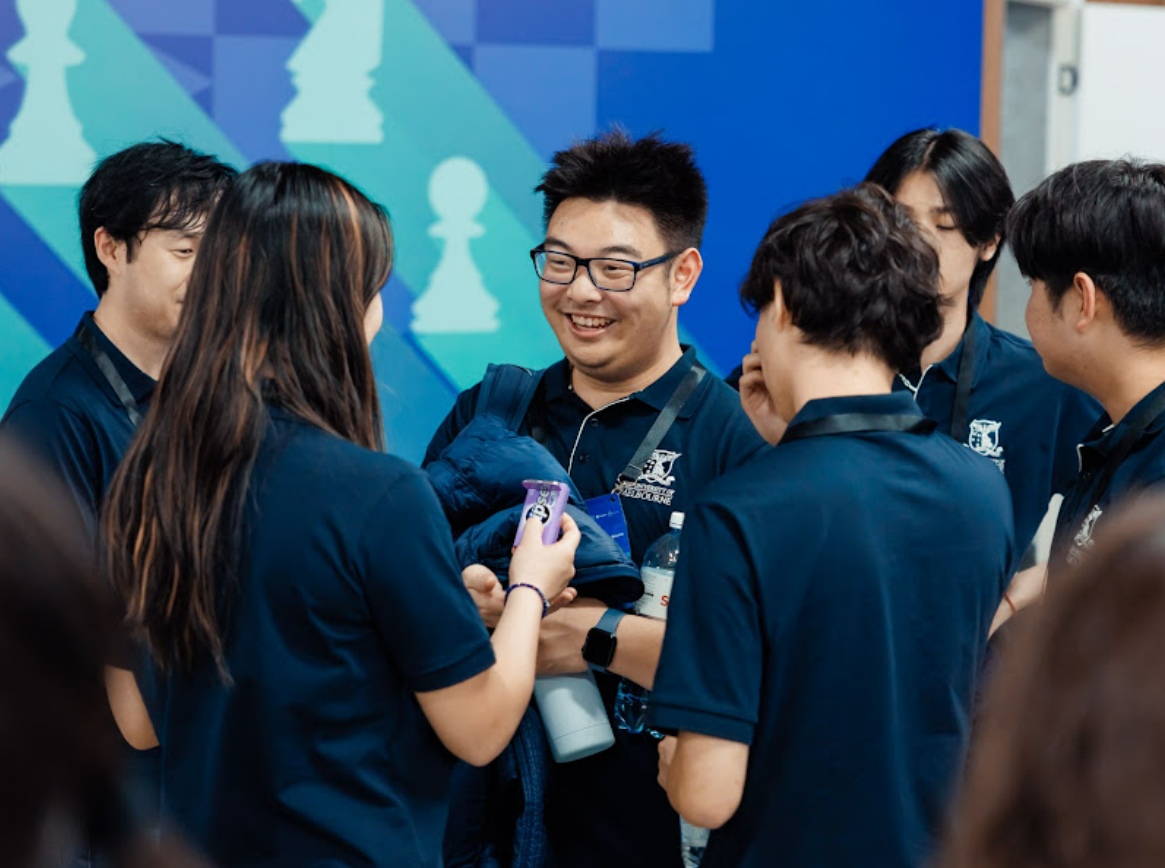
Reflecting on the educational value of chess, the students concluded: “Chess touches on patience, resilience, logical thinking and calculation. But at the end of the day, I think chess is an art. It’s beautiful, and it’s something that we can all enjoy and connect with.”
Their stories perfectly capture the spirit of the championship, where students from different countries are united not only by competition but also by education, friendship, and a shared passion for chess.
Round 1
Competition officially began with the opening round of the group stage, with each pairing consisting of two matches played with alternating colours.
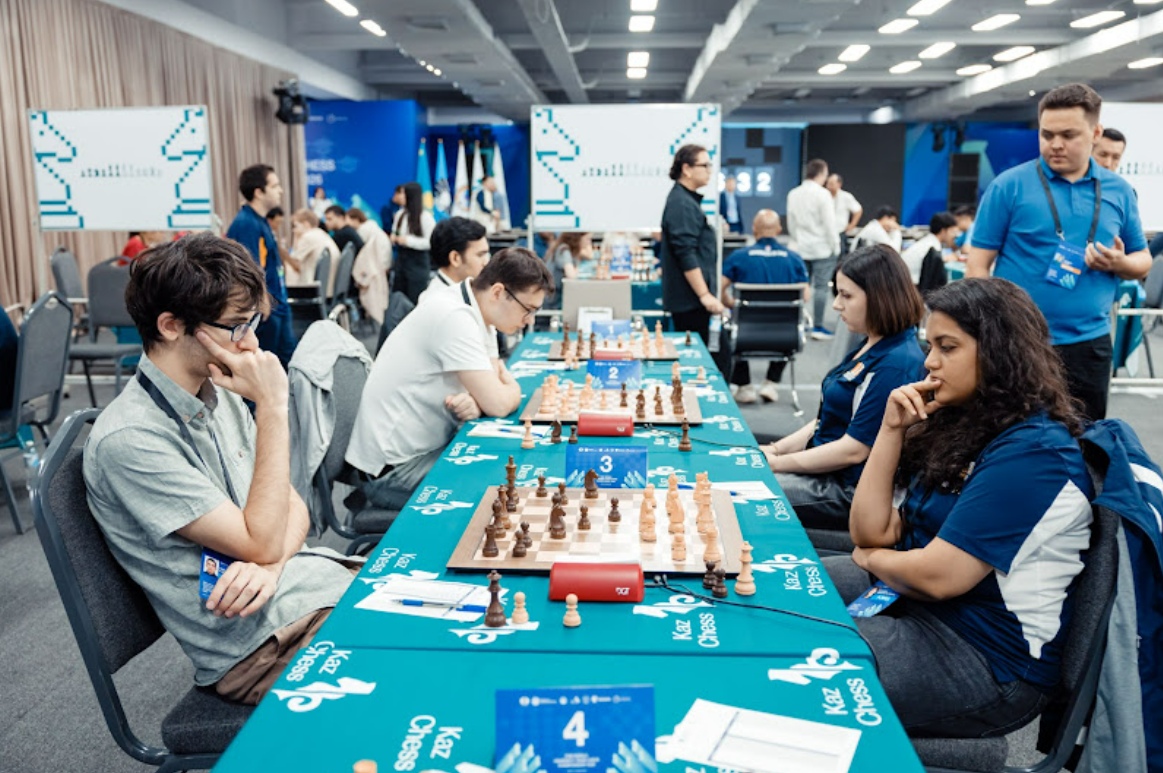
Pool A: Ural State Mining University took the early lead in Pool A after defeating Peking University 4-0 in both matches. Harvard University claimed second place after beating the University of Melbourne 2½-1½ before drawing the return match 2-2.
Pool B: Saint Louis University dominated Webster University, winning 3½-½ and 4-0 to top the standings. Universidad de Chile secured second place after drawing 2-2 with the University of Pretoria before winning the second encounter 3½-½.
Pool C: The University of Texas at Dallas swept Cambridge 4-0 and 3½-½ to finish the day on top. National Technical University of Athens followed closely after two 2½-1½ victories over Almaty Management University.
Pool D: Host team KazNU Al-Farabi delighted the home crowd by defeating Oxford University 3-1 and 3½-½. KNUS opened with a 3-1 victory over Universitas Gunadarma before drawing the return match 2-2 to secure second place.
The group stage continues on Wednesday as teams battle for the top two places in each pool and qualification for the knockout stage.
Leaders after the Round 1 of the group stage: KazNU Al-Farabi, The University of Texas at Dallas, Ural State Mining University, and Saint Louis University.
Inspiring the next generation
Alongside the university championship, Almaty is also hosting the Kazakhstan vs the World children’s team match, further highlighting the event’s commitment to promoting chess across all generations.
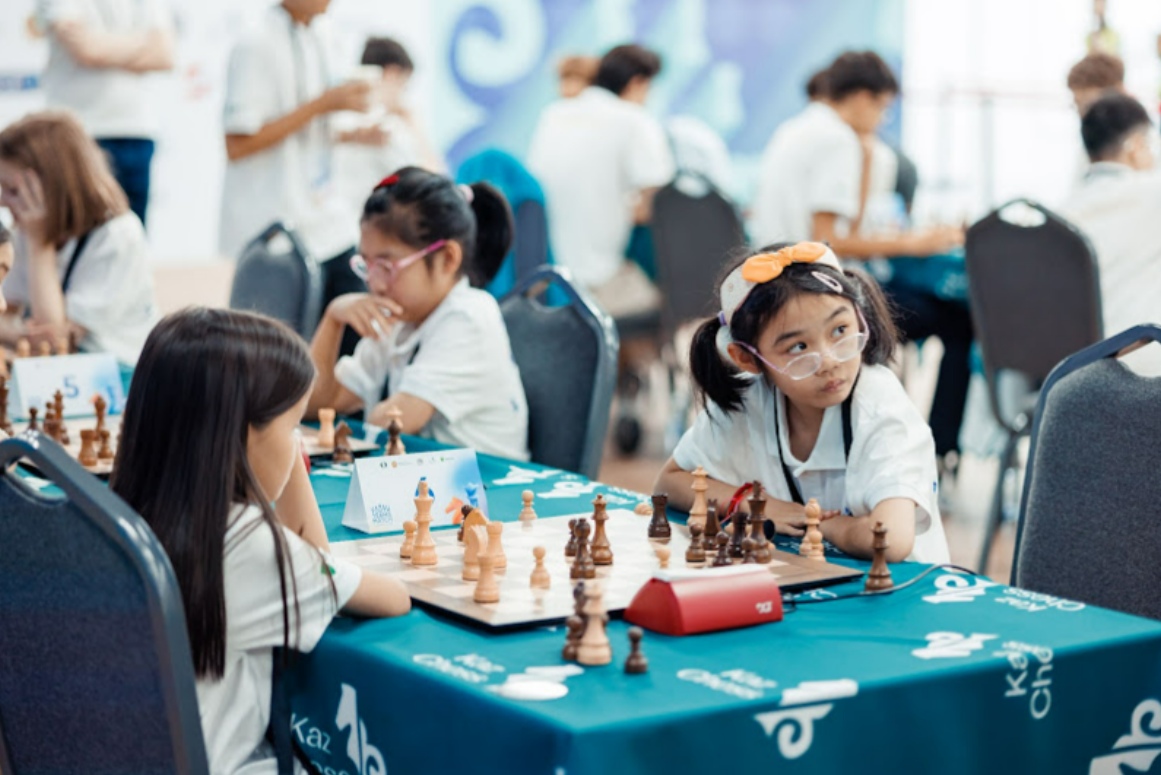
The young players took to the boards in the rapid competition on Tuesday, with Kazakhstan’s boys securing a 14½-9½ victory over the World Team in Rapid. In the girls’ match, however, the visitors responded strongly, defeating Kazakhstan 18-6 to share the honours on the opening day.
The festival of chess continues on Wednesday, when the young talents will return to compete in the blitz event before the university teams resume their battle for places in the knockout stage.
Looking ahead
The group stage continues on Wednesday with another day of double-round action as teams continue their quest for places in the knockout stage. As the inaugural edition of the FIDE World University Team Chess Championship gathers momentum, Almaty has already demonstrated how chess can unite students from around the world through competition, education and cultural exchange.
You can find the complete results here: https://s1.chess-results.com/tnr1468182.aspx?lan=1&art=0&turdet=YES&flag=30&SNode=S0
You can follow the games live: https://lichess.org/broadcast/fide-world-university-team-chess-championship-2026-finals-pool-b/round-1-game-2/KIVQWfTn
Official website: https://worlduniversities2026.fide.com/