

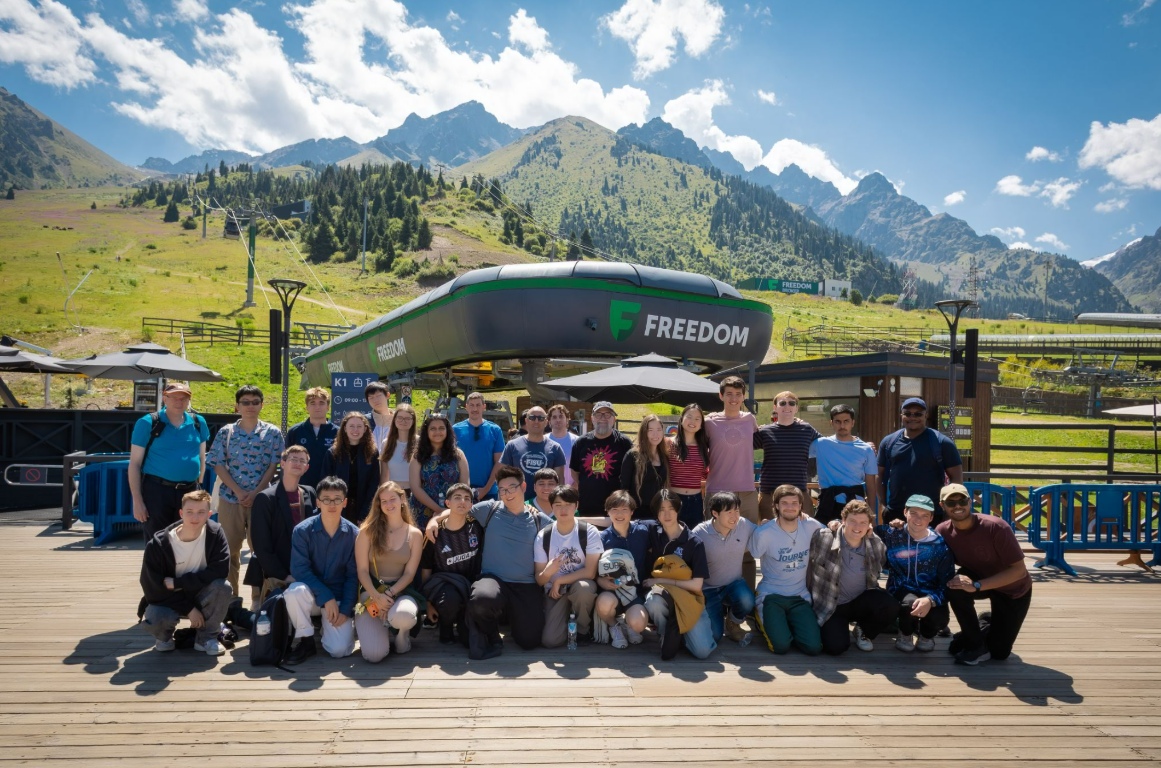
Day four of the FIDE World University Team Championship Finals began away from the chessboard, as participants traded the playing hall for the mountains surrounding Almaty.
Before the start of the quarterfinals, players had an opportunity to visit Shymbulak, one of the city’s best-known mountain destinations. After three intense days of group-stage competition, the morning excursion gave the students a chance to experience another side of Almaty and spend time together before returning to the tournament venue for the start of the knockout stage. A few hours later, attention turned firmly back to chess.
Sixteen universities had started the championship, but following the conclusion of the group stage, only eight remained. The quarterfinals would cut that number in half once again, with four teams advancing and four ending their campaigns in Almaty.
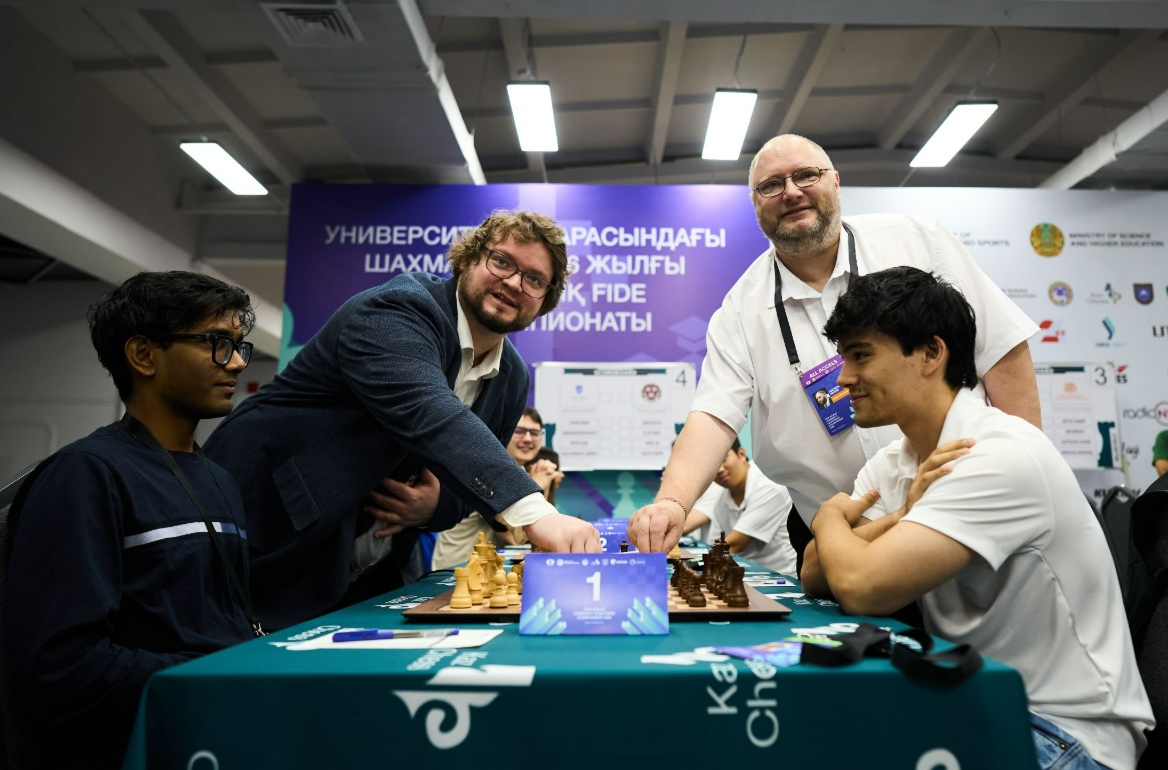
Before the opening round of the quarterfinals, the ceremonial first moves were made by Lasse Østbø Løvik, President of the Norwegian Chess Federation and Vice-President of the European Chess Union, and Andy Howie, Chairman of the FIDE Fair Play Commission and Executive Director of Chess Scotland.
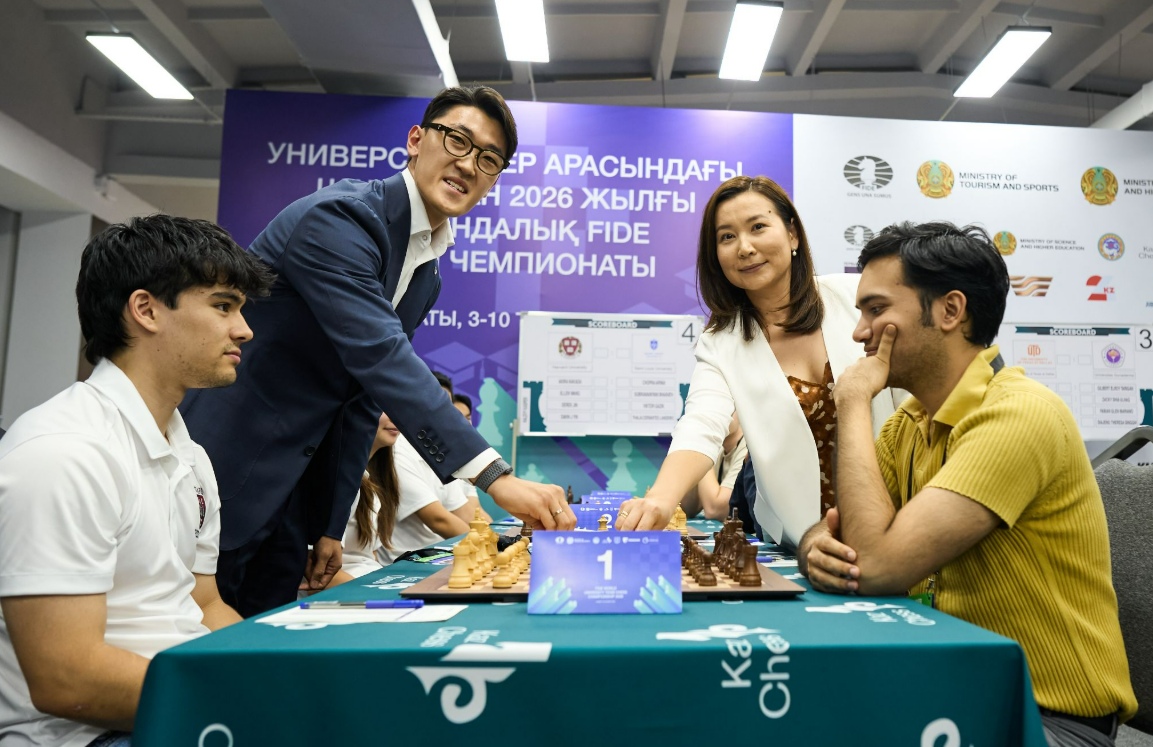
Ahead of the second round, Vyacheslav Kim, Managing Director of Freedom Bank and CEO of Freedom SuperApp, and Gulmira Dauletova, Executive Director of the Kazakhstan Chess Federation, made the ceremonial first moves.
Chess and university: Finding the balance
As the championship entered its decisive stage, the players also reflected on the different paths that had brought them to Almaty and on the challenge of combining competitive chess with university life.
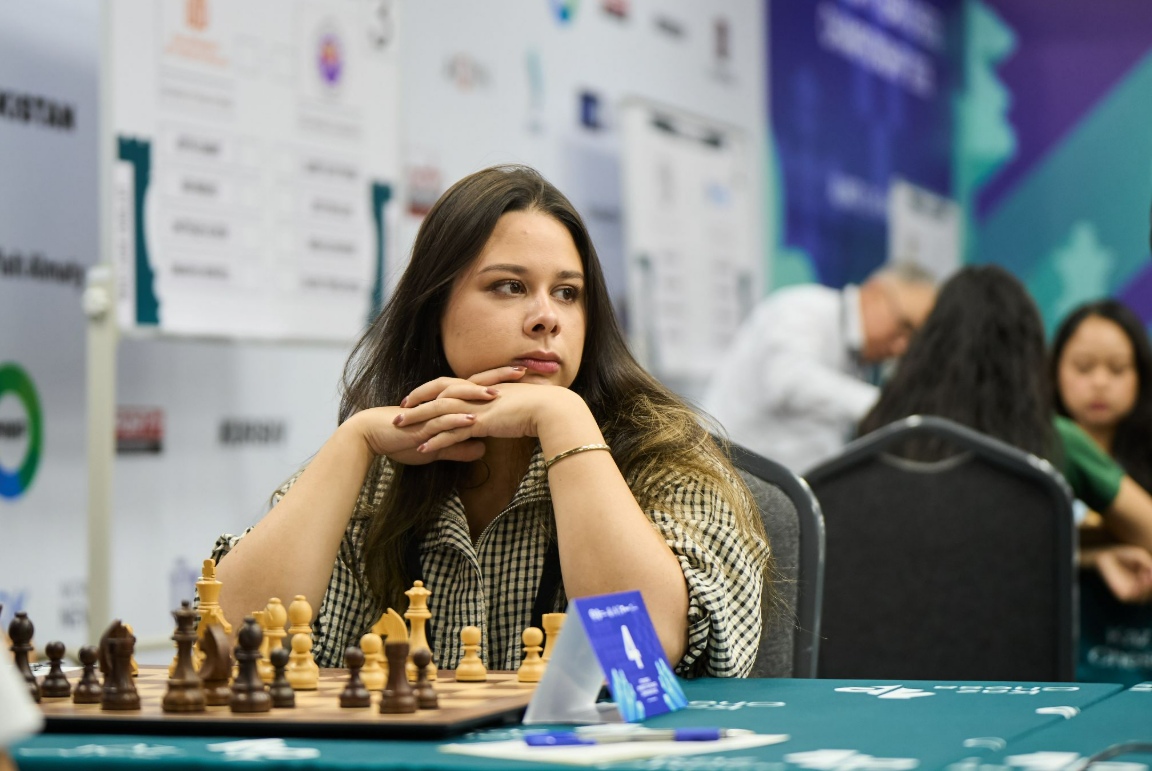
For WGM Thalia Cervantes Landeiro of Saint Louis University, chess is connected to almost every part of her daily life. She is completing her master’s program at Saint Louis University, plays professionally, and also works at the Saint Louis Chess Club.
“I work through chess, and I’m studying because of the scholarship that I got through chess, so it’s always been a big part of my life – even the reason why my family moved from Cuba to St. Louis. It’s been a big part of my life, and it will continue to be.”
Her quarterfinal opponent, WIM Ellen Wang of Harvard University, studies computer science and physics and described chess as an outlet from the demands of academic life. Wang also believes that years of playing chess have influenced the way she thinks far beyond the board.
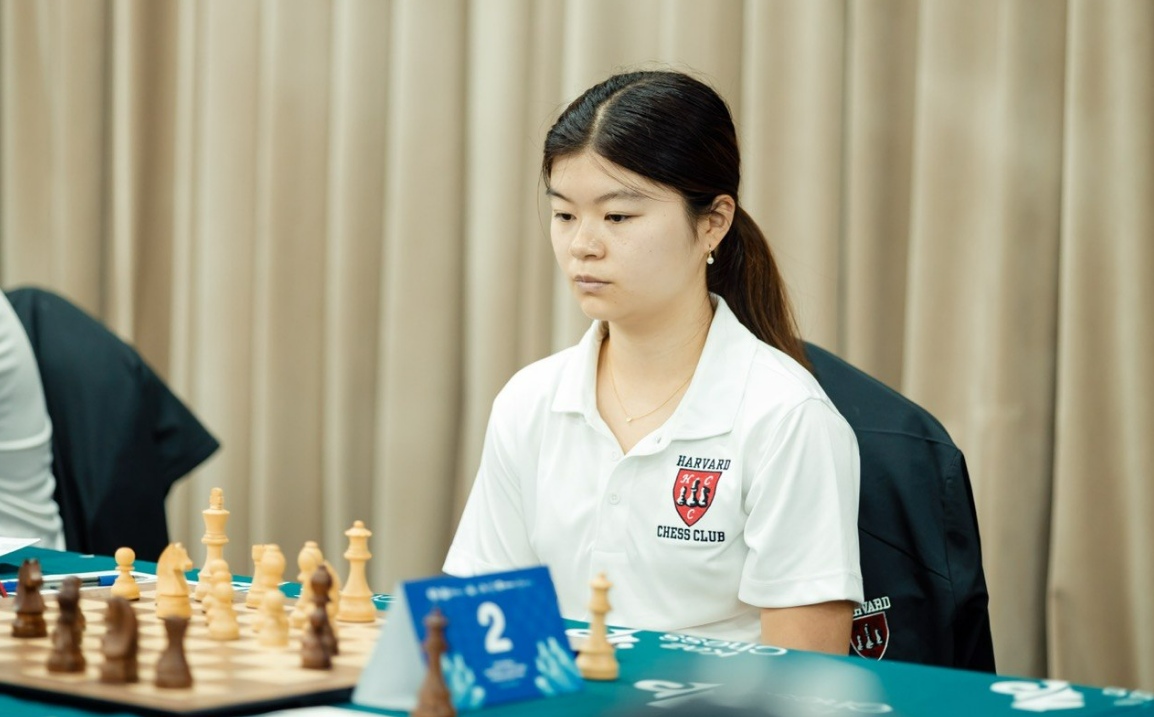
“I think because of chess, the way that I think has changed a lot. I am way more analytical than I would have been had I not played chess, and I also think it’s helped a lot with my focus and my social life. I don’t really know what my life would be like without chess, to be honest.”
Despite Harvard’s campaign coming to an end in the quarterfinals, Wang leaves Almaty with positive memories of the experience.
“It’s been a huge honor to play here. We’ve had a lot of tough games, but it’s been a great learning experience. It’s also been wonderful to be in Almaty – the hospitality has been incredible, and we’re really grateful to be here.”
For WIM Diajeng Theresa Singgih of Universitas Gunadarma, the journey into chess began at home. Her older sister, IM Irene Sukandar, was already one of Indonesia’s leading players when Singgih was a child.
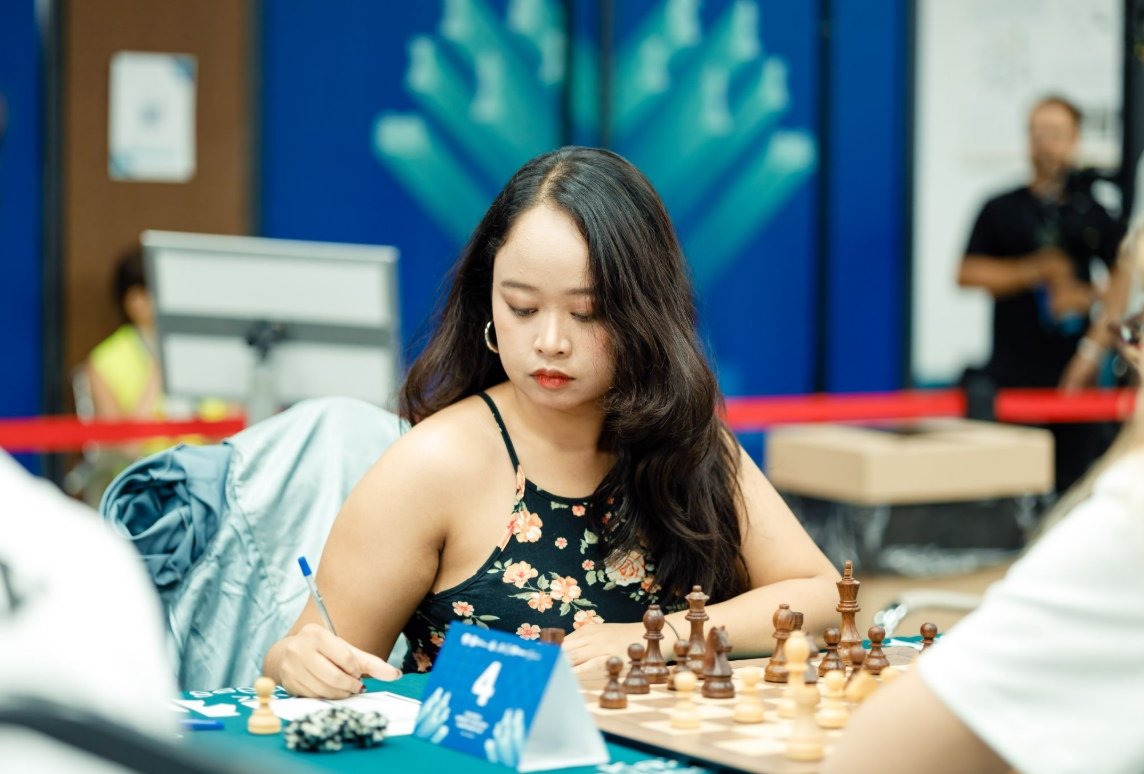
“When my sister became the first ever Woman Grandmaster of Indonesia, I was four years old and she was 16. Growing up, I would see her interviews on TV and in newspapers. She was always traveling, and when she came home from tournaments, she would bring medals and souvenirs and tell me about the places she had visited. As a four-year-old, I thought, ‘I want that life too.’ And my sister told me, ‘You can have it if you play chess.’”
Years later, chess remains at the centre of her life.
“Chess has pretty much been the center of my life since I was four. Every decision I make somehow depends on chess – where I spend my weekends, where I go to university, what hobbies I take up, and even when I have free time. It all depends on when my tournaments and training end.”
For the players of the National Technical University of Athens, the connection between chess and academic studies is particularly strong. FM Nikolaos Koutlas studies electrical and computer engineering and has developed his own way of dividing his time between the two.
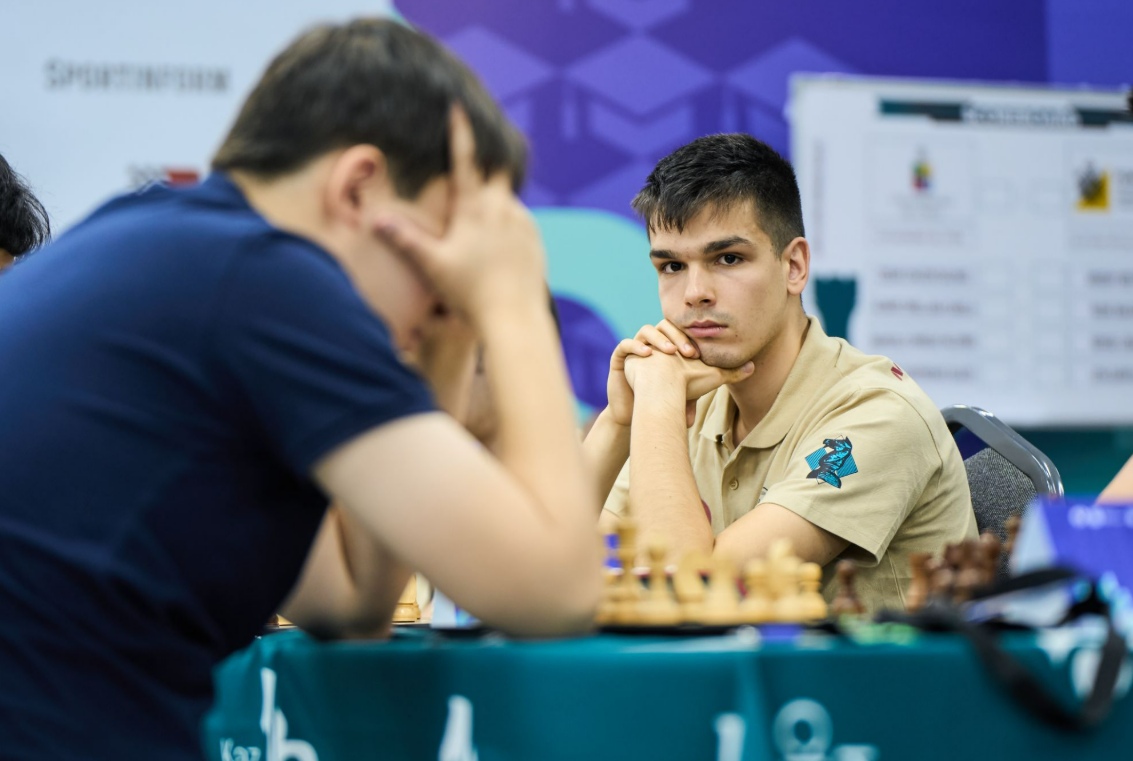
For Koutlas, the skills developed through chess also have a direct connection with engineering.
“If you combine chess and study well, I think chess can be very helpful in engineering. The schematic thinking, imagination, and pattern recognition you develop through chess can help a lot with mathematical subjects.”
Koutlas joked about how the two worlds sometimes collide: “Of course chess helps with studies, but sometimes you have an exam and spend the whole night before playing blitz – that definitely doesn’t help.”
Quarterfinals decide the final four
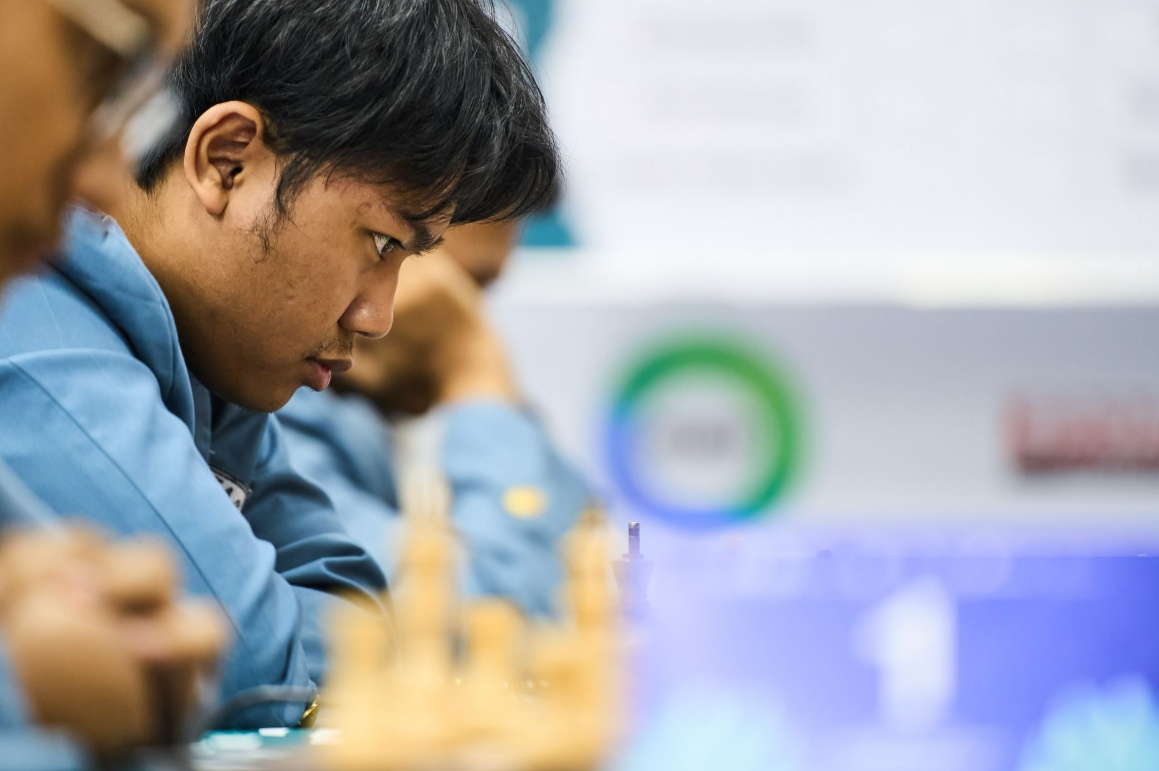
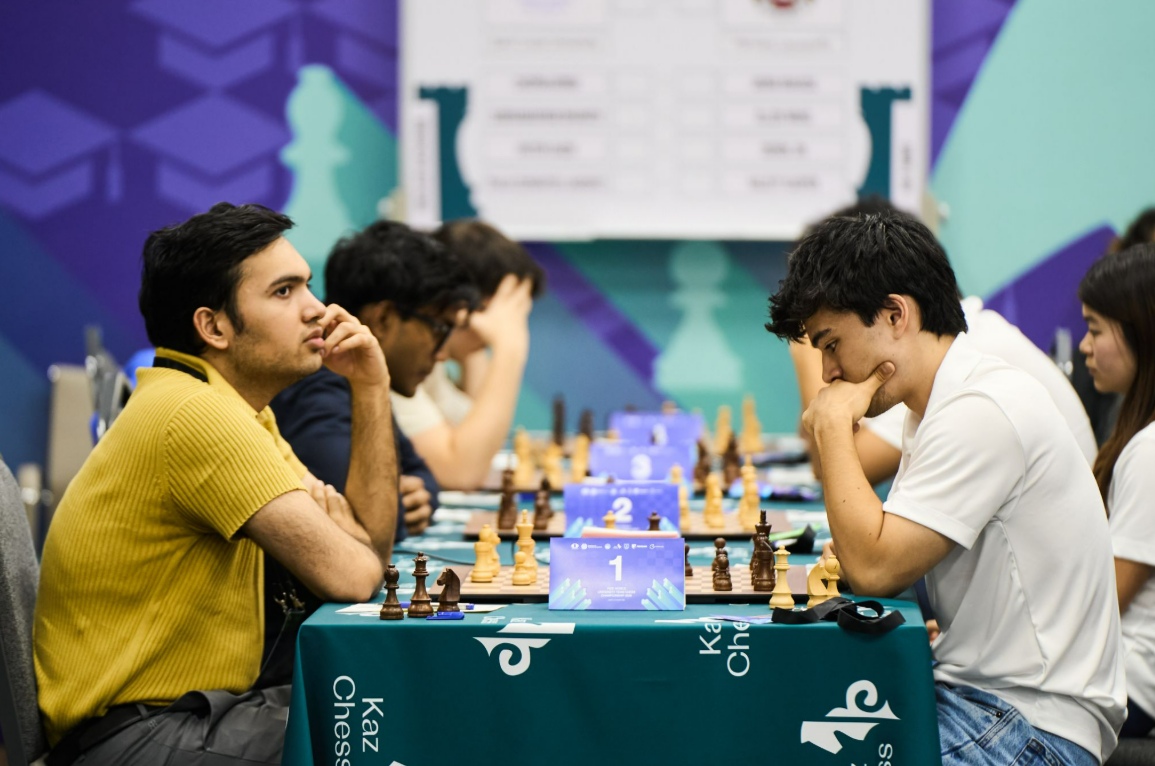
Saint Louis University delivered the most dominant quarterfinal performance, defeating Harvard University 4-0 and 3.5-0.5 to comfortably secure its semifinal place.
Ural State Mining University was equally convincing against Universidad de Chile, winning 4-0 and 3.5-0.5 to advance.
KNUS (Kazakh National University of Sports) drew 2-2 with the National Technical University of Athens in the opening match before winning the second 3-1 to reach the semifinals.
The University of Texas at Dallas defeated Universitas Gunadarma 3-1 in the opening round, but the Indonesian team came close to winning the second and forcing tiebreaks. A late mistake in a winning position turned the match around, allowing Dallas to take the second round 2.5-1.5 and secure the final semifinal place.
Four teams remain
After four days of competition, the original field of sixteen has been reduced to four:
- The University of Texas at Dallas
- Saint Louis University
- Ural State Mining University
- KNUS (Kazakh National University of Sports)
Saturday’s semifinal pairings are:
- KNUS vs. Ural State Mining University
- The University of Texas at Dallas vs. Saint Louis University
With the inaugural title now just two matches away, Saturday will determine which two universities advance to the final of the first FIDE World University Team Championship Finals.
Pairings of the Semi-Finals of the FIDE World University Team Chess Championship:
https://s1.chess-results.com/tnr1470969.aspx?lan=1&art=0&turdet=YES&flag=30&SNode=S0
Follow the games live:
https://lichess.org/broadcast/fide-world-university-team-chess-championship-2026-finals-playoffs/semifinals-game-1/zJLf6V2o#overview
Official website: https://worlduniversities2026.fide.com/