Handmade boards from Rio, a simul with a twist, and a tightening race in San José

Share this post:

Day three of the American Continental Stage of the FIDE ISCF World Schools Team Championship 2026 brought rounds five and six to the DoubleTree by Hilton Cariari in San José, and one team dominated the day. Saco Oliveros de Lince began the day tied at the top with Harvest Park Middle School and Crescent Heights Academy, and by the evening, they had defeated both of them to stand alone, two match points clear. Behind them, the race for the qualifying places is now the main story, with four teams within a single match point of each other going into the final day.

Round 5

Harvest Park Middle School 1–3 Saco Oliveros de Lince

The top two teams in the field met on table one, level on 7 match points and 13 game points, and the Peruvian team won 3–1.

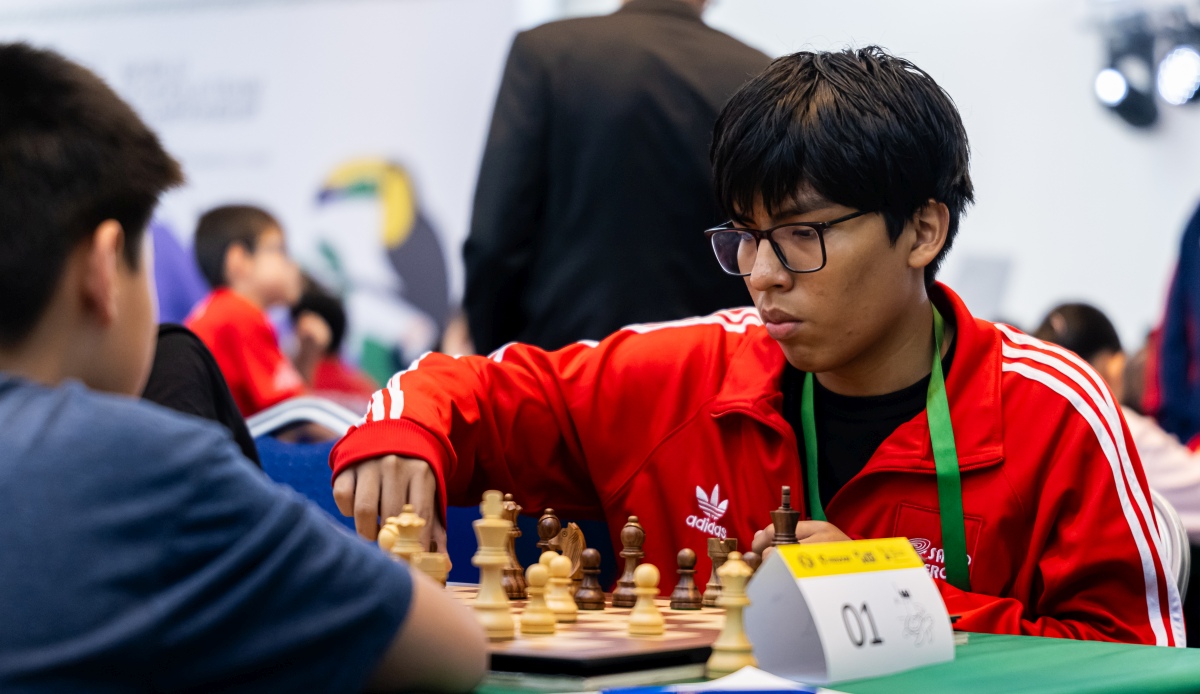
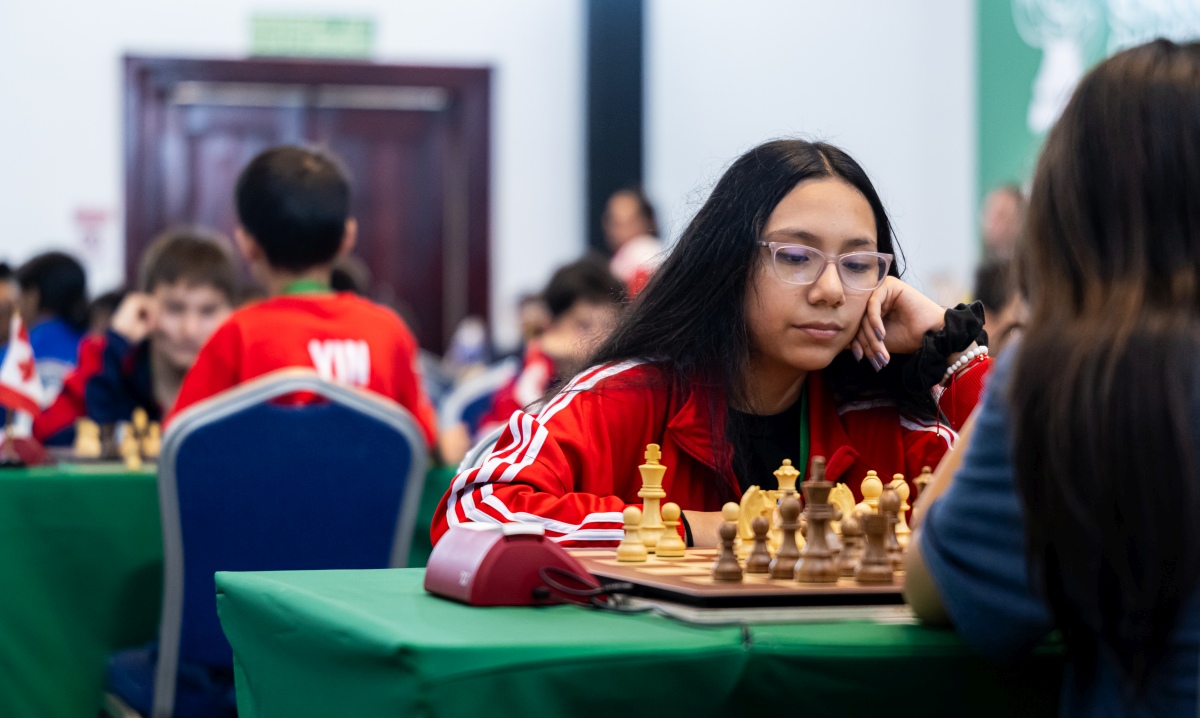
On board one, Marcos Beltrán Meneses Morales (pictured below) from Saco Oliveros de Lince beat Harvest Park Middle School’s Zhuoyuan Wu in a Caro-Kann. White emerged from the opening with a slight but tangible advantage, then lost it due to an inaccurate move order, and later overextended on the kingside, leaving weaknesses on both wings. Black took control of the position, White faltered in defence, and by the time White gave up the queen simply to stay alive, the game was already lost. Black was too far ahead in material, and White resigned.

On board two FM Patrick Liu, the highest-rated player in the championship, faced Dante Iván Vilca Contreras. Neither player made a mistake. Both finished with 99% accuracy, and the draw was the natural result, producing the best chess of the round.

Board three saw the same accuracy rating for both players but rather less drama: a series of trades led to a dry endgame that neither side could make progress in, ending in a draw by threefold repetition. It was also a clash of two unbeaten streaks: Ethan Sun and WCM Fabiana Jiménez Salas had both won all four of their previous games, and each dropped their first half-point to the other.

On board four, Rihanna Irina Rojas Salas controlled the game from the start, created a passed pawn on the queenside, promoted it, and delivered checkmate.

Crescent Heights Academy 2½–1½ Saint Gabriel’s School

The Canadian team came through the other top match, with the two lower boards deciding the outcome.

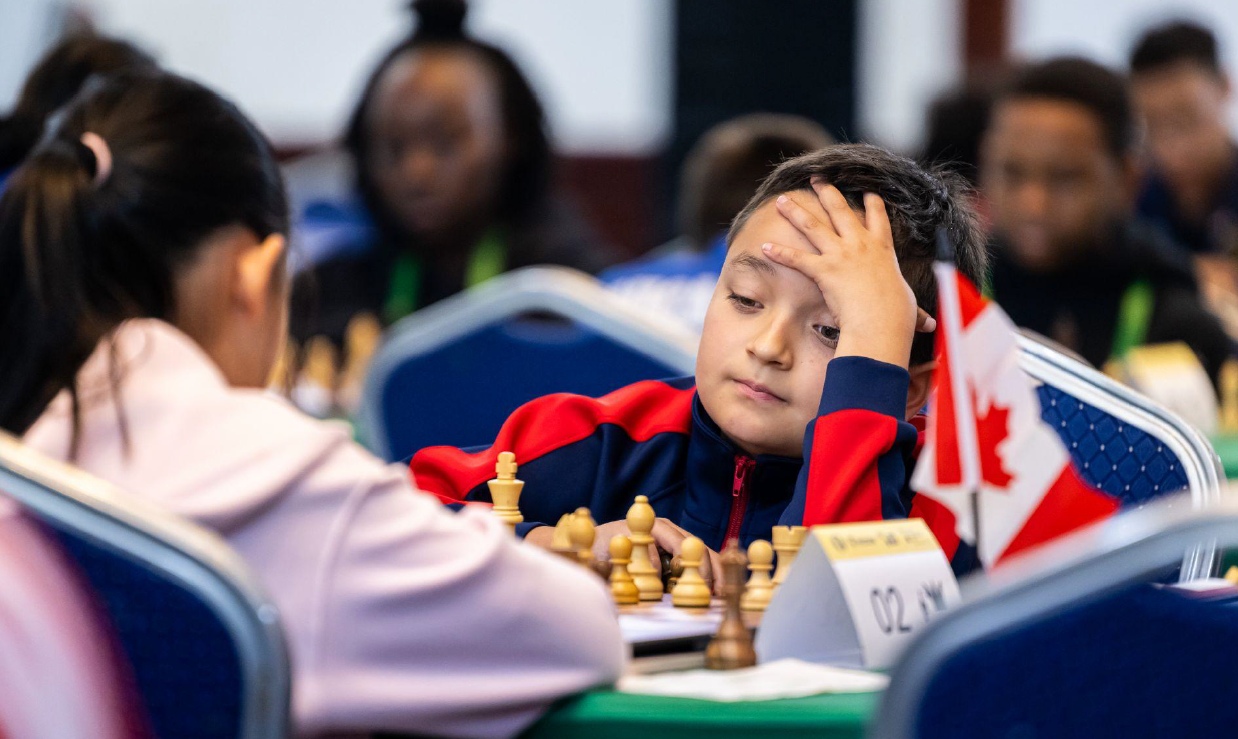
On board one, FM Lucas Mason Pin Qian Yao of Crescent Heights Academy had a pleasant position out of the opening but misplayed it; at the critical moment, he chose an aggressive plan that looked strong but allowed Black to equalize. Tobias Passmore Bowman held the endgame from there, defending in time trouble with his opponent fifteen minutes ahead on the clock. On board two, Vicente Muñoz Venegas (pictured below) outplayed Adela Sun, and the game was decided after only 18 moves.

That left boards three and four to the two higher-rated Canadians, and both delivered. On board four, CM Andrew Yin faced an opposite-castling opening that burned out quickly once the queens came off; White then drifted into a passive defence, could not shake it in the endgame, and Black converted. Both Aiden and Andrew Yin remain on a perfect score after five rounds.

Position of the round 
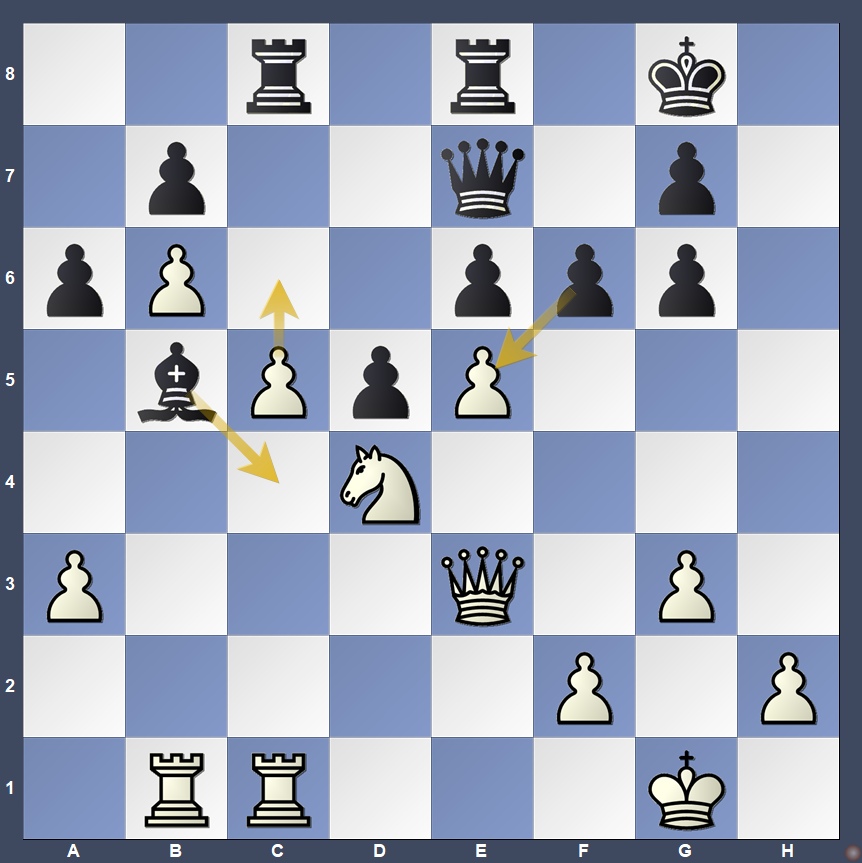
On board three, another Caro-Kann produced the highlight of the round.

Felipe Brunstein Hauyon played 28…Bc4 here, trying to hold on to the bishop, which proved to be the losing move. The correct continuation, 28…fxe5! 29.Nxb5 axb5 30.Rxb5 Qd7, followed by 31…e4, keeps everything under control.

After this erroneous move by Black, Aiden Yin, playing White, found 29.c6!. Following 29…bxc6? 30.b7!, the rook had to retreat to b8. Then, 31.Nxc6 forked the queen on e7 and the rook on b8. A piece up, with a passed pawn on b7 that was later joined by the a-pawn, White converted smoothly to score the decisive point of the match.

Columbus American School beat Creative Kids Learning Academy 3–1 to move into third place, with William Nicolás Rodríguez winning again on board one to maintain his perfect score. Colegio Madre del Divino Pastor beat Harrison College School 2½–1½, with Jasmany Shallom Castillo Romero defeating AIM Jeremiah Farley on the top board, and Charis Stuart losing for the first time, ending the last perfect score for a Barbadian player. Colegio Celta Internacional beat The Oxford School by the same margin, with CM Fernando Cortes Medina winning his fifth game out of five.

The best result for the hosts came further down the hall, where Colegio Bilingüe San Francisco de Asís swept Escuela Internacional Sampedrana 4–0, marking the first clean sweep by a Costa Rican school all week. Colegio Humboldt drew 2–2 with Red Bay Primary School, and the British School lost 1½–2½ to Martin Klein Schiller. St. Kitts International Academy, which had not won a match since joining the event, beat Projeto Vidançar 2–0.

Round 6
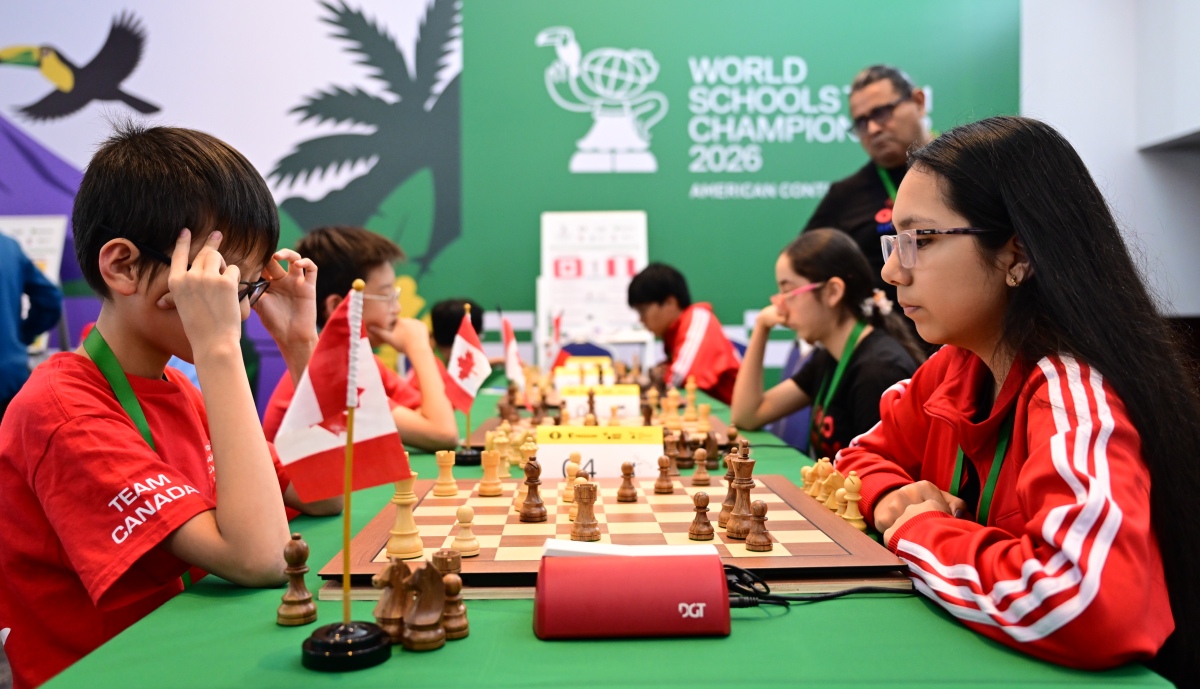
Saco Oliveros de Lince are the top seeds, and the reason is worth noting now that they have taken the lead. They do not have the strongest player in the championship, nor are they close to it. What they have is the most balanced squad in the field: their four players in round five were rated 1980, 1955, 1832, and 1742, a spread of just 238 points. Harvest Park has the highest-rated player in the entire event (2292) and a rating spread of nearly 900 points. Over the course of eight rounds of four-board matches, the most balanced team tends to be the one still standing.

Saco Oliveros de Lince 3–1 Crescent Heights Academy

The two leading teams met on table one, level on 9 match points, and the Peruvian team won again.

On board one, Meneses Morales delivered for the second time that day, and this game was hectic. An interesting King’s Indian saw Black’s two knights chase the white queen around the board before Black made a positional error that cost material, but the game was far from over. Yao held on, and the game was reduced to an endgame of rook and two pawns against bishop and two pawns – a sort of position that is winning on paper but awkward in practice. Meneses Morales, with the rook, converted it with excellent technique.

Board two featured a 19-move miniature, with Dante Iván Vilca Contreras finishing with a neat checkmate.

On board three, Aiden Yin scored the only point for Crescent Heights, defeating WCM Fabiana Jiménez Salas to keep his own perfect score intact. He emerged from the opening well, created weaknesses in his opponent’s position, traded pieces at the right moments, and converted cleanly.

Board four kept the other perfect record alive. Rihanna Irina Rojas Salas had the harder time of it; her opponent was more comfortable and held an advantage for much of the game until a critical moment arrived, which the young Peruvian seized immediately.
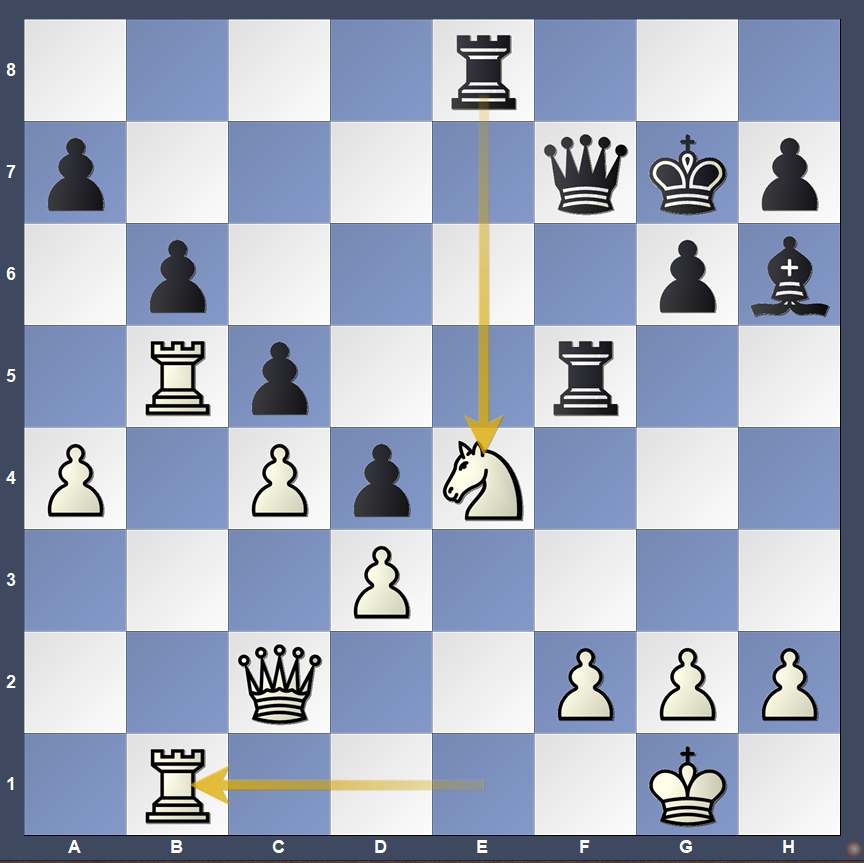
White had just played 25.Reb1?, and Black struck immediately with the exchange sacrifice 25…Rxe4!, removing the knight and launching an attack. After 26.dxe4 Rxf2, White cannot capture: 27.Qxf2 runs into 27…Be3!, pinning the queen to the king.

White tried 27.Qd3 instead, but after 27…Be3 28.Kh1 Rxg2, the king still cannot capture, because 29.Kxg2 fails to 29…Qf2+ with mate to follow.
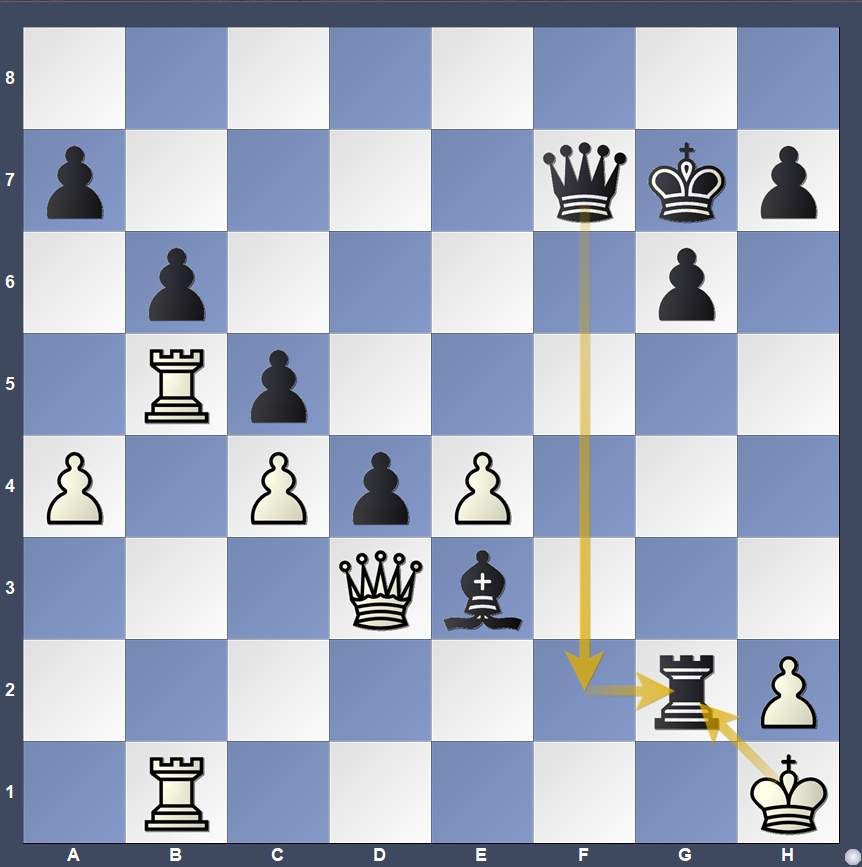
The finish came quickly: 29.R5b2 Rg4 30.Qe2 Qf4 31.Qf1 Qxe4+ 32.Rg2 Rxg2 33.Qxg2 Qxb1+, and White resigned, facing checkmate on the next move.

Harvest Park Middle School beat Columbus American School 3–1, the only consolation for Colombia being William Nicolás Rodríguez winning again on board one, where he is now the only top-board player in the championship with six wins out of six. Colegio Madre del Divino Pastor beat Colegio Celta Internacional 2½–1½, with Liang Noel Pérez Wong winning for a second consecutive round and CM Fernando Cortes Medina dropping his first half-point of the week. Saint Gabriel’s School beat Don Bosco Macas 3–1; the Oxford School beat Colegio y Liceo Nuestra Señora del Verdún 3–1, with Verdún’s Juan Esquibel winning on the top board; Creative Kids Learning Academy beat the British School 3–1; and Harrison College School drew 2–2 with Martin Klein Schiller.

Three players on a perfect score

Nine players were unbeaten after four rounds. Three are left after six:

  • Rihanna Irina Rojas Salas, Saco Oliveros de Lince, Peru
  • Aiden Yin, Crescent Heights Academy, Canada
  • William Nicolás Rodríguez, Columbus American School, Colombia

Standings

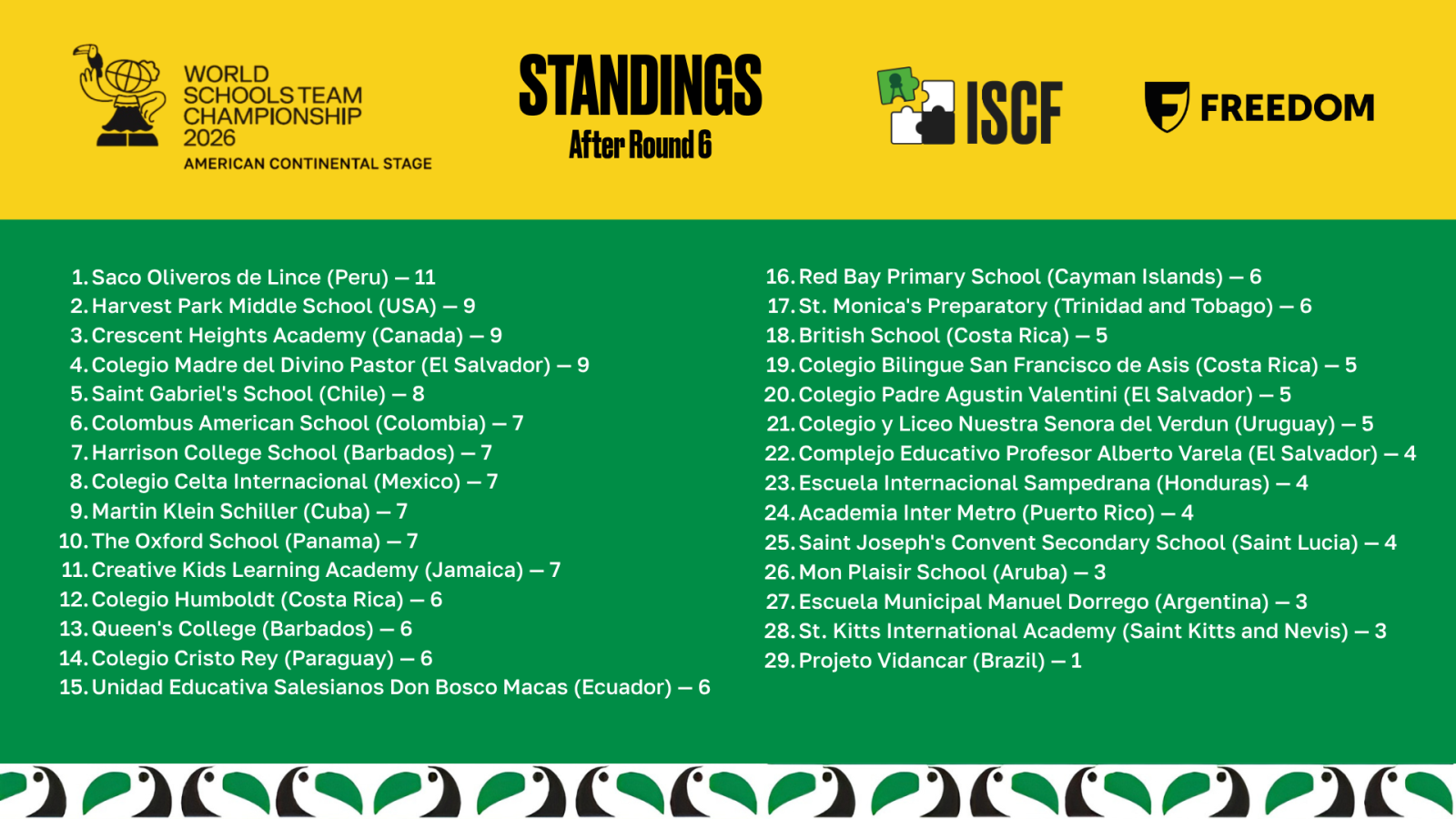
The Peruvian team leads alone with two rounds to play. Behind them, three teams share second place on 9 match points. With three places in the Grand Final at stake, the final day will decide which of them qualify for the finals.
A day for the side programme

Away from the boards, the day offered a full slate of activities for players, parents, and coaches.

The ISCF Master Class Series featured a session for parents, coaches, heads of delegations, and federation officials, led by GM Gilberto Hernández before an audience of around 50.

In the evening, the side programme delivered one of its most anticipated events: a Simul with a Twist, a simultaneous exhibition by IM Emmanuel Jiménez, a multiple-time Costa Rican national champion. The format came with an unusual twist: while Jiménez faced his young opponents in the traditional one-against-many setup, one board was played collectively by the audience, with spectators voting on each move and the majority decision being played on the board.

Rounding out the programme was an offline culinary workshop at the hotel, where a small group of players swapped the chessboard for the kitchen to make empanadas—the golden stuffed pastries that are a staple across Latin America and an everyday favourite in Costa Rica, where they are typically made with corn masa and filled with beans, cheese, or meat.

A team with a bigger story

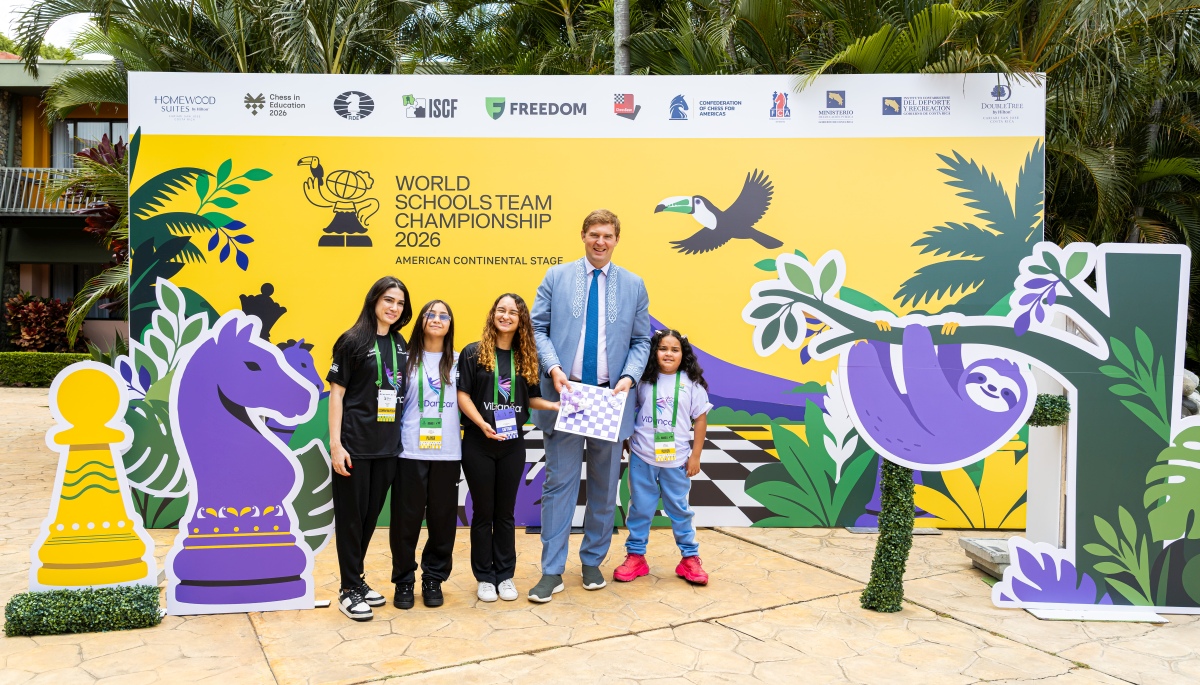
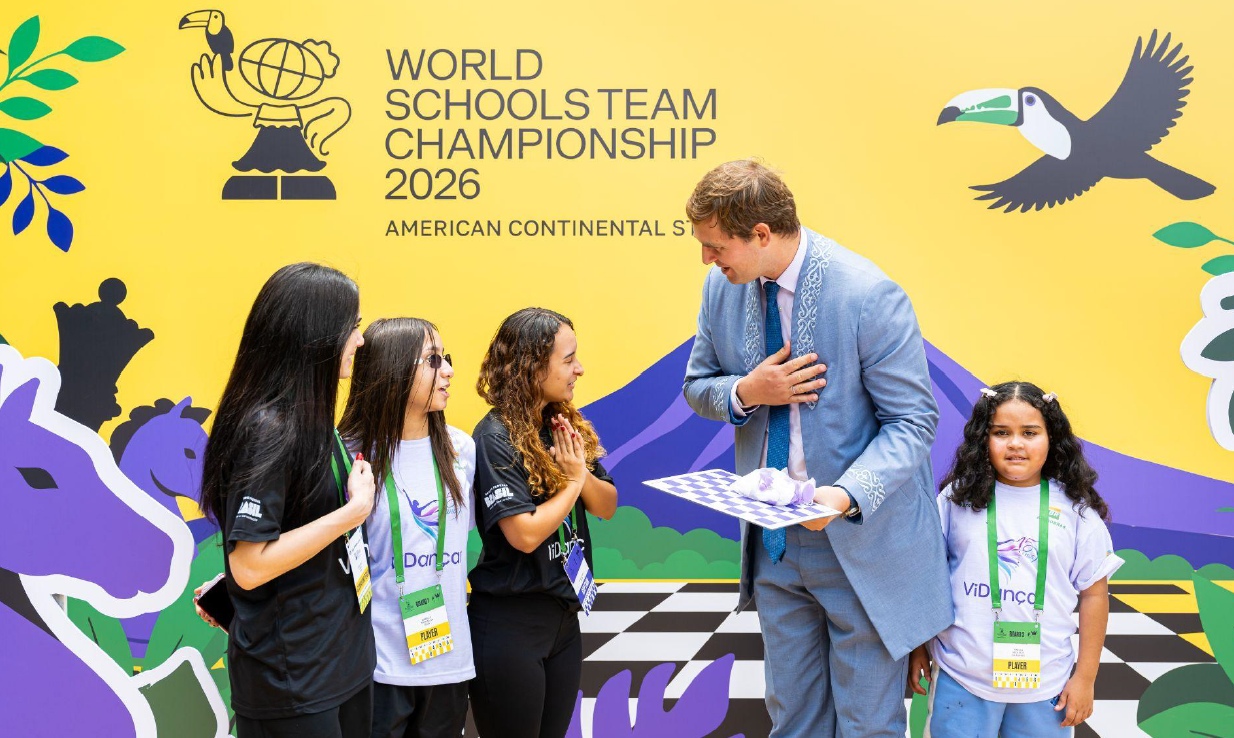
Among the teams in San José is one whose journey began far from any chessboard. Projeto Vidançar, representing Brazil, comes from Rio de Janeiro’s Complexo do Alemão, one of the city’s most challenging favelas. The two girls who travelled to Costa Rica continue a tradition that began at the Asian and African stages of welcoming a girls’ team from an underprivileged community onto the world stage.

Founded in 2009 with 12 girls, Vidançar began as a way to give children a means of self-expression through classical ballet, used as a pedagogical tool alongside lessons in the value of education, respect for others, and self-esteem. To take part, children must be enrolled in school and keep their grades up. Today, the project reaches around 200 boys and girls and has grown well beyond ballet, into hip hop, football, the Brazilian street dance passinho, and, most recently, chess. What began as a dance school has steadily become a broader educational programme, and chess is its newest chapter. Like everything else the project teaches, the game is a tool for concentration, discipline, and confidence rather than an end in itself, and it is what brought two of its students all the way to San José. Its work has sent pupils on to the Teatro Municipal Ballet School in Rio and to the Bolshoi School in Joinville.

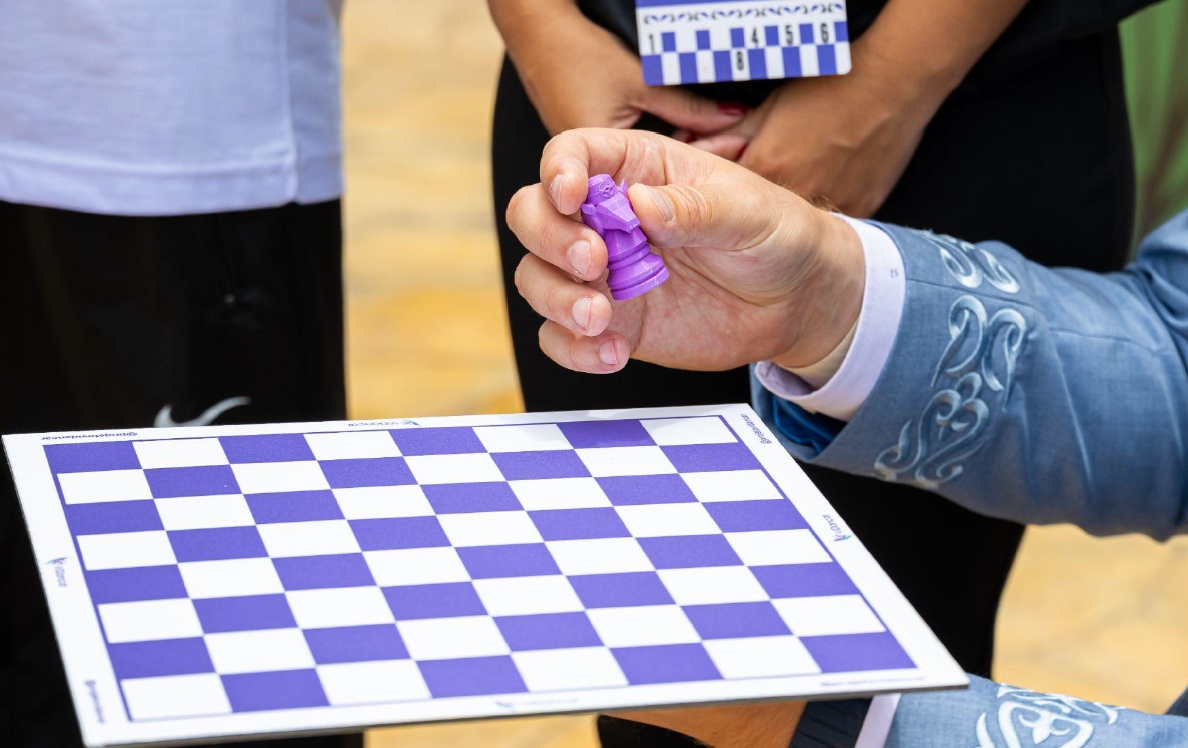
The girls brought more than their results to San José. They presented the ISCF with a set of handmade chess boards made by the project’s own students – a gift that captures what the Year of Chess in Education is about: chess as a bridge, and as a tool for opportunity, wherever a child begins.

Looking ahead

The competition continues tomorrow, 15 August, with the final rounds, as the leading teams push for a place in the Grand Final.

The event is supported by Freedom Holding Corp., the main sponsor of the American Continental Stage and General Partner of the International School Chess Federation, together with the Costa Rican Institute of Sport and Recreation (ICODER). Their continued commitment helps make both the competition and the wider educational and cultural programme possible.

Written by Aruzhan Aldasheva

MORE ON THE TOPIC