

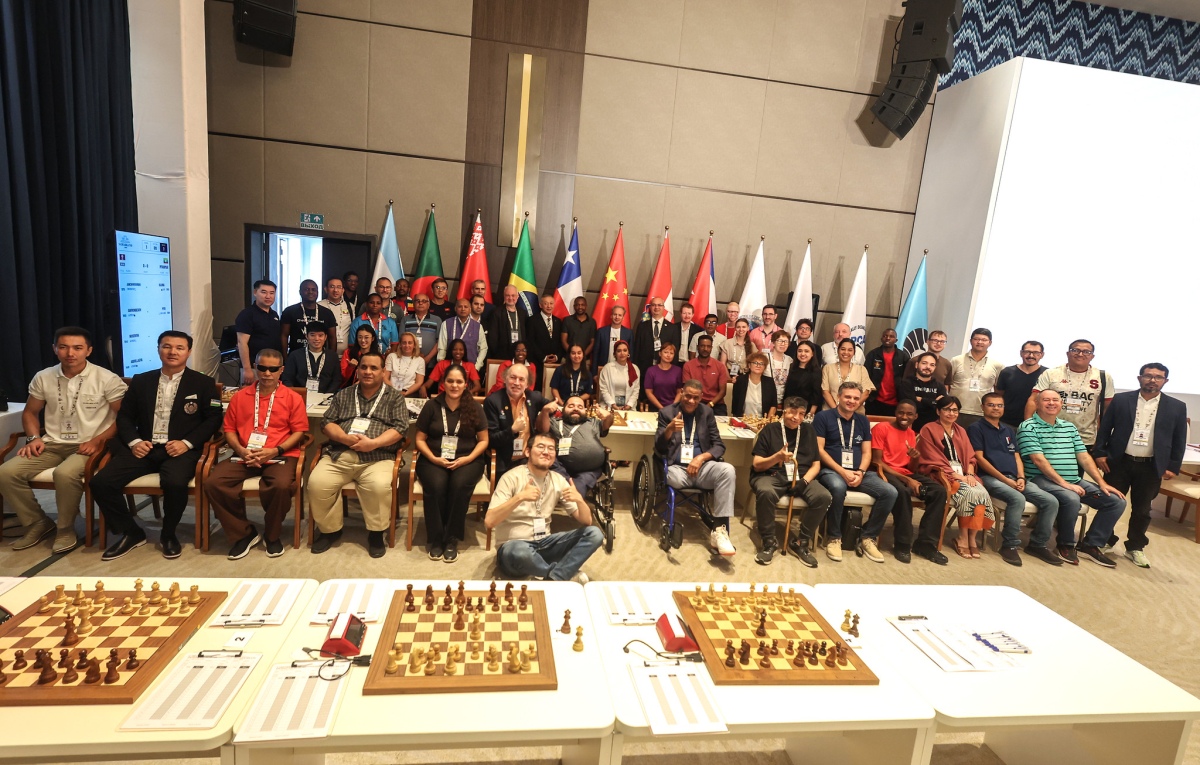
Day 3 of the 3rd FIDE Chess Olympiad for People with Disabilities began with a panel discussion on inclusion and technology in chess before attention returned to the boards, where the race at the top narrowed to just three teams with perfect scores.
The morning discussion brought together players, coaches, officials and federation representatives and followed a presentation by a professor, Dr. Kubanych Takyrbashev, from the American University of Technology in Tashkent.
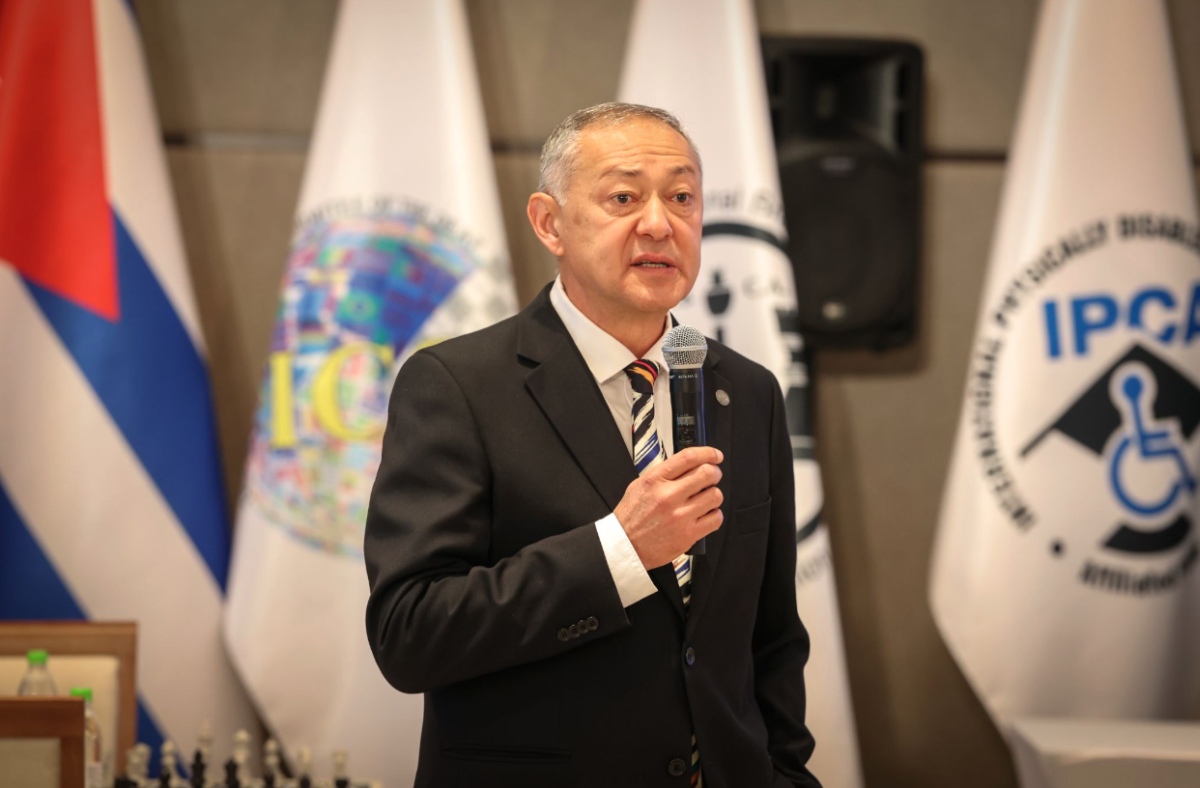
Participants exchanged ideas on how technology can improve accessibility, as well as on education, training, chess in schools and creating more opportunities for players with disabilities.
For GM Thomas Luther, Chairperson of the FIDE Commission for Players with Disabilities, technological development can help reduce barriers.
“People with disabilities have disadvantages, but technology actually can be an equalizer. With technology, we already see that people can work on computers and phones and have all sorts of different gadgets to make their lives better. But now with AI, things come to a new level.”
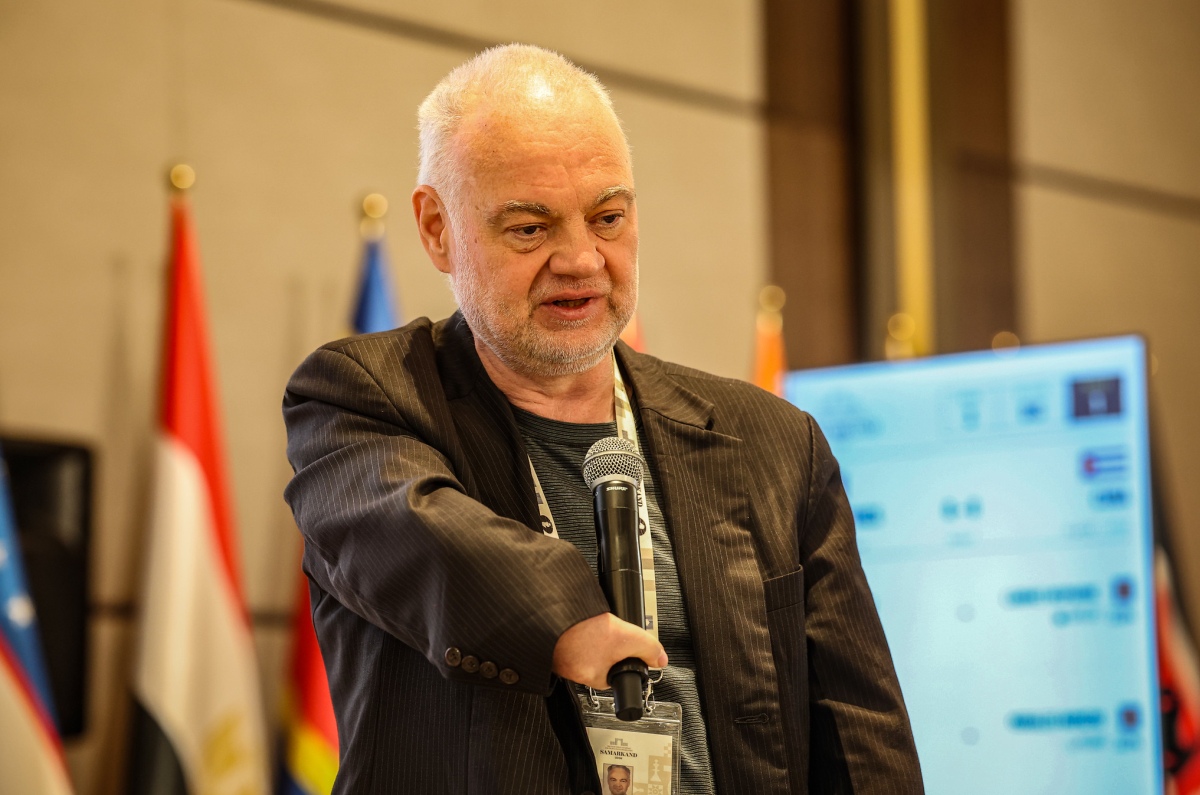
Luther also highlighted the significance of holding the Olympiad for People with Disabilities alongside the 46th FIDE Chess Olympiad in Samarkand.
“It’s not like one event is singled out; it’s overlapping. We are a family in FIDE. Gens Una Sumus is not just a motto – we are really living it.”
For Jamie Kenmure, Chairman of the Asian Commission for People with Disabilities and Chancellor of the FIDE DIS Commission, the discussion also provided an opportunity to listen directly to what federations and players need.
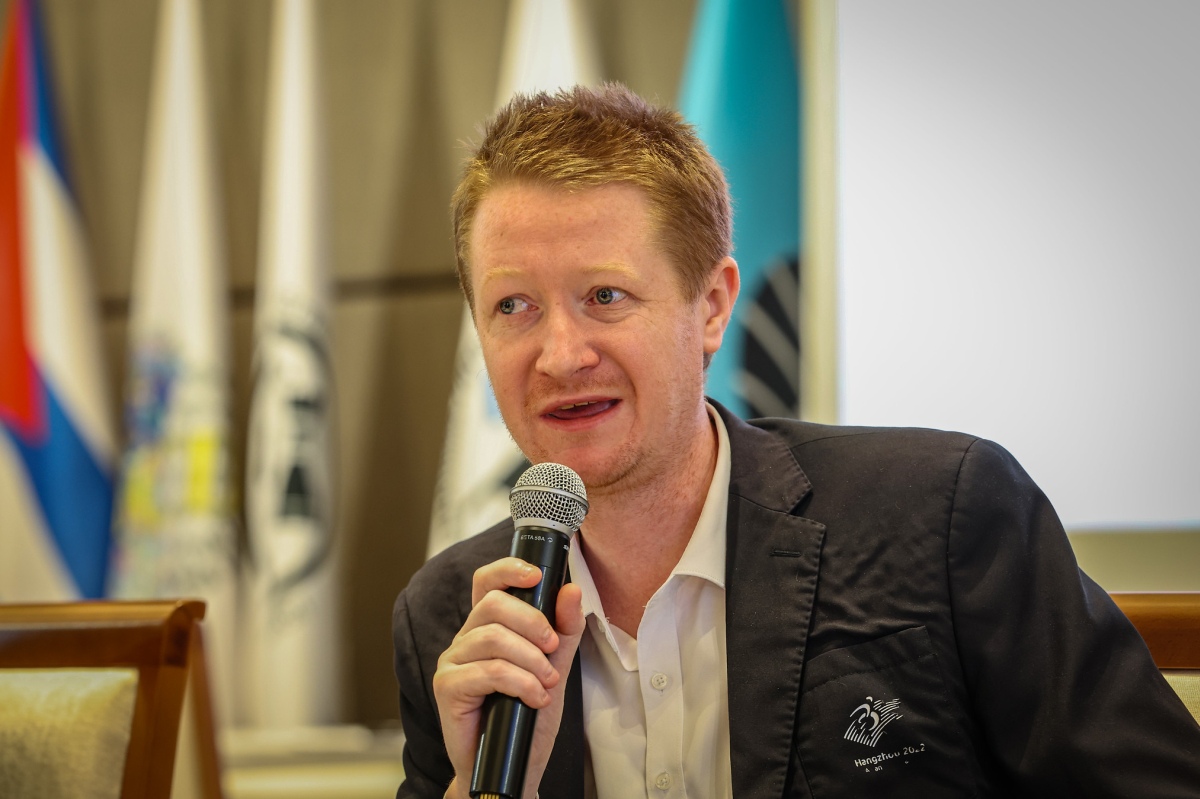
“We need more education, more awareness, visibility, empowerment. This is the key message: empowerment.” And for Kenmure, that empowerment is ultimately about the participants themselves.
“The people who really make the tournament are the players themselves. They are the ones who should feel special. It’s their moment to shine.”
From world champion to coach of champions
One of those players competing in Samarkand is FM Sirojiddin Zaynidinov of Uzbekistan, a two-time world champion in deaf chess whose influence on Uzbek chess extends well beyond his own results.
Zaynidinov lost his hearing after becoming ill at around the age of three. At five, his father introduced him to chess, beginning a journey that would eventually take him to world titles. Growing up, he was often the only deaf child among hearing players at his chess club.
“All the other children in the chess club were hearing, and I was the only deaf child among them. But that never bothered me. I enjoyed playing chess with them.”
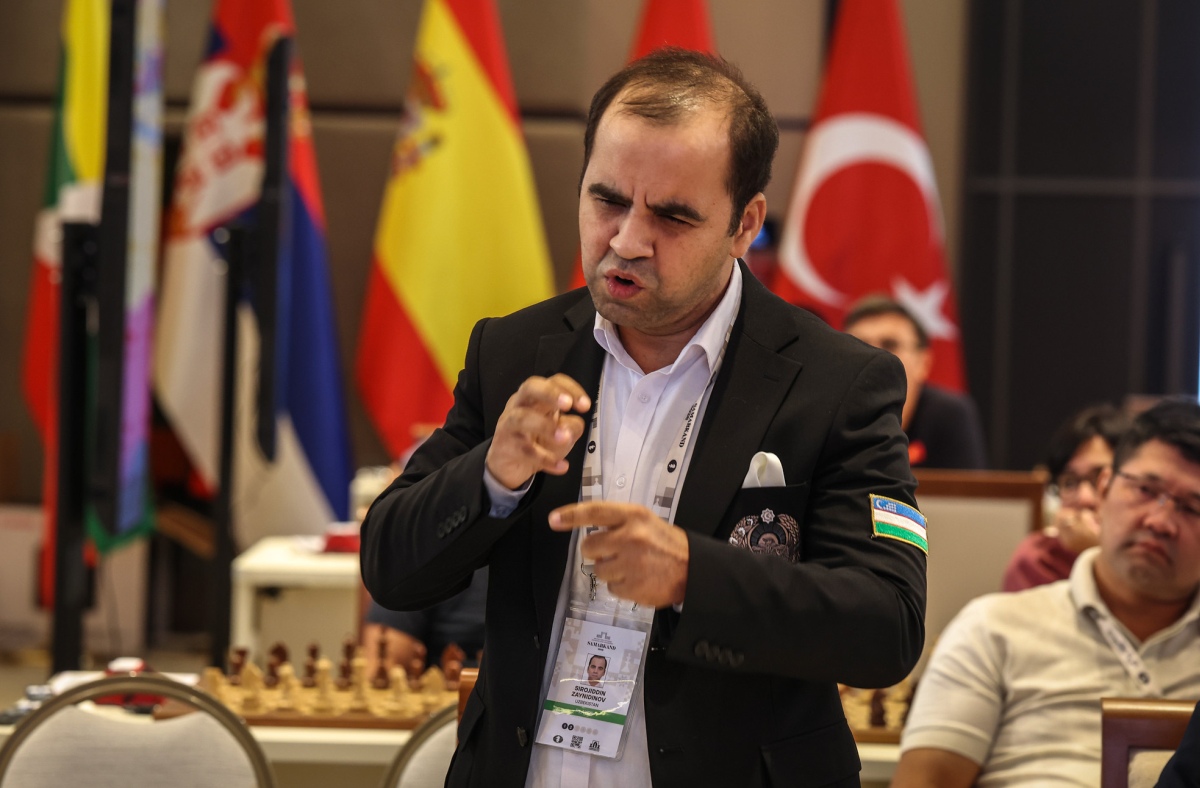
At the age of 14, Zaynidinov won a World Youth Championship in Germany in 2004. Four years later, he won another world title in Switzerland. But after becoming a champion himself, Zaynidinov decided that his next goal would be to help others achieve the same.
“I didn’t want only to be a champion myself – I wanted to teach others and have students who could become champions too.”
Among the children who later arrived at his chess club was five-year-old Javokhir Sindarov.
Zaynidinov immediately recognised his potential. Communication initially required some adaptation: he used visual explanations and repeated words when necessary, while Sindarov gradually learned to understand his articulation and speech. The young player’s progress was rapid. By eight, Sindarov’s rating was already around 1900.
“I was convinced that by the age of 12 he would become a grandmaster. I had that feeling. I was sure of it.”
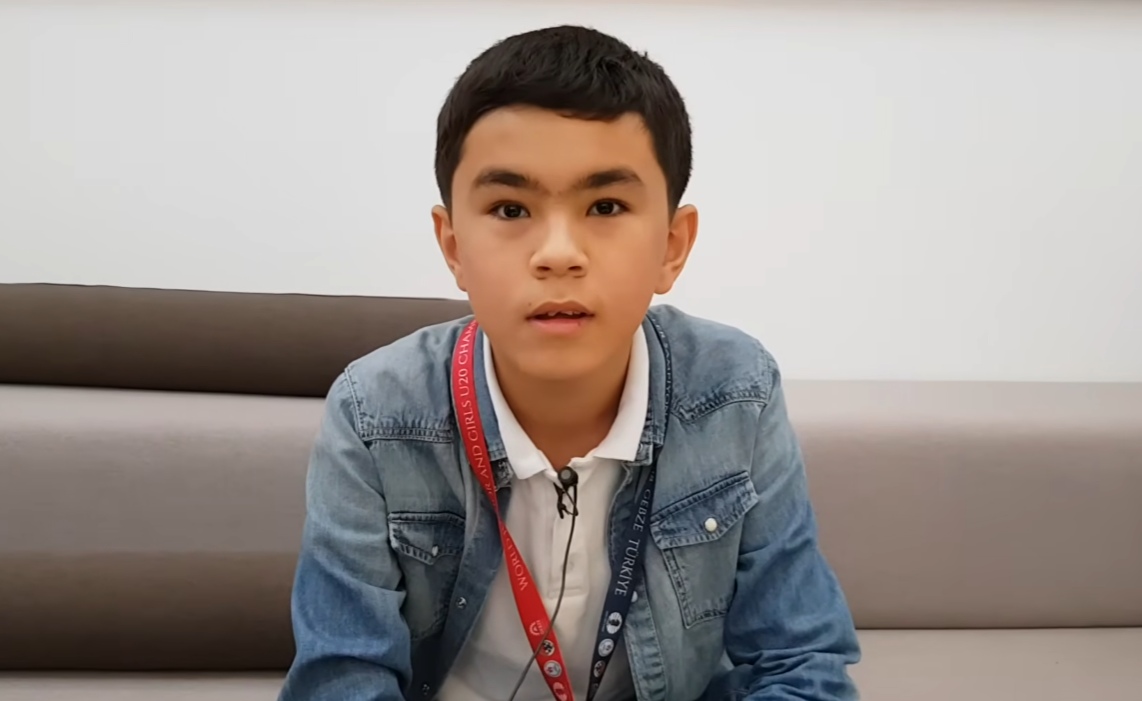
Sindarov later continued working with other coaches, but Zaynidinov had provided the foundation. His student’s success also brought more parents and young players to Zaynidinov’s chess club. The relationship between the two has remained strong.
“When he became a champion, he would still come to me and greet me. I am very happy that he has never forgotten that I was his teacher.”
Their paths now cross again in Samarkand: Zaynidinov is competing in the Olympiad for People with Disabilities, while Sindarov is preparing to play in the 46th FIDE Chess Olympiad.
A first Olympiad for Eswatini’s Mlandvo Khumalo
For Mlandvo Khumalo of Team Eswatini, Samarkand represents a different milestone: his first FIDE Chess Olympiad for People with Disabilities.
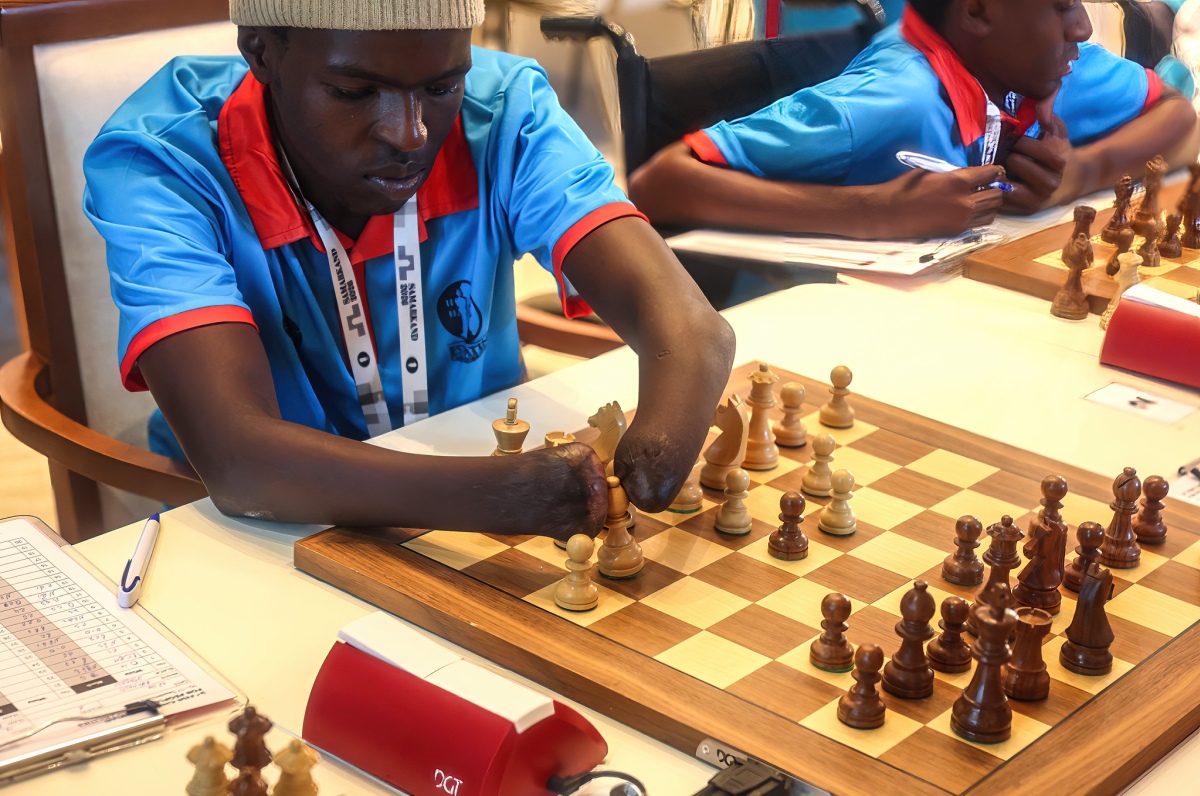
Khumalo discovered chess at secondary school after his teacher, Mr Malaza, encouraged him to try the game. At first, he was unsure whether chess was for him.
“The first time he said that I must try it, I thought this was a game for other people, not for someone like me. But he gave me the energy to go and play chess.”
Once Khumalo began learning the moves, his perception changed. His school team later finished second in a tournament, strengthening his desire to continue.
“That was when I realized that I have to play chess, and that it is a good sport. It opens the mind.”
Khumalo lost both hands following a serious illness during infancy. Today, he manages most aspects of everyday life independently: he writes, uses his phone and plays chess, moving the pieces with his arms. In Samarkand, however, the experience has been about more than the games.
“I like playing with different teams, getting to know different people and seeing different kinds of people. It makes me feel inside that I am part of the people.”
And his description of what happens when a game begins reveals the enthusiasm that brought him this far.
“When the opponent pushes the pawn, I feel like we are in a war. I like to defend. It makes me excited, and it opens my mind.”
Three teams on 6/6
On the boards, Round 3 significantly narrowed the group at the top of the standings.
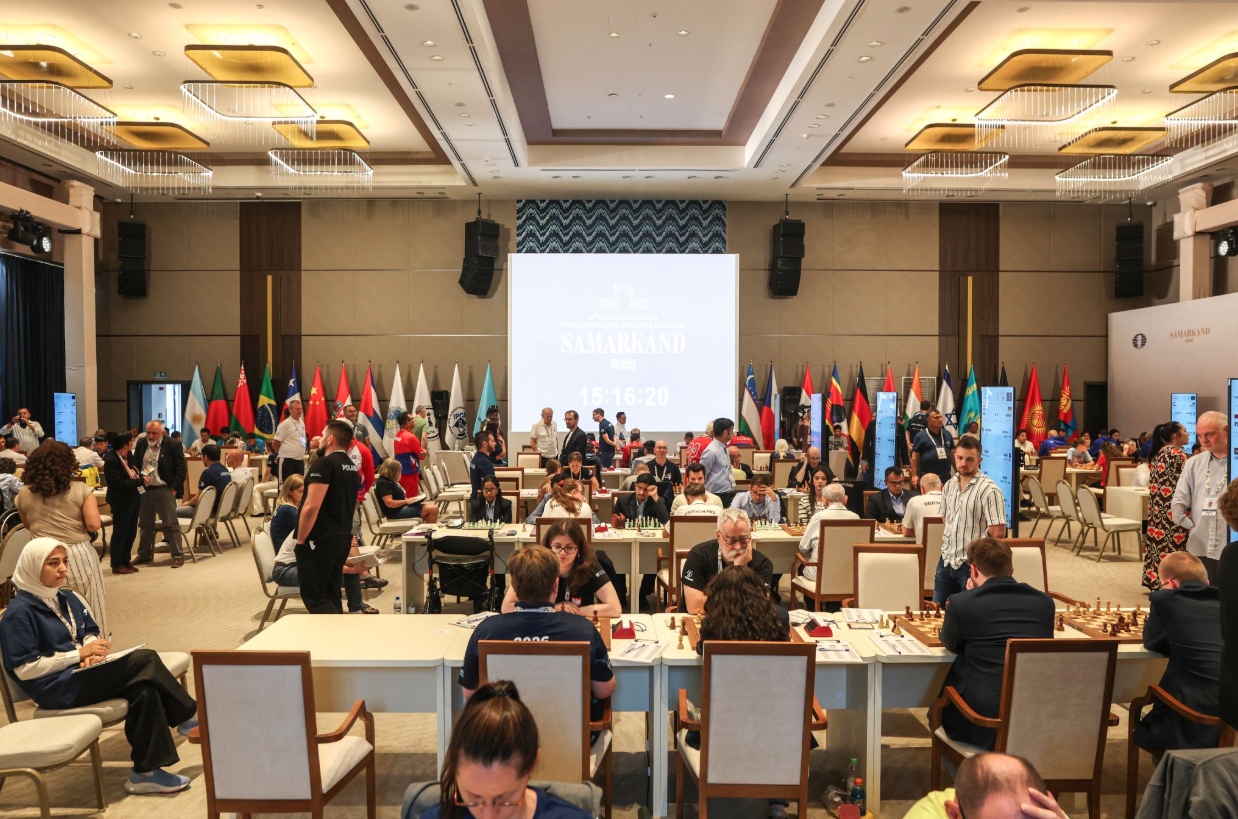
After eight teams entered the day with perfect scores, only Cuba, Israel and the Czech Republic emerged from the third round on 6/6.
The result sets up a direct confrontation between two of the leaders in Round 4, when Cuba face Israel, while the Czech Republic take on Germany.
With the tournament moving towards its decisive stages, the leading group is beginning to take shape – but the stories emerging from Samarkand continue to extend well beyond the standings.
From a two-time world champion among deaf who went on to become the first coach of Javokhir Sindarov, to a first-time Olympiad participant from Eswatini who once wondered whether chess was a game for him at all, Day 3 reflected the different paths that have brought players to the same boards in Samarkand.
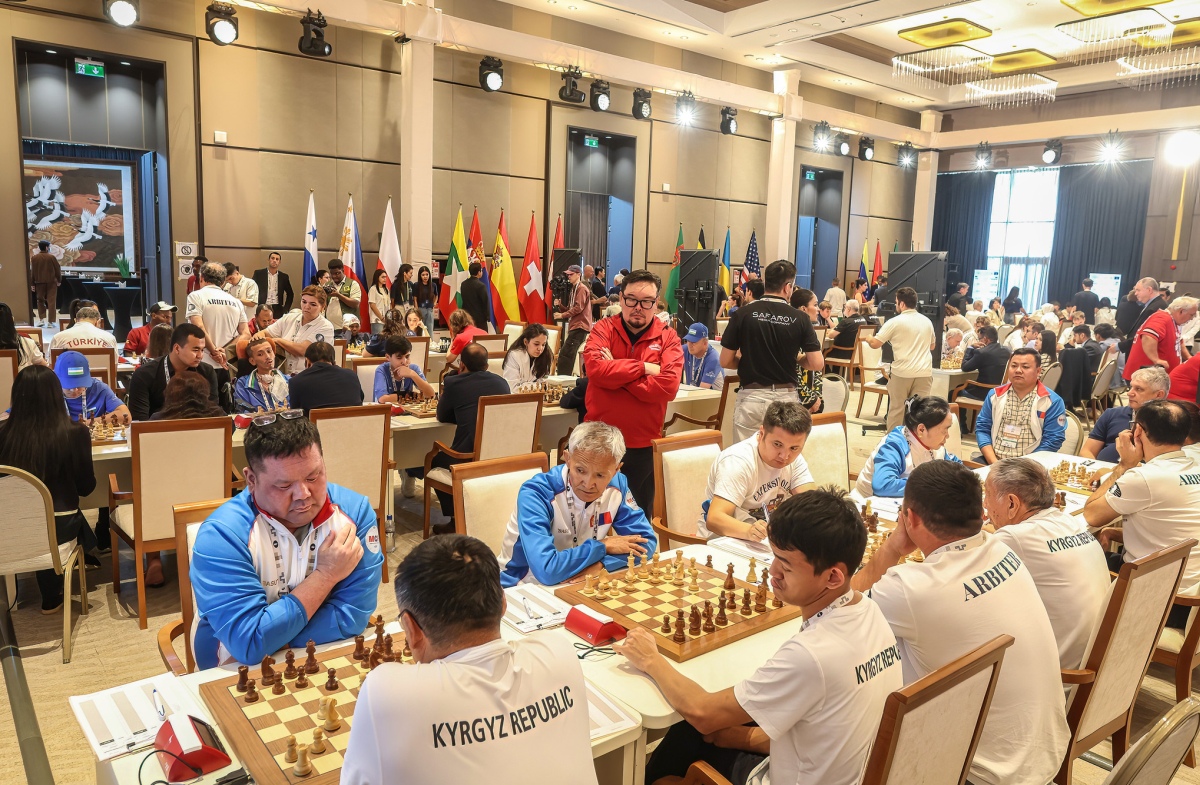
And as the competition enters Round 4, three teams remain perfect – with one of those perfect records certain to be tested when Cuba and Israel meet head-to-head.
You can find results of the Round 3 and pairings of the Round 4 on Chess-results.
Follow the games live.
FIDE Chess Olympiad for People with Disabilities official website: https://dis-olympiad2026.fide.com/
Written by Angelika Valkova
Photo: Mark Livshitz, Andrey Anosov and ChessBase India