


Season 4 of the Tech Mahindra Global Chess League ended in Bengaluru with a new champion and a clearer sense of what the competition is becoming.
The fourth edition of the Tech Mahindra Global Chess League that just finished in India’s tech hub of Bengaluru brought us much more than chess. After Dubai, London, Mumbai, season four in Bengaluru stood out not primarily because of the unique league format, but because GCL felt like a real league.
Here are some key things GCL Season Four showed and what they mean for the wider chess world and the future of the sport.
The competition produced genuine league unpredictability
One of the key tasks for any sports competition is to produce the excitement and anticipation among fans. Since its inception, the GCL has gradually grown the competitive aspect of the event, weaving it into the fandom around the teams. Season four had the closest league stage in GCL history: all six franchises remained in contention for the top four places deep into the final rounds. The two eventual finalists even lost their last round-robin matches before qualifying thanks to their overall tournament performance.
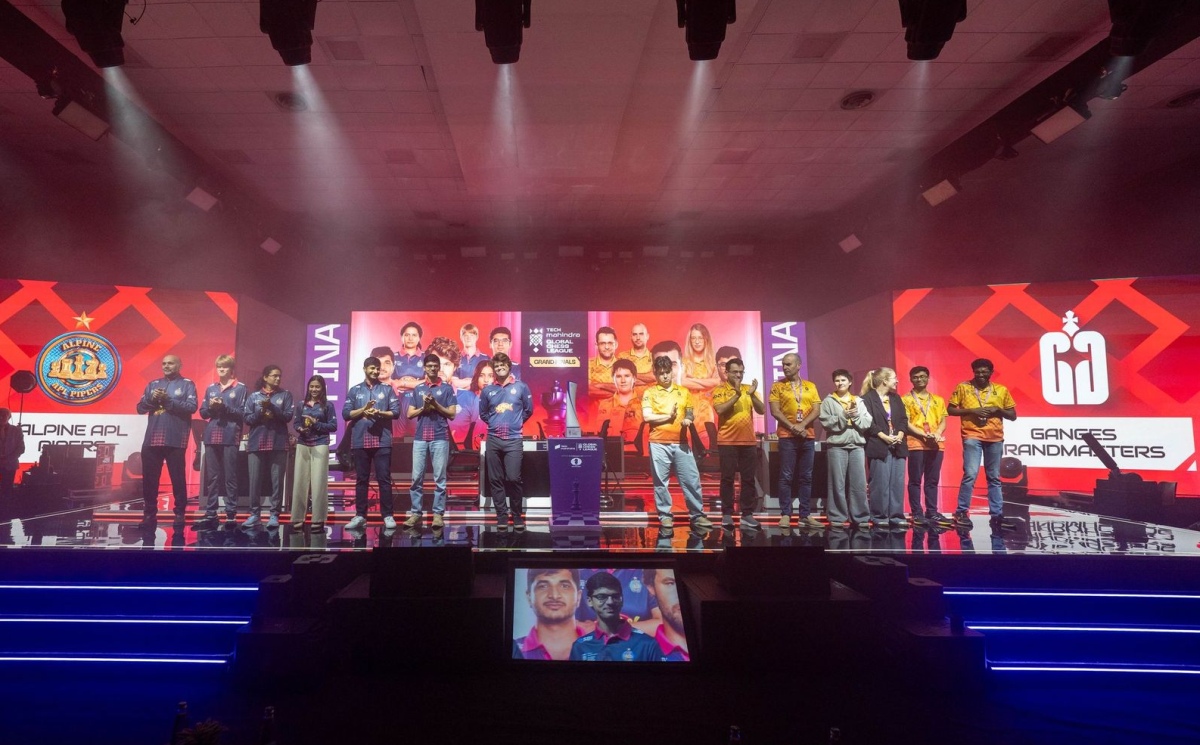
While in previous seasons the story was often more about a dominant team, this year the unique scoring system, equal board weighting and team depth genuinely affected qualification. It felt as though the teams had finally internalised the format and learned how to adapt to its demands.
This is also a sign that the unique GCL rules – on team format, playing structure and scoring – create something different from having just six simultaneous individual chess games.
Ganges winning is arguably the best franchise story GCL has produced
Ganges Grandmasters won their first GCL title. They entered the race in a difficult position. Ahead of the Season 4 draft, the team changed operators, with Team MGD1 owners stepping in to assist the team and select a squad for Bengaluru. Under coach Adhiban Baskaran, the new squad performed spectacularly in the league and reached the finals, where they beat Alpine APL Pipers. This made Ganges Grandmasters the third victors in the four seasons of GCL so far, after Triveni won the first two and Alpine won Season 3.
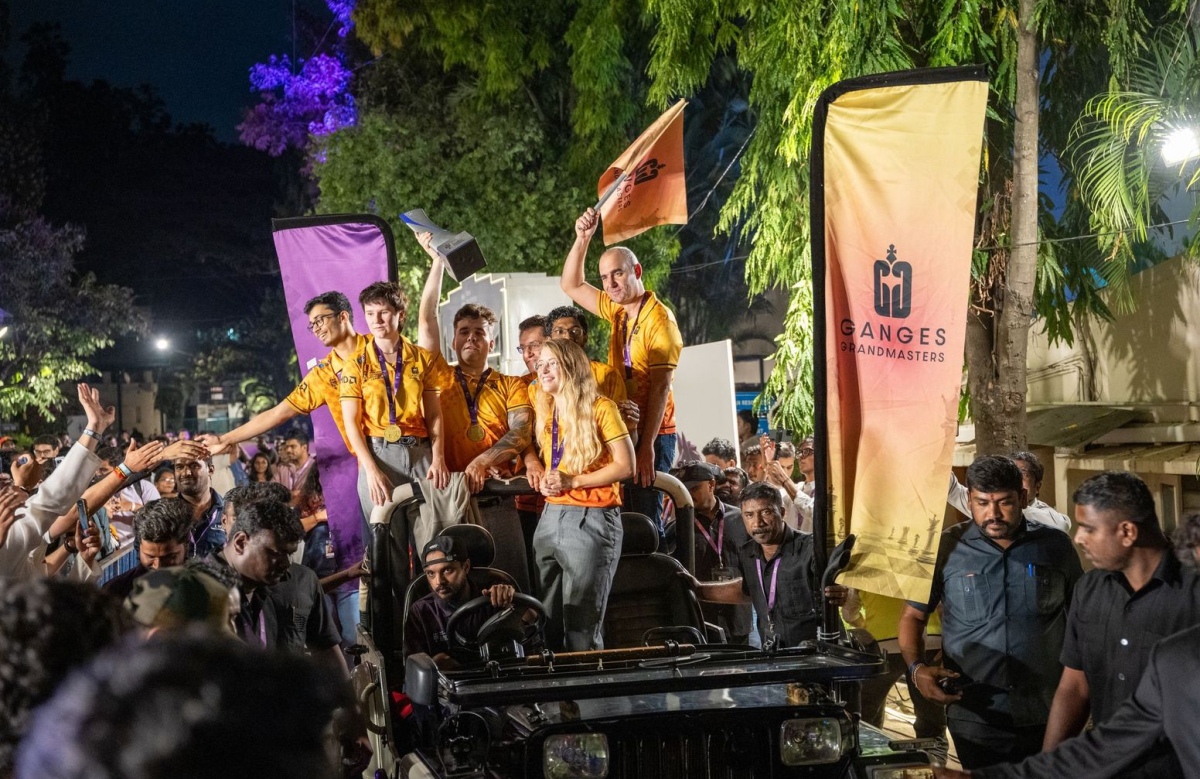
The team concept proved stronger than the superstar concept
Although the return of Magnus Carlsen to the league (following a pause in Season 3) was a major news story, Bengaluru showed that GCL is about the team and not the individual. Despite Alpine boasting someone like Carlsen, in the end they were beaten by a side whose decisive strength came across the roster, rather than from one player.
There were also other moments, noticeable throughout the season: the emotions, including tears and visible disappointment from players after missing a win for the team.
The symbolic moment of Season 4 was the final: Nepomniachtchi beat his old nemesis Carlsen, but Stavroula Tsolakidou’s victory over Koneru Humpy sealed the championship. Thanks for her great performance – six wins and three draws – Tsolakidou finished as Player of the Tournament and also won a motorcycle – a Jawa bike – an unusual award in chess tournaments.

Overall, season Four showed women playing decisive roles throughout the competition, offering clear evidence that the mixed-team format affects sporting outcomes rather than serving as a symbolic feature.
Season 4 looked more like a sports-entertainment product than the earlier editions
One of the key aspects which make GCL stand out when compared to other chess initiatives is its emphasis on entertainment. An audience-first experience, trying to bring chess closer to the casual viewer, regardless of their knowledge of chess.
The production in Bengaluru involved more than 30 cameras constantly rolling across all the halls, live DGT feeds, real-time evaluation graphics. For the first time in GCL, there was an independent English and Hindi live feeds, noting the relevance of the Indian stamp and influence on the project.
The broadcast was structured so that it creates an explicit bridge between traditional sport, gaming and esports, emphasizing the versatile nature of chess as a sport.
The fan-facing layer was also highly emphasized in this season – app-based prediction, audience involvement, Road2GCL events and planned/experimental AR/VR and physical AI elements tested new opportunities and pathways for audience engagement.
GCL had publicly promised that Season 4 would be a “bigger, bolder” version of the previous seasons with a significantly larger fan setup and technology layer and this was delivered in Bengaluru.
The rising audience momentum
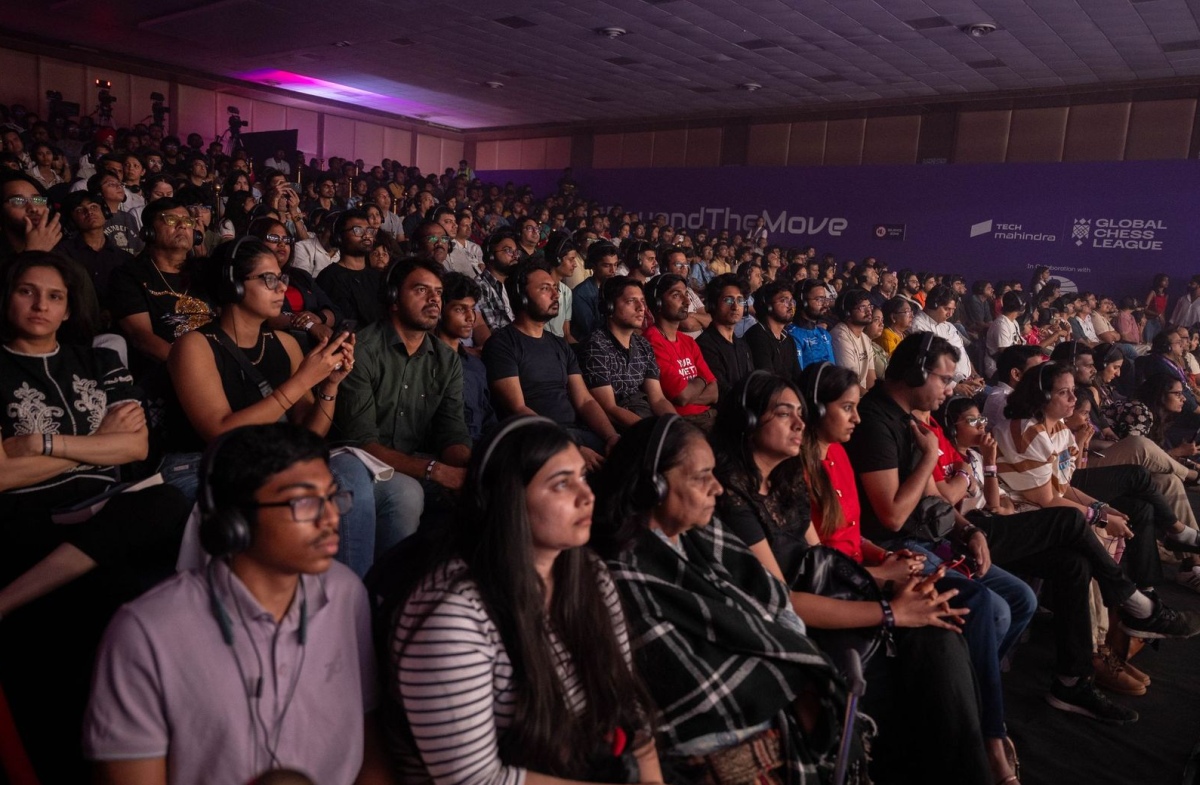
Throughout the nine days of Season Four, the venue in Bengaluru was packed. In addition to that, according to GCL data, online engagement soared significantly. Compared to season three, GCL increased the number of YouTube subscribers by more than 80,000 to 104,000, while the Instagram following grew from 60,000 to more than 145,000.
The data follows a trend set since season one – a 65% growth in reach and 2.4x growth in media value from Season 1 to Season 3.
Taken together, the stronger conclusion is no longer simply that GCL wants to grow chess audiences. There is now measurable evidence that the audience around the league is expanding.
Carlsen helped the league – but the league produced a story bigger than Carlsen
Magnus Carlsen’s return to GCL was unquestionably the strongest promotional asset. But strategically, the fact that GCL did not end with Carlsen or his team simply winning everything proved how strong the format is.

While stars attract the audience, the league can still create outcomes the stars do not control and this unpredictability helps GCL’s unique status in the chess world.
Bengaluru strengthened the India story – but also clarified the global challenge
Season 4 showed why India is compelling for GCL: a large chess audience, strong live atmosphere, enormous young-player ecosystem, technology industry and an increasingly mainstream culture around the game.
GCL explicitly positioned Bengaluru as the intersection between chess and India’s technology economy and this was obvious with big tech sponsors signing up to the league (the likes of AMD, Cisco, Google Cloud and others).
But two consecutive Indian seasons also reinforce the strategic question: Can GCL use India as its growth engine without becoming perceived internationally as an Indian domestic league?
Season 4 gave it stronger evidence for the first half of that proposition. Season 5 will probably need to demonstrate the second.
Peeyush Dubey, chairperson of the Tech Mahindra Global Chess League:
Chess can become mainstream without changing the fundamental character of the game
Peeyush Dubey, chairperson of the Tech Mahindra Global Chess League and the company’s Chief Marketing Officer spoke openly about what Season 4 of GCL has brought and what it means for the future of chess.
Q: What has GCL Season 4 shown and how did it differ from the previous ones?
PD: Season 4 showed us that GCL is beginning to mature from an innovative format into an established part of the global chess ecosystem.
What felt different in Bengaluru was the intensity around the chess. We had packed stands, fans cheering teams and reacting collectively to moments on the board, and a league table that remained alive until the final match of the preliminary stage. There was a sense of jeopardy and emotion that you associate with the best live sport.
We also saw the team concept mature significantly. Players were not simply playing their own boards; they were living every move of their teammates’ games. The camaraderie, the celebrations and even the disappointments felt genuinely collective.
And we had wonderful, unscripted stories: from Ganges Grandmasters emerging as champions to some extraordinary individual performances across the men’s, women’s, and prodigy boards.

Q: What are your biggest impressions and learnings from Season 4?
PD: My biggest learning is that chess can create the emotion and theater of mainstream sport without changing the fundamental character of the game.
We saw packed stands where people were cheering teams, reacting together to critical moments, and following the permutations of who could reach the final. We saw similar momentum digitally, with our YouTube subscriber base growing fivefold and our social following doubling during the tournament.
The second learning is that the team format is becoming real for the players themselves. This is no longer simply six individual players wearing the same jersey. One of my favourite moments was when Magnus was named Player of the Match and handed his award to Vidit because he believed his teammate deserved the recognition. You cannot manufacture moments like that.
And perhaps the most exciting learning is that the format can create new heroes and new stories. Magnus Carlsen and Vishy Anand naturally attract enormous attention, but we also saw Stavroula Tsolakidou emerge as Player of the Tournament, Harika Dronavalli go through the season unbeaten, Pranesh emerge as an unexpected star, and Ganges Grandmasters become the champions.
For any sporting property to grow, it has to continually create new stars, rivalries, loyalties and stories. Season 4 showed that GCL can contribute to doing that for chess.
Q: What impact do you think this event will have on the chess community in India and more broadly?
P.D: India is going through an extraordinary chess moment. We have world champions, a remarkable generation of young players, and millions of new people engaging with the game. But I think the opportunity goes beyond producing great players.
India has an opportunity to contribute not only chess talent to the world but also new ideas about how chess can be experienced.
One of the things I particularly value about GCL is the combination it creates: the world’s leading men and women, established champions and young prodigies, all contributing to the same team result. It gives fans an opportunity to discover players they may not otherwise have followed and creates new role models for young chess players.
What we saw in Bengaluru was particularly encouraging because the audience wasn’t limited to traditional chess followers. There were families, children, serious chess enthusiasts and casual sports fans all experiencing the same event.
Chess already has an extraordinary global and digital community. GCL can complement the rich tradition of individual chess by adding another dimension – teams, rivalries, shared identities and an annual league narrative.
If we can bring new audiences into chess while also giving existing chess fans another way to enjoy the game, that is good not just for GCL but for the entire chess ecosystem.
Q: What now after Season 4?
P.D: We are already looking ahead. FIDE has confirmed the dates for Season 5 from September 3–11, 2027, so we have begun thinking about how we make the next season even bigger and better.
The first four seasons have taught us a tremendous amount and demonstrated that there is a real appetite among players, fans, partners and franchises for team chess at this level. Now the focus is on building GCL for the long term.
That means deepening fan engagement beyond the days of competition, continuing to improve the player, live and broadcast experience, and bringing GCL to more audiences around the world.
Bengaluru has also given us a lot to think about. The response from the city was exceptional, and it raises interesting possibilities about the role a strong home can play in building tradition and affinity around the League.
But ultimately, our objective is not simply to make Season 5 bigger than Season 4. The opportunity is to build GCL into an annual celebration of chess that the world’s best players look forward to playing and fans look forward to watching, and that adds something distinctive to the global chess calendar.
Photos: Global Chess League