

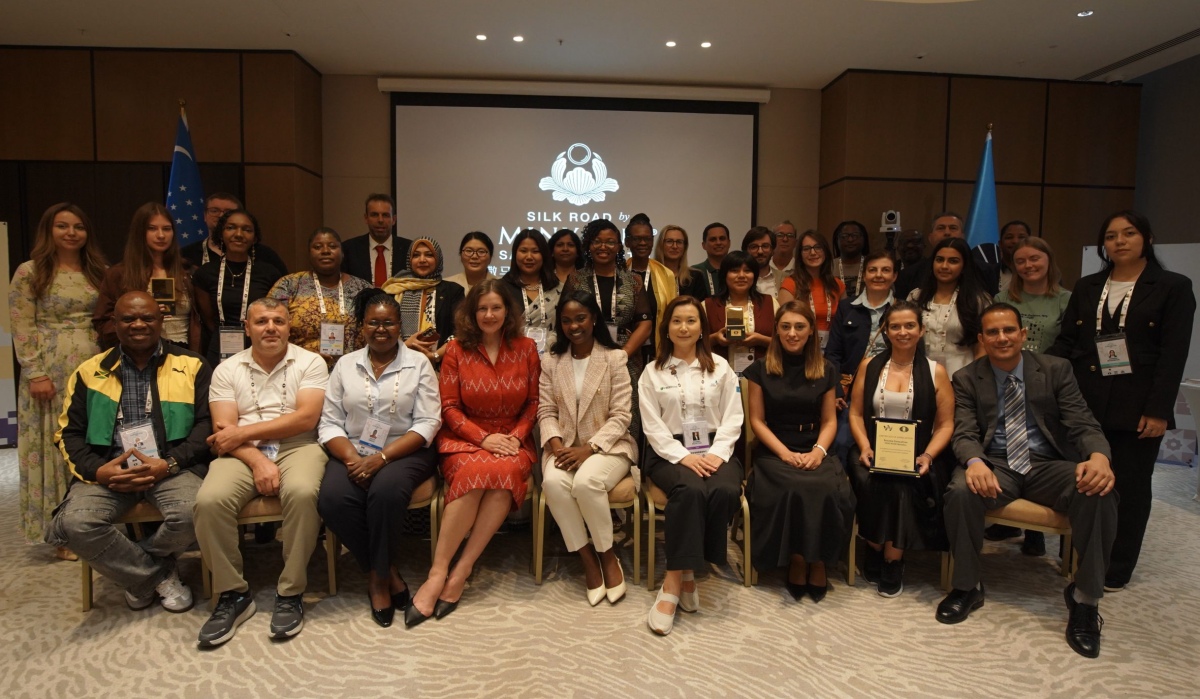
The FIDE Commission for Women’s Chess (WOM) held its 2026 Commission Meeting on September 22 in Samarkand, bringing together FIDE leadership, Commission members, invited speakers and guests to discuss the development and future of women’s chess.
Themed “Beyond the Board: Women, Innovation and the Business of Chess,” the meeting explored opportunities for women across the wider chess ecosystem – from playing and education to media, entrepreneurship, leadership and business – while reviewing the Commission’s projects and recognizing the people contributing to its work.
Women in chess: Beyond playing
Opening the meeting, Dana Reizniece, Acting Chair of the FIDE Management Board, reflected on the progress made in recent years and stressed that increasing women’s representation in chess means looking far beyond the number of female players.
“When we speak about women in chess, it’s not only about players. It is about so many other professions that we see in the chess world where women are underrepresented: as an arbiter, a trainer, a fair play officer, a commentator, and in the leadership positions. And this is our common task to change.”
Reizniece highlighted the work undertaken through initiatives for girls, training programmes, projects supporting refugees and efforts to create new women’s Olympiad teams. She also pointed to the record number of women’s teams participating in Samarkand as an encouraging sign of progress.
The meeting then featured a special session with the three candidates for the FIDE presidency: Wadim Rosenstein, Timur Turlov and Jan Henric Buettner. With women’s chess forming an important part of FIDE’s activities and the wider chess community, the presence of all three candidates gave the meeting a chance to address the subject within the broader conversation about the federation’s future.
Building a safe environment for women and girls
GM Viswanathan Anand, FIDE Interim President, reflected on the work of the Women’s Commission over the past four years and the continued growth in female participation.
Anand also gave the discussion a personal dimension when speaking about the ChessMom initiative, recalling that he himself had learned chess from his mother. He stressed that alongside increasing participation, creating an environment in which women and girls feel safe must remain a long-term priority.
“We are very committed to making chess a very safe space. It has to be a place where, especially for a parent of a young girl, you don’t have to think about it – it’s completely okay to send my daughter to play chess. That’s the long-term goal.”
Anand also highlighted initiatives including the online women’s chess festival and Women’s Chess Day, and emphasized the importance of continuing to raise both participation and the profile of women in chess.
Tris-Ann Richards: Safeguarding must be a priority
Tris-Ann Richards, Chair of the FIDE Commission for Women’s Chess, then presented an overview of the Commission’s work and projects over recent years, while also turning attention to one of the most serious issues discussed during the meeting: safeguarding.
Richards referred to research conducted through the Commission, including the recently completed global survey. According to the figures she presented, two in five of women surveyed reported having faced sexual harassment within a chess setting, three-quarters reported experiencing discrimination or harassment, and almost half had considered leaving chess.
For Richards, the findings reinforce the need for safeguarding procedures to become an integral part of the way chess events and organizations operate.
“I’m very adamant on a clear policy being established to deal with such incidents, a clear FIDE policy, and that each national federation has procedures to deal with incidents like this when they occur. What I hope and will work towards is that every event, every major chess tournament, will make public what their safeguard measures are.”
Richards also advocated safeguarding training for officials, including arbiters and trainers, independent investigative procedures, and clearer information at tournaments on how participants can report harassment or discrimination.
At the same time, she pointed to progress in women’s participation and acknowledged the work of Commission members and supporters, while stressing that further work remains.
From chess player to chess professional
The programme continued with reports and presentations demonstrating the different ways women can participate in and build careers through chess.
Ulkar Umudova presented the Queens & Princesses initiative and its latest developments, highlighting a project designed to create opportunities for women and girls to participate, compete and connect through chess.
WIM Fiona Steil-Antoni then spoke on “From Chess Player to Chess Entrepreneur: Building Opportunities On and Off the Board.” A chess player herself, Steil-Antoni has also developed a professional career in the game as a commentator, interviewer and host, offering an example of how a connection to chess can evolve into professional opportunities beyond tournament play.
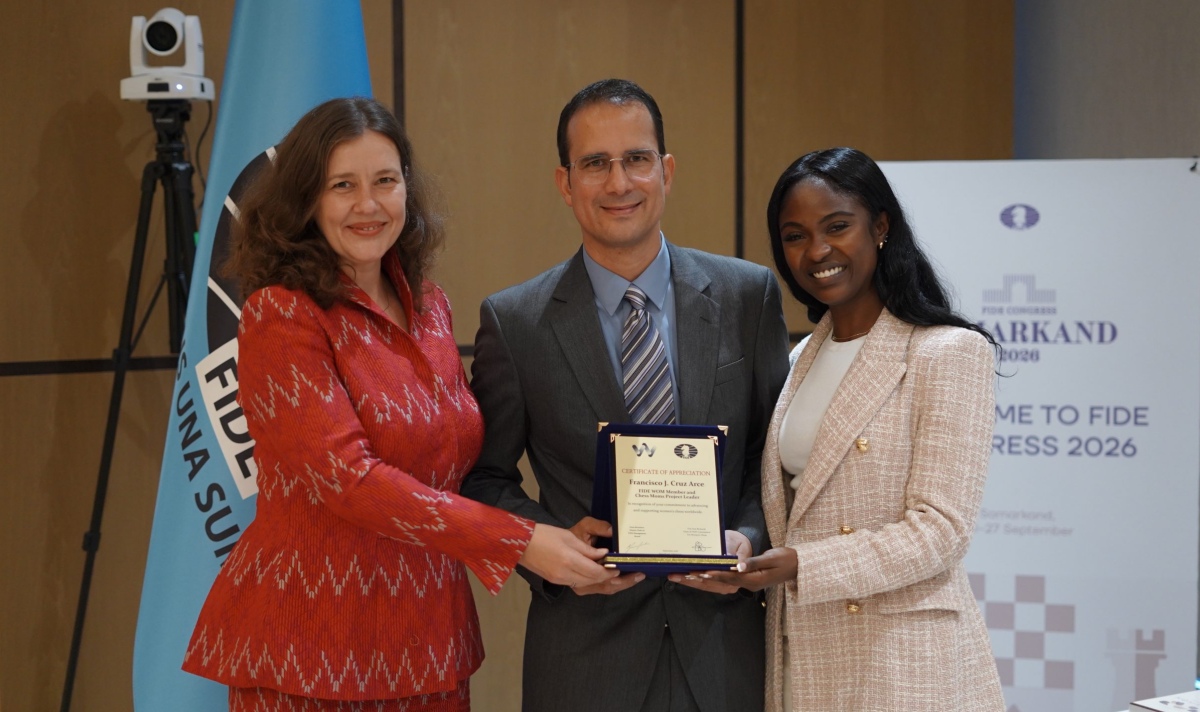
The focus then moved to motherhood and chess. Francisco Cruz, Deputy President of the Confederation of Chess for Americas and a WOM Commission member, presented the ChessMom initiative, which addresses some of the challenges faced by chess-playing mothers and explores how the chess community can better support them.
The business of chess
Another dimension of the “Beyond the Board” theme came from Sagar Shah, whose presentation, “The Business of Chess: Opportunities, Investment & The Future of the Chess Industry,” examined the expanding professional ecosystem around the game.
With chess increasingly creating opportunities in media, technology, education, events, content creation and entrepreneurship, the presentation looked at where the chess industry is heading and what new professional possibilities its development can create.
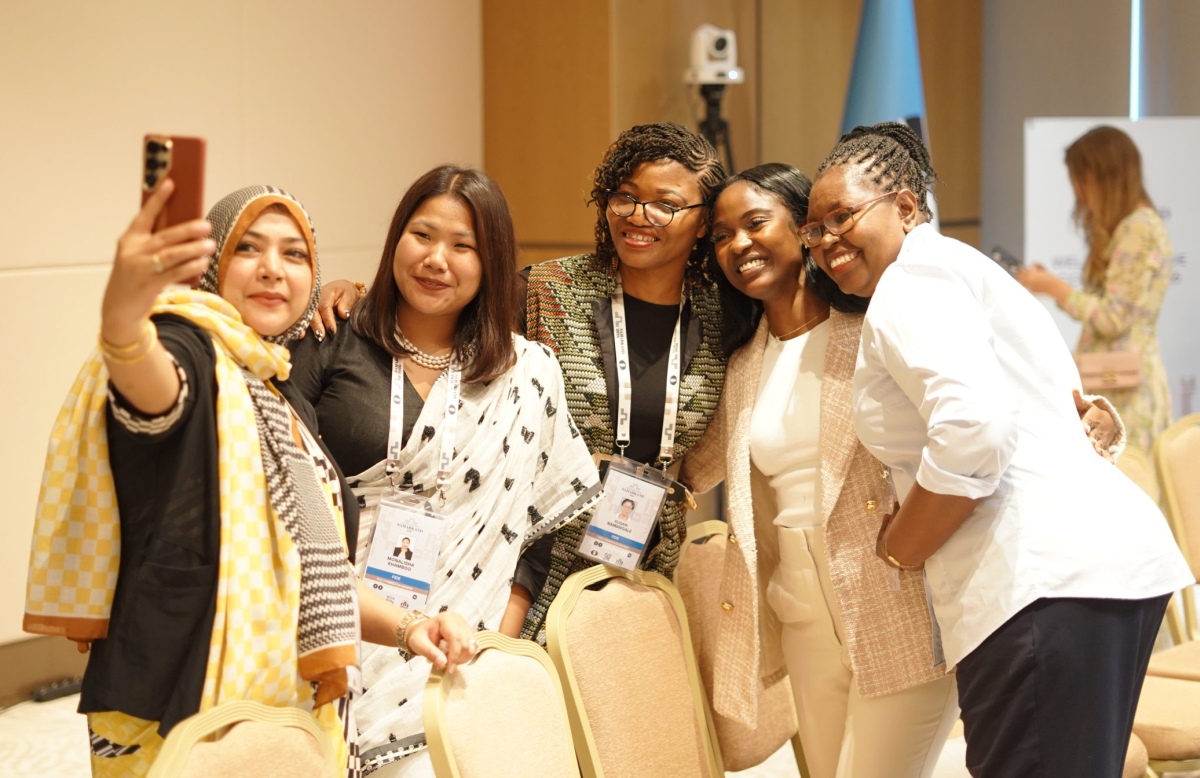
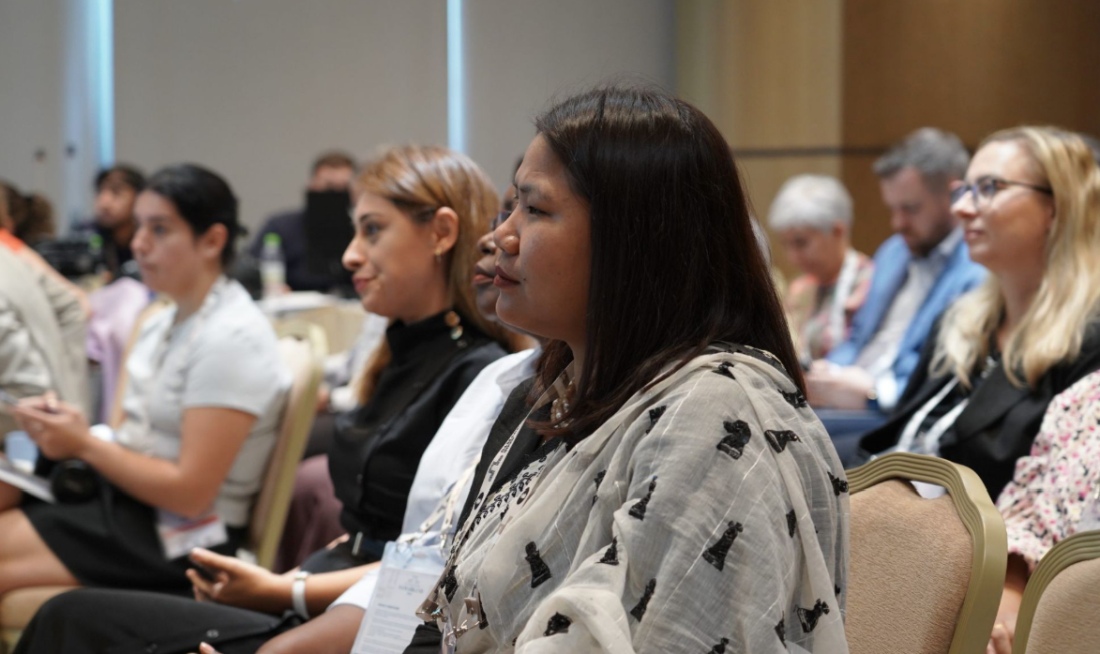
The Commission reports continued with Susana Alexandra Gonçalves, Marco Biagioli and Monalisha Khamboo (pictured below), who presented updates on WOM projects and ongoing work.
Pathways, potential and data
Joining the meeting online, Christina Aziz presented “More Than Players: Women’s Pathways, Power & Potential in Chess.”
A Gambian-Lebanese chess educator, FIDE Senior Lead Instructor and Arbiter, Aziz shared her personal journey and reflected on the pathways, challenges and possibilities available to women beyond competitive play. Alongside her work in chess education and inclusion, she is also a medical student at the University of St Andrews in Scotland.
The presentation programme concluded with Arhan Boyd, who introduced the Global Survey and Women in Chess Index 2026, moving the discussion from individual experiences to data and the broader landscape of women’s participation in chess.
Recognizing the people behind the work
The final part of the meeting was dedicated to recognizing those contributing to the work of the Women’s Commission.
Tris-Ann Richards presented the WOM Commission Member Recognition Awards. Certificates of appreciation went to Paris Klerides, Ken Koort, Judy Karigu Kiragu, David C. Smerdon, Gulmira Dauletova, Francisco J. Cruz Arce, Katrin Didriksen Apol, Chen Mei Fang Dina, Ulkar Umudova, Monalisha Khamboo, Yilmaz Kartal, Anna Kantane and Susana Gonçalves, recognizing their commitment to advancing and supporting women’s chess worldwide.
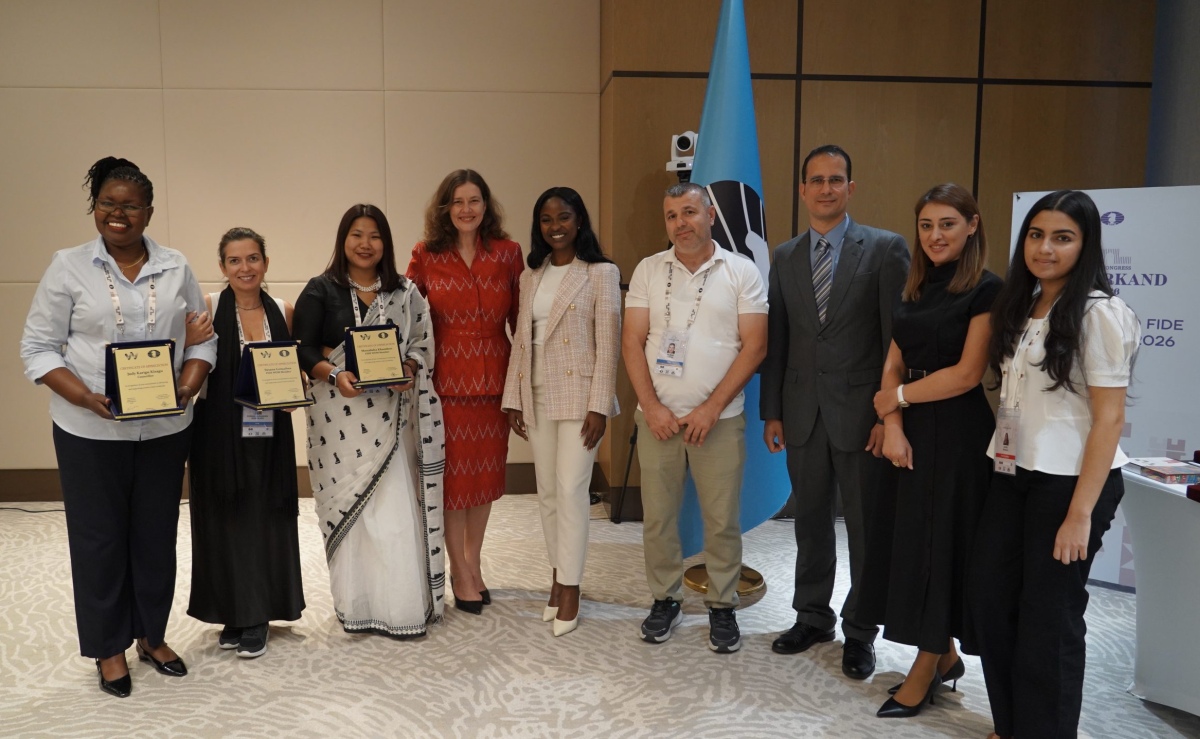
The ceremony continued with the Special Awards, presented by Dana Reizniece.
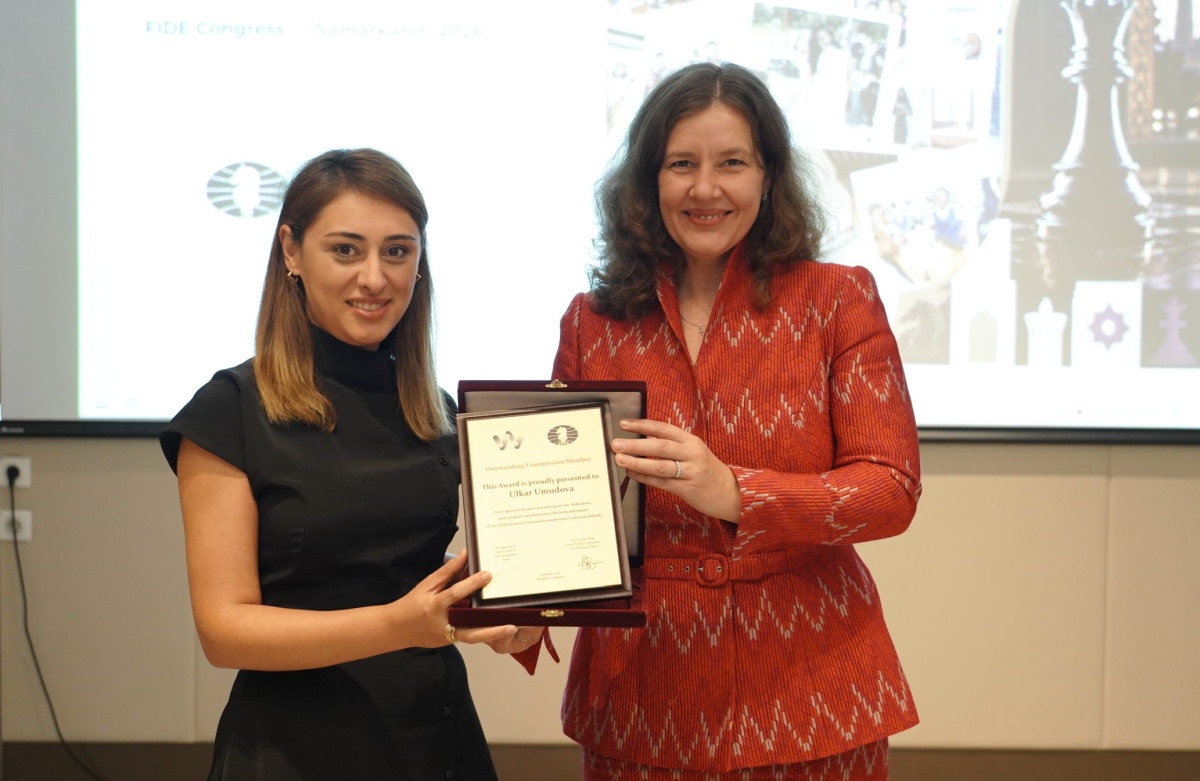
The Outstanding Commission Member Award went to Ulkar Umudova, while Yilmaz Kartal received the Outstanding Contribution to WOM Award.
The Outstanding Leadership & Service Award went to WIM Anastasia Sorokina, and Rita Atkins was recognized with the Excellence in Chess Education Award.
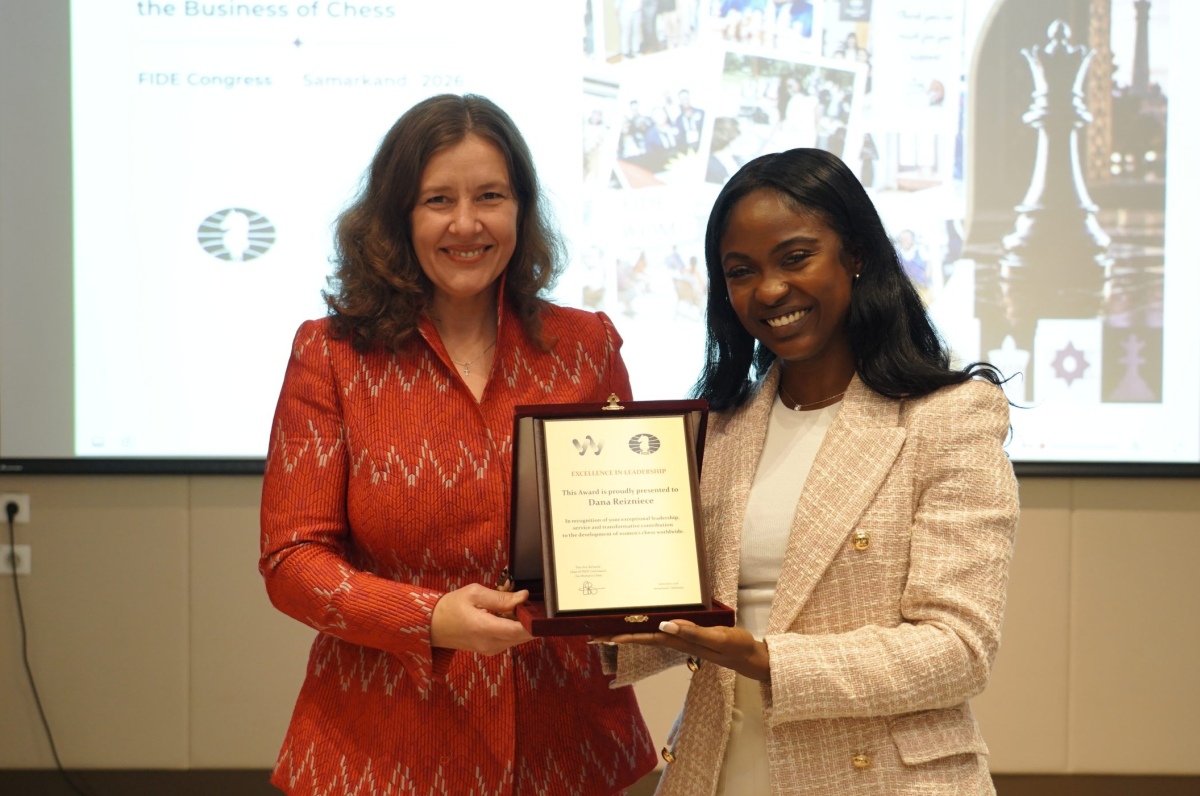
The final Special Award brought a surprise for the presenter herself. After Reizniece had recognized the other recipients, Richards returned to the stage to present her with the Excellence in Leadership Award, recognizing Reizniece’s leadership, service and contribution to the development of women’s chess worldwide.
Queens’ and Princesses’ Festival winners
The awards concluded with recognition of the Queens’ and Princesses’ Festival winners, presented by Ozgur Solakoglu.
IM Deysi Cori of Peru was recognized as the Queens’ Festival 2026 winner, while Aliona Garmash received the 2025 award.
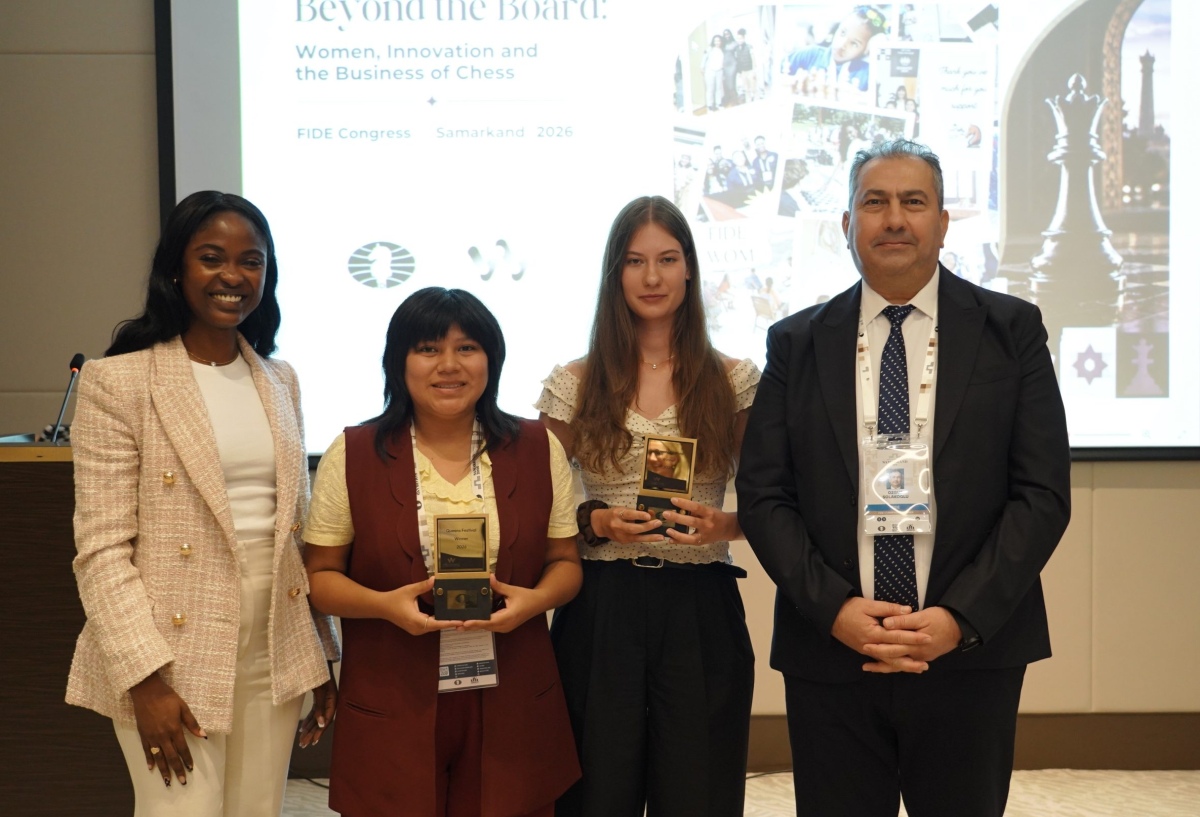
In the Princesses’ Festival, Joana Maria Pinholi Martins de Souza of Brazil was recognized as the 2026 winner, while Isra Aara Ibrahim Shafeeu of the Maldives was recognized as the 2025 East Winner. As the Princesses’ Festival winners could not attend in person, federation representatives accepted the trophies on their behalf.
Across discussions of participation, safeguarding, motherhood, professional careers, entrepreneurship, research and leadership, the meeting returned repeatedly to the idea at the heart of its theme: women in chess are not only players, but also coaches, arbiters, educators, organizers, entrepreneurs, commentators, creators and leaders – and expanding opportunities across all of these pathways remains central to the work ahead.
Written by Angelika Valkova