
Uzbekistan’s dream finish: Olympiad gold in Samarkand

Share this post:

China’s new generation shines and Kazakhstan and India complete the Women’s medal podium.

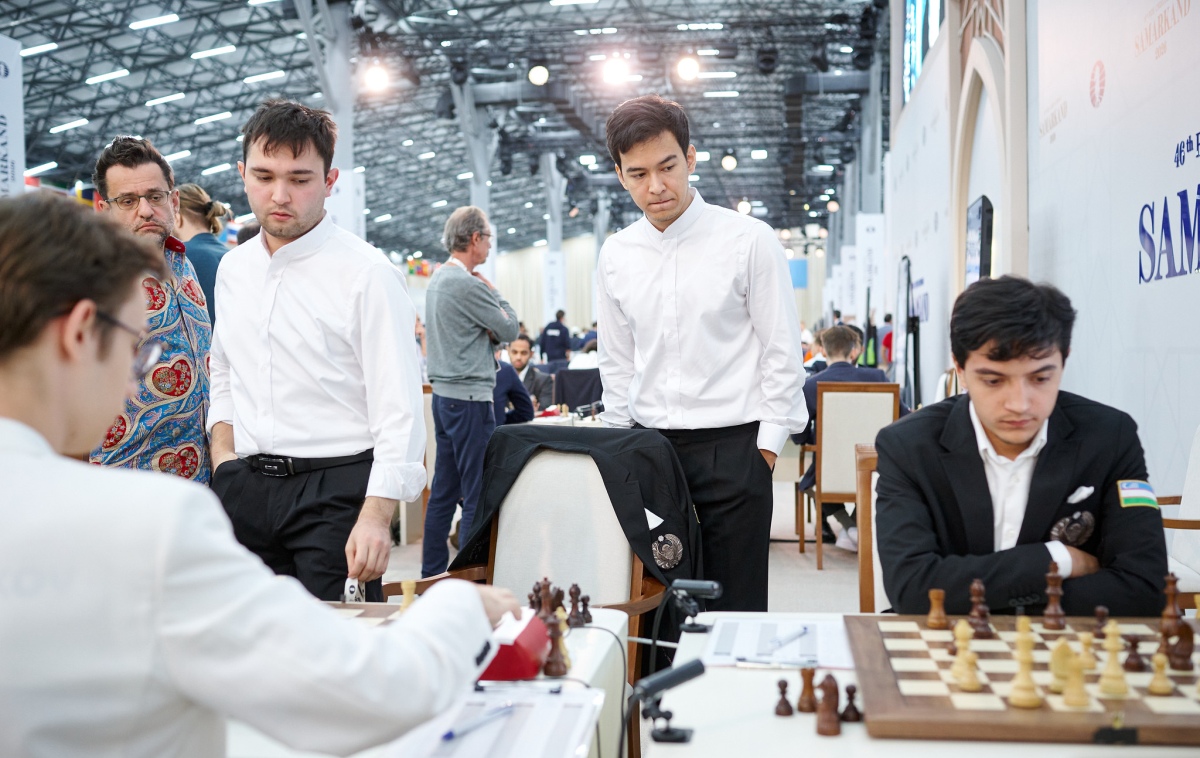
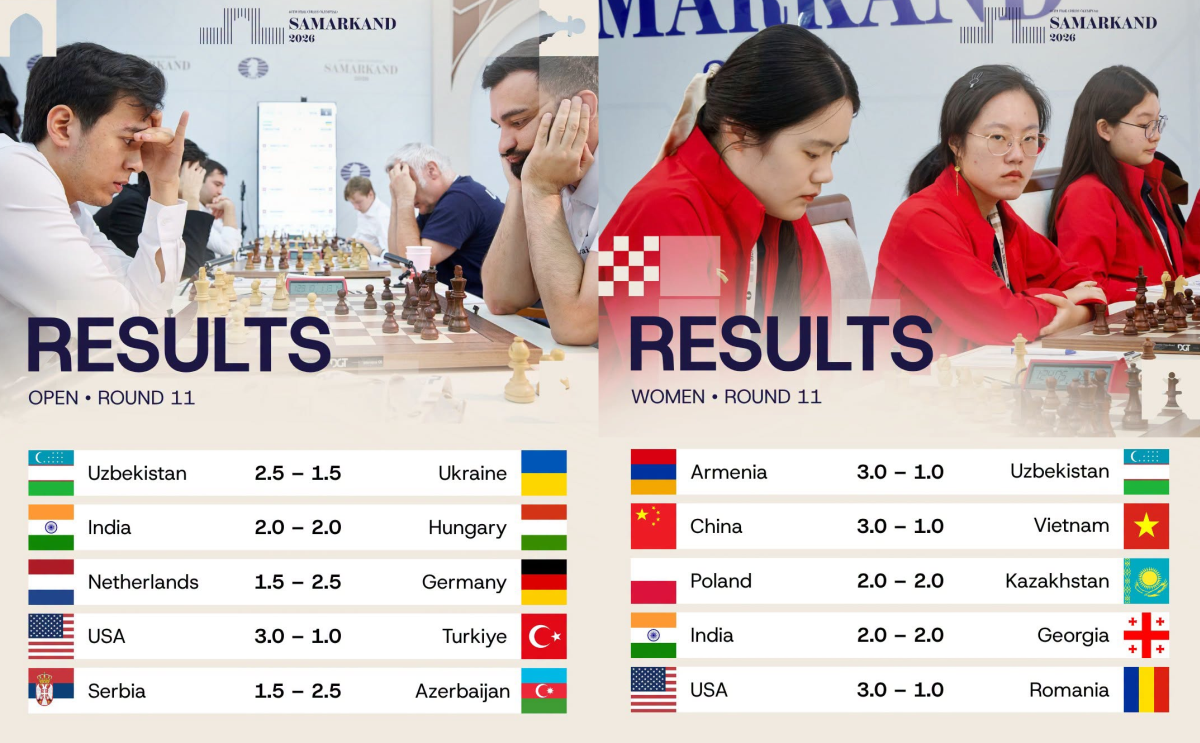
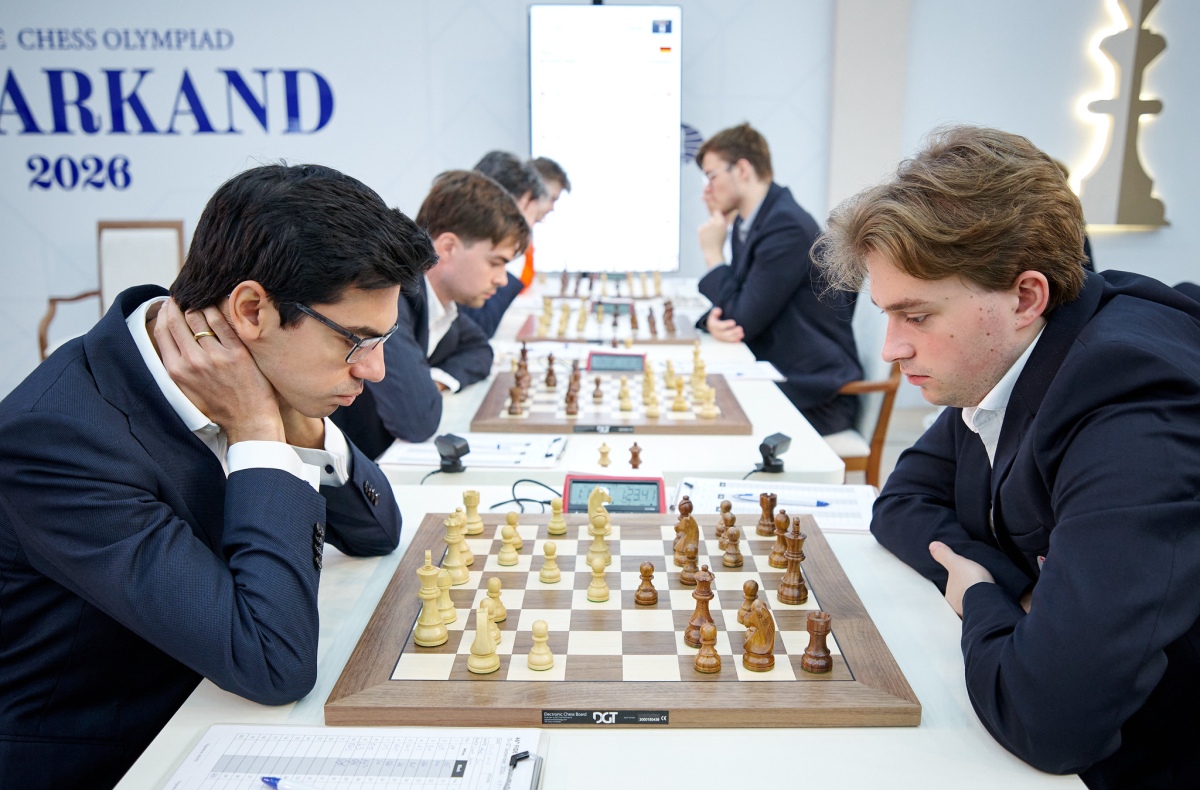
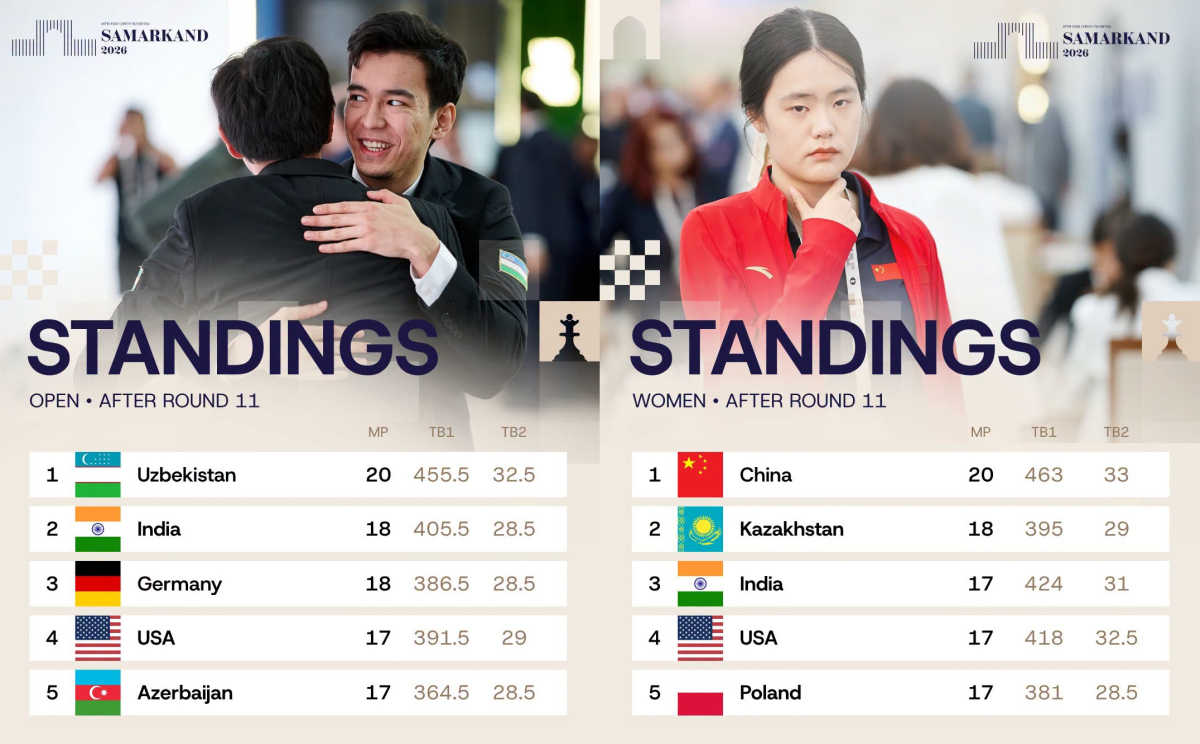
Uzbekistan won the Open section of the 2026 Chess Olympiad on home soil in Samarkand, defeating Ukraine 2.5–1.5 in the final round to claim their second Olympiad title after Chennai 2022. India took silver following a 2–2 draw with Hungary, while Germany secured bronze with a 2.5–1.5 victory over the Netherlands. 

China claimed the Women’s gold medal with a convincing 3–1 victory over Vietnam in the final round, while Kazakhstan secured silver after a 2–2 draw with Poland. India took bronze on tiebreak after also drawing 2–2 with Georgia.

Full results 46th Chess Olympiad

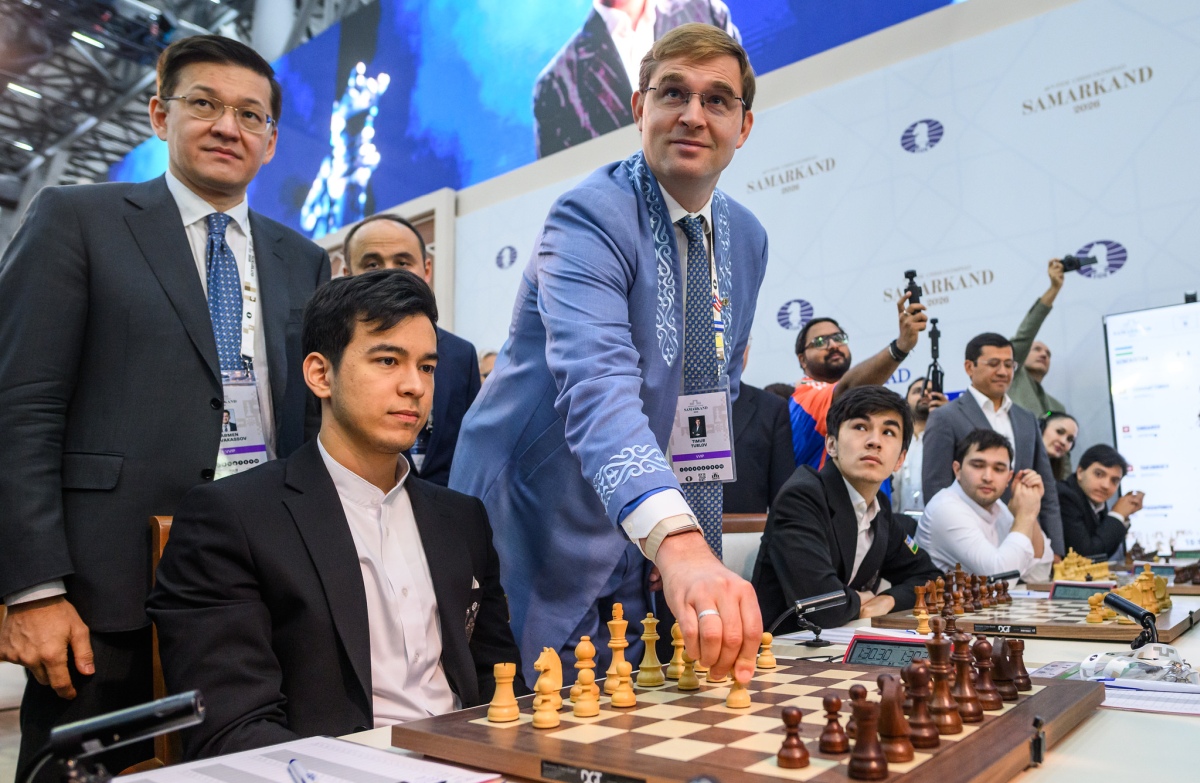
Timur Turlov, elected as the eighth FIDE President yesterday, made the ceremonial first move for Nodirbek Abdusattorov, playing 1.e4, after congratulating all the players on their performances throughout the Olympiad. Turlov also shared a heartfelt handshake with Ukrainian chess legend Vasyl Ivanchuk, who was playing on board two.

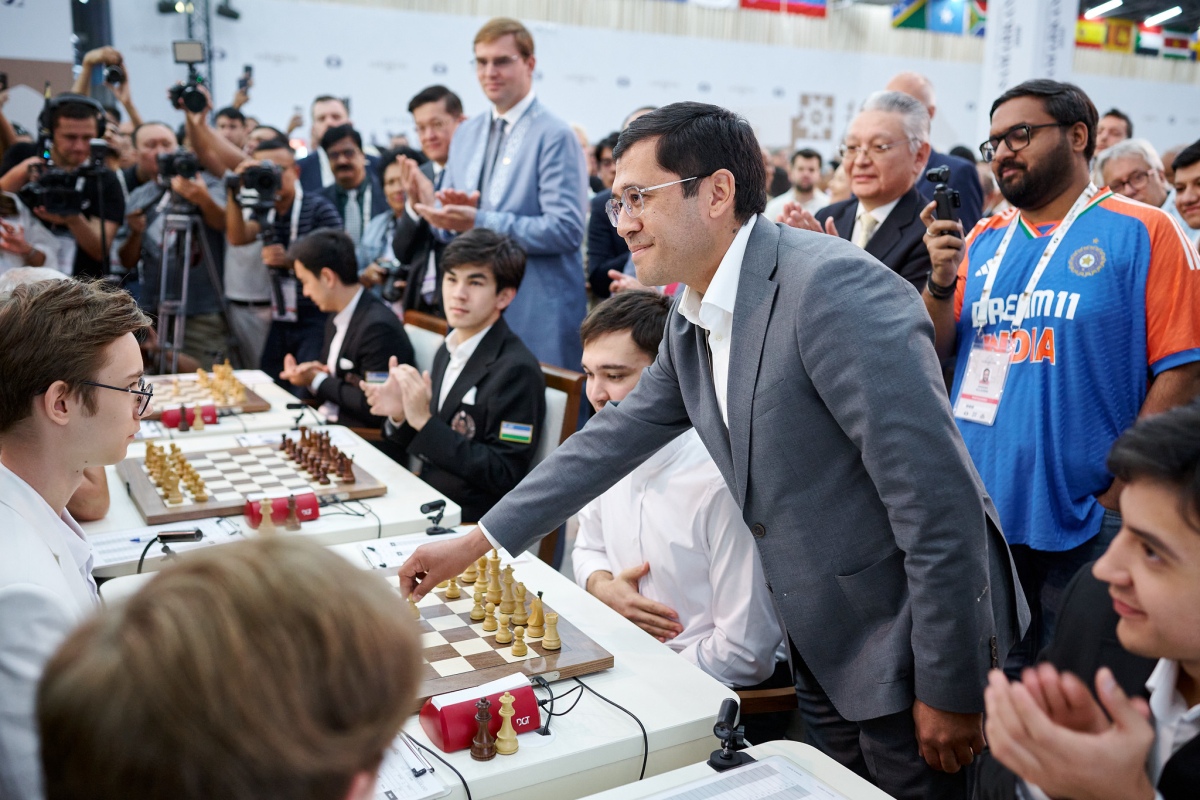
Rashid Talipov, Responsible Official of the Cabinet of Ministers of the Republic of Uzbekistan, made the ceremonial first move for Nodirbek Yakubboev, playing on board three for the Uzbekistan team.

The venue also burst into applause when the Chief Arbiter presented GM Tin Jingyao of Singapore with the Svetozar Gligoric Fair Play Prize. During Round 6 of the Almaty Qonayev Cup in 2025, Tin’s opponent arrived after the default time because of heavy traffic. Although Tin was entitled to claim a win by forfeit, he chose instead to allow his opponent to play.

Open section

Uzbekistan wins the Olympiad on home soil

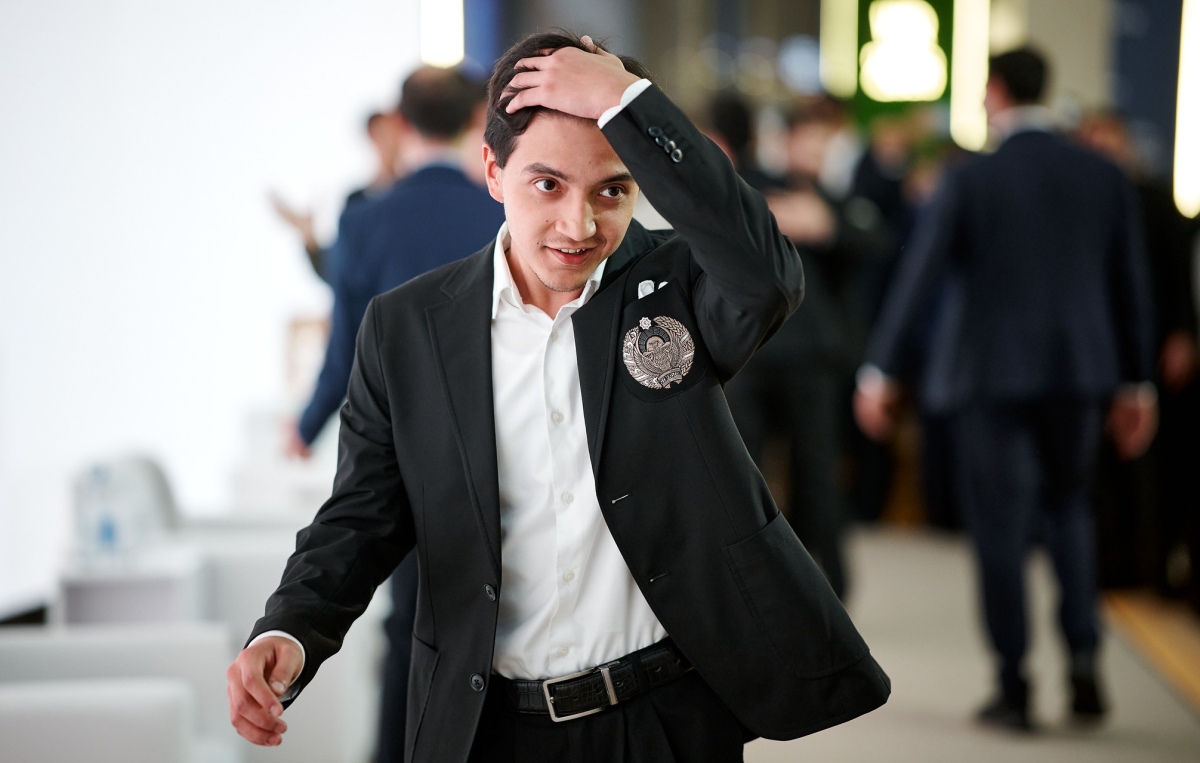
With a decisive 2.5–1.5 victory over Ukraine, Uzbekistan won the 2026 Olympiad in Samarkand, claiming the title on home soil. Although a 2–2 draw would probably have been enough to secure gold, reserve board Mukhiddin Madaminov delivered the decisive point on board four, finishing the event with an outstanding unbeaten score of 5.5/7. His performance fully justified his selection for the team.

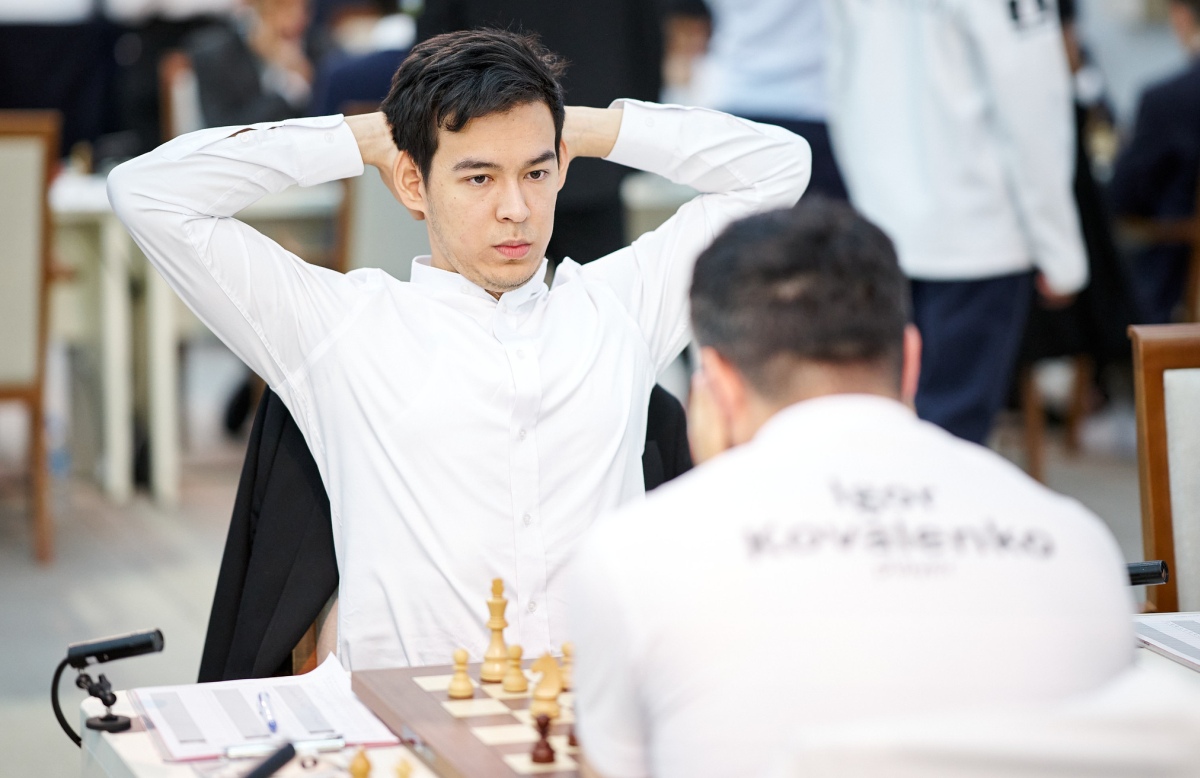
The other three games ended in draws; Nodirbek Abdusattorov pressed hard in a bishop ending with an extra pawn, but let the win slip away at the very end. This is Uzbekistan’s second Olympiad victory, following their triumph in Chennai in 2022, with four of the five players from that team repeating their success in Samarkand.

Abdusattorov also takes home the individual gold medal for board one, recording an outstanding 2869 performance rating.

India takes silver, Germany claims bronze

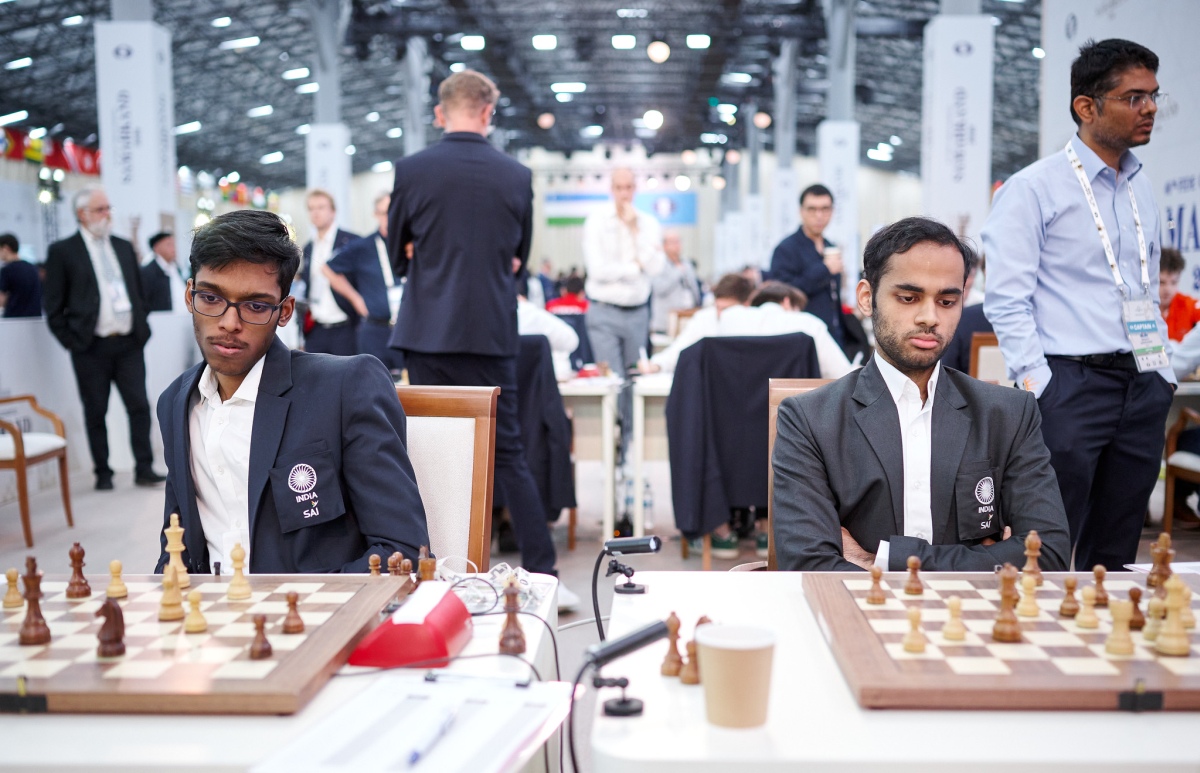
India secured the silver medal after a 2–2 draw with Hungary. Arjun Erigaisi overcame Peter Leko with Black on board two, while Gleb Dudin produced the result of his tournament by defeating World Champion Gukesh D on board four. Dudin’s victory secured him the individual gold medal on first reserve board, while Gukesh finished with the silver medal on board four.

Germany claimed bronze after defeating the Netherlands 2.5–1.5, with Matthias Bluebaum scoring the decisive win against Jorden van Foreest on board two. Frederik Svane took the individual gold medal on board three with an impressive 2796 performance rating.

All three medal-winning teams had occupied the top boards throughout much of the tournament, making their final positions a reflection of their consistent performances across the eleven rounds.

The United States, Azerbaijan, Armenia and Hungary shared fourth to seventh place, while China dropped to eighth after spending much of the tournament among the leaders. Wei Yi nevertheless secured the individual gold medal on board two.

Women’s Section

China claims Women’s gold in style

China dominated Vietnam 3–1 in the final match to clinch the gold medal in convincing fashion. On board one, Zhu Jiner led the team’s triumph with a win against Le Thao Nguyen Pham, finishing the Olympiad with an outstanding unbeaten score of 7/9.

She also secured the individual gold medal on board one, capping an excellent tournament. Charlize van Zyl interviewed Zhu in the media area immediately after the game.

Although China’s women’s team also boasts such world-class players as Hou Yifan, World Champion Ju Wenjun, Lei Tingjie and Tan Zhongyi, their performance in Uzbekistan has shown that the country’s next generation of elite players is more than capable of delivering at the highest level, even in the absence of its highest-rated stars.

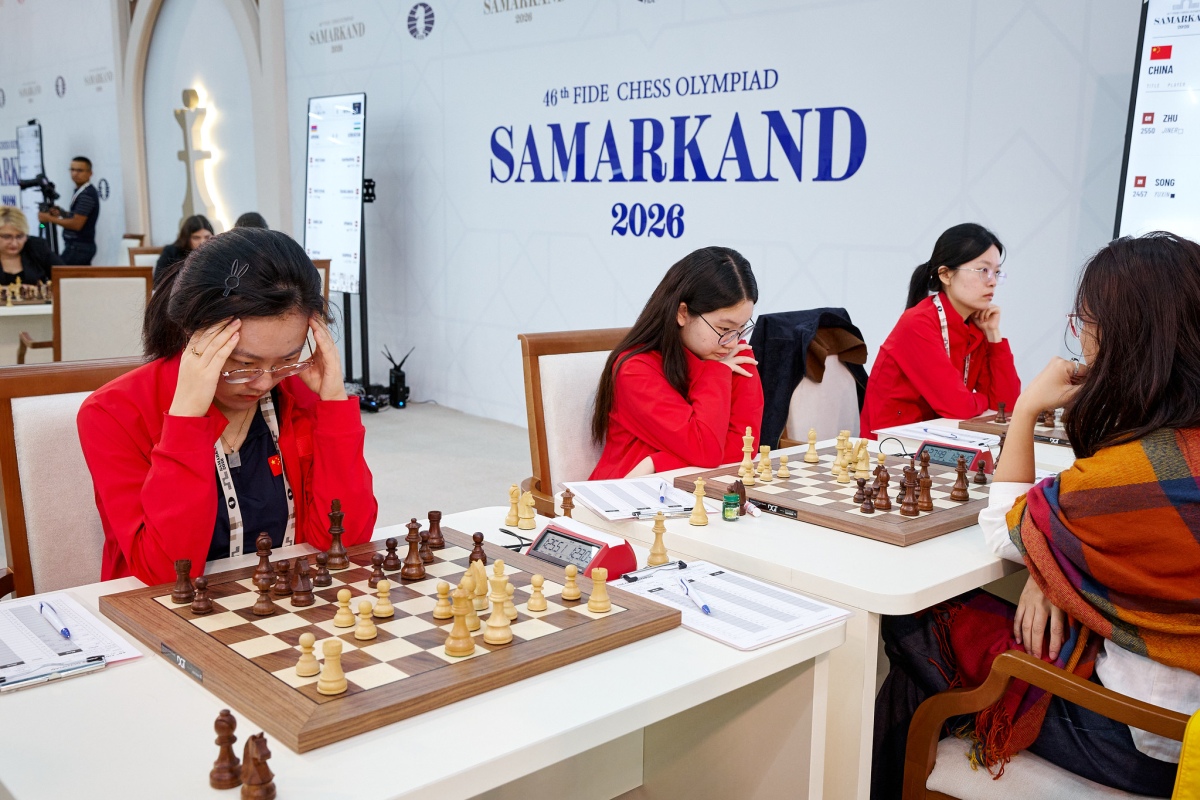
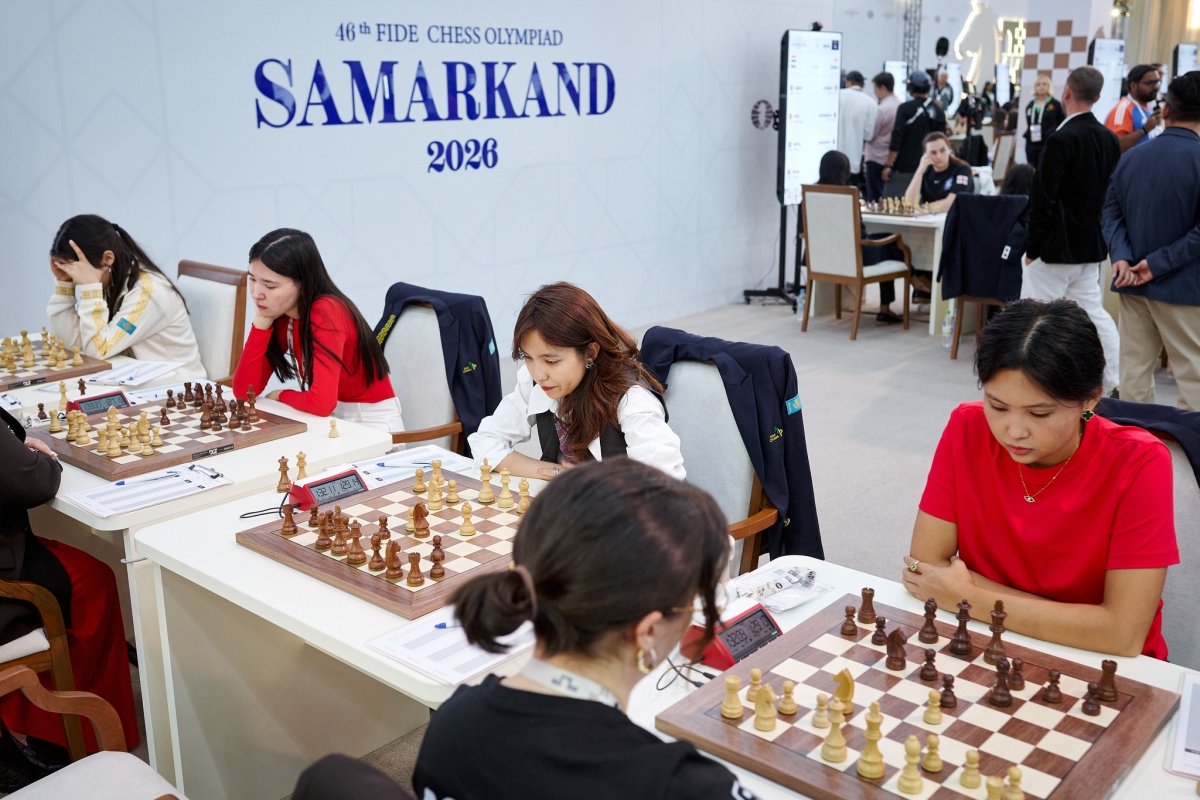
China’s other win came on board three, where Lu Miaoyi (pictured below, center) continued her remarkable tournament with a decisive victory over Phuong Hanh Luong. The 16-year-old remained unbeaten throughout the Olympiad, scoring an impressive 9.5/11.

Her performance underlines the strength and depth of Chinese women’s chess, and suggests that many more medals could be on the horizon for the young star. Lu also took home the individual gold medal on board three.

Kazakhstan takes silver as India secures bronze

Kazakhstan, who spent much of the Olympiad fighting on the top boards, secured the silver medal after drawing 2–2 with Poland in the final round. Aleksandra Maltsevskaya defeated Alua Nurman on board two, but Elnaz Kaliakhmet levelled the match for Kazakhstan with a win over Alicja Sliwicka on board four. The victory also secured Kaliakhmet the individual gold medal on board four.

India, the United States, Poland, Armenia and Mongolia all finished on the same match-point total, but India claimed the bronze medal on tiebreak after drawing 2–2 with Georgia in the final round. Alice Lee of the United States took the individual gold medal on board two with a performance rating of 2572, while India’s Shri B Savitha secured the board-five gold medal.

Humpy finds a stunning tactical finish against Dzagnidze

Position of the day

Humpy Koneru – Nana Dzagnidze
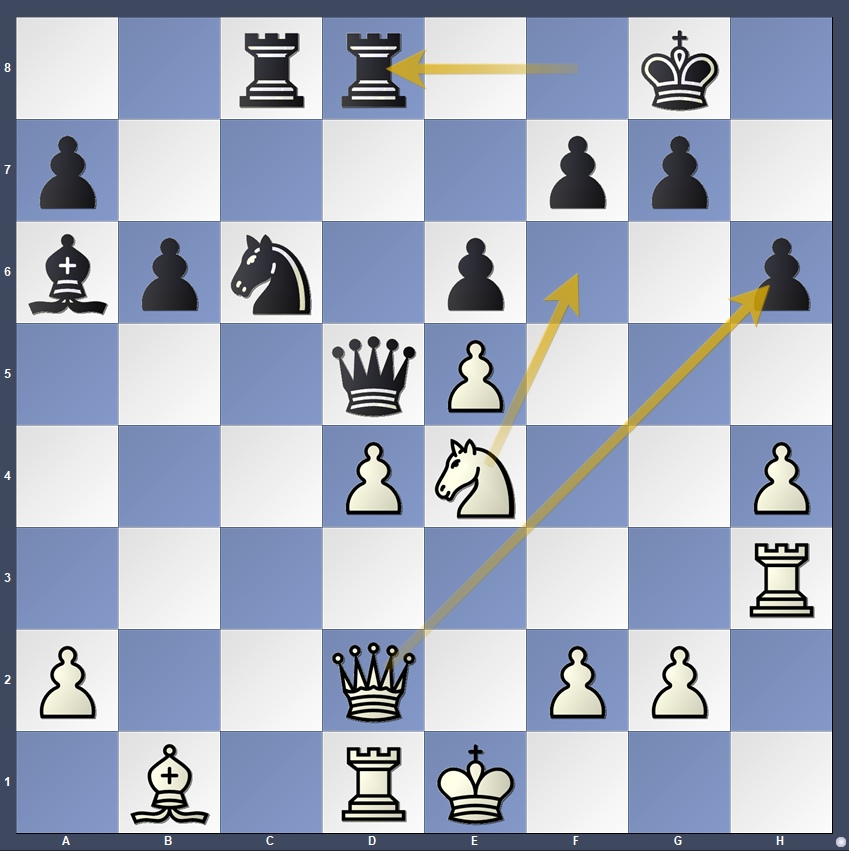
Nana Dzagnidze, Georgia’s first board, had just played 18…Rfd8, opening the f8-square as an escape route for her king while putting additional pressure on the d4-pawn.

Humpy Koneru was tactically alert, however, and responded with a wonderful combination beginning with 19.Nf6+!, sacrificing the knight. After 19…gxf6, which was forced, Humpy continued with 20.Qxh6, creating multiple threats against the black king, including Rg3 or Bh7+ followed by mate in three.

Dzagnidze tried 20…Qa5+ 21.Rd2 Nxe5, aiming for a back-rank mating idea with …Rc1 while also adding some protection around her king. But Humpy had calculated perfectly and found the only winning continuation: 22.Bh7+! Kh8 23.Bf5+! Kg8, followed by the killer 24.Rg3+!.

Dzagnidze resigned at this point, as 24…Ng6 would be met by 25.Rxg6+! fxg6 26.Bxe6#, a spectacular forced checkmate.

It is never easy to know exactly what a player has missed, but given that Dzagnidze spent around five minutes before playing 18…Rfd8, it is possible that she overlooked the Bf5+/Rxg6+/Bxe6 mating idea. In fact, this intricate sequence was the only way for White to win.

Humpy Koneru spoke to Charlize van Zyl in the interview area immediately after the game.
A full report of the closing ceremony with podium photos, board medals and other category prizes will be published shortly.

Written by IM Michael Rahal (FIDE Press Officer)

Photos: Michal Walusza, Rafal Oleksiewicz

Official website: https://chessolympiad2026.fide.com/

MORE ON THE TOPIC