

Road to the crown: 2026 Candidates Tournament begins in Cyprus

World-class players, expert predictions, and a festival of chess await as the battle for a shot at the world title unfolds at Cap St Georges Resort With just one week to go before the start of the 2026 Candidates Tournament, excitement for the event is building at full speed. The sixteen players (eight men and eight women) who will compete for the right to challenge the world champion will soon travel with their respective teams to the island of Cyprus. As in previous editions, the organizing team has planned various parallel activities to ensure a complete experience for all fans eager to attend their first Candidates as spectators. The venue Cap St Georges Hotel & Resort is an award-winning luxury destination on the unspoiled coastline of Peyia, Paphos, Cyprus, offering an inspiring setting where elegance, tranquillity, and excellence come together. Surrounded by landscaped gardens with centuries-old olive trees, the resort reflects the island’s character through refined architecture and well-designed spaces, with a strong focus on privacy, comfort, and attentive service. Guests enjoy exceptional facilities, including Olive Tree Beach and Kafizis Beach, a beachfront framed by the resort’s natural surroundings, outdoor and heated indoor swimming pools, a spa and wellness centre, fully equipped fitness facilities, and a diverse collection of ten restaurants and bars offering refined international and local cuisine The side events The Pafos Municipality & Pafos Chess Club are hosting the 4th International Open Tournament, from April 13-19 (overlapping the Candidates’ final week). The event will be a 9-round classical Swiss with a €5,000 prize fund – ideal for international norm and title seekers! The event has already attracted 10 GM’s and many other titled players. Check out the line-up here. The tournament fan-zone, hosted by Angelika Valkova, will feature master-classes, simultaneous displays, lectures and Q&A during the event, with legendary players such as Vishy Anand, Nigel Short, Boris Gelfand, Victor Bologan and Alexandra Kosteniuk. In addition, each game day two or three players will join the fans after their games for interviews and photo opportunities. The line-up and schedule is evolving continuously and can be found here. Standard ticket holders can watch the games live from the viewing area inside the playing hall and have access to the fan zone. VIP ticket holders enjoy an enhanced experience, including access to the VIP lounge, live viewing from VIP seats inside the playing hall, preferential seating in the fan zone, all-day catering service, and a unique opportunity to play a chess game with a Grandmaster. Tickets are available here https://tickets.fide.com/ with special limited-time offers and multi-day discounts available. Expert forecasts Over the past few days, many experts have shared their opinions about the tournament, indicating who has the greatest chances of winning and who could be the surprise player of the event. As a five-time World Champion, Vishy Anand has taken part in this event multiple times, giving him some of the most valuable insight to draw upon. “The Candidates is one of the great competitions in chess. People are very-highly motivated, and they have a chance to play for the world title, which is obviously the big prize.” “We have four people who are new and four who have played the Candidates before, with a few unexpected names. Bluebaum is a bit of a surprise; while with Wei Yi and Esipenko you sort of think that they could be in there. Also, Fabiano and Hikaru are getting on in age: it doesn’t show but in a long event you never know. Obviously, they remain very strong and very competitive, but I think youngsters almost always have more energy.” Breaking down the tournament on the Perpetual Chess Podcast, Jan Gustafsson (one of the onsite commentators) outlined the most likely approach. “I think that the good-old game after game strategy does apply. It’s good to score points at any moment but the players will start taking more risks when they are at plus one and there’s not that much tournament to go. You can’t really pace yourself in the Candidates, but sometimes when a player gets to plus three they freeze a little bit or stop taking risks and wait for the moment to score against a lower-rated opponent.” Gustafsson’s co-host is once again none other than Peter Svidler, an eight-time national champion and three-time Candidates contender. Although he acknowledged that all the players have a reasonable chance, one stands above the rest. “For me this has always been the most exciting tournament of the year, and definitely one of my highlights of the year. I don’t think there is a clear favourite but if I had to pick a player with a gun to my head I would go with Fabiano Caruana. He is so consistent and has a fantastic record playing in the Candidates However, it’s a very interesting field this year – Praggnanandhaa also has a decent shot.” Official website: https://candidates2026.fide.com/ Written by IM Michael Rahal – FIDE press Officer (Barcelona, Spain) Photos: Michal Walusza
Shift your perspective: FIDE Infinite Chess hosts “An Atypical Day” for autism awareness
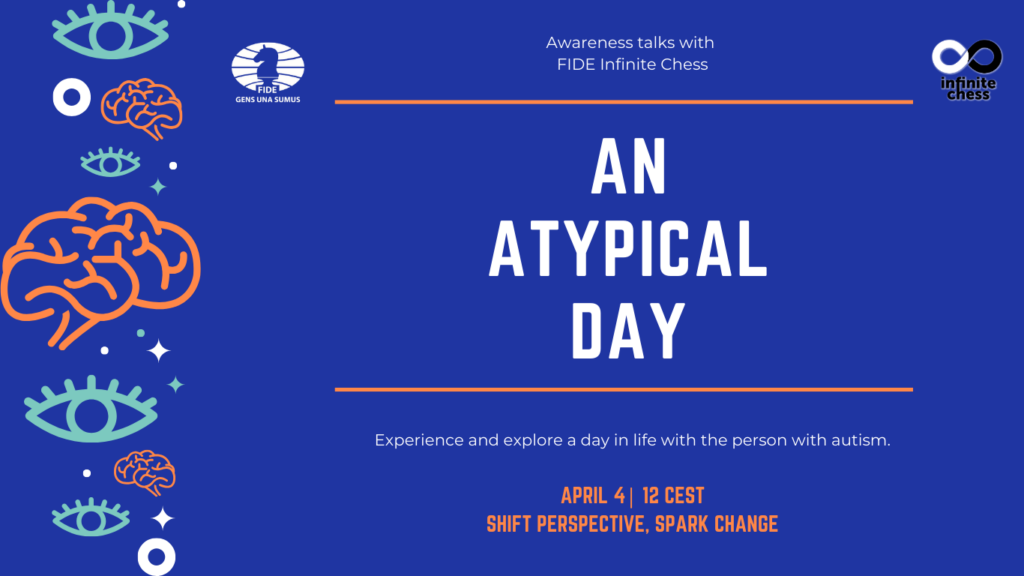
In celebration of International Autism Awareness Day, the FIDE Infinite Chess project invites you to an online event that goes beyond the board to explore the real lives of families living with autism. This April 4, is a step into a world of unique perspectives, challenges, and triumphs. The FIDE Infinite Chess project is proud to present “An Atypical Day,” a special awareness talk dedicated to fostering understanding and sparking meaningful change within the chess community and beyond. Date: April 4Time: 12:00 CESTLocation: Online (Link available upon registration)Registration link: https://forms.gle/dA7TRwSRyCLzksoM6 While chess is often hailed as a universal language, the Infinite Chess project recognizes that the journey to the board is different for everyone. This event will pull back the curtain on that journey, placing the spotlight not just on the game, but on the incredible families who navigate the world of autism every single day. The core of “An Atypical Day” is a powerful dialogue. We will hear firsthand accounts from the people who live this reality daily: parents and coaches. They will share their intimate experiences, painting a vivid picture of life beyond the diagnosis. We will explore the central theme of the event: the journey of families living with autism. What does a typical (or atypical) day actually look like for them? What are the unspoken challenges they face from morning until night? How do they cope, adapt, and find joy in the midst of a world not always designed for them? Most importantly, we will delve into a story of hope and integration. We will ask the crucial question: How have their lives changed since joining the Infinite Chess community? Has the structured, logical, yet creative world of chess provided a new outlet, a safe space, or a bridge to connection? We aim to uncover the transformative power of inclusion, one move at a time. Following these personal stories, the floor will open for a vital Q&A session. This is a unique opportunity for participants to ask questions or share their own concerns in a safe and supportive environment. To guide this discussion and provide professional insight, we are honored to welcome a distinguished specialist: Gulzhanar Akhaeva – Defectologist, Master of Special Pedagogy, Sensory Therapist, and Head of the Psychological and Pedagogical Correction Office No. 5 under the Akimat of Astana. Gulzhanar will offer expert perspectives on the topics raised by the families, helping to bridge the gap between personal experience and professional understanding. Join us “An Atypical Day” is more than just a talk; it is an invitation to shift your perspective. Whether you are a chess enthusiast, an educator, a parent, or simply someone who wants to understand the world a little better, your presence matters. Let’s come together to listen, learn, and champion a world where every mind can thrive. How to participate: The event will take place online on April 4 at 12:00 CEST. Registration details: https://forms.gle/dA7TRwSRyCLzksoM6 About FIDE Infinite Chess: The FIDE Infinite Chess project is dedicated to making chess accessible and beneficial for individuals with autism and other special needs, fostering inclusion and cognitive development through the royal game. The project currently thrives in 28 countries, supporting more than 270 children with autism and co-occurring conditions, and welcomes new interested families from around the world. Contact us: infinitechess@fide.com
Erling Haaland invests in Norway Chess to launch the new Total Chess World Championship Tour
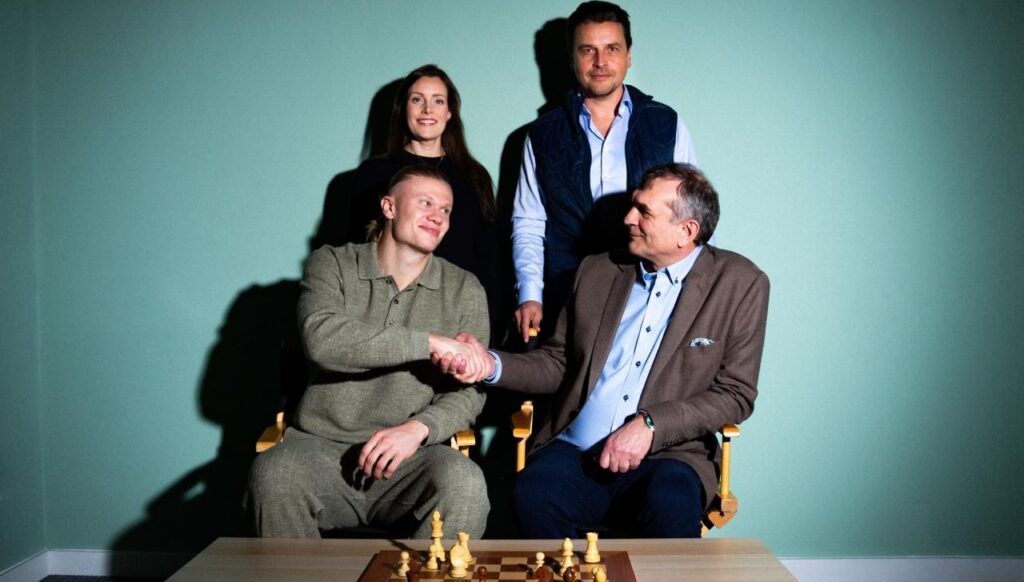
Football superstar Erling Haaland is investing in Norway Chess and its new tour format, the Total Chess World Championship Tour. Haaland has ambitious plans to contribute to make chess a broader and more spectator-friendly sport. Norway Chess has been a driving force for innovation in chess for years and is now taking another major step with the launch of the Total Chess World Championship Tour. The initiative is now gaining a new strategic investor: global football superstar Erling Haaland. Together with Norwegian business leader Morten Borge, Haaland has established the company Chess Mates, which will be a significant owner of Norway Chess. “Chess is an incredible game. It sharpens your mind, and there are clear similarities to football. You have to think quickly, trust your instincts, and think several moves ahead. Strategy and planning are everything”, says Erling Haaland. “Chess is ultimately about strategy and long-term thinking”, says Morten Borge. “Those are qualities that also define both elite sport and the ability to make sound investments over time. In many ways, chess sits right at the intersection of the worlds Erling and I come from. I’ve even promised to give Erling a bit of chess training!” With millions of fans around the world, Haaland is already a global sports icon and a natural partner to help grow new audiences and bring fresh energy to the game. “I’m investing in Norway Chess because I believe the new Total Chess World Championship Tour can turn chess into an even bigger sport for spectators around the world. The team behind Norway Chess has already done an impressive job growing the event, and joining the project was too exciting to pass up,” says Haaland. The new championship, featuring the world’s best players, is expected to become one of the most significant developments in modern chess. The Total Chess World Championship Tour will consist of four tournaments each year, hosted by four different cities, and will crown a combined world champion across three disciplines — Fast Classic, Rapid, and Blitz chess. This new World Championship has been approved by the International Chess Federation (FIDE) for a minimum of 16 years. “Chess – like football – has always been a global language of strategy and creativity. Seeing a world-class athlete like Erling Haaland join the Total World Chess Championship Tour is a powerful signal of the global attention and cultural relevance that chess enjoys today. As FIDE President, it has always been my ambition to build chess into a sustainable and attractive global sport. Working closely with my team and with forward-thinking partners such as Norway Chess, our goal is to develop the Total World Chess Championship Tour into the most compelling intellectual sporting event in the world,” says FIDE President Arkady Dvorkovich. A pilot tournament is planned for autumn 2026, followed by a full championship season in 2027. Each season will consist of four events, and a minimum annual prize pool of USD 2.7 million. Kjell Madland, CEO of Norway Chess and Total Chess, welcomes the investment and involvement of Haaland as a long-term strategic partner. “We expect the new championship to become one of the most prestigious events in the global chess calendar. The fact that Erling is joining us as an investor says a great deal about the commercial potential of this tour. Erling has an enormous global following and is truly world-class when it comes to creating magical sporting moments. I am absolutely certain he will bring tremendous value to Total Chess, help generate increased interest in the fascinating world of chess, and attract new audiences. He has already contributed with several great ideas. With Erling on board, we are now entering the final phase of finding host cities for the first tour,” says Madland. About Norway Chess and Total Chess World Championship Tour: A groundbreaking FIDE-approved format, developed and owned by Norway Chess. The Total Chess World Championship Tour brings together the best players across three disciplines — Fast Classic, Rapid, and Blitz — to crown the FIDE World Combined Champion, the most complete and versatile chess player in the world. Fast Classic is an innovation of classical chess with a shorter time limit, down to 45 minutes plus a 30-second increment, and will receive classical rating. The Tour will feature a minimum $2.7 million annual prize pool, including at least $750,000 for each of the first three events and $450,000 for the Finals (with four players), plus performance bonuses. The Total Chess World Championship Tour, hosted by four different cities, will officially launch in Q1 of 2027. For more information, go to: https://www.totalchess.com/ Contacts: For Norway Chess and Total Chess:Kjell Madland: +47 911 67 695, kjell@norwaychess.com For Chess Mates and Morten Borge:Peter Markovski: +47 920 41 055, pm@stormcom.no
Regulations published for the 2026 FIDE World Team Rapid and Blitz Chess Championships in Hong Kong
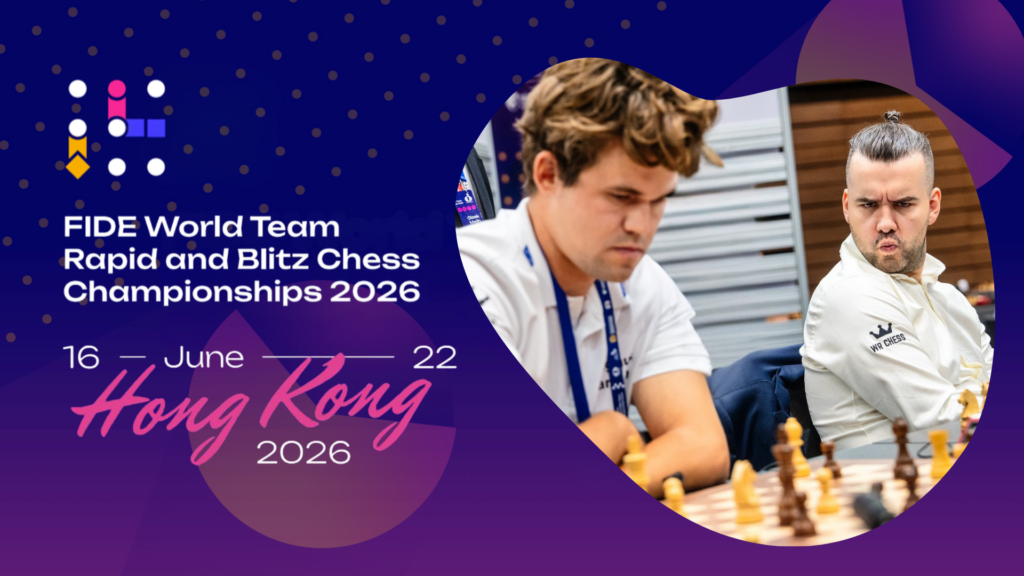
With the publication of the official regulations, preparations are now fully underway for the FIDE World Team Rapid and Blitz Chess Championships 2026, which will take place in Hong Kong from 16 to 22 June. Following successful editions in Düsseldorf, Astana, and London, the championship returns with the concept that has made it popular among players and fans: mixed teams combining elite professionals with recreational players competing side by side in rapid and blitz formats. Team composition Every match is played on six boards and must meet the following requirements: This structure allows teams to combine world-class grandmasters with club players, creating a format where amateurs can share the same stage as some of the strongest players in the world. Tournament schedule The competition will begin with the World Team Rapid Chess Championship, followed by the World Team Blitz Chess Championship later in the week. Full details of the playing schedule and prize fund are available in the official regulations. Registration Team registration for the championship will open next week. Clubs, companies, federations, and independent teams from around the world will be eligible to enter. Further information on the registration process will be published closer to the opening date. Top players expected The event has consistently attracted many of the world’s strongest players. According to WR Chess, Magnus Carlsen is expected to return to the championship this year as part of their team, adding further star power to the competition. In previous editions, the tournament has featured numerous top players competing alongside amateurs and rising talents, producing a dynamic atmosphere rarely seen in traditional elite events. Regulations (PDF) Official website: https://worldrapidblitzteams2026.fide.com/ Amateur teams to compete alongside the elite Alongside the main championship, Hong Kong will also host the inaugural FIDE World Team Amateur Rapid Chess Cup, running from 16 to 22 June 2026. The event is designed specifically for amateur players and will allow club teams, friends, and local groups to take part in the same international chess festival. Open to teams of six players who have never achieved a FIDE rating of 2000 or higher, the tournament will be played with a rapid time control of 15 minutes plus a 10-second increment. The competition will feature a two-stage format, culminating in final matches to determine the champion. By staging the Amateur Rapid Cup alongside the elite team championship, players will experience the atmosphere of a major international event while competing for their own title. With the regulations now published and teams beginning to form their lineups, attention turns to Hong Kong, where several days of fast-paced team chess will bring together players from across the world. Register here: https://worldteamamateurrapid2026.hkchessevent.com/registration/ Regulations (PDF) Official event website: http://worldteamamateurrapid2026.hkchessevent.com Contact: hkchessevent@gmail.com
Deputy Chair of FIDE Management Board visits DR Congo to advance chess
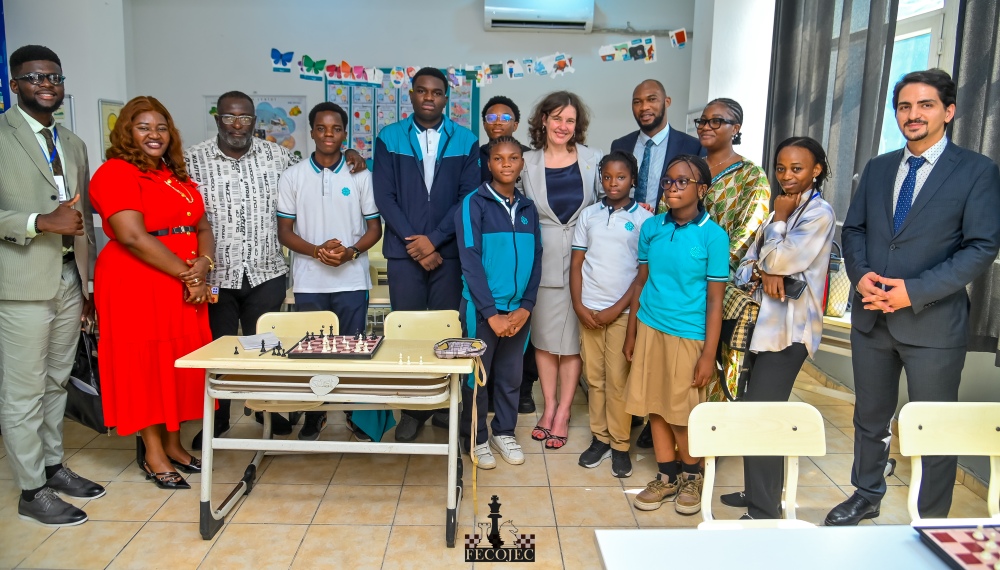
During her official visit to Kinshasa, the capital of the Democratic Republic of the Congo, Dana Reizniece, Deputy Chair of the FIDE Management Board, held a series of meetings with government officials and representatives from the education and sports sectors to discuss the development and promotion of chess in the country. In a meeting with Didier Budimbu, Minister of Sports and Recreation of the Democratic Republic of the Congo, the Deputy Chair of the FIDE Management Board emphasized the importance of supporting the National Chess Championship to ensure that players from all regions of the country have the opportunity to participate. Such support would help identify the strongest players and enable the formation of a competitive national team to represent the country at the Chess Olympiad. The Minister expressed his support for this initiative. Discussions also focused on the introduction of chess in schools, an initiative that received positive feedback from the Ministry. During a meeting with Theodore Kazadi Muayila, Deputy Minister of National Education and New Citizenship of the Democratic Republic of the Congo, several important projects were discussed, including: Potential financing for the introduction of chess in approximately 200 schools, aligned with the educational priorities of UNICEF; The preparation of a Memorandum of Understanding (MoU) under which the International Chess Federation would support teacher training and provide educational resources for the implementation of chess in schools; An invitation for representatives of the Ministry to visit Uzbekistan to learn from its successful experience in integrating chess into the national education system. As part of the visit, Dana Reizniece also visited Maarif School in Kinshasa, where she met with students and educators and discussed the role of chess in education, critical thinking development, and youth empowerment. In addition, Dana Reizniece gave a simultaneous exhibition organised in her honour at the headquarters of the Gombe Chess Club. Around fifteen players took part in the event, including four women, all eager to challenge the visiting Woman Grandmaster. Among the participants, Josué Kanda distinguished himself as the only player to defeat Dana Reizniece. Christophe Binana also achieved a notable result by securing a draw. Both players are winners of the most recent National Chess Championship, highlighting the growing strength and talent of chess players in the Democratic Republic of the Congo.
FIDE Candidates 2026: Eight contenders, one dream
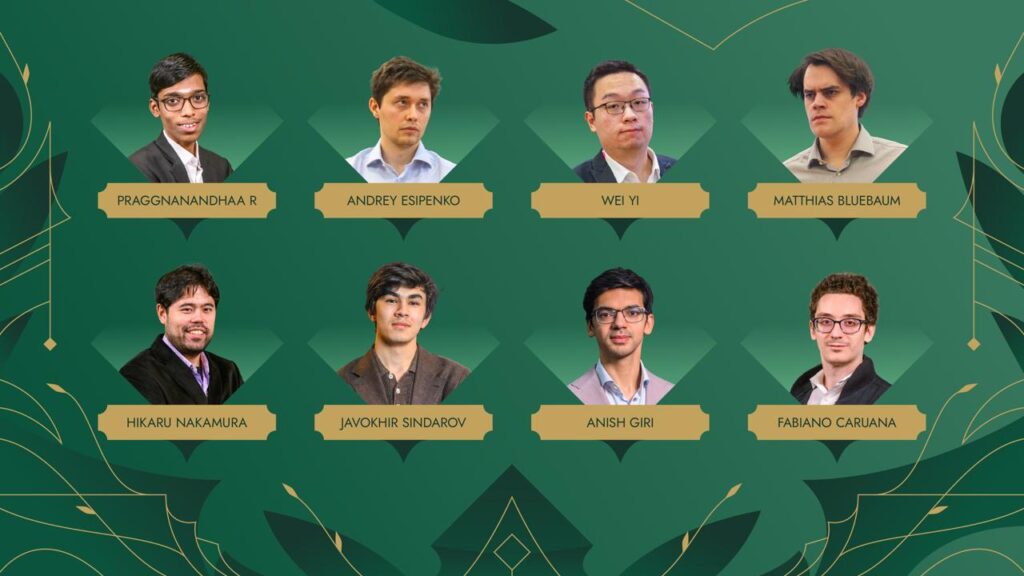
Chess elite face off in a high-stakes quest to become the next challenger The pieces are in position in Paphos, Cyprus, where the FIDE Candidates Tournament 2026 will soon determine the challenger for the World Chess Championship. Over fourteen gruelling rounds, eight of the world’s strongest grandmasters will battle for the right to challenge the reigning world champion, Gukesh D. The field combines seasoned Candidates veterans with fearless new challengers. Some qualified through spectacular tournament victories, others through consistency across the elite circuit, but all arrive in Cyprus with one goal: winning the most demanding tournament in professional chess. The Candidates Tournament is widely regarded as the toughest event – fourteen rounds, no easy games, and every half-point can change the destiny of the tournament. To add to the excitement, this year’s lineup promises a fascinating clash of styles and generations: experienced contenders such as Caruana, Giri, and Nakamura; rising stars like Praggnanandhaa, Sindarov, and Esipenko alongside elite technicians such as Bluebaum and Wei Yi. With elite GM commentators Jan Gustafsson and Peter Svidler calling the action, one thing is certain: in Cyprus, every move will matter. Let’s take a closer look at the contenders, sorted by their current March 2026 FIDE Ratings. Hikaru Nakamura (USA, 2810) A five-time U.S. Champion and one of the most recognizable figures in modern chess, Nakamura qualified to the Candidates through the rating spot, with the highest average classical rating over the course of the qualification period. Although entirely compliant with regulations, his performance didn’t come without some public controversy, as he secured the minimum number of games against lower rated opponents. Currently ranked number two in the world, his recent fame has been more due to his online presence, but Nakamura has demonstrated remarkable resilience throughout his career, spanning elite classical tournaments, world championships cycles, and countless rapid and blitz titles. His achievements include gold medal at the 2016 Chess Olympiad, winning Tata Steel in 2011 and Norway Chess in 2023, along with multiple Grand Chess Tour events. He is widely considered one of the strongest rapid and blitz players in history, winning the 2022 World Rapid and achieving several podium finishes in the World Blitz. Online he is one of the most followed chess streamers globally and a popular ambassador for the game on internet platforms like Twitch and YouTube. With multiple appearances in the Candidates few players handle pressure better than Nakamura. If Hikaru finds early momentum, he could become a serious contender for first place. Fabiano Caruana (USA, 2795) Qualified by winning the 2024 FIDE Circuit, a season-long competition rewarding elite tournament performances, Fabiano will make his fifth appearance at the Candidates. Currently holding the world’s number three rating position, Caruana has been a staple in the fight for the world title for over a decade and is renowned for his deep opening preparation and extraordinary calculation. The American grandmaster won the Candidates tournament in Berlin (2018), challenging Magnus Carlsen in London for the World Championship, eventually losing in one of the most evenly fought championship matches in history. Other tournament successes include the Grenke International in 2015, Norway Chess 2018 and Tata Steel in 2020. His most significant tournament win was in 2014 at the Sinquefield Cup where he scored 8.5 out of 10 against world class competition, with an extraordinary 7/7 start! He is also a five-time USA champion, gold medallist at the 2016 Olympiad and holder of several Grand Chess Tour titles. As part of his preparation for the event, Fabiano has just finished two events in Saint Louis, including a promising 7/9 score in the Saint Louis Masters. Caruana is widely regarded as one of the strongest players of the 21st century and one of the most formidable challengers to the world championship crown. Many analysts consider Caruana the natural favourite and, if experience counts for anything in the Candidates, he has plenty of it! Wei Yi (China, 2754) Ranked number seven in the world, China’s top player qualified as the 2025 Goa World Cup finalist. This will be his first Candidates appearance. For many years, Wei Yi was widely regarded as the greatest chess prodigy since Magnus Carlsen. The Chinese grandmaster burst onto the world stage as a teenager with extraordinary tactical brilliance and fearless attacking play. Wei still holds the record for being the youngest ever player to cross 2700, when he was 15 years old! The Chinese grandmaster has produced some of the most spectacular games of the modern era. One of the fan favorites, and possibly one of the best king-hunts in history, is his 2015 victory over GM Lazaro Bruzon. See the game [HERE] Winner of multiple elite and invitational tournaments in China and internationally, Wei Yi has also played a key role in China’s gold-winning team at the Chess Olympiad (2014) and the World Team Chess Championship (2015). Wei Yi combines deep calculation, tactical creativity, and fearless attacking instincts. When the position becomes sharp, he is capable of producing brilliant sacrifices and spectacular combinations. If the tournament turns sharp and tactical, Wei Yi could be one of the most dangerous players in the field. Anish Giri (Netherlands, 2753) Qualifying by winning the 2025 FIDE Grand Swiss in Samarkand, Cyprus Giri will take part in the Candidates for the third time in his career. One of the most consistent elite players of the last decade, he has been a fixture among the world’s top grandmasters since his teenage years and a regular participant in the World Championship cycle, famously drawing all fourteen games of his 2016 Candidates Tournament games. Contrary, in the 2020-21 Candidates, he fought for first place until the final rounds. With many international tournament victories to his name, Giri has been the cornerstone of the Dutch national team for many years, winning a bronze medal at the Chess Olympiad 2014, alongside a number of strong individual performances on board one at other Olympiad and European team competitions. Currently number eight in the world, Giri is famous for
FIDE Chess for Freedom program leader visits Georgia
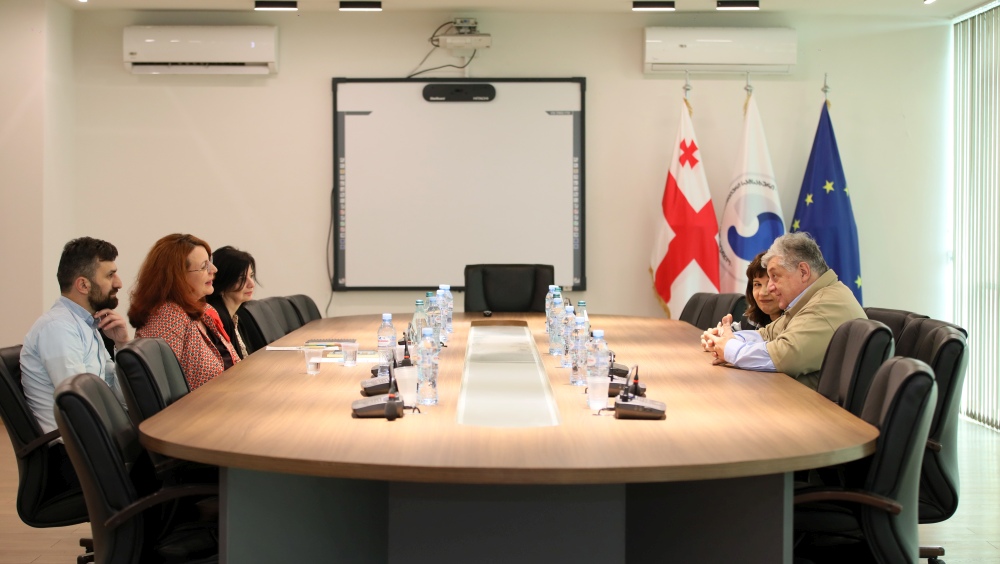
During his recent trip to Georgia, Mikhail Korenman, the FIDE project leader for Chess for Freedom program, visited to Head office of Special Penitentiary Service, Ministry of Justice of Georgia. He discussed the project development in Georgia with Inga Sarjveladze, Director of Resocialization rehabilitation department and Nana Koridze, Deputy Director of Resocialization Rehabilitation Department, and Vasil Liparteliani, Chess for Freedom project coordinator for Georgia. The Chess for Freedom program is part of the large scale social and rehabilitation activities at the women’s prison directed by Nestan Verulashvili. The special guests of the event at the women’s prison were Minister of Justice of Georgia Paata Salia, Member of Parliament of Georgia Nino Tsilosani, and the First Lady of Georgia Tamar Bagrationi. The director of the men’s prison #16, Zaza Jamatashvili, presented all resocialization and rehabilitation programs. Mikhail Korenman also met the members of the Georgian male chess team. The first online tournament bringing together men, women, and youth teams playing in one mixed group was organized on March 5 on the chess.com platform and directed by the IA Nebojsa Baralic. Eight teams from Georgia, England, and Latvia participated in this first-of-its-kind event, combining all three Chess for Freedom program categories – Men, Women, and Youth – in a single pool. The Georgia Men’s team claimed the title, winning all four matches (total 8 points). England Men, England Youth, and Latvian teams tied for second place with 5 match points each. A strong finish by the Georgia Women team (top Female team) and England Youth team (top Youth team) validated the initial concept that all three participant groups can compete in this mixed format. The event also featured an additional session where all teams competed in a draughts tournament organized by the US NDF and directed by the IA Andriy Shetbatyuk. The Latvian team won all three rounds with came out on top with a perfect score, Georgian Women and Youth teams shared second place with four points. In the combined results of the event, the Latvian male team from Jelgava prison, led by the coach IM Sergejs Klimakovs, secured the overall first place with a total score of 11 points. The Georgia men’s team finished second (total 10 points), while the Georgia women’s team completed the podium with 7 points.
FIDE EDU Classroom Contest announced
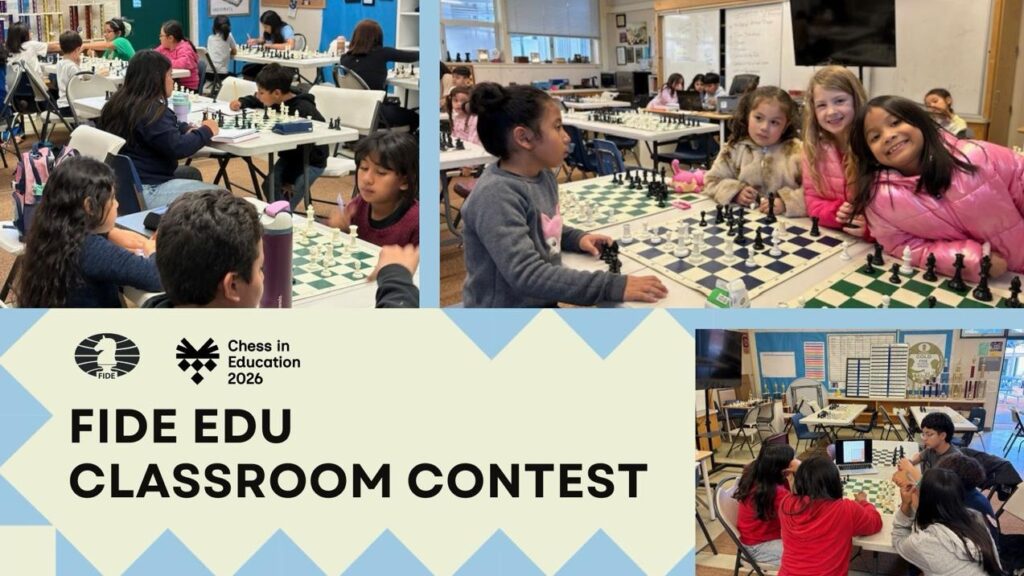
As 2026 is celebrated as the Year of Chess in Education, the FIDE Chess in Education Commission is pleased to highlight schools worldwide that use chess classrooms as hubs for personal growth and social development. We are proud to announce the 2026 FIDE EDU Classroom Contest! Send us pictures of your chess classroom in action for a chance to win some great prizes: 1st prize – Social media post by FIDE promoting your school program, free entry on a FIDE School Award application, and one free entry for the Preparation of Teacher’s course, and one free annual subscription to LogiqBoard. 2nd prize – Social media post by FIDE promoting your school program, free entry on a FIDE School Award application, 50% discount on a Preparation of Teacher’s course, and a 50% discount on an annual LogiqBoard subscription. 3rd prize – Social media post by FIDE promoting your school program, 50% discount on a FIDE School Award application, 25% discount on a Preparation of Teachers course, and a 25% discount on an annual LogiqBoard subscription. Entries will be judged on classroom engagement, creativity of classroom activities, the use of chess as an educational tool, and the ability of chess to bring people together. If a picture is worth a thousand words, we seek classrooms that speak for themselves in showing the power of chess to transform lives. The size of the school or chess club does not matter! Whether you are large institution or grassroots initiative, a school chess club is a place where students come together, play, socialize, learn, and build skills and relationships that will last a lifetime. Show us your classroom so we can show it to the world! Send photos to abel@riseforthekids.org. Each school may submit up to three photos of their chess classroom; photo must be under 500kB. Please include the name of your school, city, country, and the name of the chess teacher, coach, or school coordinator. We are eager to see the differences between chess classrooms around the world but also discover the common thread that makes us alike. The deadline for submissions is April 30, 2026. Winners will be announced May 8, 2026.
FIDE Candidates 2026 Fan Zone: Meet the players in Paphos

Fans attending the FIDE Candidates Tournament 2026 will have a new way to experience the event up close. Throughout the tournament, an open-air Fan Zone at the venue will bring the world of elite chess closer to spectators, offering daily activities, special guests, and rare opportunities to meet some of the biggest names in the game. Hosted by Angelika Valkova, the Fan Zone will run alongside the tournament schedule and feature a lively programme of lectures, masterclasses, simul exhibitions, and discussions with leading players and personalities from the chess world. The highlight of the Fan Zone will be the daily appearances by the Candidates players themselves. On most days, two or more of the tournament participants will visit the Fan Zone to take part in audience Q&A sessions, sign autographs, and take photos with fans. For spectators following the drama of the Candidates, it offers a unique chance to hear directly from the players competing for the right to challenge for the World Championship. Alongside the Candidates players, the programme will welcome several distinguished guests from across the chess world. Confirmed appearances include five-time World Champion Viswanathan Anand, former Women’s World Champion Alexandra Kosteniuk, FIDE Director for Chess Development Nigel Short, and legendary grandmasters such as Boris Gelfand and Victor Bologan. Educational sessions will also feature speakers including Deputy Chair of FIDE Management Board Dana Reizniece and Dr. Yevgeny Levanzov. Across the tournament, fans can look forward to a rich variety of activities: children’s masterclasses, simultaneous exhibitions, autograph sessions, and talks exploring topics such as “How to think like a Grandmaster,” as well as the connections between chess, mathematics, and technology. The Fan Zone programme begins on March 29 with a special appearance by Viswanathan Anand and continues throughout the fourteen rounds of the Candidates Tournament, with activities scheduled on most days starting at 16:00. More guests and events will be announced as the tournament approaches, making the Fan Zone a daily meeting point for players, fans, and the wider chess community. Tickets for the FIDE Candidates Tournament and Fan Zone access are available through the official ticketing platform: https://tickets.fide.com Fans are encouraged to secure their seats early and follow FIDE channels for further announcements and programme updates as additional guests are confirmed. Official website: https://candidates2026.fide.com/
FIDE Director for Chess Development makes historic visit to Benin
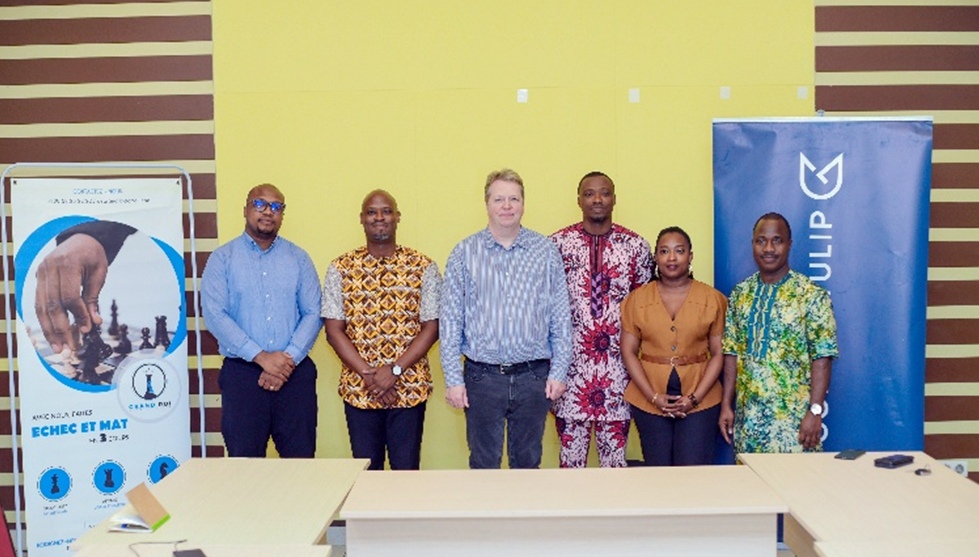
From February 12-15, 2026, Grandmaster Nigel Short, FIDE Director for Chess Development, visited Benin for the first time in the country’s history. The visit was part of FIDE’s ongoing efforts to promote chess and assess the situation in countries that do not yet have a national federation, such as Benin. The objective was to learn more about chess promotion efforts in Benin, understand local challenges, and identify obstacles to establishing a national federation – in order to jointly explore potential solutions. The program included: A working session and discussions with chess promoters in Benin An appearance on the ACTU MATIN program on Canal 3 A meeting with the Secretary General of Benin’s Ministry of Sport A simultaneous exhibition with 20 Beninese players A culinary discovery and sightseeing tour of the city of Ouidah Working Session with Chess Club Promoters in Benin During his visit, the FIDE Director for Chess Development held a working session with chess club promoters at the Golden Tulip Le Diplomate Hotel to gain insight into the reality of chess in Benin. Elfried Dossavi-Messy, President of the Grand Roi Chess Club, spoke on behalf of the promoters, presenting Benin’s achievements over the past ten years. These included the chess-in-schools program, organized tournaments, public events, and international meetings where Benin sought connections with prominent figures – including federation presidents and FIDE Executive Director Victor Bologan – to seek advice on promoting chess in Benin. Nigel was impressed by all that had been achieved despite the absence of a national federation. He appreciated the positive momentum and growing understanding among stakeholders. He shared anecdotes about other federations and proposed solutions inspired by his experiences in other countries. Nigel also noted that Benin was already performing better than many existing federations. Appearance on ACTU MATIN on Canal 3 Television During the television appearance on Canal 3’s ACTU MATIN program, alongside Elfried Dossavi-Messy (Grand Roi Chess Club) and Victor Oyetola (La Forteresse Chess Club), Dossavi-Messy highlighted the gap between the strong response to chess initiatives in Benin and the absence of a federation – so that the guest could appreciate the momentum firsthand and consider strategic levers for establishing a federation. Oyetola presented the benefits of chess, including its role in psychosomatic structuring through strategic thinking, anticipation, patience, and memory enhancement. Nigel Short was highly impressed by the quality of programs and initiatives carried out in Benin, as well as the dynamism and leadership shown by the chess movement’s team. He concluded that all indicators are favorable for Benin to establish a national federation. He emphasized that, despite not having a federation, Benin is already performing better than some countries with formally constituted federations. He noted that 20 million people play chess online daily and that at least 1,000 Beninese participate regularly. He expressed confidence that Benin is ready and that the internal process would move quickly – making Benin the next country to join FIDE. He also expressed hope to replicate Togo’s feat in Benin by winning the simultaneous exhibition. Meeting at the Ministry of Sport The meeting at the Ministry featured intense and fruitful discussions with the Ministry team, led by the Secretary General, who had been instructed by the Minister. After customary pleasantries, delegation spokesperson Elfried Dossavi-Messy explained the purpose of the visit, presenting Benin’s achievements in chess and the steps taken toward establishing a federation. The FIDE Director for Chess Development praised recent efforts and made a plea to the authorities to simplify the procedure for establishing a federation. Speaking on behalf of the Minister, the Secretary General congratulated the promoters on their work and reiterated the Ministry’s commitment to supporting efforts to create a national chess federation – provided this is done in accordance with Benin’s current rules and regulations. Nigel Short expressed his satisfaction, stating that, without wishing to interfere with Benin’s domestic law or influence decisions, he would appreciate any simplification of the association formalization process. He took the opportunity to outline the procedure, membership conditions, and key documents required for joining FIDE. Simultaneous exhibition To assess the level of Beninese players, a simultaneous exhibition was organized on February 14 in the Cèdre room of the Golden Tulip Le Diplomate Hotel, where Nigel Short took on 20 Beninese chess players. The Grandmaster achieved a sweeping victory, defeating all opponents. Nonetheless, he acknowledged that the overall level was acceptable. While some players were stronger than others, he believes that continued training and participation in international competitions will lead to improvement – and that we may see FIDE Masters, International Masters, and even Grandmasters emerge from Benin in the years to come. FIDE Vice-President Olalekan Adeyemi, who attended the session, expressed satisfaction and admiration for Benin’s progress in recent years. He noted that while FIDE could currently offer only limited support, it would spare no effort to provide more substantial assistance once the federation is established. On behalf of the promoters, Elfried Dossavi-Messy expressed satisfaction, stating that Benin had passed with flying colors – both in terms of the visit’s outcomes and the resulting assessments. He emphasized the need to redouble efforts to achieve more significant results and, above all, to establish a national chess federation. Culinary discovery & sightseeing tour To combine business with pleasure, the FIDE Director for Chess Development was treated to a culinary discovery of local Beninese food and drinks, as well as a sightseeing tour of the historic city of Ouidah. He visited the sacred forest of Kpassèzounmè, the slave route, the python temple, the Basilica of Ouidah, the arts market, and the Door of No Return. The visit concluded with an exchange of gifts between Nigel Short and Elfried Dossavi-Messy in memory of a pleasant stay in Cotonou.