

FIDE Freestyle World Championship: Carlsen, Keymer, Caruana and Abdusattorov contenders for the title
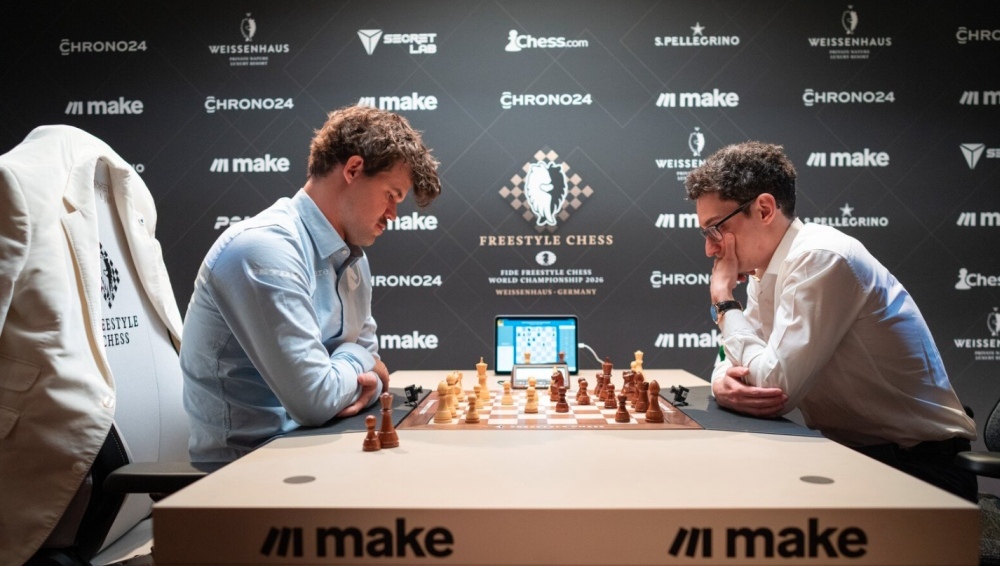
Qualification race remained open until the end in round-robin tournament Magnus Carlsen, Vincent Keymer, Fabiano Caruana and Nodirbek Abdusattorov have qualified for the semifinals of the FIDE Freestyle Chess World Championship and remain in contention for the 2026 world title. The four secured their places after the completion of the seven-round rapid round-robin on Friday in Weissenhaus, Germany. Carlsen won the round robin with 4.5 points out of 7 games. Keymer, Caruana and Abdusattorov each finished on 4 points. Hans Niemann scored 3.5, Arjun Erigaisi 3, while Javokhir Sindarov and Levon Aronian concluded the day on 2 points. Qualification remained undecided until the final round, with several players still in contention and even the possibility of a four-way tie on 4 points. Only after the last results were confirmed did the semifinal field become definitive. Freestyle Chess returned to Weissenhaus in Northern Germany once again in early February, with more at stake than ever before. This year, a cooperation with FIDE means that the official world title is at stake alongside a prize fund of $300,000 and three spots for the 2027 world championship cycle. Now renamed Freestyle Chess, which might appeal to a wider audience, the Chess960 world championship was last held in 2022 when Hikaru Nakamura won the title. The American grandmaster chose not to defend his title and focus on the upcoming Candidates Tournament instead, but his successor will surely be a worthy champion as well. A single-day round-robin of seven rounds was the traditional opener on Friday and delivered four semifinalists who are still in contention: Carlsen, Caruana, Keymer, and Abdusattorov. Especially after his victory of the 2025 Freestyle Grand Slam Chess Tour in South Africa, there is no doubt who is the favorite once again: Magnus Carlsen. “I like the fact that it’s cut-throat and it’s not going to be easy to come through for anybody,” was what Carlsen said about it at the press conference ahead of today’s opening day. It should be noted that a world title in this format of chess is one of the few trophies still missing in his cabinet. The Norwegian star, sporting a moustache in Weissenhaus, has often appeared rusty and had some bumpy starts in these round-robin tournaments during the 2025 Tour, but not this time. He seemed fully warmed up from the start, perhaps because he was making the rounds on social media the other day in a cute video in which he played chess with his wife Ella. Starting with two draws and three wins out of the first five rounds, Carlsen was a point ahead of the field and virtually certain of qualification with two rounds to spare. The tournament was a seven-round rapid event with games of 10 minutes and a five-second increment, and a new starting position for each round. It started with the always interesting clash between Carlsen and Hans Niemann. The American GM had entered the tournament as a wildcard and against Carlsen he was under pressure but got away with a draw. FIDE World Cup winner Javokhir Sindarov played quite well in the next round and was close to holding Carlsen to a draw as well, until the latter found an extraordinary checkmate idea deep in a rook endgame: In this objectively equal endgame, Sindarov played 49…b4??, missing White’s treat. Something like 49…a5 would have led to a draw: 50.bxa5 Kxa5 51.Kf4 c5 52.Ke5 d4 53.cxd4 cxd4 54.Kxd4 b5 55.Ke5 Kb4and Black is in time with the counterplay. 50.g8=Q! Javokhir instantly realized that taking the queen is met by 51.Rxb7 checkmate and so he resigned. 1–0 Another player who had a good start was Caruana, who won his first two games and then drew his next two. The all-American clash ended in his favor as Niemann followed the wrong strategy of material vs. dynamics, as was noted by commentator Judit Polgar. (It’s a joy once again to have the star of the recently launched Netflix documentary Queen of Chess being part of our commentary team once again, alongside Peter Leko, David Howell, Tania Sachdev and James “Dash” Patterson.) Levon Aronian, the winner of the Las Vegas leg of last year’s Tour, had an unfortunate first day and didn’t make it into the top four. He called it “a day of blundering,” and explained that he was out of practice because he hadn’t played chess for two months. After spoiling a winning position in the fist round, he had a similar experience against Carlsen in the third, losing a promising endgame. Arjun Erigaisi had the wildest tournament of them all: he didn’t draw a single game today. The Indian GM, who is the highest rated player of his country and the world number five in classical chess, was the only player to beat Carlsen, in round six. He didn’t just beat him, he crushed him. It was one of the few games where the engine showed an evaluation “better for White” from start to finish, and the eval bar just went up and up. Very impressive. Vincent Keymer, the splendid winner of Weissenhaus a year ago, started well again on home soil. The German GM qualified with a round to spare after beating Caruana in a very nice game in round six. There was a brief moment where the latter missed a draw, but otherwise, Keymer was fully in control. 29…Rdxe5?? Black had to focus on counterplay on the second rank: 29…Rc5! 30.b6 Rcc2 and White cannot avoid a perpetual. After the move played Black was doomed: 30.b6 Re1+ 31.Rxe1 Rxe1+32.Kf2 Rb1 33.a5 Kf7 34.Be3 Ke6 35.a6 1–0 A wounded Caruana now had to face Carlsen-killer Arjun in the final round, who was also still in contention. As it turned out, both players absolutely needed to win this game to make it into the top four, and it was the highly experienced American grandmaster who pulled it off. This time, Arjun was on the wrong side of a one-sided game; he never got a chance after some early mistakes in the opening. Caruana and Keymer finished on 4/7, half a point behind Carlsen, and there
FIDE and Freestyle Chess launch World Championship at Weissenhaus
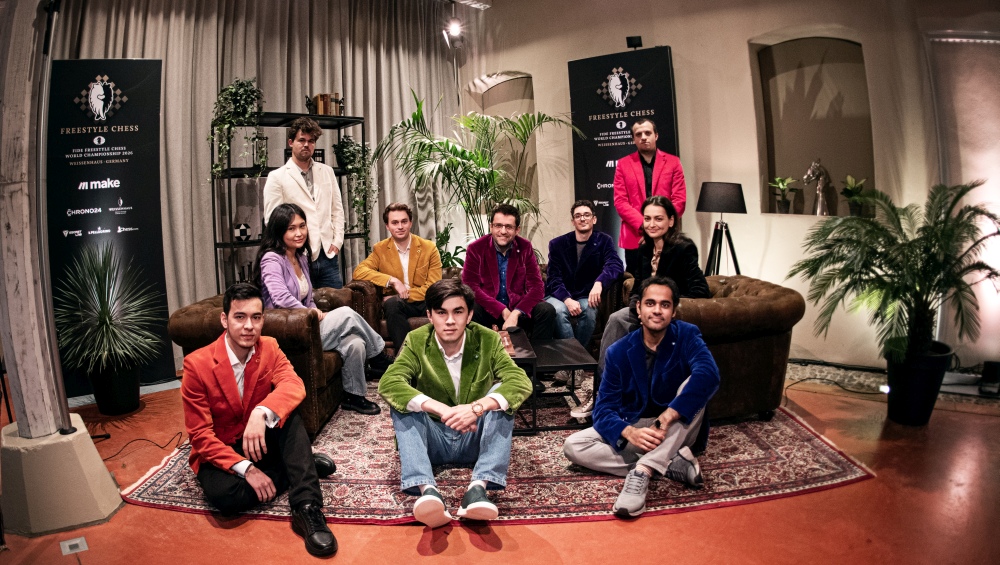
Weissenhaus, February 13, 2026 – The FIDE Freestyle Chess World Championship 2026 was officially launched at Weissenhaus today. Eight of the world’s leading grandmasters begin their campaign for the title under the joint staging of the International Chess Federation (FIDE) and Freestyle Chess. The championship places the Freestyle format within the official FIDE World Championship framework and establishes a direct qualification pathway for the next cycle. With the 2026 world title, $300,000 in prize money and three qualification spots for 2027 at stake, the event carries both immediate sporting pressure and long-term consequence. The winner receives $100,000, while the top three finishers qualify directly for the FIDE Freestyle Chess World Championship 2027. Structure and legitimacy In the opening press conference, Freestyle Chess co-founder Jan Henric Buettner described the launch as the culmination of the format’s development alongside FIDE. “We are proud of what we have achieved together,” Buettner said. He noted that the world championship brings together the best possible players and represents a condensed structure in which “each day is extremely important.” Buettner also addressed the inclusion of the women’s exhibition match, referencing long-standing advocacy from former world-class player and Freestyle Chess commentator Judit Polgar for stronger competitive integration. He confirmed that the winner of the exhibition match will qualify for the future FIDE Women’s Freestyle Chess World Championship, as part of the developing pathway for the women’s cycle. Carlsen and the stakes of the title Among the contenders are Magnus Carlsen and Vincent Keymer. Carlsen, who arrives at Weissenhaus after winning the 2025 Freestyle Chess Grand Slam Tour, described the format as “cutthroat” and said he was “grateful for the opportunity.” Carlsen noted: “It’s not easy to come through for anybody. I hope it’s going to be me.” Should Carlsen prevail, he would add the Freestyle world title to his record and claim what would be recognized as his 21st world championship title across formats. Keymer echoed the competitive assessment. “Like Magnus, I will try to win,” he said, while agreeing that the format leaves little margin. “You never know. Magnus has to be the favourite – he wins most top events – but for sure it’s not going to be easy for him.” FIDE oversight Representing the federation, FIDE Technical Delegate Pavel Tregubov described Freestyle as “a challenging new format” and said the championship would serve as a test at the highest level. “This is the beginning of a tradition. Let’s see how it develops,” he said. Tregubov emphasized that FIDE considers the title on par with other official championships. “We value this title like all other championship titles. We take it very seriously,” he stated, calling it “a high-level event.” He added that the federation is determined to develop the format further, noting that earlier editions under a different name had already shown that “the players like it.” Elite field, demanding format The three-day tournament opens with a rapid round-robin at 10 minutes plus five seconds increment. The top four advance to the knockout stage. Semi-finals and the Final are played as best-of-four matches at 25 minutes plus 10 seconds increment, while matches for fifth and seventh place are best-of-two. If tied, an Armageddon game determines the winner. For each round, the starting position is drawn at random, with classical position 518 excluded. All simultaneous games begin from the same setup. The format removes established opening theory and demands calculation and adaptability from move one. Women’s exhibition match Alongside the main championship, Weissenhaus will host a women’s exhibition match on February 14 and 15 featuring former Women’s World Champion Alexandra Kosteniuk and reigning Women’s World Blitz Champion Bibisara Assaubayeva. The best-of-four match will be played at 25 minutes plus 10 seconds increment, with Armageddon if required. The exhibition is positioned as a precursor to a future FIDE Women’s Freestyle Chess World Championship. The championship is broadcast globally via digital streaming platforms with live commentary and daily coverage. Photos: Freestyle Chess / Lennart Ootes and Stev Bonhage Hock und Partner – Beratungsgesellschaft für Marketing und Kommunikation mbH Till Behrend Rothenbaumchaussee 1 D-20148 Hamburg T: +49 (0) 40 413 228-0 M: +49 (0) 151 4231 7721 t.behrend@hock-partner.de media@freestyle-chess.com www.freestyle-chess.com
Cuban Championship: Lelys Martinez wins maiden national title
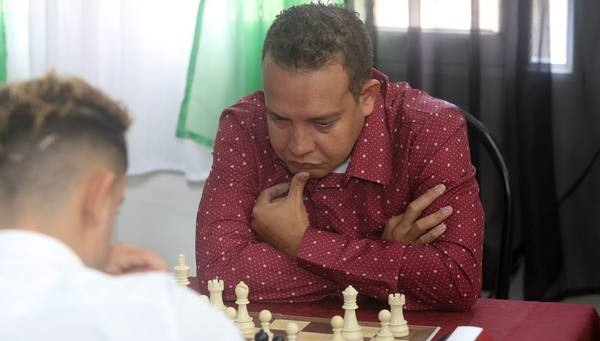
GM Lelys Martinez emerged as the winner of the 2026 Cuban National Championship, claiming his first national title. The Absolute National Chess Championship, a nine-round Swiss event with classical time control, was held at the Girasol Hotel in Havana from February 4–12. Seventh seed Martinez seized the lead after Round 4, but three rounds later, four players – including Jorge Roberto Elías – caught up with him to tie for first place. In Round 8, the future champion scored a crucial victory over IM Michel Díaz Pérez and surged ahead as all his rivals drew their games. Going into the final round a half-point ahead of three of his closest rivals, Martinez defeated IM Daniel Hidalgo with the Black pieces to secure the title with 7/9. Meanwhile, Ermes Espinosa prevailed over FM César Alejandro Pérez to take silver, finishing half a point behind the champion. The 2025 champion, Jorge Roberto Elías, rounded out the podium with bronze, scoring 6/9. Final standings (chess-results) Photos: Federación Cubana de Ajedrez Facebook
Join the Global Celebration of Women and Girls in Chess!

March is a time to celebrate women, and what better way to do so than through chess? Following a strong and inspiring first global Chess Women’s Day Celebration last year, the FIDE Commission for Women’s Chess once again invites federations, clubs, and organizers around the world to take part in this shared initiative throughout March, the Chess Women’s Day Celebration: Visible, Connected, Worldwide. This year’s theme, “Visible, Connected, Worldwide” reflects what we aim to achieve together: increasing the visibility of chess events celebrating women and girls, strengthening connections between local communities and organisers across continents, and highlighting the many fantastic projects happening worldwide. Every event counts. By making these efforts visible and connected, we strengthen their impact and remind each other that we are part of something truly global. Are you planning a chess event in March to celebrate women and girls? Whether it’s a tournament, a mixed or women-focused event, a simultaneous exhibition, a lecture, a workshop, or any special gathering – we want to hear about it! By joining this global celebration, your event becomes part of a worldwide network of activities, all united by a common goal: to bring people together through chess and to make women and girls more visible within our chess communities. The strength of this initiative lies in its diversity – many events, many voices, one shared moment. Last year demonstrated the power of this collective effort. This year, we hope to build on that energy and create even more impact – together. How to get involved: Plan a chess event celebrating women and girls Let us know about it by reaching out to us and tagging our social media Join a global celebration promoting women in chess Contact us to be part of the Chess Women’s Day Celebration. Together, we can increase visibility, strengthen connections, and inspire more women and girls to take part in chess around the world. For more details and to share your event with us, please contact: anna.kantane@gmail.com Find us on our social media: Instagram and Facebook. FIDE Commission for Women’s Chess official website: https://wom.fide.com/
Estonian Team Championships: Diagonaal repeats victory, Kaksikodad claims overall crown

Photo: Karl Erik Olde The 2026 Estonian Chess Team Championships concluded in Tallinn this past weekend. Held from February 6–8 at the Paul Keres Chess House, the competition featured fourteen teams in the Open tournament and four in the Women’s section. MK Kaksikodad (pictured below) claimed first place in the combined standings, lifting the club’s historic traveling trophy – established in 1991 – for the first time. Kaksikodad shared first place in the Women’s tournament and finished third in the Open. SK Reval-Sport, which had won the cup the two previous years, did not participate. Photo: Photo: Karl Erik Olde SK Diagonaal (pictured on the top) won the Open event for the second consecutive year, scoring nine match points out of ten. Their lineup included Estonia’s top-rated player, GM Aleksandr Volodin, along with Dmitri Petrov, Valeri Golubenko, Vyacheslav Koop, and Andrei Skladtshikov. The runner-up, Tonu Truusi MKK, netted an equal amount of match points but finished half a game point behind the champions. Their team featured International Masters Sergei Zjukin and Andrei Shishkov, FIDE Master Ilja Haitin, Marti Medar, and Georg Abozenko. Third place went to the first team of MK Kaksikodad (FIDE Master Oliver Wartiovaara, Georg Aleksander Pedoson, Candidate Masters Tormi Kull and Daniil Shnurov, Aaron Rajandu, Markus Hansson, and Karl Kristofer Orgse). Final standings – Open Photo: Markus Hansson In the Women’s tournament, three teams shared first place, each scoring four match points out of six and finishing equal on all tie-break criteria. As a result, the titles were awarded to MK Vektor (Women’s FIDE Master Sofia Blokhin, Maria Helena Rudiger, and Alexis Miriam Reren), MK Kaksikodad (Woman Candidate Master Maria Ioanna Haapsal and Leelo Mia Thimm), and Tallinna MK (Women International Masters Margareth Olde – the reigning Estonian Women’s Champion – and Margit Brokko, along with Woman Candidate Master Grete Olde), which had won the Women’s tournament in the previous two years. Final standings – Women Estonian Chess Federation’s website: https://maleliit.ee/
Teacher training in Eritrea lays foundation for future chess talent
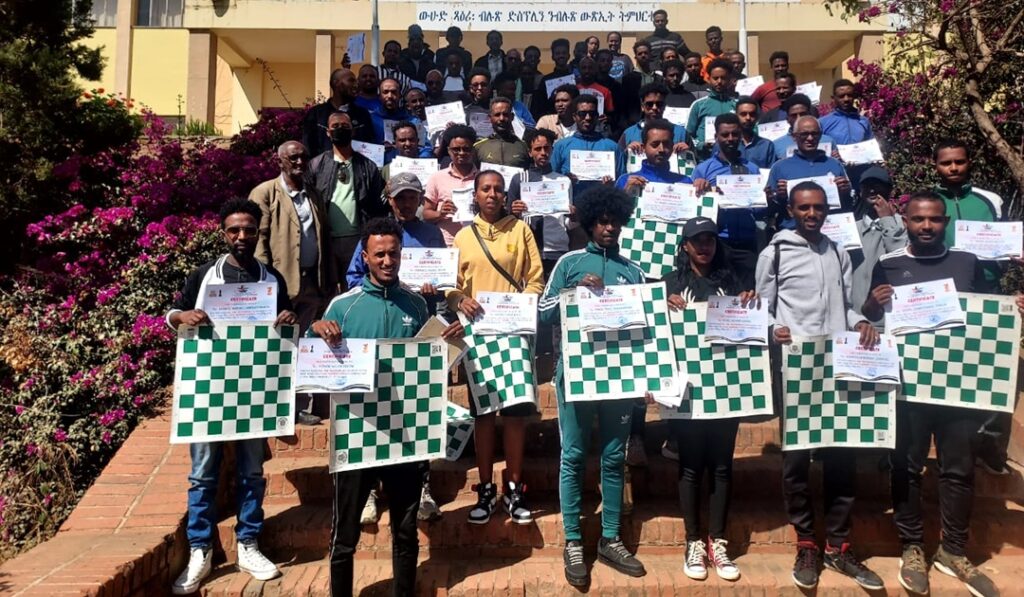
The Eritrean National Chess Federation (ENCF) has taken a significant step in strengthening grassroots chess development through a teacher training programme held from February 2-6, 2026. The course trained educators to coach junior and high school students. The five-day course focused on equipping educators with the practical coaching skills, age-appropriate training methods and the effective ways to introduce chess within school environments. Sessions were highly interactive, combining theory with hands-on activities designed to make learning engaging and accessible for young players. Participants described the training as both informative and enjoyable, noting its emphasis on creativity, critical thinking and student engagement. Beyond technical instruction, the programme also highlighted chess as a tool for education, discipline and character development. Officials from the ENCF said the initiative is part of a long-term strategy to build a sustainable pipeline of players by investing in coaches at the school level. With a growing pool of trained and motivated teachers, the federation is confident the impact will be felt in the near future. “Now that we have devoted and well-prepared coaches, we are confident that strong players will emerge within the next two to three years,” an ENCF official noted. The training programme represents a major milestone for chess development in Eritrea, laying a solid foundation for future national talent and reinforcing the federation’s commitment to structured, school-based chess growth.
Bruno Parma (1941-2026)
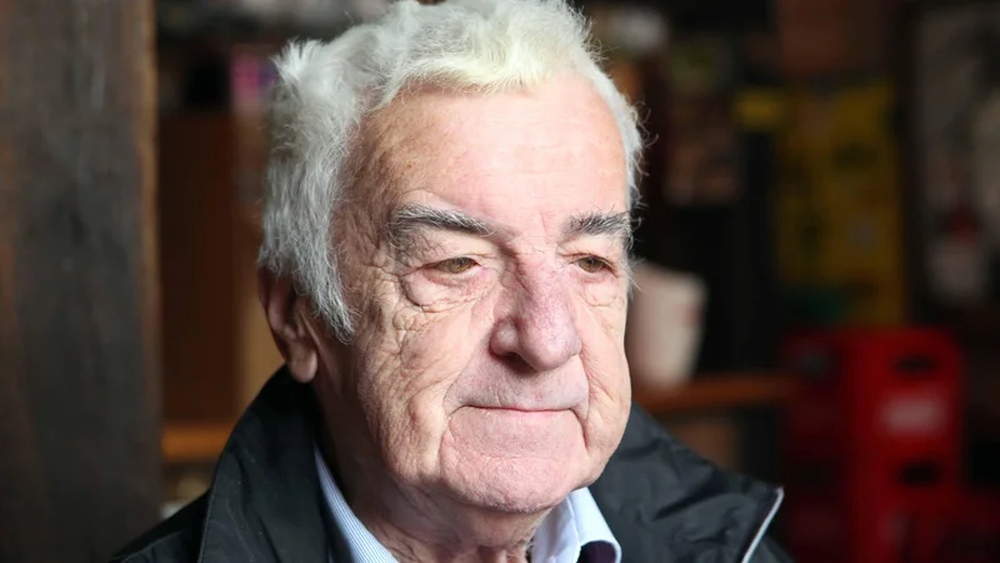
The chess world mourns the passing of Yugoslav-Slovene Grandmaster Bruno Parma, who departed this life at the age of 84. Born in Ljubljana in 1941, then part of Italian-occupied Slovenia, Parma learned chess during his school years. His early career was marked by significant success in youth competitions. As a high school student, he secured second place at the 1959 World Junior Championship at the age of 17. Two years later, Parma won the World Junior Championship outright in The Hague, Netherlands, earning the International Master title. Parma was awarded the Grandmaster title in 1963 following his success at the Beverwijk tournament, becoming the third Slovenian to achieve this distinction. Among his most notable international results were a second-place finish in San Juan, Puerto Rico (1969), behind Boris Spassky, and shared first place with Georgi Tringov in Vršac (1973). A regular participant in the highly competitive Yugoslav Championships for over two decades, Parma never captured the national title but achieved a shared third-place finish in Čatežske Toplice (1968), behind co-winners Svetozar Gligorić and Borislav Ivkov. Parma represented Yugoslavia at eight Chess Olympiads (1962, 1964, 1966, 1968, 1970, 1974, 1978, and 1980), contributing to four team silver and two team bronze medals. He also played for Yugoslavia in nine USSR vs. Yugoslavia matches held throughout the 1960s and 1970s. After retiring from competitive play in the late 1980s, Parma transitioned to coaching. He served as a selector for both the Yugoslav national team and the inaugural Slovenian national team, helping to foster the development of future generations of players in post-independence Slovenia. FIDE expresses its deepest condolences to Bruno Parma’s family, friends, and loved ones.
Georgian Championship 2026: Baadur Jobava and Nino Batsiashvili claim titles
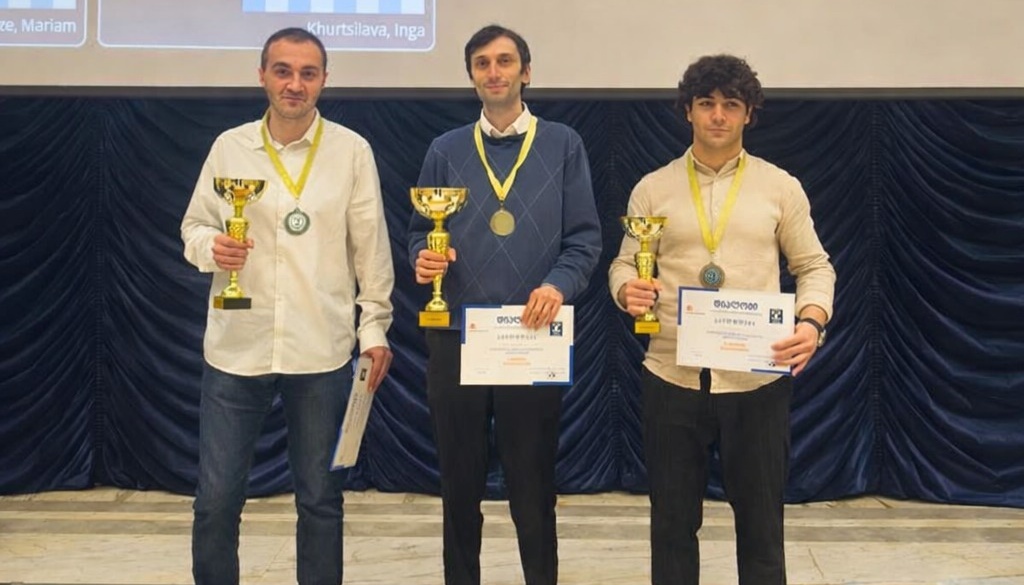
Baadur Jobava and Nino Batsiashvili have been crowned Georgian chess champions, each claiming their fifth national title. The 85th Georgian Chess Championship and the 83rd Georgian Women’s Chess Championship were held concurrently in Tbilisi from January 27 to February 5, 2026. Both competitions were 10-player round-robins with classical time control. Top seed Jobava lived up to his status as the pre‑tournament favorite, seizing the lead in Round 4 and preserving it to the finish. Entering the final round on 5.5/8 – a half‑point ahead of Tornike Sanikidze and a full point ahead of Luka Kiladze – he secured the title with a quick draw against his nearest rival as all other games also ended in draws. Sanikidze took silver, while Kiladze completed the podium with bronze. Notably, the champion and the runner-up completed the event unbeaten. Final standings – Open Nino Batsiashvili continued her impressive run of strong results, dominating the women’s event. The top seed strung together five consecutive victories in Round 4-8 and secured the title with a round to spare, finishing on 7.5/9. In the final round, Meri Arabidze defeated Lela Javakhishvili in a hard‑fought encounter and caught up to tie for second place. However, Javakhishvili claimed silver on the Sonneborn–Berger tiebreak, leaving Arabidze with bronze. Final standings – Women Photos: Georgian Chess Federation Facebook
Abdusattorov tops FIDE Circuit 2026-27 leaderboard after Tata Steel triumph
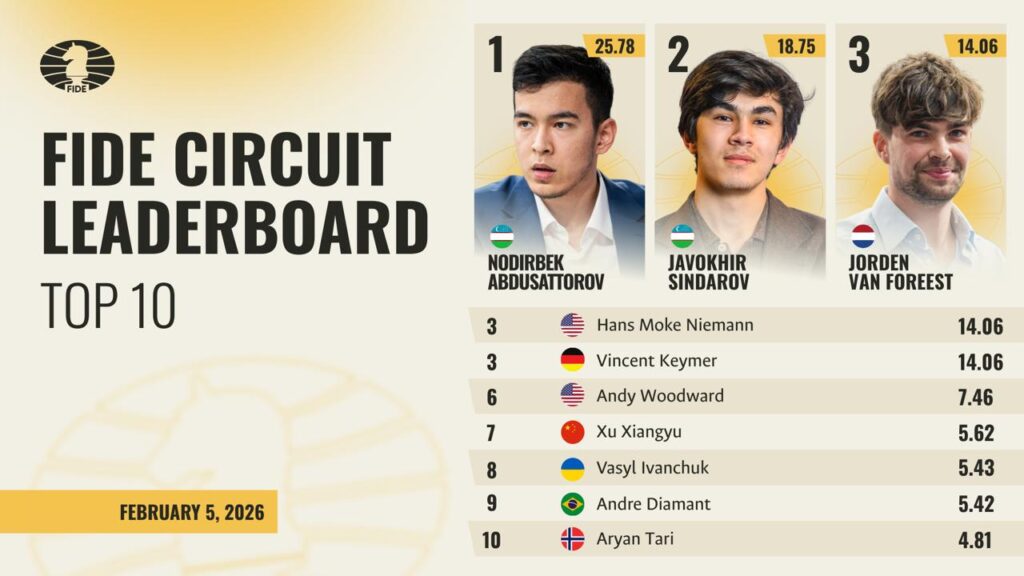
Nodirbek Abdusattorov has taken the lead in the FIDE Circuit 2026–27 following his impressive victory at the Tata Steel Masters 2026, netting him 25.78 points. As the first major of the year and one of the most point‑heavy tournaments on the calendar, the Tata Steel Masters propelled its top finishers into prominent positions: Javokhir Sindarov, Hans Niemann, Jorden van Foreest, and Vincent Keymer now occupy the places directly behind the leader. Andy Woodward, winner of the Tata Steel Challengers, holds sixth place with 7.46 points, while runner‑up Vasyl Ivanchuk ranks eighth. The traditional Rilton Cup, which concluded in early January, initially produced an early circuit leader, the event’s winner Xu Xiangyu. However, following the Tata Steel tournaments, he has slipped to seventh place in the standings. Rounding out the top 10 are the top two finishers from the Brazil Series in Florianópolis: Andre Diamant with 5.42 points and Aryan Tari with 4.81 points. Dedicated page for the FIDE Circuit 2026-27 is maintained on our website, featuring the latest information on eligible tournaments, current standings, and regulations. Visit: FIDE Circuit 2026-27
New competition format for the 2026 World Schools Team Championship

The World Schools Team Championship (WSTC) will adopt a new tournament structure for its 2026 edition, featuring four continental qualifying stages followed by a four-team Grand Final in December. First held in 2023 in Kazakhstan and then in 2025 in the US, the World Schools Team Championship is the primary global scholastic chess competition, jointly organised by FIDE and the International School Chess Federation (ISCF) in cooperation with Continental bodies. The 2026 edition will take place during the Year of Chess in Education, a joint FIDE and ISCF initiative to promote the role and value of chess as part of education, supporting both cognitive and social development among schoolchildren. In October 2025, FIDE and ISCF signed a Memorandum of Cooperation, which announced a series of international school team tournaments for 2026. The WSTC will serve as a flagship circuit of the “Chess in Education 2026” programme. It was then announced that the tournaments would unfold in two stages: Continental Championships for Africa, the Americas, Asia and Europe and the Grand Final, featuring the winners of the respective Continental Championships. FIDE and ISCF now announce the structure of the new format and the regulations for the event. The 2026 cycle will consist of four continental stages: Africa, the Americas, Asia and Europe, all held throughout 2026. Each continental championship will produce one champion school team that will directly qualify for the Grand Final, which will take place in December 2026 as a four-team tournament. The WSTC 2026 will kick off with the Asian Continental stage in Almaty, Kazakhstan in early April. Exact dates and locations for all stages will be announced at a later date. Only teams representing a single general educational institution (such as a school) may take part in the event. Each team must include at least one boy and at least one girl, with possible exceptions for single-gender schools. Eligible players must have been born between January 1, 2012 and December 31, 2018 (inclusive). The regulations explicitly provide for substantial organiser support for participating teams. “Everyone has something they can learn from someone or teach someone. By bringing together children from different countries and cultures to play chess, we are sowing the seeds of knowledge, creativity and multiculturalism, which are essential for a thriving life and society. The ISCF is excited to be partnering with FIDE on this project, and we are looking forward to a successful series of events in the Year of Chess in Education,” ISCF President Timur Turlov said. “FIDE has consistently championed education and learning, and we have always believed that chess is a powerful tool for education, whether among children or adults. After the successful Year of Social Chess in 2025, we have dedicated 2026 to education and to children in school. The four continental championships, as well as the Grand Final, will not only further promote chess in schools, but will be an impulse for many schoolchildren to take up the game, spreading the wonder of our sport further. We are exceptionally grateful to ISCF for their work on this project, which has the full backing of FIDE,” said Dana Reizniece, Deputy Chair of the FIDE Management Board. The regulations for the FIDE ISCF World Schools Team Championship 2026 can be found [HERE]. Official email: worldschoolteam@fide.com Official website (coming soon): https://worldschoolteam2026.fide.com/ About ISCF: The International School Chess Federation (ISCF) is dedicated to the promotion and integration of chess within the educational system globally. Launched in September 2024 as a FIDE affiliated organisation, the ISCF operates as a main institutional platform for advancing chess in schools, developing educational programmes, supporting national federations and fostering cognitive and social growth among students through the game of chess. Official website: https://ischoolchess.com/