

Call for Bids: FIDE Amateur World Championships 2026

FIDE Events Commission is pleased to announce “Call for Bids for FIDE Amateur World Championships 2026” and invite FIDE member Federations to participate. The deadline for submissions is January 26, 2026, 15:00 CET. Two competitions included in this call: World Amateur Chess Championships (in a new format) World Amateur Rapid and Blitz Chess Championships (a new event) Interested bidders can find detailed information about the bidding procedure – including the Bidding Form, Bid Form Annex, and applicable Bid and Deposit Fees – [HERE].
European Women’s Rapid & Blitz Championship 2025: Batsiashvili and Roebers capture titles
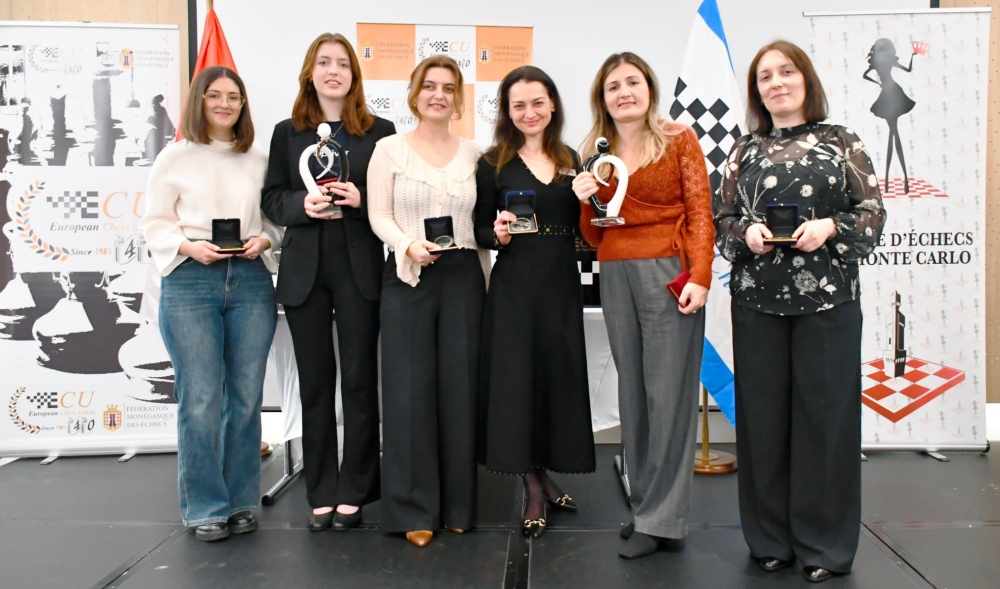
Nino Batsiashvili and Eline Roebers emerged as champions of the European Women’s Rapid and Blitz Championships, respectively, both securing decisive victories in the final round. The 2025 European Women’s Rapid & Blitz Chess Championships took place from January 8–12, 2026, in Monte Carlo, Monaco. The total prize fund for the two events was €46,500, with €15,200 allocated to the Blitz Championship and €31,300 to the Rapid Championship. The 2025 edition set a new participation record, with 154 players from 32 federations registered for the Rapid event and 145 players for the Blitz competition. The first event on the schedule was the European Women’s Blitz Chess Championship 2025, a 13-round Swiss-system tournament played on January 9 under a time control of 3 minutes per game plus a 2-second increment. The blitz event was fiercely contested and came down to the wire. IM Bella Khotenashvili of Georgia seized the lead after Round 7 and entered the final round with 10/12, a full point ahead of IMs Oliwia Kiolbasa (POL), Yuliia Osmak (UKR), and Eline Roebers (NED). Top seed Roebers rose to the occasion, defeating the leader in their direct encounter to clinch the title. Four players tied for third place with 9.5/12, and Oliwia Kiolbasa claimed the bronze medal on tiebreaks (superior Buchholz score). Complete final standings – Blitz The European Women’s Rapid Chess Championship 2025, an 11-round Swiss-system tournament with a 15+10 time control, was held from January 10–11 at the same venue – Hotel Novotel – and followed a similarly dramatic script. GM Alexandra Kosteniuk of Switzerland surged into sole lead after Round 7 and held that position through the penultimate round. In the final round, she faced GM Nino Batsiashvili (GEO), who trailed by a full point. Needing a win, Batsiashvili delivered brilliantly, securing the gold medal with a final score of 9/11. Kosteniuk finished second with the same score but had to settle for silver after losing their head-to-head encounter. Six players tied for third place with 8 points each, and IM Sofio Gvetadze earned the bronze medal based on a superior Buchholz tiebreak. Complete final standings – Rapid The сlosing ceremony of the event took place on Sunday night in the playing venue with the attendance of the ECU President Zurab Azmaiparashvili, ECU Vice President and President of the Monaco Chess Federation Jean-Michel Rapaire, ECU Vice President Malcolm Pein, ECU Vice President Gunnar Bjornsson, ECU Vice President Alojzije Jankovic, ECU CEO Erald Dervishi, ECU Commercial Chief Advisor Moshe Slav, event’s supporter Evren Ucok, and other distinguished guests. The ECU President addressed the players, congratulated the winners, and officially declared the event closed, and with the other distinguished attendees joined the awarding ceremony for the medalists of the European Women’s Rapid and Blitz Chess Championship 2025, and winners of the special awards – the best veteran 50+ players, the best Monaco players, the best players in different rating categories, the best PACA players, and the best Alpes Maritimes player. Photos: Patricia Claros Aguilar
FIDE Freestyle Chess World Championship Play-In set for this week
On January 7, FIDE and Freestyle Chess officially announced the inaugural FIDE Freestyle Chess World Championship, scheduled to take place in Weissenhaus, Germany, from February 13–15. To complete the lineup for the event, Chess.com will host a Play-In qualifier to determine the remaining player who will compete at the event. The Play-In qualifier will be held on January 14–15, starting at 10:00 AM ET / 16:00 CET, and offers a ticket to the $300,000 FIDE Freestyle Chess World Championship. The event is open to all verified titled players who have not already qualified for the Championship. All participants in the Swiss stage will be required to use Proctor. The Play-In will follow a familiar qualification format, beginning with a nine-round Swiss tournament played at a 10+2 time control. The top four players will advance to the knockout stage. The knockout will be a single-elimination competition, with each match consisting of two games played at a 15+3 time control. In the event of a tie, players will contest two 5+2 games, followed, if necessary, by a bidding Armageddon with a base time of five minutes, in which the bid winner receives the black pieces. The winner of the Play-In will secure the final spot in the first FIDE Freestyle Chess World Championship, joining the seven players who have already qualified through the 2025 Freestyle Chess Grand Slam Tour or were selected as wildcards by Freestyle Chess: GM Magnus Carlsen GM Levon Aronian GM Fabiano Caruana GM Vincent Keymer GM Arjun Erigaisi GM Javokhir Sindarov GM Hans Niemann The Play-In features a $5,000 prize fund, with $1,000 awarded to first place, $700 to the runner-up, $550 each to the third- and fourth-place finishers.
FIDE statement regarding CAS filing
FIDE has received a copy of the complaint filed by five federations (Ukraine, England, Norway, Estonia, and Germany) to the Court of Arbitration for Sport (CAS). The appeal concerns the recent decisions of the FIDE General Assembly in relation to restrictions on Russia and Belarus. FIDE will review the complaint and submit a timely official response to CAS. We remain confident in our legal position and the integrity of the General Assembly’s procedures.
FIDE Global Conference on Chess in Society and Education: Final call for registration

The Social and Educational Chess Conference, marking the launch of the FIDE Year of Chess in Education 2026, is fast approaching. Organized by FIDE, in partnership with KIIT and the All India Chess Federation the conference will take place from January 14 to 16, 2026 in Bhubaneswar, India. It aims to bring together experts from the fields of education, academic research, social development, public policy, and chess to critically examine and advance the use of chess as a structured instrument for learning and social impact on a global scale. “Chess has a unique ability to bring together education, social programmes, and public institutions. When it is organised well and supported by strong partners, it can reach people globally and create real opportunities for learning and participation. This conference is about sharing what works, learning from each other, and building stronger cooperation so that chess can play a meaningful role in education and social projects around the world,” said Arkady Dvorkovich, FIDE President. The event will be held at the Kalinga Institute of Industrial Technology (KIIT), one of India’s leading educational institutions, and will focus on two core pillars of FIDE’s global strategy: Social Chess and Chess in Education. “Education must go beyond textbooks and classrooms to nurture character, values, and the ability to think independently. Chess is a powerful tool in this journey, as it cultivates discipline, critical thinking, patience, and ethical decision-making. We are honoured that KIIT and KISS will host this global conference and partner with FIDE and the All India Chess Federation in advancing chess as an instrument for social transformation and inclusive education worldwide,” said Dr. Achyuta Samanta, Founder, KIIT, KISS & KIMS. Over the course of the conference, participants will examine how chess can support inclusion, education, rehabilitation, and personal development across different communities and age groups. The programme combines strategic discussions, academic research, practical case studies, and on-the-ground experiences. The list of speakers includes: Achyuta Samanta, a globally respected educationist, social reformer, and sports visionary, and the founder of KIIT, KISS & KIMS Rodrigo Barbeito, a sociologist and international project manager at Club Magic Extremadura Mukesh Ranjan Das, Executive Director (HR), Indian Oil Corp (IOC) Professor Sabine Vollstädt-Klein, who leads the Neuroimaging of Addictive Behaviour group in the Central Institute of Mental Health at Heidelberg University. Tunde Onakoya, a Nigerian National Chess Master and founder of a nonprofit Chess in Slums Africa. Cristóbal Blanco Acevedo, a neurosurgeon, neuroscientist, and International Chess Master. His work uniquely bridges elite chess and brain science using the game as a model to study advanced cognition Jerry Nash, Chair of FIDE Chess in Education Commission, a National consultant for educational chess in the US. André Vögtlin, FIDE Social Chess Commission Chair Anastasia Sorokina, Chair of the FIDE Commission for Women’s Chess The first day of the conference, titled “Every Move Matters: Social Chess in Action”, will focus on social impact initiatives. Sessions will highlight the outcomes of FIDE’s Social Chess Year 2025 and present priorities for 2026. Speakers and project leaders from around the world will share experiences from initiatives working with refugees, prison populations, children in underserved communities, elderly participants, and individuals facing addiction and social exclusion. The programme will also address institutional models, partnerships, CSR engagement, volunteer management, and sustainable project development. As part of the Every Move Matters theme, the first day of the conference will conclude with the presentation of the FIDE Social Chess Storytelling Challenge. Short films submitted through the global initiative will be screened, showcasing real stories of how chess supports education, inclusion, and social change across communities worldwide. The evening programme will culminate in the announcement of the winning films, followed by a networking reception hosted by KIIT and the All India Chess Federation. The second day, “Every Lesson Counts: The Present and Future of Chess in Education”, will focus on chess in formal and non-formal education systems. Discussions will include current research on the cognitive and academic impact of chess, national and regional implementation models, teacher training, curriculum integration, and policy development. Digital tools and platforms supporting chess in education will also be showcased, alongside case studies from established programmes around the world. Beyond the main conference sessions, the programme includes exhibitions of social chess projects, educational workshops, networking activities, and presentations from digital and educational partners. Interactive formats such as audience Q&A, project showcases, and short film screenings will encourage dialogue and exchange between participants. The final days of the programme will be dedicated to site visits at KIIT and KISS facilities, local social chess initiatives, school activities, and Chess in Education teacher training courses, reinforcing the conference’s emphasis on practical application and long-term capacity building. The Social and Educational Chess Conference reflects FIDE’s ongoing commitment to developing chess as a tool for education, inclusion, and social development, while strengthening collaboration between institutions, educators, researchers, and federations worldwide. The conference will be streamed live on the FIDE YouTube Channel. Registration details, speakers, and the program are available at soc.fide.com/global-chess-conference.
Freedom Asian Chess Initiatives 2026: Application deadline approaching
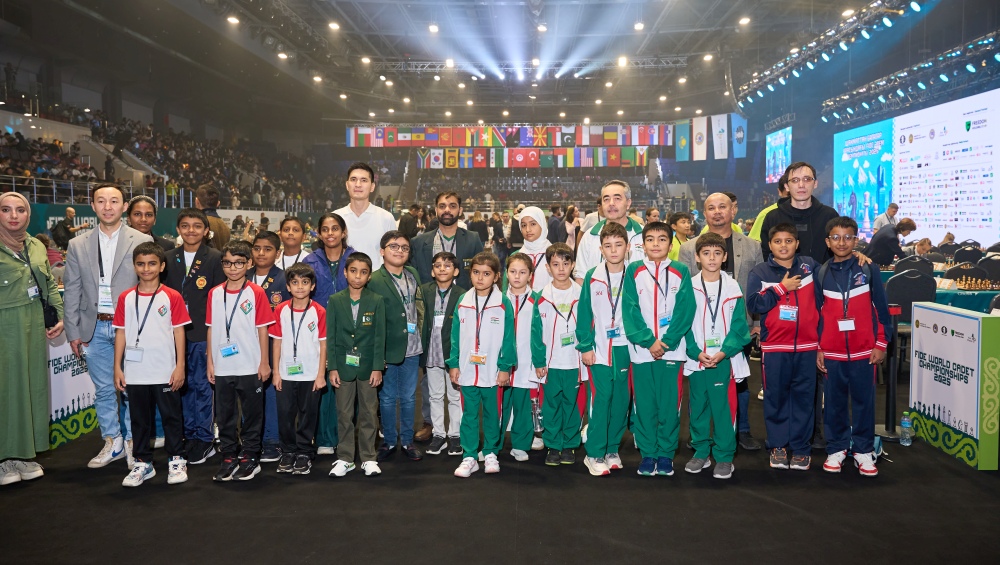
We would like to kindly remind you that the application process for the Freedom Asian Chess Initiatives (FACI) Project 2026 is currently open. FACI is an international project implemented by the Kazakhstan Chess Federation with the support of Freedom Holding Corp., in partnership with FIDE and the Asian Chess Federation (ACF). The FACI Project aims to support the sustainable development of chess by strengthening national chess federations, developing chess education, and promoting international cooperation. In 2025, the FACI Project supported seven national chess federations: Oman, Cambodia, Nepal, Tajikistan, Sri Lanka, Jordan, and Pakistan. Participating countries achieved strong results, including prize-winning places at international tournaments. Selected countries also received grants to take part in the FIDE World Cadet Chess Championships in Almaty, providing young players the opportunity to compete at the highest level. A key focus of the FACI Project is the organization of training camps for national teams, conducted with the participation of Kazakhstan’s leading coaches. National chess federations interested in participating in FACI 2026 are invited to submit their applications via the official website: faci.kazchess.kz. Deadline: January 12, 2026, 12:00 PM Astana time (UTC+5). All applications will be processed in accordance with the FACI Project Regulations. The results of the selection process will be announced in early February 2026. Federations that participated in 2025 are invited to submit a new application to be considered for support in 2026. Decisions will be made by the FACI Working Group and the President of the Kazakhstan Chess Federation. Please carefully review the FACI Project Regulations posted on the official website. For more detailed information about the FACI Project, you can watch our video. https://www.youtube.com/watch?v=XMYLo4rCK24
The first official FIDE Freestyle Chess World Championship to be hosted in Weissenhaus
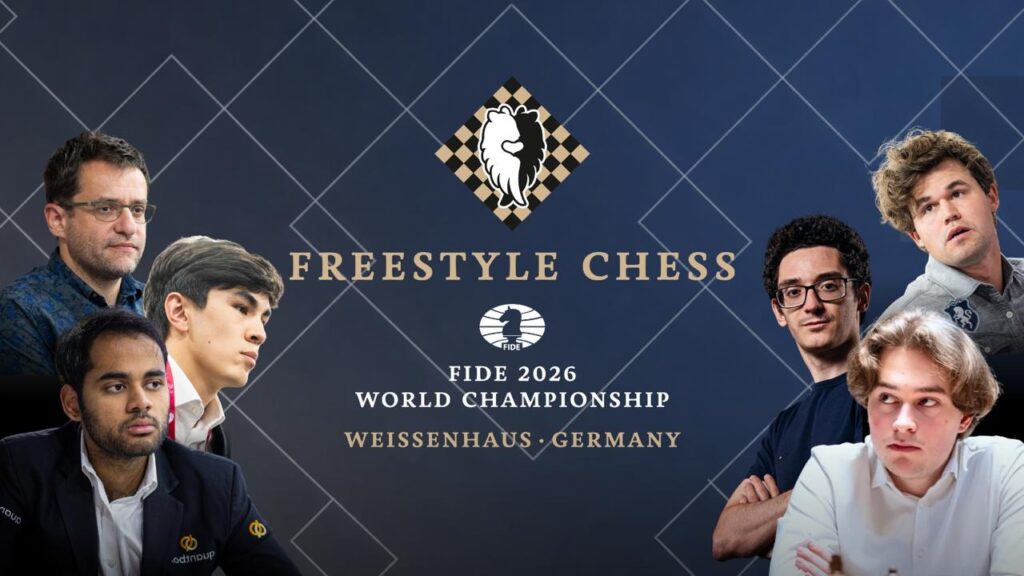
Weissenhaus / Hamburg / Germany, January 7, 2026 The International Chess Federation (FIDE) and Freestyle Chess Operations GmbH have agreed to stage the first official FIDE Freestyle Chess World Championship in Weissenhaus, Germany, from February 13–15, 2026. The event is governed by FIDE in collaboration with Freestyle Chess. On January 7, 2026, FIDE and Freestyle Chess signed a cooperation agreement, giving the green light to the first joint World Championship. This is the first time that the World Championship title in this format is awarded under a joint framework between FIDE and a private organiser. As confirmed by the Parties, “no event may be designated as an official ‘World Chess Championship’ in any format, including Freestyle Chess, without the prior written consent of FIDE”. Freestyle Chess is also known as Chess960 or FIDE Fischer Random Chess as per the FIDE Charter. The FIDE Freestyle Chess World Championship will be a continuation of FIDE’s previous events in the Fischer Random format (previously held in 2019 and 2022) and will feature eight players. Six players have qualified based on their results during the 2025 Freestyle Chess Grand Slam Tour: Magnus Carlsen, Levon Aronian, Fabiano Caruana, Vincent Keymer, Arjun Erigaisi, and Javokhir Sindarov. Two additional participants will be selected separately, one by FIDE and one by Freestyle Chess. Freestyle Chess has already nominated Hans Niemann, due to his outstanding performance in the Freestyle Chess Grand Slam in Las Vegas. FIDE will hold an Online Qualification Tournament on Chess.com as early as January 14 and 15 to determine the eighth player. A Women’s Exhibition Match between two of the best women will be held in parallel in Weissenhaus. Additionally, the Parties have agreed to the launch of the inaugural FIDE Women’s Freestyle Chess Championship in late 2026. The event will feature a $50,000 prize fund, financed from the payment made by Freestyle Chess under the current agreement with FIDE. “This World Championship and signed cooperation agreement bring FIDE and Freestyle Chess together within a clear and transparent sporting framework,” said Arkady Dvorkovich, President of FIDE. “It is important that elite competition in this format is governed under established international standards administered by FIDE as the sole governing body of world chess.” “Our aim from the outset was to build a serious competitive structure, not isolated events,” said Jan Henric Buettner, CEO of Freestyle Chess. “After completing our first Grand Slam season, a World Championship in cooperation with FIDE is the logical next step – a defined title, a fixed venue, and a clear competitive peak.” The FIDE Freestyle Chess World Championship 2026 follows the conclusion of the Freestyle Chess Grand Slam Tour 2025, which recently crowned Freestyle Chess co-founder Magnus Carlsen as its first overall champion at the season final in South Africa. The inaugural Grand Slam Tour established Freestyle Chess as a structured, season-long elite circuit. Set on Germany’s Baltic Sea coast, Weissenhaus has already established itself as a distinctive venue for elite chess events. The historic estate offers seclusion, architectural character, and controlled playing conditions, providing a focused environment for top-level competition and broadcast production. Format and Schedule Friday, February 13: The tournament opens with a rapid round-robin stage, following the format used in the Freestyle Chess Grand Slam events. All eight players face each other once with a time control of 10 minutes plus 5-second increment. The top four players advance to the semifinals, while the remaining players move into placement matches. Saturday, February 14: The knockout stage begins with the semifinals and placement matches, played with a time control of 25 minutes plus 10-second increment. The semifinals will be played as four-game matches. Sunday, February 15: The final, played over four games, and the placement matches use the same 25 minutes plus 10-second increment. In the final, the FIDE Freestyle Chess World Champion is determined. All final places from first to eighth will be decided over the board. The total prize fund is $300,000, with $100,000 awarded to the FIDE Freestyle Chess World Champion. Arrivals are scheduled for February 11, with February 12 reserved as a media and content day. The event concludes on Sunday, February 15, followed by departures on February 16.
FIDE introduces updated Circuit format for 2026-2027
FIDE has approved a new format for the FIDE Circuit, introducing a series of regulatory and structural updates that will apply to the 2026 and 2027 seasons. The revised regulations further define the Circuit as a unified system of top individual chess tournaments worldwide and strengthen its role as a performance-based qualification pathway, with increased emphasis on consistency, strength of opposition, and participation at the highest level. The updated regulations were approved by the FIDE Council on 26 December 2025 and will come into force on 1 January 2026. Summary of key changes: Introduction of a two-year Circuit cycle covering the 2026 and 2027 seasons Expansion of the number of results counted toward the final score Introduction of a separate FIDE Open Circuit sub-ranking Updated tournament strength calculation Expanded eligibility for rapid and blitz tournaments Inclusion of the Total Chess World Championship Tour Adjusted bonus scoring for the World Championship Match For the first time, the FIDE Circuit will operate over a two-year cycle. Instead of an annual ranking, results from the 2026 and 2027 seasons will be combined into a single Circuit ranking. A player’s final score will be calculated as the sum of their twelve highest event scores achieved across the two-year period, or all event scores if fewer than twelve are available. Alongside this expansion, new balance rules have been introduced to ensure that a player’s final score reflects a broad and competitive tournament portfolio. When a final score includes eleven or twelve event scores, no more than four rapid or blitz tournaments may be counted. In addition, no more than seven events, in the case of eleven results, or eight events, in the case of twelve results, may come from tournaments with fewer than 50 participants. When a final score is based on ten or fewer events, these limits are reduced accordingly. These measures reinforce classical chess as the core of the Circuit, while allowing rapid and blitz events to contribute in a limited and clearly defined way. To be eligible to qualify for the FIDE Candidates Tournament 2028 via the Circuit, a player’s final score must include at least eight eligible tournaments, of which at least five must be standard time-control events. Depending on the total number of tournaments counted, a minimum number of these standard tournaments must also have participation of 50 players or more. Event scores of zero points may be included for the purpose of meeting participation requirements. A new Open Circuit sub-ranking has been introduced as part of the overall structure. This ranking will include only tournaments with more than 50 participants and is intended to highlight performances in large open events. The top players in this sub-ranking will earn qualification opportunities for selected FIDE competitions, such as the Total Chess Tour, further strengthening the link between open tournaments and the elite pathway. Another significant update concerns tournament strength calculations. The average rating used to determine a tournament’s strength will now be based on the top twelve players, rather than eight as in previous cycles. This adjustment provides a more accurate reflection of the competitive level of elite events and aligns scoring more closely with the actual strength of the field. Eligibility for rapid and blitz tournaments has also been expanded. The minimum average rating threshold required for such events to be included in the Circuit has been lowered from 2700 to 2650. Eligible rapid and blitz events remain subject to reduced weighting through established multipliers. The Total Chess World Championship Tour 2026-2027 has been formally included in the FIDE Circuit. Results from these events will count toward Circuit scores, with specific coefficients applied, and are treated as standard tournaments for the purposes of participation requirements. Adjustments have also been made to bonus scoring related to the World Championship Match, where the runner-up of the World Championship match will get fewer points with a coefficient decrease to 1.5 compared to the Circuit 2025, ensuring a better balance between match results and tournament performance across the Circuit as a whole. “It is extremely important for FIDE to provide equal competitive opportunities to grandmasters of all levels and increase the role of sporting merit in selection. The new FIDE Open Circuit allows all grandmasters to compete for direct spots in the most prestigious FIDE tournaments. Thus, the top 3 players in the 2026 FIDE Open Circuit standings as of September 1, 2026, qualify for the 2026 pilot Total Chess event. Furthermore, the top 2 players as of January 1, 2027, will also qualify for the 1st leg of the 2027 event,” said FIDE President Arkady Dvorkovich. The revised regulations further clarify eligibility criteria for tournaments, including minimum numbers of players and rounds, rating thresholds, federation representation requirements, the mandatory application of FIDE Fair Play procedures, and advance notification obligations for organisers. The FIDE Council retains authority over the regulations, with any unforeseen circumstances or formats not covered referred to the FIDE President for a final decision. The official FIDE Circuit rankings will be published and updated on a weekly basis throughout the 2026-2027 cycle. Regulations are available in the FIDE Handbook: handbook.fide.com/files/handbook/Regulations_for_FIDE_Circuit_2026.pdf FIDE Circuit 2026-2027 page: fide.com/fide-circuit-2026-2027/
Inaugural Pia Cramling Cup and DGT Board Operator Seminar successfully held in Stockholm
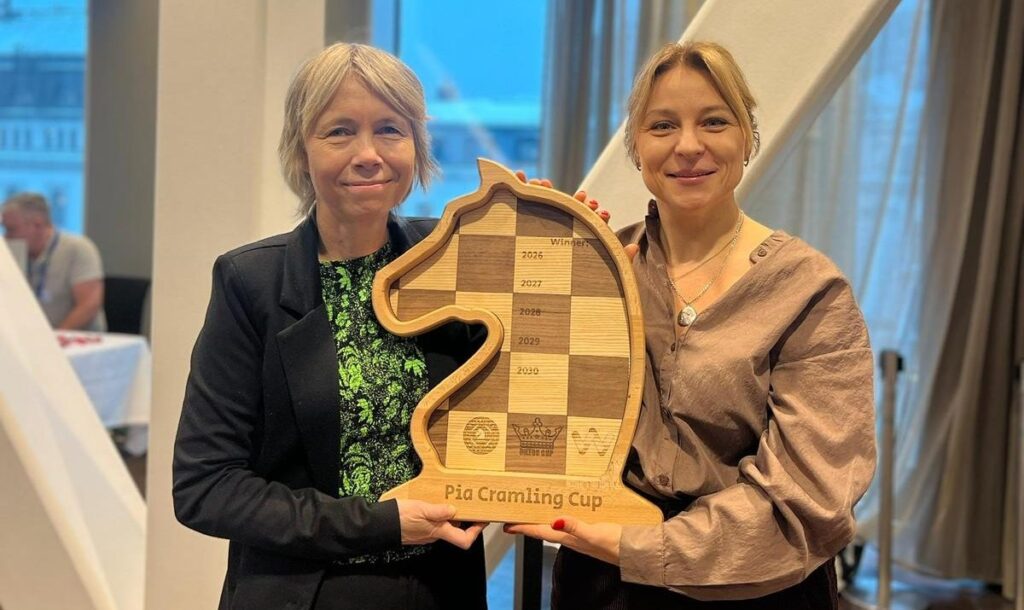
The FIDE Commission for Women’s Chess was proud to co-organize the first-ever Pia Cramling Cup and the DGT Board Operator Certification Seminar, which took place in Stockholm, Sweden, alongside the prestigious and long-standing Rilton Cup. Inaugural Pia Cramling Cup Held in collaboration with Pia Cramling and the Stockholm Chess Federation on January 2, the 7-round FIDE-rated rapid tournament brought together 38 girls and women from seven countries. With free entry and strong organizational support, the Pia Cramling Cup reflected the Commission’s continued commitment to creating accessible, meaningful opportunities for girls and women in chess. Honoring a legend More than a tournament, the Pia Cramling Cup was a tribute to one of the most iconic figures in the history of women’s chess. A former world number one and a true pioneer of the game, Pia Cramling has inspired generations through her achievements at the board. Her personal presence and involvement throughout the event sent a powerful message to every participant: ambition, perseverance, and belief can take you far in chess and beyond. Tournament Results The competition concluded with the following results: 🥇 Winner: Agnesa Stepania Ter-Avetisjana (Latvia)🥈 Second place: Irina Tetenkina (Sweden)🥉 Third place: Susanne Hansson (Sweden) From the youngest participant, Miya Sundell, to the oldest, Paula Svensson, the tournament demonstrated how chess connects and empowers women of all ages, creating a shared space for learning, competition, and mutual respect. Connection across generations Adding to the special atmosphere of the Rilton Cup, Anna Cramling – a WFM and one of the world’s most recognized chess content creators – was competing simultaneously in the Rilton Cup. The connection to the Pia Cramling Cup was highlighted when Anastasia Sorokina, Chair of the FIDE Commission for Women’s Chess, made the ceremonial first move on Anna Cramling’s board. Together with Pia Cramling, Anna has played a remarkable role in bringing chess to wider audiences, presenting the game in a way that is engaging, authentic, and always true to its values. DGT Board Operator Seminar Hosted at the same venue, the Scandic Continental Hotel, from January 3-4, the seminar unfolded in a vibrant chess atmosphere, with participants surrounded by one of Scandinavia’s most traditional international tournaments. The seminar was organised by DGT (Digital Game Technology) in cooperation with the FIDE Commission for Women’s Chess, the Stockholm Chess Federation, and the Rilton Cup organisers, highlighting the strong and growing partnership between DGT and the Commission. A total of 26 participants took part in the seminar, representing eight countries: Sweden, Mexico, Latvia, Denmark, Iceland, Romania, Portugal, and Slovenia. Particularly encouraging was the strong female participation, with 14 women attending. It reflects the Commission’s ongoing commitment to improving gender balance in technical and professional chess roles, including officiating, tournament operations, and chess broadcasting. As part of this commitment, the FIDE Commission for Women’s Chess fully waived the participation fees for all female attendees, ensuring access to high-level technical education and supporting women’s representation in areas of chess that remain traditionally male-dominated. Creating such opportunities is a key part of the Commission’s broader mission to promote equality, visibility, and sustainable involvement of women at all levels of chess. The seminar was led by International Arbiter (Category A) Sotiris Logothetis, who delivered a high-quality, hands-on programme focused on modern chess technology and event operations. Participants received practical training on the use of DGT e-Boards and e-Pieces, event setup through DGT LiveChess, live game broadcasting, troubleshooting, and integration with major online platforms such as Chess.com and Lichess. Upon successful completion, participants received official DGT Board Operator certification, an internationally recognized qualification that supports professional involvement in modern chess tournaments and digital broadcasting. The Commission is also pleased to underline that DGT is a key partner and sponsor of the Pia Cramling Cup, further demonstrating shared values in supporting girls and women in chess through concrete actions. Appreciation and thanks The FIDE Commission for Women’s Chess extends its sincere thanks to the Stockholm Chess Federation and the Rilton Cup organisers for their close cooperation, as well as to the event sponsors DGT (Digital Game Technology) and Majana, whose support helped make these events possible possible. We also warmly thank International Arbiter Sotiris Logothetis for his high-level instruction and practical approach throughout the programme. Above all, we express our heartfelt gratitude to Pia Cramling herself. Her warmth, integrity, and enduring passion for chess continue to inspire players and organisers alike. The Pia Cramling Cup stands as a reflection of her values – excellence, kindness, and belief in the next generation. The Commission is honoured to be part of this initiative. The FIDE Commission for Women’s Chess looks forward to building on this successful first edition of the Cramling Cup and continuing its close cooperation with DGT through future educational initiatives that expand professional opportunities, strengthen technical expertise and support balanced representation in chess worldwide.
Sixteen players earn the right to compete in 2026 Total Chess pilot event

FIDE and Norway Chess are pleased to announce the first 16 players who have earned the right to receive an invitation to the 2026 Total Chess World Championship Tour pilot tournament (“Total Chess 2026 Pilot”), the new combined competition across Fast Classic, Rapid, and Blitz. The 2026 event is officially a pilot, testing the full concept, format, and regulations of the Total Chess World Championship Tour. The inaugural full Tour season, with the official crowning of the first Total Chess World Champion, will start in 2027. The pilot tournament is scheduled to take place from October 3–15, 2026. The host destinations/locations will be announced at a later date. Formal invitations to the qualified players will be sent out in the coming days and within the next week. Based on the qualification criteria approved by FIDE, the group already includes the top 13 players in the January classical rating list, the Women’s World Champion, plus additional elite qualifiers from the World Rapid and World Blitz Championships – a more than respectable lineup for the 2026 pilot. Players who have earned the right to receive an invitation 1–2. World Champions GM Gukesh Dommaraju – World Champion GM Ju Wenjun – Women’s World Champion 3–5. World Rapid Championship 2025 (three places) The three medalists of the 2025 World Rapid Championship have earned the right to be invited: GM Magnus Carlsen GM Vladislav Artemiev GM Arjun Erigaisi 6–7. World Blitz Championship 2025 (two places) The two qualifiers from the 2025 World Blitz Championship are: GM Nodirbek Abdusattorov GM Maxime Vachier-Lagrave (qualified via the lowest average sum of placements) 8–16. Top-9 Rated Players (January 2026 list, with replacements) Based on the classical rating list as of 1 January 2026, and applying the agreed replacement rules (to account for players already qualified via World Championships and World Rapid/Blitz), the following players have earned the right to receive an invitation via rating: GM Hikaru Nakamura GM Fabiano Caruana GM Vincent Keymer GM Anish Giri GM Alireza Firouzja GM Rameshbabu Praggnanandhaa GM Wei Yi Two further places are filled according to the replacement criteria: GM Wesley So – first replacement (lowest average sum of placements) GM Viswanathan Anand – first replacement according to rating A star-studded field and the road ahead In summary, the right to receive an invitation to the 2026 Total Chess pilot tournament has currently been granted to 16 chess players, comprising: The top 13 players in the January classical rating list GM Vladislav Artemiev GM Maxime Vachier-Lagrave, and The Women’s World Champion, GM Ju Wenjun The next two players who will earn the right to receive invitations will become known in April 2026, following the conclusion of the FIDE Candidates Tournament and the FIDE Women’s Candidates Tournament, whose winners will also qualify for the Tour. They will be joined by the top three players in the standard rating list (June 1, 2026), excluding those already qualified, and three FIDE Open Circuit qualifiers (special ranking, including only open events). The 2026 pilot 24-player tournament will be held from October 3-15, 2026, with destinations/locations to be announced later. The inaugural full Total Chess World Championship Tour season will then launch in 2027. Regulations of the Total Chess World Championship Tour FIDE and Norway Chess are also announcing that the official Regulations of the Total Chess World Championship Tour have now been published. They define in detail: The full qualification system Event structure and scoring system across Fast Classic, Rapid, and Blitz Tie-break and replacement rules Prize fund distribution and tour standings The regulations can be found here: fide.com/wp-content/uploads/Total-Chess-WCT-Regulations.pdf