

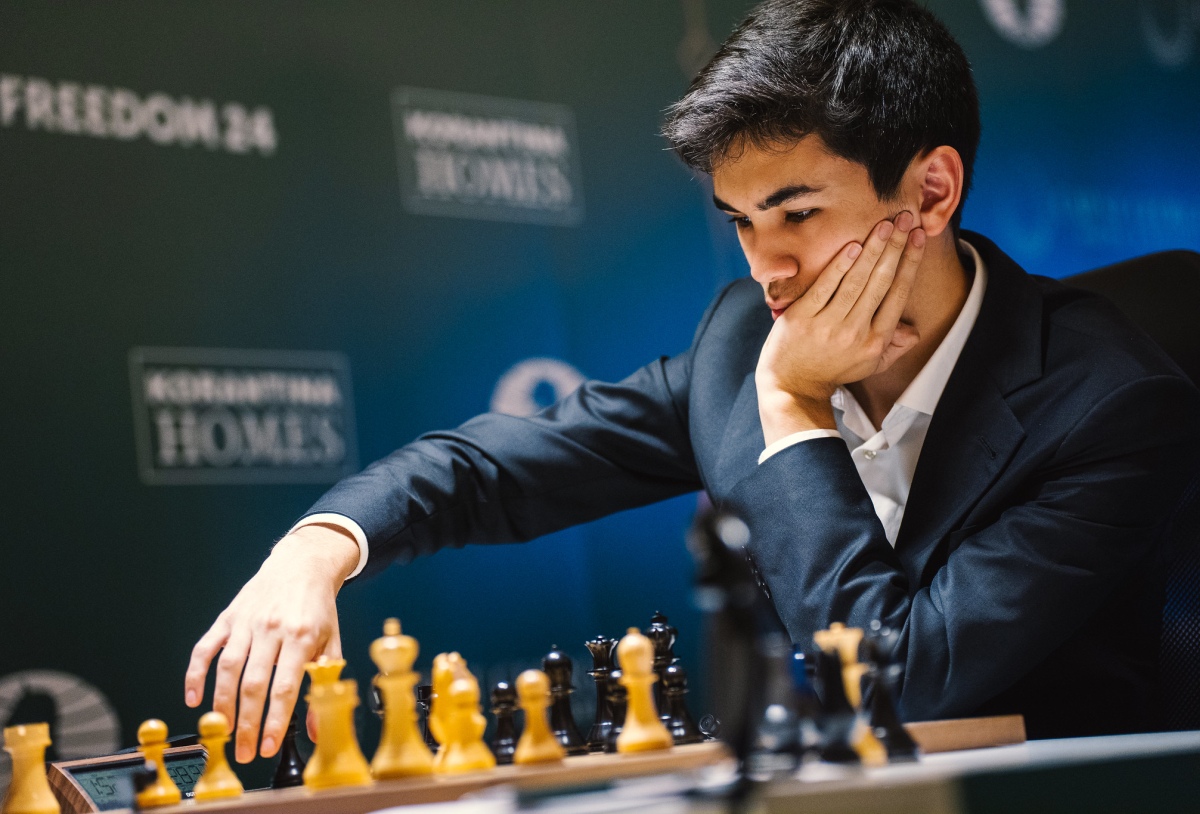
Javokhir Sindarov has now scored an incredible five wins from six games, defeating Wei Yi to further extend his lead in the FIDE Candidates Tournament 2026. Meanwhile, Fabiano Caruana could only manage a draw and now trails by one and a half points.
In the FIDE Women’s Candidates Tournament 2026, last-minute replacement Anna Muzychuk continues her remarkable run, beating Zhu Jiner with the black pieces to become the sole leader on 4 out of 6.
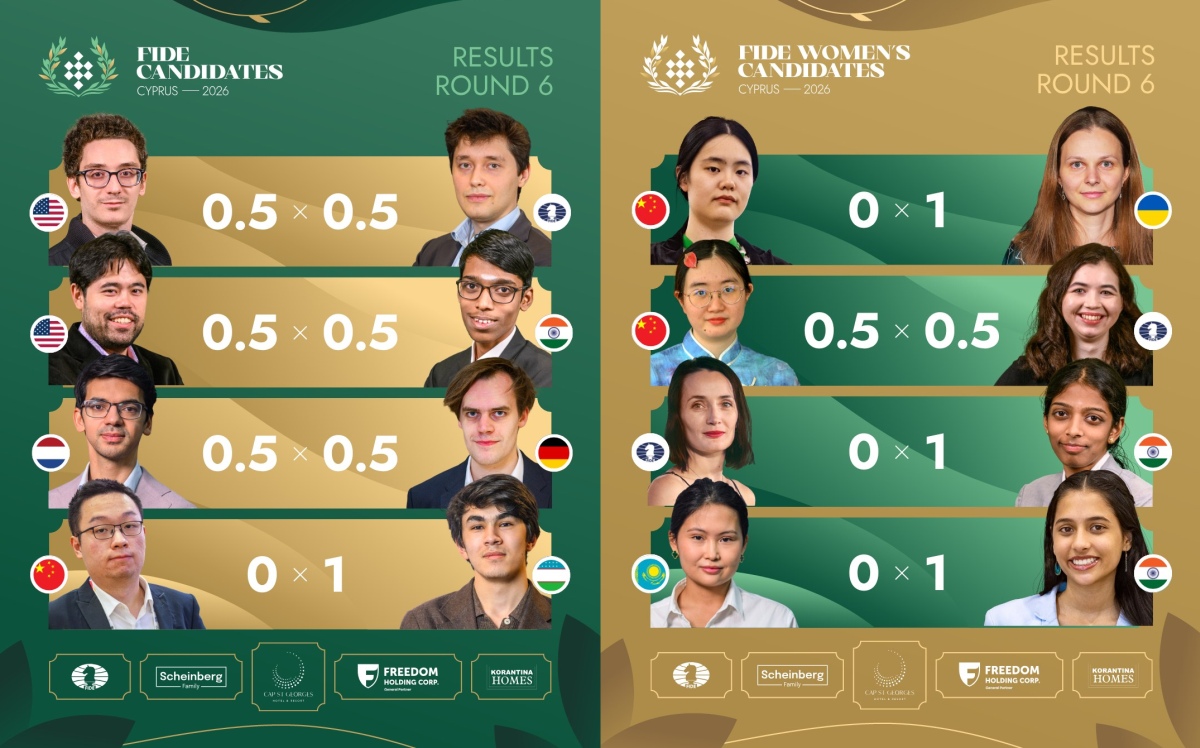
Let’s take a closer look at this afternoon’s action in the playing venue at Cap St. Georges Hotel and Resort.
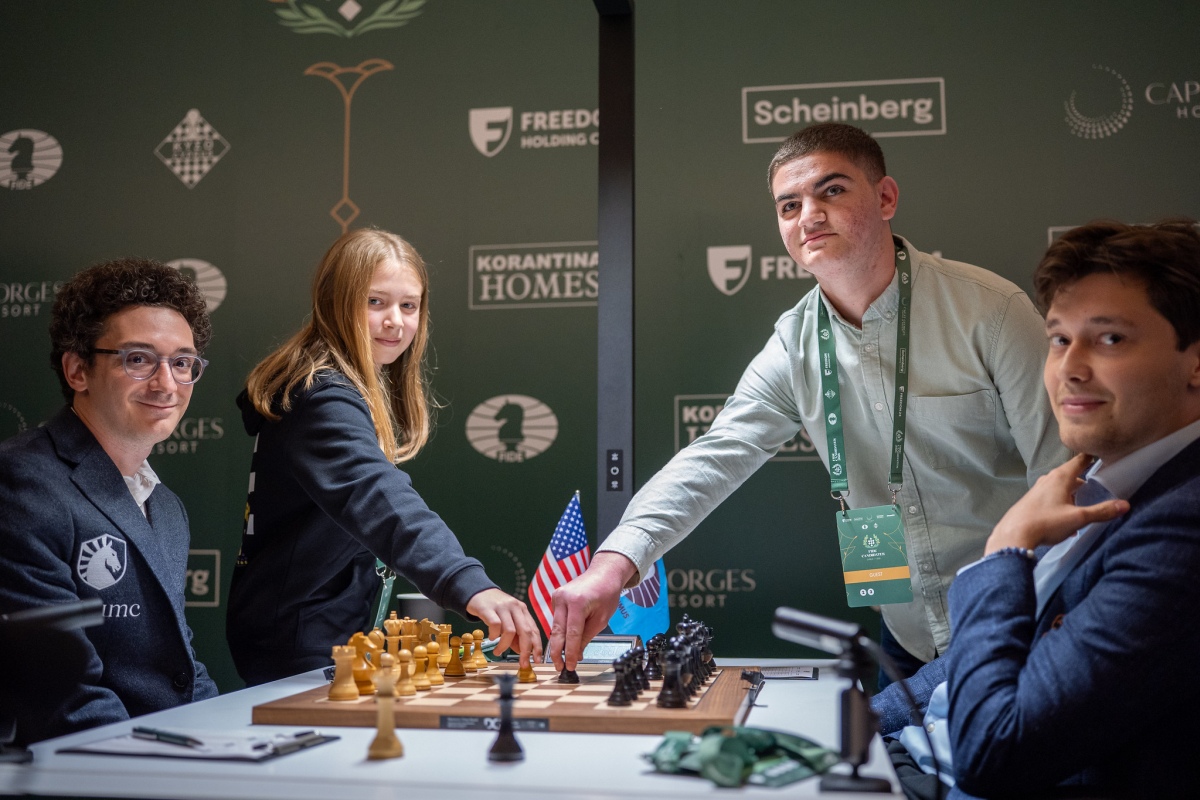
Two ceremonial opening moves took place today. Demetris Skourides, Chief Scientist of the Republic of Cyprus, made the first move for Wei Yi in his game against Sindarov. Meanwhile, the game between Caruana and Esipenko featured young talents at the board: 12-year-old WCM Aida Paunescu, the current Women’s Champion of Cyprus and the youngest national chess champion, played the opening move for Caruana, while 18-year-old FM Rafail Antoniou, the reigning Champion of Cyprus, opened for Esipenko.
What began as a Vienna Game in the clash between Wei Yi and Javokhir Sindarov quickly transposed into a classical Bishop’s Opening, an excellent practical decision by the Chinese grandmaster, steering the game away from heavily memorized lines.
In the post-game press conference, Wei Yi explained his opening choice: “My team found this interesting idea and I liked it and wanted to try it (5.a3). I knew that the position was not easy to play for both sides, but my opponent played some very strong moves.”
Sindarov responded ambitiously, quickly securing the bishop pair, though at the cost of certain weaknesses on his kingside. Reflecting on the early phase, he said: “This move 5.a3 surprised me and I was pretty much out of the book. But if I get a chance to play a dynamic position from either side, I will always be very happy.”
The tournament leader gradually equalised before ultimately taking control, capitalising on his opponent’s time trouble. Sindarov was candid about his approach: “I played very solidly. I think I was a bit worse, but I started to like my position when my bishop landed on d4. I also had a big clock advantage, and I could press. I took advantage of his mistakes in time trouble.”
Asked about his performance, Wei Yi admitted: “My opponent is in good shape, but today I had White and tried to fight for the win. However, I made some mistakes in time trouble.”
Considering the tournament situation, Fabiano Caruana was always likely to apply early pressure against Andrey Esipenko, a player known for his classical and principled style. Accordingly, he opted for the Reti Opening, aiming to steer the game into flexible and less predictable territory.
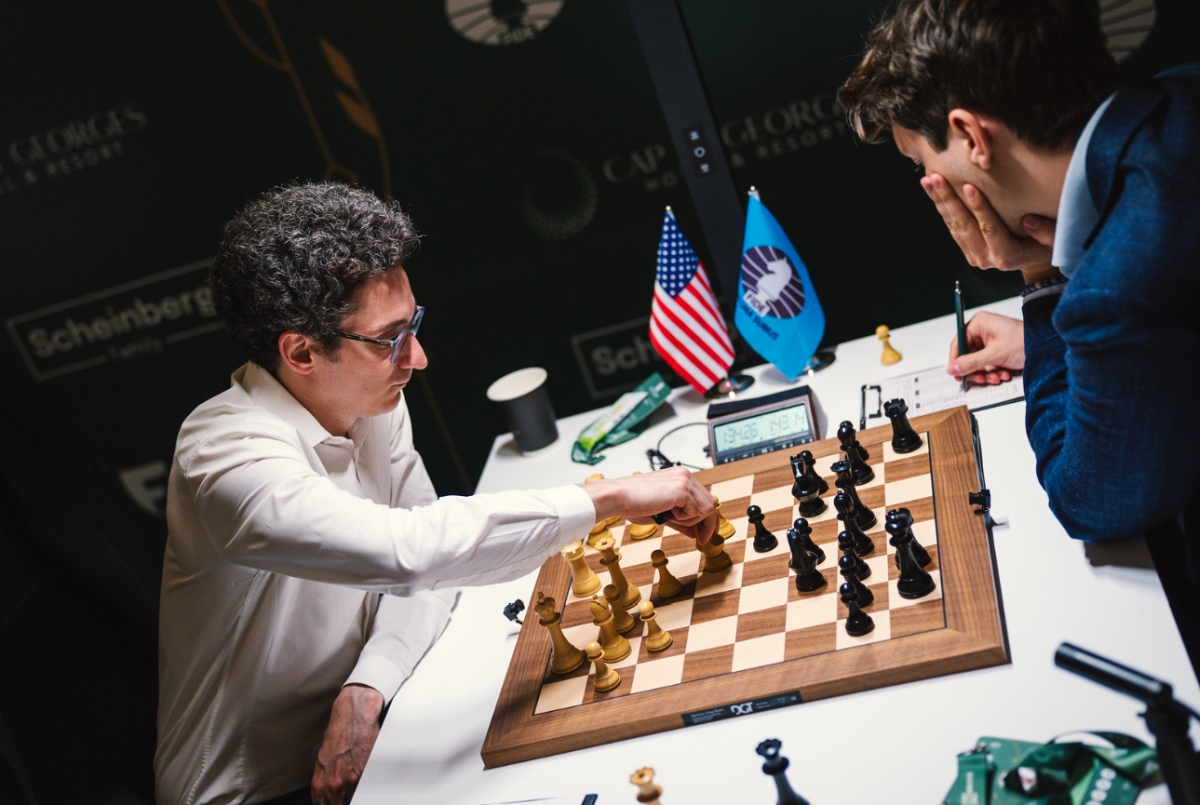
“As Garry Kasparov once did in a must-win game, this setup has entered chess lore,” explained commentator Jan Gustafsson during the live broadcast. “If you want to win, play Nf3–g3–b3 and go from there.”
However, this time the strategy yielded little. Esipenko handled the symmetrical position with remarkable precision, reportedly playing at a 98% accuracy rate and leaving Caruana with no real winning chances. The draw means the American now trails the tournament leader by 1.5 points, though his overall score of +2 remains solid.
In another key encounter, Hikaru Nakamura faced Praggnanandhaa R, against whom he holds a favourable head-to-head record, with two wins and four draws. For the first time in the tournament, the Nimzo-Indian Defence appeared on the board. Nakamura seemed slightly surprised by the choice, spending considerable time navigating the theoretical lines, albeit within one of the many available side-lines.
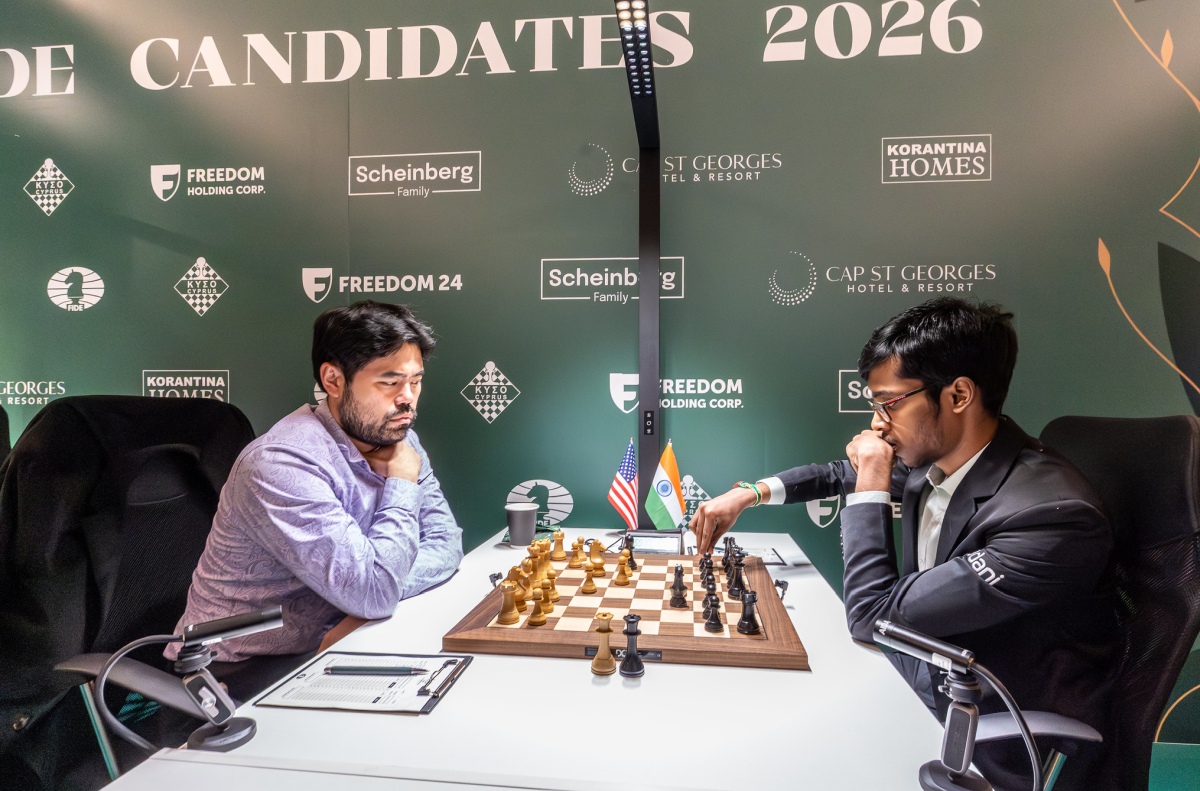
In contrast, Praggnanandhaa looked entirely comfortable, equalising smoothly. Both players appeared satisfied with the outcome and soon steered the game toward a threefold repetition, agreeing to a draw on move 23.
Reflecting afterwards, Nakamura noted: “The final position is hard to judge—probably equal. But I was surprised my opponent didn’t decide to play on, given that his tournament situation is better than mine.”
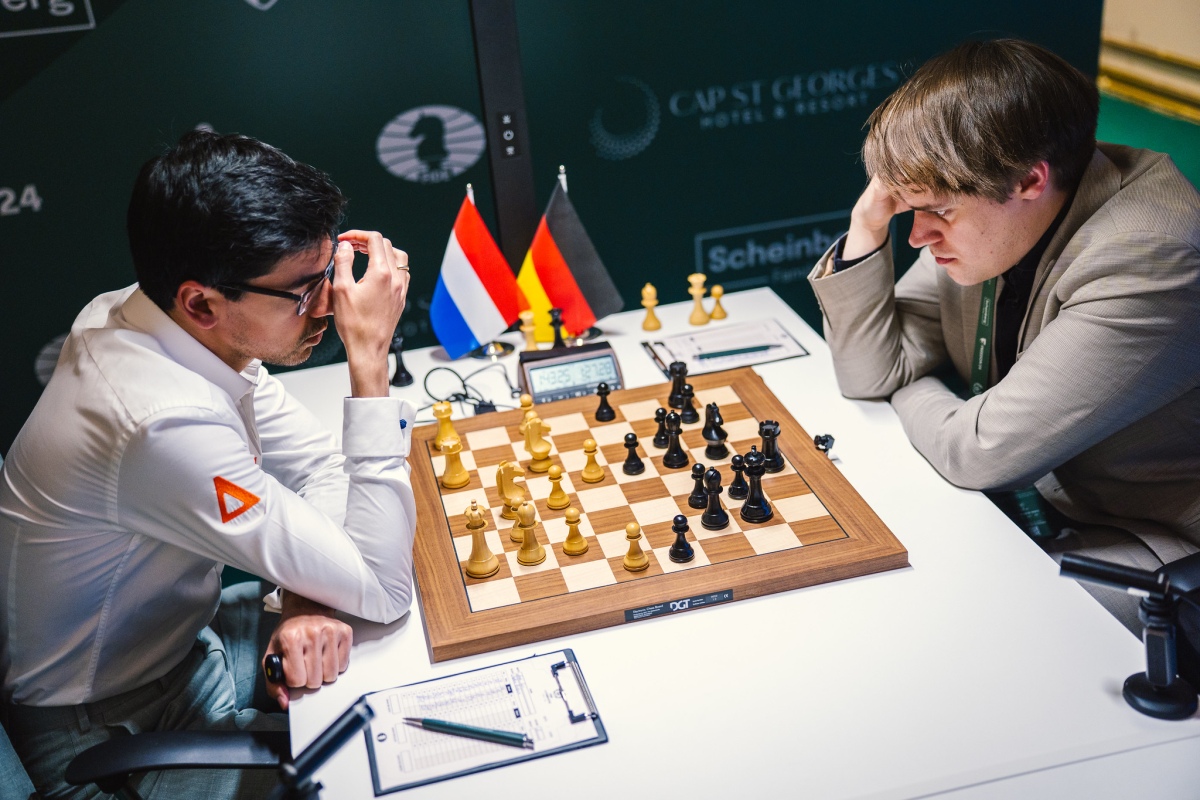
An intriguing matchup saw Anish Giri face Matthias Bluebaum. Their only previous encounter, in Tata Steel Chess Tournament earlier this year, ended in dramatic fashion, as Giri overpressed with the black pieces and was convincingly defeated in a miniature.
Today’s game, however, followed a completely different course. A classical Carlsbad structure arose from the Queen’s Gambit Declined, with queens exchanged early. While theory holds that Black can hold such positions, it often comes at the cost of defending long-term structural weaknesses: a pair of doubled isolated pawns. Bluebaum rose to the challenge admirably, defending with precision for a full 84 moves to secure the draw.
Meanwhile, in the FIDE Women’s Candidates Tournament, Anna Muzychuk emerged as the sole leader after an important victory with the black pieces against co-leader Zhu Jiner. Combined with a loss by Bibisara Assaubayeva, Muzychuk now leads the standings by a full point.
Zhu opted for a quiet Italian Game, choosing the relatively rare 5.Be3. Muzychuk equalised comfortably before gradually seizing the initiative. In a bold turn, she sacrificed material to launch a powerful attack, which ultimately proved decisive.
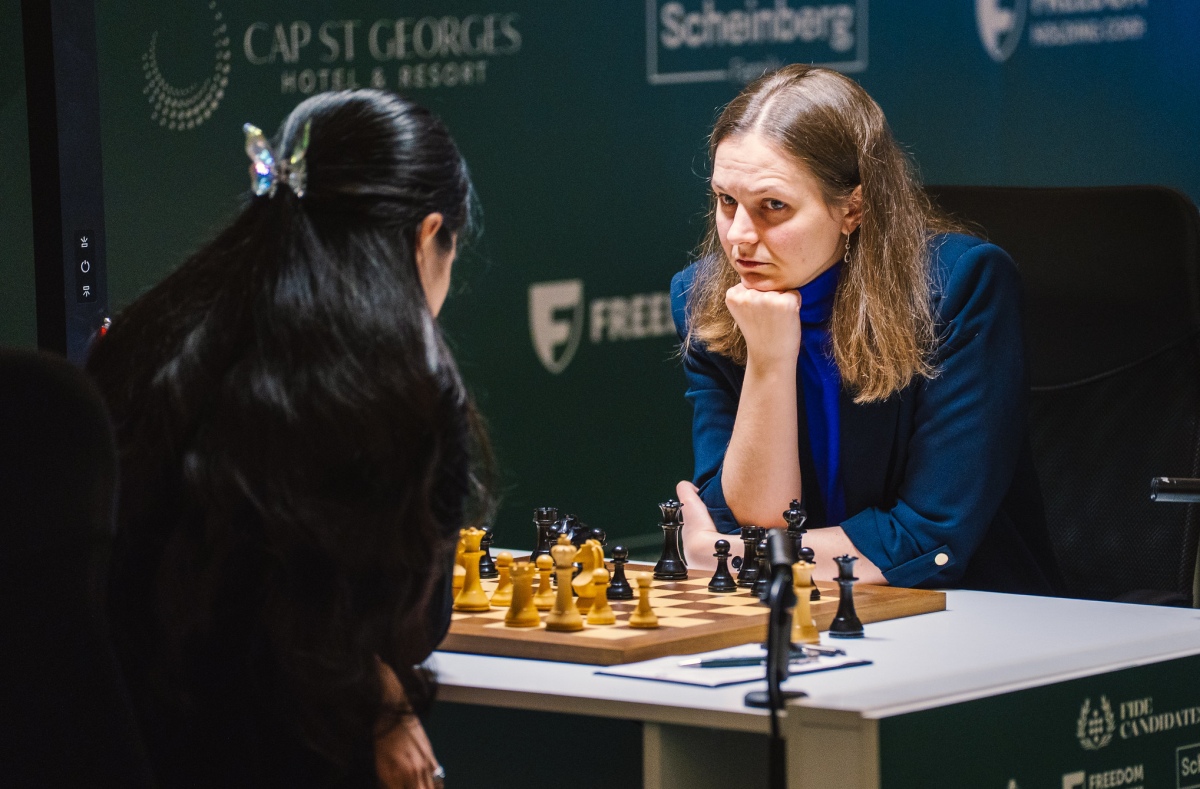
Reflecting on the game, Muzychuk said: “It was a very stressful game. I did expect the Italian but not this line, so I was trying to figure it out over the board. Zhu Jiner is a very strong player – the highest rated – and she had won the last two, so it was a dangerous game for me.”
Aleksandra Goryachkina essayed the Two Knights Defence against Tan Zhongyi, who arrived exceptionally well-prepared, confidently blitzing out her opening moves.
Out of the opening, Tan secured an extra pawn heading into the middlegame, but the tactical complications ultimately favoured Goryachkina. With a well-calculated combination, she managed to win her opponent’s queen. However, Tan demonstrated remarkable defensive resilience, constructing a fortress that Goryachkina could not break down, thus denying her a first victory in the event.
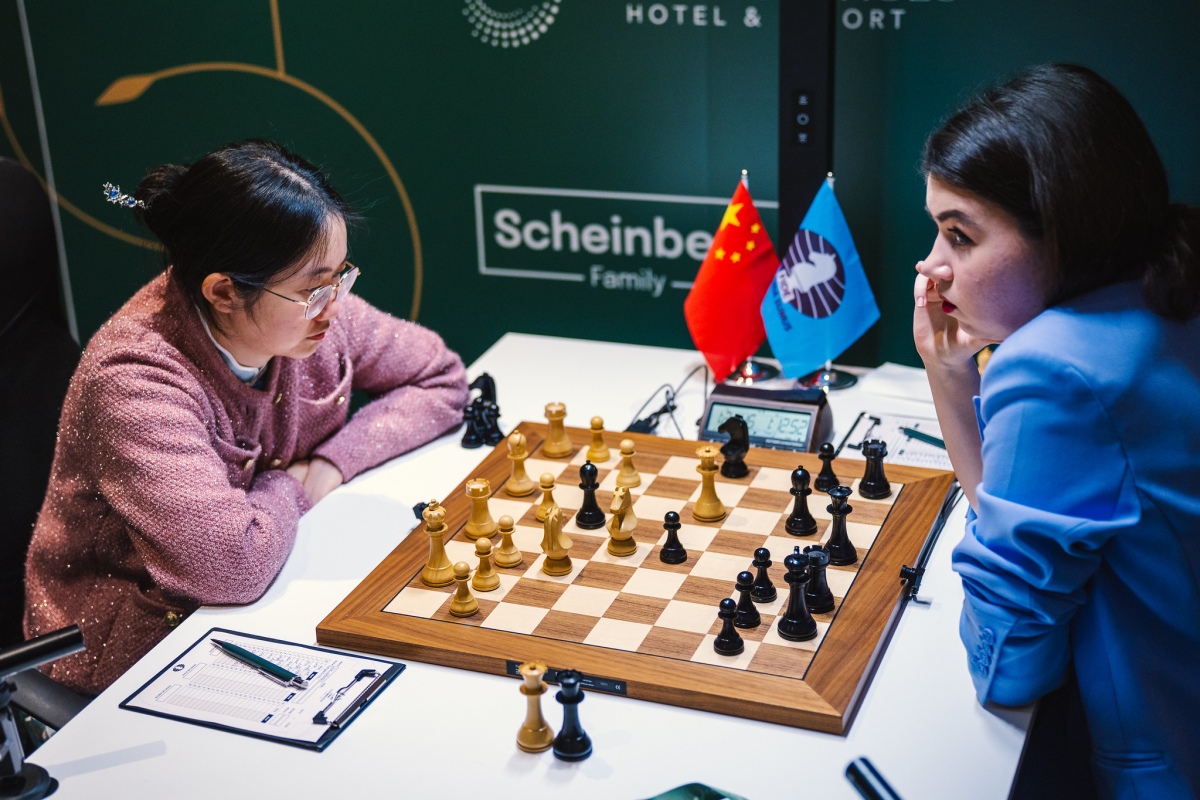
In another dramatic encounter, Vaishali R scored her first win of the tournament against Kateryna Lagno. In a game full of momentum swings, Vaishali seized the initiative around move 20 and launched a strong attacking push.
At one critical moment, however, she faltered, giving Lagno a chance to turn the tables – an opportunity that went unclaimed. Reflecting afterwards, Vaishali admitted: “It was an interesting game. In time trouble I thought I had the game under control, but I was lucky at some moment. After time trouble I think I was winning.”
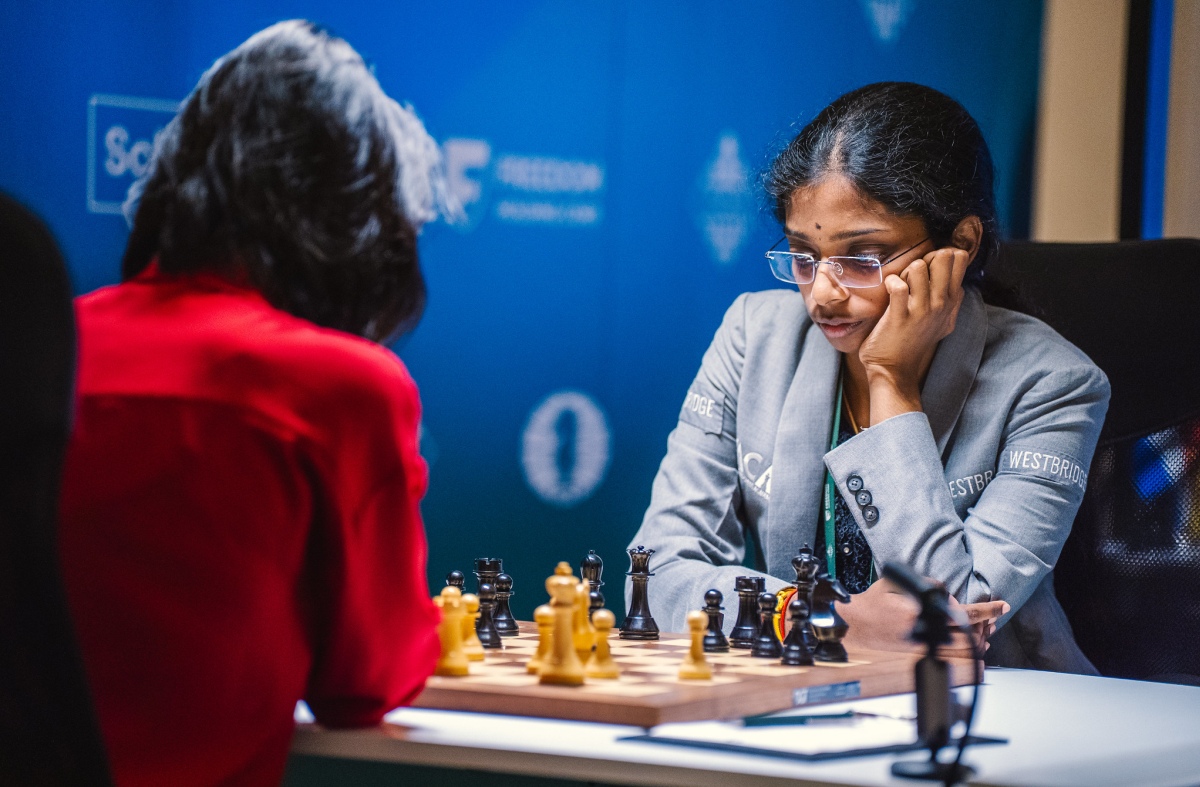
Once she regained the advantage, Vaishali converted with precision, finishing the game with a neat tactical sequence.
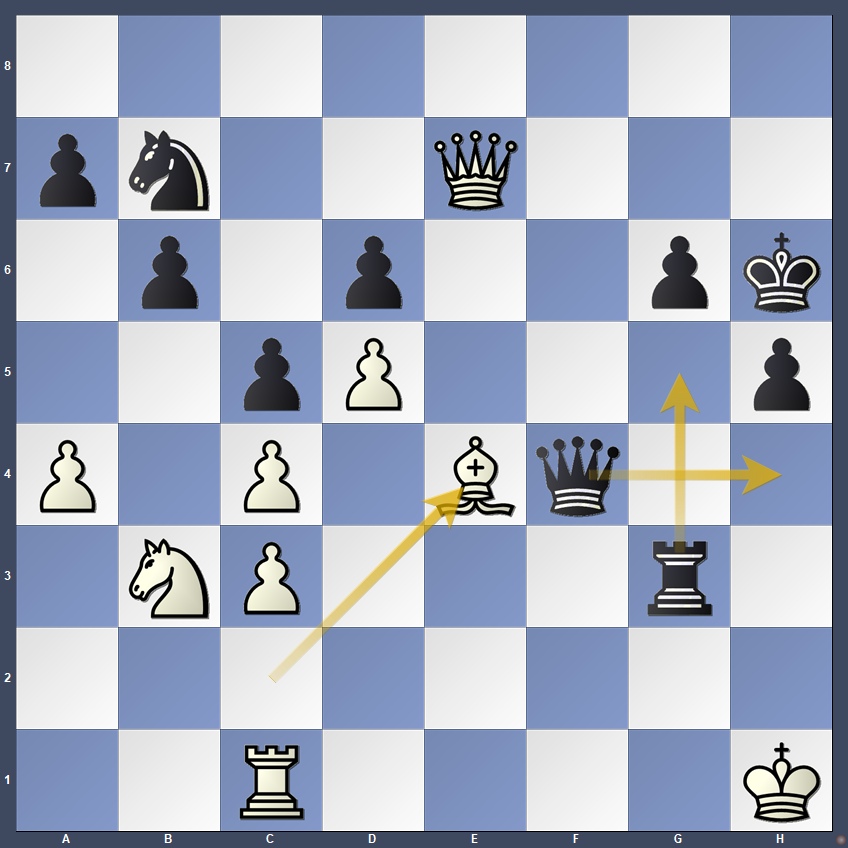
Black’s attack is overwhelming, but accuracy is essential due to the material deficit. Vaishali found the subtle and powerful 46…Rg5!, a quiet rook retreat that sets up the decisive threat of …Qh4 mate. Following 47.Bg2 Qh4, it became clear that 48.Kg1 would fail to 48…Rxg2!, winning the queen on e7. A crisp and elegant finish.
In the final game of the afternoon, Bibisara Assaubayeva suffered her second consecutive defeat, allowing Divya Deshmukh to score her first victory of the Candidates and join the chasing pack.
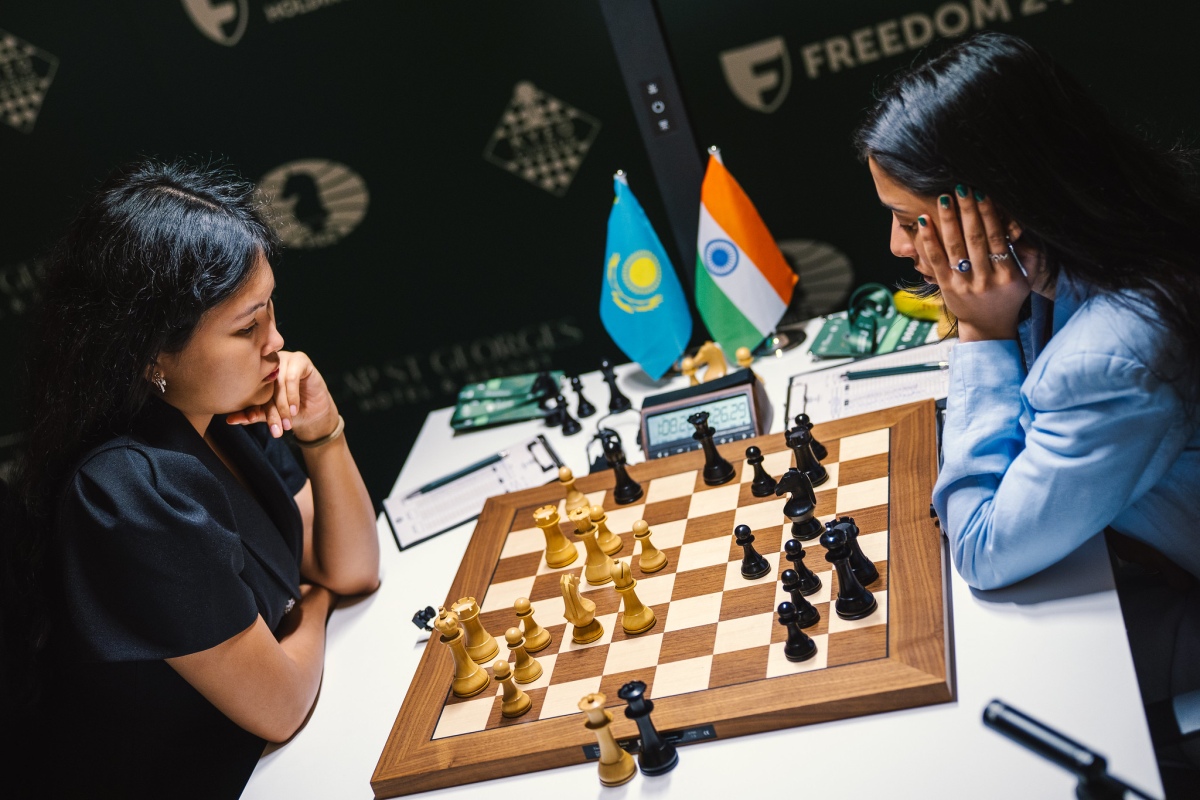
The opening, a topical line in the Queen’s Gambit, prompted commentator Jan Gustafsson to take a nostalgic trip down memory lane: “I used to play the Cambridge Springs when I was young. I had the hope of winning with one of the many blunders my opponents could fall into.”
Although the game was complex and dynamically balanced for long stretches, Assaubayeva eventually overpressed in her attacking efforts, allowing Divya to consolidate her extra material and convert the advantage.
Reflecting on her win, Divya said: “I have studied these openings quite well and I was well prepared. I wasn’t sure of my position, but I thought it was better to be a pawn up in a slightly worse position. I think that after 40.f6 the position was winning for me, although up to that moment I was not sure at all.”
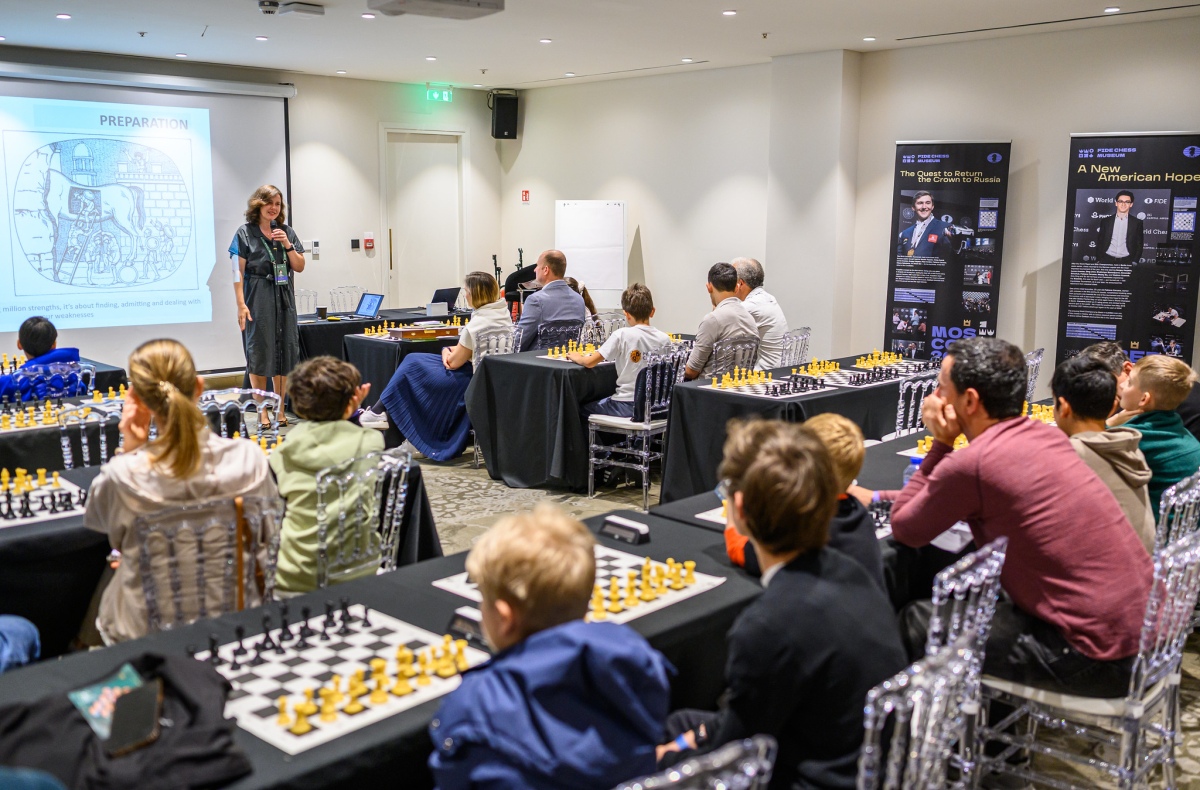
The fan zone was also in full swing. Dana Reizniece delivered a talk titled “How to win at chess? Life lessons learned from chess”, while Sagar Shah hosted a workshop for children. Finally, Dr. Yevgeny Levanzov gave a lecture on “Chess and Maths”, rounding off a busy and engaging day around the playing hall.
Standings after Round 6
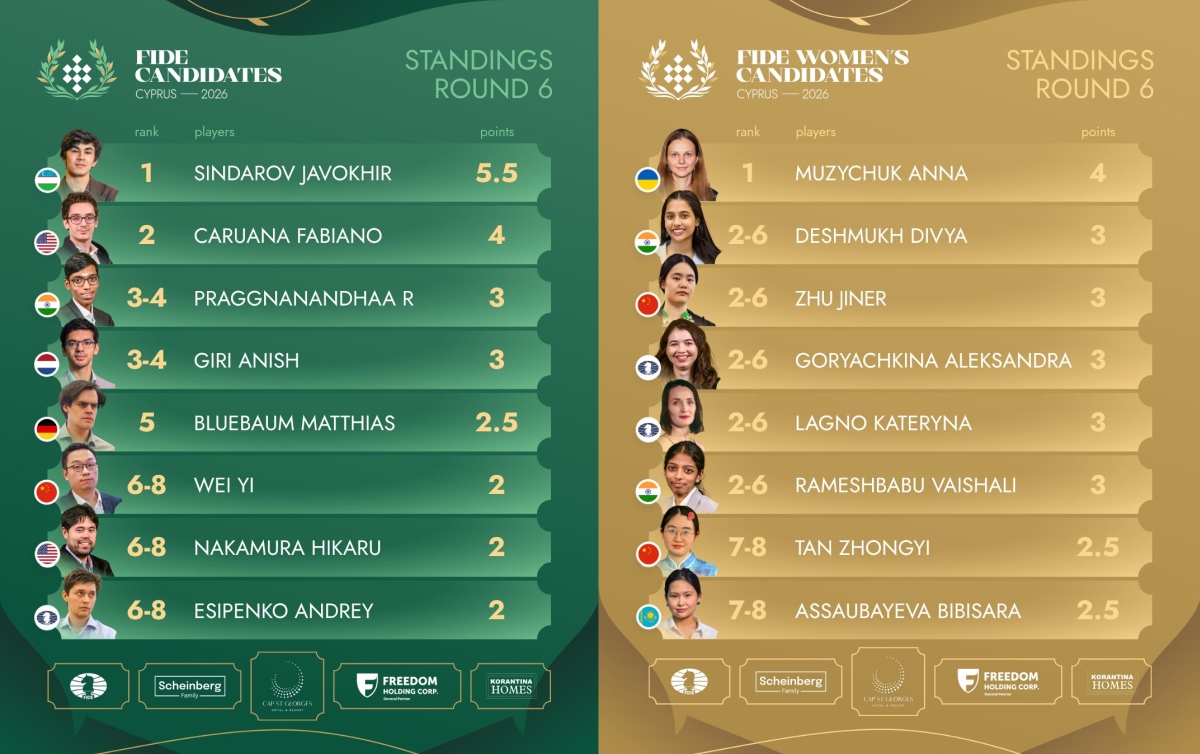
The 7th round will commence on April 5, at 3:30 pm (Cyprus).
Round 7 pairings – FIDE Candidates Tournament:
Andrey Esipenko – Wei Yi
Javokhir Sindarov – Anish Giri
Matthias Bluebaum – Hikaru Nakamura
Praggnanandhaa R – Fabiano Caruana
Round 7 pairings – Women’s Candidates Tournament:
Anna Muzychuk – Bibisara Assaubayeva
Divya Deshmukh – Kateryna Lagno
Vaishali R – Tan Zhongyi
Aleksandra Goryachkina – Zhu Jiner
Official website: https://candidates2026.fide.com/
Event photo gallery: https://www.flickr.com/photos/fide/
Live daily broadcast with GM commentary: https://www.youtube.com/@FIDE_chess
Written by IM Michael A. Rahal (Cyprus)
Photos: Michal Walusza and Yoav Nis
