

The Greek Chess Federation, under the presidency of Mr. Stathis Efstathopoulos, has achieved something truly transformative in recent years: it has introduced chess into Greek classrooms in an organized and sustainable way. In May 2022, the Ministry of Education approved the teaching of chess within the framework of the Skills Labs, incorporating strategic thinking, concentration, and creativity into everyday school life.
Subsequently, through its School Chess Committee, the Federation submitted three comprehensive educational programs – tailored respectively for Kindergarten, Primary School, and Junior High School – which were officially approved by the Institute of Educational Policy (IEP) of the Ministry of Education. As a result, chess is now being taught in schools. As Mr. Stathis Efstathopoulos, President of the Greek Chess Federation, stated: “From vision to every classroom – we believed in chess education, and we made it a reality.”
To support this growth, the Federation took a decisive next step last year by establishing the Teachers’ Training Committee. Its mission is both clear and far-reaching: to equip educators throughout Greece with the knowledge and tools required to teach chess effectively, not only within the Skills Labs but also in after-school clubs, creating a strong foundation for future generations of students.
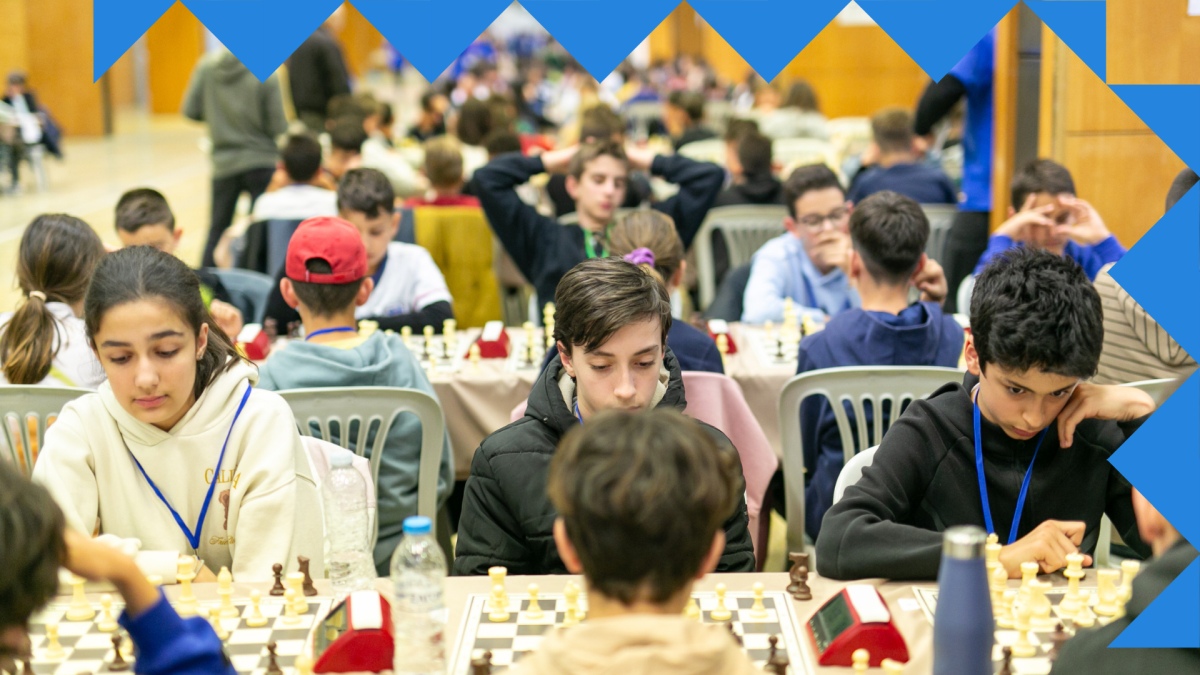
Furthermore, during the summer of 2025, the School Chess Committee brought together students from geographically remote communities through a series of online chess events under the project “Inter-Island Chess Actions.” Fourteen schools from eight islands, involving 65 students, participated in lessons, tournaments, and team activities that fostered cooperation, friendship, and fair play. The initiative helped reduce the sense of isolation often experienced in island communities by using chess and technology to connect young people across Greece.
This outreach continues through the new “Chess Bridges” initiative, which aims to include more islands as well as remote mountainous regions of mainland Greece, using chess as a shared language among communities.
At the same time, this year the Strategic Planning Committee was established under the supervision of Mr. Georgios Makropoulos. The Committee has submitted to the Ministry of Sports a comprehensive four-year program for school chess. Beyond the organization of the Student Qualifying Championships in every prefecture and region of the country, the program includes informational presentations in schools, the development of a competition network, collaborations with institutions and organizations, the promotion of school and interschool activities, the use of digital technologies and the internet, as well as the mapping of schools with chess activity.
More specifically, the responsibilities of the Strategic Planning Committee include the systematic collection and evaluation of data from schools, cooperation with local unions and chess clubs for the organization of qualifying tournaments, and the development of partnerships with the Central Union of Municipalities of Greece and the Union of Regions of Greece, so that municipalities and regional authorities can actively support chess in their areas and facilitate student participation in the final phase of the championships. Within the same framework are included the search for sponsors to secure the necessary chess equipment, the creation of promotional videos and informational brochures aimed at students, parents, and educators, as well as the development of a digital platform for school chess.
This platform will host a competition calendar, an interactive map of active chess clubs and schools, an archive of articles, and extensive photographic material. The year 2026 marks the foundational starting point of this long-term strategic plan and, with participation reaching the impressive number of 10,000 students, this vision began its path toward implementation through the Greek National Student Chess Championships, held on May 2nd and 3rd in Thessaloniki. Organized by the Greek Chess Federation, in cooperation with the Thessaloniki–Chalkidiki Chess Clubs Association, the Ministry of the Interior (Macedonia–Thrace Sector), the Municipality of Thessaloniki, and HELEXPO, the championships evolved into one of the largest school chess events ever held in Greece.
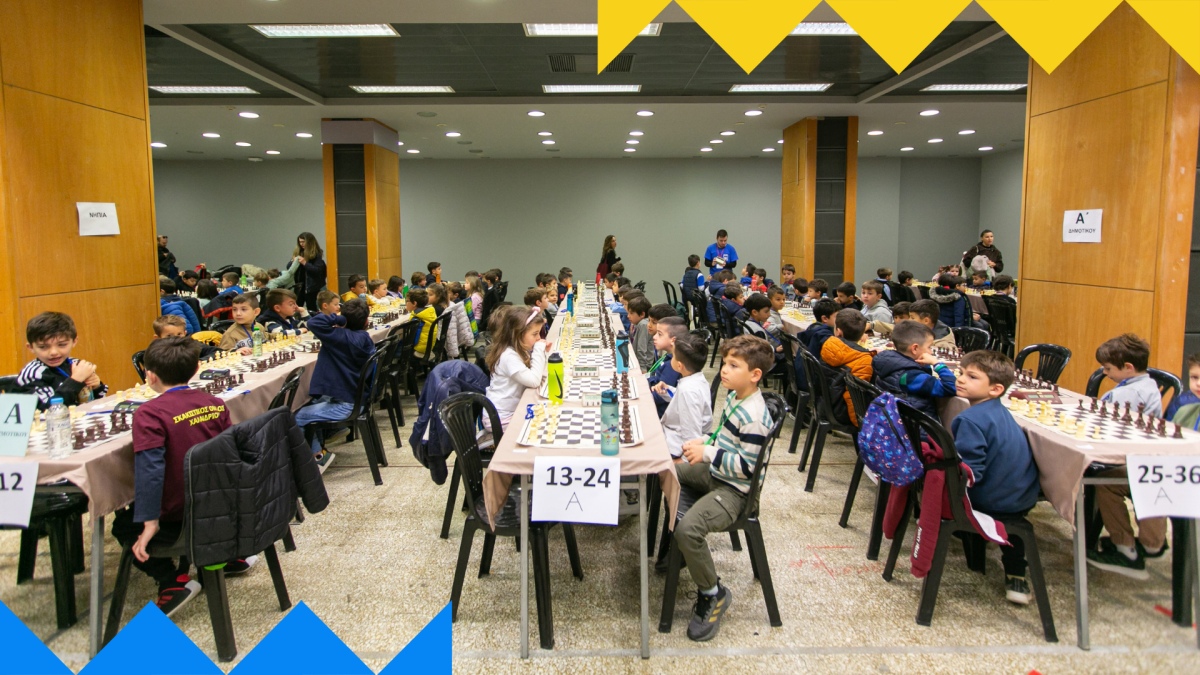
Hosted at the historic Thessaloniki International Fair, home of the 1984 and 1988 Chess Olympiads, the event welcomed around 1,600 students from 74 schools, alongside more than 3,000 parents and guests. Team championships were held on Saturday, followed by individual events on Sunday with 1,223 participants. Beyond the boards, families enjoyed activities including face painting, children’s workshops, blindfold chess demonstrations, robotics showcases, and exhibition games against the AI-powered SenseRobot.
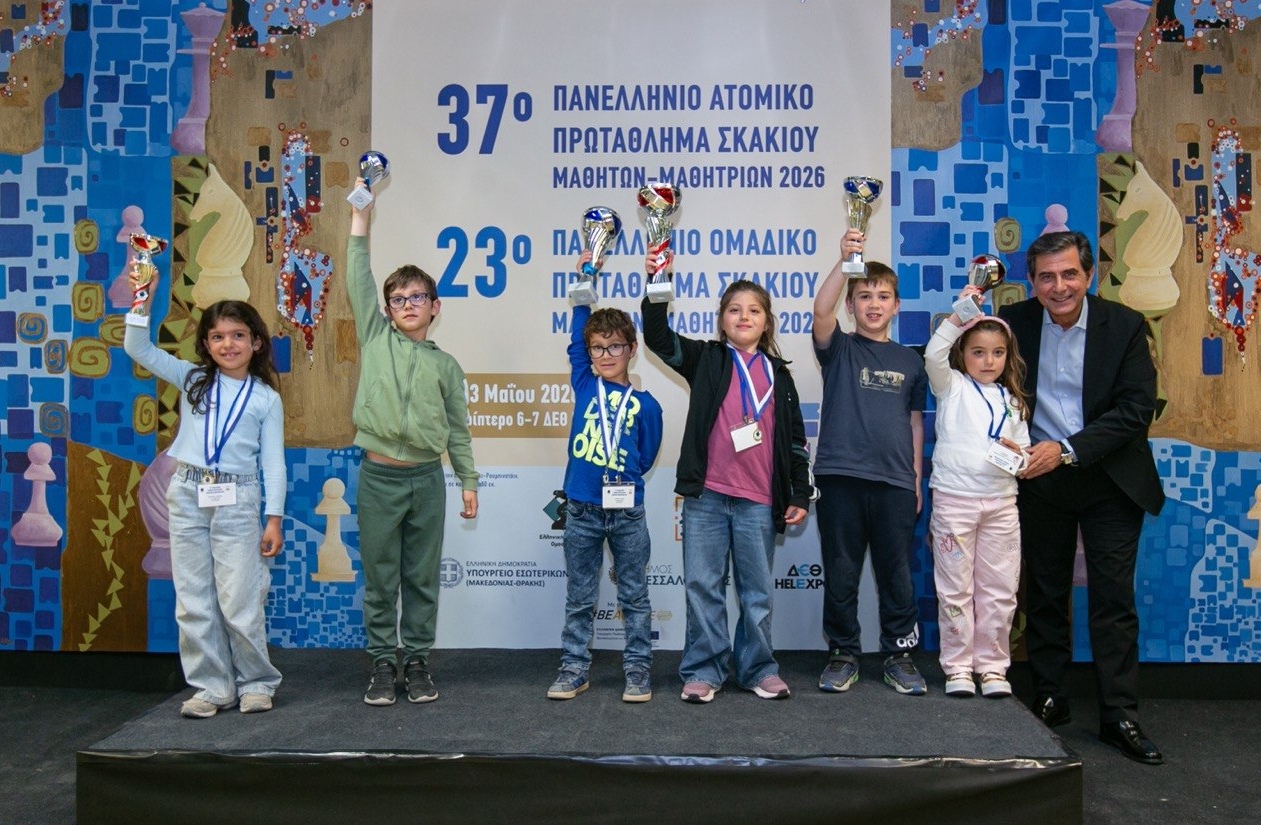
The closing ceremony brought together leading figures from Greek and international chess, including FIDE Vice President Georgios Makropoulos, President of the Greek Chess Federation Stathis Efstathopoulos, and Secretary General of the European Chess Union Theodoros Tsorbatzoglou, alongside government officials and institutional representatives, including the Minister for Macedonia and Thrace, Konstantinos Gioulekas. A special highlight was the presence of Dana Reizniece, Deputy Chair of the FIDE Management Board, who participated in the award ceremonies and honored distinguished individuals for their contribution to chess, including Pavlos Anastasiadis, First Vice President of the Greek Chess Federation (1984–1988), who played a decisive role in securing and organizing the two Chess Olympiads held in Thessaloniki in 1984 and 1988, and who has supported chess whenever needed for more than 40 years.
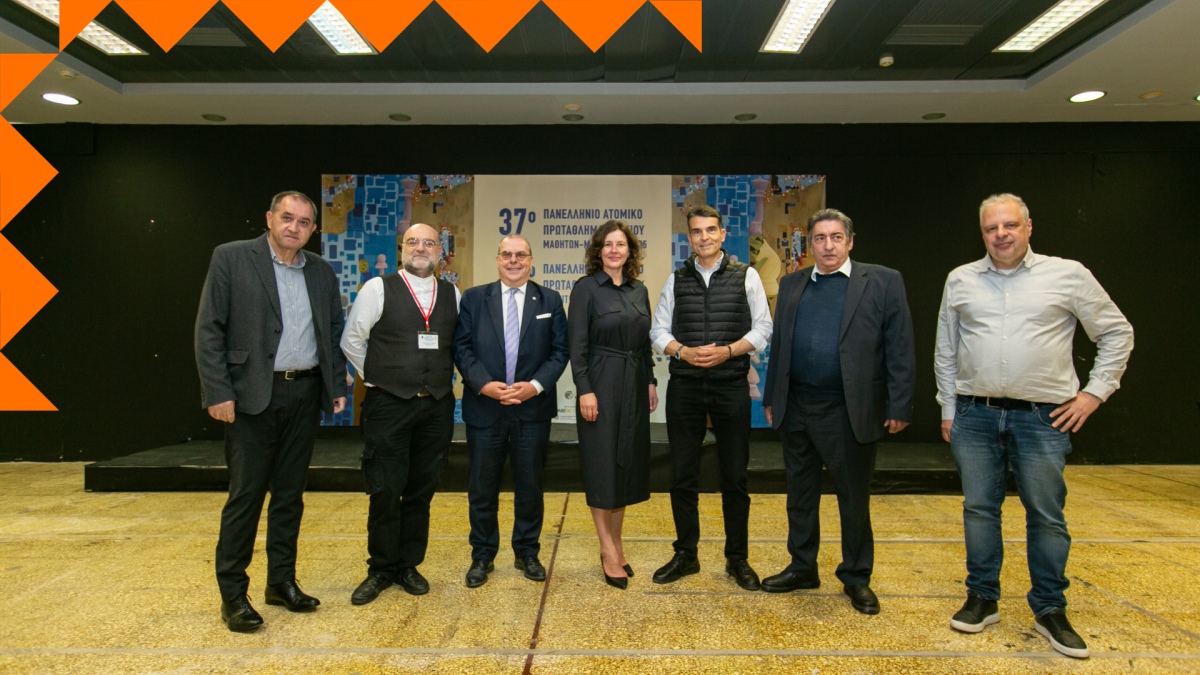
In addition, FIDE honored for their contribution to school chess Vera Avramidou, Chair of the School Chess Committee, and Stathis Theofylaktidis, President of the Teachers’ Training Committee.
“Chess has the unique ability to bring together education, culture, and community,” said Makropoulos. “What we are seeing in Greece today is not simply the growth of a sport, but the creation of opportunities for young people to learn, connect, and develop important life skills through chess.”
The Greek Chess Federation is guided by an ambitious vision: to give every student in Greece the opportunity to learn and benefit from chess. Supporting this vision is a dedicated leadership team working in close collaboration under the presidency of Prof. Stathis Efstathopoulos. Key contributors include FIDE Vice President Georgios Makropoulos, who leads the Strategic Planning Committee; Vera Avramidou, head of the School Chess Committee; and Vice President Stathis Theofylaktides, leader of the Teachers’ Training Committee. Through sustained effort, strategic planning, and a deep commitment to education, they continue to redefine the role of chess in Greek society — not merely as a competitive activity, but as a powerful instrument for learning, social connection, and inspiration.