

Forty teams have entered the 3rd FIDE Chess Olympiad for People with Disabilities, setting a new participation record for the competition. The tournament runs in Samarkand from 10 to 17 September alongside the 46th FIDE Chess Olympiad, marking the first time the two events have been staged together.
The field has grown with each over-the-board edition, from 26 teams in Belgrade in 2023 to 34 in Astana last October, and now 40 in Samarkand.
The tournament will be played as a seven-round Swiss, one round longer than either of the first two editions. Games are played at a time control of 90 minutes for the first 40 moves, followed by 30 minutes for the rest of the game, with a 30-second increment from move one.
Each team consists of four players and one reserve, with at least one player of each gender required to play in every round. The competition brings together players with visual, hearing, and physical disabilities.
Poland tops the seedings with an average rating of 2215 and the strongest record in the event’s short history. Poland won the inaugural online edition in 2020, swept all six matches to take gold in Belgrade, and finished second in Astana. The squad is led by IM Marcin Molenda, who scored 5.5/6 on board two in Belgrade, with IM Pawel Piekielny and IM Aleksander Czerwonski also in the line-up.
Cuba is seeded second with an average rating of 2200. IM Carlos Larduet Despaigne and IM Pedro Morales Romero, both rated 2274, occupy the first two boards.
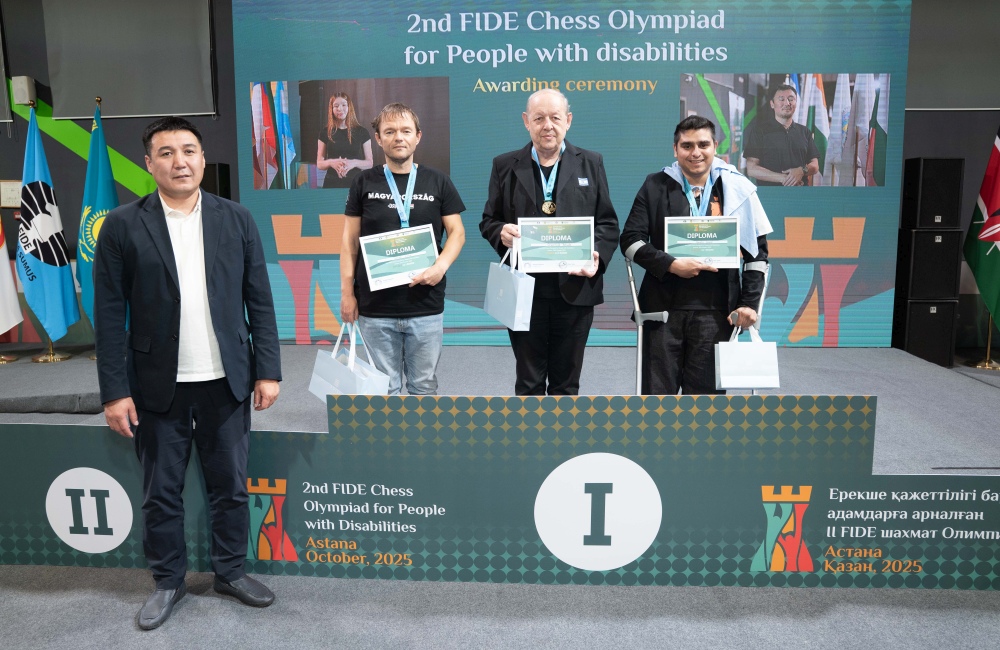
Third seed Israel brings the highest-rated player in the field in GM Yehuda Gruenfeld (pictured below; center), rated 2379. Gruenfeld won the board-one gold medal in Astana and added two more world titles in May, winning both the rapid and blitz competitions at the World Deaf Chess Championships in Spain at the age of 70. The results also secured his place at the 2027 Deaflympics. He is joined in the Israeli team by IM Eyal Deutsch and IM Andrei Gurbanov.
The three international organisations for players with disabilities also enter their own teams. The International Braille Chess Association, representing blind and visually impaired players, are fourth seeds with an average rating of 2137, with IM Predrag Nikac on the top board. The International Physically Disabled Chess Association, whose team took silver in Belgrade, is led by FM Sargis Sargissyan, rated 2254. The International Chess Committee of the Deaf completes the three international teams.
Behind the top seeds, the field is tightly packed. Croatia, Germany, Argentina, the United States, the Philippines and Serbia are separated by fewer than 50 average rating points.
Switzerland fielded IM Igor Yarmonov, a multiple IPCA world individual champion and, at 2315, the third-highest-rated player in the field.
The United States returns with brothers Sullivan and Griffin McConnell after finishing level on match points for sixth place in Astana and placing seventh on tie-break. Celine Atassi, who received the prize for the youngest player in the physical disability category at that event, is also back in the team.
Several of last year’s individual medallists return. Kishan Gangolli, who scored an unbeaten 5/6 to win the board-three prize for India in Astana after taking silver on the same board in Belgrade, plays behind IM Shashikant Kutwal.
Serbia brings Jovan Pavicevic, who finished second on board two in Astana, and Jovana Pavicevic, who took third place on board five. Croatia’s Domagoj Glazar was third on board two, Argentina’s Leonel Amato third on board one, Kazakhstan’s Aiganym Kambarova first on board five and Bangladesh’s Md Ali Nawaz Sarkar second on the same board.
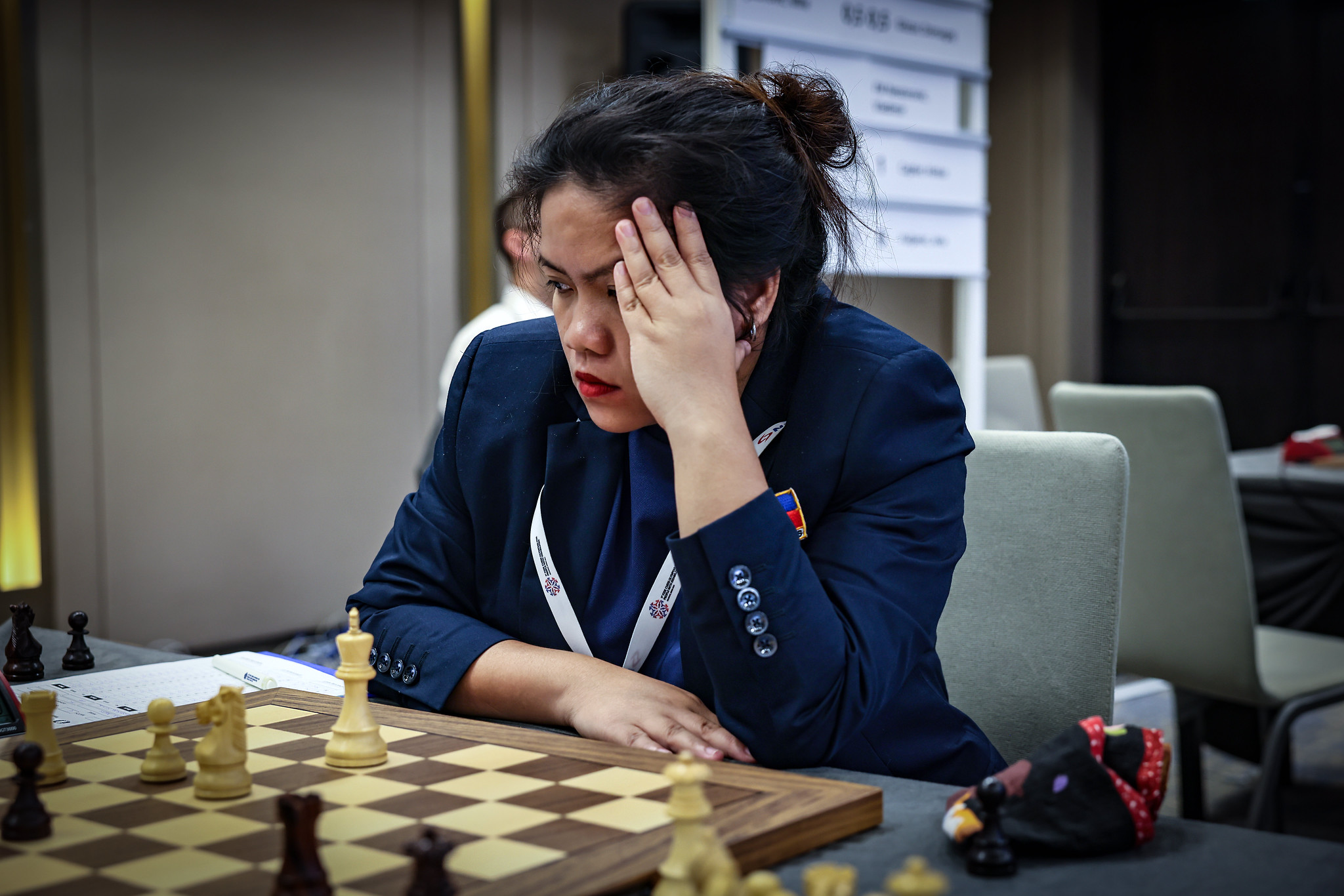
Cheyzer Crystal Mendoza (pictured above), winner of the best-game prize in Astana, returns for the Philippines. The Philippine team also has a podium finish behind them, having taken bronze at the inaugural over-the-board edition in Belgrade.
The 40-team field spans four continents. Six African federations have entered: Egypt, Eswatini, Kenya, Uganda, Zambia, and Zimbabwe. Seven teams come from the Americas, while hosts Uzbekistan will be represented by three teams, seeded 25th, 26th, and 39th.
Medals will be awarded to the top three teams, together with individual medals on each of the four boards and the reserve board. Special prizes will recognise the best performance, the most beautiful game, and the youngest and oldest players in each disability category.
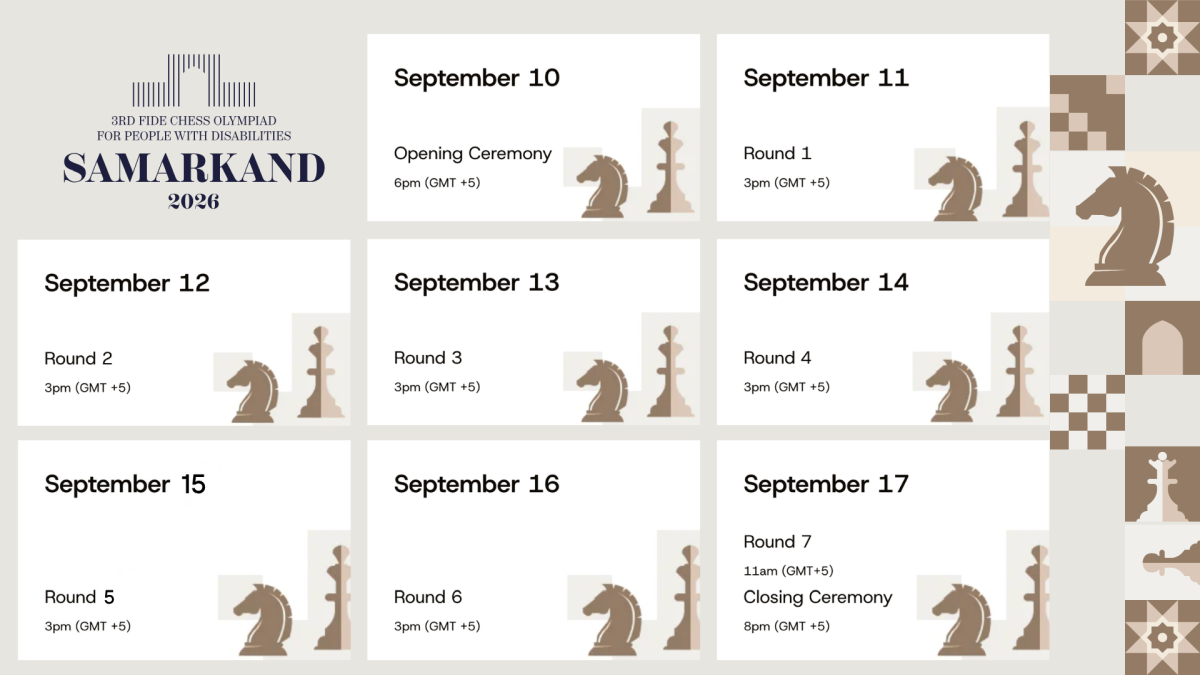
The opening ceremony will take place on 10 September at 6 p.m. local time. Rounds one to six begin at 3 p.m. daily from 11 September, before the final round starts at 11 a.m. on 17 September.
The full list of teams and participants can be found here:
https://dis-olympiad2026.fide.com/teams_pwd
Official website: https://dis-olympiad2026.fide.com/