

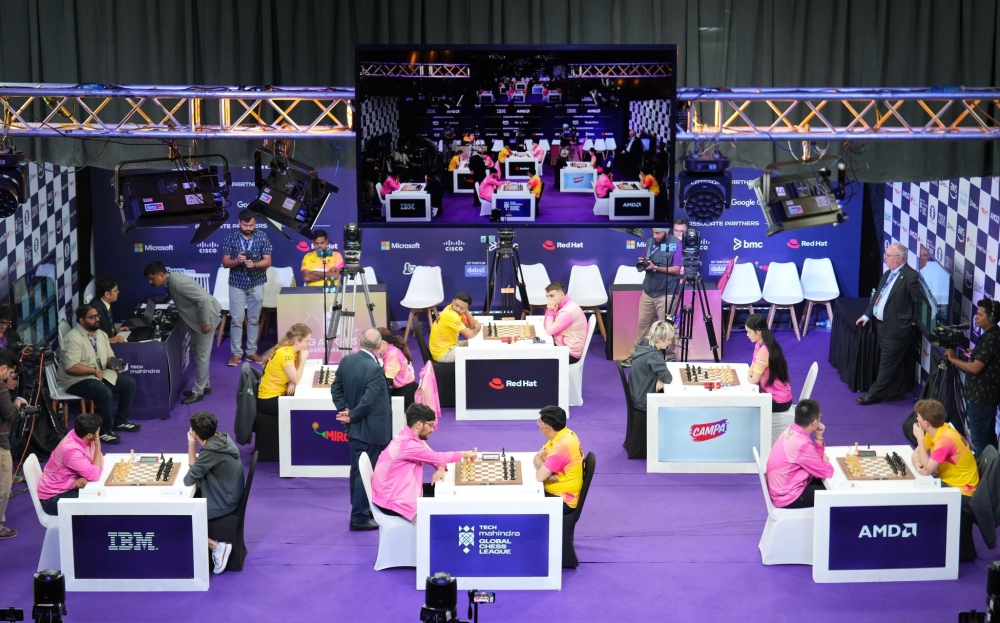
Day 4 of the Tech Mahindra Global Chess League reshaped the race at the top. The upGrad Mumbai Masters crushed the PBG Alaskan Knights 18–2, the Triveni Continental Kings hit back with an 11–6 win over the Ganges Grandmasters, and the Alpine SG Pipers rolled the Fyers American Gambits 10–4 to stay in the fight.
It was a day when the favourites showed their strength. Triveni immediately recovered from their loss to the Gambits, with Alireza Firouzja and Wei Yi leading the way against Ganges. upGrad roared back after their defeat by Alpine with a ruthless performance against PBG, while the Pipers confirmed their revival as Nino Batsiashvili and Leon Luke Mendonca again delivered on the lower boards. The only team unable to stop the slide was the Knights, who suffered their fourth straight loss.
Standings after Day 4
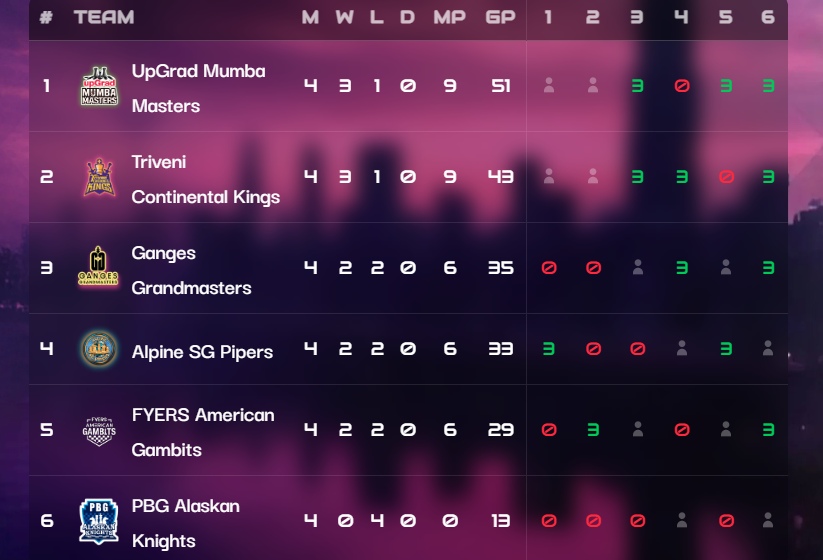
After four rounds, the upGrad Mumbai Masters and Triveni Continental Kings share the lead on nine Match Points, with upGrad slightly ahead on Game Points (51 to 43). The Ganges Grandmasters, Fyers American Gambits, and Alpine SG Pipers form a tight chasing pack on six Match Points each and remain very much in contention. The PBG Alaskan Knights are rooted to the bottom on zero, needing a perfect finish to have any hope of climbing back into the tournament.
Match 10: Fyers American Gambits vs Alpine SG Pipers (4–10)
Day 4 opened with a clash between two teams fresh off big wins. On Day 3, the Fyers American Gambits had shocked the defending champions Triveni Continental Kings 10–8 after Volodar Murzin turned a lost position into a match-winner on the prodigy board. The Alpine SG Pipers had finally broken their bad run by beating the upGrad Mumbai Masters 9–7, thanks to Leon Luke Mendonca delivering checkmate in another must-win prodigy game. The Gambits started the round on six Match Points, the Pipers on three.
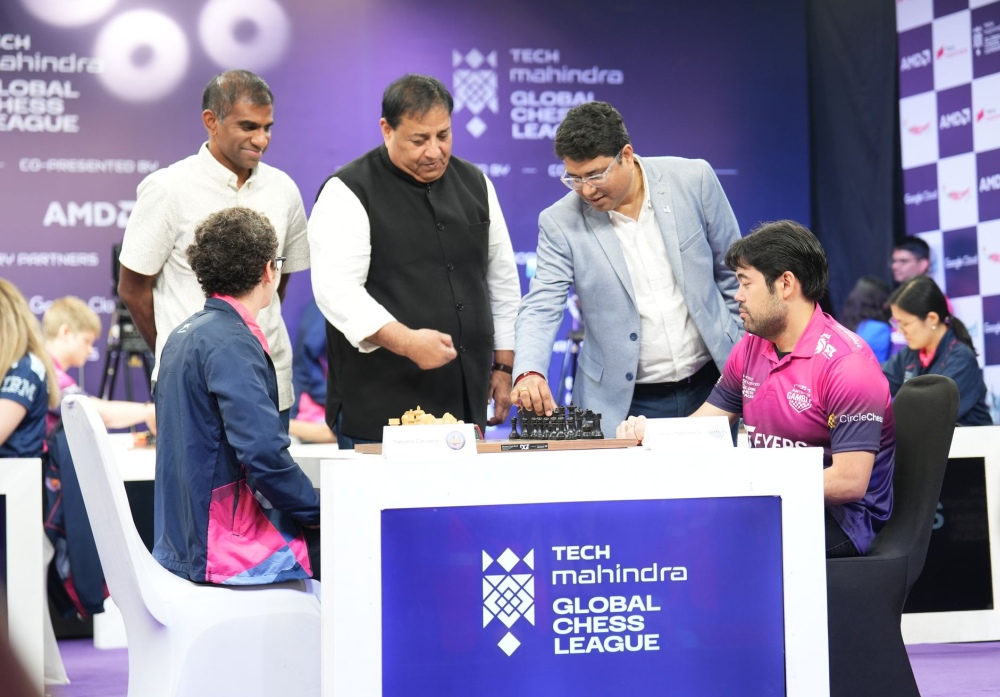
All eyes were on the Icon board, where Hikaru Nakamura faced Fabiano Caruana. The two US stars tested each other in a classical line of the Petrov. For most of the game, it was a pure theoretical battle between two well-prepared players, with many moves that looked strange to the audience still being theory. After the counterintuitive king move Kd7, Nakamura calmly walked around the stage and checked the other boards. Caruana then went for an exchange sacrifice, pushing his h-pawn down the board. The position looked tense, but the engines and the players knew it was balanced. After 59 moves, they agreed to a draw in an equal endgame.
On the first men’s board, Anish Giri and Vladislav Artemiev also repeated preparation, reaching a balanced position where neither side could make real progress, and soon split the point. The second men’s board followed a similar script. Praggnanandhaa and Richard Rapport tested a rare line of the East Indian Defence. Rapport played creatively as usual, while Pragg never lost control despite spending more time on the clock. The game stayed level and ended in another draw.
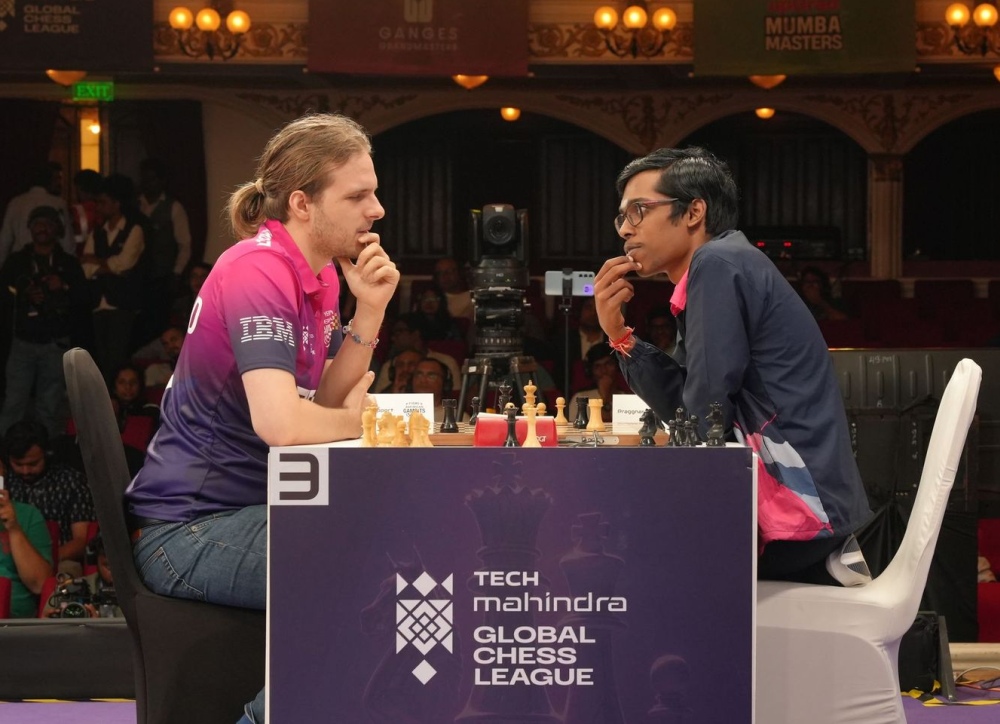
The real drama of the match came on the women’s and prodigy boards.
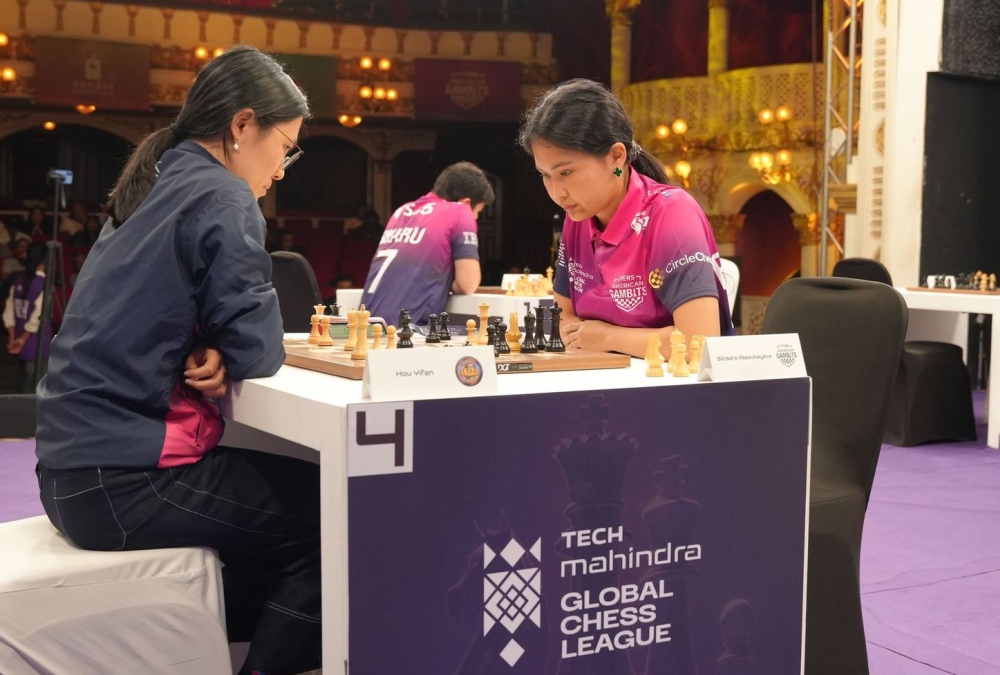
Hou Yifan, the former Women’s World Champion, faced Bibisara Assaubayeva. Hou created a thorn-in-the-flesh e6-pawn in an Alapin Sicilian, emerging clearly better, but did not find the best continuation and sacrificed a pawn instead. After accepting the sacrifice, Bibisara defended patiently, equalised, and steered the game to a draw.
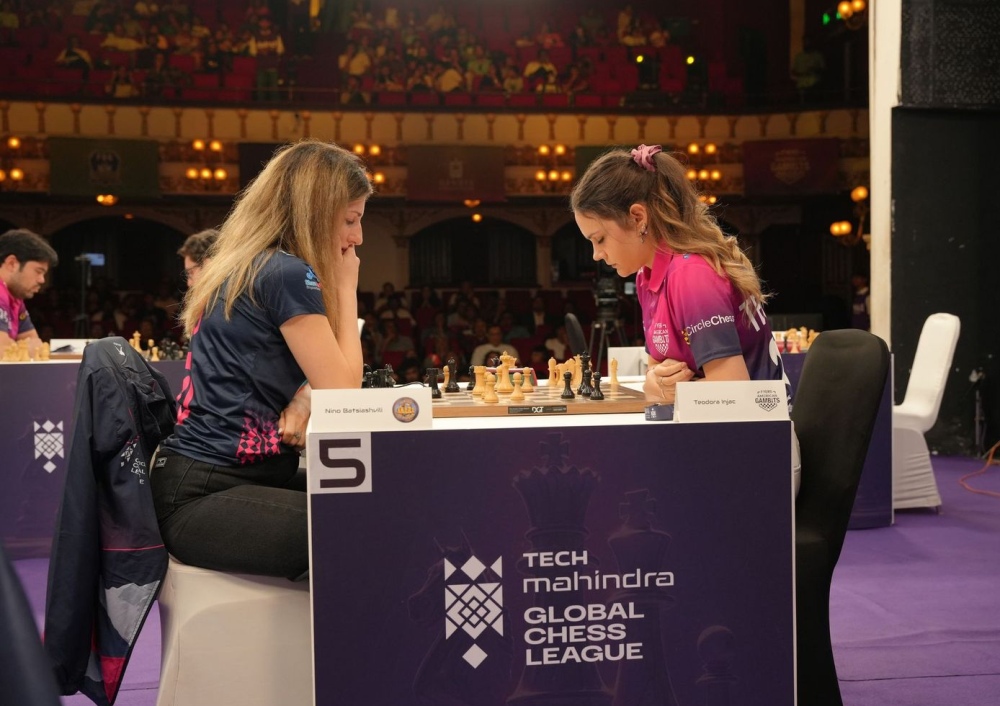
On the second women’s board, Teodora Injac, playing the King’s Indian against Nino Batsiashvili, was clearly better for most of the game, building pressure and forcing Nino on the defensive. Then, in the space of three moves, everything changed. The position turned around, and Injac began to run low on time. Batsiashvili also slipped, blundering and allowing Black to win a bishop for two pawns. The ensuing endgame was about even, but Injac could not find a clear path. Move by move, she helped White advance her queenside pawns. Batsiashvili, in turn, allowed her opponent to blockade the pawns along the dark squares, handing Black the decisive advantage again. However, when the time came to collect these passers, Injac made a couple of mistakes, letting White’s king penetrate the kingside.
After trading rooks, Injac was left with only a bishop while Batsiashvili had three pawns marching forward. In the time scramble that followed, Teodora made a grave error, moving her king back to e7 (instead of forward to e5 with a draw), which immediately changed the evaluation from “equal” to “lost” for Black. Nino showed good technical control and converted her advantage. The Pipers scored three vital Game Points and moved ahead 7–4.
On the prodigy board, Leon Luke Mendonca once again became the main hero for Alpine. Facing Volodar Murzin, he won a pawn early and took over the initiative. Although Mendonca’s conversion was not ideal, Murzin was the last to err in a slightly inferior endgame. Leon finished the job and secured another three Game Points for his team.
With four draws and two wins, the Alpine SG Pipers took the match 10–4 in Game Points. They climbed to six Match Points and joined the leading group in the standings. For the Fyers American Gambits, it was a painful defeat. After their inspiring comeback against Triveni, they managed to create only one serious winning chance across six boards and will want to move on quickly from this match.
Match 11: PBG Alaskan Knights vs upGrad Mumbai Masters (2–18)
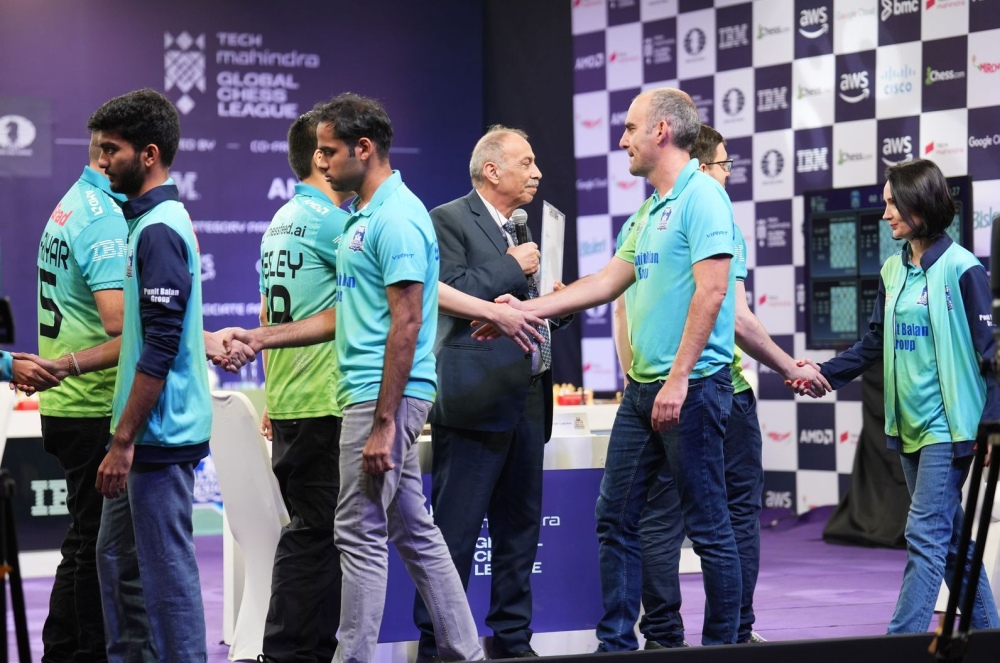
This was a make-or-break moment for the PBG Alaskan Knights. After three straight losses, they were the only team without a single Match Point. On the other side stood the upGrad Mumbai Masters, still part of the leading pack despite their painful collapse against Alpine on Day 3. The Knights had the small practical edge of playing with the White pieces, but the pressure of needing a result in front of the home crowd felt heavy from the start.
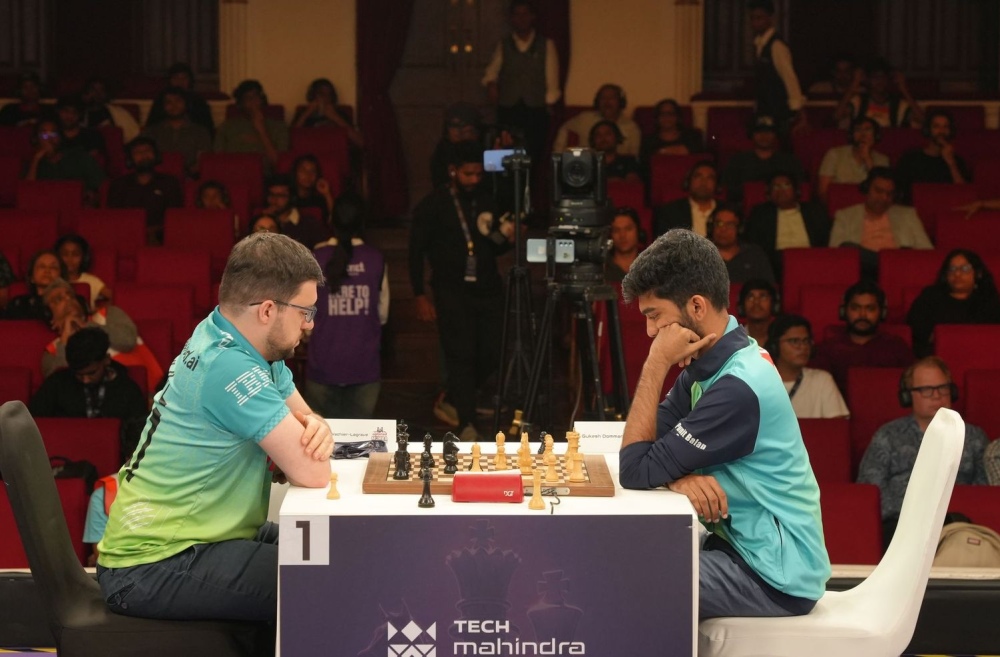
On the Icon board, World Champion Gukesh D met Maxime Vachier-Lagrave. The French grandmaster had started the season well, with wins over Anand and Caruana. Gukesh had only half a point from three games. In a Queen’s Gambit Declined, Vachier-Lagrave equalised smoothly. Black had the bishop pair, White an isolated pawn on e3. There was no sign of danger for Mumbai’s leader, who looked calm and confident, while Gukesh tried to pose problems in an equal position. In the end, there was simply nothing to squeeze. The players repeated moves and agreed to the first draw of the match.
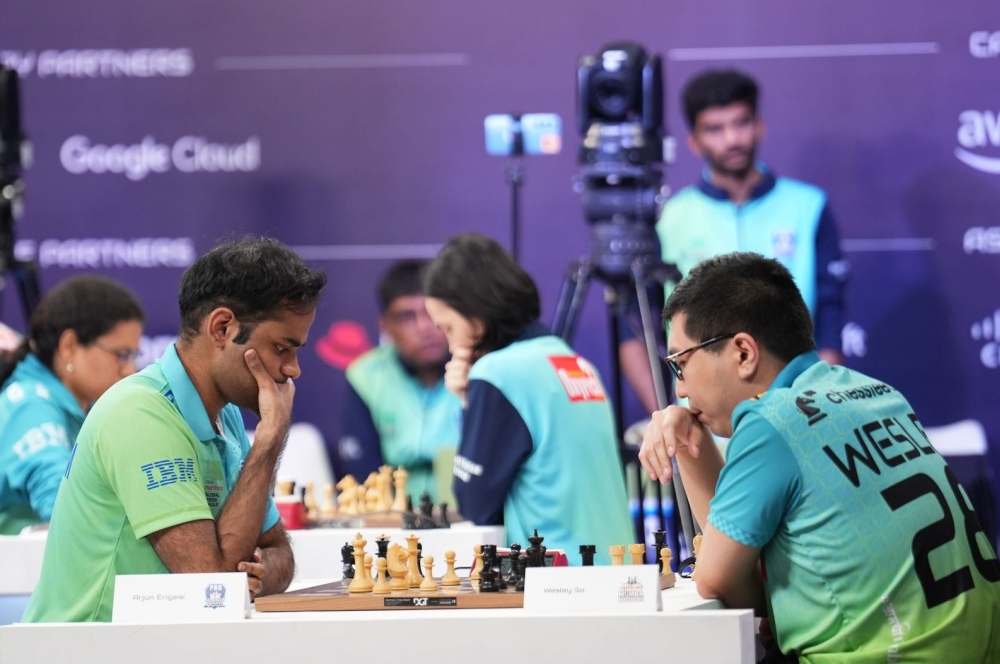
About twenty minutes into the round, it became clear the balance on the other boards was shifting toward Mumbai. On the first Superstar board, Arjun Erigaisi took on Wesley So in a Semi-Slav. Arjun outplayed his opponent and reached a position close to winning. After a blunder by So on move thirty, White launched a powerful attack. Black had to give up his queen for two rooks, but the rooks were uncoordinated, and the white queen dominated the board. Erigaisi then created a passed pawn on the queenside, increasing his advantage. It should have been a win, but the clock changed everything.
In a blitz finish with only seconds left, Arjun played 54.g5? – a natural-looking pawn move that turned out to be a blunder. So returned the favour, pushing his king forward instead of checking with the knight and snatching the pawn. Arjun had to find the only move, 55.Qd1+, with good drawing chances, but it was not his day. Black’s king found shelter and then joined forces with his remaining pieces to attack the white king. In just a few moves, the result flipped. Erigaisi was suddenly the one getting mated and had to resign.
On the second men’s board, Leinier Dominguez faced Shakhriyar Mamedyarov. Dominguez pressed a little, but never managed to get anything substantial. Mamedyarov defended accurately, simplified, and held the balance. The game ended in a draw, and PBG missed another chance to close the gap.
The real collapse came on the women’s and prodigy boards.
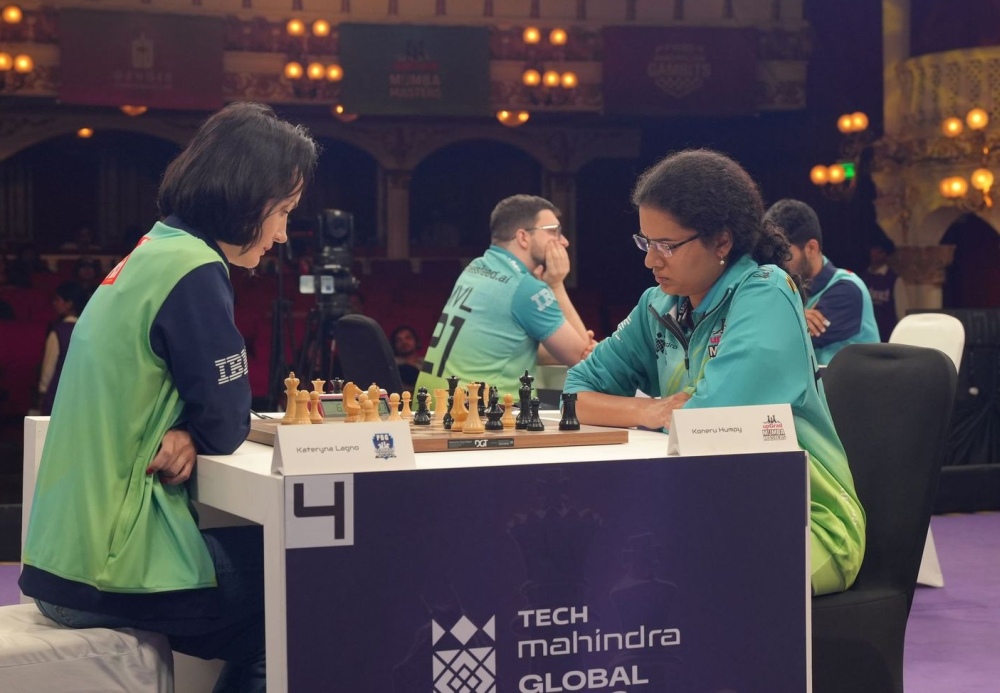
Kateryna Lagno sacrificed an exchange and gained a huge advantage against Humpy Koneru. By move fifteen, the evaluation bar was firmly on White’s side. However, just a move later, Katerina failed to find a beautiful winning sequence, and the position became equal. In the ensuing sharp tactical phase, Lagno found a brilliant queen sacrifice that should have led to a winning position. Once again, nerves and time trouble stepped in. At the most important moment, she chose the wrong follow-up, and the position turned around completely. Koneru seized her chance, activated her pieces, and launched a decisive counterattack.
On the other women’s board, Sara Khadem never really got going against Harika Dronavalli. In a Queen’s Pawn Opening, Harika took control straight out of the opening and kept it all the way. White was pushed back move by move and did not come close to creating counterplay. Dronavalli converted cleanly and gave Mumbai another full point. Out of four games in the league so far, Khadem had managed only two draws.
The last game to finish was on the prodigy board. Daniel Dardha essayed an offbeat opening against Bardiya Daneshvar, sacrificed a pawn, and obtained a promising position. However, he played somewhat hesitantly, allowing Black to consolidate. Trying to complicate things, he sacrificed a piece, ending up in a worse but hectic position where White’s queen and two bishops were all pointing toward the black king, offering some hope for a save. Daneshvar, who had already shown strong nerves earlier in the season, kept his concentration. He gradually untangled his pieces, repelled the attack, and then went after the white king. Once Black’s pieces fully connected, the result was no longer in doubt.
When the final score was confirmed, the numbers were harsh. The upGrad Mumbai Masters had won 18–2 in Game Points. They took a convincing match victory and stayed in the fight at the top of the table. For the PBG Alaskan Knights, four defeats in four matches effectively ended their hopes of reaching the top places in Season 3.
Luck may favour the brave, but misfortune has a habit of finding those who can least afford it.
Match 12: Triveni Continental Kings vs Ganges Grandmasters (11–6)
The final match of Day 4 pitted the defending champions Triveni Continental Kings against a resurgent Ganges Grandmasters, led by Viswanathan Anand. Triveni were coming off a painful loss to the Fyers American Gambits and needed a strong response. Ganges had won two matches in a row and arrived with confidence after Anand’s powerful win over Gukesh on Day 3.
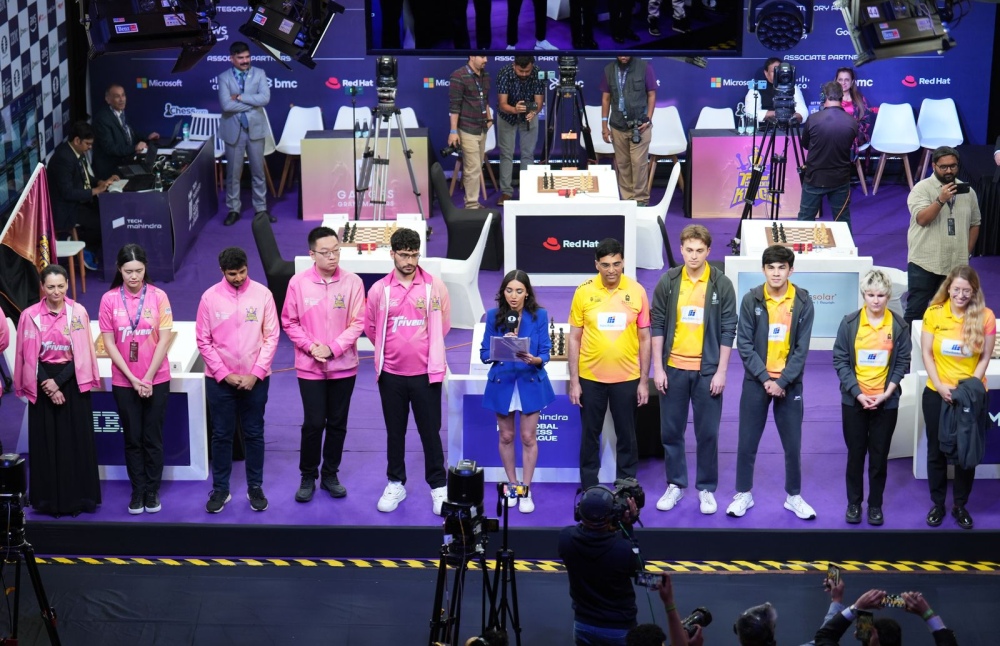
The match was tense from the start. For a long time, most positions were balanced, with the real drama arriving as the clocks ticked under five minutes.
The first game to finish was on the prodigy board. Marc’Andria Maurizzi and Raunak Sadhwani played a Ruy Lopez where the heavy pieces came off early. The game simplified into an equal endgame, and the players agreed to a draw.
As time trouble approached, Triveni’s positions looked promising on almost every remaining board. Firouzja and Wei Yi were both clearly better on the top two boards. Alexandra Kosteniuk was also pressing hard against Stavroula Tsolakidou. Only Javokhir Sindarov and Polina Shuvalova were holding firm for Ganges.
The next result came from the board of Wei Yi and Vincent Keymer. In a Caro-Kann, Keymer’s move 24…g5 on the kingside turned out to be a serious mistake. Wei pushed his pawn to g7 and completely disrupted Black’s position. Keymer tried to play fast and complicate matters, but Wei kept control and converted the advantage. Triveni took the lead, moving to 4–1 in Game Points.
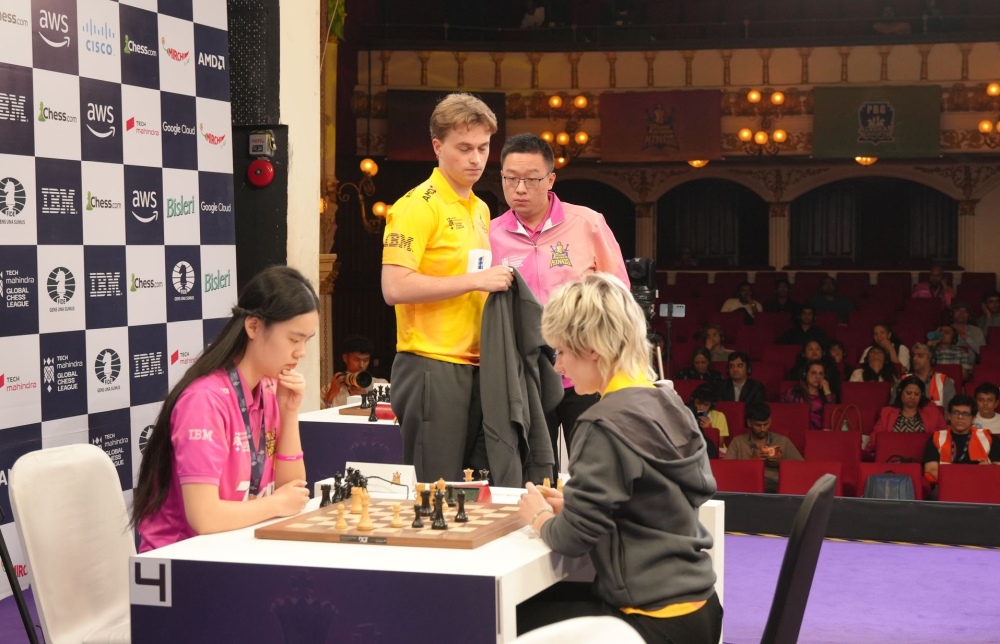
On the women’s board, Zhu Jiner pressed against Shuvalova. White seemed a little better, but Black defended with care. The game eventually reached an endgame with opposite-coloured bishops and rooks and ended in a draw. That result stopped Shuvalova’s winning streak but also kept Ganges alive in the match.
Then Triveni struck again on the Icon board. Alireza Firouzja defeated Viswanathan Anand in a Vienna Game. Anand, with Black, won a pawn at the cost of weakening his kingside, but White’s compensation seemed insufficient. However, Anand made several inaccuracies in the ensuing complicated struggle, allowing Firouzja to give up his queen for two rooks. From there, the five-time World Champion was on the defensive. His king became exposed, and White’s pieces swarmed around it. Firouzja attacked with his usual energy and did not give Anand a single chance to escape. With this win, Alireza kept his perfect personal score in the league.
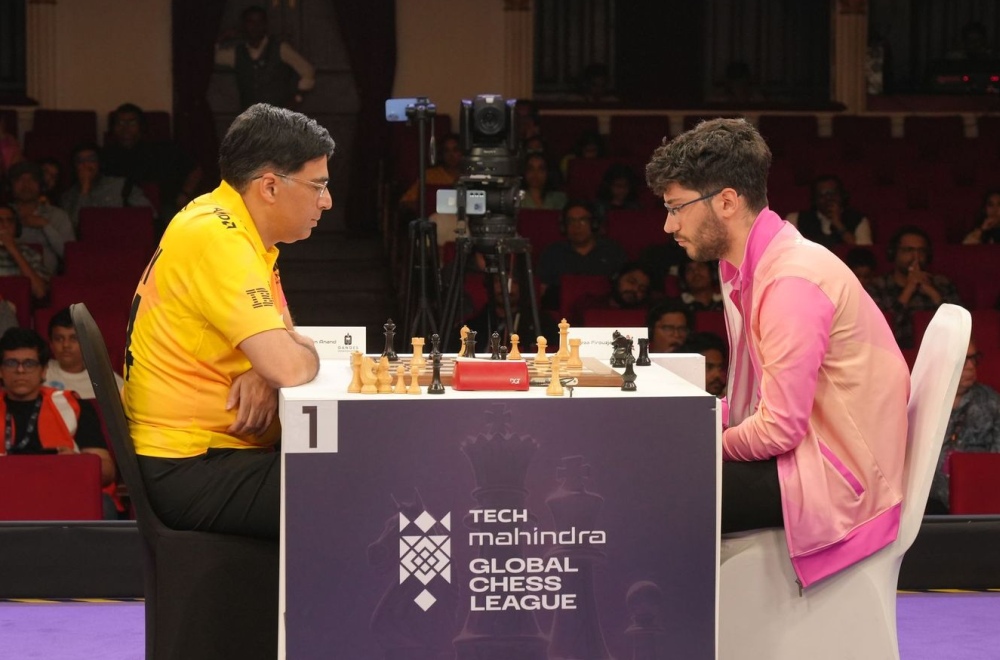
The match now seemed firmly in Triveni’s hands.
On the second women’s board, Stavroula Tsolakidou fell into serious time trouble against Alexandra Kosteniuk in an Alapin Sicilian. Kosteniuk reached a winning position, but with little time left she did not fully trust her technique, giving Black a chance to equalise. With no clean win in sight, Kosteniuk relied on practical play, posing problems here and there and forcing Tsolakidou to find only moves with seconds on her clock. For a long time, the Ganges player defended well, but in the end the stress took its toll. Tsolakidou cracked, while Kosteniuk seized the chance and converted. Good time management, as much as pure calculation, decided this game.
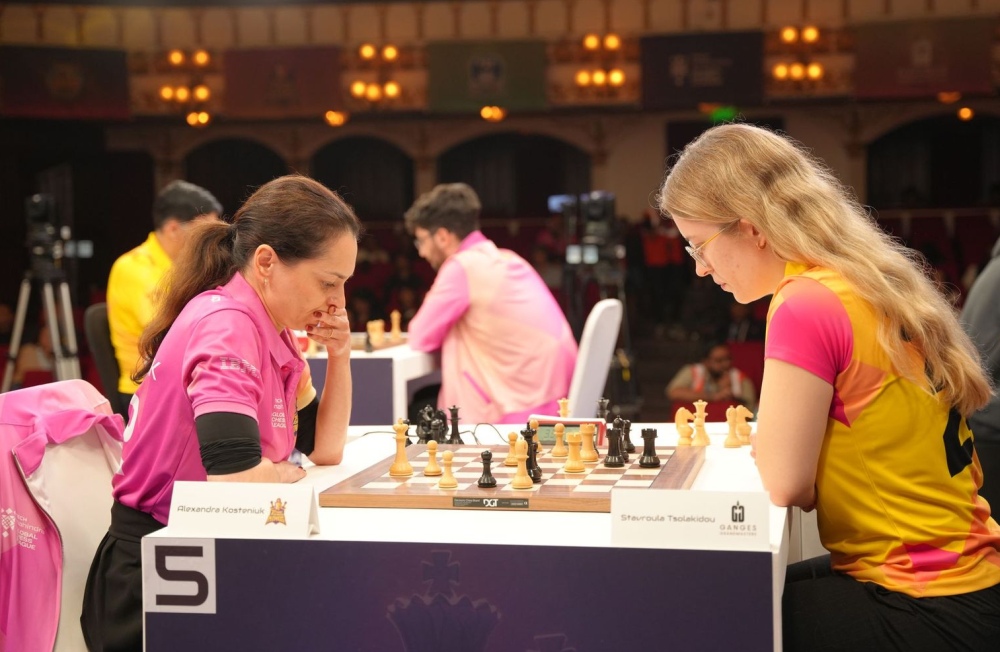
With that point, the score moved to 11–2 for Triveni.
The last game in play was between Vidit Gujrathi and Javokhir Sindarov. In a King’s Indian Defence, Sindarov’s opening preparation did not work well, and he came out of the early phase with an inferior position. Vidit did everything right, but then miscalculated, giving up his central pawn and allowing Black to win a central pawn and turn the tables. The final portion of the game was riddled with mutual errors, with both players missing chances. With only seconds left, Sindarov blundered and allowed a simple checkmating idea in two moves. Vidit did not see it. The game went on, and the material balance shifted to a rook for White against a rook and bishop for Black. In a theoretically drawn position, Vidit did not demonstrate the correct defensive plan and walked his king into a mating net. This time, Sindarov did not let him off the hook.
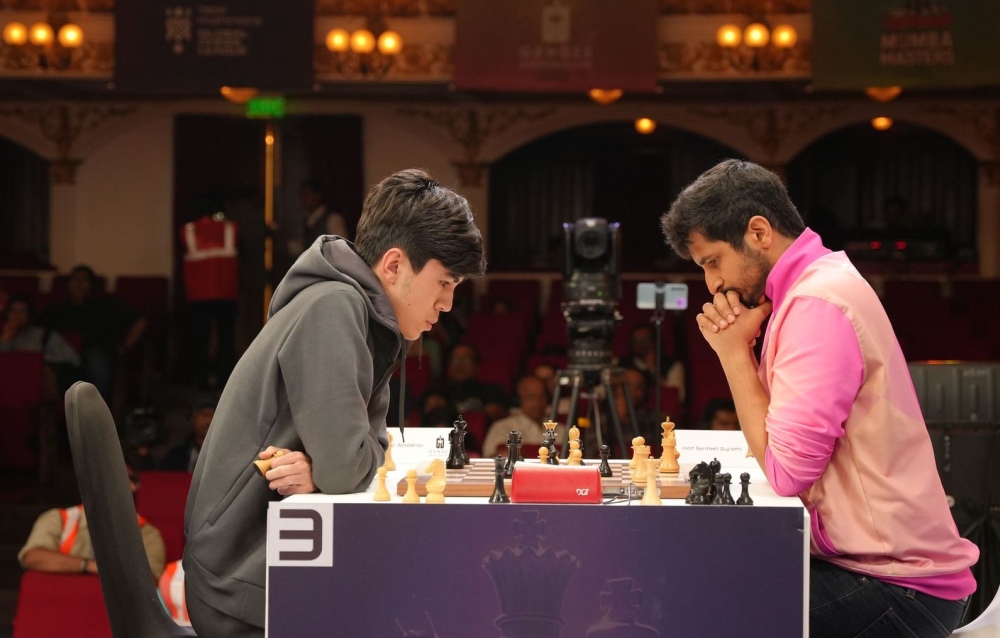
Despite this late loss, Triveni had already secured the match. The final score was 11–6 in Game Points for the defending champions. They closed Day 4 sharing the lead on nine Match Points with the upGrad Mumbai Masters, while the Ganges Grandmasters stayed in the chasing group.
Written by Milan Dinic
Photos: Global Chess League
About Tech Mahindra Global Chess League
The Global Chess League is the world’s first and largest official franchise league of its kind, with chess players from all over the world competing in a unique joint team format. It is a joint venture between Tech Mahindra, a part of the Mahindra Group, and FIDE. The league will feature male and female chess champions competing in the same team. Playing on the popular rapid format, the league’s joint male-female teams will have the rare distinction of being a unique multiplayer team in the world of professional sports. In addition, the league is a one-of-its-kind live televised chess event offering fans a unique viewing experience. Tech Mahindra and FIDE will explore innovative ways to promote the game through interactive technology-enabled platforms by leveraging next-generation technologies such as 5G, artificial intelligence, and virtual reality, among others.
For more information on Tech Mahindra Global Chess League, please visit: globalchessleague.com/
Contact: Abhilasha Gupta, Global Head – Corporate Communications & Public Affairs, Tech Mahindra
Email: Abhilasha.Gupta@TechMahindra.com; media.relations@techmahindra.com