


The FIDE Tech Mahindra Global Chess League is returning for its fourth season. With its unique format and competition concept, GCL is looking less like an annual chess tournament and more like a mature global sports league.
After Dubai, London and Mumbai, Season 4 will take place in the southern Indian city of Bengaluru, from 5th to 13th September. With India being one of the fastest-growing chess markets and following an unprecedented response to Season 3 in Mumbai, hosting the event in the country for the second time in a row builds on strong Indian momentum in world chess.
This is where the “India exports not only chess talent but also a chess format” narrative belongs.
Season 4 will see Magnus Carlsen’s return to the competition. World Cup winner and India’s rising woman chess star Divya Deshmukh joins the GCL for the first time, while Viswanathan Anand moves from Ganges Grandmasters, where he spent the first three seasons, to PBG Alaskan Knights.
The unusually strong generational pairings, the Road2GCL event prior to the season, a more ambitious technology/fan layer, and growing outside investment in franchises point to an exciting new GCL Season ahead.
“We are very excited about Season 4 which is designed to deliver a bigger, bolder version of everything done in the previous three events. We will have a significantly larger fan-facing setup than in previous events, a more prominent technology layer with AR/VR and Physical AI, and we already have a refreshed set of teams promising exciting matchups and outcomes,” says Peeyush Dubey, Chairperson, Tech Mahindra Global Chess League.
Bengaluru: Chess meets India’s technology capital
Season 4 takes place in Bengaluru, marking a clear connection between chess and technology, which has been one of the staple points of GCL since inception.
Dubbed “the Silicon Valley of India,” the city is home to India’s best-known tech companies, with a large population of students and tech professionals. This goes hand in hand with GCL positioning technology as a key tool in improving the spectator experience and engagement with chess.
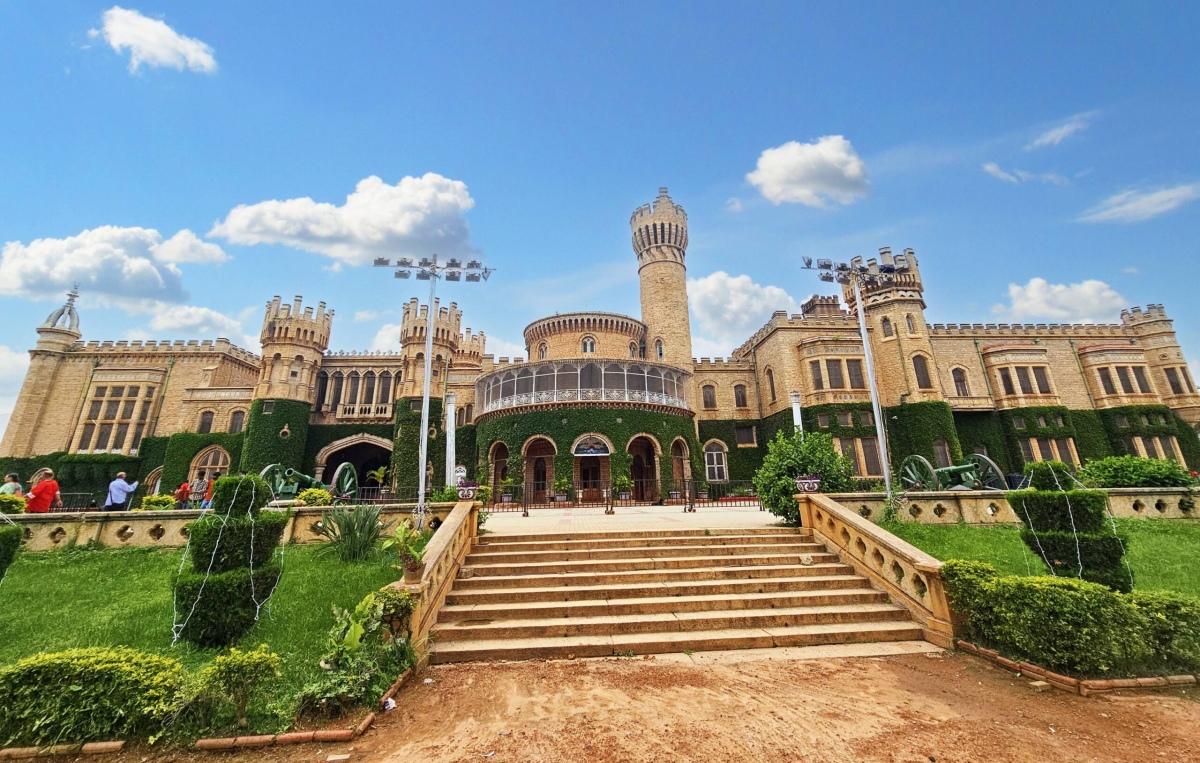
Bangalore Palace – the 19th century royal palace built for the Maharaja of Mysore – will host the opening ceremony while the competition itself will take place at The Lalit Ashok luxury hotel.
Taking chess beyond the venue, GCL also continued with its Road2GCL programme which was launched in 2025 and saw online and in-person competitions. The year-round engagement platform is designed to bring players, creators, fans to celebrate chess through different events.
When GCL launched four years ago featuring a franchise league structure, some doubted the chances of this approach succeeding in chess. Still, with Season 4 lined up, the league has moved from proving that franchise chess can work to building continuity.
According to the analysis provided by GCL, the media reach grew 65% from Season 1 to Season 3, while the media value of the project increased 2.4 times.
Magnus Carlsen’s return and Divya Deshmukh’s debut
From a purely chess perspective, the biggest news of Season Four is the return of Magnus Carlsen after he skipped Season 3. The Norwegian returns as the Icon player of the Alpine APL Pipers, the defending champions of the League.
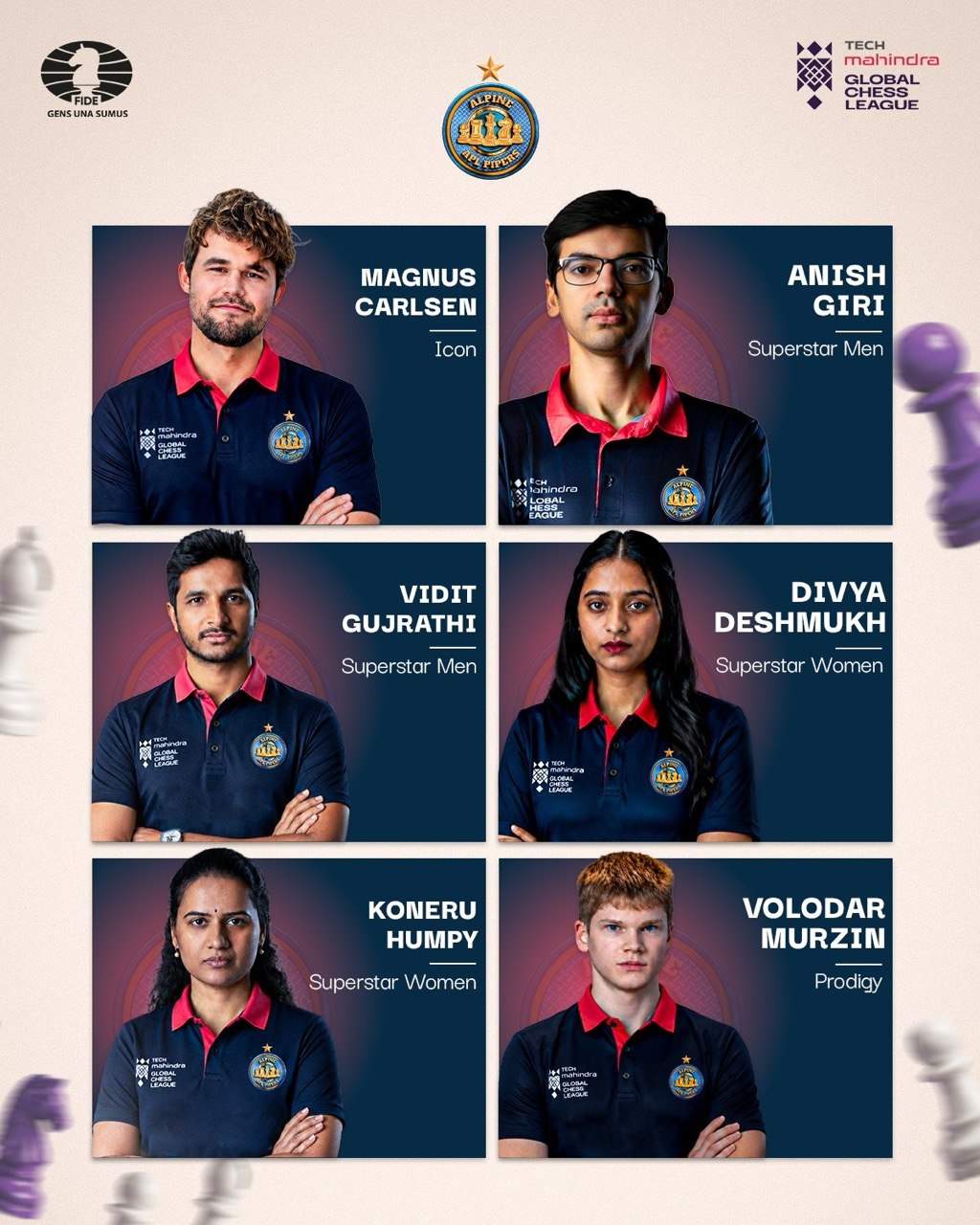
It is not just Carlsen who makes Pipers the top favourites this season. The team lineup features Anish Giri and Vidit Gujrathi on Men’s Superstar boards. The Pipers also strengthened their women’s ranks, with Koneru Humpy being joined by Divya Deshmukh, the rising sensation who took the Women’s World Cup by surprise. At 19, she defeated Humpy in the FIDE Women’s World Cup final in Batumi. The victory made her the first Indian winner of the Women’s World Cup and earnt her the Grandmaster title.
The Humpy – Divya tandem also tells another compelling story of GCL: two generations of elite Indian women players in the same team, highlighting that generational dynamics are also a big GCL feature.
The team’s Prodigy board will be manned by Volodar Murzin, the 2024 World Rapid Chess Champion.
Viswanathan Anand changes teams for Season 4
One of the most visible changes this season involves Viswanathan Anand.
After representing Ganges Grandmasters for the first three editions, the five-time World Champion moves to PBG Alaskan Knights and takes their Icon board. Anand will be leading one of the youngest teams in the League: with the 15-year-old Turkish star Yagiz Kaan Erdogmus joining Arjun Erigaisi on the Superstar Men boards. Kateryna Lagno and Nino Batsiashvili fill the Superstar Women positions, while Abhimanyu Mishra (17) makes his league debut as the team’s Prodigy.
Anand, therefore, enters Season 4 alongside some of the youngest players in elite chess.
The other franchises have taken different approaches. Two-time champions Triveni Continental Kings have retained much of their established core, including Alireza Firouzja, Wei Yi, Alexandra Kosteniuk, and Zhu Jiner.

Ganges Grandmasters have built around experience, with Ian Nepomniachtchi taking the Icon board alongside Levon Aronian and Leinier Dominguez.
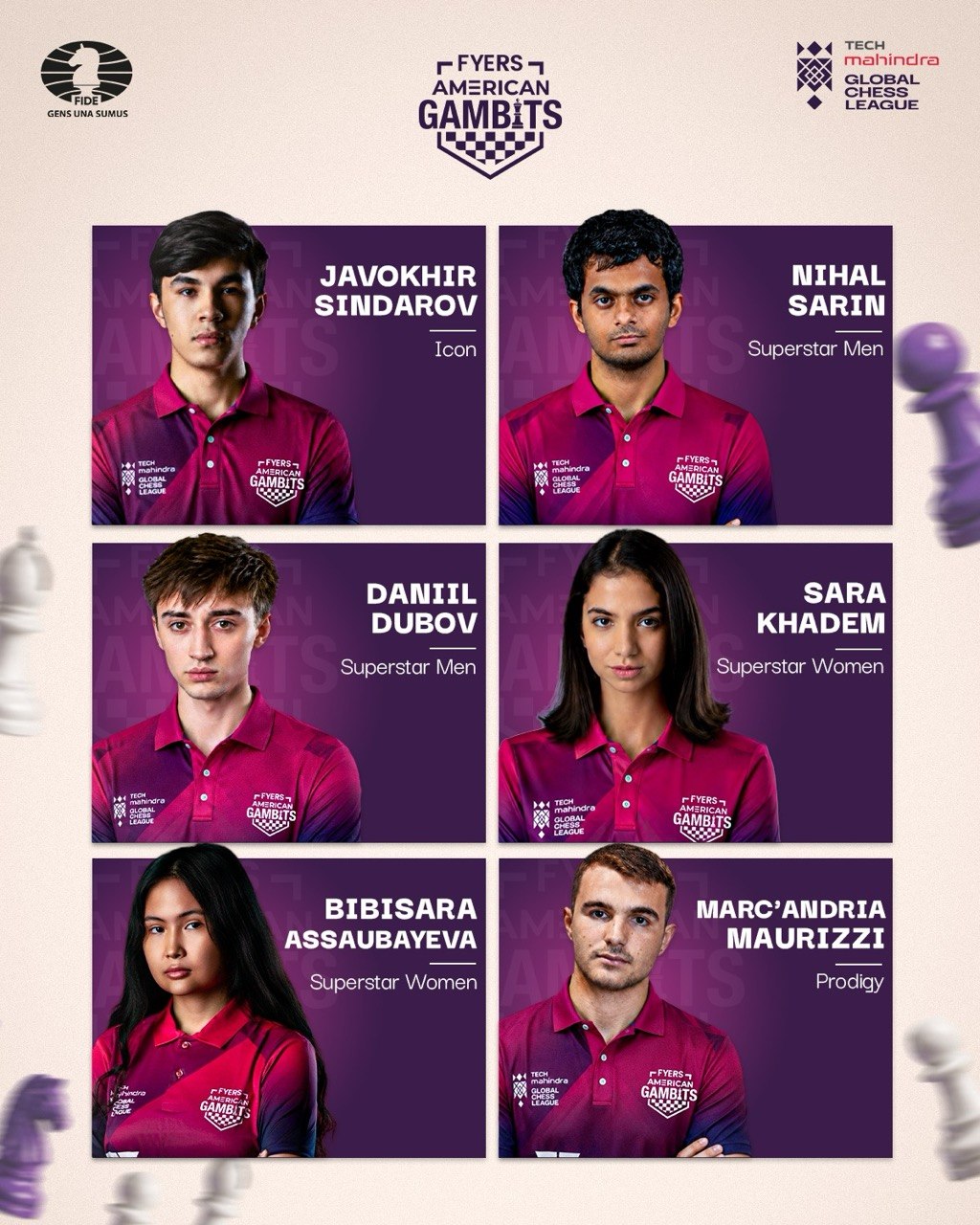
Mumba Masters continue with Maxime Vachier-Lagrave as their Icon, while FYERS American Gambits enter the season with World Champion Candidate Javokhir Sindarov leading a squad that also includes Daniil Dubov and Nihal Sarin.
A particularly strong “old guard vs. next generation” season
The generational divide is another defining characteristic of Season 4. At one end there are seasoned champions Anand, Carlsen, Aronian, Nepomniachtchi, MVL, Humpy, Kosteniuk. At the other end – rising stars: Divya, Erdogmus, Abhimanyu Mishra, Murzin, Pranav Venkatesh, Leon Mendonca, and others.
The team structure of the competition means that different generations will not just be playing against or alongside one another, but they will depend on one another for the team result.
Why GCL plays differently from a traditional chess tournament
The competition format remains GCL’s biggest competitive differentiator. For those new to GCL, this format is the main thing to understand ahead of the event.
Six franchises compete in a double round-robin league stage before the knockouts to determine the champion.
Each team fields six players across six boards at the same time in a match. The teams consist of one Icon, two Superstar Men, two Superstar Women, and one Prodigy player.
Each player contributes to the same team result.
The entire team plays with the same colour, which is determined by a coin toss ahead of the matchup.
The league uses rapid time control, with 20 minutes per player and a two-second increment from move 41. Its scoring system also gives Black an additional incentive. A win with Black earns four Game Points, compared with three for a win with White. A draw earns one point for each player.
The team that finishes a match with more Game Points receives three Match Points. Teams receive one Match Point each when the match finishes level.
Technology and the fan experience move closer to the action
When launched in 2023, one of the main goals of the Global Chess League was to change the way the spectators experience chess. This is notably visible in the setup of the venue, the approach to broadcast and commentary. With a sports-like atmosphere, multiple camera angles, and event coverage on and off the chessboard, and with much more dynamic and simplified commenting compared to standard chess events, GCL is designed to appeal to a novice player or someone who is just getting into chess.
Season 3 introduced AI-powered in-arena features and expanded the league’s broadcast experience. For Season 4, GCL says it is exploring a live match-winning probability meter designed to give viewers more context as games develop.
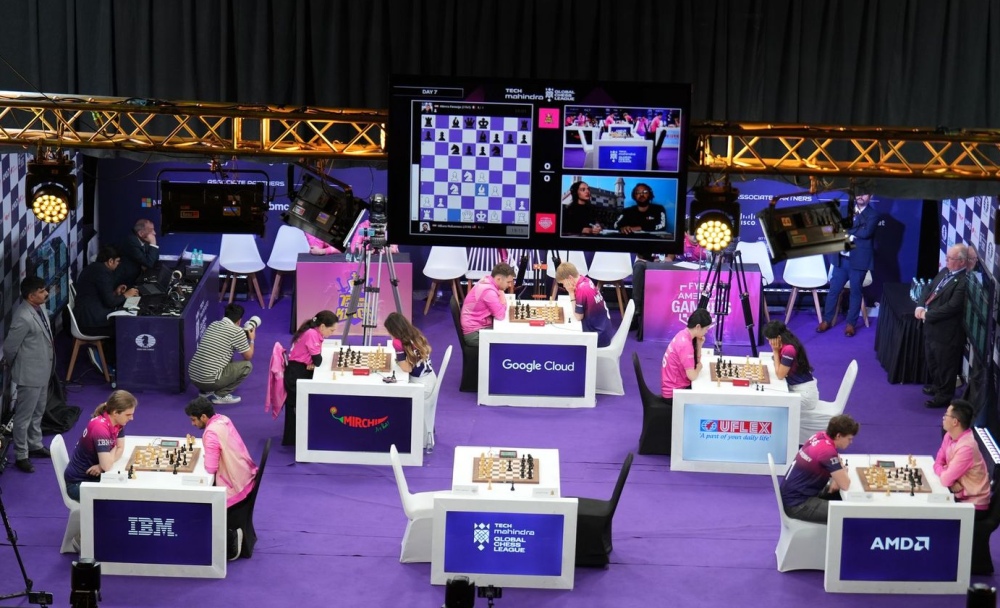
The official GCL app will also give fans a prediction engine that lets them engage with matches while they watch. The league’s Season 4 plans also include exploration of AR and VR experiences and Physical AI applications.
Fans in Bengaluru will also have the Chesstival fan zone, which GCL says will feature technology-led and interactive experiences around the live competition.
A growing interest in the franchise model
In August 2026, former FC Barcelona and Spain footballer Gerard Piqué joined FYERS American Gambits as a strategic shareholder. The franchise’s ownership group also includes former India cricketer Ravichandran Ashwin.
For GCL, these developments extend the story beyond which player wins which game.
The league started in Dubai in 2023 with an unusual idea: take a sport built around individual competition and create franchise teams where established champions, women players, and young talent all affect the same result.
Four seasons in, that idea has a larger ecosystem around it.
Bengaluru now gets the next test.
Written by Global Chess League
Official website: https://globalchessleague.com/