

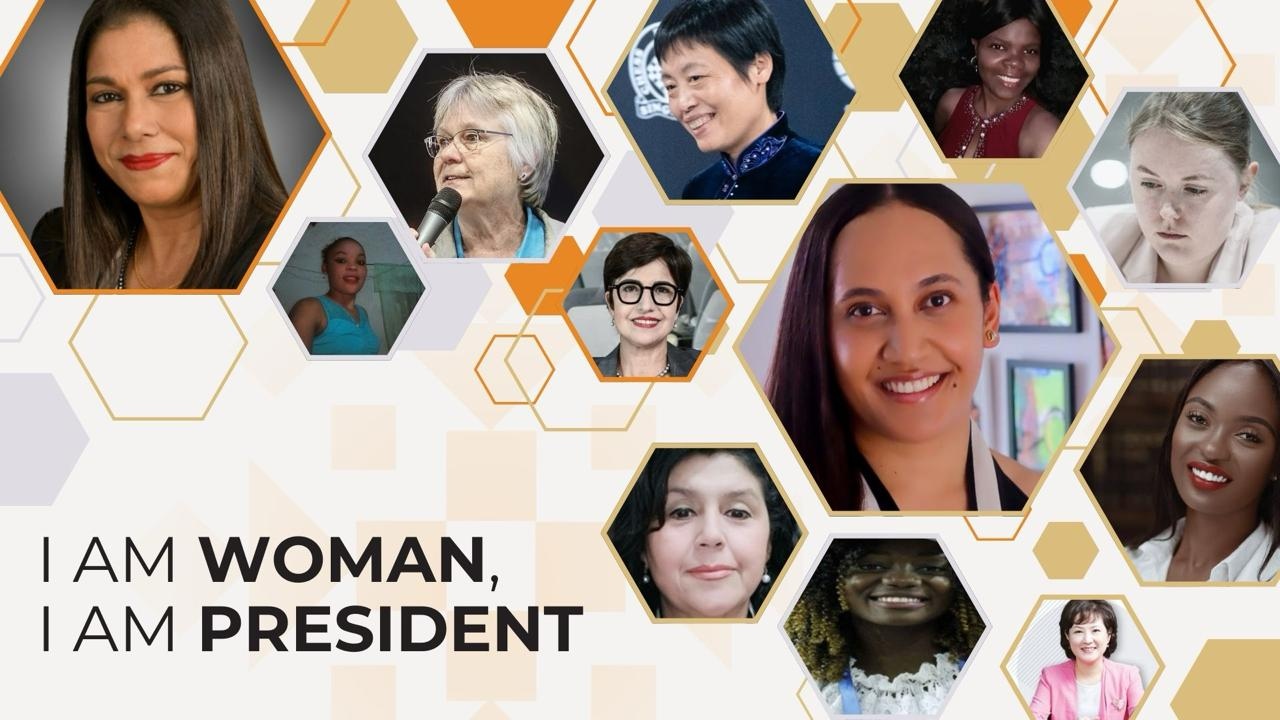
Out of 201 FIDE members, only 13 have women presidents. In a slow but steady shift, more women are taking executive roles in chess and business. FIDE spoke to four women who run national chess federations. Here is what they say about the role women can play in chess away from the board.
In 1971 the Australian singer Helen Reddy came out with the song “I am woman” which by 1972 reached the number one spot on the U.S. Billboard Hot 100 chart. The famous chorus “I am strong, I am invincible, I am woman,” went on to become an anthem of the rising feminist movement. At the same time, another story of women’s voices was taking shape: in 1971 FIDE organised the first Women’s Interzonal in Ohrid (which was Yugoslavia, at the time), a step towards bringing it in line with the competing system for men. The following year, Nona Gaprindashvili defended her world title against Alla Kushnir by the narrowest margin, eight and a half to seven and a half. In Skopje, the Soviet team with Gaprindashvili and Kushnir on the top two boards dominated the Women’s Olympiad. Also that year, Olga Rubtsova quietly became the first ever women’s world correspondence champion, and the only person in history to hold both over the board and correspondence world titles. For the first time since Vera Menchik, it became more common to talk about women in chess.
On the board, women were already making a breakthrough in chess. But away from the board, they were almost absent from the rooms where chess was governed. Nona Gaprindashvili – who is the first woman in history to earn the title of Grandmaster – was also faced with dismissal by many of her male colleagues or men in positions of power.
Turning back to the U.S. where the global feminist movement from the 1970s was most prominent, it took another three decades before the U.S. Chess Federation elected its first woman president – Beatriz Marinello (pictured below), in 2003.
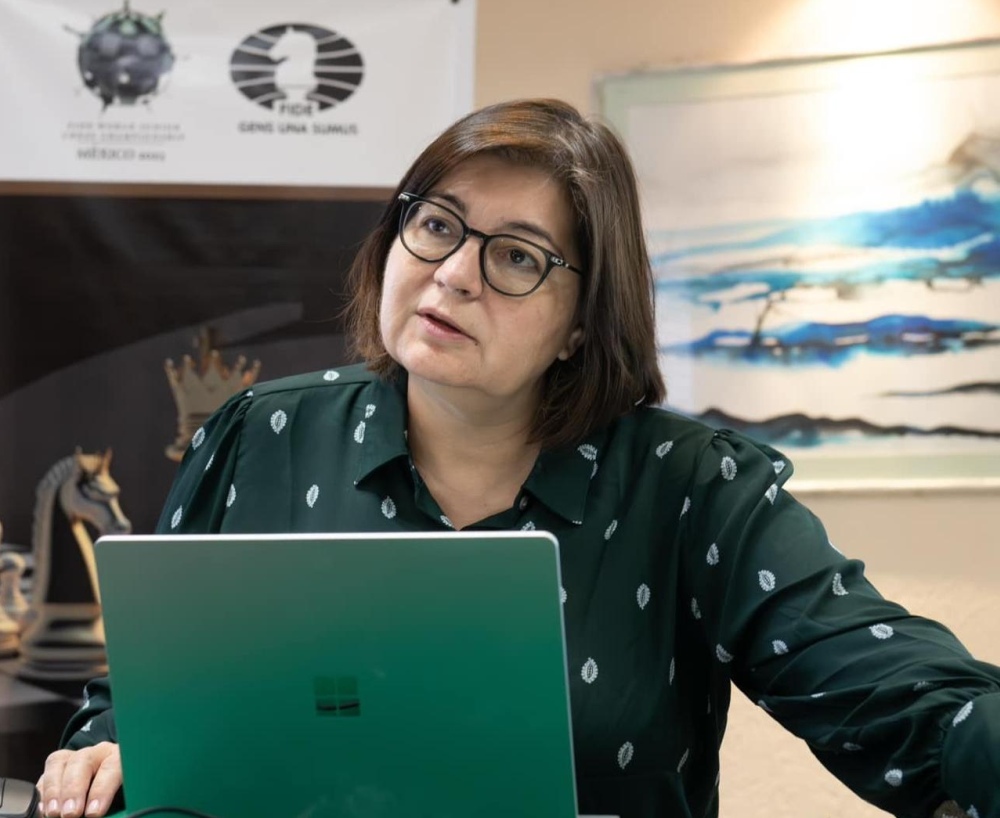
Today the picture of women in chess looks quite different, but it is far from transformed. At the moment, according to FIDE data, out of 201 member federations, only 13 have a woman president. That is still a small percentage, yet – it would have been unthinkable when Helen Reddy first recorded her song and Gaprindashvili faced Kushnir across the board in Riga. Things are changing.
The changing times
Recent years have seen more emphasis and support not just for getting women into chess, but for using chess to help them improve their own careers.
FIDE has not only increased the number, scope and support for women’s events, but has made women’s chess one of its top priorities, with the Commission for Women’s Chess and the appointment of Dana Reizniece as the Deputy Chair of the organisation’s Management Board. For years, FIDE’s finances have been looked after by Zhu Chen – a former Women’s World Champion, who is the treasurer of the International Chess Federation and is tasked with overseeing revenue flow and ensuring financial transparency.
The Commission for Women’s Chess has supported programmes that help countries build women’s national teams from scratch. A 2024 initiative helped nine federations to send a women’s team to the Chess Olympiad for the first time. A conference on chess and life balance discussed the impact motherhood has on a woman’s chess career. Development projects such as the Queen’s Gambit Challenge have brought together more than five hundred eighty women from over eighty countries for training and support.
The struggles women face in chess – be it as players or decision-makers in organisations – are the same as those faced in business. A recent Global Gender Report by the World Economic Forum notes that women are a large share of the workforce but a much smaller share of senior leadership. Deloitte’s Women in the Boardroom report, published in March 2024, notes that “women hold less than one-quarter (23.3%) of the world’s board seats”.
Like companies, chess federations exist in that same world. They are sports bodies, but they are also employers, event organisers and public facing institutions. When women take the chair in those organisations, they are not only symbols. They are also decision makers in a sector that shapes how millions of children and young people first meet the game. FIDE spoke to several women who are presidents of national chess federations and asked them to share their views and tips on women looking to make a career in chess which is not strictly tied to the performance on the chessboard.
From Women’s World Champion to federation President
Few stories link together a path from “I am woman” to “I am president” better than that of Xie Jun.
She began in Chinese chess at six. At ten, she switched to what people in China call “international chess” and by sixteen she was already in the national team. In 1991, she became Women’s World Champion, the first world champion from outside Europe. She recalls that moment in simple terms, saying that nothing compares to seeing your national flag raised for the first time at a world title match. In parallel with her chess career, Xie Jun pursued a doctorate in psychology – an extremely rare combination in the chess world.
Her transition from the board to the boardroom was gradual: After playing she started coaching, then taught at university and worked as a sports administrator, and in 2024 she became the President of the Chinese Chess Association.
“Every promotion felt like a logical ‘next move’ on a larger board, if you want to change the rules, you have to help write them,” notes Xie Jun.
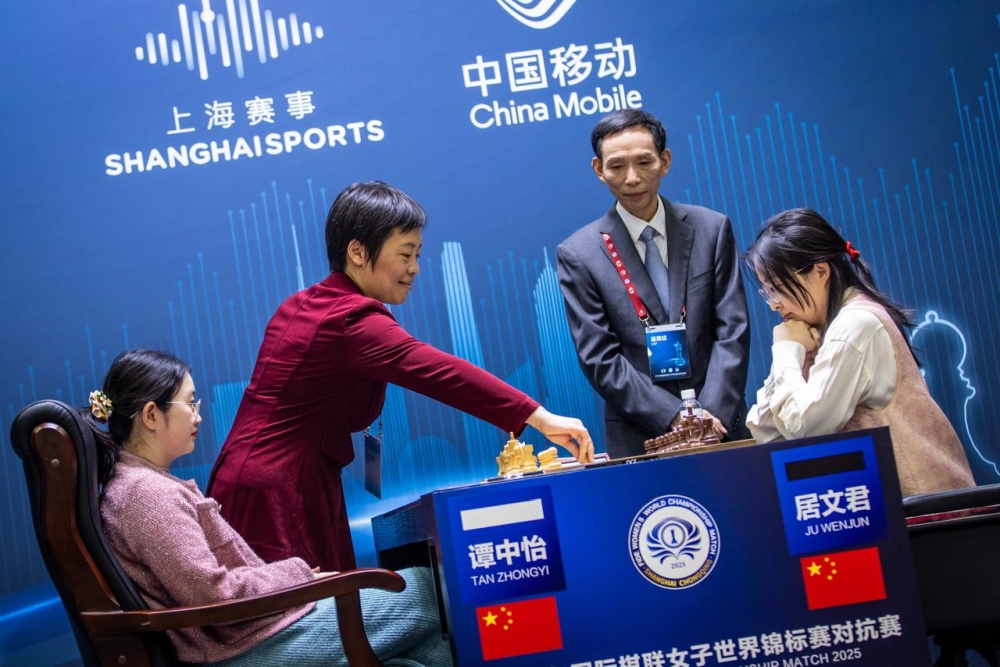
On the evergreen question of work-life balance, Xie gives a simple answer: “I treat life like a long game with two clocks: family and career. If you work hard enough and put your heart into it, you can definitely achieve a balance.”
Her advice to young women who want leadership roles in chess is practical: “Play strong, your best credential is your performance, competence silences prejudice. Build networks, find both female allies and male mentors, chess is a team sport played one board at a time. Stay educated, chess federations need professionals, not just former players. Pay it forward, once you reach any seat at the table, pull another up with you. Like chess, we turn an unstoppable passed pawn into a queen.”
Xie Jun’s story shows one path – that of a superior player turned chess-administrator. Most other paths, however, begin far from the world championship stage.
“Good news” from Morocco
In Morocco, Bouchra Kadiri is the first woman to hold the presidency of her country’s chess federation. Her story begins with her name. In Arabic, “Bouchra” means “good news”. Her father chose it because on the day she was born he won a chess championship. From that moment, the game was part of her identity, tied both to her name and to a father who was a champion and a passionate player.
She became the first woman champion of Morocco in 1984. The following year, she won a bronze medal at the Arab Championship. As she points out, chess for her “has been more than a personal passion: it has been a mission”. From the glamorous celebration of 100 years of FIDE to taking chessboards to villages and hillsides of rural Morocco, Kadiri is spreading the spirit of chess as a tool of bringing people together.
This long work at the base of the chess career led her to the position she holds today. She describes her election as president of the Royal Moroccan Chess Federation as the result of a mix of passion, experience and a will to serve the chess community. Focused on bringing structure and formality to the chess organisation, under her leadership the number of registered clubs rose from 12 to 39, a historic increase.
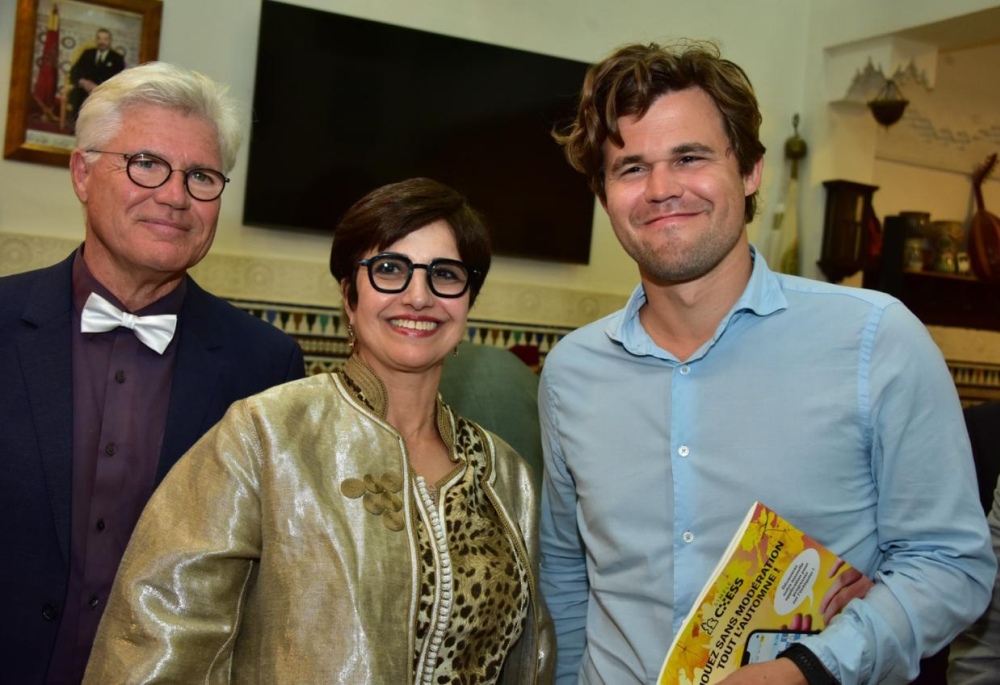
Balancing federation work, personal life and other duties is not simple for her. Speaking like an experienced executive, Kadiri says she relies on strict organisation and a strong team, and that the support of her family is crucial. She calls this balance “a strategic art” where every move counts and where equilibrium is built step by step with patience and determination.
“I want to pass on: It is possible to be committed, active, and present in several areas at once, provided you work with method and passion”.
“Leadership is not only a position,” she says, “but a commitment to others, to encourage, support and inspire those around you while staying true to your values.”
An Icelandic President shaped by two generations
In Iceland, Johanna Bjorg Johannsdottir’s path is rooted in family history as well. Taught chess by her father and great-grandfather, she joined a school club at eight and fell in love with both the competitive and the social side of the game.
In Johanna’s case – she had a family trailblazer when it came to women in chess administration: Her mother served on the board of the Icelandic Chess Federation, and through her Johanna became interested in questions of governance and fairness. She recalls that seeing the first female president of the federation was a defining moment. It showed her in a concrete way what was possible.
Unlike in the cases of Xie Jun or Bouchra Kadiri, Johanna’s path almost immediately started with the organisational side of chess. As a teenager, she helped at large junior tournaments. After high school, she taught chess, especially to girls, and focused on improving opportunities for girls and women. She helped set up training sessions reserved for girls and worked on strengthening the structure of the women’s national team.
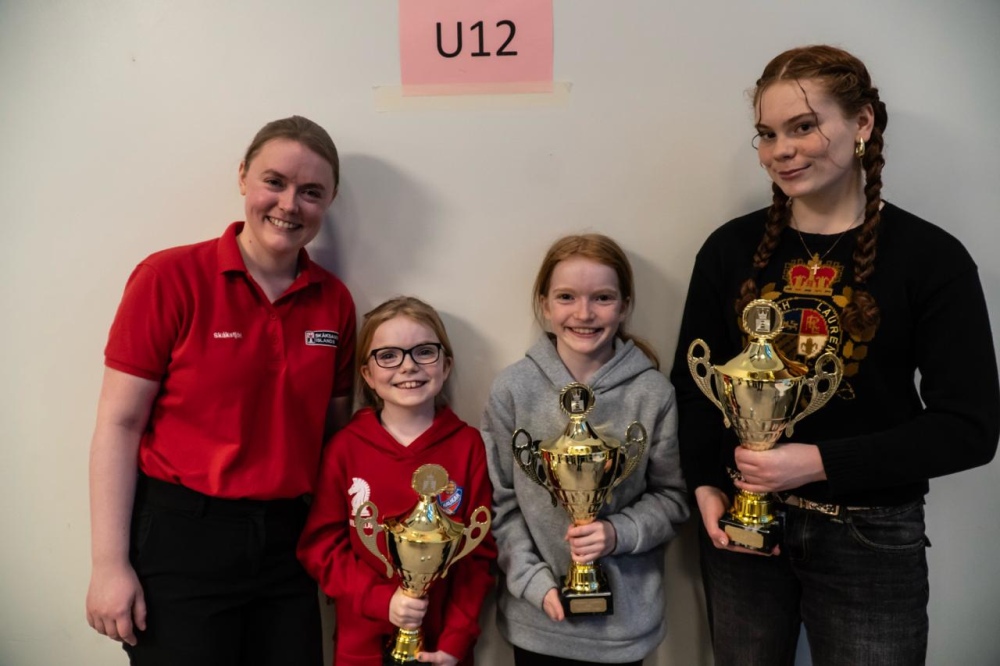
In 2020, she was elected vice president of the federation, chaired the Women’s Commission and continued to work as an arbiter and as a player on the women’s national team. After finishing her psychology degree and gaining professional experience, she decided to run for president and was elected in 2025.
She says that she is most proud of “standing up for girls and women in chess and helping to create spaces where they feel supported and taken seriously, and that this has always meant more to her than medals or titles”.
Being a full-time psychologist and president of a chess federation is a demanding combination. In these times of economic challenges, many find themselves doing more than two jobs. The question is – how to balance. Regular family dinners are one of the ways she keeps herself grounded. Her advice to young women who want leadership roles is clear: “Be brave and trust that your voice matters. Do not be afraid to speak your mind, to share your ideas, to point out what can be improved and take part in chess in any role that interests you. Confidence grows through participation, and your voice matters.”
“You don’t have to be a Grandmaster to make an impact”
For many in the chess world, the game has been part of family life since childhood. But not for everyone. TrisAnn Richards learnt chess at high school, but it was only in adulthood that she became truly involved in the sport. Going from volunteer to President of the Saint Lucia Chess Federation, she has positioned St Lucia as one of the most active FIDE members in the Caribbean.
“Chess became a meaningful way for me to connect with others, build community, and form lasting friendships,” she says.
In a region where athletics and cricket traditionally dominate sport, bringing chess to the forefront is no easy task. Still, by seizing the opportunity presented by the Queen’s Gambit Challenge – which helped multiple countries field female teams at the 2024 Chess Olympiad – and through similar projects, chess has gained greater prominence in Saint Lucia and across the Caribbean. This opened up new opportunities to develop the sport.

“I’m proud that women who entered our programmes as beginners have gone on to become national players, arbiters, instructors, and federation leaders. Beyond chess, I am proud to be a woman from a small Caribbean island making a positive impact on the global stage,” says Richards, who also works in dentistry. Managing two careers isn’t easy, but “faith, friends, and personal well-being keep me grounded,” she explains.
For those looking to find their path forward if they want to get involved in chess, Richards has a simple but sound message: “You don’t have to be a Grandmaster to make an impact.”
Her advice is clear: don’t wait to be invited in. Step forward and act like you belong – because you do. Build real competence. Learn how the system works, from the game itself to the structures that govern it.
From representation to power
The stories of Xie Jun, Bouchra Kadiri, TrisAnn Richards Johanna Bjorg Johannsdottir are very different – showing different paths that exist in the chess world.
But they all share something important: linking their own path to the next generation. Xie Jun speaks of turning a passed pawn into a queen and of pulling others up once you gain a seat at the table. Bouchra Kadiri talks about leadership as an ongoing commitment to those around you. Johanna Bjorg Johannsdottir says that what matters most is not medals but creating spaces where women can feel supported.
While the wider data on women in chess and in business shows there are many challenges ahead – at the same time – the support for dedicated development programmes is growing, suggesting that the future can look different from the past.
In 1972 the words “I am woman, hear me roar” were a challenge to a world dominated by men because of their gender and stereotypes, not because of skill. In 2025, with a growing number of women in boardrooms and when thirteen national chess federations are led by women, the challenge is more specific. One of its key elements is to make sure that this is not a passing phase, but part of a broader shift in who plays, who decides and who shapes the game for the next fifty years.
Written by Milan Dinic
Photos: Lennart Ootes, Tómas Tandri Jóhannsson, Anna Shtourman, Stev Bonhage, Beatriz Marinello’s FaceBook