

Latin America is trying to do something different in chess. Instead of spending money on new grand tournaments and spectacles for the elite, it is investing in chess as an educational tool, banking on a wider social impact reaching well beyond the chessboard.
“Of course, competitive chess is important to us. But by investing in chess as a tool to empower society, we can make it part of our culture and our future. As chess becomes more deeply rooted in society, more people will play, so it will bring about more competition and more Latin American players in the chess world,” argues José Antonio Carrillo Pujol, the president of the Confederation of Chess for the Americas.
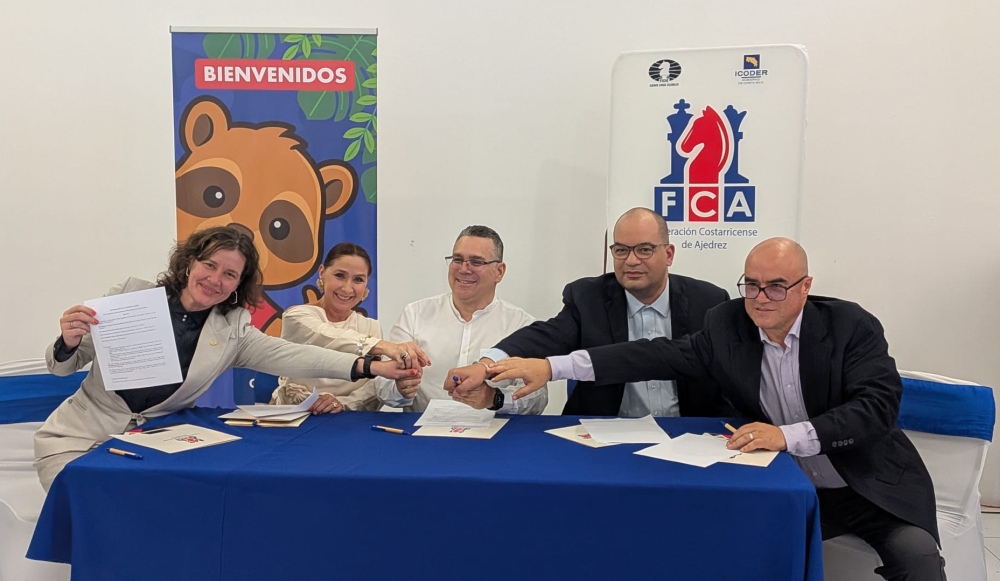
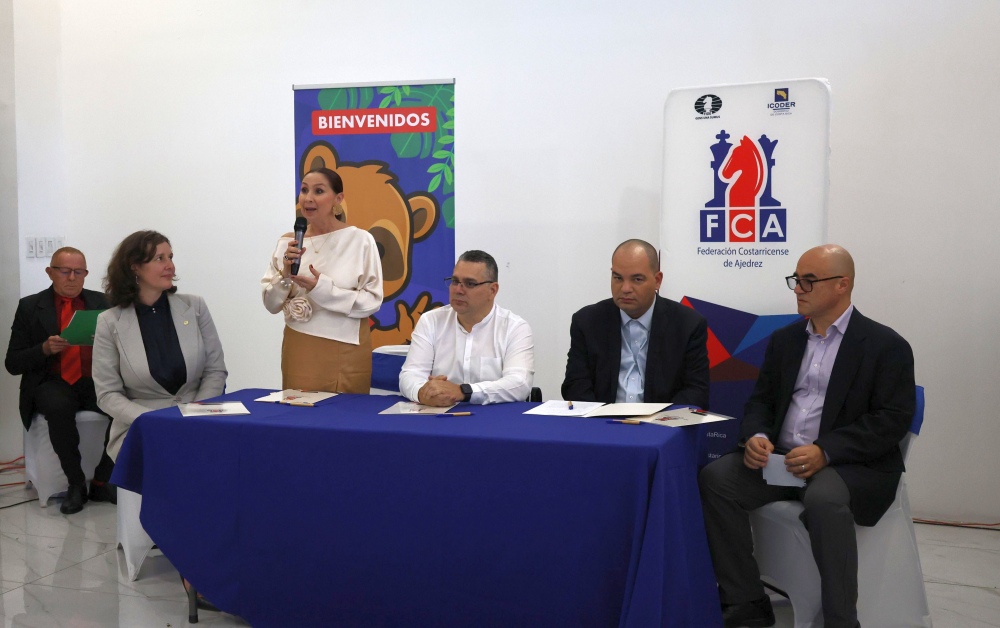
At the two-day conference in San Jose (20 and 21 March), the central event was not a chess tournament but the signing of The Memorandum of understanding, where a foundation was laid for formally incorporating chess in the educational system.
The Memorandum of understanding signed in San Jose brings together Costa Rica’s Ministry of Education, the Ministry of Sports, FIDE, the Confederation of Chess for the Americas, and the Costa Rica Chess Federation around a 2026 pilot project in selected schools. In the document all signatories express their intention “to cooperate in promoting and implementing Chess in Education initiatives in the Republic of Costa Rica, while contributing to broader international and continental strategies”. In practical terms FIDE will provide the government of Costa Rica with mentorship, technical guidance, pedagogical methodologies and support for teacher training to integrate chess into curricular or extracurricular school programmes.
“This is the first memorandum of cooperation signed during the Year of Chess in Education and we very much hope that many others will follow”, said Dana Reizniece, Deputy Chair of the FIDE Management Board who thanked the government of Costa Rica “for becoming the leaders in the continent and in the world” in a new model for introducing chess in education.
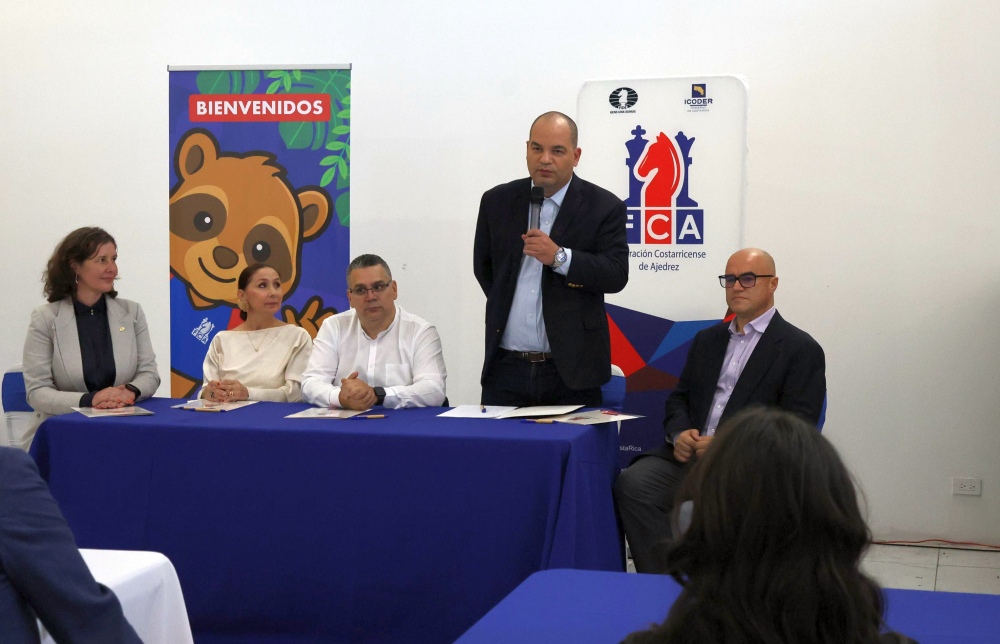
The Minister of Sport of Costa Rica, Donald Rojas Fernandez said that his country wants chess to teach students not how to compete, but “how to live”.
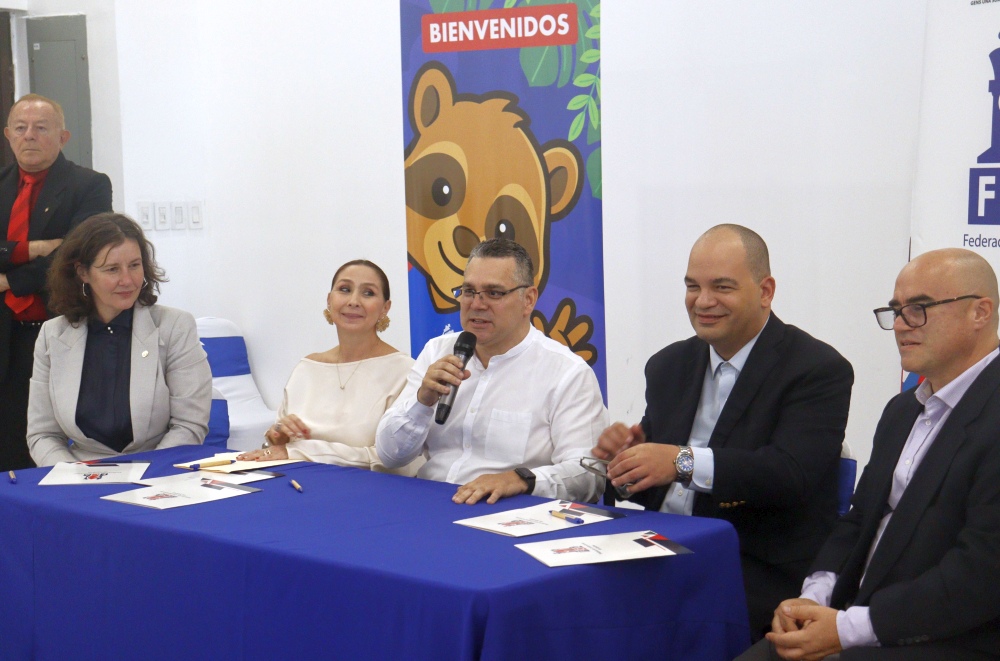
“This is a journey we will take step by step. You have my commitment, and the commitment of my colleagues, to ensure this becomes a snowball effect – growing and growing. We are not doing this for ourselves; we are doing it for our children and our youth,” said Rojas.
The fact that Costa Rica was the first to sign such a document is not surprising. In 2022 the country adapted Law No. 10187, which declared the promotion of chess teaching in the education system to be in the public interest and authorised cooperation agreements with the national federation.
Drivers of the change
The central figure in this regional push is José Antonio Carrillo Pujol. Known across the continent as Pepe, he is the president of the Confederation of Chess for the Americas and the leading force behind FIDE America’s educational turn.
“As a player, I love chess. When you love something, you try to promote it. When you learn chess, you can instantly see the benefits it can have for society. So, I set to work on promoting this”.
In Panama, where Carrillo was heading the chess federation for eight years, he persuaded the government to adopt legislation introducing chess as an extracurricular project in schools. To achieve this, his strategy was based on two principles: bringing in experts in the field to strengthen the argument and going not just to elected officials but also administrators and those responsible for policy implementation who stay in their roles regardless of whether there is a change in government.
And this is where Mauricio Arias Santana has become essential. Arias, an International Master from Costa Rica, is the president of the Education Commission for FIDE America who has been spearheading the practical implementations of strategies and projects focused on using chess as an educational tool.
Critics may argue that by focusing on education, not enough attention is being paid to promoting chess competitions, but Arias rejects this.
“Chess is still extremely important to us as a competition. But by making chess more inclusive and more open to everyone, more people will be interested, and more will go into competitive chess.” He argued that the broader approach makes chess more accessible to children and the youth, “where most won’t become professional chess players”.
“Players prepare for competitions, but most kids are not interested in that. But when you promote chess in the way we are now – little by little, through various programmes touching different aspects of life and life skills – a wider pool of people can relate to that, and the game is likely to grow faster”, Arias said.
Planting the seeds
To achieve their goals for chess, Carrillo and Arias are implementing a strategy which is focused more on administrators and officials tasked with implementing policies, who remain in government regardless who is in power.
“We deliberately focused on the branch of the administration that executes policy. Not the politicians who come and go, but on the administrators who drive the changes.”
The two-day conference in San Jose was attended by advisors to the Ministry of Education from all 27 regions of the country. Almost none of them play chess or have any experience with the game.
“This is exactly what we wanted,” notes Arias – “professionals in the field of education who will approach chess not as fans or players, but as experts who can assess and implement the best tools for empowering the future generations”.
Even before the conference in San Jose, educational events in Argentina and Cuba helped spread the word in the Americas about the new approach. As Carrillo notes, the response has been strikingly positive. “Every country we reached,” he said, mentioning places such as St Kitts and Nevis, Barbados, Colombia, Peru, Argentina and Chile, “was very keen on this.”
The key to success – Carillo and Arias argue – is to help national chess federations reach state officials, by providing them with experts and policy documents that help strengthen the argument for greater government support for chess.
FIDE has been supportive of the project. In August 2025, FIDE President Arkady Dvorkovich led a delegation on a tour of Latin America. Working closely with national federations and speaking with state officials, FIDE helped open doors for more state support for chess in the continent. More recently, Deputy Chair of the FIDE Management board, Dana Reizniece, has been travelling the Caribbean, working closely with federations on drafting policies, preparing educational programmes for schools and meeting state officials.
The next big step
The organisers of the Summit on Chess and Education plan to turn the event into an annual gathering which will take place in different countries across Central and Latin America.
One country is already moving fast: Guatemala surprised everyone with an announcement that as early as this autumn they are launching a national school chess programme and have already put aside $1.5 million for the effort. Panama is also planning to host a conference on chess and education, and many Caribbean countries have also supported the initiative.
Asked what he hoped to see from the programme in 5-10 years, the president of the Confederation of Chess for the Americas had a simple answer: “better people in all our societies, working together.” While that may sound larger than chess, it is exactly the point of the new Latin American approach taking place.
How Costa Rican government officials see chess
Donald Rojas Fernandez, Minister of Sport
Rojas sees chess as a tool to “build a grassroots foundation,” where children will get a chance to learn through play and develop cognitive skills without even realising. “In the future, this will give us not just better athletes, but better people,” he told FIDE in an interview.
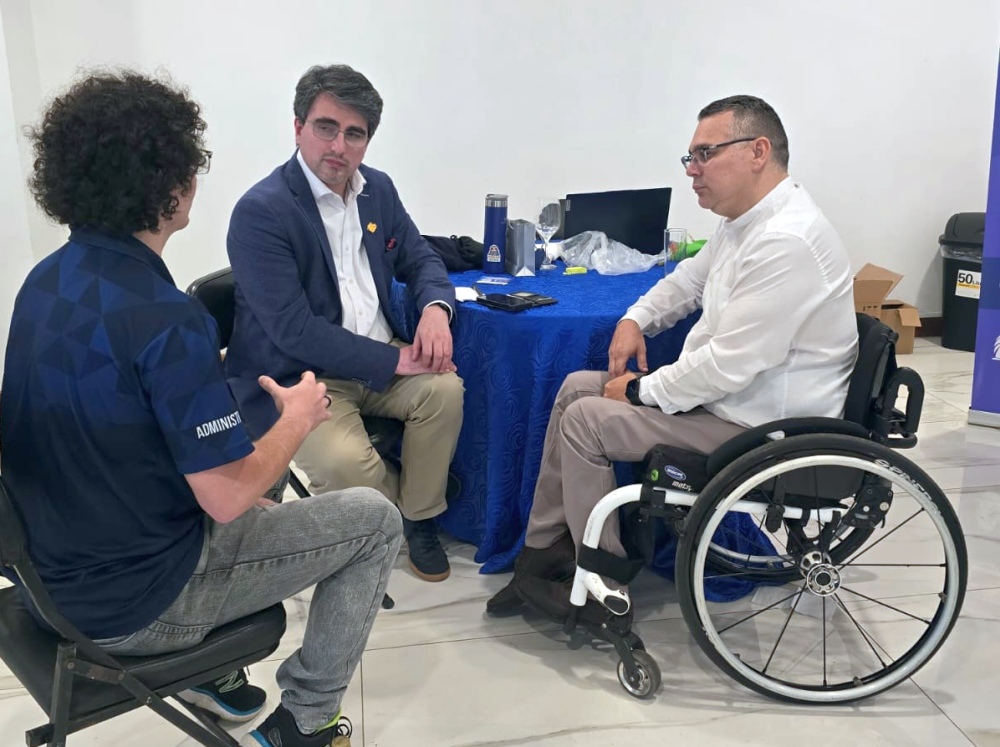
Asked about the challenges to achieving this, Rojas points to age. “At an older age, it becomes more difficult. We need children to fall in love with chess – not as a high-pressure competition, but as a game that naturally develops their skills and for that, we need the programmes to be planned well enough and implemented”. This is where FIDE steps in – providing logistics, support programmes, and materials.
Another challenge is the cultural preference for football as the main tool to bring communities together and bridge gaps.
“Because of our Central American idiosyncrasies, many believe it is easier to reach people through football than chess. However, I hope to prove in a few years that chess is a superior tool for social development. My colleagues think football is easier because everyone aspires to be a football star. But in football, the aspiration is often just to be a celebrity; in chess, the aspiration is to develop as a person.”
What helps Rojas’ argument is that even the president of Costa Rica, Rodrigo Chaves Robles, enjoys chess. “He views politics as a strategy, much like the game itself. He believes citizens need to learn to be strategic and to think ahead. When we presented the project, he said it was an excellent option for developing critical thinking in children”.
Sofia Ramírez Gonzalez, Vice Minister of Education
Before entering state administration, Sofia Ramirez Gonzalez was a teacher, working with small children. There she got first-hand experience of what worked and what did not work when it comes to education policy.
Speaking to FIDE, Ramirez noted that chess will have a purpose to “serve as a tool for the peripheral areas of the country, complementing the wider learning process”.
Asked about the challenges, Ramirez pointed to the public perception of chess as a “complex sport, requiring intense thought”.
“However, we are positioning it through gamification – the playful side of it. Behind the game, there are many elements that allow learning to transcend”.
Ramirez also sees a broader goal, for the region: “We want to position chess so that all countries in the region are on the same page, using it as a pedagogical resource.”
Ramirez also has a personal connection to the game as her two sons are fans.
“Chess is a game that has always been on the table in my home. Personally, I value it immensely because it generates discipline, concentration, and decision-making skills. It teaches you to respect the person sitting across from you while engaging in healthy competition. These are the things we need to learn in life”.
She also sees another use for chess – as a tool to prevent violence in schools. “Since the pandemic, violence has accelerated in our country due to the stress of lockdown, job losses, and the shift to virtual education, which reduced social interaction. We are bringing chess in as an element of violence prevention and a pedagogical accelerator,” Ramirez said.
Written by Milan Dinic