

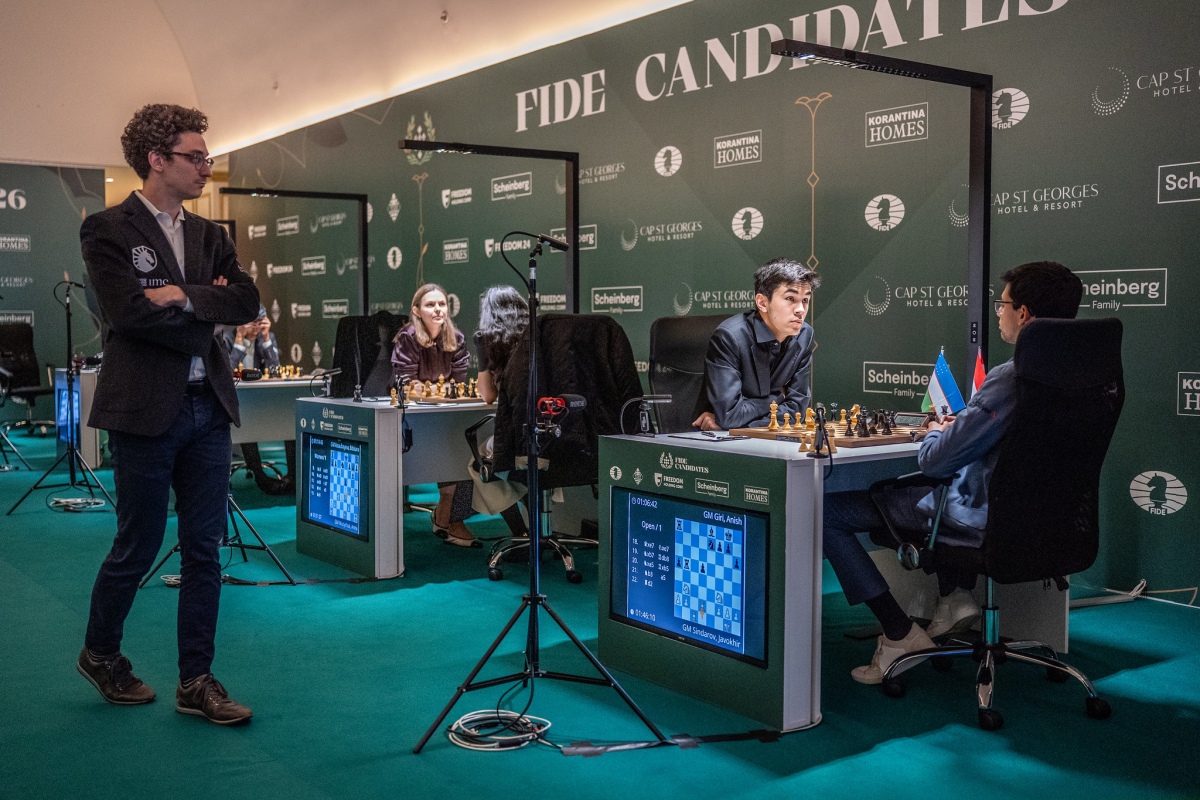
By IM Michael A. Rahal, FIDE Press Officer (Cyprus)
Over the past week at the FIDE Candidates Tournament, I have been closely following the players during their games, paying particular attention to their demeanour at the board. As top professionals, they naturally adhere to best practices: most of their time is spent analysing positions at the board, both on their own move and their opponent’s, especially in time trouble, when the tension in the room becomes palpable.
Nonetheless, I believe the players can broadly be divided into two categories: the “pacers” and the “sitters.”
The pacer, often referred to as a “walker” or “restless type,” tends to think away from the board. These players reset mentally between moves and stay physically relaxed through movement. This approach is quite common at high-level tournaments, and many strong players rely on it.
In contrast, the sitter, or “board-focused player,” is someone who appears “locked in” or “glued” to the board. Sitters calculate continuously while maintaining visual contact with the position, rarely stepping away.
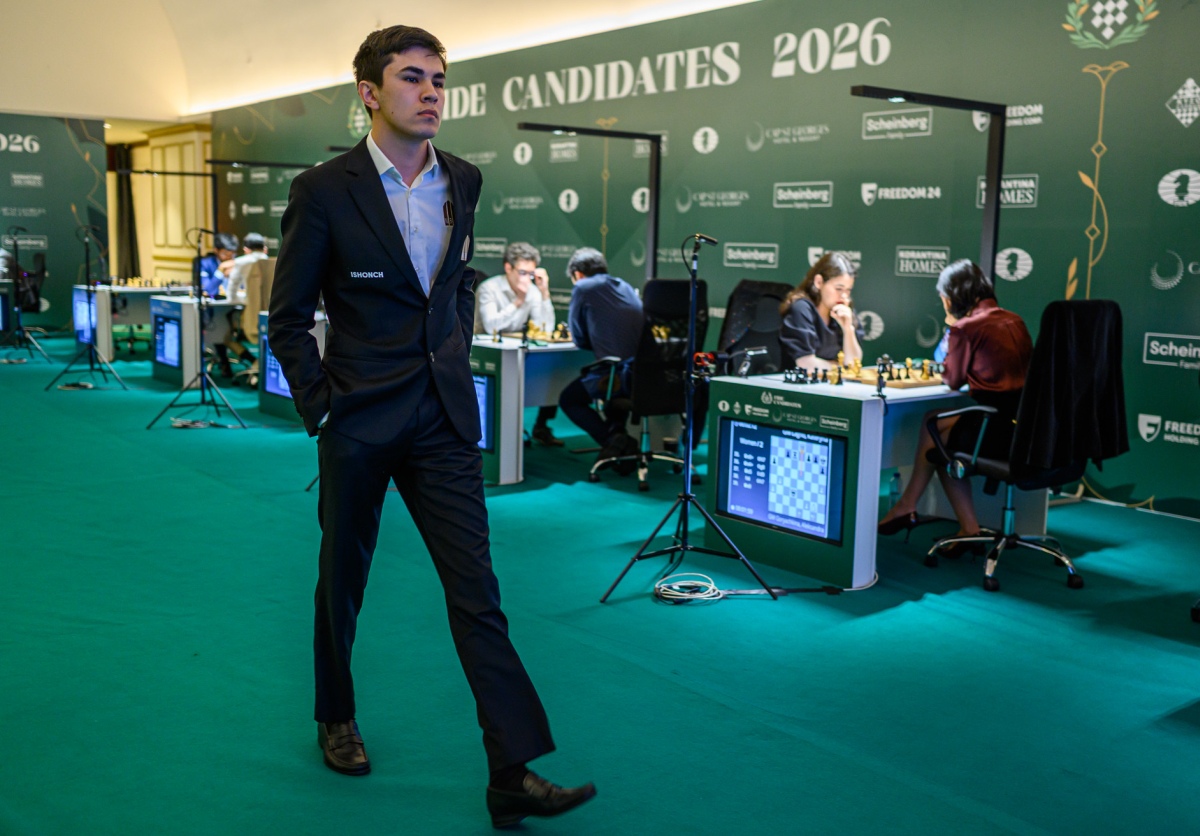
The most striking example of a pacer is Javokhir Sindarov. The tournament leader has a very distinctive way of relaxing between moves, confidently strolling up and down the playing hall, seemingly without a care in the world.
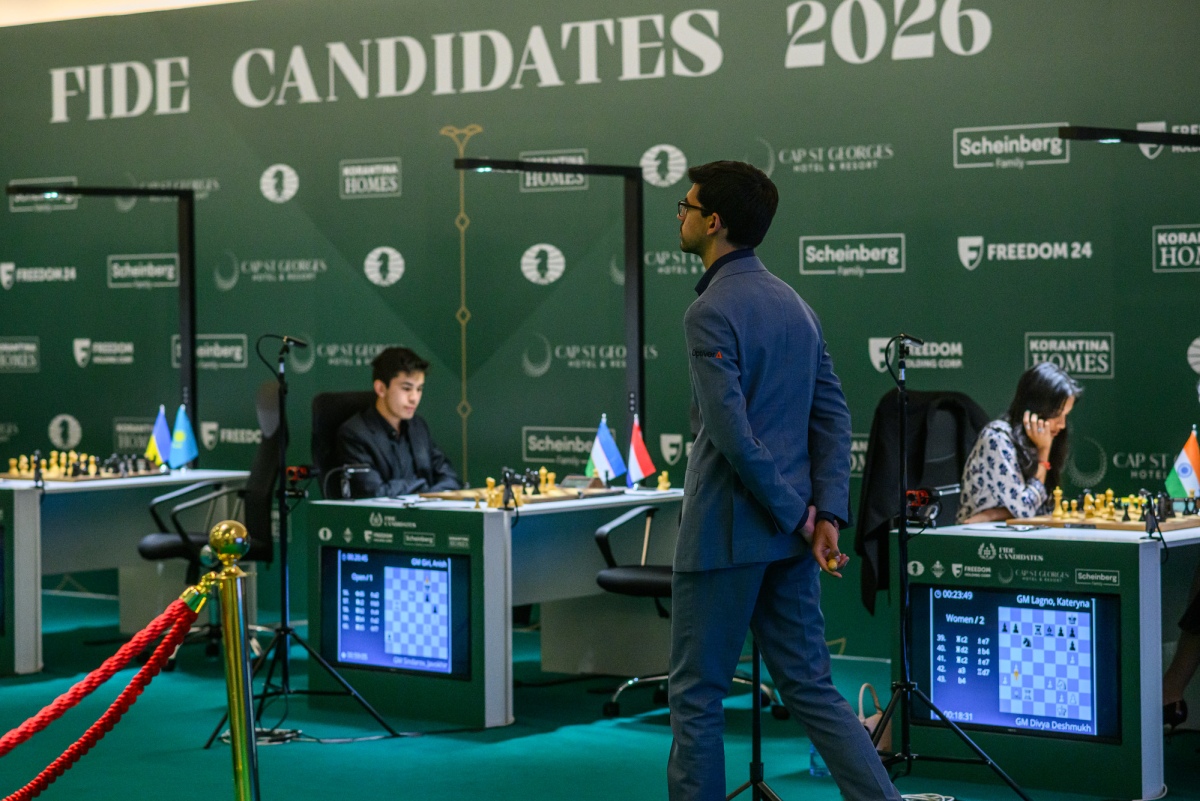
Other notable pacers include Anish Giri, often seen with his hands interlocked behind his back, occasionally idly twirling a captured piece. In fact, he once admitted in an interview that he has accidentally taken pieces back to his hotel room in his pocket.
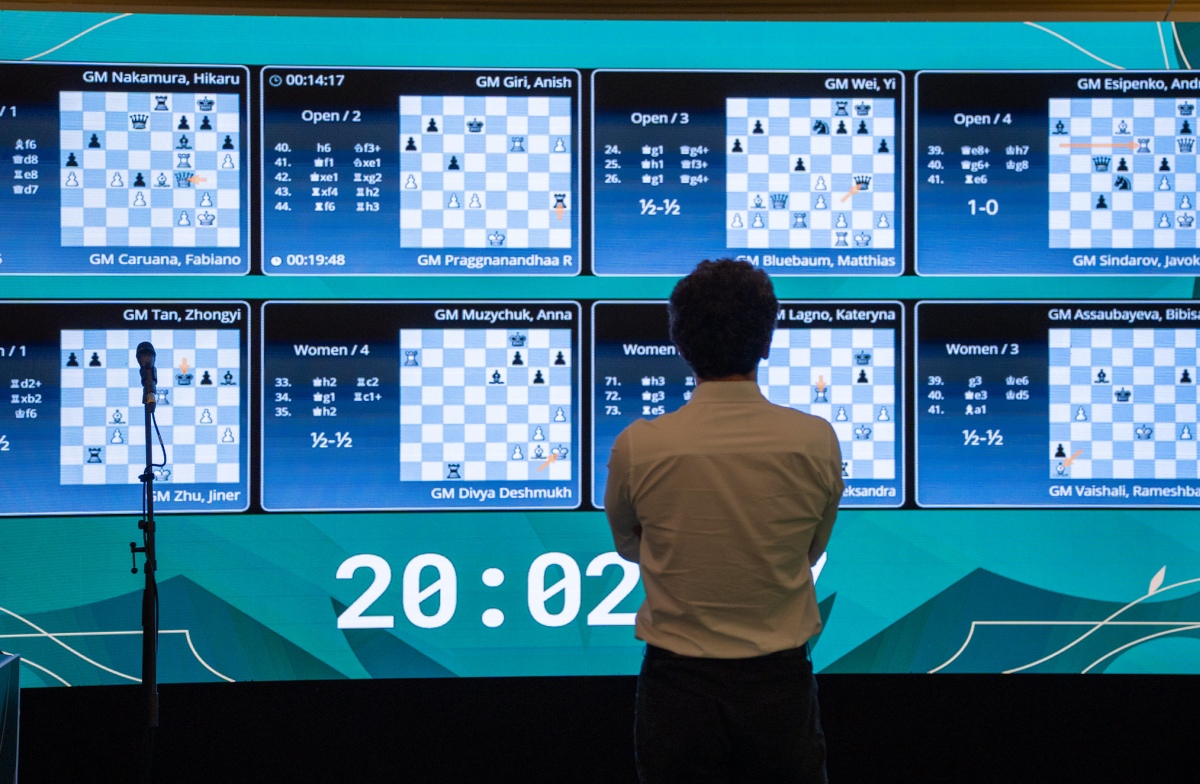
Fabiano Caruana has his own variation of this habit: he frequently stands in front of the large screen displaying all the games in progress. Watching him there, one might wonder whether he is analysing his current position – or already preparing an opening for a future opponent!
His teammate Hikaru Nakamura is intensely competitive in his pursuit of victory, while appearing outwardly calm or even detached! His mood during the game actually depends a lot on the situation on the board.
On the other side of the spectrum, the archetypal sitter is none other than Wei Yi. His focus is extraordinary: he hardly moves at all, except occasionally to clean his glasses. One might even speculate whether he practices something akin to Jingzuo, or “quiet sitting,” a form of seated meditation and self-cultivation that became prominent during the Song dynasty.
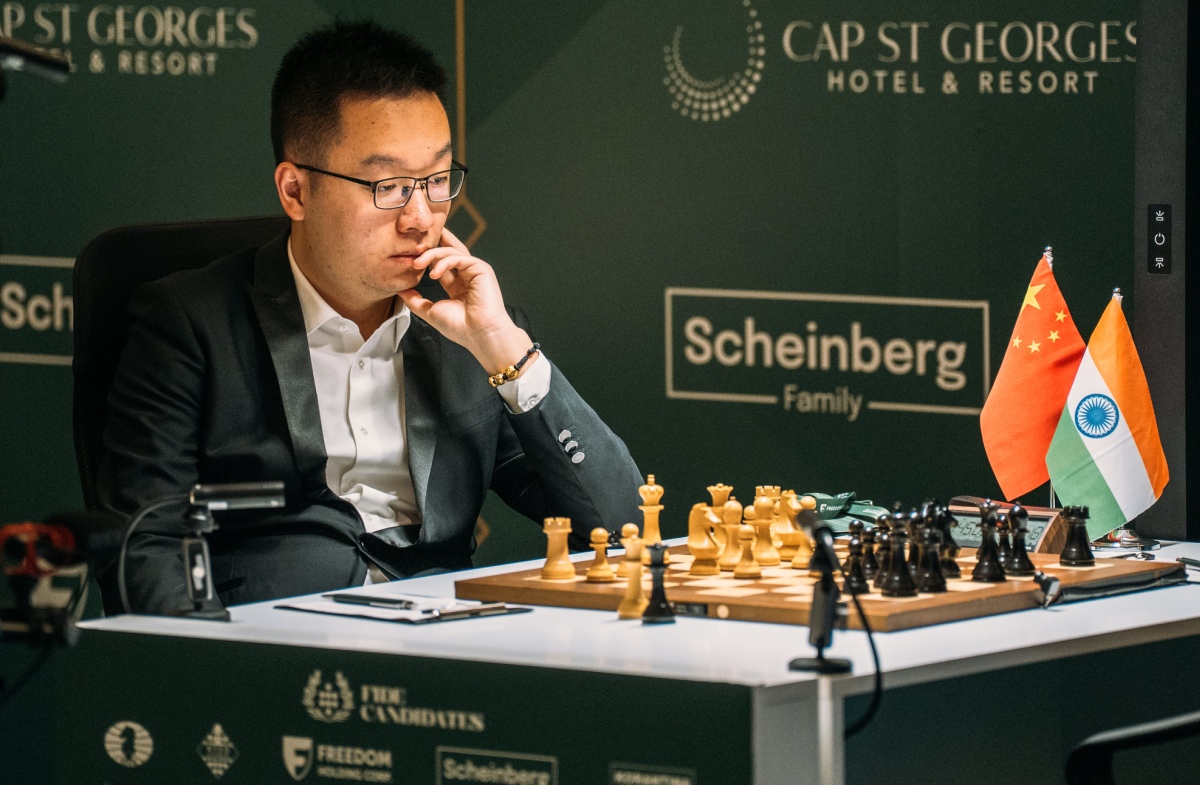
This practice was used by scholars to cultivate moral character and achieve a calm, focused mind in daily life. I would say that Praggnanandhaa also adheres to this stoic, calm way of approaching the game – in fact, he attended the Inner Engineering Program at the Isha Yoga Center in 2022, and asked Indian guru Sadhguru a question about handling tension during a tight game.
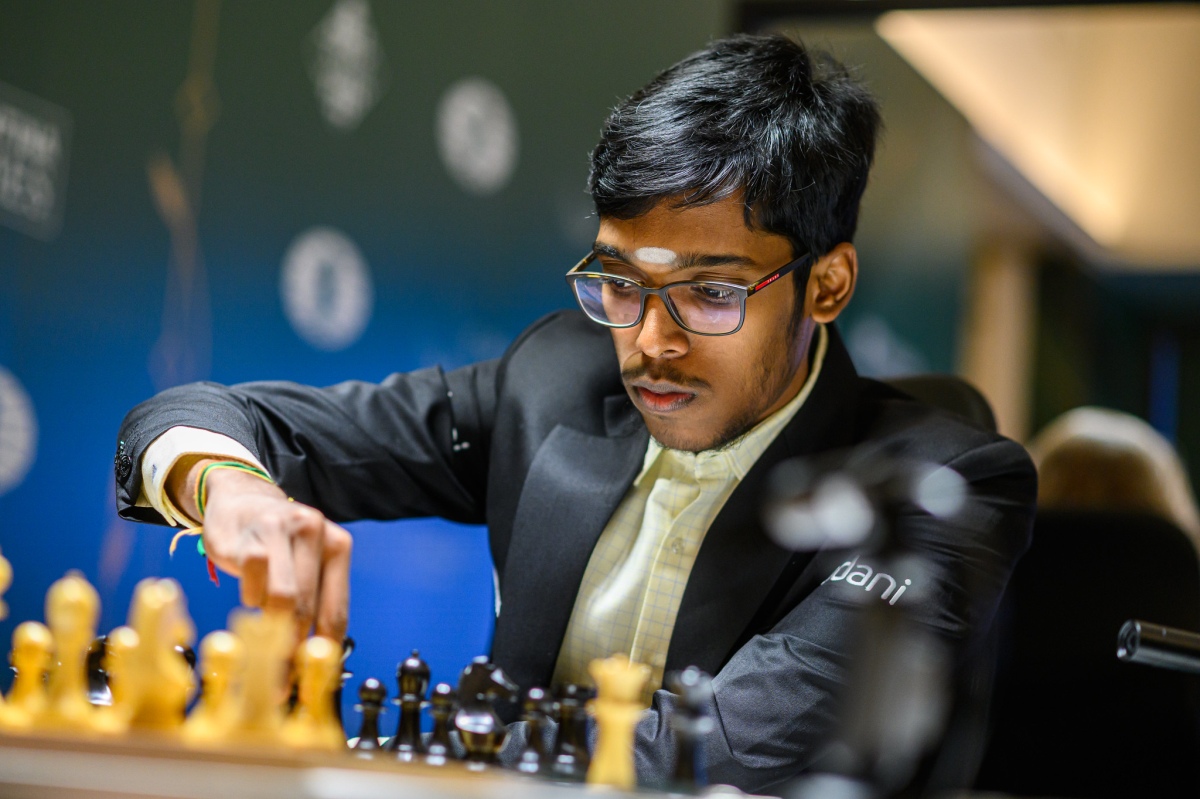
Other regular sitters include Matthias Bluebaum and Andrey Esipenko, although I have noticed that Esipenko occasionally walks around early in the game, particularly when he has surprised his opponent in the opening.
Ultimately, neither style is inherently superior at the highest level; it is largely a matter of temperament and personal thinking style. Some players calculate more effectively away from the board, while others rely on constant visual engagement with the position. That said, Sindarov’s outstanding performance might even suggest that the pacer’s approach has its advantages.
Photos: FIDE / Michal Walusza, Yoav Nis
