

Preliminary confirmation of participation in WSTC 2023: Deadline announced
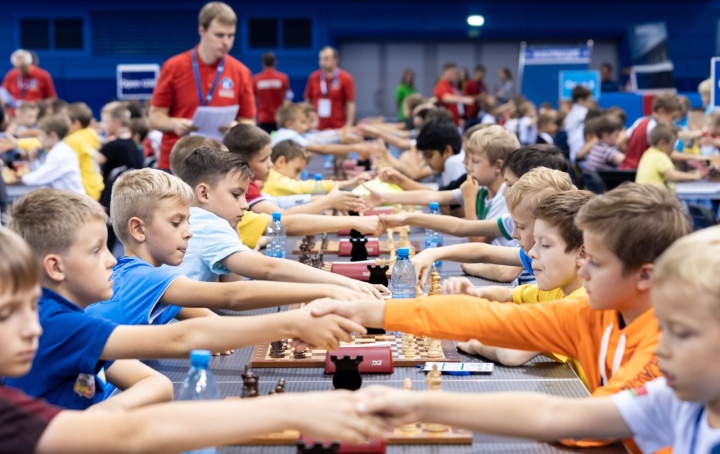
To all FIDE National Federations All FIDE member federations should email the FIDE Events Commission for preliminary confirmation of participation in the World Schools Team Championship (WSTC) 2023. Only federations that held or are going to hold Stage 1 (National Championship) are eligible to apply for “invited team” status (with expenses for accommodations and travel covered by the organisers for one team). National Federations should indicate the exact dates before Thursday, May 26; and after the competitions finish, provide the data (documents and photos) that confirm the organisation of the Championship as per Article 2.4 of the WSTC Regulations. If the National Championship has already been held, National Federations should submit all the necessary information according to Article 2.4 of the Regulations to the FIDE Events Commission. The Events Commission should be emailed at: fideevents@fide.com Regulations of the World Schools Team Championship (pdf)
11th FIDE World Cup in Composing 2023: Unearthing new masterpieces
Chess composition dates back to the first Arabic manuscripts on chess. Throughout history, the theory of composition has kept defining and collecting the patterns of chess beauty, record achievements, schools, styles, and fashions – as all the forms of art. One of the milestones was the first international chess tournament in London (1851), followed by the first international tourney in chess composition. Since then, composing competitions have become the driving force of chess composition. Composers compete with the achievements of their great predecessors to add some quality, intensity, elegancy, and originality… At the same time, they do it for the sake of chess solvers: to entertain, puzzle or amaze the coming generations. What would solvers do without new composers? Over the last decades, the FIDE World Cup in Composing has been one of the most important events to inspire new masterpieces, and this year’s edition is no exception. In the next several weeks, until mid-June, chess composers worldwide will prepare and polish their creations for the 11th FIDE World Cup in Composing 2023. As usual, the competition will be held in eight different sections and judged by well-known experts in each genre. The sections are: A. Twomovers – Judge: Gerard Doukhan (France) B. Threemovers – Judge: Jean-Marc Loustau (France) C. Moremovers – Judge: Ralf Krätschmer (Germany) D. Endgame studies – Judge:Branislav Djurašević (Serbia) E. Helpmates – Judge: János Csák (Hungary) F. Selfmates – Judge: Zoran Gavrilovski (North Macedonia) G. Fairies – Judge: Borislav Gadjanski (Serbia) H. Retros (Proofgames) – Judge: Thomas Brand (Germany) There are no set themes. Each participant can submit only one entry per section to the tournament director Alexey Oganesjan (alexeioganesyan@gmail.com), until June 15, 2023. After careful checking and evaluating all anonymous entries, the judges will prepare preliminary awards by August 15, leaving two weeks for appeals before finalizing the awards for publication on the World Federation for Chess Composition website by September 1. In each section, the Cup winner will receive a monetary prize of 500 Euro, a Cup, a medal, and a certificate. Composers taking 2nd and 3rd places will be awarded medals and respective certificates. The prizes and other distinctions will be presented to the winners at the World Congress of Chess Composition 2023 closing ceremony in Batumi (Georgia) on September 8. The previous editions of the FIDE World Cup have inspired many memorable compositions. Here is one of them: Mirko Miljanić, 1st Prize 4th FIDE World Cup 2015 White to play and win White has an advantage and attack, but Black may count on perpetual or – in the later stage – on stalemate: 1.c6+ Ka8 2.Nc7+! (2.Qxd7? Re2+! 3.Kf3 Qf8+ 4.K×e2 Qf3+! 5.Kxf3 stalemate) 2…Qxc7 3.Rg8+ 3…Rf8! 4.Rxf8+ (3…Nf8 4.Qxc7; 3…Ka7 4.Qxd7 Rf4+ 5.Ke3 Rf7 6.Qd4+!) 4…Nb8. 5.Qh6! Qh7+! (5…Qe7+ 6.Kd5 Qb4 7.Qc1) 6.Rf5! Qxh6 7.Ra5+ Na6 8.Rxa6+ Kb8 9.c7+ Kxc7 10.Rxh6 +- The comment by the judge of the FIDE World Cup 2015, the Grandmaster of the FIDE for chess composition Yochanan Afek: “Brilliant sacrificial anti-stalemate play on an open board, with the heavy cannons absolutely free. The battery Rook-pawn is created already in the first move to trap the black queen by checking her king should he move to the sixth rank. Following an amazing journey highlighted by 6.Rf5!! the very same rook eventually lands on the other side of the very same line to complete the initial job by role exchanges with the pawn in regards to the enemy royal couple. A highly original concept presented in an exemplary setting. A remarkable achievement!” While the most ambitious chess composers will be trying their best in the 11th FIDE World Cup, “Generation Z” will try to reach their own heights in the 7th Youth Chess Composing Challenge. This WFCC competition is open to all U23 composers (born in 2000 and later), matching the limit for juniors in the WFCC solving competition. There are three sections, two of them with the set thematic conditions (mate in 2 and endgame studies), and the 3rd one is open to all genres, with no restrictions in length and content. The YCCC Project includes a workshop mentored by some of the leading chess composers in the world. The deadline for the 7th YCCC is one month longer (July 15) than for the 11th FIDE World Cup (June 15), but the results will be announced at the same time, during the closing ceremony of the Batumi WCCC, on September 8, 2023. Official website: https://www.wfcc.ch/ Text: Marjan Kovačević, WFCC President
First Chess for Freedom Conference opens in Chicago

FIDE and the Cook County Sheriff’s Office (Chicago, USA) are hosting the first in-person Chess for Freedom Conference which is taking place from May 17th – May 20th, 2023, in Chicago, USA. More than 40 participants, including FIDE officials, representatives of national chess federations and experts involved in programmes that introduce chess to inmates have come to Chicago to discuss concepts and approaches to using chess as a rehabilitation tool for incarcerated people. On the first day of the conference, the delegation visited the Cook County Jail, where they were greeted by the Cook County Sheriff Thomas J. Dart. He was the one who introduced the chess programme to Cook County Jail more than 10 years ago. The Cook County Sheriff’s Office initiative has now grown into a great “Chess for Freedom” movement. Since 2021 the annual Intercontinental Online Chess Championships for Prisoners are organized, attracting men, women and youth teams from all continents. Chess as a rehabilitation tool is being introduced to more and more prisons around the world. FIDE President Arkady Dvorkovich greeted the participants of the conference and thanked Sheriff Dart for his enthusiasm in introducing chess to inmates: “We are really proud of the work you’re doing here. We have already visited these facilities a couple of years ago, and what I saw was dedication and inspiration for this programme. Without the continuous support from Sheriff Dart this won’t be possible. We need more people like this around the world to promote this initiative”. With the aim to support and promote this line of work, the International Chess Federation and the Cook County Sheriff’s Office have signed a Memorandum of Understanding to continue and strengthen cooperation in using chess as a rehabilitation tool for incarcerated people within the period of 2023‐2026. The future initiatives mentioned in the memorandum include: – organizing events such as conferences, round‐tables, practical seminars, project presentations, and site‐visits;– engaging with chess federations, responsible governmental authorities and correctional facilities in order to facilitate the Chess for Freedom programme introduction in all continents and provide a continuously growing participation in Intercontinental Online Chess Championship for Prisoners;– developing video and web training programmes for a chess training in correctional institutions;– launching a research project on the impact of chess on individuals in custody during the incarceration time and after that;– devising a post‐incarceration reintegration and monitoring program;– attracting strategic informative, financial and administrative partners to expand Chess for Freedom activities;– promoting the Chess for Freedom project to media;– organizing the Intercontinental Online Chess Championship for Prisoners on annual basis. Participants of the conference have also met the Cook County Department of Correction administration and staff, and watched presentations and interactive sessions with members of the penitentiary administration. They had an opportunity to visit the jail and see the social programmes in action – play chess with inmates and have a pizza that was baked by prisoners themselves for lunch. “A recipe for a change!” is the slogan for their cooking programme which could as well be appropriate for the chess programme. Asked why they like chess, the inmates’ answers were sharp: “Chess teaches you to make better moves in life!” Today the conference will continue with the plenary sessions, featuring many experts from the worldwide chess community presenting their national initiatives and approaches to teaching chess in prisons. The conference will be broadcast online on FIDE Youtube channel. Link to the broadcast:https://youtu.be/3M6m1Q18uHk
FIDE Online Cup for People with Disabilities starts on May 21
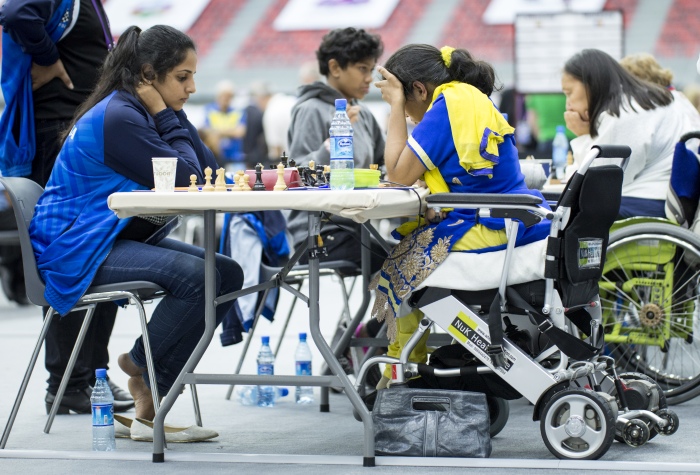
FIDE DIS Commission published a confirmed list of participants of the first FIDE Online Cup for People with Disabilities. This event, considered by many to be a full rehearsal before the 2020 World Chess Online Olympiad, will be held on a popular online chess platform playchess.com. On May 19 the FIDE DIS Commission held an online meeting with FIDE President Arkady Dvorkovich to exchange plans and ideas on how to continue moving forward, keeping chess on top of the activities for players with disabilities. The FIDE Online Cup for People eagerly anticipated by many players will be the first important step in this direction. This invitational event will bring together 38 participants representing 28 national federations who will play not only for the title and glory but also for a €2,200 prize fund. The 5-round Swiss tournament starts on May 21, 2020, and can be followed live at playchess.com. Full list of participants in alphabetical order (pdf) Regulations (pdf) Live games: https://disabledchess.org/LIVE_GAME/m333http://live.chessbase.com/watch/1st-Online-FIDE-Cup-Players-Disabilities/ (will be active after the pairings announced) Live commentary: https://disabledchess.org/LIVE_COMMENTS/m344 Schedule: 14.00 CEST – the platform and Zoom conference opened14.30 CEST – the technical meeting and opening ceremony14.55 CEST – President’s speech15.00 CEST – the start of the tournament. Photo: David Llada
Czech Championship 2023: David Navara and Julia Movsesian win titles
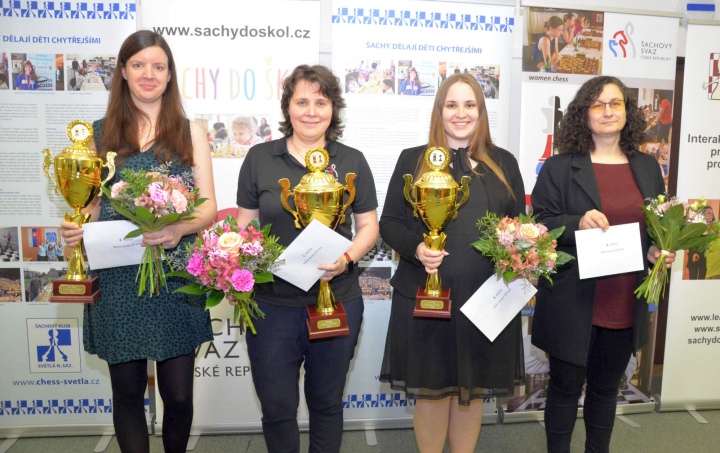
David Navara and Julia Movsesian are the new chess champions of the Czech Republic. The Open and Women’s Czech championships organized by the Světlá nad Sázavou Chess Club and Šachový svaz České republiky (Czech Chess Federation) took place from May 9-17 in the conference hall of the Skalský Dvůr hotel in Lísk. The events were held concurrently but in different formats. The open competition was a 10-player round-robin, while the women’s championship was a knock-out tournament with a single preliminary round followed by the quarterfinals, semifinals and final. GM David Navara turned in a dominant performance in the open event and claimed his twelfth national title with a round to spare. The current Czech number one scored an impressive 7.5/9 and became the only unbeaten player in the competition. The fight for the silver was much closer, with the second-youngest participant, IM Tomáš Kraus and GM Vlastimil Babula, coming into the final round tied for the second position. Kraus pulled out a crucial victory over the 2021 champion Vojtěch Plát and secured second place, as Babula managed only a draw against Navara with the black pieces and had to settle for bronze. Final standings Open: 1 GM Navara, David 2678 7½ 2 IM Kraus, Tomáš 2473 6 3 GM Babula, Vlastimil 2533 5½ 4 GM Krejčí, Jan 2517 5 5 GM Štoček, Jiří 2525 5 6 GM Šimáček, Pavel 2466 3½ 7 IM Zwardoń, Vojtěch 2494 3½ 8 GM Petr, Martin 2478 3½ 9 FM Finěk, Václav 2410 3 10 GM Plát, Vojtěch 2535 2½ In the women’s championship, the rating favourites, WGMs Julia Movsesian (pictured below) and Karolína Pilsová, made it all the way to the final, which the former convincingly won by a score of 2-0. The last-year champion WIM Nataša Richterová prevailed over WGM Olga Sikorová in the match for bronze. The complete results of the open and women’s championships can be found here. Official website: chess.cz/ Photos: Official website
FIDE and GCF to stage Solidarity Matches in Batumi, Georgia
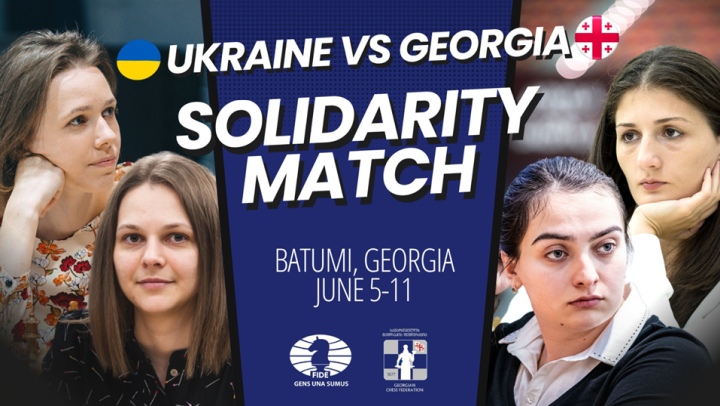
FIDE and the Georgian Chess Federation have organized a double match-up between Top Ukrainian players Mariya and Anna Muzychuk and local stars Nino Batsiashvili and Meri Arabidze, respectively. The games will take place in the Hotel Legend in Batumi, Georgia, from June 5-11. Each of the matches will consist of six classical games, following this schedule: June 5: 1st gameJune 6: 2nd gameJune 7: 3rd gameJune 8: (rest day)June 9: 4th gameJune 10: 5th gameJune 11: 6th game Mariya Muzychuk Born September 21, 1992 Federation: Ukraine Rating: 2515 Mariya Muzychuk was the Women’s World Champion in 2015-16 and reached the semi-finals in the Women’s World Championship in 2018. She earned her spot for the Women’s Grand Prix 2022-23 thanks to her 4th place in the FIDE Grand Swiss 2021 held in Riga. Mariya was born on September 21, 1992, in Stryi, Lviv Region, Ukraine. She started her chess career in the village of Ugersko, where her parents used to work at a local sports school for children and youngsters. However, Mariya managed to train at home, too: her elder sister Anna used to help her along with her parents. Since she was 7, Mariya has participated in the Ukrainian youth championships; in 2002, she won the Ukrainian and European championships for children under 10. At the age of 11, Mariya was shortlisted for the Ukrainian women’s championship, then she won the World Youth Championship for children under 14 and later repeatedly won medals at the European and World Youth Championships. Her success at the European Women’s Championships brought Maria the title of women’s grandmaster, and in 2008 she was awarded the title of International Master. After taking her first serious steps into professional chess, Muzychuk got on the Ukrainian national team (while her elder sister was playing for Slovenia); as a member of the Ukrainian national team, she was the silver medalist (2018) and a three-time bronze medalist (2012, 2014, and 2016) of the Olympiads, as well as the women’s World and European (2013) champion as a member of the Ukrainian team. Moreover, she won the gold medal at the 2018 Olympiad, holding the best result on the second board. She is a two-time Ukrainian women’s champion (2012 and 2013). Muzychuk got her moment of glory in the 2015 knockout World Women’s Championship in Sochi: after outplaying Yuanling Yuan, Monika Socko, Antoaneta Stefanova, Humpy Koneru, Harika Dronavalli, and Natalija Pogonina one by one, the Ukrainian grandmaster became the fifteenth Women’s World Champion. In March 2016, Mariya Muzychuk failed to defend her title in a match against Hou Yifan, China. In 2014, Mariya Muzychuk won the first women’s prize at a prestigious Gibraltar Open tournament. Her beginning of this year has been fruitful: she won the second women’s prize in the same tournament, demonstrating an impressive performance with a score of 2718 points. Mariya Muzychuk holds the honourable FIDE Caissa award as the best women’s chess player in 2015. At the FIDE Women’s Candidates Tournament 2019 (Kazan, Russia), Mariya Muzychuk was the only woman chess player to defeat the tournament’s winner, Aleksandra Goryachkina, with their match game having been awarded the special prize for being the most beautiful game of the tournament. Like many other Ukrainian players, Mariya had to reallocate abroad since the start of the war, and for the last months, she has been living with her sister in Valencia, Spain. Despite the added difficulties, Mariya successfully defended the first for Ukraine at the Chennai Chess Olympiad, leading her team decisively contributing to a historical gold medal. Anna Muzychuk Born: February 28, 1990 Federation: Ukraine Rating: 2504 Anna Muzychuk is the fourth woman in history to reach 2600 Elo points. She collected all possible ranks in rapid and blitz chess, and she is also the 2017 World Vice-Champion. She finished 7th in the previous edition of the Women’s Grand Prix, and she qualified for the current one thanks to reaching the semi-finals in the FIDE Women’s World Cup 2021 in Sochi. Anna was born on February 28, 1990, in Stryi, Lviv Region, Ukraine. Her parents, chess candidate masters, were coaches conducting classes at a local sports school for children and youngsters in the adjacent village of Ugersko. They made little Anya familiar with the game; a bit later, her younger sister Mariya started playing, too. Anna Muzychuk took medals and first prizes in many world youth championships and won as many as five European youth championships. At the age of 12, Anna became an international master and, two years later, a grandmaster. In 2003, she won the Ukrainian women’s championship and repeated that achievement in 2014. Between 2003 and 2014, she represented the Slovenian Chess Federation in the international arena and then returned under the Ukrainian flag. She is World Women’s Junior Champion (2010), Two-Times World Blitz Champion (2014, 2016) and World Rapid Champion (2016). When playing on the first board of the Ukrainian national team at the World Chess Olympiad, she won silver in 2018 and twice received the bronze award (2014 and 2016). In 2016, she also won the gold for the best result on the first board. In 2017, at the World Women’s Championship, A. Muzychuk made it all the way to the finals, where she lost to the Chinese chess player Tan Zhongyi in a fierce struggle. At the end of the same year, Anna Muzychuk decided to boycott the World Rapid and Blitz Championship in Saudi Arabia despite being the current women’s champion in these two disciplines. Her Facebook post on the subject broke all records in the Ukrainian sector of that social network: it collected more than 160,000 likes and was shared by more than 70,000 people. “The age gap between me and my sister Mariya is two and a half years. Those who know us say that we’re totally different. She is fast, and I’m calm. But we’re on really good terms. We practice together, and never conflict; we just argue a little bit sometimes. A few times, we played against
Toronto Chess Festival for Women & Girls runs big

On Sunday, May 14th, Toronto became the centre of the female chess movement. The All4chess & Chess4All: Toronto Chess Festival for Women & Girls, which took place at the Hart House Chess Club of the University of Toronto, brought together more than 60 participants. The one-day free-to-attend event came to life thanks to the joint effort of the FIDE Commission for Women’s Chess, Chess Federation of Canada, Ontario Chess Association, and Hart House Chess Club. Deputy Chair of the FIDE Management Board, WGM Dana Reizniece-Ozola, was the Festival’s special guest. It was her first visit to Canada’s largest city. The day was packed with activities. The morning started with inspiring and instructive lectures by WGM Anna Burtasova, who spoke about the first Women’s World Champion Vera Menchik, WGM Dana Reizniece-Ozola, “How to Win the Game: a Secret to a Smart Game”, and WFM Oksana Golubeva who demonstrated impressive tactical strikes from the games of top women players. In addition, Ala Mischanka told the audience about FIDE’s “INFINITE Chess” project for children with ASD amid the plans to launch it in Canada. Soon we will publish the recording of the speeches on the FIDE YouTube channel. After a lunch break with free pizza for all attendants, the next item on the menu was a simultaneous exhibition by WGM Dana Reizniece-Ozola, WGM Anna Burtasova, and WFM Cindy Qiao. The simuls warmed everyone up for the afternoon rapid tournament. Played over the six rounds, it had numerous prizes in age and rating categories. Fifty-four players played hundreds of games and only a handful ended in draws. WGM Dana Reizniece-Ozola showed her class by sweeping the rapid event by a perfect 6 out of 6, followed by the group of players who shared for second with 5/6. The tiebreak criteria put WGM Anna Burtasova in second place and WFM Oksana Golubeva in third. Our congratulations to all winners in the categories! Trophy for the best player from the University of Toronto: WFM Cindy Qiao (5/6) Top U9 Trophy: Chloe Huang (4/6) Top U12 Trophy: Laksshana Deepak (4/6) Top U15 Trophy: Lucy Gao (5/6) Top U18 Trophy: April Zhong (5/6) Top U2000: Lucy Gao, April Zhong (5/6) Top U1600: Ingrid Wu, Duong Ngoc Minh Chau, Shabnam Abbarin, Adie Todd, Anna Gavrileva (all 4/6) Top U1200: Chloe Huang (4/6) Top U800: Victoria Lai, Katherine Leung, Angela Wang, Tiffany Chen (3/6) Top Unrated: Liza Augustin (3.5/6) And the cutest prize of them all: 6-year-old Carter Payne, the youngest participant, got a teddy bear. The top boards were broadcast live on Lichess:Toronto Chess Festival For Women & Girls • Round 1 • lichess.org Photos: Michael Reyes
WGP Nicosia: Lagno and Tan Zhongyi maintain the lead going into the 4th round
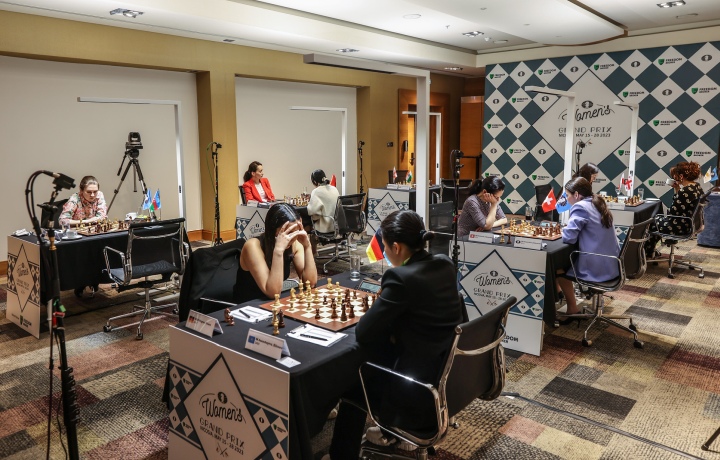
Appearances can be deceiving. Although the final score of the day featured only one decisive outcome – Shuvalova defeated Mammadzada in the longest game of the afternoon – the other five games were intensively fought. Even the first draw of the afternoon had some interesting nuances. After three of the eleven scheduled rounds, Kateryna Lagno and Tan Zhongyi maintain the lead with 2.5/3 while no less than three players –Goryachkina, Harika and Shuvalova – are breathing down their necks. The event was honoured by the surprise visit by Ms. Elżbieta Witek, Marshal of the Sejm of the Republic of Poland. Witek is Poland’s number two authority. Escorted by three or four security guards and administrative personnel, she performed the ceremonial move in the game between Kiolbasa and Khotenashvili. “It’s a special opportunity to be able to, symbolically, take part in the competition of the top chess players in the world, and specially to be able to play the first move for Oliwia Kiolbasa, one of Poland’s most talented female player’s” Witek said appreciatively. “Chess teaches us so many skills which both young players and outstanding women grandmasters can use to build relationships based on common respect, choosing the proper strategies and responsibilities for taking decisions. Such a prestigious sport as chess fits ideally into the development strategy of Cyprus and in the construction of further cooperation as we discussed here intensively during the past days”. Witek added: “I am very glad that in a couple of months, we shall host the top chess female players in the city of Bydgoszcz, Poland,” in reference to the World Team Championship. GM Dzagnidze, Nana vs GM Dronavalli, Harika vs (0.5-0.5) The first game of the afternoon to finish ended in a peaceful draw. In a reversed Colle-Zukertort Attack, which by the speed of their moves, both players knew perfectly, Dronavalli played a well-known piece sacrifice that, once accepted, inevitably leads to a forced perpetual draw. Funnily enough, the same draw pattern had been played in 2016 between two other very strong women masters, S.Foisor and N.Paikidze. GM Lagno, Kateryna vs GM Tan, Zhongyi (0.5-0.5) Soon after, another important game ended peacefully. Leading the field on +2, the winner of this match-up could easily forward her claim to be the overall winner of the event, even though it’s still early days. Many Chinese players excel in the Petroff defence (also called the Russian Game) and Tan Zhongyi is no exception. She knows the lines by heart and is capable of playing them at high speed. In a well-known theoretical variation, Lagno repeated a relatively new move – 15.Bf4 instead of 15.Qc2 – but the symmetrical nature of the position was just too hard of a nut to crack. Although Kateryna obtained an outpost for her rook on e5, the position was totally balanced and a draw was agreed on move thirty-five. WGM Wagner, Dinara vs IM Assaubayeva, Bibisara (0.5-0.5) For this important game, Assaubayeva once again opted for her beloved King’s Indian defence, in which she is an expert and has scored many excellent victories. Wagner likes to mix it up with White, and today she went for the Gligoric variation with Be2 and Be3, delaying kingside castling. I did notice a 2015 game played by her husband GM Denis Wagner in the same line: maybe they have been cooking up some interesting ideas in this variation! A typical KID middlegame was reached: White counted on an excellent knight on the e4 square and superior pawn structure, in exchange for many weaknesses on the dark squares. In her postgame interview, Assaubayeva recognized that she was slightly worse, but there were some options for counterplay. After some inaccuracies, Wagner forced the exchange of queen’s and the game petered out into a draw. IM Kiolbasa, Oliwia vs GM Khotenashvili, Bella (0.5-0.5) After two losses, Kiolbasa enjoyed the white pieces today. Opening with 1.e4, she went for a side-line in the Open variation of the Ruy Lopez – 6.Re1 instead of the more popular 6.d4. However, Khotenashvili came very well-prepared. She blitzed out all of her opening moves, including the engine novelty 12…Ng5, exchanging off some minor pieces to try and force equality. Kiolbasa still kept an edge going into the middlegame – a safer king in an opposite-coloured bishop, but it was hard to prove an advantage. In her postgame interview, Oliwia mentioned that maybe she was suffering a certain lack of experience and also that she overestimated her chances in today’s game. GM Kosteniuk, Alexandra vs GM Goryachkina, Aleksandra vs (0.5-0.5) Goryachkina introduced a very interesting novelty on move seven in a topical Italian game with 7….a5. Although it’s the first engine move, to date 7…0-0 and especially 7…Ne7 were the main lines. Nonetheless, it didn’t change the nature of the position very much. As far as I can tell, the key moment of the game revolved around the exchanges initiated on move fifteen, which left Kosteniuk with weak doubled pawns on the e-file and, more importantly, a fabulous outpost on e5 for one of Goryachkina’s knights. In exchange, Kosteniuk did have some pressure on the kingside – the f-file for her rooks and the f5 square for her knight. However, Goryachkina gradually pushed back Kosteniuk’s pieces and started to advance her own pawns on the queenside. Things were not looking good for White. After the 40th move time control, it became clear that only Black could win – finding the correct plan was the challenge. Kosteniuk has always been known for her fighting spirit and resilience in difficult positions and, once again, she defended tenaciously, forcing her opponent to surrender her queen for two rooks. A draw was soon agreed in a balanced position. IM Shuvalova, Polina vs IM Mammadzada, Gunay (1-0) Although Mammadzada has occasionally played the Sicilian Kan, she generally goes for the Najdorf variation. Today she revisited the Kan and ended up out of the opening in a slightly passive Marozcy position. It’s hard to pinpoint an exact mistake – probably 21…Be5, permitting some
FIDE World Amateur Championships 2023 announced
FIDE and the Oman Chess Committee invite all FIDE Member Federations and eligible players with FIDE rating under 2300 to participate in the FIDE World Amateur Chess Championships (Open and Women sections). The Championships will take place in Muscat, Oman, from November 01-11, 2023. The Championships are open for players registered by their national federation. FIDE member federations have the right to send as many players as they wish. There will be separate championships in the rating categories Under 2300, Under 2000 and Under 1700. There shall be separate Women’s Championship(s) if there are at least ten players from at least two continents in each category. Championships will be 9-round Swiss tournaments with the control of 90 minutes for the whole game + 30-second increment for every move played, starting from the first move. All players, accompanying persons and delegation members have to register before the deadline of September 1, 2023. Regulations for FIDE World Amateur Chess Championships 2023 (pdf) FIDE World Amateur Chess Championships 2023 official website will be launched soon:https://worldamateur2023.fide.com E-mail: worldamateur2023@fide.com
FIDE WGP Nicosia: Lagno and Tan Zhongyi lead with 2/2
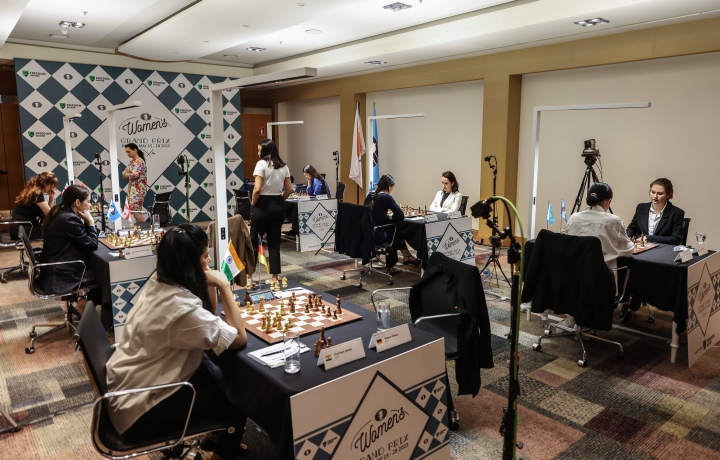
Another intense fighting round in Nicosia in the fourth leg of the Cyprus Women’s Grand Prix. A testament to this fact is that only one of the games – the draw between Harika and Wagner – finished before the 40th move time control: of the other five, four ended in a decisive result. After the first two rounds, two players lead the field on 100%: Kateryna Lagno and Tan Zhongyi. Both of them have displayed excellent form up to now, and their victories have been clear and undisputed. The second round also highlighted a certain level of recovery by Alexandra Goryachkina and Polina Shuvalova, while Oliwia Kiolbasa and Bibisara Assaubayeva will have to wait for the third round for their chance to score. As five-times World Champion and current FIDE Deputy President Vishy Anand put it: “A thrilling day, so many interesting games. I hope that this tournament will live up to the new expectations because people probably expect this every day now, but certainly, the players showed exceptional fighting spirit”. In his interview, Anand also gave his take on many issues, including the number of countries he has visited in his lifetime. Evgeniy Tyapkin, Executive Director at Freedom Finance Europe and member of the Board of Directors made the ceremonial first move today for Bibisara Assaubayeva. IM Assaubayeva, Bibisara vs IM Shuvalova, Polina (0-1) In her preparation for this game, Shuvalova came up with a new idea in the Exchange Variation of the Queen’s Gambit: 7…Bg4 hitting the queen and allowing White to grab a pawn with Qb3xb7. Assaubayeva thought for nearly ten minutes but preferred to finish her development instead of swimming into deep waters. Around move twenty, the position became quite messy. Shuvalova advanced her kingside pawns, grabbing space and attacking possibilities, but at the same time potentially weakening her own king. A risky proposal, but as they say, “no pain, no gain”. As she mentioned in her postgame interview: “I think that the tide turned in my favour when Assaubayeva played 32.d5, and I got the nice square for my bishop on e5”. Complications ensued, but Shuvalova prevailed, notching up her first win in the event. IM Mammadzada, Gunay vs GM Lagno, Kateryna (0-1) With both players on 100% after the first round, it was going to be interesting to see how Mammadzada would approach Lagno’s solid 1…e5 repertoire. In a standard Ruy Lopez, Lagno went for the Berlin defence. Mammadzada chose the solid 5.Re1 line, instead of the famous Berlin ending, aiming for a symmetrical structure with a slight edge. The position remained fundamentally balanced going into the middlegame, although it was clear that Lagno had absolutely no problems at all. The key moment was move twenty-two. Slightly under pressure, Mammadzada advanced 22.f4 to protect her e5-pawn and was hit by a bolt out of the blue – the fabulous 22…g5! Instead, 22.Re1 should have kept the balance. The ending was clearly better, and Lagno demonstrated excellent technique. In her postgame interview, Lagno talked about the difficulties in winning a bishop ending with just an extra pawn. GM Tan, Zhongyi vs IM Kiolbasa, Oliwia (1-0) In an attempt to surprise her opponent, Kiolbasa prepared a relatively modern line in the Queen’s Gambit Semi-Tarrasch defence, which has been basically analysed at the top-level to a draw. After a few minutes of thought, and taking into account that her opponent hadn’t played this before, Tan Zhongyi opted for a side-line (6.Nxd4 instead of the main line 6.Qxd4), a slightly worse line according to the engine but fully playable. Clearly taken aback, Kiolbasa went into the tank for more than twenty minutes. A game was on! Although the position was only slightly better for Tan Zhongyi, it seemed that Kiolbasa was not entirely familiar with the nuances and around move eighteen, she was already down to her last twenty minutes, while Tan Zhongyi enjoyed more than an hour on the clock. Black’s position gradually deteriorated up to the point of losing a pawn, and Tan Zhongyi’s excellent endgame technique did the rest. GM Khotenashvili, Bella vs GM Kosteniuk, Alexandra (0.5-0.5) In a theoretical line of the Catalan Opening, both players blitzed out their first nine moves following several top GM games. It’s hard to know what happened exactly, but Kosteniuk deviated from known theory with 10…Nfd7 (instead of 10…Qc7), dropping a pawn a few moves later. In any case, she did have some dynamic compensation and, of course, her well-known fighting spirit, which has allowed her time and time again to come back from worse positions. Alexandra managed to recover the pawn, arriving at a slightly worse queen plus rook endgame. Khotenashvili probably missed some chances to increase a clear advantage to a decisive one, but Kosteniuk tenaciously kept the game going until the extra pawn was clearly not enough to win and a draw was agreed. GM Goryachkina, Aleksandra vs GM Dzagnidze, Nana (1-0) In a queenless Catalan middlegame, Dzagnidze blundered with 16…Bb5 (the unlikely 16…Nc3 was the way to go for equality), and Goryachkina immediately found the strong sequence 17.Bxd5! followed by 18.Ne3, forcing an endgame in which her two minor pieces proved too strong for Dzagnidze’s rook plus advanced passed pawn. The way Goryachkina converted her material advantage in this game is unique. Her knowledge of the subject is unparalleled and should be added to any textbook on this type of ending. GM Dronavalli, Harika vs WGM Wagner, Dinara (0.5-0.5) It was the first game to end this afternoon. Dronavalli achieved a very small edge with White in a Reversed Grunfeld but nothing really tangible. Her bishop pair was outweighed by her opponent’s excellent development and central knight. After mass exchanges, a draw was agreed just after move thirty. Standings after Round 2 Text: IM Michael Rahal (Nicosia, Cyprus) Photo: Mark Livshitz About Freedom Finance Europe Freedom Finance Europe, a subsidiary of Freedom Holding Corp., is a leading European stockbroker. The company’s Freedom24 web and mobile app investment platform provides traders with direct access to 15 global stock exchanges, including NYSE, Nasdaq,