

Wesley So set to defend his Fischer Random title
Wesley So already knows the complete list of players who will challenge him for the Fischer Random world title, which will be held in Reykjavik from 25–30 October. With a prize fund of USD 400,000, this is the second edition of the FIDE World Fischer Random Championship, a discipline officially recognized by the International Chess Federation in 2019. “I am so excited to be competing in Fischer Random again! And in Iceland! It couldn’t be more special than to compete in that particular place, defending my title against the best players in the world. To play in Reykjavik, fifty years after the match between Fischer and Spassky, gives it a historical perspective that cannot be matched,” commented Wesley So. Along with the reigning Champion in this variety of chess, 29-year-old Wesley So from the USA, the current World Champion and World’s number one in Classical Chess, Magnus Carlsen, will also compete. The Norwegian was automatically qualified as the runner-up in the previous edition, held in Oslo. Ian Nepomniachtchi, Hikaru Nakamura, Vladimir Fedoseev, Nodirbek Abdusattorov, Matthias Blübaum and Hjörvar Steinn Grétarsson complete the field for this interesting event, which will be broadcast live by NRK, the largest media organization in Norway, and RUV, Iceland’s major national broadcast company. These were their respective qualification paths: Wesley So (2774)2019 World Fischer Random Chess Champion Magnus Carlsen (2856)2019 World Fischer Random Chess Championship runner-up Vladimir Fedoseev (2688)Winner of the Online Knock-out Qualifier 1 at Chess.com Matthias Blübaum (2647)Winner of the Online Knock-out Qualifier 2 at Chess.com Nodirbek Abdusattorov (2713)Winner of the Online Knock-out Qualifier 1 at Lichess, organized by Offerspill Sjakklubb Hikaru Nakamura (2768)Winner of the Online Knock-out Qualifier 2 at Lichess, organized by Charlotte Chess Center, and the North American Corporate Chess League Ian Nepomniachtchi (2793)FIDE’s wildcard, as the third top finisher in the 2019 World Fischer Random Chess Championship and the world’s third highest-rated player Hjorvar Steinn Gretarsson (2533)Wildcard from the local organizing committee as the strongest Icelandic Grandmaster. What is Fischer Random Chess? Fischer Random is a chess variant invented by legendary Bobby Fischer, 1972-75 World Chess Champion. The game’s rules are the same as standard chess, but the starting position of pieces is randomly shuffled. It reduces the impact of opening theory and makes players contemplate game development from the first moves. Regulations for the 2022 FIDE World Fischer Random Chess Championship (pdf)
“Chess in the Process of a Preschooler’s Development” online conference announced

On the initiative of FIDE Chess in Education Commission (EDU) and Chess Scientific Research Institute of Armenian State Pedagogical University, an International Online Conference, “Chess in the Process of a Preschooler’s Development”, will be held on December 10, 2022. The conference aims to discuss different approaches to teaching chess to preschoolers, focusing on chess as an educational tool for a child’s development. All interested people can participate in the conference evaluating chess in the field of preschool education. The main topics of the conference are: The methodology of teaching chess to a preschooler. Chess and kindergarten teachers’ training. The working languages of the conference are English and Spanish. All interested people can participate in the conference evaluating chess in the field of preschool education by registering online via the following link. The theses of the reports must be sent by November 20, 2022. The authors will be informed about the decision by the organizational committee by November 27, 2022. We would be glad to see you at our upcoming conference.
3rd FIDE Educational Seminar “Chess for children with ASD. Learn & teach” announced
IMPORTANT UPDATE: The resistration is extended until October 6, 2022 The International Chess Federation, with the support of the International Olympic Committee, FIDE Planning and Development Commission, and FIDE Social Commission, is pleased to announce the 3rd FIDE Educational Seminar “Chess for children with an autism spectrum disorder. Learn & teach”. The seminar will take place on October 9, 2022, from 12:00 to 15:00 CEST. The event follows the success of the previous two workshops held in 2021, which you can find on our YouTube channel (part 1 and part 2). Teaching chess to children with autism spectrum disorder positively impacts their communication abilities, speech, thinking, self-esteem and confidence. Speakers will present a unique training program they developed in 2021 and provide practical advice. The seminar aims to deliver core knowledge to potential chess teachers and coaches starting to work with children within our Infinite Chess project. In January 2021, a pilot project was launched in six countries: Spain, Turkey, France, Gibraltar, South Africa and Norway. In 2022 we’re planning on adding nine new partner countries: Australia, New Zealand, Bangladesh, Indonesia, Malaysia, Maldives, Albania, Latvia, and Morocco. The seminar is aimed first and foremost at the teachers from these new partner federations. However, we decided to make it open for everyone to benefit individual teachers or parents working with children with ASD. Speakers of the seminar will talk about the ways of teaching chess to children with autism spectrum disorder and explain their methodology covering the following topics: • What is autism spectrum disorder? • How to teach chess to children with autism? • How to prepare the classroom? What else to pay attention to? The list of speakers includes: Natalia Popova – WIM, FIDE Trainer, Trainer of the FIDE Chess Academy in Belarus, leader of the two-year-long project teaching chess to children with autistic spectrum disorder (FIDE); Ala Mishchanka – Special needs educational assistant, more than 15 years of experience (Canada); Evguenia Charomova – Bachelor of Science, Masters in speech therapy, Former New Zealand women’s chess champion, Speech-Language Therapist (New Zealand); Kanthi Devi Sarjoo – Speech and language therapist of the Brown’s School (South Africa); Sharon Whatley – Chess Coach & President of the Gibraltar Chess Association Ghost Writer and Author (Gibraltar); Karel van Delft – chess teacher, coach, chess organizer, writer, lecturer, Science Project Manager in Chessable science (The Netherlands). How to register: For registration, please, please fill out the form before September 30, 2022. On October 08, all the registered participants will receive the access link to the online seminar. All participants who successfully pass a test will get a certificate of attendance. For further inquiries, please contact: Infinitechess@yahoo.com Nadezhda Kravchuk, Project Coordinator Anastasia Sorokina, Project Leader
FIDE Arbiters’ Manual 2022 released
The FIDE Arbiters’ Commission just released the latest update of the FIDE Arbiters’ Manual, dated October 1, 2022. This new edition includes some important changes in regulations that every arbiter should be familiar with. It would also be highly recommended that players read this document – as well as, of course, the laws of chess. These are the main modifications that we recommend you check thoroughly: – Standards of Chess Equipment (Chapter 8) – FIDE Compliant Electronic Chess Equipment (Chapter 8) – Anti-cheating regulations (Chapter 3) – FIDE Rapid and Blitz Rating Regulations [B02] (Chapter 6) – Regulations for the Titles of Arbiters (Chapter 10) – New Role of the Captain (Chapter 9) FIDE would like to thank IA Shohreh Bayat, Councillor of the ARB Commission, for her work in this document, gathering contributions from Alex McFarlane, Gopakumar Sudhakaran, Sabrina de San Vicente, Andy Howie, David Sedgwick, Alex Holowczak, Matthew Carr, Aris Marghetis, Juergen Klueners. DOWNLOAD Arbiters’ Manual, October 2022 (pdf)
Arkady Dvorkovich meets with President of Azerbaijan
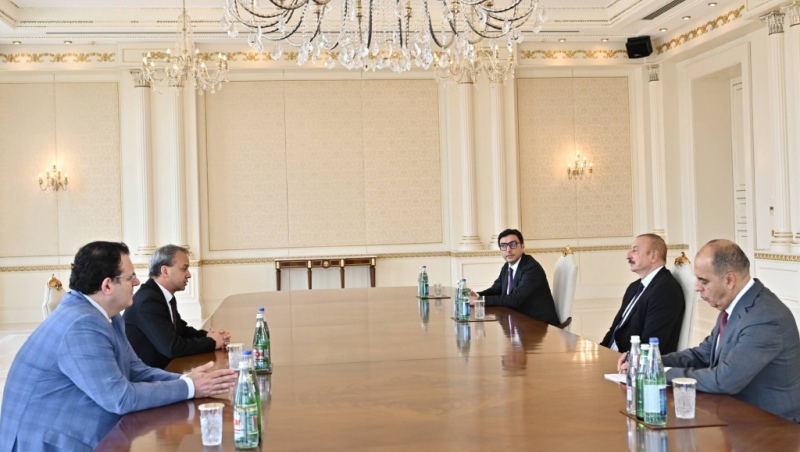
The President of the Republic of Azerbaijan Ilham Aliyev has received the President of the International Chess Federation (FIDE) Arkady Dvorkovich, its Vice-President Mahir Mamedov, and its General Director Emil Sutovsky. Mr Aliyev confirmed his support for the development of chess in the country, which is currently hosting the FIDE World Youth Olympiad. He reiterated the continuation and expansion of the “Chess in Education” program and expressed the readiness to host upcoming major FIDE events.
FIDE World Youth U-16 Chess Olympiad 2022 starts in Nakhchivan
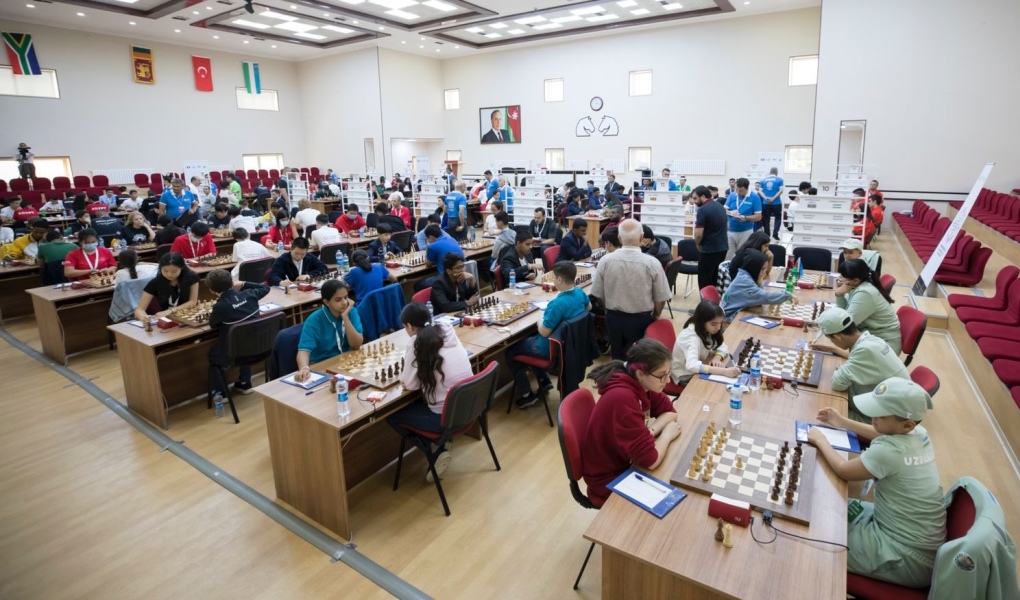
FIDE World Youth U-16 Chess Olympiad 2022 kicked off in Nakhchivan, Azerbaijan. The 9-round Swiss tournament with classical time control brought together 34 teams from 22 countries with host Azerbaijan being the rating favorites. Each team shall comprise 4 players and a maximum of 2 reserves with at least one girl included in the team composition in each round. Each match between teams will be played over 4 boards. Prizes The best three teams receive Cups. Six (6) members of the best three teams will receive Gold, Silver and Bronze medals and memorable gifts. The best three players on the boards receive Gold, Silver and Bronze medals and memorable gifts. Tournament Schedule: Date Activity Time October 1 Arrival date October 2 Technical Meeting 10:00 October 2 Opening Ceremony 12:00 October 2 Round 1 15:30 October 3 Round 2 15:00 October 4 Round 3 15:00 October 5 Round 4 15:00 October 6 Round 5 15:00 October 7 Round 6 15:00 October 8 Round 7 15:00 October 9 Round 8 15:00 October 10 Round 9 10:00 October 10 Closing ceremony 18:00 October 11 Departure date Regulations for FIDE World Youth U-16 Chess Olympiad 2022 Official web-site: http://youtholympiad.fide.com Photo: Islam Igshid
Jose Carrillo Pujol elected new President of CCA
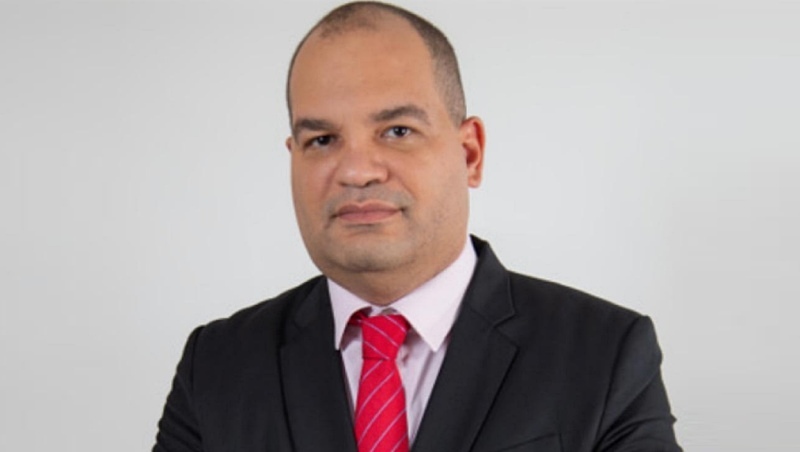
The CCA Assembly (FIDE America) took place on October 1, 2022, in the beautiful city of San Jose, Costa Rica. The General Assembly was attended by various authorities, such as Zone Presidents and Federation leaders. The main item on the agenda was the election of CCA Officials. After hearing the President’s and Treasurer’s reports, the 27 Federations present at the Assembly elected Mr Pepe Carillo as the head of the CCA for a four-year term. Here is the full composition of the ticket: President José Carrilo Pujol – (Panama) Deputy President Francisco J. Cruz Arce (Puerto Rico) Treasurer Erick Hernandez (El Salvador) Secretary Enrique Celi Frugoni (Uruguay) Member of the Board Carol S. Williams Pesqueira (Aruba) Member of the Board Sandy Rarzak (Trinidad and Tobago) Member of the Board Juan C. Mundaca Álvarez (Chile) The Assembly also paid tribute to President IA Jorge Vega for his nearly 20 years of dedicated work for chess in America. After that, the delegates approved the calendar for 2023.
Record-breaking attendance at FIDE Trainers’ Seminar
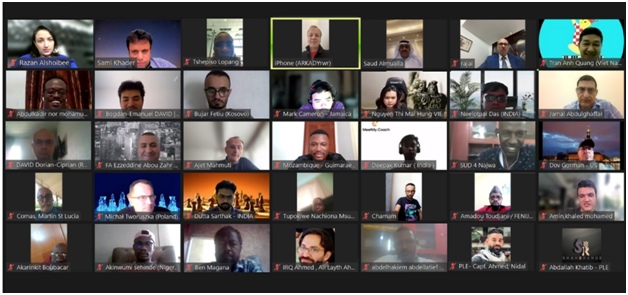
Under the auspices of FIDE, Arab Chess Federation and Asia Chess Academy organized an online trainers’ seminar that took place from 23-25 September 2022. Thanks to FIDE’s support and collaboration between the Arab Chess Federation (ACF) and the African Chess Confederation (ACC), a new record has been set in a very successful trainers’ seminar with an unprecedented turnout of 97 participants from 57 countries. The high quality of the material presented by great lecturers and world champions clearly increased the value of TRG seminars. This particular one attracted a record-breaking number of participants striving to hone their skills by learning from the best of the best. The closing ceremony was attended by FIDE President, Mr Arkady Dvorkovich, FIDE Vice-President and ACF President Sheikh Saud Bin Abdulaziz Al Mualla, ACC president Tshepiso Lopang and TRG Chairman Sami Khader. Mr Khader expressed his delight with the presence of the honorable guests and the results of the seminar. He also related to the gradually growing success of TRG seminars to the quality of the material provided and the standards set by TRG in selecting lecturers. He also reinstated TRG’s willingness to continue building on that success. FIDE President, Mr Dvorkovich, expressed satisfaction with achieving such impressive numbers, which indicates a high demand for this kind of trainers’ seminars that the FIDE trainers Commission (TRG) has been organizing for a while. Mr Dvorkovich believes that TRG will continue its active work across the world for different groups. It will help to reach different geographical regions and chess levels. Coupled with high efficiency, it would help to create a new generation of chess trainers and players. Arkady Dvorkovich also stressed the importance of ACF’s cooperating with the ACC actively in fostering a new generation of professionals, which he believed was the way to go, and an example of how affiliated organizations should act together with FIDE to achieve common goals. Mr Dvorkovich thanked ACF & ACC for their joint effort and appreciated all participants’ investing their time in improving their qualifications as trainers. He wished them, on behalf of FIDE and FIDE Council, good luck. FIDE Vice President and ACF President, Sheikh Al Mualla, was glad to see the top figures in the chess world getting together to nurture the growth of the new generation of trainers. He also ensured ACF’s effort to maintain the quality of the seminars in the future. ACC President, Ms Tshepiso Lopang congratulated the TRG Chairman, Sami Khader, on his job well done! And thanked him for the efforts to ensure that the event was a real success. She also thanked Sheikh Almualla for supporting the ACC throughout that seminar and expressed ACC’s hope for further collaboration and support by FIDE to develop the game on the African continent.
FIDE October 2022 rating list is out
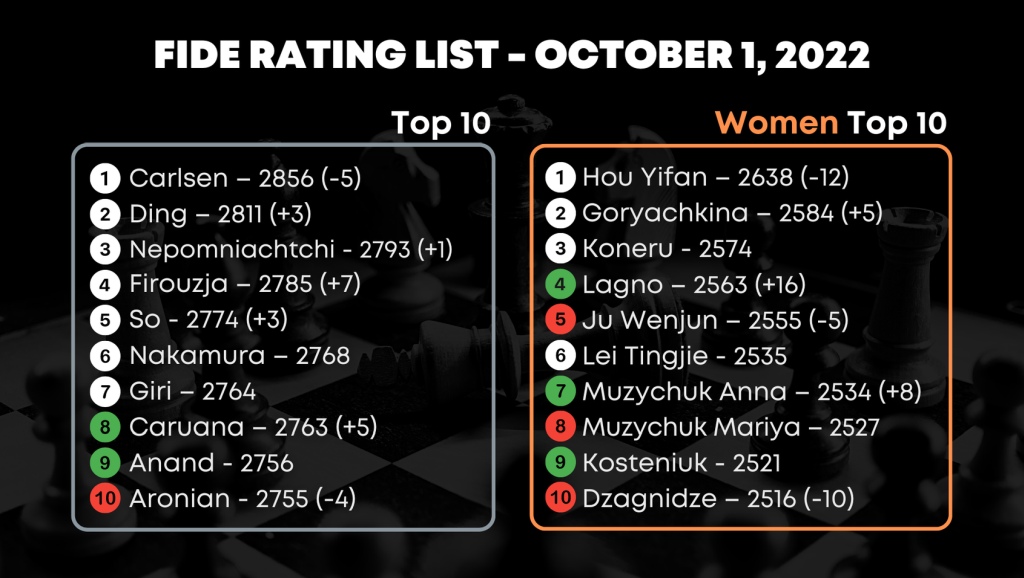
The top ten places in the open and women’s October 2022 rating lists were mainly affected by the Grand Chess Tour Sinquefield Cup and FIDE Women GrandPrix, respectively. Vishy Anand reappears in the top 10 Open for the first time since October 2019 – the biggest change in both top 10. Alexandra Kosteniuk is also back into the women’s top 10 following her good performance in Astana. As we predicted in the previous edition, it did not take Vincent Keymer long to hit 2700-mark – after picking 7 rating points in Enea Ekstraliga 2022, he joined the 2700 club. Biggest gains in Top 10 Open and Women: Socko, Monica GM POL 2454 (+34) Maltsevskaya, Aleksandra IM POL 2389 (+33) Wagner, Dinara WGM GER 2390 (+32) Zhu, Jiner WGM CHN 2484 (+20) Mkrtchian, Lilit IM ARM 2380 (+17) Lagno, Kateryna GM FID 2563 (+16) Fataliyeva, Ulviyya IM AZE 2422 (+14) Ning, Kaiyu WIM CHN 2387 (+13) Niemann, Hans Moke GM USA 2699 (+11) Praggnanandhaa R GM IND 2687 (+11) Monika Socko (pictured above) won this category following her brilliant performance at the European Women’s Championship, where she achieved probably the greatest success in her career and picked up 18.6 rating points (later on she netted another 15 points in Enea Ekstraliga 2022). Her compatriot Alexandra Maltsevskaya also did a great job in Prague earning 33 rating points. The same applies to Lilit Mkrchian and Ulviyya Fataliyeva, who increased their rating by 17 and 14 points, respectively. Somewhat surprisingly, the biggest rating beneficiary of the recently ended FIDE Women’s Grand Prix Astana is not the winner of the event, Kateryna Lagno (16+ rating points – an impressive gain by any standards) but Dinara Wagner (pictured above). The German WGM shared 6-8th places but netted impressive 32 rating points partly because of the so-called low-base effect. Zhu Jiner (pictured below) also turned in an excellent performance in the capital of Kazakhstan, picked up 20 rating points and consolidated her top position in the junior women rating list. Rameshbabu Praggnanadhaa keeps steadily climbing in the rankings. Following his solid showing in Dubai Open, he got 11 rating points and 66 points since March. The Indian youngster became the primary beneficiary of the new rating regulations for Rapid and Blitz tournaments. Thanks to the 100-point rule (if a player had their rapid/blitz rating more than 100 points below classical, it was changed to be exactly 100 points below classical) that came into force on October 1, 2022, he improved his rapid rating by 660 points overnight.
2022 Astana Women’s Grand Prix: Kateryna Lagno, winner
Aleksandra Goryachkina comes in second, Zhu Jiner and Dinara Wagner achieve IM norms After a long and tense final round, Kateryna Lagno, playing under the FIDE flag, emerged as the winner of the Astana leg of the 2022-2023 Women’s Grand Prix. Undefeated, Lagno scored 8/11, a full point ahead of pre-event favourite Aleksandra Goryachkina, who could only achieve a draw in the final round against Vaishali and finished with 7½ points. Zhu Jiner, representing China, came in third with 6½ points. Lagno takes home the €15,000 first prize in addition to 160 WGP points. The next WGP tournament will be held in Munich, Germany, from February 1-14, 2023. FIDE President Arkady Dvorkovich was the guest of honour at the final round of the Women’s Grand Prix, which started this afternoon in Astana’s International Business Hub. After congratulating the organizers, arbiters and media team, he approached the board on which Alexandra Kosteniuk and Kateryna Lagno were already seated and made the ceremonial first move. A few minutes later, he joined Press Officer IM Michael Rahal for a short interview, in which he discussed his meeting with the Kazakhstan Republic President Kassym-Jomart Tokayev. He also explained FIDE’s plans for dealing with fair-play issues, in addition to commenting on the situation of the world’s top female players. Kosteniuk, Alexandra — Lagno, Kateryna (0.5-0.5) The first game to finish was a relatively short draw between Kosteniuk and Lagno. In a classical Four Knights opening, with transposition to a Scotch, Kosteniuk went for a theoretical draw by means of a double piece sacrifice, followed by perpetual check. According to my database, three other games followed the same path, with the same result. Kateryna Lagno kindly joined us for a quick interview in which she summed up her performance in the tournament. Paehtz, Elisabeth — Tan, Zhongyi (0.5-0.5) The second game to finish was also a draw. Playing White, Paehtz went for the solid 2.c3 Alapin variation against the Sicilian Defence. Queens were exchanged before move ten, and neither player seemed excessively ambitious this afternoon. In the final position, a draw was agreed upon by move repetition, although the computer suggests that Paehtz was slightly better due to a superior pawn structure. Zhu, Jiner — Assaubayeva, Bibisara (0.5-0.5) The young Chinese star has had a brilliant run in Astana and in general in the past year. Although she is WGM, Zhu Jiner has already made her three IM norms but has decided not to request the title: she is going straight for the GM title. She already has two GM norms and has crossed the 2500 barrier. However, a win today would not have been enough to reach the 2600 performance necessary for the final GM norm. In her game against Assaubayeva, Zhu Jiner went for a Sicilian c3 side-line, generally considered inoffensive. With precise defence, Assaubayeva neutralized her opponent’s opening edge and installed a strong knight on d4. Massive exchanges followed, resulting in a small but stable advantage for Assaubayeva. However, as Bibisara explained in her post-game interview, she didn’t want to lose in any situation. Unable to find a clear way to increase her advantage she settled for a draw. Wagner, Dinara — Shuvalova, Polina (1-0) In great form since the rest day, Polina Shuvalova went for one of the main lines in the Nimzo-Indian defence. Playing with White, Wagner got a passed d-pawn and a strong knight on f5 in exchange for her opponent’s huge black knight on d3. According to the computer, chances were more or less equal, so Wagner struck with 24.f4 and went for a direct attack on Shuvalova’s king. Kramnik has said several times that if you think more than 18 minutes, you are bound to make a mistake. In a very tricky position, Shuvalova took 33 minutes to play 24…Kf8? and was suddenly dead lost. Instead, 24…exf4 was the only move for Black, which would have led to a slightly inferior position. A few moves down the road, Polina was forced to give up her queen for a rook and a knight and had to resign shortly after. Abdumalik, Zhansaya — Kashlinskaya, Alina (1-0) After two consecutive draws in just a few moves against the two best performers, Zhansaya Abdumalik, Kazakhstan’s star female player, wanted to finish the tournament in style and, if possible, with a win. Her opponent, Alina Kashlinskaya, who has only scored 0.5 points in the last four games, was also going for a win: with both of them tied for 5th-8th, a victory could easily mean a huge jump in the final standings. Both players blitzed out their first 15 moves in a topical poisoned pawn variation of the French Defence, but Abdumalik went into deep thought after 15…Rc8, although this move is by far the most theoretical. Upon a more than 20-minute reflection, she played the novelty 16.g3 (16.0-0 is much more popular and better). After consolidating, Abdumalik launched an attack with 26.h4, and the position became very sharp. A critical moment came on move 32. She could have won the game with 32.Rxf7, but instead, she chose 32.Qc2, probably afraid of 32.Rxf7 Be7, against which the computer crashes through with the rook sacrifice on g7 followed by f5. Nonetheless, Abdumalik’s position was still very good, and eventually, she broke through with a timely f5 thrust. She popped into the press centre for a final short interview, in which she revealed her opening preparation for the game. Vaishali, Rameshbabu — Goryachkina, Aleksandra (0.5-0.5) Goryachkina’s only chance to win the tournament was to defeat Vaishali with Black. An on-demand win with Black is always difficult: take to many chances to unbalance, and you might end up losing. Her choice of the opening was certainly surprising: a Sicilian seemed more fitting for an unbalanced game than the hyper-solid Berlin defence in the Ruy Lopez. For the first ten moves, they followed several GM games, most importantly a 2019 clash between Sergei Karjakin and Wesley So. In a symmetrical pawn structure, the game was heading for a draw when Goryachkina