

FIDE Trainer Seminar for Spanish Americas held online
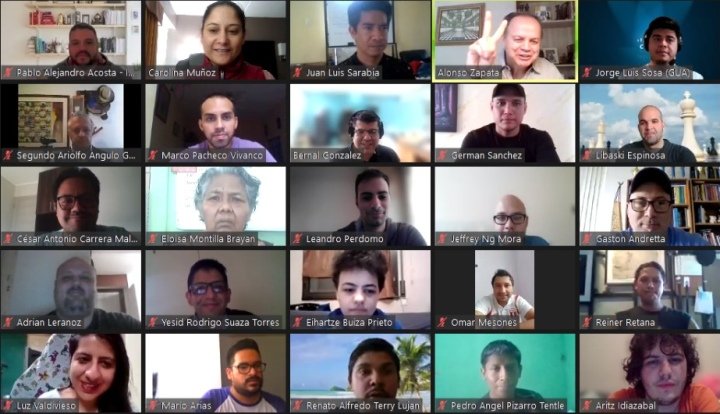
The first of two FIDE Trainer Online Seminars planned for Spanish Americas this year was held from 15-17 April 2022. A total of 27 participants from 14 countries took part, with FIDE Executive Director GM Victor Bologan welcoming the participants. Victor Bologan expressed hope that the seminar would help the trainers attending become better at their work while highlighting the credentials of the lecturer team. He also had little doubt that their feedback would be excellent. The lecturers for this seminar were led by FST & GM Alonso Zapata together with FST & GM Reinaldo Vera, FT & GM Bernal González, with assistance from FI & WIM Carolina Munoz and WIM Adriana Salazar. The main organizers for TRG were FST & GM Alonso Zapata and FI & WIM Carolina Munoz. FIDE Trainer Online Seminars have been organized by TRG since April 2020, first in response to the global COVID-19 pandemic, but increasingly for accessibility as it more effectively reaches trainers by region and language, lowers costs of participation and allows lecturers from all parts of the world to share their experience and teaching methods.
Martin Haubro wins 2022 Danish Championship
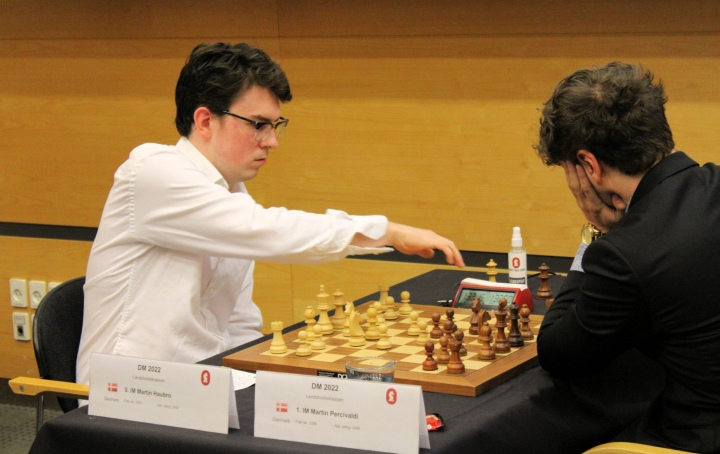
IM Martin Haubro is a new champion of Denmark. The 28-year-old IM netted 7/9 (no draws!), won his maiden national title and picked up impressive 61 rating points. With this result, Martin completed his first GM norm. The Danish Championship (Masters), a 10-player round-robin tournament with classical time control, took place from April 9-17 in Svendborg, a small town that has hosted this event for the last three years. The town Mayor Bo Hansen opened the tournament by making a symbolic first move Lars Schandorff’s – Bjørn Møller Ochsner. Danish championships are known for competitive spirit and close fights, and the 2022 edition was no exception. The future champion suffered a setback in the first-round game against GM Jesper Sondergaard Thybo (pictured below) but stormed back by scoring six straight victories and grabbed the lead. His main competitor Thybo who also had an excellent tournament, kept the pace with Haubro until the decisive final round. With both leaders sitting on 6/8, Haubro was in better a position coming into the final round as he faced Martin Percivaldi with white, whereas Thybo took on Bjorn Moller Ochsner with black pieces. Haubro made a quick work of his namesake Percivaldi and had to wait for the outcome of Ochner – Thybo. Had Jesper Sondergaard won this game, he would have become champion thanks to his first-round victory over Haubro (the first tiebreaker criteria). Thybo obtained a slight edge on the black side of the Berlin System of Ruy Lopez but did not manage to make progress, drew the longest game of the round and fell just a half-point short of the title. The runner-up completed the event unbeaten and became the only player to defeat the champion. The rating-favourite of the event and the only 2600+ player GM Jonas Buhl Bjerre (pictured below) turned in a decent performance but lost two games and had to settle for bronze. Final standings: 1 IM Haubro, Martin 2391 7 2 GM Thybo, Jesper Sondergaard 2559 6½ 3 GM Bjerre, Jonas Buhl 2611 6 4 GM Schandorff, Lars 2475 5 5 IM Ochsner, Bjorn Moller 2506 4½ 6 IM Olsen Filip, Boe 2402 4½ 7 IM Percivaldi, Martin 2399 4 8 GM Hoi, Carsten 2359 2½ 9 IM Sylvan, Jacob 2319 2½ 10 IM Borge, Nikolaj 2403 2½ Offical website: skak-dm.dk/2022 Photo: Thomas Vestergård
Trainer Workshop: “How to Teach Calculations” by Artur Jussupow

FIDE Senior Trainer and GM Artur Jussupow, a World Championship Candidate who has been ranked as high as third behind legends Garry Kasparov and Anatoly Karpov at their peak, will conduct a workshop “How to Teach Calculations” on 14 May 2022. The workshop will be held in online format. This is the second of a series by Jussupow where he shares his experience and methods, and which is part of our Trainer Professional Education and Development workshops where we look to help trainers enhance their skills. Photo: Vladimir Jagr Credits are also awarded towards bonus points at seminars towards future title upgrades. The most important topics that would be discussed in this workshop are: Candidate Moves Method of Elimination Comparison Method Priorities in the calculations Typical mistakes Training methods Held at Central European Time, the workshop will be in two three hour sessions, from 10 a.m. to 1 p.m. and 2 p.m. to 5 p.m. Eligible are licensed FIDE trainers and the fee is €50. Please download registration form complete it and send by email to trainers@fide.com. The payment options can be found here: https://trg.fide.com/trg-billing-collection-procedures/
Qualification Commission renews its leadership

Nick Faulks, chair of the Qualification Commission (QC), and Alex Holowczak, its Secretary, have decided to step down from their current positions. They both will remain as Councillors and will also keep cooperating with FIDE in other areas, putting their invaluable experience to use. The intention of this change of leadership is to allow for a fresh approach to the work of the Commission. Nick Faulks will pass the baton to Sabrina de San Vicente (pictured above), from Uruguay, who has been one of the most active members of the Qualification Commission. Sabrina is a very experienced IA, a member of the Green Panel of arbiters, and the current Chair of the Arbiters Commission at the Confederation of Chess for Americas. “I would like to thank my colleagues Nick Faulks and Alex Holowczak for their trust and support. Nick has been a member of the Commission for more than ten years. Their contribution to the QC was and will be invaluable. I look forward to keeping working with them,” said Sabrina. Gunther van den Bergh, from South Africa, will take the position of Secretary. Like Sabrina, he has been a member of the qualification Commission during the past years, besides being the Chair of the arbiters Commission of the South African Chess Federation. A programmer by profession, he is one of the most experienced arbiters in the African continent. Besides his work at the QC, Gunther’s predecessor Alex Holowczak has been heavily involved in renewing and improving its most important documents, like its Handbook and tournament regulations. Leaving his post as Secretary of the QC will allow him to focus completely on this area of work. “After more than ten years on QC, as Secretary and then Chairman, I believe this is a good moment to pass control to a new group,” said Nick. “I hope that I have helped to maintain the long tradition of the Commission’s work and am particularly pleased that we have recently finalised a fully revised set of Title and Rating Regulations. I look forward to working closely with Sabrina and Gunther in the coming months. I know they can rely, as I have, on full support from their Commission and also, most crucially, from the professional staff at the FIDE office.” Photo: Lourdes Porta
Ten years of Chicago chess in jail
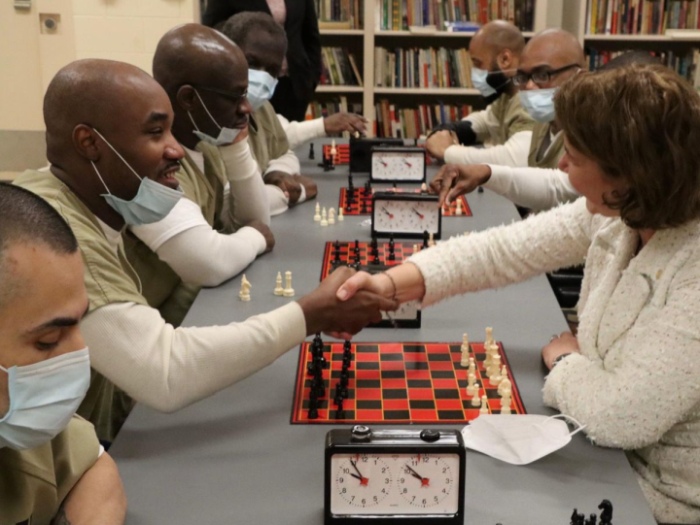
Ten years ago, a very fortunate connection happened in Chicago when Cook County Sheriff Thomas Dart approached his children’s chess coach, Mikhail Korenman. Apart from being a seasoned teacher, Mikhail had already been engaged in all kinds of chess activities, from founding chess clubs and schools, to organizing events. Sheriff Dart thought that the game could also play a very important role in jail. Dart’s vision appealed to Mikhail, and the two agreed to start a ‘chess in jail’ program. “Chess is more than an entertaining pastime. The game teaches its players valuable life lessons,” Sheriff Dart said in a statement. “It requires critical thinking and to consider the risks and rewards of their decisions, which are valuable skills that help foster a reduction in violent behavior.” The program has grown with about 3,000 individuals in custody participating in the last 10 years. “About 50% are completely new to chess, and they learn the game from scratch,” Dr. Korenman said. In 2020, the Sheriff’s Office and FIDE agreed to host online, international chess competitions with detained individuals around the world. Cook County Department of Corrections, where “Chess for Freedom” meets “The Year of the Woman in Chess” The program’s tenth anniversary was celebrated on April 1st, and FIDE was represented by Dana Reizniece-Ozola, who travelled all the way to Chicago to have the opportunity to meet some of the people she had been working with, “closely but remotely”, during the last year through the program “Chess for Freedom.” Along with Dana, representatives of the consulates of Mongolia, Bulgaria and Australia — countries that participated in the first Intercontinental Online Chess Championship for Prisoners — also joined the celebration. “The Cook County Sheriff’s Office initiative has now grown into a great movement which we call “Chess for Freedom”. Last year we organized the First Intercontinental Online Chess Championship for Prisoners. 40 teams from 31 countries, including 5 female teams were participating. And this year we aim to expand the event to at least 64 teams,” explained Dana. “Such flagship events give a great deal of motivation to inmates. However, the most important part is the everyday work behind them. It is about passionate people like Mikhail Korenman who work with inmates on a regular basis and become role models for them. Chess teaches patience, respect for the opponent and the relationship between the cause and the consequences. It also stresses guiding to little victories and greater success through discipline and lots of work. Cook County Sheriff Thomas Dart with some of the organizers and representatives of the first Intercontinental Online Chess Championship for Prisoners. It is also about leaders like Sheriff Thomas Dart who support such programs and understand how important it is to provide skills and support to those who have made mistakes in their lives. That way there is a chance they can get back to normal lives with less inclination for repeating infringement of law.” Apart from its proven effect in reducing depression, anxiety, and stress in human groups under difficult circumstances, research in other countries also demonstrates the efficiency of chess as a tool for insertion. A study presented by GM Darcy Lima (“Chess that Liberates”) analyzing the experience in Brazil shows that with inmates participating in a chess program for longer than two years, their repeated infringements rate reduces from 72% to 12%. That is why we at FIDE are so enthusiastic about expanding the program in those countries that have not yet started their chess in prisons activities. If you need any advice or assistance with reaching out to authorities, or sharing methodologies/best practices, please contact us at socialchess@fide.com, and we will try to assist.
FIDE Executive Director attends symposium in Corsica
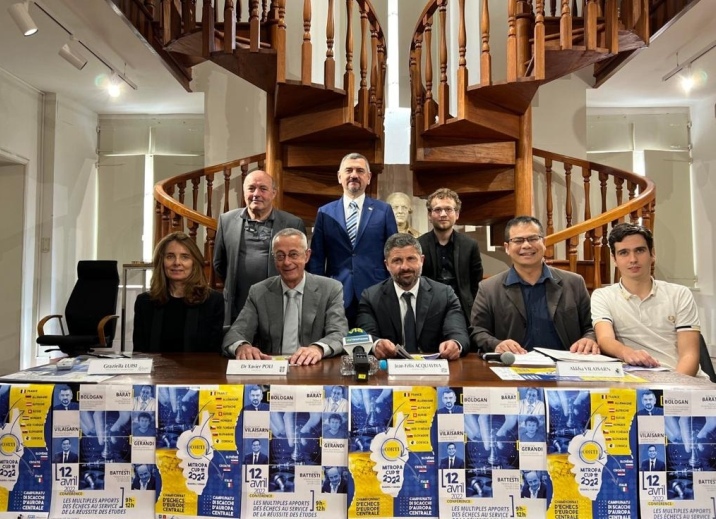
On April 12, 2022, the Island of Corsica, France, hosted a symposium, “The multiple contributions of chess to support success of studies”, that took place in the Palazzu Naziunale, in the city of Corte. The President of the University of Corsica, Dominique Federici, and the Director of the Fundazione Università di Corsica, Graziella Luisi, welcomed the participants of this event. The President of the Lega Corsa di Scacchi, Akkha Vilaisarn, then introduced the speakers: the Executive Director of the International Chess Federation (FIDE) and Doctor of Education GM Victor Bologan, Guillaume Gerandi, Doctor of Physical Sciences, as well as Léo Battesti, the first president and founder of the Corsican Chess League (Ligue Corse des Echecs). Two elected officials, Congressman of Haute-Corse, Jean-Felix Acquaviva, and the Mayor of Corte, Dr Xavier Poli and executive adviser Lauda Guidicelli also attended the conference. The latter confirmed that the CDC strongly supported the League, which continues its productive work with different audiences: young people, girls and schoolchildren. The first speaker, Dr Guillaume Gerandi, a teacher at the University of Mulhouse (East of France), emphasized qualities developed by practising chess from an early age: concentration, calculation, structuring of thought, objectivity, imagination, etc. All these qualities can be transposed to his field of competence, scientific research. He also shared his experience as an arbiter, which proved useful in human management. FIDE Executive Director GM Bologan first told about his teaching experience at the Northwestern University of Qatar. His classes focus on Chess and Strategic Thinking. Currently, he is working on more intense training aimed at the students of business schools. This part sparked the interest of the President of the Associu di i Scacchi di U Centru, Dr Sauveur Giannoni, a professor of economics. Secondly, the FIDE Executive Director presented a “Chess ID” project for all chess players from amateurs to professionals. The idea is to create an ecosystem that brings together all the chess world players. In relation to Corsica, we are talking about 50,000 players in schools or chess clubs on this Mediterranean Island. One can imagine the scope of such a network if it is extended over the planet! Finally, Léo Battesti recounted the history of the Corsica League, which he has chaired for more than 20 years. When he arrived in Corsica twenty years ago, the Island had a strong connection with the Côte d’Azur and active chess life but was not very open to the world. The League turned to young people to involve as many people as possible. The League focused on schools in the city and rural areas to bring up the elite on the grass-root level. Victor Bologan confirmed that the image of the pyramid with a wide base perfectly illustrated the growth of the Corsica League. Akkha Vilaisarn stressed out very strong support for school teachers who are very keen on specific training in the game of chess. The President of the League and the Director of the Fundazione discussed future plans for joint projects between the two entities. At the end of the day, the FIDE Executive Director showed his chess skills over the board. Victor Bologan gave a simul to 20 professors and students learning chess at the University of Corsica. Despite the high level of the opponents, the grandmaster managed to win all the games.
Pragganandhaa wins 2022 Reykjavik Open
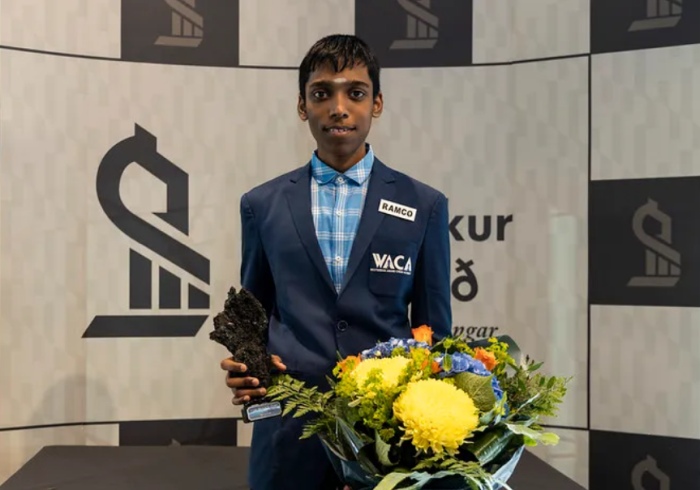
Rameshbabu Pragganandhaa emerged as the winner of 2022 Reykjavik Open after dramatic turn of events in the final round. The Indian youngster scored 7½/9 and finished a half-point ahead of Max Warmerdam, Mads Andersen, Hjorvar Steinn Gretarsson and Abhimanyu Mishra. The 2022 Reykjavik Open, a nine-round Swiss tournament with classical time control (90 min for 40 moves followed by 30 min to the end of the game, plus a 30-second increment starting from move one), took place in Harpa Music and Conference from April 6-12 with a double-round day on April 10. The sponsors of the event with a total prize fund of €15,000 were Kvika, Reykjavik City, and FIDE, which supported the tournament via the FIDE Aid package. Max Warmerdam, Mads Andersen, and Rameshbabu Pragganandhaa were heading into the final, ninth round as joint leaders on 6½ each, with a large group of players trailing them by half-point. After Mads and Max (pictured below) made a quick draw, it looked like the door was wide open for several players to join them. Indeed, Gukesh had a considerable advantage in the game against his compatriot Pragganandhaa, while young Abhimanyu Mishra and local favourite GM Hjörvar Steinn Grétarsson grabbed the initiative with black pieces against Pouya Idani and Lukasz Jarmula, respectively. Things changed drastically in time trouble as Gukesh ruined his overwhelming position in just two moves and missed not only a win but also a draw. Gukesh D – Pragganandhaa R 35.Qe5? (35.h3! parrying Black’s main threat, 35…Qxa5 36.Qd2! Qa3 37.Qc2! and White wins) Qg4 36.Rg1?? (36.Be4=) Nd1! and Gukesh capitulated as the only way to avoid checkmate is to give up his queen 0-1 This unexpected outcome helped Pragganandhaa to take clear first and pocket the first prize of €5,000. Max Warmerdam, Mads Andersen, Hjörvar Steinn Grétarsson, and Abhimanyu Mishra finished a half-point behind and tied for the second place. Final standings: 1 Praggnanandhaa R IND 2624 7½ 2 Warmerdam, Max NED 2599 7 3 Andersen, Mads DEN 2582 7 4 Gretarsson, Hjorvar ISL 2542 7 5 Mishra, Abhimanyu USA 2524 7 6 Fier, Alexandr BRA 2573 6½ 7 Niemann, Hans Moke USA 2637 6½ 8 Gupta, Abhijeet IND 2616 6½ 9 Larkin, Vladyslav UKR 2424 6½ 10 Korley, Kassa DEN 2400 6½ Photo: Thorsteinn Magnusson and Hallfríður Sigurðardóttir Official website: reykjavikopen.com/
FIDE World Rapid and Blitz Championships and WR&B 2022 – Call for bids
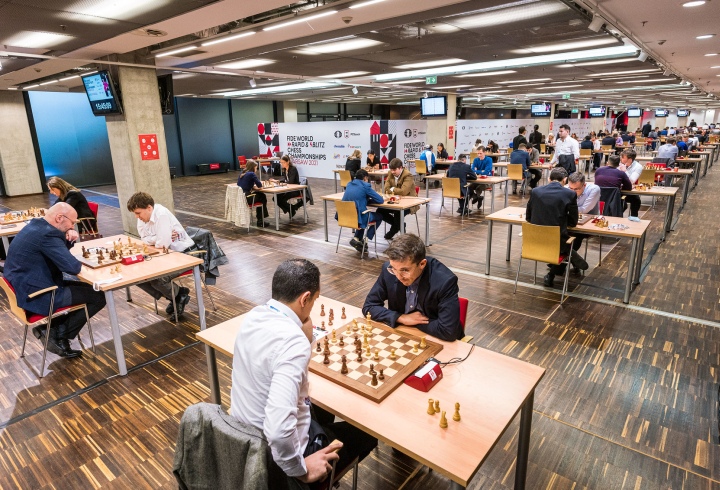
1.1 The International Chess Federation (FIDE) will hold the World Rapid and Blitz Championships (R&B) and World Women’s Rapid and Blitz Championships (WR&B) in the second half of 2022 (see the Tournaments Regulations: World Rapid and Blitz Championships 2022; World Women’s Rapid and Blitz Championships 2022). 1.2 FIDE is opening a bidding procedure to invite any federation member of FIDE or any organizer approved by the national federation to host the event. The federation’s letter of support may be provided later when the bid’s evaluation procedure is launched. 1.3 The bid may contain special proposals on financial and commercial conditions. The FIDE Council shall decide whether these conditions are admissible. 1.4 The Bidding Form shall be filled in by an Applicant. A signed copy shall be submitted as e-mail messages to the FIDE Secretariat to office@fide.com from 12 April to 31 May 2022 by 23:59 Lausanne time (FIDE has a right to extend this deadline). All the documents shall be submitted in English. Additional documents may be requested by the FIDE General Strategy Commission (GSC) for further evaluation. 1.5 Bid Evaluation Report shall be presented by GSC for approval by FIDE Council. Priority shall be given to an Organizer applying for both events – R&B and WR&B. 1.6 Once the Organizer is granted the right to host the event, a relevant announcement shall be made on the FIDE website. FIDE Technical Delegate (FIDE TD) may be appointed at the same time to supervise the event on behalf of FIDE in consultation with GSC.
Winners crowned at 2022 US High School Championship
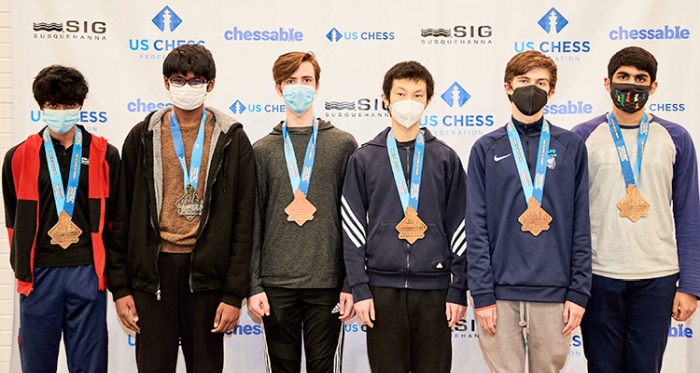
1,067 players return to over-the-board play in Memphis, Tennessee to determine the nation’s top high school player; a massive seven-way tie for first place . Memphis, Tennessee: The 501(c)3 US Chess Federation’s 2022 National High School (K-12) Championship (NHS) took place from April 8-10 at the Renasant Convention Center in Memphis, Tennessee. Due to continuing concerns about the pandemic and travel difficulties related to severe weather on the east coast, attendance was lower than the typical range of 1400-1600 competitors, but still, 1,067 players from 40 states competed in this national championship event. This was the first in-person NHS since 2019. The first NHS was held in 1969. The Individual Championship ended in a seven-way tie for first. All seven are National High School Co-Champions (but listed in tiebreak order): IM Arthur Guo, 10th Grade, The Westminster Schools, Atlanta, Georgia Vishnu Vanapalli, 9th Grade, Ardrey Kell High School, Charlotte, North Carolina FM Gus Huston, 10th Grade, The Dalton School, New York, New York IM Anthony He, 11th Grade, Tesla Stem HS, Redmond, Washington Bijan Tahmassebi, 12th Grade, Winston Churchill HS, Potomac, Maryland FM Nico Chasin, 9th Grade, Columbia Grammar and Prep, New York, New York Advaith Karthik, 10th Grade, Cox Mill HS, Concord, North Carolina The Team Championship was won by The Dalton School of New York, New York. Team members are Gus Huston, Ryan Peterson, Max Mottola, and Nathaniel Shuman. Many other winners in multiple sections below the championship section were also revealed. These winners are properly identified as “Winner of the <X> section at the National High School Championship.” For a full list of winners, please visit uschess.org/results/2022/hs/. As US Chess fulfils its mission to “empower people, enrich lives, and enhance communities through chess,” we use our scholastic nationals to fulfill our goals to expand the educational, social, recreational and rehabilitative applications of chess; increase the visibility of chess on mainstream communications channels; develop the depth and breadth of our partnerships; use chess to increase opportunities for underrepresented segments of society, and to continuously improve internal operations and member services. US Chess Executive Director Carol Meyer notes: “Our vision is that chess is recognized as an essential tool that promotes inclusiveness and benefits education, rehabilitation, recreation, and friendly competition. This all comes together at our national scholastic championships.” The organizers are grateful for the sponsorship provided by SIG Susquehanna. For more information on our events, please visit www.uschess.org. Photos: Caroline King
Global Exchange Forum: Facts and myths about gender in chess
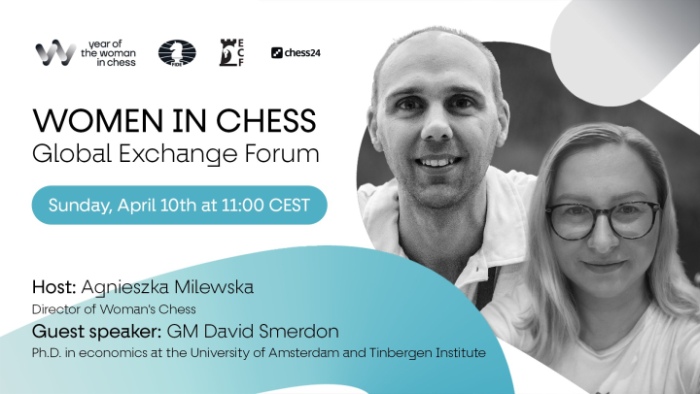
The Year of the Woman in Chess is in full swing with the strong engagement of women in chess worldwide through workshops, training seminars, fundraisers, and women’s day events, organized by the FIDE Commission for Women’s Chess. One more online event – the Global Exchange Forum, a quarterly seminar aiming to connect chess officials, organizers and influencers working on behalf of women around the globe – was organized in cooperation with Chess24. The first one in a series took place yesterday. The event was hosted by Agnieszka Milewska, Director of Woman’s Chess and Eva Repkova, Chairperson of the FIDE Commission for Women’s Chess. The special guest of the forum, GM David Smerdon, presented research on the gender gap in chess” Facts and Myths about Gender in Chess”. David is a Ph.D. in Economics at the University of Amsterdam and Tindergen Institute. He was awarded the title of international grandmaster in 2009 and has represented Australia in seven chess Olympiads. Smerdon was part of an international research team of academics that included GM Hou Yifan, one of the best female players in history and the current #1 rated woman. They took an in-depth look at some of the challenges women face in chess and the possible approaches to address them. According to the results of the research, girls drop out at faster rates than boys at all ages, but the drop-out is especially severe after age 16. Besides, there are both participation and performance gaps for women in chess. It is caused both by social and biological factors. Stereotypes are among the social factors that negatively affect women’s performance. Multiple studies have found that women chess players play worse against men than against other women, while men modify their playing style when facing women – they take longer to resign against women and play riskier openings against attractive females. Some evidence shows that women and men exhibit a similar life-cycle of chess strength, except for women who have children, which is both biological and social factors. When speaking of boosting female participation in chess, it was noted that role models matter for minorities in competitive environments. For example, Ugandan girls who watched “Queen of Katwe” before their math exams were 44% more likely to pass. Having a female leader among Indian polititians means girls are more likely to pursue politics, and delay marriage and children. The same happens in chess. Not just top players can be role models for girls playing chess. It can be trainers at all levels, administrators, arbiters, organizers, commentators, and streamers. Peer effect is another thing that can shorten the gender gap in chess. In men-dominated environments, having more women peers significantly helps women. The results of the research show that having to train alone, feeling pressure to represent all female players, and lacking social/friendship groups cause disincentives to continue for female players. Smerdon’s recommendations on how to increase the numbers of women playing chess are: – Sponsor an annual FIDE retreat for talented girls, featuring role-models – Consider introducing a ‘gentle’ quota into national leagues – Develop and publish an annual Women in Chess Federation ranking For more information about the research, you can watch the Exchange Forum on FIDE’s Youtube channel or download David Smerdon’s “Facts and Myths about Gender in Chess” presentation.