

Gabor Kallai (1959-2021)
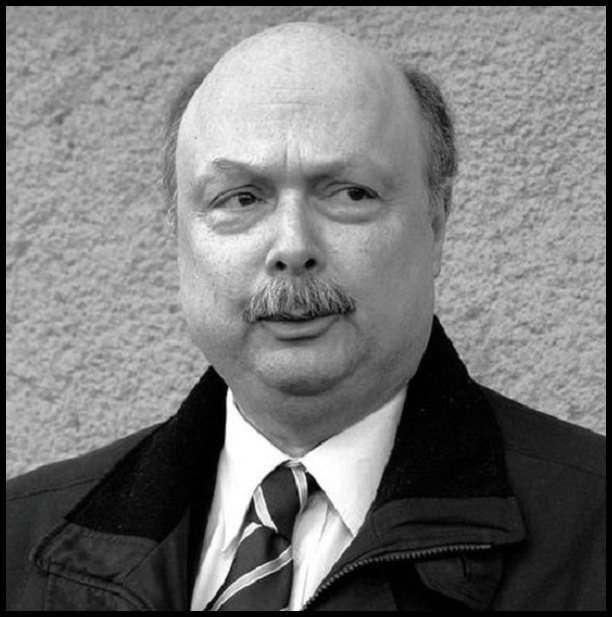
Hungarian chess has suffered an enormous loss with the tragic and unexpected death of Gabor Kallai on the last day of 2021. He was a real gentleman in all aspects. We will always miss his kind smile. Gabor Kallai was born in Budapest on February 21, 1959. Chess filled his days fully from 14 when he joined the MTK Budapest Chess Club. Famous GM-s Laszlo Szabo and Gyozo Forintos were his first teachers, and they made Gabor an enthusiastic lover of the game. He became IM in 1982 and GM in 1995. Gabor was involved in various chess activities throughout his life, excelling in all of them. As a player: 1981 bronze medal in the World Team Ch. of Universities1984 Silver medal in the Hungarian Open Championship1988 7th place in the Rapid World Championship in MexicoMultiple national team champion with the MTK and Miskolc teams in Hungary, with Bern in Switzerland and with Strasbourg in France. As a coach: Starting from 1975, for several years, he was one of the first coaches of Susan Polgar, who later became the Women’s World Champion1983-1987 Assisting GM Zoltan Ribli in the Candidate cycles 2002 Team Captain of the Silver medallist Hungarian Olympic Team (Bled)From 2012 he was an external coach of the Kasparov Chess Foundation (New York). As an International Arbiter: Chief Arbiter of the following great matches: Leko – Khalifman (Budapest, 2000)Leko – Kramnik (Budapest, 2001)Portisch – Spassky (Heviz, 2007) As an author: His most successful publication, the Book of Openings, has been translated into five languages.He published chess articles in several newspapers and magazines. Gabor also worked as a commentator and host of the chess broadcasts on Hungarian Sports TV. From 2015 to his untimely death, he was a Master Lecturer at the University of Physical Educations in Budapest. His list of awards includes Knight’s Cross of the Order of Merit in 2002, Coach of the Year (3rd place) in Hungary, both for the silver medal achieved at the Bled Chess Olympiad. FIDE extends its sincere condolences to Gabor’s family, friends, and loved ones.
Susal and Niklesha win Sri Lanka championship
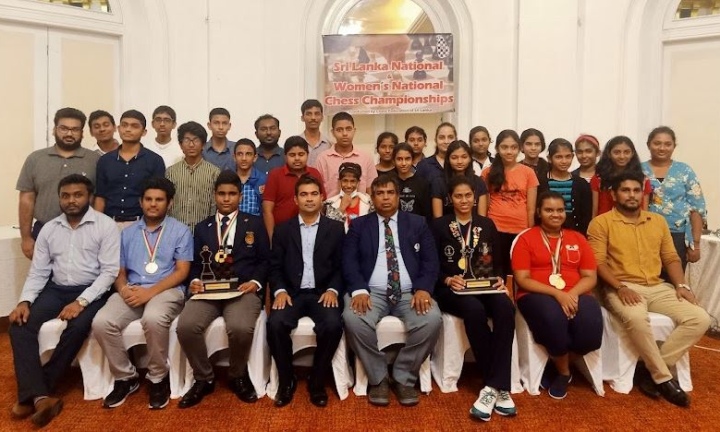
16-year-old Susal De Silva of Nalanda College won the Sri Lanka National Chess Championship after a heavy battle with his rival main Ranindu Dilshan Liyanage of Ananda College, the National Chess Champion 2020. After the penultimate round, Susal led the field with 11 points, a half a point ahead of Ranindu. Susal drew the final round direct encounter against Ranindu and clinched National Chess Championship. He received Rs. 100,000/= in cash with the Gold Medal and the championship trophy. Ranindu Dilshan Liyanage (Ananda College) also had a good event where he dropped only 2 points (making four draws) and netted 11 points. He was awarded the Silver Medal with Rs. 50,000/=. Young Thumula Kiriella (Ananda C) performed remarkably well to win bronze 8 points and Rs. 30,000/=. Final standings open: 1 De Silva L M S T (FM) 2131 12 2 Liyanage Ranindu Dilshan (FM) 2300 11 3 Kiriella K G T S D 1608 8 4 De Silva Osheen 1806 7½ 5 Theekshana H G Denuwan 2045 7½ 6 Sivathanujan S 1828 7 7 Weerasinghe C C 1784 6 8 Dahanayake Isara Banidu (CM) 1721 6 9 Sanudula K M Dahamdi (WCM) 1653 6 10 Senevirathne S D B K 1660 6 11 Piyumantha M Thisal Manjith 1818 5½ 12 Ahangama Senuka Aswin 1654 3½ 13 Nabil Nazar Mohamed 1499 3 14 Gunathilake M D Vinuda Shenal 1415 2½ Niklesha Tharushi of Visakha Vidyalaya convincingly won the Women’s National Chess Championships. After a bumpy start, losing the first two games, Niklesha came back strongly to finish on 9 points out of 13 games. Niklesha beat Chethani Chamathka, Esha Pallie, Oshini Gunawardena, Sayumi Gamage, Nemindi Ramanayake. Niklesha received Rs. 60,000/=, gold medal and the championship trophy. Young Esandi Newansa of Dharmasoka College also did a good job beating the bronze winner Dasuni in the penultimate round to earn silver and Rs. 30,000/= with 8½ points out of 13. Dasuni slipped on the final day, losing two games and getting out of the contest for gold, but she scored 8 points to get Rs. 20,000/= with the bronze medal. Final standings women: 1 Tharushi T H D Niklesha (WCM) 1711 9 2 Newansa M Esandi 1163 8 3 Mendis Dasuni Hansika (WFM) 1664 8 4 Pallie Ehsha Mishela (WCM) 1533 7½ 5 Gamage Desandhi Dhihansa 1314 7½ 6 Abeysinghe H M H Janandani 1486 7 7 Ranganath Tharuli Vihasna 1348 7 8 Ramanayake Nemindi Linaya 1328 6½ 9 Gunawardhana Devindya Oshini 1371 6½ 10 Attanayake Chanindi Mewna 1317 6½ 11 Vithanawasam Oneli 1345 6 12 Chamthka W A Chethani 1267 4½ 13 Herath H M R M K 1559 4½ 14 Gamage B K Sayumi Hasithma 1154 2½ The SL National Chess Championships 202, in a round-robin format, brought together 28 top local players competing in the open and women’s categories. The event took place from 24th to 30th of December 2021 at the Taj Samudra Hotel, Colombo, with the awards ceremony held in the presence of Mr Luxman Wijesuriya, the President of Chess Federation and Vice President of Asian Chess Federation as the chief guest. The games are available via the following links: Sri Lanka National Chess Championship – 2021: Link https://view.livechesscloud.com#7fc38dc3-fe7b-4c2f-8562-8d75478229f1 Sri Lanka Womenś National Chess Championship – 2021: Link https://view.livechesscloud.com#b15eb593-90e2-41ef-9314-4f425ef02ce9
Kenya Championship: Njoroge and Mongeli clinch titles
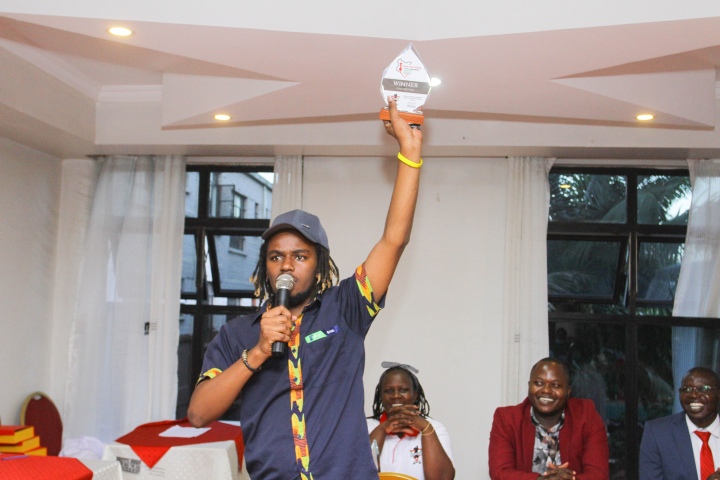
The Kenya National Chess Championship 2021 ended yesterday at Luke hotel, Nairobi. The nine-round Swiss tournaments (open and ladies sections) were played over five days from December 26-30 and attracted 211 players. In open section saw a dramatic finale as the defending champion Mehul Gohil faced off against Martin Njoroge in a two-game tiebreaker of 15minutes each. Both contenders scored 8/9 to tie for the first place, making just two draws each. After the tiebreaker ended in a 1-1 draw, the opponents proceeded to a blitz match. Martin won all two games and clinched the title of the National Kenya Champion of 2021. Over a short period of time the young player broke into adult chess to notch up the greatest success in his career. His achievement will hugely motivate his young peers. Final standings open: 1 Njoroge, Martin 2014 8 2 Gohil, Mehul 1901 8 3 Magana, Ben 2081 7½ 4 Methu, Joseph Muragu 2024 7 5 Sagwa, Hillary 1820 7 6 Hugh, Misiko Okonga 1661 7 7 Kanegeni, Matthew Kamau 1977 7 8 Oluka, Robert Mcligeyo 1686 7 9 Gisore, Daniel 1777 6½ 10 Ndegwa, Jackson Kamau 1910 6½ The women’s tournament was also a close race with Sasha Mongeli and Triza Mwendwa sharing first place. Again, it boiled down to a tiebreaker to determine the champion. Sasha won both rapid games to be declared the Ladies National Kenya Champion of 2021. Final standings women: 1 Mongeli, Sasha 8 2 WFM Mwendwa, Triza 8 3 WCM Ndirangu, Joyce Nyaruai 7 4 Jumba, Gloria 6 5 Obondo, Cynthia Awino 6 6 Karanja, Ether 6 7 Mutisya, Jully 6 8 WCM Wanjiru, Lucy 5½ 9 Ngima, Cheryl 5½ 10 Madelta, Glenda 5½ The winner of the 2021 National Championship Open Section – Martin Njoroge was awarded Brand New Mazda Demio by Chess Kenya President Mr Benard Wanjala during a colourful closing ceremony.
Vachier-Lagrave and Assaubayeva are the new world blitz champions
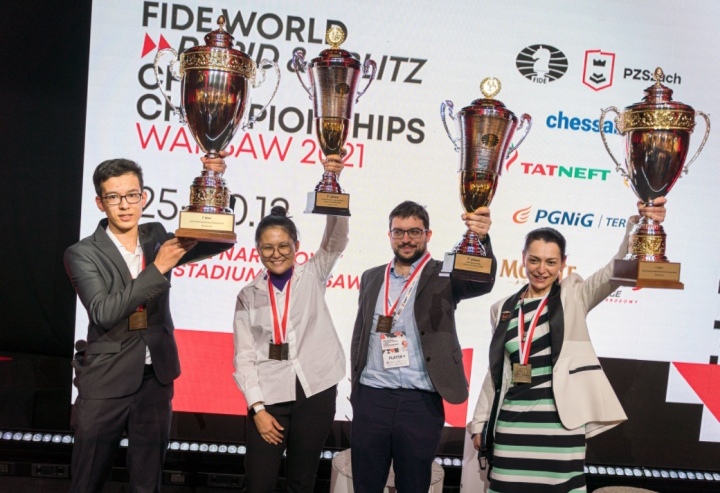
In the tiebreak blitz shootout, the Frenchman defeated local superstar Jan-Krzysztof Duda with 2:1. In the women’s event, Bibisara Assaubayeva – the 17-year-old prodigy from Kazakhstan – spectacularly won the Women’s World Blitz Chess Championship, securing the title with a round to spare The open section of the World Blitz Chess Championship ended in a tiebreak shootout where 31-year-old Frenchman Maxime Vachier-Lagrave clinched the title after defeating local star Jan-Krzysztof Duda with 2:1. This is the first world championship title for the 31-year-old French Grandmaster, one of the top-rated players on the planet who came very close to this title in 2015 but had to settle for silver. The path of Maxime Vachier-Lagrave to the top didn’t go in a straight line. On the first day of the event, he lost three games and didn’t immediately figure as someone who would win the event. However, his resilience showed on day two – not losing a single game, drawing rarely and winning when it was necessary, including in the 21st round against none other than Magnus Carlsen. A day of ups and downs The second day of the open section of the world blitz saw the remaining nine (out of altogether 21) rounds played. Although tournament leader Levon Aronian (who won the title in 2010) started the day well – scoring important victories against top dogs Daniil Dubov and Anish Giri – he then suffered three consecutive losses throwing the tournament wide open. What made things worse was how Aronian lost: first, playing against Maxime Vachier-Lagrave as Black in Round 17, he equalized comfortably but then allowed the Frenchman to create some threats. In a game full of twists and turns, Aronian overlooked an almost winning move and then lost. In the next round, he fell to former compatriot Haik Martirosyan – after reaching an overwhelming position, he missed a simple move by his opponent and had to sacrifice a queen for a rook and a knight. Levon could have forced a draw by repetition at some point, but he took it too far. In the end, Levon was hoping for a ‘fortress’, but Black confidently led the white king away from his pieces before exchanging his queen for the rook and leaving his king to collect the remaining two pawns and promote his own. Then, in Round 19, Aronian lost to Vladimir Artemiev after making a risky choice in the opening. From a comfortable lead of one and a half points, Aronian lost it all in the end but still finished close to the very top – on fifth place, with 14 points. Just behind him is Shakhriyar Mamedyarov, who also finished on 14/21 and had a good tournament overall. As the sun was setting on Levon Aronian, there was a new dawn for Alireza Firouzja. Having struggled for most of the event, the current world number two made a miraculous recovery, scoring five victories in the final five rounds of the tournament and ending up in shared first place. On his path to the top, Firouzja crushed two players who were at one point leading in the tournament – Daniil Dubov and Levon Aronian. However, at the end of the day, he was left disappointed as he didn’t make it to the tiebreaks, due to inferior point breaks. Unlike Aronian and Firouza, local hero Jan-Krzysztof Duda was much more consistent in his performance throughout the blitz, always playing among the top boards. Apart from losing to Martirosyan and Dubov, the Polish Grandmaster won all his games in the rounds with confidence and vigour, which ultimately landed him in the tie breaks. This was a very good tournament for the 2018 Rapid Champion Daniil Dubov, who was always just a step behind first place, taking the lead after Round 18. However, Dubov opted to make a few quick draws in the closing rounds of the event, which ultimately ended, costing him a place in the tie breaks as he was half a point behind the top three. Still, with 14/21, Dubov finished alone in fourth place. Magnus Carlsen, who was defending the title of world champion in blitz, had another bad day – again losing three games – and with 13.5/21 finished on 12th place, just ahead of Russian superstar Alexander Grischuk who also has 13.5 points. In the five-day event in Poland, Carlsen lost two of the three chess crowns in his possession – in rapid and blitz chess. The freshly defeated contender for the title of World Champion, Ian Nepomniachtchi, lost steam in the final part of the day, making some quick draws and losing two games, including to Magnus Carlsen. Nepomniachtchi finished the tournament in a group of players on 12.5/21. The Tie Breaks Before the final – 21st round – six players were sharing first place: Levon Aronian, Daniil Dubov, Vladislav Artemiev, Jan-Krzysztof Duda, Maxime Vachier-Lagrave and Alireza Firouzja. In the final round of the open event, Daniil Dubov drew quickly with Anish Giri in the last game, banking on a chance to get a place in the tiebreak. Jan-Krzysztof Duda defeated Vladislav Artemiev. Defending champion Magnus Carlsen had no chances for first place, as he was on half a point behind the leading pack. He was leading black pieces against Maxime Vachier-Lagrave of France. In a tense game with the advantage changing hands, Carlsen lost, putting Lagrave among three players ending the regular part of the tournament in the shared first place, on 15/21. After the final round, there were three players tied for first place, on 15/21: Jan-Krzysztof Duda, Maxime Vachier-Lagrave and Alireza Firouzja. According to the rules, only the first two among them (Jan-Krzysztof Duda and Maxime Vachier-Lagrave) could go to tie breaks. Vachier-Lagrave was leading the white pieces in the first game. However, both players were cautious and didn’t show too much appetite for risk, agreeing to a draw. In the second game, Duda was in time trouble and an inferior position, but he managed to consolidate and force the Frenchman to a draw. However, in the third and final game, in the Ruy Lopez, Vachier-Lagrave introduced an improvement comparing to the first tiebreak game and got
Wide-open race in the World Blitz as Carlsen suffers three defeats
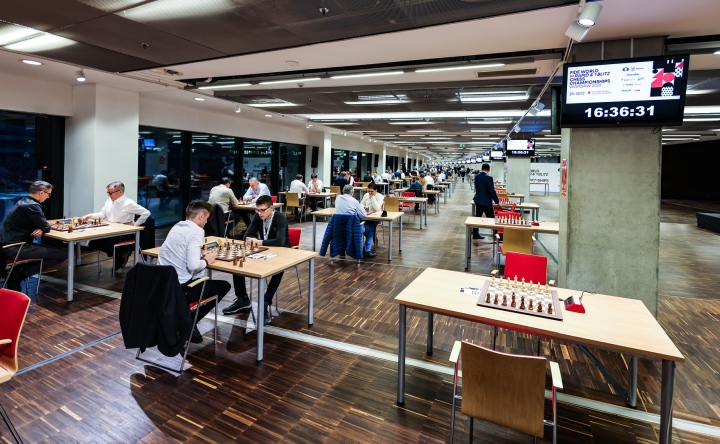
An open field in the World Blitz Chess Championships as defending champions Carlsen and Lagno underperform on the first day Defending champion Magnus Carlsen got off to a bad start in the World Blitz Chess Championship, having suffered three losses on the first day and is a point and a half behind the tournament leader Levon Aronian. Sitting alone at the top on 10/12, Aronian (who in 2010 won the world blitz) lost just one game but beat all of his main opponents of the day. He is, however, yet to play the defending champion Magnus Carlsen as well as Hikaru Nakamura (who has won the silver medal in the previous edition of the event). Egypt’s Bassem Amin has staged a big surprise, finishing day one alone in second place, with 9.5/12, and is followed by the top Iranian player and former junior world champion Parham Maghsoodloo who is on 9/12. They are chased by a field of 12 grandmasters, all with 8.5 points, including defending champion Magnus Carlsen, Ian Nepomniachtchi, Daniil Dubov, Alexander Grischuk as well as one of the top blitz players in the world, Hikaru Nakamura who also struggled to make a breakthrough, making five draws in a row. The third tier of players, on 8/12, is led by local favourite Jan-Krzysztof Duda and includes former contender for the world chess crown and the 2016 World Blitz Champion Sergey Karjakin. World number two Alireza Firouzja is also on 8/12, but it is clear that he is not in his element. He started with a loss and then made two draws. His two-game victory run in rounds Four and Five ended when Serbian GM Aleksandar Indjic dominated the young French superstar in Round Six. Two more victories, and Firouzja lost another game – to Alexander Predke in Round Nine. However, the 18-year-old showed he is world-class material by keeping his cool and making a comeback with three victories in the final three rounds of the first day of the blitz. The former contender for the title of World Champion, American Fabiano Caruana, is on 7/12, while the winner of this year’s world rapid championship, Nodirbek Abdusattorov, has 6.5 points. A day of ups and downs for Magnus Carlsen The problems for Carlsen began in Round 5 where he got into time trouble and found himself in an inferior position Black against Polish GM Bartosz Socko. To make things even worse for the World Champion, he ended up a piece down with no compensation and had to capitulate. The audience burst into applause as Carlsen shook the hand of his opponent admitting defeat. Then came another shock for Carlsen. In Round 6 he was leading white pieces against the strong Grandmaster Vladimir Fedoseev (who finished the day on 8.5/12). The world champion played fast, making sure he didn’t repeat the mistake from the previous round and end up in time trouble. He achieved control over the game, but his execution was poor and – again – Carlsen made a fatal mistake on the move 44 and threw in the towel a few moves later. The world champion showed a sign of frustration as he slammed down one of the pieces on the chessboard following the game. Carlsen then managed to recover, scoring two victories, but then came another blow. In Round 9, he suffered a loss at the hands of Shakhriyar Mamedyarov (who finished the day on 7.5/12). The world champion was gradually outplayed and lost an exchange ending in a hopeless position. However, Carlsen did not allow the setbacks to crush him completely as he then defeated former Kasparov’s second Mikhail Kobalia and Turkey’s Vahap Sanal. But the day ended on a bitter-sweet note for Carlsen as he didn’t manage to win against India’s Arjun Erigaisi, who defended very well as Black. Carlsen enters the second part of the blitz championship a point and a half behind leader Levon Aronian. The women’s championship: Bibisara Assaubayeva leads as defender and three-times champion Lagno sinks With eight points, Bibisara Assaubayeva is the sole leader following the first day of the Women’s World Blitz Chess Championships, where nine rounds were played on the first day. The 17-year-old player from Kazakhstan has earlier this year shown great promise in the online Women’s Speed Chess Championship where she reached the quarterfinals and was eliminated by the eventual winner Hou Yifan. In the first nine rounds of the world blitz, Assaubayeva has lost just one game (to Valentina Gunina), defeating some of the tournament top contenders – Alexandra Kosteniuk, Polina Shuvalova and Anna Muzychuk. Following a solid performance in the three-day world rapid championship, 20-year-old Indian player Vaishali Rameshbabu (the sister of the Indian chess prodigy Praggnanandhaa) is in second place with 7.5/9. Three players are sharing third place – Humpy Koneru (pictured below), Alexandra Kosteniuk (who managed to recover from a loss in the first round to Turkey’s Ekaterina Atalik) and another Kazakh player, 21-year-old Zhansaya Abdumalik. Top seed player and the current titleholder, Kateryna Lagno, seriously struggled on the first day of the women’s world blitz tournament. The three-time women’s world blitz champion started with a loss to a significantly lower-rated player and then made a draw. Out of nine rounds, Lagno won just three games, drew four and lost two. With 5/9, she is now as far down as 40th place and will have an arduous task in the remaining eight rounds should she want to retain the title. Text: Milan Dinic Photo: Rafał Oleksiewicz, Lennart Ootes, Anna Shtourman and Michal Walusza Official website: worldrapidandblitz.fide.com/ Partners:
Vachier-Lagrave and Aronian forge into the lead
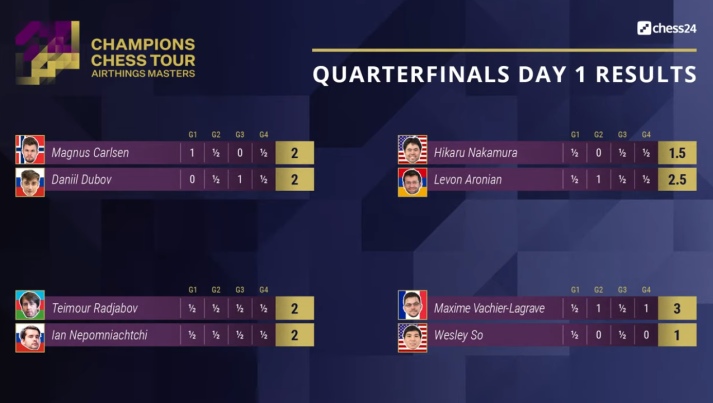
Day 1 of the quarterfinals at the Airthings Masters featured four mini-matches of four 15+10 games. Maxime Vachier-Lagrave defeated Wesley So 3-1 winning two games with Black in the sharpest lines of the Sicilian. The second game with unusual material balance (a rook and four pawns vs. a pair of bishops) was particularly exciting. The Frenchman proved once again that he feels in his element in this type of position. Levon Aronian beat Hikaru Nakamura 2½-1½ after winning the second game and drawing all the rest. In the critical second game, the Armenian obtained a very comfortable position in the London System and instructively exploited the weakness of dark squares in the opponent’s camp. Magnus Carlsen again outwitted Daniil Dubov in a drawn endgame in the starting encounter of their match, but the Russian stroke back in the third game. The World Champion snatched a poisoned a5-pawn and fell under a crushing attack. The second and fourth games were drawn. Ian Nepomniachtchi and Teimour Radjabov played solid chess and drew all four games although the Azerbaijani GM was much closer to the match victory. In game four Teimour reached a quite promising position but being short of time did not use all his chances. The second quarterfinal matches will be played on Wednesday starting at 2 PM GMT. Official website: https://championschesstour.com/
Candidates play-off introduced

As per the decision made at the FIDE Council meeting on December 27, a playoff has been introduced for the Candidates Tournament and the Women’s Candidates Tournament, to be played in the case of a tie for first place. This decision has been taken after consultation with all the players who have already qualified for the competition. A majority of them favoured the option of a play-off over the tie-break system used in previous editions (“1. The results of the games between the players involved in the tie; 2. Number of wins; 3. Sonneborn-Berger”). The play-off will consist of rapid games. Details like the exact time control to be used and the total number of players to take part in the tie-break, will be decided in January after further consultation with players. Once the precise format has been defined, FIDE will publish an updated version of the regulations. As it was announced yesterday, the Candidates Tournament 2022 will take place in Madrid, Spain, from June16 to July 7.
92nd FIDE General Assembly: results and decisions
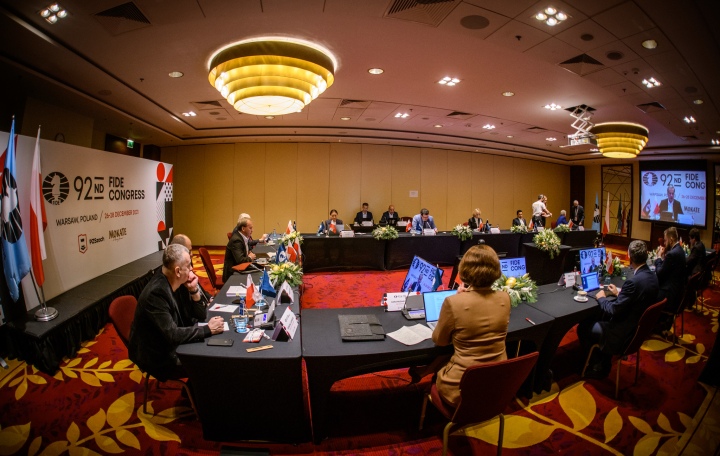
The 92nd FIDE General Assembly took place yesterday, December 28, and for the first time ever, it was organized under a hybrid format. While most of the delegates participated through videocall, and votes were cast online, the FIDE President, Management board, and several members of the Council were present in Warsaw, where the World Rapid and Blitz Championship takes place. As it has become a tradition, the meeting began with a video In Memoriam in remembrance of the chess family members who passed away during the year. The President summarized the highlights of the year, including all the FIDE main competitions and FIDE’s social initiatives, one of the areas where our organization made more progress over the past few months. The report of the Treasurer Zhu Chen and discussions on financial matters demonstrated that FIDE is in good financial shape. The approach of presenting the FIDE budget has been changed to presenting gross income and expenditure, which allows for more transparency and resembles the best practice of our peer international sports federations. Such profound change comes from the implementation of what can be considered a change in our business model. In the past, FIDE outsourced organization of most Events, including World Championship Matches, to third parties. But shortly after the new management team took office in October 2018, FIDE has been building capabilities to organize event and acquired back the right to stage the World Championship Match. “This is a major change of business model for FIDE that requires us to review our financial reporting and budgeting process,” explains Chen. “While the pandemic forced us to postpone the implementation of our new business model by almost two years, the recent World Championship Match has proved that FIDE is on the right track.” The budget for 2022 is balanced and established at a total income and expenditure of 12.84 million EUR. “The Development Fund has been doubled, which means many opportunities for great projects”, explains Dana Reizniece-Ozola, FIDE’s Managing Director. It must be noted that, in 2021, more than 80% of the income was generated by sponsorship, donations and broadcast rights, compared to 48% in 2020, and 4,8% in 2016. In other words, the income from licenses and fees paid by member federations and chess players has been reduced from 95,2% in 2006 to less than 20% in 2021. Another important step forward was the approval of a New Ethics and Disciplinary Code, a pivotal document to provide FIDE with better governance policies and increased transparency. The new Code is the product of intensive work and review over the past year. “It is the mission of FIDE to promote the highest possible ethical values within the sport of chess and to ensure that the spirit of fair play and good sportsmanship prevails. The Code sets out ethical values, principles, duties and proper sanctions applicable throughout the chess community and sport,” explains Francois Strydom, Chairman of the FIDE Ethics & Disciplinary Commission. In the same direction, a new set of FIDE electoral rules were approved for the electoral procedure that must take place in 2022. This document defines the scope of application and general principles, the eligibility and nomination and candidates, the ethical considerations to observe during the campaign, the designation of the electoral commission, and the counting of votes, among many other details. These new rules also imply a strong stance for an increased gender balance, something particularly important in a year that has been designated by FIDE as “The Year of Women in Chess”. Finally, we are happy to announce that the FIDE family keeps growing. To begin with, the request to join FIDE by four new Federations was approved. Dominica, St.Vincent and Grenadines, Niger, and Belize, are now members of FIDE. FIDE will be happy to host the new member federations in the World Chess Olympiad in Moscow next year, and also provide them with development funding and capacity building support. They are already taking the first steps, and for instance the St Vincent and Grenadines Chess Federation just held its first national championship ever. On December 17, Chinedu Benjamin Enemchukwu was crowned as the first national champion in this Caribbean country. FIDE also awarded a new title of a FIDE Honorary Member. The 92nd FIDE General Assembly voted unanimously in favour of awarding the title of “FIDE Honorary Member” to Andrey Filatov, President of the Chess Federation of Russia, for his special contribution to development of chess. Over the entire history of FIDE that counts nearly 100 years, the honorary member title has been awarded to about 80 people, including one of the Federation founders, Lord Frederick Hamilton-Russell, world champions Max Euwe and Boris Spassky, world women’s champions Nona Gaprindashvili and Maia Chiburdanidze, the oldest grandmaster in the world Yuri Averbakh, the inventor of the universally adopted in chess ELO system, Arpad Elo, and the leaders of the Soviet Chess Federation Boris Rodionov and Vitaly Sevastyanov. Decisions of 2021 FIDE General Assembly Decisions of 2021 4th FIDE Council Meeting Please visit the FIDE Congress website for a complete information. Photo: David Llada
Nodirbek Abdusattorov and Alexandra Kosteniuk win World Rapid Championship
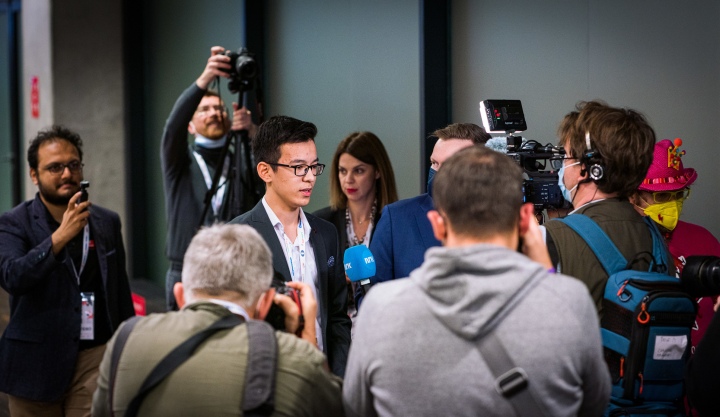
Following a blitz tie break victory against Ian Nepomniachtchi, the 17-year-old Uzbek prodigy Nodirbek Abdusatorov won the crown in rapid chess, stripping the defender Magnus Carlsen of his title. In the women’s section, Alexandra Kosteniuk finished first with 9/11 and won her first-ever world crown in rapid chess With 9.5 points out of 13 rounds, Nodirbek Abdusattorov was the first among four players tied for the top spot in the open section of the World Rapid Chess Championship. The other three were Ian Nepomniachtchi, defending champion Magnus Carlsen and Fabiano Caruana. Under regulations, only the top two players went on to play the tie-breaks. The champion in rapid chess was decided by two blitz games in which each player had three minutes with a two-second increment per move. The first game was drawn, so the champion was decided in the second game, where Abdusattorov as White scored a victory against Ian Nepomniachtchi. With this victory, Abdusattorov did not only make history but also won a prize of 60,000 USD. In the women’s section, Alexandra Kosteniuk is the winner of the World Rapid Chess Championship. In eleven rounds of the women’s tournament, Kosteniuk did not lose a single game – scoring seven victories (6 in a row in the first six rounds) and making four draws. How the final day unfolded in the open section Day three of the rapid saw the remaining four of 13 rounds played. There was a big surprise in Round Ten as the defending champion Magnus Carlsen lost to the 17-year-old Uzbek Nodirbek Abdusattorov. Following the English Opening, both sides ended in an equal position, but Carsen, leading black pieces, tried to force a victory. However, things didn’t go his way and – for the first time in the tournament – Carlsen was the one in time trouble. Undeterred, he played aggressively, but Abdusattorov did not let himself be intimidated, finding the right moves and seeking counterplay. The two ended in a queen and pawn endgame where, although Carlsen had an extra pawn, White advanced his pawn down the h-file closer to the promotion. Carlsen could have forced a draw with precise play, but he overlooked a check on the a1-h8 diagonal which forced the exchange of queens, leaving White to promote and win. Carlsen resigned instantly. This was not the first time Abdusatorrov caused problems for Carlsen. In the 2019 edition of the World Rapid Championship, played in Moscow, the then 15-year-old Uzbek managed to make a comeback in a weaker position against Carlsen and get a draw, which then visibly upset the world champion. Abdusatorrov’s victory was a big shock which not only turned the tables on Carlsen but changed things at the top of the scoresheet. It was now Abdusattorov and Ian Nepomniachtchi (who in Round Ten beat compatriot Alexander Grischuk) who were in the lead, on 8.5/10, half a point ahead of Carlsen, who was joined by Fabiano Caruana (who scored a confident victory as Black over Bassem Amin to reach the top). Round 11 saw the first duel between Carlsen and Nepomniachtchi since the two played the match for the title of World Champion earlier in the month in Dubai. Carlsen (White) opted for a sideline in the Catalan, but Nepomniachtchi was unfazed with this surprise. He easily equalised and brought the game to a draw. While Carlsen was struggling to get a lucky break, luck was clearly on the side of Abdusattorov as he managed to save a very bad position with a two-pawn deficit as Black against Fedoseev, keeping him in the lead after the 11th round, together with Nepomniachtchi. Things changed again in Round 12: luck was again on the youngster’s side. Playing with black pieces, he ended in a hopeless position against the young Indian star Gukesh but managed to wriggle out, although not without some help from his opponent. Meanwhile, Carlsen, won an exchange but his opponent, the seasoned heavyweight Levon Aronian was holding his ground. Suddenly Aronian overlooked a rook exchange, handing over the victory to Carlsen and a place among the tournament leaders. In this round, Nepomniachtchi made a quick draw with Nakamura, saving himself for the final rapid game. In the final round of the regular part of the tournament, it was an open race: there were four players on nine points (Abdusattorov, Nepomniachtchi, Carlsen and Caruana) and three on 8.5 (Jan-Krzysztof Duda, Hikaru Nakamura and Dommaraju Gukesh). The game between Caruana and Nepomniachtchi ended in a speedy draw, with almost no serious play. The local favourite, Jan-Krzysztof Duda, was close to winning as Black against Abdusattorov, but the Uzbek managed to save a weaker rook endgame and clinch half a point. All eyes were now on the game between Nakamura (who in 2019 won the bronze medal at the world rapid) and Carlsen. Nakamura, playing with white pieces, was caught out in the opening but managed to consolidate. The position transpired into an even rook endgame where Carlsen had an extra pawn. Despite being an expert in grinding opponents in equal positions until they finally make a mistake, Magnus did not manage to convert as Hikaru did not crack and the two finally agreed to a draw. Thus, the third and final day of the World Rapid Chess Championship – which started with an upset for Carlsen – ended in a drama as there were four players on 9.5 points, in a tie for first place: Nodirbek Abdusattorov, Ian Nepomniachtchi, Magnus Carlsen and Fabiano Caruana. According to the rules, only the first two among them (Abdusattorov and Nepomniachtchi) went to the tie breaks to decide who would be the champion. The tie-breaks There was a drawing of lots to determine who would be leading the white pieces in the first blitz game. Nepomniachtchi drew White. In the first blitz game of the tie break, Nepomniachtchi had come out from the opening with a strong position. Abdusattorov had serious problems in the middlegame but – like in other games during this final day – managed to defend well and get a draw. In the second game, Abdusattorov opted for his favourite
Candidates Tournament to take place in Madrid sponsored by Chess.com

The 2022 Candidates Tournament, which will produce the challenger for the next world chess championship match, will take place in June-July 2022 in Madrid, Spain. As the organising sponsor of this prestigious tournament, Chess.com signed an agreement on Monday with governing body FIDE and the Scheinberg family, patrons of the event. The Candidates Tournament will once again be the most important tournament of the year, with eight top grandmasters fighting for a spot in the next title match. The previous Candidates tournament, which was held in Yekaterinburg, Russia partly in 2020 and partly in 2021 due to the Covid-19 pandemic, was one of the best-viewed tournaments in chess history. So far, six players have qualified for the 2022 edition: GMs Fabiano Caruana, Jan-Krzysztof Duda, Alireza Firouzja, Sergey Karjakin, Ian Nepomniachtchi, and Teimour Radjabov. The final two players will come from the 2022 FIDE Grand Prix, to be held February-April 2022. Following the agreement among FIDE, the Scheinberg family, and Chess.com, the dates and host city for the next Candidates Tournament have been set. The tournament is due to take place June 16 – July 7, 2022 in Madrid. The location of the playing hall is yet to be announced, but it’s known already that the opening and closing ceremonies will be held in the Four Seasons luxury hotel in the Spanish capital. “The Candidates tournament is one of the most exciting events in the chess calendar, and as such, it has massive followership. Its popularity has grown to the point that it is comparable to that of the World Championship Match. For FIDE, it is a great satisfaction to hold this important tournament in Spain, a country that loves chess,” said the FIDE President, Arkady Dvorkovich. “The partnership with Chess.com will also allow us to organise this event at the highest level, as was the case recently at the FIDE Chess.com Grand Swiss in Riga. Last but surely not least I’d like to thank the Scheinberg family, whose constant contribution to chess deserves real appreciation.” “For the Spanish Chess Federation, it will be a great honour to cooperate with FIDE and Chess.com in making this event happen. Chess has always been very popular in our country, and well respected as an educational tool, with hundreds of thousands of children engaged in chess activities in schools. Hosting a top sporting event like the Candidates brings media attention, and gives all these kids something to look up to.”, said Javier Ochoa, President of the Spanish Chess Federation. “I am very excited to be working with FIDE and the Scheinberg family on this event. As a fan, I’m already looking forward to following this incredible tournament and can’t wait for the outcome,” said Erik Allebest, CEO of Chess.com. “I am also happy for these amazing players to have the opportunity to play in such a wonderful city and what will surely be a great venue.” The tournament is made possible by the generous patronage of the Scheinberg family, who have stated to be honoured to once again contribute to a major chess event that is part of the world championship cycle. Chess.com will provide further support as a co-organizer and official broadcast partner, once again having exclusive footage from the playing hall on Twitch. Spain’s chess tradition is centuries old. The rules of chess as we know it today were established in Spain in the late 15th century, around the time when the Catholic priest Ruy Lopez de Segura (c. 1530 – c. 1580) was considered to be the strongest player in the world. All major chess events have taken place in Spain at least once, including among others the 1987 Kasparov-Karpov World Championship in Seville, the Susan Polgar- Xie Jun Women’s World Championship match in Jaen in 1996, and the Chess Olympiad in Calvia in 2004. Spain has also hosted the Candidates final twice before. In 1987 Anatoly Karpov qualified for his Sevilla match by defeating Andrei Sokolov in Linares, and the 1993 FIDE Candidates final between GM Nigel Short and GM Jan Timman was held in El Escorial, about 45 kilometres (28 miles) northwest of Madrid. The 1998 Magistral Comunidad de Madrid, won by GM Viswanathan Anand, was the last major chess tournament in the Spanish capital. The Candidates Tournament itself has a long tradition as well. It was first held in 1950 in Budapest and the second edition, the 1953 Candidates Tournament in Zurich, belongs to the most famous tournaments in chess history. In modern times, the 2013 Candidates Tournament in London was particularly dramatic and historic, when the current world champion GM Magnus Carlsen managed to qualify for his first world championship. He went on to beat Anand later that year, and successfully defended his title in 2014, 2016, 2018, and 2021. Recently, Carlsen has stated that he only wishes to defend his title if his opponent will be from the new generation of chess players. His preferred opponent is 18-year-old Firouzja, who recently surged to the world number-two position behind Carlsen as the youngest-ever player to break the 2800 Elo rating margin. Photo: Fermín Rodríguez Fajardo About FIDE: Founded in 1924, the International Chess Federation (FIDE) is the governing body of the sport of chess, and it regulates all international chess competitions. Constituted as a non-governmental institution, it was recognized by the International Olympic Committee as a Global Sporting Organisation in 1999. Headquartered in Lausanne, it is one of the largest sports organisations, encompassing 195 countries as affiliate members, in the form of National Chess Federations. About Chess.com: Chess.com is the world’s largest chess site, with a community of more than 77 million members from around the world playing millions of games every day. Launched in 2007, Chess.com is the leader in chess news, lessons, events, and live entertainment. Visit Chess.com to play, learn and connect with chess—the world’s most popular game. Contact: FIDE:press@fide.com Chess.com:press@chess.com