

2025 U.S. Championships: Fabiano Caruana and Carissa Yip defend titles

GM Fabiano Caruana and IM Carissa Yip were crowned U.S. Champions, winning their fourth and third consecutive titles, respectively. The 2025 U.S. Championships (Open and Women’s) were 12-player round-robins with a classical time control and a combined prize fund of $402,000. Held at the upgraded facilities of the Saint Louis Chess Club in St. Louis, Missouri, the tournaments attracted the strongest American players, with the exception of Hikaru Nakamura. The Open competition turned into a thrilling duel between Fabiano Caruana and Wesley So. Despite missing a win in their sixth-round clash, Caruana seized the lead in Round 9 and preserved it to the very end, securing his fifth national title with a score of 8/11. Wesley So finished a half-point behind the champion to take the silver medal. Levon Aronian completed the podium with 6.5/11; all three finished the event undefeated. The Women’s event followed an equally exciting script, with Anna Zatonskih, Carissa Yip, and Alice Lee sharing the lead with just two rounds to go. Yip finished strongly with two victories over Nazi Paikidze and Thalia Cervantes Landeiro to capture her fourth national title. Meanwhile, Anna Sargsyan pulled off two crucial wins over Zatonskih and Lee to claim the silver medal. Irina Krush scored 1.5 points in the final two rounds to secure the bronze. Photos: Saint Louis Chess Club / Lennart Ootes Official website: saintlouischessclub.org/event/2025-us-chess-championships/
2nd FIDE Olympiad for People with Disabilities nears its grand finale
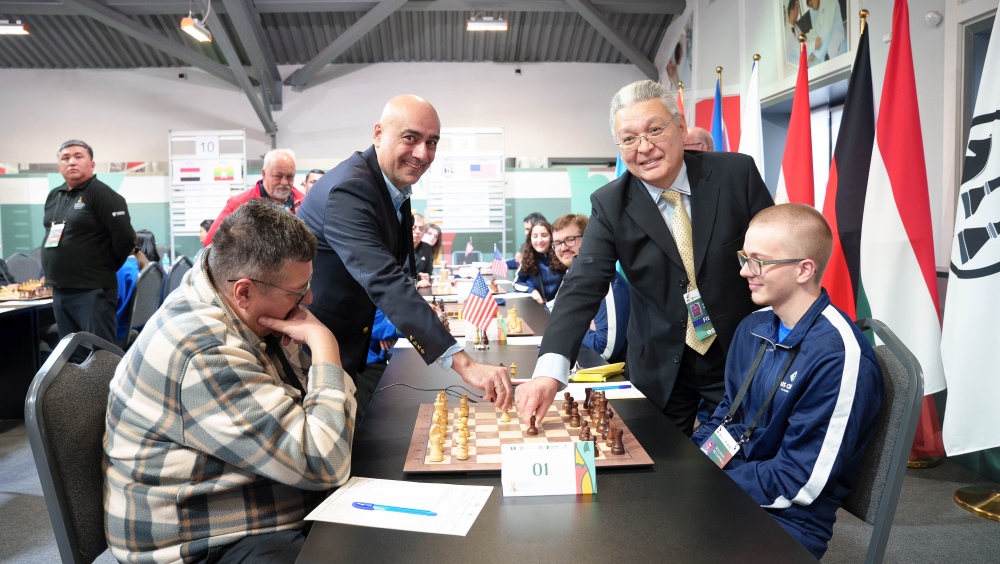
The fifth day of the 2nd FIDE Chess Olympiad for People with Disabilities began with “Inspiration Talks” featuring WGM Dana Reizniece, Deputy Chair of the FIDE Management Board, and GM Thomas Luther, Chair of the FIDE Commission for People with Disabilities. The motivational meeting, held at the New Generation School, brought together children with special needs. The event was jointly organized by FIDE, Kazchess, and the International School Chess Federation (ISCF), with support from the Ministry of Education of Kazakhstan. The speakers shared their personal journeys and insights into how chess can teach resilience, discipline, and creativity. An open discussion followed, where the children asked questions and shared their enthusiasm for the game. GM Thomas Luther said: “It was a wonderful experience to meet so many motivated children. Chess is more than a game – it teaches imagination, concentration, respect, and how to handle both victory and defeat.” Celebrating United Nations Day As play resumed for Round 5, the first ceremonial move was made by: Philip Gardner, President of the International Committee of Silent Chess (ICCD), Berik Balgabaev, Advisor to the FIDE President, Sukhrob Khodzhimatov, Deputy Resident Representative of the United Nations Development Programme (UNDP) in Kazakhstan, and Ardak Yeleussizov, Director of Freedom Bank Astana. The visit of Mr. Khodzhimatov was especially symbolic, coinciding with United Nations Day. He shared:“This movement is truly meaningful. For UNDP, our guiding principle is to leave no one behind. People with disabilities must be treated as full members of society – we must value their power, energy, and initiative. I was deeply impressed by this facility and the happiness of the participants – this is truly a place for everyone.” Young Stars of the Olympiad The Olympiad also celebrates its youngest participants, whose enthusiasm and spirit continue to inspire everyone in Astana. Thirteen-year-old Mikhail Dzenisenia from FIDE Team 2 (pictured below) spoke confidently about his ambitions: “I started playing chess when I was four. Now I want to become a FIDE Master and one day win the World Championship for players with disabilities.” The youngest boy at the Olympiad, 12-year-old Ben Kaufmann from Germany, expressed his joy at playing alongside his father: “It’s very special to be here. We show that everyone is perfect. I play with my dad every day, and chess is a big part of our life.” His father, Thorsten Kaufmann, captain of the German team, added: “Here, everyone is equal on the board – there are no disadvantages. This tournament shows that all people are special, and you should never give up.” Twelve-year-old Celine Atassi from the USA, the youngest girl at the Olympiad, shared what chess means to her: “Chess plays a huge role in my life. I study for several hours every day, and I hope to become an International Master or even a Grandmaster one day.” On the boards At the top tables, Poland and FIDE 1 drew their crucial match, trading blows on boards two and four. Both teams remain in the lead with 9/10 team points. Just behind them are IBCA and IPCA, both on 8/10 points, keeping the race for gold wide open before the final round. Standings after Round 5 can be found on Chess-Results. Position of the Day Today’s instructive position came from the game between Griffin McConnell (USA) and IM Piotr Dukaczewski (IBCA), showcasing the power of active defense and creative counterplay. In a position where White’s rook and two minor pieces should normally overpower the queen, Black found a brilliant idea: 23… b3!! – a dynamic pawn thrust, threatening a double attack after …Qa5. White tried 24. Bd5 Qa5 25. c3, but then came another stunning move: 25… c4!, creating multiple threats. After 26. Bxc4 d5!, White’s bishop was trapped, and the balance tipped decisively in Black’s favor. The rest was a smooth sailing for Black. As the Olympiad reaches its final stages, excitement and tension are rising. The players remain fully focused, yet the atmosphere of team spirit continues to define this unique event. Tomorrow, the final round will decide who takes home the gold – but here in Astana, every participant has already become a winner through their spirit, courage, and love for the game. Official website: dis-olympiad2025.fide.com/
2nd Olympiad for People with Disabilities, Day 4: Inspiration, inclusion, and the power of chess
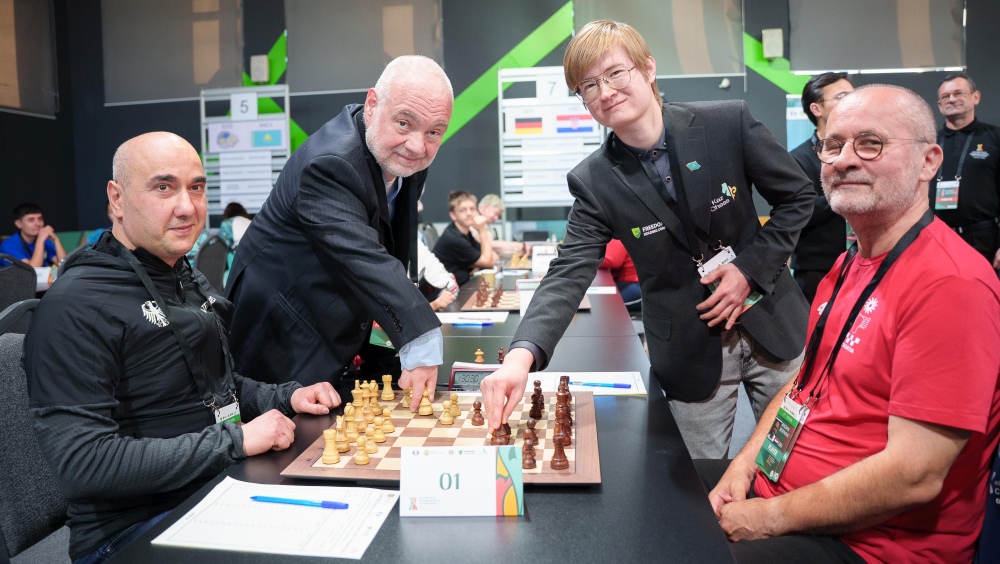
The fourth day of the 2nd FIDE Chess Olympiad for People with Disabilities began with a heartwarming initiative. GM Alisher Suleymenov of Kazakhstan, a bronze medalist at the Asian Championship, hosted a simultaneous exhibition on 12 boards for local children with disabilities at the Paralympic Training Centre. The event was organized by the International School Chess Federation (ISCF), which brought together young players with disabilities to enjoy an inspiring day of chess. “It was a great day! I was very excited to give a simultaneous exhibition against 12 very talented young stars,” said GM Suleymenov. “The games were quite interesting, and I hope this experience helps them grow. I wish them all the best in their chess journeys.” ISCF also organized a friendly online match between children with hearing impairments from Kazakhstan and South Africa — demonstrating how chess can connect and inspire across continents. Following the simul, the fourth round began with the ceremonial first move made by GM Thomas Luther, Chairman of the FIDE Commission for People with Disabilities; Diyar Seitov, Sports Director of the National Paralympic Center; and GM Alisher Suleymenov, fresh from his exhibition. “Inclusive sport is very important – in Kazakhstan and around the world,” shared GM Suleymenov. “I’m really happy to see this movement grow and to meet so many strong players and young talents here.” GM Thomas Luther emphasized the broader meaning of the event: “This Olympiad shows how the world of sports should be – inclusive and open. Every edition grows, and that’s our ambition.” “This beautiful venue shows how chess belongs to both the Olympic and Paralympic families,” he continued. “Chess removes barriers. It’s one of the few sports where everyone – regardless of background or physical condition – can play together on equal ground.” “Even if life gives you challenges, don’t be sad. Keep progressing. Today’s world gives everyone a chance – whether to become a chess master or succeed in any other field. That’s the message of this Olympiad.” Stories of Strength and Resilience Behind every participant stands a story of perseverance, courage, and love for the game. Prince Musokeri from Zimbabwe shared his powerful journey: “I started playing chess as a little boy. I come from a poor background, and this is my first time playing abroad. I’m so happy to finally be here,” he said. “Some years ago, during COVID, I struggled, got addicted to drugs, and lost my way – I was almost killed and even lost my memory. But chess gave me another chance to rebuild myself. Now I play for Zimbabwe, and my dream is to become a Grandmaster and teach others. Chess saved my life.” Jesús Osorio from Panama, who also played in the inaugural Olympiad in Serbia, expressed his deep emotions about returning: “For me, it feels like a dream come true every time. This isn’t just a tournament – it’s a celebration. Win, lose, or draw, everyone is happy, everyone is celebrating chess.” “Chess is everything to me. It’s how I prove myself, how I show I can be equal or even stronger. And it’s a universal language – here we come from all continents, yet we understand each other perfectly.” Jesús also shared a touching detail: “My wife is my lucky charm. She travels with me everywhere and even keeps my lucky pen – the one I used when I held a draw against a FIDE Master in round 1. She takes care of everything, and I’m so grateful for her strength.” These stories capture the essence of the Olympiad – a place where courage meets community, and every move on the board reflects a life story of determination. Standings after Round 4 With two rounds remaining, the race for gold is heating up. Poland and FIDE 1 are leading the standings with a perfect 8/8 team points. Just behind them, the teams from Israel, USA, Philippines, Cuba, IBCA, and IPCA are within striking distance with 6/8 points each. Tomorrow promises thrilling clashes at the top as Poland faces FIDE 1 in a key matchup. You can find the standings after Round 4 and pairings for the next round on Chess-Results. Position of the Day: The beauty of sacrifice Round 4 featured many tense battles, but one game stood out – between Lin Htet Naung (Myanmar) and Arias Cano Iliak Omar (Panama). After a tense middlegame, White achieved a completely winning position and found a brilliant finishing combination: White sacrificed the queen with 27. Qxf6!!, delivering a beautiful checkmate after 27…Bxf6 28. Rxh6+ Nh7 29. Nf7#. The 2nd FIDE Chess Olympiad for People with Disabilities continues to inspire everyone who witnesses it – on and off the board. Every move played is more than strategy; it’s a statement of strength and unity. Official website: dis-olympiad2025.fide.com/
2nd FIDE Olympiad for People with Disabilities reaches its midpoint
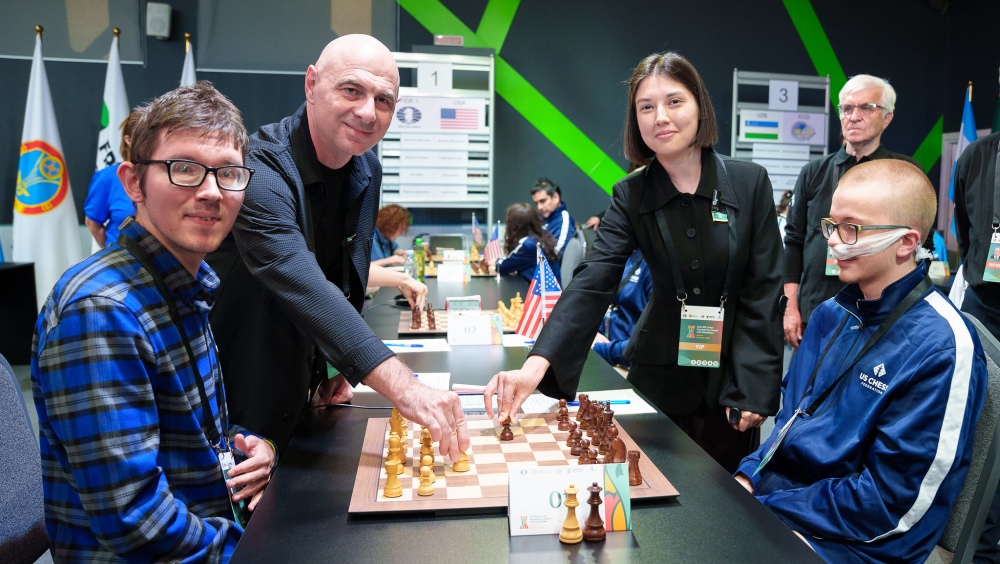
The 2nd FIDE Chess Olympiad for People with Disabilities in Astana has reached its half-way mark – the equator of this inspiring event. With Round 3 underway, the excitement and determination in the playing hall grow stronger each day. The first ceremonial move of the round was made by Dinara Naumova, Member of the Parliament of Kazakhstan, together with Akaki Iashvili, FIDE Special Tasks Director. “Before the first move, I spoke with the contestants – they were positive and confident. The atmosphere is wonderful, and the team spirit is inspiring,” said Dinara Naumova. “It’s an honour for Kazakhstan to host this event. I wish every player success and the strength to never give up. Team spirit makes us stronger.” Her words perfectly captured the spirit of the event – one of unity, resilience, and shared joy. The strength and spirit of the players Every participant at this Olympiad has a remarkable story. For them, every move on the board represents persistence, focus, and the triumph of the human spirit. Luisa Molina, from Team Colombia, shared her joy at being part of this inclusive event: “This Olympiad for People with Disabilities has been one of the best experiences we’ve ever had! This isn’t your usual event – it provides a space for inclusion.” Aryan Joshi from India, a first-time participant, was full of enthusiasm and optimism: “Feeling amazing – this is my first Olympiad for people with disabilities. Despite disabilities, despite the challenges on and off the board, everyone here is giving their best. Everyone is very friendly and very happy. Disability is not something that makes us less – we are differently able, not disabled.” Niloy Chakraborty, a coach for players with hearing impairments and an accompanying person at the event, emphasized the importance of opportunity: “I’ve worked with disabled students for a long time. I’ve shown them tournaments, helped them find opportunities, and organized many events for differently able teams. Here, everyone can participate – and they do, as equals.” Eugenio Campos, representing the IPCA team, coming from Angola, shared how chess became part of his life from a very young age: “This is a well-organized event; it gives us, players with disabilities, the opportunity to play against others from different countries. I thank IPCA, FIDE, and the Kazakhstan Chess Federation. I started chess when I was five – my cousin taught me, and since then, chess has meant a lot to me. Most of my life, I’ve played chess – it’s everything to me.” Another remarkable player of IPCA team is IM Igor Yarmonov from Ukraine, a five-time IPCA World Champion and International Master of both chess and chess composition. His wife and accompanying person, Galina Yarmonova shared: “We are grateful to all the organisers, volunteers, and staff for the wonderful atmosphere in Astana, for the excellent conditions for the players and their companions – everything is of the highest standard! This is our first time at such an Olympiad, and we thank the referees and volunteers for their kind, individual approach to each player.” “Throughout Igor’s life, chess has helped him overcome challenges and see the world – and we are happy to represent this big chess family,” she added. Even after the event, Igor continues contributing to the chess world as a judge for multi-move problems in the FIDE Album – evaluating compositions from around the globe. Inspiration beyond the board Every player finds their own motivation to keep going, and we asked, “Who is your favourite chess player in history?” Answers came quickly and with admiration: Magnus Carlsen, José Capablanca, Garry Kasparov, Anatoly Karpov, Bobby Fischer, and Mikhail Tal were among the most mentioned. But one response stood out. Jesús Osorio from Panama said: “My favourite chess player is not a famous person, but he is a very good chess player – my friend Osvaldo Herrera Graham.” A beautiful reminder that inspiration doesn’t only come from world champions, but also from those who encourage us personally – friends, coaches, and loved ones who share the same passion. The battle for the top Position of the day Today’s Position of the Day came from the exciting battle between Syed Ejaz Husain (Bangladesh) and Ben Kaufmann (Germany). Although Black’s position was slightly worse, they could still defend with 20…Nd6, trading off White’s active knight on f5. Instead, 20…Ne6?? was played, ignoring of White’s mounting kingside pressure. White immediately took advantage with 21. Ne5!, and after 21…Ra6?!, taking no heed of danger, came 22. Qg4 — launching a decisive attack. Black tried 22…Kh7, defeinding h6, but the storm was already breaking. White delivered a stunning blow 23. Nxh6!!, a brilliant sacrifice that ripped open Black’s kingside. After 23…gxh6 24. Qf5+ Kg8 25. Qxf7+ Kh8 26. Ng6#, it was checkmate. This brilliant finish reminds us of one of the great lessons of chess — and life: sometimes, you must take risks and trust your calculation. Evaluating, understanding, and acting with courage can lead to victory both on and off the board. Looking ahead As the Olympiad crosses its midpoint, the energy in Astana continues to rise. Every player here proves that chess is not only a sport of the mind, but a triumph of spirit, inclusion, and shared humanity. The standings after Round 3 and pairings for Round 4 can be found here: Chess Results – 2nd FIDE Chess Olympiad for People with Disabilities Official website: dis-olympiad2025.fide.com/
FIDE President Statement

Human life and dignity are fundamental values shared by all of us. While we hold deep respect and love for the game of chess that unites our community, these values must always come first. In recent times, public debate within the chess world has too often moved beyond the boundaries of acceptable, harming not only people’s reputation but their very well-being. When this happens, discussions can turn into harassment, bullying, and personal attacks — a particularly serious concern in today’s environment. The chess community has long respected the achievements of GM Vladimir Kramnik, and his contributions to our sport are undeniable. The same high standards that accompany great achievements, however, also confer a responsibility to uphold the principles of fairness and respect and to be ambassadors for the sport. Therefore, I, along with the FIDE Management Board, will formally refer all relevant public statements made by GM Vladimir Kramnik — both before and after the tragic death of GM Daniel Naroditsky — to the FIDE Ethics and Disciplinary Commission for independent consideration. At the same time, I reaffirm that FIDE will take appropriate action in any case where a lack of respect, public harassment, or bullying is observed within the chess community. We all share responsibility for ensuring that our sport remains a space of integrity, respect, and humanity — values that must always prevail over hostility and division. Arkady Dvorkovich, FIDE President
Turkic world: A joint move toward chess unity
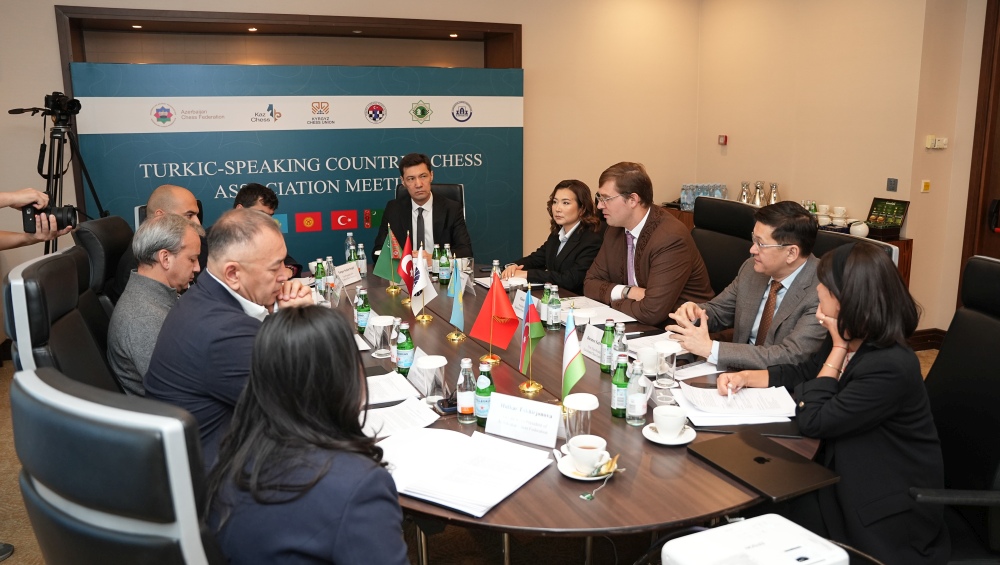
A memorandum to establish the Chess Association of Turkic-Speaking Countries signed in Astana, Kazakhstan On October 20, 2025, in Astana, representatives of Kazakhstan, Turkey, Azerbaijan, Kyrgyzstan, Turkmenistan, and Uzbekistan signed a Memorandum of Intent to establish the Chess Association of Turkic-Speaking Countries (TSCCA). This document formalizes the creation of a new structure designed to unite the chess federations of the Turkic world. The next step will be the legal registration of the TSCCA, paving the way for its full operational launch. The candidacy of Ilaha Gadimova (pictured below, right), a former prominent chess player from Azerbaijan and now a sports official, has been proposed for the position of TSCCA Secretary General. The idea for the association was conceived in September 2024 during the 45th Chess Olympiad and the FIDE General Assembly in Budapest. The participating countries agreed then to collaborate on developing a structure affiliated with FIDE. The association aims to strengthen ties between national chess federations, exchange experience and ideas, organize major tournaments, and develop programs for children and youth. Special attention will be given to promoting chess in schools and universities to inspire a new generation of players. The memorandum was signed in a ceremonial setting on the eve of the 2nd Chess Olympiad for People with Disabilities. The event was attended by Arkady Dvorkovich, President of FIDE, and Timur Turlov, President of the Kazakhstan Chess Federation. “The Turkic world is rich in chess traditions, great names, and strong schools. Now we have a common platform that will allow us to unite our efforts, share experience, and nurture a new generation of champions. This project brings us together not only through sport but also through our shared history and culture — which is why I am confident in its success,” said Timur Turlov. The association’s headquarters are planned for Turkistan, the cultural capital of the Turkic world. Turkey will chair the association until the end of 2025, with Kazakhstan assuming the leadership starting in 2026. The member countries represent a region with a population of around 170 million people and are home to over 100 grandmasters. The creation of the TSCCA is expected to significantly strengthen the chess movement across the Turkic world and enhance its collective presence on the global chess stage.
World Senior Championships 2025 commence in Gallipoli, Italy
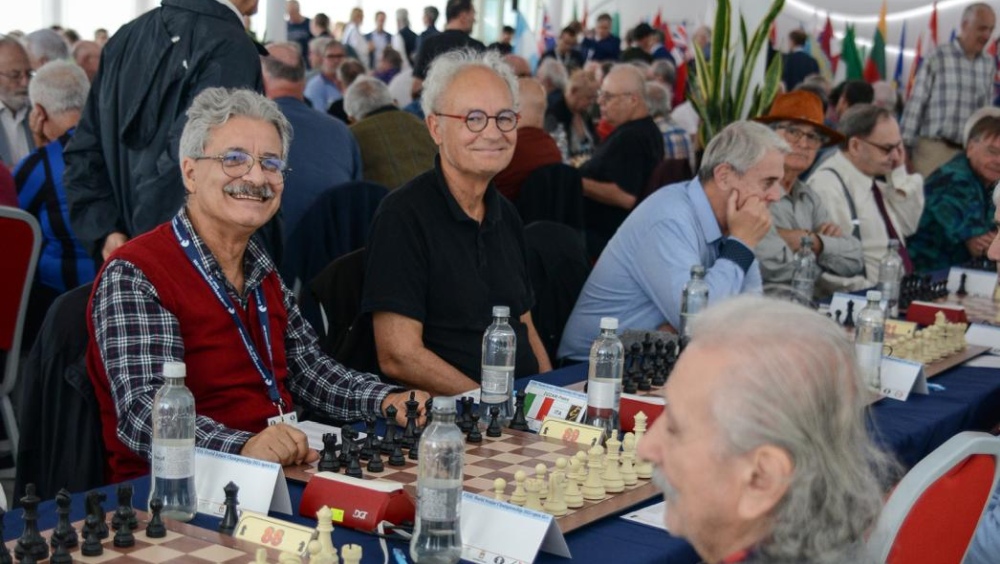
The 33rd FIDE World Senior Championships kicked off in the Grand Hotel Costa Brada, Gallipoli, Puglia, Italy, on October 21. The 2025 edition has set a new record, with 467 players participating. The players come from 67 different countries, with some even traveling halfway around the globe, flying in from New Zealand, South America, and South Africa. Of these, 55 participants are competing in the women’s competitions. The largest field is in the 65+ seniors category, with 247 players taking part. The championships are played as 11-round Swiss-system tournaments with classical time control (90 minutes plus a 30-second increment per move) and feature four categories: Open and Women’s sections for the 50+ and 65+ age groups. Four 2500+ GMs – Kiril Georgiev (BUL, 2526), Murtas Kazhgaleyev (KAZ, 2518), Alexandre Qashashvili (GEO, 2505), and Victor Mikhalevski (ISR, 2504) – headline the 50+ Open section, while reigning European Senior Champion GM Zurab Sturua (GEO, 2491) leads the 65+ Open starting list. GMs Pia Cramling (SWE, 2403), Ketevan Arakhamia-Grant (SCO, 2269; pictured above), IM Masha Klinova (ISR, 2235), and Monica Calzetta Ruiz (ESP, 2221) enter the 50+ Women’s competition as the top seeds. The legendary Nona Gaprindashvili tops the 65+ Women’s starting list. In recognition of the record turnout, FIDE has increased the total prize fund from €43,000 to €50,000. The category winners will receive: €5,000 (Open 50+), €2,100 (Women 50+), €3,000 (Open 65+), and €1,500 (Women 65+). In addition, the champions will be awarded free entry and complimentary hotel accommodation at the 3rd Cap Negret Senior Open (50+ and 65+), taking place from November 8–16, 2025, in Altea, Alicante, Spain. Special prizes for players aged 75 and above have also been increased. Several side activities will complement the main event, including two FIDE-rated blitz tournaments. The opening ceremony commenced with the playing of the Italian national anthem and the FIDE anthem, with all participants rising in a festive gesture. The competitions were officially opened by Tournament Director Cristina Rigo, co-organizer Matteo Zoldan (Chairman, WSCC 2025), and Yana Sidorchuk (FIDE Technical Delegate), who attended as the representative of FIDE. FIDE President Arkady Dvorkovich is expected to attend the award ceremony on November 1. Patrick Van Hoolandt (AC Chair) from Monaco delivered a welcome speech, wishing all participants wonderful experiences, new friendships, and many unforgettable memories throughout the tournament. Chief Arbiter Arno Eliens from the Netherlands reviewed the rules and officially signaled the start of the first round. Full results and pairings are available on Chess-Results. Official website: worldseniorchampionship2025.com/
2nd FIDE Chess Olympiad for People with Disabilities, Day 2: A celebration of strength, connection, and power of chess
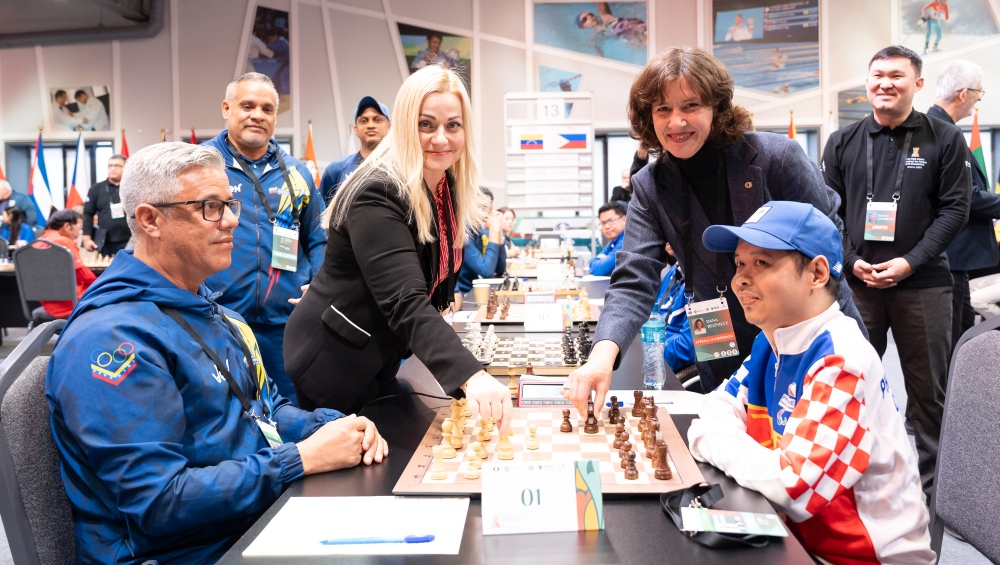
The atmosphere at the Paralympic Training Centre in Astana remains full of energy and inspiration as the 2nd FIDE Chess Olympiad for People with Disabilities continues into its second day. For many players, simply being here is already a victory – a triumph of willpower and perseverance over life’s challenges. Each move made across the chessboards carries a deeper meaning: determination, pride, and unity. Ceremonial first move with a message At the start of Round 2, the ceremonial first move was made by the Ambassador of Venezuela to Kazakhstan, Rosalba Lo Bué Antico, together with FIDE Deputy Chair of the Management Board, WGM Dana Reizniece. Ambassador Lo Bué Antico shared a heartfelt message about the event’s importance: “Today, in this 2nd Paralympiad for People with Disabilities, we see with great promise the possibility that Venezuela can develop major projects to promote chess – not only for people with disabilities, but also through educational programs in Venezuelan schools. Kazakhstan is a worthy example for Venezuela and the world.” Her words reflected the spirit of the Olympiad – an event that transcends competition and aims to make chess a global force for inclusion and opportunity. Dana Reizniece, who also made the ceremonial first move, expressed deep admiration for the players and organizers: “For me, it is not only 34 teams representing countries – for me, it’s 34 teams of people who are champions of their lives. They have a super strong character, and they are very humble. When you speak with them, you see it.” She praised the work behind the event’s organization: “The local organizers here in Kazakhstan made it possible not only with finances – thanks to Freedom Finance, the Kazakhstan Chess Federation, Astana Municipality, and the Government – but also by being brave enough to organize such an event.” Reflecting on the Olympiad’s evolution, Dana Reizniece added: “Many things have been improved. We know that there are many things that we can do even better – for example, invite more teams and provide this opportunity to play for even more countries worldwide.” And on the inclusivity of chess, she concluded: “Chess is, if not the, then one of the most inclusive sports – where people with disabilities or special abilities can play at the same level as professional players who have dedicated their whole lives to the game.” Inside the venue: Focus, friendship, and power of chess The Paralympic Training Centre in Astana – one of the most advanced accessible sports facilities in Central Asia – has become not only the stage for intense chess battles, but also a welcoming home for connection and community. Beyond the playing hall, the resting area offers players a place to relax, analyze games, and socialize. The atmosphere is warm and uplifting – filled with conversation, laughter, and mutual respect. When asked to describe chess in one word, players offered answers that capture the essence of the game:“Life. Love. Luck. Tenacity. Enjoyment. Pressure. Emotion. Equality.” For many, chess has been more than just a sport – it’s been a lifeline. As Roberto Fernando Elías, the Argentinian Chess Champion for the Blind, shared: “I’ve had my disability since the age of six. I believe that chess helped me avoid isolation and dedicate my time to a wonderful sport like chess. I’d like to express my gratitude to FIDE for creating this event.” His words mirror the feelings of many players who see this Olympiad as not only a competition, but a celebration – a place where friendships are formed and the joy of chess shines through. Position of the day: The art of trading pieces Many players believe that trading pieces leads to equality or draws. However, as today’s position of the day shows, every trade must be carefully evaluated. In the game between Axadxon Kimsanboyev (Uzbekistan) and Valeria Simone (Argentina), a critical mome nt arose: Black offered a bishop trade with 21. … Be5? to defend her d6-paw (21…Re5, sacrificing an exchange was a better option). Although logical, this decision proved costly – after the bishops exchange 22. Bxe5 Rxe5 the rook was kicked from the e5 with 23. f4 Re7 while Black’s dark-square became extremely vulnerable. A precise knight jump to f6 – 24. Nf6+ Kg7?, followed by 25. Qc3, sealed the fate of the game and the Argentinean player resigned, facing deadly threats. This instructive moment reminded everyone that in chess – as in life – not all trades are equal. Every exchange carries consequences, and true mastery lies in knowing when to simplify and when to keep the tension. Round 2 results After two rounds, seven teams – Poland, USA, Cuba, Israel, Philippines, IBCA, and FIDE 1 – are in the lead with a perfect 4/4 score. Full results and pairings for Round 3 are available on Chess-Results. A message beyond the board As the 2nd FIDE Chess Olympiad for People with Disabilities unfolds, it continues to highlight the unifying power of chess – a game where every move counts, and every participant inspires. For the players, organizers, and everyone watching, the message is clear: The board has no boundaries – and the spirit of the game belongs to everyone. Official website: dis-olympiad2025.fide.com/
India makes its move: Goa CM Pramod Sawant unveils FIDE World Cup 2025 logo and anthem
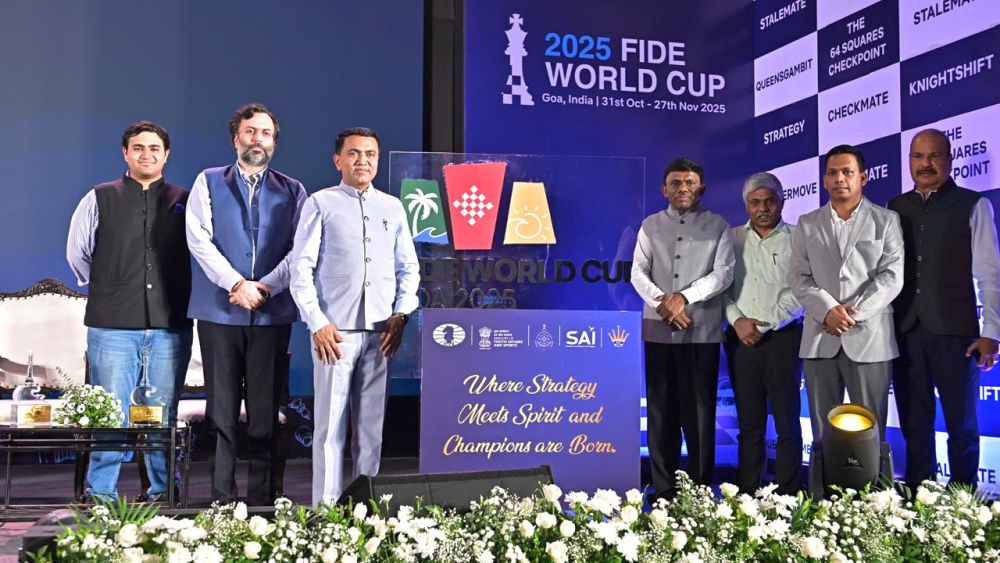
206 players from 82 countries to compete as music legend Daler Mehndi lends his voice to an anthem celebrating Goa’s cultural flair Panaji, October 21: A glittering ceremony celebrating Goa’s rich cultural heritage and India’s growing stature as a global chess powerhouse marked the launch of the official logo and anthem of the FIDE World Cup 2025, unveiled by Hon’ble Chief Minister Dr. Pramod Sawant in Goa on Tuesday. Returning to India after 23 years, the prestigious tournament will feature 206 players from 82 countries, with the anthem—voiced by music legend Daler Mehndi—capturing the spirit and vibrancy of Goa. The FIDE World Cup 2025, one of the most prestigious tournaments on the global chess calendar, will be held in North Goa from October 31 to November 27, 2025, bringing together elite players from across the world in a knockout contest for a prize purse of USD 2 million (approx. INR 17.58 crore). While the logo reflects Goa’s vibrant, culturally rich identity—capturing the essence of the state’s coastal charm and the strategic elegance of chess—the anthem, sung by legendary artist Daler Mehndi, adds a touch of grandeur and mystique to the event. Speaking at the launch ceremony, Honb’le Goa Chief Minister Dr Pramod Sawant said, “It is a moment of immense pride for Goa to host the FIDE World Cup 2025, one of the most prestigious events in global chess. This milestone not only reaffirms our state’s commitment to becoming a premier destination for international sport but also celebrates India’s rising prominence on the world chess stage. The official logo and anthem reflect the very soul of Goa — vibrant, creative, and deeply rooted in culture — while capturing the strategic elegance of chess. We are ready to welcome the world’s finest players to our shores for 28 days of top-class competition, camaraderie, and an experience that blends the spirit of Goa with the brilliance of the game.” The logo and anthem launch was also attended by Dr. Ramesh Tawadkar, Minister for Art and Culture, Tribal Welfare, and Sports and Youth Affairs, Nitin Narang, President of the All India Chess Federation (AICF) and Dev Patel, Secretary AICF. Dr. Ramesh Tawadkar, Minister for Art and Culture, Tribal Welfare, and Sports and Youth Affairs, said, “The FIDE World Cup 2025 is a remarkable opportunity to bring together culture, art, tourism, and sports on one grand stage. Goa has always been known for its vibrant heritage and hospitality, and this event will showcase how seamlessly our cultural identity blends with the global spirit of competition. The World Cup will stand as a testament to Goa’s ability to celebrate excellence — on and off the chessboard — while promoting our state as a world-class destination for sport and tourism.” Complementing the visual identity of the event is its official anthem — a dynamic celebration of India’s strategic prowess and youthful energy. Featuring the Hon’ble Prime Minister in its music video, the anthem brings together the spirit of the nation with the brilliance of chess. Iconic singer Daler Mehndi, known for his powerful and distinctive voice, infuses the anthem with his signature vibrancy, rhythm, and energy. Centered around the empowering theme “It’s Your Move,” the song captures the essence of India’s growing might in world chess while highlighting the vibrancy of its culture. The video also showcases India’s leading chess grandmasters and stars like World Champion D. Gukesh, Arjun Erigaisi, Koneru Humpy, Tania Sachdev, and Vidit Gujarati, symbolizing the new generation that is taking Indian chess to unprecedented heights. AICF President Nitin Narang thanked the Goa government for their support for the event and said, “Securing the hosting rights for the FIDE World Cup 2025 is a landmark moment for India and a testament to our growing credibility in the global chess community. Bringing a tournament of this magnitude to our shores — after 23 years — is not just a sporting success, but a proud national achievement. It will give Indian fans a rare opportunity to witness the world’s best players compete on home soil, inspiring a new generation to take up the sport. The anthem, with its energy and emotion, will revitalize chess across the country and take the game from clubs and academies into every home in India.” About the World Cup 2025 logo The logo feature three distinctive trapezoidal panels, the design captures different facets of Goa and the tournament itself. The Green Panel shows a white palm tree with a blue wave at the bottom. The Red Panel boasts of a diamond-shaped checkerboard pattern in white while the Yellow panel has a stylised sun with curved rays, representing Goa’s sunny weather and warm, welcoming vibe.
Daniel Naroditsky (1995–2025)
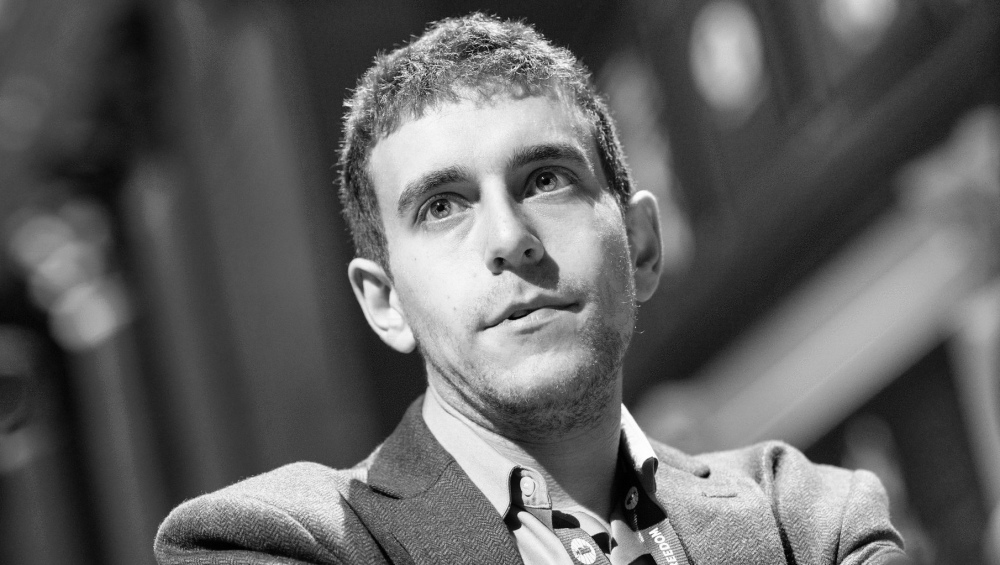
Born on 9 November 1995 in San Mateo, California, Daniel Naroditsky became a prominent Grandmaster, author, coach and streamer whose influence extended far beyond the chessboard. He died just two weeks before his 30th birthday. Chess entered his life at the age of six, when his older brother, Alan, brought several board games to entertain children at a party. Their father, Vladimir, an immigrant from Ukraine, taught them how to play chess. “I think a lot of people want to imagine that it was love at first sight and that my brother couldn’t pull me away from the chessboard… It was more of a gradual process, where chess slowly entered the battery of stuff we did to pass the time. A lot of my best memories are just doing stuff with my brother,” he told the New York Times in 2022, in an article announcing that he would be writing a chess column for the paper. Beyond chess, basketball was another of Naroditsky’s favorite sports. Like most players destined for success, Daniel Naroditsky began making his mark early. In 2007, he earned the FIDE Master title and won the U-12 section of the World Youth Chess Championship. He shared second place at the 2010 US Open, became an International Master in 2011, and won the US Junior Championship in 2013. That same year, he achieved the title of Grandmaster. His peak FIDE classical rating was 2647, reached in May 2017. Naroditsky was also an exceptional blitz and rapid player. He competed in major national and international events while simultaneously making a path for himself outside of chess, graduating with a degree in history from Stanford University. But Naroditsky’s greatest gift to chess was his ability to explain the game to those who were just starting to discover Caissa’s world. He was a teacher at the Charlotte Chess Center, and also had private students. He authored several books on chess, starting with Mastering Positional Chess which he published at the age of 14 – having begun writing it when he was just ten years old. Naroditsky often appeared as a commentator for prominent chess events, most notably on Chess.com, and also ran highly popular Twitch and YouTube channels. He was praised for the ability to calmly and simply explain the game to players of all levels. From 2014 to 2020 he also wrote a column for Chess Life. Naroditsky’s unexpected passing was announced on X by his family via the Charlotte Chess Centre. Chess players around the world spoke out following the news of Naroditsky’s death, praising him as a skilled player, a gifted educator and a generous spirit. Beyond the chessboard, Naroditsky played a pivotal role in popularizing chess content online, bridging the gap between professional and amateur chess. Speaking to the New York Times in 2022, he summed up his view of chess – and life – in the following well-known quote: “At the end of the game, both the king and the pawn go into the same box.” There are not many people in the world who manage to achieve so much before turning 30. Grandmaster Daniel Naroditsky will forever be among them. Written by Milan Dinic Photos: Maria Emelianova, Lennart Ootes and Michal Walusza