

Mongolia takes gold
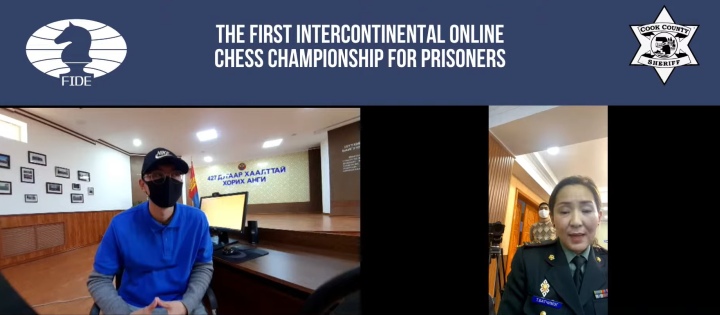
Team Mongolia became the winner of the first Intercontinental Online Chess Championship for Prisoners after defeating Team Zimbabwe in the final of the biggest ever chess event among correctional facilities. The event was organized by FIDE and the Cook County (Chicago, IL, USA) Sheriff’s Office and coincided with the International Day of Education in Prison. Both matches of the day were tremendously close, showing that these two teams clearly deserved to be in the final. The first round of the final was won by team Zimbabwe 2.5 – 1.5, however, Mongolia bounced back and won the second set 3-1, winning the final on game points. In a short after-game interview IM and WGM Batchimeg Tuvshintugs told about the experience of Mongolia in teaching and playing chess in prisons: “I am a national team player and have a woman grandmaster title. And at the same time, I am working at the Court Decision Making Agency of Mongolia. We’ve been doing several projects in our country. First of all, we’ve been organizing different chess events in correctional units, and our staff plays chess too. Mongolian chess has a great history, especially in correctional units. Since 1956 we started organizing chess tournaments in all our correctional units, so it’s like a traditional tournament for us. The Mongolian amateur chess level is pretty high, I consider, so it’s no wonder our prisoners are doing quite well in this tournament.” Despite the loss on the final day of the event, team Zimbabwe was very excited about the performance of its players, already looking forward to playing in the next year tournament: “Chess in prisons program in Zimbabwe is ongoing for the past six years, ” said Thabo Elisha, Public Relations Director at Zimbabwe Chess Federation. “We are regularly having competitions, and this is the third time we are playing against people outside our continent. We are very satisfied with our performance and results we had against our opponents and touched by their stories. We want to thank organizers for hosting such an event. We will do our best and try to win the event next year. Our success this time will help us to develop chess in the prison program, attract more attention from companies, sponsors, and individuals. We hope to get more chess equipment for our team: chessboard and books, and to organize more chess events for prisoners. We will be looking forward to the next intercontinental event and our team will do its best to get on top!” FIDE President Arkady Dvorkovich attended the online closing ceremony of the 1st Intercontinental Online Chess Championship for Prisoners and congratulated the finalists: “I want to congratulate Mongolia on winning the event and Zimbabwe on finishing second. These are great achievements and great inspiration for many people who are joining the chess community. I was in Chicago with Cook County Sheriff Tom Dart a couple of days before, greeting the US team on site in the prison, and had a lovely conversation about chess and played a game with one of the inmates. For me personally and for FIDE, it is a great inspiration to continue and to expand this project to more and more countries. And I hope that you, as the best teams of this championship, will share your experience and will continue to learn chess and to play chess, passing this love to other people around you.” The three-day tournament aimed to popularize chess as an efficient tool for reintegrating incarcerated people ran from October 13-15, 2021. The event attracted 41 teams from 30 countries representing all continents providing an opportunity for inmates to play with their peers across the globe.
Mongolia vs. Zimbabwe in the final, Georgia dominates women’s tournament

The teams of Mongolia and Zimbabwe will battle it out tomorrow (CET 10:00) for the gold in the first Intercontinental Online Chess Championship for Prisoners – the biggest ever chess event among correctional facilities. Both teams topped their groups in the championship stage today. Mongolia advances to the final Mongolia was the first team to progress to the final by winning the Group 1 round-robin tournament with a perfect score. Team Russia became a runner-up with four victories (the Philippines, Georgia, Palestine and Germany) and one loss (to Mongolia). “I think we underestimated our opponent in the beginning, and when we realized how strong they are, it was too late to turn the match around,” said Vladimir Sarkisov, player of team Russia. “This event is very important for all of us. It is a big honour to represent our correctional facility, our city and even our country on the international level. Every Sunday, we gather, study and play chess, and I give lectures on chess to my inmates. Sometimes we feel there is a lack of practice; with tournaments like this, we can play against new opponents and practice better.” Vladimir Sarkisov, team Russia Zimbabwe came out on top in Group 2, beating all its opponents – the USA, England, Croatia, North Macedonia and Argentina. North Macedonia finished second after splitting the points with the USA 2-2, defeating England 3.5-0.5, Croatia 4-0, Argentina 3-1 and losing to Zimbabwe 1-3. According to Chief Sup Moses Gukurume, Officer in Charge at Cikurube Maximum Prison, Zimbabwe, playing chess is an important part of the rehabilitation of inmates: “We are very happy to advance to the final of the first Intercontinental Online Chess Championship for Prisoners. It takes our rehabilitation programs to another level. It was very exciting for our players to interact with people who are outside their prison, outside Zimbabwe. We are encouraging our inmates to participate in activities that keep them busy, that exercise their minds and their bodies”. Leo Matimbe, team Zimbabwe captain, added that chess does not only help him during his time behind bars but gives hope for new opportunities in life: “Chess is the opening to reorganize my life and to look forward to a better future.” Team Zimbabwe For the first time in the history of international chess tournaments held in prisons, winners were determined in the women’s section too. Here, the Georgian team won all three matches and came in clear first, Russia finished second with two victories, Trinidad and Tobago scored 4 team points each, and Ukraine netted just 1 point. FIDE President Arkady Dvorkovich congratulated the participants and winners of the women’s tournament: “My warm greetings and congratulations to the team of Georgia, who won the women’s tournament. You were really good! But also I would like to say to all the participants, please continue to play chess, and it will bring you more and more benefits in your life.” The final match of the first Intercontinental Online Chess Championship for Prisoners will start tomorrow, October 15, at 10:00 CET. The games can be followed live on the FIDE Youtube channel.
All India Chess Federation signs a historic agreement with MPL
The All India Chess Federation (AICF) signed a historic agreement with the MPL Sports Foundation for a sponsorship amount of Rs. 10,000,000 (approximately $132,860) for the Indian National Championships over the next five years, with a 20% increase every year. The agreement comes soon after Indian women’s first-ever silver medal in the World Women’s Team Championship, and the bronze medal at the Online Olympiad won by the national team. MPL Foundation, primarily associated with gaming, will hold the right to be the title sponsor for various National Championships across all formats starting from the U-7 age group. For the time ever, a corporate sponsor has entered into a long term agreement with the AICF. The credit primarily goes to the new team that has been getting a lot of praise for its efforts. The new team took over AICF in January this year and since then has compiled an impressive list of achievements, including: 1. Organization of Online Arbiter (Referee) refresher Courses and development of 500+ arbiters equipped to organize online and over the board events. 2. Training and certification of more than 1200 trainers for Chess in Schools program, conducted by Grandmasters and International Masters. 3. Organization of 28 national level championships online with participation of more than 15000 players. 4. AICF awarded prize money of Rs. 4,000,000 (roughly USD 53,200) in the national championships. 5. Creating a Covid-relief fund for chess fraternity involving such top Indian players like Anand, Koneru Humpy, D. Harika, Vidit Gujarati, etc. More than Rs. 1,300,000 (approximately USD 17,300) were distributed among 50+ beneficiaries. 6. Creating a welfare fund of Rs 5,000,000 (approximately USD 66,500) for players and arbiters for emergency assistance. 7. The Indian team participated in online Asian School championships & Western Asian Championships, winning 51 medals. 8. The Indian team participated in the Online World Youth Championships, winning four medals. 9. The Indian team captained by V. Anand took part in the Online Chess Olympiad and won bronze. 10. The Indian women’s team won the silver medal in the World Women’s Team Championship. “This is a new era for chess in India, and we are committed to keep working for the betterment of the game and also to make India the number one chess-playing nation in the world”, said Dr Sanjay Kapoor, President of AICF. AICF Secretary Bharat Singh Chauhan attributed this success to a selfless approach: “I am proud to say that we have people who are very committed to uplifting of the game; the game has grown many-folds in the last one year, and this is only the beginning.” About MPL Sports Foundation: MPL Sports Foundation(MPLSF), established in 2021, is the dedicated philanthropic arm of Mobile Premier League (MPL), India’s biggest esports platform, to steer all our community-based initiatives, going beyond mere corporate social responsibility. The Foundation supports meaningful activities and transformational change across various fields and works towards community service and nation-building.The foundation aims to democratise sports, make it more accessible, diverse, equitable and inclusive, and support and strengthen the development of sports, sports-related ecosystem and sporting culture in India, with a special focus on esports. Further information: Bharat Singh Chauhan, AICF Secretary E-mail: indianchessfed@gmail.com Mobile: 9810000007
Global Chess Festival: Judit Polgar Method earns international recognition
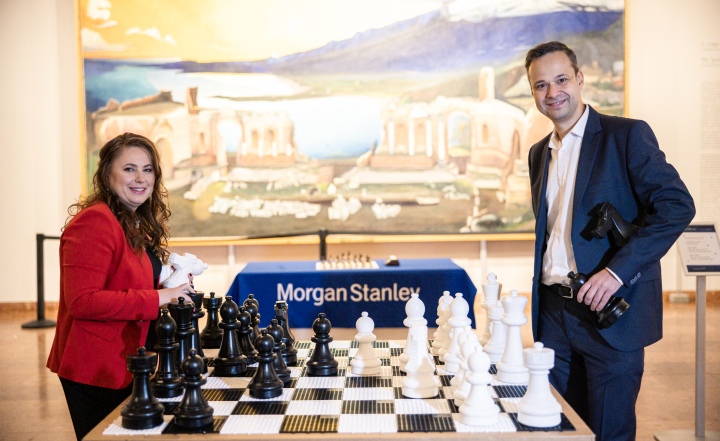
This year’s hybrid – on – and offline – Global Chess Festival has been a roaring success, with over 3000 visitors attending the event. Held on the 9th of October, the chess universe created in the Hungarian National Gallery has been home to many interactive programs, a series of lectures about creativity and innovation, and – last but not least – the Educational Chess Summit. The summit welcomed professionally acclaimed lecturers from all around the globe, exploring the power of chess in schools, which examples how educational chess can improve the pupils’ different skills, logical and critical thinking, self-esteem, and gave international recognition to the Judit Polgar Method. On the 9th of October, the Hungarian National Gallery went through a great transformation: it has become a chess palace, home to the Judit Polgar’s Global Chess Festival of 2021, bringing exciting lectures and activities for everyone who wanted to discover the diversity of chess: its connection to education, arts and science. Many countries joined the global celebration of the game: among others Nepal, Uruguay, Israel and Mexico, joined with their own local festivals, amplifying the event’s cross-cultural voice. Those interested were able to follow the event from the comfort of their home as well: apart from the 3.000 visitors in the Hungarian National Gallery, more than 45.000 viewers joined online from all around the world. Throughout the day, creativity and innovation took the main role: spectacular lectures like Ashwin Subramanian’s presentation about biofeedback – investigating the player’s pulse and eye movements and how it influences their performance and decision making. The Indian software engineer also described how analysing the data harnessed through biofeedback can help during preparation. Furthermore, according to Ashwin: “Thanks to biofeedback, even outsiders can witness the stress the players feel”, as biofeedback can be visualized during broadcasts. Presenters of the Educational Chess Summit have also showcased the latest results of their work regarding the effectiveness of chess in individual skill development. According to Ernő Rubik, gamifying education is the way to effectively engage and develop children. Jerry Nash, National Chess Education Consultant also stated that gamification does indeed have positive effects, highlighting that – according to his experience – children playing chess possess a certain “can-do attitude” towards any challenge that comes their way. In his speech, he claimed that “chess does not only change classrooms, but the whole culture of entire institutions.” He stands by the positive effect chess has on children’s attitude towards learning. Patronate of the event, Mariya Gabriel, Commissioner for Innovation, Research, Culture, Education and Youth for the European Commission welcomed the visitors in a video message, where she praised the Judit Polgar Method. “I certainly hope that Erasmus+ teacher academies will engage with your Chess Palace approach.” Furthermore, the International Chess Federation, the European Chess Union and the Ministry of Human Capacities also endorses the exemplary nature of the Judit Polgar Method, by publishing a statement in order to popularize Judit Polgar’s chess-based educational programs throughout the world. In addition to thought-provoking presentations on the importance of chess in education, especially in STEM, many exciting games of chess were played the day leading up to and during the festival. Among them were the finals of the inter-office tournament of Morgan Stanley – which attracted more than 400+ entrants from across the investment bank’s global offices. During the festival, visitors were also invited to stop by the Morgan Stanley Chess Café, where they could challenge the firm’s chess masters for a game. Over the last few years, simuls have become a tradition of the festival. This year challengers could play in a simultaneous exhibition with Judit Polgar and grandmaster Zoltan Almasi. The lectures of the Global Chess Festival can be found on the following link: https://www.youtube.com/watch?v=PIJqim4QR5A A summary video of the event can be found on the following link: https://www.youtube.com/watch?v=27IW64ogaSs Pictures: https://we.tl/t-W1NjvWVCBN Mission of the Judit Polgar’s Global Chess Festival Facebook Website Pictures Twitter The Global Chess Festival promotes the 1000 faces of chess all around the world. We aim to share the beauty of chess with 5 million people by 2025. Chess Connects Us! More Information: Csató Krisztina krisztina.csato@skyrocketgroup.hu About Morgan Stanley Morgan Stanley is a leading global financial services firm providing a wide range of investment banking, securities, wealth management and investment management services. With offices in more than 41 countries, the Firm’s employees serve clients worldwide including corporations, governments, institutions and individuals. For further information about Morgan Stanley, please visit www.morganstanley.com. For updates regarding our Budapest office, please visit www.morganstanley.hu.
FIDE launches the biggest chess event among prisoners
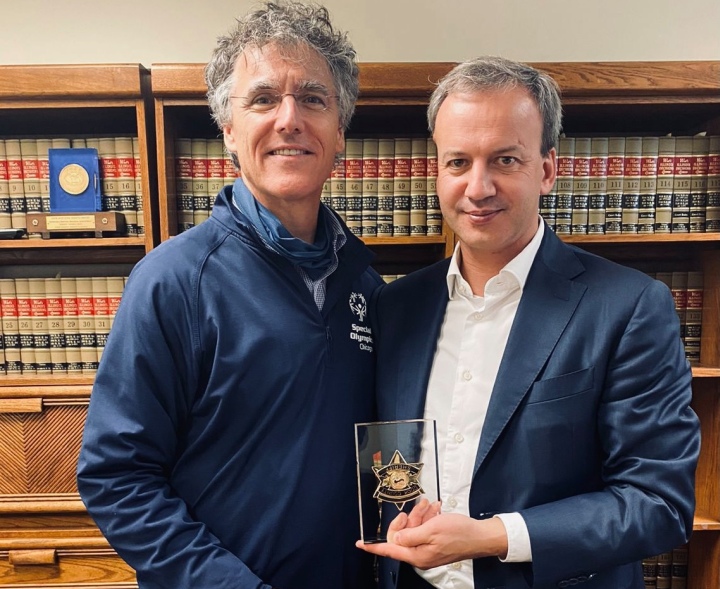
The first Intercontinental Online Chess Championship for Prisoners – the biggest ever chess event among correctional facilities – kicked off on October 13. 41 teams from 30 countries representing all continents participated in the tournament, which aimed to popularize chess as an efficient tool for reintegrating incarcerated people. The online opening ceremony featured FIDE President Arkady Dvorkovich and Cook County Sheriff Tom Dart. In his introductory speech, Tom Dart talked about the importance of the tournament for the inmates. “It is remarkable how chess transforms so many people’s lives. In our jail system, we have well over a hundred of inmates engaged in chess. This event is a culmination of it. I cannot tell you how many of our people in this facility looked forward to it for like a year. They couldn’t wait for this day to come, because this is where they can represent their country in a sport that they are very good at, they are passionate about. We have a really good team this year. And I want to say thank you to FIDE and its President Arkady Dvorkovich; without FIDE this couldn’t happen,” he said. Arkady Dvorkovich underlined that chess could work as an educational tool for many people: “It’s my pleasure and honour to sent greetings on behalf of the International Chess Federation to all the participants and organizers of the first Intercontinental Online Chess Championship for Prisoners! We wanted to do something good for people who made mistakes and who are going through a difficult period in their lives but have all chances to recover from that and live a better life in future. And chess helps! And the fact that we have so many participants today is proof of this. 30 countries, around 40 teams after just a few months on preparation, but also a 10-year experience of working together. I would like to thank Cook County Sheriff Tom Dart and the world champion Anatoly Karpov, who was very instrumental and very enthusiastic about bringing chess to prisons all around the world. We are doing this on the occasion of the International Day of Education in Prison, recognized by the United Nations. For us, one of the things that is really important is to send a signal that chess is an excellent educational tool for everyone – kids, people at risk, like refugees, and whose people who made wrong steps in their lives.” FIDE Managing Director Dana Reizniece-Ozola added that the Chess for Freedom program launched by FIDE in May 2021will not be limited to hosting chess events among prisoners: “We shall continue with tournaments and conferences, but also we are willing to prepare a new methodology that could be used by the countries that don’t have a training system yet and are willing to introduce chess in prisons. We are also planning to research how chess impacts the inmates and concentrate on preventive measures, promoting chess to children and youth at risk. Many special guests – experts, chess activists, and chess teachers in prisons – joined the event’s broadcast. Among them was WGM Padmini Roup, an ambassador of the “Parivartan – Prison to Pride” project, launched by IndianOil for training prison inmates in specific sports: “We had training camps in 17 different prisons,” – she said. – “It’s a unique and new initiative, and I am very happy to be a part of it. I hope playing chess will give participants motivation to become better people. Also, this tournament is a team event, so it can teach how to be a team player. They come from different backgrounds, and a lot of them are normal people who had unfortunate times, wrong decisions at certain moments and ended up behind bars.” Some former prisoners also told their stories about chess helping them to change their lives. Simosakhe Ngwane, an ex-convict from South Africa, was one of them. “I started playing chess in prison, and I fell in love with the game,” he confessed. “Learning chess made me develop a positive attitude. It taught me that life is built by the decisions we make every day. If I do what’s right, then I can enjoy the positive results and enjoy life. Chess is very important for those in prison and people who don’t want to go to prison because it makes you think about the future and worry more about the consequences of your decisions now. Chess brings discipline and calm; you must wait, think, prepare before you make a decision or a move. I hope the program expands into schools as well because that’s where our kids start making mistakes.” The two-day tournament started with a group stage where all the teams, made of 4 players each, were divided into 6 groups competing in round-robin chess tournaments. Two top teams from each group advanced to the Championship round that will be played tomorrow, October 14. Those teams are Philippines and Mongolia (Group 1), Argentina and USA (Group 2), England and Croatia (Group 3), Russia 1 and Germany (Group 4), Zimbabwe and North Macedonia (Group 5), Georgia 1 and Palestine (Group 6). The event will continue tomorrow, on October 14, with the Championship round, where 12 teams divided into two groups will play round-robin tournaments with the winners facing off in the championship match. Two best women’s teams will play a separate final match. The broadcast of the event starts at 10:00 CET: https://youtu.be/T0c5rOZsSh0 The Championship can also be followed on Chess.com: https://www.chess.com/events/2021-intercontinental-chess-championship-for-prisoners/results To learn more about the Chess for Freedom program, please visit chessforfreedom.fide.com.
International Children and Youth Online Festival «ChessYes»: registration continues

The International Children and Youth Online Festival «ChessYes», an official side event to the FIDE Chess.com Grand Swiss and Women’s Grand Swiss 2021, is halfway through on lichess.org with two tournaments (in U-8 and U10 categories) already completed and two more to be played. The winners and medalists of the online event in the categories U-8, U10 (open & girls) will get a free online 1.5-hour group lecture by GM Dmitry Gordievsky. Top-3 finishers in the categories U-12, U-14 (open & girls) will be awarded an online 90-min group lecture by GM Boris Gelfand – FIDE World championship runner up (2012). Applications for participation are accepted until October 16, 2021 (U-12) and October 20, 2021 (U-14). The registration is done via the official website of the tournament: https://chessyes.online/. The registration fee is €10. Since the registration deadline in U-12 and U-14 categories was extended many young players still have a chance to participate. Each tournament in age group consists of two stages: the Qualifying stage, two online 9-round Swiss System tournaments held from October 09-23, 2021, and the Final stage for top players, a 16-player Knockout tournament, played from October 24 to November 07, 2021. The time control for both stages is 5 minutes + 3-second increment starting from the first move. Online tournament regulations (pdf) Unfortunately, due to circumstances beyond the organizers’ control, the offline event has been cancelled. Here is the statement by the tournament director Nadzeya Krauchuk in full: Dear Chess Friends, According to the decision No 662 of Cabinet of Ministers as of 11.10.2021., the state emergency situation was declared in Latvia due to deteriorating COVID-19 situation. Unfortunately, the legislation is changing together with the dynamics of the epidemiological situation worldwide. Therefore we will not able to organize the offline children chess festival “ChessYes” in Riga. The health of players, officials and all individuals participating in our sports event remains FIDE’s and Organizer’s top priority, even more so when it relates to children. We are still very happy to welcome you in our online chess festival chessyes.online and are looking forward to see you in Latvia again at our chess events in future! On behalf of the Organizers, Nadzeya Krauchuk, Tournament Director
Nicholas Pert wins British Championship

The British OTB championships, Swiss tournaments in various categories have been held in two different locations – University of Hull and Milton Keynes – and stretched over two weeks: Open Championship Final – Saturday 2nd October to Sunday 10th OctoberWomen’s Championship Final – Thursday 14th October to Sunday 17th OctoberSenior Championships Finals (50+ and 65+) – Monday 4th October to Sunday 10th OctoberJunior Finals – Saturday 2nd October to Sunday 3rd October In the absence of the top-six English grandmasters with a 2600-plus rating, Nicholas Pert (pictured below) entered the open competition (a 9-round Swiss tournament) as the top-rated participant and lived up to his reputation. The former World U18 champion scored 6½ points and clinched his maiden national title. There was a large 5-way tie for the second place, with Daniel Gormally and Marcus Havey finishing second and third respectively, thanks to better tiebreaks. Andrew Ledger gave the champion a good run for his money, coming into the final round as joint-leader. Unfortunately, the defeat at the hands of Hamish Olson relegated him to the sixth position in the final standings. Final standings open: 1 GM Pert, Nicholas ENG 2548 6½ 2 GM Gormally, Daniel W ENG 2480 6 3 FM Harvey, Marcus R ENG 2465 6 4 GM Hebden, Mark L ENG 2455 6 5 IM Ledger, Andrew J ENG 2329 6 6 FM Olson, Hamish SCO 2273 6 7 IM Mcphillips, Joseph ENG 2425 5½ 8 Finn, Peter ENG 1959 5½ 9 GM Arkell, Keith C ENG 2380 5 10 WFM Sucikova, Svetlana SVK 2175 4½ Mike Waddington Photo: Brendan O’Gorman In the Senior Championship 50+ (a 7-round Swiss tournament), Mike Waddington came in the clear first with an excellent score of 6/7, a full point ahead of Ian Robson and Donald Mason. Roger De Coverly netted 5 points in 7 games and emerged as the winner in the 65+ tournament, followed by Ivan Myall (4½) and Philip Stimpson (4). Roger De Coverly Photo: Brendan O’Gorman Kumar Avait Keerthi (U8), Cameron Crose (U10), Jude Shearsby (U12), James Merriman (U14) and Timur Kuzhelev (U18) took the titles in the British Junior Championship. Official website: www.britishchesschampionships.co.uk
WCC for People with Disabilities: Introducing the players
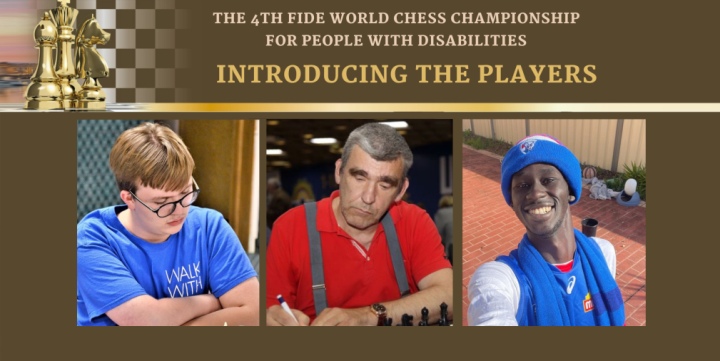
The 4th FIDE World Chess Championship for People with Disabilities – an event organized by Dresdner Schachfestival E.V. under the auspices of FIDE – will be held online from 4-14 November 2021. The 9-round Swiss tournament with 45 minutes + 30 seconds increment per move, starting from move 1, is an individual competition with an additional team ranking. Registration of the participants is still on until November 1, 2021. At the moment, players from 12 countries – Russia, USA, Georgia, Australia, Ukraine, India, Colombia, Turkey, Saudi Arabia, Poland, Iran and Uzbekistan – have already registered. Although every person has a unique story of willpower, perseverance and tenacity, they have one thing in common: their passion for chess. Griffin McConnell (USA) Griffin McConnell, 17, learned chess from his dad when he was just four years old and have constantly been playing ever since. He was diagnosed with epilepsy and had several brain surgeries to cut the seizure activity. The surgeries failed to stop his seizures, but they did not fail to end Griffin’s love for playing chess. “Chess was always a passion of mine.” – he confesses. Despite his young age, the achievements of Griffin McConnell are impressive. He placed third in the first and second FIDE World Youth Chess Championships for the Disabled in 2017 and 2018. He was invited, as the sole player representing the United States, to compete in the first FIDE Confederation Cup for People with Disabilities in Ankara, Turkey, in 2019. Griffin helped Team Americas win a bronze medal and was the only player in the tournament to win all four of his games. He was selected, by the tournament directors and judges, as the best player in the tournament; at the age of 15, he was also the youngest. In December 2020, Griffin played Board 2 for Team USA in the first FIDE Online Chess Olympiad for People with Disabilities and helped the team finish in the top-10. He played against higher rated players in all seven rounds and won four of his games despite having several seizures while playing. “A great icon for me is Thomas Luther. He is a grandmaster, but he has a disability. He is trying to create all of those tournaments that I’ve been into. I want to be like him,” Griffin says. Andrei Obodchuk (Russia) 11-time Russian champion, 8-time world champion, participant of 6 World Chess Olympiads, IM Andrei Obodchuk, 66, is one of the most experienced and titled participants of the 4th FIDE World Chess Championship for People with Disabilities. In 1994, Obodchuk became an international master, the first in the world among the disabled. His highest rating achieved is 2447. Obodchuk is also a well-known theoretician, an experienced trainer and author of the book “The Four Knights Game”, as well as several theoretical studies for “New in Chess”. Once, at a super tournament in Poikovsky, he defeated GM Alexander Onischuk with Black in the difficult line of Botvinnik’s variation – the game was included in the book “Revolution in the 70s” by Garry Kasparov. In October 2018, team Russia won gold medals at the 1st World Team Chess Championship for Disabled, with Andrei Obodchuk playing on Board 1. “Playing online is not the same as playing over the board. This is a completely different game,” Obodchuk says. Still, his performance in online events is as impressive as in OTB tournaments. In June 2020, Andrei Obodchuk finished second in the first World Online Championship of IPCA (the International physically disabled chess association affiliated to FIDE). He also played Board 2 for Russia in the first FIDE online Chess Olympiad for People with Disabilities, helping his team to win silver medals. Benjamin Akok (Australia) Benjamin Akok, 23, was born in Sudan. He doesn’t remember much about his home country, which in 1998 – the year Benjamin was born – was crippled by poverty, drought and one of the longest civil wars on record. When he was one, his family moved to Egypt, and a few years later, they settled in Melbourne, Australia. That aside, Benjamin Akok was born with cerebral palsy. “I like playing chess and participating in tournaments. I play in tournaments every year, and I improve every single year.” Benjamin says. Those who know Benjamin Akok notice that he is a very methodical thinker; he likes challenges to solve problems. And chess is a game that attracts people with that kind of thinking. Besides playing chess, Benjamin Akok is a young author who crafts children’s stories. Taking inspiration from his surrounding, he focuses on teaching the readers different values that can change society. He firmly believes that hard work and consistency leads to success. Registration of the participants of the 4th FIDE World Chess Championship for People with Disabilities is open until November 1, 2021, via online form. Tournament regulations (pdf) Further Information: Website: www.schachfestival.de worldchess-disabled.com/en/
Russian Championship Superfinals get underway in Ufa

The Superfinals of the 74th Russian Championship and the 71st Russian Women’s Championship are held in Ufa from October 8-21. The tournament is a part of the Chess in Museums international programme realised by the Chess Federation of Russia and the Elena and Gennady Timchenko Foundation. The line-up, open: Dmitry Andreikin (2728), Nikita Vitiugov (2727), Andrey Esipenko (2720), Kirill Alekseenko (2710), Vladimir Fedoseev (2704), Maxim Matlakov (2682), Alexandr Predke (2666), Pavel Ponkratov (2659), Aleksandr Rakhmanov (2657), Maksim Chigaev (2639), Alexander Motylev (2624), and Aleksandra Goryachkina (2602). The second-rated Nikita Vitiugov is in a cheerful mood The three-time Russian women’s champion Aleksandra Goryachkina has become the first woman to take part in the Russian Championship Superfinal. She qualified for this competition from the Russian Championship Higher League, having won bronze. The line-up, women: Polina Shuvalova (2509), Alina Kashlinskaya (2493), Natalija Pogonina (2467), Valentina Gunina (2462), Alisa Galliamova (2421), Anastasia Bodnaruk (2415), Olga Girya (2410), Leya Garifullina (2409), Marina Guseva (2394), Alina Bivol (2392), Daria Voit (2357), and Evgenija Ovod (2331). The opening ceremony, drawing of lots, and press conference were held in the Bashkir Nesterov Art Museum in Ufa on the 8th of September. Polina Shuvalova drew #1 Both tournaments are 11-round all-play-all events. The playing days are 9-14 and 16-20 October. The rest day is the 15th of October. The games will start at 3 PM local time (GMT +5). The time control is 90 minutes for the first 40 moves plus 30 minutes for the rest of the game with a 30-second increment per move starting from move one. The total guaranteed prize fund is 11 million rubles (roughly USD 152,000): 7 million rubles in the open section and 4 million rubles in the women’s tournament. The Superfinals are organised by the Chess Federation of Russia with the support of the Russian Ministry of Sport, the Government of the Republic of Bashkortostan, and the Elena and Gennady Timchenko Foundation. The CFR general partner is PhosAgro. Partners: Aeroflot, Art Russe, Chess Federation of the Republic of Bashkortostan, and the Bashkortostan State M.V. Nesterov Art Museum. Photo: Eteri Kublashvili About Chess in Museums programme Since 2012, the Chess Federation of Russia and the Timchenko Foundation have organised chess tournaments in the leading museums of Russia and the whole world. The World Chess Championship match between Vishy Anand and Boris Gelfand took place in the State Tretyakov Gallery (Moscow) in 2012. In 2013, the CFR and the Timchenko Foundation held the Alekhine Memorial. The first half of the super tournament was played in the Louvre (Paris), the second part took place in the Russian Museum in St. Petersburg. The Museum of Russian Impressionism in Moscow hosted the Tal Memorials in 2016 and 2018. Almost all Russian Championships Superfinals are held as part of the Chess in Museums programme. The tournaments took place in the Rukavishnikov’s Mansion in Nizhny Novgorod (2013), the Museum of Art in the Kazan Kremlin (2014), the Novosibirsk State Museum of Local History (2016), and the State Museum of Political History of Russia in Saint Petersburg (2017). In 2018, the players competed for the titles in the Magnezit Palace of Culture in Satka, where the exhibition of the well-known Soviet and Russian painter Geliy Korzhev was opened. In 2019, the Superfinals were held in two venues in the Udmurt Republic – in the Tchaikovsky Museum in Votkinsk, and the Palace of Peoples’ Friendship in Izhevsk. In 2020, the famous Cetral Chess Club in Moscow with a unique Chess Museum became the venue for the Superfinals.
FIDE endorses Judit Polgar Method

It is a core mission of FIDE (Fédération Internationale des Échecs) to research, monitor and promote best practices of chess in education programs across the globe. In that sense, we are happy to endorse the Judit Polgar Method, a proven and successful methodology that has already long been recognised as a unique and comprehensive approach in using chess to foster cognitive skills development as well as curricular enhancement in schools. The Judit Polgar Method has already been introduced in hundreds of schools in Hungary and China, and it is being rolled out further internationally. Its “Train the Teachers” program perfectly aligns with FIDE’s strategy and goals, since training teachers is the first step towards introducing chess massively in schools, and supply for the strong demand from the educational community. While FIDE is developing its own certification process, we also must support and join forces with all those who are working in the same direction. FIDE appreciates the existing partnership model and hopes for further strengthening of the cooperation with GM Judit Polgar, European Chess Union, and the Ministry of Human Capacities of Hungary. Together we will pursue the goal of bringing chess, and its educational benefits, to more children around the world.