

FIDE reminds manufacturers, organizers and arbiters of Updated Chess Equipment Regulations effective March 1, 2026

FIDE wishes to remind manufacturers of chess equipment, tournament organizers, and arbiters that the updated C.02 Chess Equipment Technical Specifications, Rules, and Regulations came into effect on March 1, 2026. The revised regulations are intended to improve clarity, consistency and administrative efficiency in matters relating to chess equipment compliance, approval and endorsement. Among the key aims of the revision is to streamline the endorsement process for chess equipment and to address handbook provisions that had become fragmented, outdated or insufficiently clear. The updated framework also supports the broader restructuring of the relevant regulations and introduces the FIDE Technical Commission Manual (TEC Manual) as an important reference in this area. These changes form part of FIDE’s continuing efforts to maintain clear, practical and modern standards for equipment used in official chess activities.For any inquiries or further information, please contact Hendrik du Toit at secretary.tec@fide.com.
FIDE reminds organizers and arbiters of updated Play-Off and Tie-Break Regulations effective March 1, 2026
FIDE wishes to remind organizers, arbiters, players, and manufacturers of Tournament Handler Programs (THPs) that the updated Play-Off and Tie-Break Regulations (C.07) came into effect on March 1, 2026. The revised regulations are intended to improve clarity, fairness and consistency in the application of tie-break systems across a wide range of tournament formats.Among the key updates is the introduction of Standard Points, making it possible to apply the traditional 1, ½, 0 scoring framework in events that use alternative scoring systems. The revised text also introduces additional tie-breaks, providing further options at the end of tie-break sequences and reducing the need to determine final standings by drawing lots. Further refinements include clarifications to Buchholz, additional provisions for team knockout tie-breaks, and revised treatment of unplayed games in Buchholz and Sonneborn-Berger calculations. These changes are intended to promote fairer outcomes and greater consistency in practice. The updated regulations also improve the handling of unplayed rounds in Rating-Based Tie-Breaks and Type B Tie-Breaks, while supporting the needs of a growing variety of tournament formats, including team and hybrid events. These updates form part of FIDE’s continuing efforts to ensure that its regulations remain clear, practical and suited to modern competitive chess. For any inquiries or further information, please contact Hendrik du Toit at secretary.tec@fide.com.
FIDE reminds organizers and arbiters of updated Swiss Rules effective February 1, 2026
FIDE wishes to remind organizers, arbiters, players and Swiss pairing software providers that the updated FIDE Swiss Rules came into effect on February 1, 2026. The revised provisions are now reflected in the FIDE Handbook and apply to all relevant tournaments and pairing procedures conducted under FIDE regulations. The update incorporates important amendments to the Basic Rules for Swiss Systems (C.04.1) and the FIDE (Dutch) System (C.04.3), together with related adjustments to the broader Swiss Rules framework. These changes were introduced to improve clarity, simplify application, and strengthen consistency in the implementation of Swiss pairing rules. Among the main developments are refinements to pairing procedures, clarifications regarding the handling of byes, and structural improvements intended to support arbiters and endorsed pairing software in the correct application of the rules. FIDE also draws attention to related regulatory changes that came into effect on March 1, 2026, including updates to C.02. Chess Equipment Technical Specifications, Rules, and Regulations and 07. Play-Off and Tie-Break Regulations. Organizers and arbiters are encouraged to consult these updated texts alongside the revised Swiss Rules to ensure full compliance with the current FIDE Handbook. These updates form part of FIDE’s continuing work to maintain clear, practical and modern regulations for tournament administration and fair competition. For any inquiries or further information, please contact Hendrik du Toit at secretary.tec@fide.com.
Latin America’s long game in chess
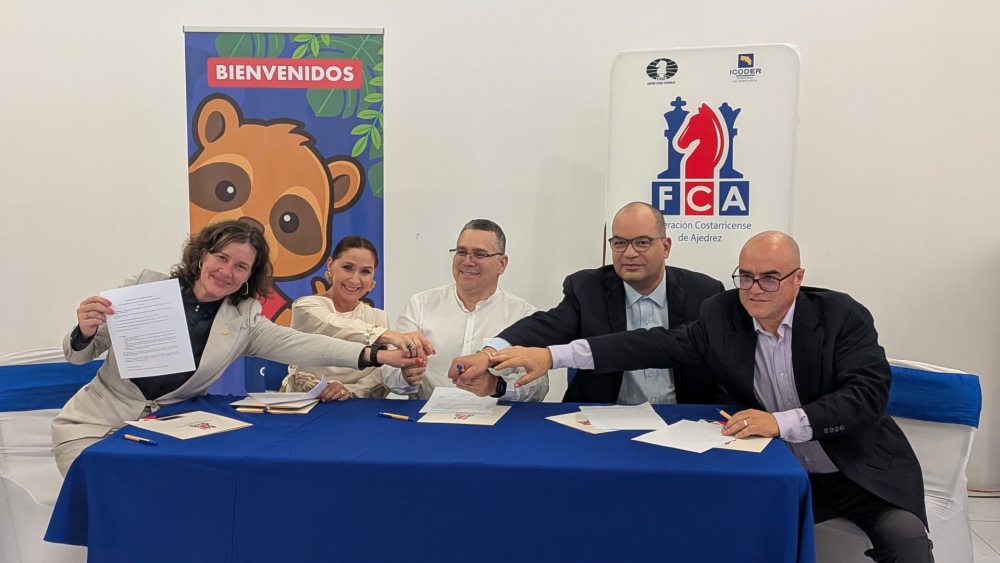
Latin America is trying to do something different in chess. Instead of spending money on new grand tournaments and spectacles for the elite, it is investing in chess as an educational tool, banking on a wider social impact reaching well beyond the chessboard. “Of course, competitive chess is important to us. But by investing in chess as a tool to empower society, we can make it part of our culture and our future. As chess becomes more deeply rooted in society, more people will play, so it will bring about more competition and more Latin American players in the chess world,” argues José Antonio Carrillo Pujol, the president of the Confederation of Chess for the Americas. At the two-day conference in San Jose (20 and 21 March), the central event was not a chess tournament but the signing of The Memorandum of understanding, where a foundation was laid for formally incorporating chess in the educational system. The Memorandum of understanding signed in San Jose brings together Costa Rica’s Ministry of Education, the Ministry of Sports, FIDE, the Confederation of Chess for the Americas, and the Costa Rica Chess Federation around a 2026 pilot project in selected schools. In the document all signatories express their intention “to cooperate in promoting and implementing Chess in Education initiatives in the Republic of Costa Rica, while contributing to broader international and continental strategies”. In practical terms FIDE will provide the government of Costa Rica with mentorship, technical guidance, pedagogical methodologies and support for teacher training to integrate chess into curricular or extracurricular school programmes. “This is the first memorandum of cooperation signed during the Year of Chess in Education and we very much hope that many others will follow”, said Dana Reizniece, Deputy Chair of the FIDE Management Board who thanked the government of Costa Rica “for becoming the leaders in the continent and in the world” in a new model for introducing chess in education. The Minister of Sport of Costa Rica, Donald Rojas Fernandez said that his country wants chess to teach students not how to compete, but “how to live”. “This is a journey we will take step by step. You have my commitment, and the commitment of my colleagues, to ensure this becomes a snowball effect – growing and growing. We are not doing this for ourselves; we are doing it for our children and our youth,” said Rojas. The fact that Costa Rica was the first to sign such a document is not surprising. In 2022 the country adapted Law No. 10187, which declared the promotion of chess teaching in the education system to be in the public interest and authorised cooperation agreements with the national federation. Drivers of the change The central figure in this regional push is José Antonio Carrillo Pujol. Known across the continent as Pepe, he is the president of the Confederation of Chess for the Americas and the leading force behind FIDE America’s educational turn. “As a player, I love chess. When you love something, you try to promote it. When you learn chess, you can instantly see the benefits it can have for society. So, I set to work on promoting this”. In Panama, where Carrillo was heading the chess federation for eight years, he persuaded the government to adopt legislation introducing chess as an extracurricular project in schools. To achieve this, his strategy was based on two principles: bringing in experts in the field to strengthen the argument and going not just to elected officials but also administrators and those responsible for policy implementation who stay in their roles regardless of whether there is a change in government. And this is where Mauricio Arias Santana has become essential. Arias, an International Master from Costa Rica, is the president of the Education Commission for FIDE America who has been spearheading the practical implementations of strategies and projects focused on using chess as an educational tool. Critics may argue that by focusing on education, not enough attention is being paid to promoting chess competitions, but Arias rejects this. “Chess is still extremely important to us as a competition. But by making chess more inclusive and more open to everyone, more people will be interested, and more will go into competitive chess.” He argued that the broader approach makes chess more accessible to children and the youth, “where most won’t become professional chess players”. “Players prepare for competitions, but most kids are not interested in that. But when you promote chess in the way we are now – little by little, through various programmes touching different aspects of life and life skills – a wider pool of people can relate to that, and the game is likely to grow faster”, Arias said. Planting the seeds To achieve their goals for chess, Carrillo and Arias are implementing a strategy which is focused more on administrators and officials tasked with implementing policies, who remain in government regardless who is in power. “We deliberately focused on the branch of the administration that executes policy. Not the politicians who come and go, but on the administrators who drive the changes.” The two-day conference in San Jose was attended by advisors to the Ministry of Education from all 27 regions of the country. Almost none of them play chess or have any experience with the game. “This is exactly what we wanted,” notes Arias – “professionals in the field of education who will approach chess not as fans or players, but as experts who can assess and implement the best tools for empowering the future generations”. Even before the conference in San Jose, educational events in Argentina and Cuba helped spread the word in the Americas about the new approach. As Carrillo notes, the response has been strikingly positive. “Every country we reached,” he said, mentioning places such as St Kitts and Nevis, Barbados, Colombia, Peru, Argentina and Chile, “was very keen on this.” The key to success – Carillo and Arias argue – is to help national chess
In memory of Viktor Korchnoi on the 95th anniversary of his birth
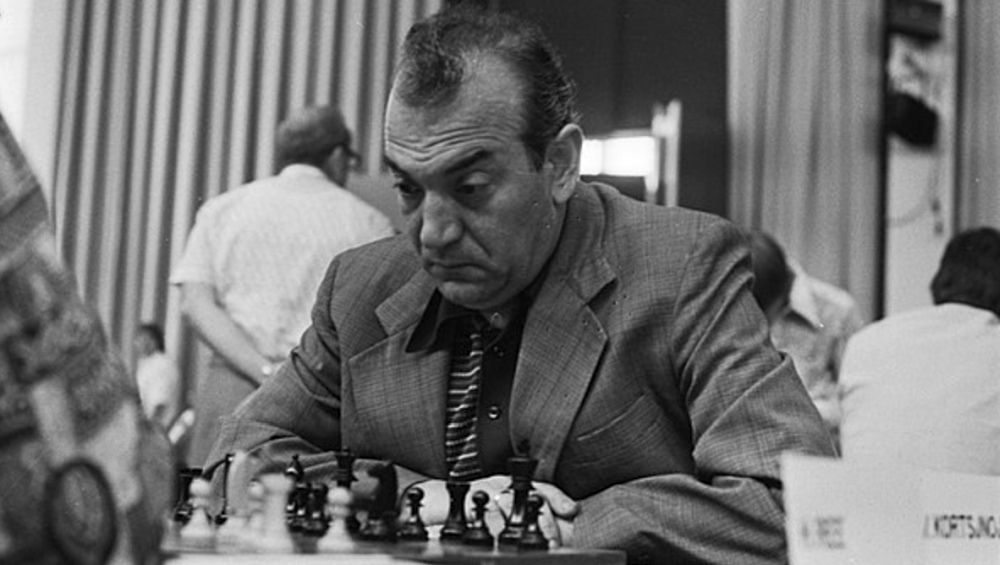
Photo: Anefo / Rob Bogaerts Viktor Lvovich Korchnoi would have turned 95 today. He is one of those monumental figures one returns to time and again when writing about chess. What would most people know about Korchnoi nowadays? A strong player, an incredible fighter, a cranky guy. These traits can’t be argued, and they are well-known; I would like to offer nuances and details about a character that were more hidden from the world. First and foremost, Korchnoi’s attitude towards chess. It was strikingly different from the approach of the majority of his colleagues, even the greatest ones. Arguably, Korchnoi became the first one to make “Fighting to the last bullet” his chess motto. He kept this aggression burning throughout his long career and probably was the best chess player in history when it comes to fighting spirit and resilience. Korchnoi was one of the few (perhaps along with Geller, Polugaevsky, and Fischer) who toiled over chess incessantly. It helped him to permanently stay in shape. Quite funny was to hear the young players lament exhaustion after working with the seventy-year-old Korchnoi at a training camp. Photo source: http://gahetn.nl Viktor Lvovich (simply Viktor back then) grabbed material in a way that was later to be labeled “computer-like,” but still was ready to fend off his opponent’s attacks (please note, that despite his pawn-grabbing propensity, Korchnoi rarely came under a crushing attack). The word “dangerous” was not in his vocabulary. He neither guessed nor made rough estimations; he just diligently calculated numerous variations. This, incidentally, explains his overwhelming record against Tal. It was Korchnoi who, 40-50 years ago, long before Carlsen was born, became a great (probably the best in the world) master of a complex endgame. He was particularly strong in rook endings. Striving for a real fight and for opportunities to overtake the initiative over the chessboard throughout his career, Korchnoi frequently used difficult openings (French Defense, Pirc Defense). But he also had great opening intuition – in a letter, written in 1972 (published in the excellent book Russians vs. Fischer), Viktor Lvovich advised Spassky in preparation for his match with Fischer: “From the play-to-equalize standpoint, I suggest paying attention to the Petroff Defense and 3…Nf6 in the Ruy Lopez”. Nowadays these continuations (along with the Marshall counterattack and the Sveshnikov variation of the Sicilian Defense) are Black’s most solid response to 1.e4 – but back then both the Petroff Defense and the Berlin Variation of Ruy Lopez were on the fringes of opening theory! In fact, Korchnoi was the first and only one for decades to use the Open variation of the Ruy Lopez – currently, the majority of the best players have this line in their opening repertoire. Photo: Anefo / Croes, R.C. Korchnoi was never an easy man, and, drawing parallels to the present day, was a great master of trash-talking, so popular among the leading young chess players nowadays. On the other hand, “Viktor the Terrible” won over chess fans with his unfailing love of chess, ever-burning fighting spirit, and desire to give it all on the battlefield. Elegantly dressed, distinguished-looking, and always eloquent, but he could be different each time you met him – from prickly and caustic to charming or infectiously laughing. Korchnoi was invariably gallant in female society but often irritable and scathing with his colleagues. Ready to talk endlessly about chess and chess-related topics, he had tenacious memory. Viktor often quoted the classics of literature (Pushkin for example) and chess players of the past (“but Levenfisch said…”). At times Korchnoi was unexpectedly respectful and open with young colleagues outside the tournament hall, but one could see him nervous and at times aggressive during and immediately after a game. From Korchnoi’s personal archive, via ruchess Usually, Viktor showed mercy to his defeated opponents, but once he remarked immediately after the game we played, in which I intuitively sacrificed a piece in a position with a huge advantage, but was unfortunately left high and dry: “Do you think you’re Tal? Even Tal didn’t sacrifice me a piece without calculating variations. And you are not Tal.” He was admired by many, but it was hard to imagine a person who could tolerate the irascible Viktor Lvovich. Frau Petra managed it, although not without difficulty – perhaps because their life together was based on mutual respect. Today you cannot imagine married couples who address each other exclusively as “You”. Another reason might be that she went through a school of hard knocks and became just as tough a fighter herself. Korchnoi as a chess player was treated with fearful respect, but an even greater number of people found his behavior during/after a game unacceptable. Yet, the Greats are forgiven more sins than mere mortals. He was forgiven not only for his magnificent play but also for his dedication to chess, for that genuine commitment over the board. Karpov once said: “Chess is my life. But my life is not just chess”. Korchnoi could have easily discarded the second half of that quote. Photo: John Saunders Viktor Lvovich pushed every conceivable boundary, surpassing even Lasker. At 70 he won a super-tournament in Biel finishing ahead Gelfand, Grischuk, Svidler, and others, and at 80 he put in a good performance in Gibraltar, defeating, among others, Caruana, who had already begun his meteoric rise… And yet Korchnoi’s best period is the 1970s. His epic duels with Karpov are still talked about. But there were so many other remarkable battles: the matches with Spassky, Petrosian, Polugaevsky… Even in the match against Kasparov (1983), for the most part, he was fighting on equal ground. We often talk about the most interesting unplayed matches – one of the most interesting for me would have been the Candidates final between Korchnoi and Fischer (1971). But Korchnoi lost to Petrosian in a very strange semi-final. The duel with the American genius did not take place. It is a pity because Viktor Lvovich was effective against Fischer; he controlled the proceedings in their
Humpy Koneru withdraws from FIDE Women’s Candidates 2026; Anna Muzychuk steps in

Humpy Koneru (India) has officially withdrawn from the FIDE Women’s Candidates Tournament 2026, scheduled to take place in Cyprus from March 28 to April 16. In accordance with Article 2.2. of the Tournament Regulations, her place has been offered to the next highest finisher in the Women’s Events Series 2024–25 not securing qualification. As a result, Anna Muzychuk (Ukraine) will join the tournament as her replacement. According to Article 4.5.3. of Tournament Regulations, “the pairings shall remain the same except that the replacement player shall take the place of the withdrawn player.” The Chief Arbiter will shortly adjust the pairings accordingly. Official website: https://candidates2026.fide.com/ Tickets are available here: https://tickets.fide.com/
Sergey Pinchuk (1943-2026)
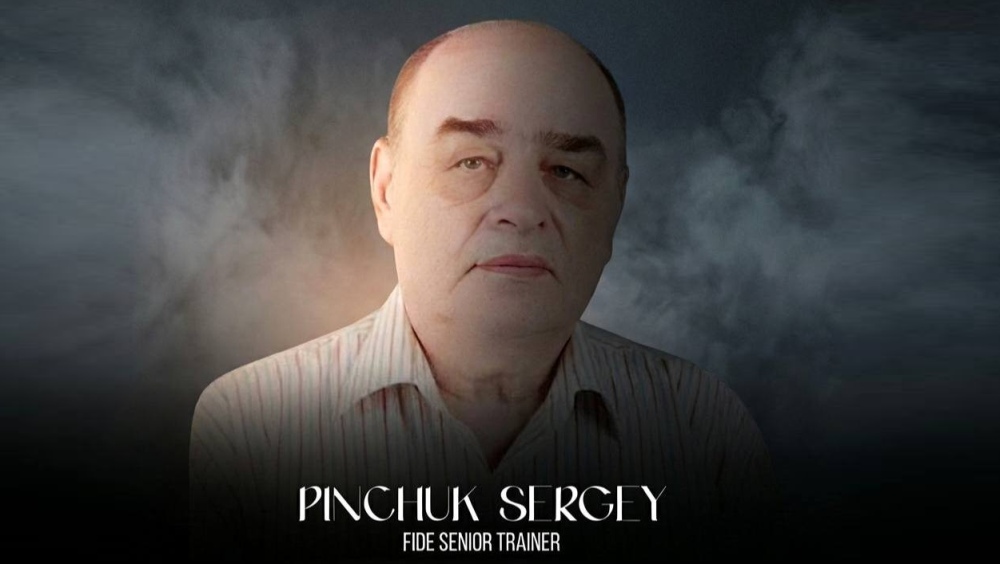
It is with deep sadness that the International Chess Federation has learned of the passing of Sergey Pinchuk, a respected FIDE Senior Coach who made immense contributions to developing chess talent in Uzbekistan. He was 83. Born in 1943 in Tashkent, Pinchuk honed his chess skills through self-directed study and extensive reading of chess literature. Soon he became a Master of Sports in Chess represented the Uzbekistan national team in various competitions and secured numerous titles in the national championship. In 1970, Sergey Pinchuk transitioned to professional coaching upon receiving an invitation from the Republican Youth School of Sports Mastery (RYSSM). As head coach, he led the Uzbekistan national youth teams for twenty years. In 1984, the national team of Uzbekistan became the champion of the All-Union Spartakiad of Schoolchildren in Tashkent. Under his guidance, Uzbekistan’s national team earned silver medals at the 1992 Chess Olympiad in Manila. Throughout his long coaching career, Pinchuk worked closely and productively with grandmasters Grigory Serper and Rustam Kasimdzhanov. In recognition of his students’ distinguished performances in both individual and team competitions, Pinchuk received the following honors: Honored Coach of Uzbekistan (awarded in 1979) Honored Worker of Public Education of Uzbekistan (awarded in 1985) In 1992, S.T. Pinchuk was awarded the Certificate of Merit of the Republic of Uzbekistan for his long-term and fruitful work and participation in public and political life. Pinchuk’s successful professional activities were twice recognized with certificates from the Cabinet of Ministers of Uzbekistan, in 2009 and 2011. FIDE expresses its deepest condolences to Sergey Pinchuk’s family, friends, and loved ones.
Dana Reizniece: Treat chess as part of an education policy, not an extracurricular activity
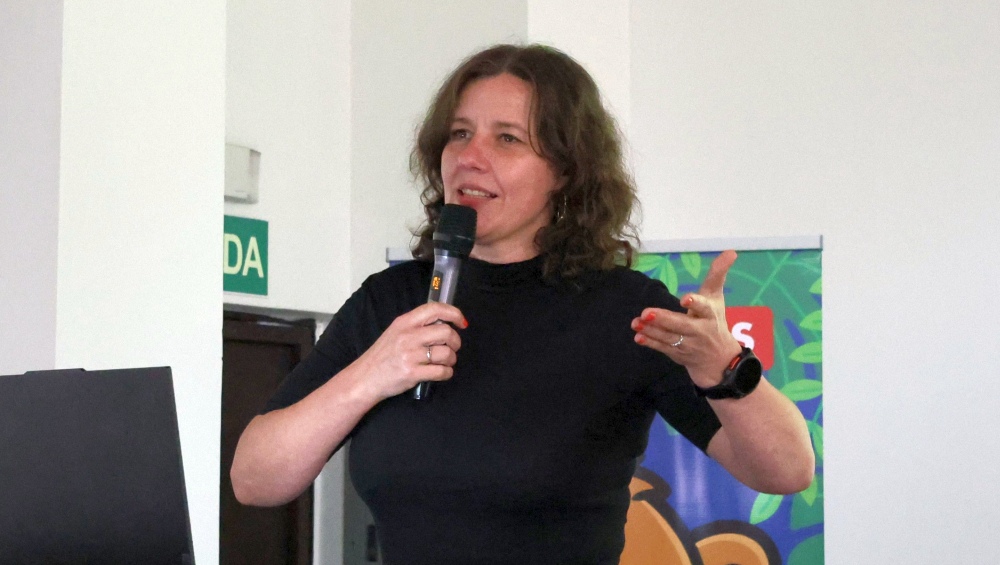
At the Chess in Education Summit in San José, Dana Reizniece, Deputy Chair of the FIDE Management Board, spoke about how campaigners should approach policy makers to get chess included in educational programmes. Drawing on her own experience in politics and government (she served as the finance minister of Latvia from 2014 to 2016), Reizniece said advocates need to speak to policymakers in the language of public policy they are tasked with delivering. “When you approach politicians, you need to talk about what they want to listen to. You need to tap into their problems and provide solutions for that. For example, if you want more children to play chess and bring more medals for the country, you should talk to the minister of sports, not education. If you want to improve chess education, then the minister of education is the right address”. Reizniece pointed out the challenges governments face in fighting inequality and the role chess can play as a low-cost, scalable method that can support the quality of education and bridge the social divide. Governments, Reizniece said, understand in principle that education is a strong long-term investment (claiming that investment in education gives a return of more than 10% – on bigger wages of educated people, bigger taxes and lower expense on social welfare). But in practice decision-makers face hard trade-offs, rising inequality, uneven access, pressure on public budgets, and the challenge of reaching marginalised communities, especially across urban and rural divides. Quality, she argued, remains the key question where chess can provide an answer. Reizniece argued that chess can help address several priorities at once, as both an affordable and flexible enough tool to fit different school contexts while supporting multiple goals. A line from her presentation captured that approach: chess is “not a silver bullet,” but it is a “cost-efficient, scalable” tool that aligns with several public education priorities. “When it comes to schools, chess should not be regarded as just a game,” Reziniece said. Citing examples from previous work with children who have disabilities or are in refugee camps, she argued that chess can support foundational learning by strengthening attention, concentration, working memory, executive function, logical reasoning, and problem-solving. Reizniece also reflected on the fact that education systems are already under strain and that adding more layers – such as the inclusion of chess – would be costly or inefficient. Chess, her presentation said, should be understood as “teacher support, not replacement or overloading” – not as another demand on schools, but as a structured tool teachers can use across subjects and classroom settings when proper training is in place. The keynote also widened the argument beyond academic performance alone. Reizniece said chess can contribute to emotional control, resilience, respect for rules, and learning how to deal with both success and failure, which was demonstrated through programmes such as chess for people in prisons and correctional facilities. That gives it a place, in her view, in the growing policy focus on student well-being, citizenship, and social-emotional learning. “Chess must be framed not as a game, not as extracurricular activity, but as a pedagogical tool,” Reizniece concluded, noting it addresses the problems education ministries are already trying to solve: quality, equity, engagement, teacher support, future skills, and cost. What two psychologists found out by using chess in working with disadvantage children Fernando Moreno and José Francisco “Pep” Suárez – psychologists from Spain – have dedicated their professional lives to persuading educational institutions and governments that chess is not just a competitive game but a tool and a metaphor for inclusion and teaching children real life skills. Fernando Moreno is a psychologist who moved from Madrid to Washington in 1980s and spent most of his time working with children from disadvantaged backgrounds. Since then, he has been using chess as a tool to help children and their families channel grievances and fears, but also to identify emotions, regulate impulses, reflect on choices, connecting game situations to real-life behaviour. Moreno starts from an important distinction: playing chess to compete and using chess as a tool for social-emotional learning. His focus is on the latter. Moreno argues that discussing positions, mistakes, sacrifices, conflicts, and consequences on the board gives teachers a way to talk with students about anger, frustration, self-control, empathy, decision-making, and resilience. He linked his approach to established SEL language (specific vocabulary and communication strategies used to teach Social and Emotional Learning) where practical life lessons are taught through decision-making in chess positions. Different chess concepts are used as metaphors for life lessons: piece sacrifice for a positional advantage is used as an example of giving up short-term pleasure for long-term gain; following the rules of the game (e.g. how to properly castle) is tied to attention, listening and discipline. Reflecting on his decades-long experience, Moreno notes that “chess serves as a universal language that goes beyond nationality, ethnic identity, race, and gender, offering a way to connect across cultural gaps”. “Chess has taught me that, despite our diverse backgrounds, socio-economic conditions, and languages, our thinking processes can synchronize in comparable ways when we strive for a common objective. Chess serves as a universal language that goes beyond nationality, ethnic identity, race, and gender, offering a way to connect across cultural gaps.” “The Magic of Predictability” FIDE Senior Trainer and psychologist José Francisco “Pep” Suárez, from Menorca, told the Chess in Education Summit in San José that schools should stop seeing chess only as a competitive game and start using it as a practical tool for inclusion. Like Moreno, Suárez drew a sharp distinction between competitive chess and what he called educational chess which is “a tool to create people with critical thinking, capable of having autonomy, and above all, the power to understand the complex world we live in.” He placed special emphasis on therapeutic chess, which he presented as a way of using the game to support attention, self-control, reflection, and social development. Suárez rejected the idea that chess is a universal fix for
How Costa Rica plans to bring chess into the classroom
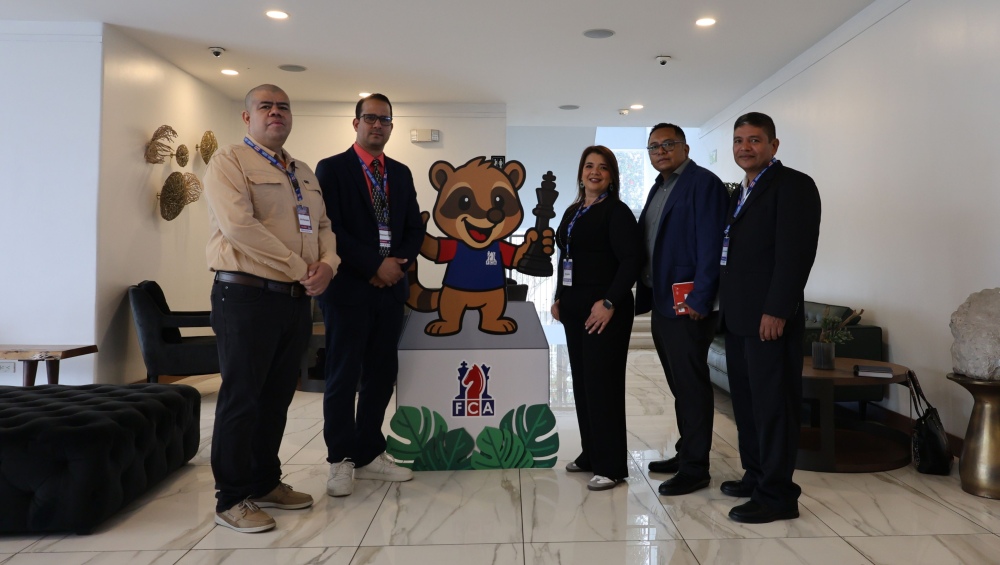
At the Chess and Education Summit in San Jose – taking place on 20 and 21 March – Costa Rican officials, educators and chess leaders set out a practical question: how can chess move from being respected as a game to being used as a classroom tool across the public school system? The two-day event, held at the historic Costa Rica Tennis Club, forms part of FIDE’s Year of Chess in Education 2026 and brings together national authorities and regional partners around a pilot programme that is due to begin in ten Costa Rican schools as early as April 2026. Educational councilors from all 27 regions of Costa Rica attended to understand how chess can help in their local schools. The summit is not framed as an agora to exchange ideas and plans. It is being presented as a policy meeting and a working session on implementation. Organisers say the focus is on practical models for integrating chess into school systems, with emphasis on inclusion, student well-being and ease of use for teachers. The official programme reflects that structure. Day one was built around official remarks, the formalisation of the Costa Rica pilot plan, and keynote talks on policy, curriculum, teacher training, inclusion, executive functions and emotional well-being. Day two will focus on workshops and practical training. From public interest to public policy Costa Rica is not starting from scratch. In 2022, the country enacted Law No. 10187, which declared the promotion of chess teaching in the Costa Rican educational system to be in the public interest. The law recognises chess both as a sport and as a pedagogical tool aimed at the integral development of students. That legal basis has since been followed by institutional work between the Ministry of Public Education, Ministry of Sports and the Costa Rican Chess Federation. That is the background to the summit’s main institutional objective: to get chess into the classrooms and make it a part of a healthy lifestyle of every Costa Rican. The project will start with a classroom-based pilot project in ten public schools, developed jointly by FIDE, the Confederation of Chess for the Americas, the Costa Rican Chess Federation and the Ministry of Public Education. This initiative will be a test case for how chess can be inserted into schools in a way that is structured, measurable and manageable for teachers. A small chess country with a big ambition Costa Rica is a relatively small chess country. According to local federation figures, it has about 1,200 active players, though many more people know the game and view it positively. That gap matters to the organisers. While not widely player, chess enjoys a high reputation in Costa Rica, especially among parents who see it as good for children. Luis Eduardo Quirós Rojas, president of the Costa Rican Chess Federation, said the purpose of the summit was to help decision-makers understand what chess can do inside the education system. In his remarks, Rojas stressed that the federation was not approaching the issue mainly as a matter of competition or elite performance. “We are promoting a sport as an educational tool. For us, that is very important,” he said. Quirós Rojas described the summit as a way to give officials and educators practical tools and perspective that they can later apply in the classroom. As he noted, the point is not to convince people that chess is valuable in the abstract, but to help local authorities understand how it can be used and what conditions are needed for it to work. That helps explain why the summit has drawn education officials rather than only chess administrators. The organisers want people involved in curriculum decisions and regional implementation to hear the case directly, assess what is realistic, and then help open space for the programme inside schools. The political aim is simple enough: if chess is to function as an educational tool, it must be understood and backed by the people who shape policy and school practice. “The power in our hands” The scale of the Costa Rican education system is one reason the pilot matters. Ministry of Public Education material refers to more than one million primary and secondary students nationwide, and recent ministry reporting points to a public system that reaches thousands of education centres across the country. For supporters of the initiative, that means even a small pilot can carry policy significance if it shows that the model is workable. Nancy Aguirre Araya is a PE teacher from San Jose. She is currently educational councillor for the Ministry of Education and her role is to propose and advise the teachers on integrating new tools and approaches in schools. “The key thing I hope all of the councillors will take from this meeting is the power we have in our hands to do great work in our communities using chess”, Araya says. When it comes to challenges, Araya notes the lack of chess knowledge among teachers to effectively use the game. But this was taken into account by the specially designed programme. Not about producing champions That distinction came through clearly in the remarks of Mauricio Arias, who presented the Costa Rican plan as a broad educational effort rather than a search for future champions. As he explained, the goal is to give children an opportunity and to build a wider base of talent, not to create a small professional elite. “It is difficult to find out whether something works if you do not test it,” Arias said, explaining why Costa Rica is beginning with a pilot before considering any wider rollout. He also made clear that the programme is meant to proceed carefully. According to his remarks, Costa Rica wants to start with a technical alliance, train 25 professionals, measure results and make sure that teachers feel comfortable using the method before moving beyond the initial phase. “It is one more step toward the country we want to build: children who are capable, educated, and prepared for life,” he
Latin America at the forefront of chess in education policy
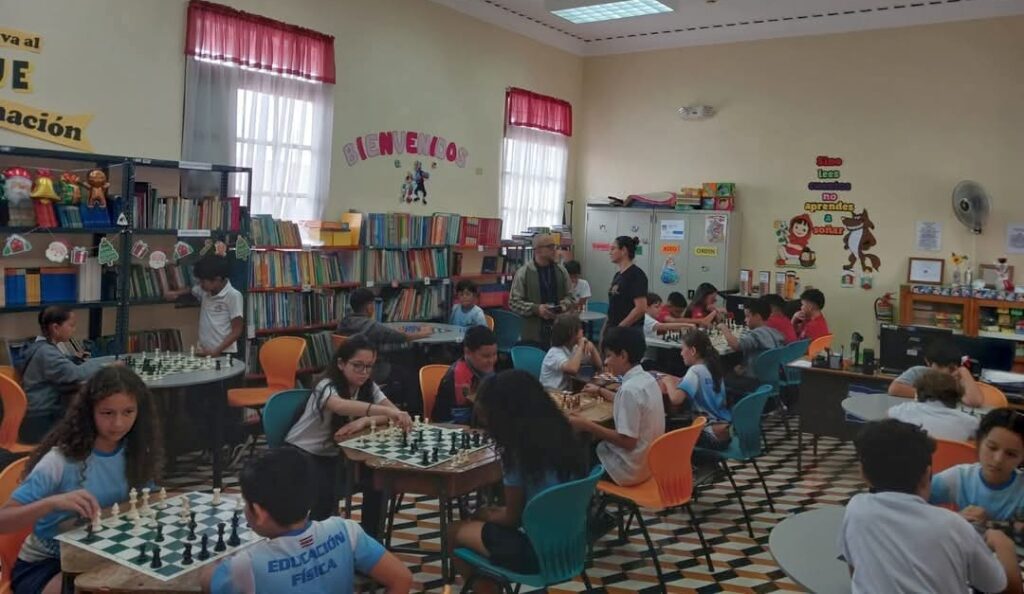
The Summit on Chess and Education, held in Costa Rica on 20 and 21 March, brought together experts from across Latin America to discuss how chess can support learning. In an article for the summit, FIDE President Arkady Dvorkovich wrote about Latin America’s growing role in shaping chess education policy worldwide. Since I became President of FIDE in 2018, one of the key goals has been to develop chess as a tool for engagement, inclusion and education. This idea has found support not only in the chess world but also among teachers, psychologists, clinicians, scientists, social workers, humanitarian organisations, governments and many others. As part of this work, FIDE named 2025 the Year of Social Chess. Building on the efforts led by FIDE Deputy Chair Dana Reizniece, we declared 2026 the Year of Chess in Education. For us, social chess and chess in education are not slogans. Together with international organisations and state institutions, we have held events, seminars, conferences and competitions across the world, promoting the concept and inviting all interested parties to provide ideas, questions and solutions. In each place, we showed how chess can become part of daily life, regardless of background or circumstance. We already know that full integration is possible. In Armenia, chess has been a mandatory subject in primary schools since 2011. The program has been successful, which is also reflected in the number of highly rated players from the country. Latin America is at the heart of this project. Several essays on the region, published by the FIDE Chess in Education Commission in 2023, describe a strong wish to use chess as an educational innovation. They also point to gaps in coverage and limited institutional backing. Long term programmes begin when school leaders and classroom teachers see chess as part of learning, not as a hobby on the side. Political engagement in the region is growing. In 2024, federations in Honduras, Trinidad and Tobago and Costa Rica invited Jerry Nash, chair of the FIDE Education Commission, to visit schools and meet ministers to discuss large scale plans. His visit helped local teams prepare proposals for national or regional programmes and raised awareness of chess as an educational tool, not only as a sport. Later visits across the Americas by Victor Bologan, focused on chess in education and youth development, continued this work of linking chess projects with finance, sport and education authorities. In August 2025, at the Smart Moves Summit in Washington D.C., the Costa Rican Minister of Sport and Recreation, Donald Rojas Fernandez, presented results from pilot projects in schools. The data showed that classroom chess can support better academic performance and stronger social skills. It is therefore natural that the second global conference on chess in education is now taking place in Costa Rica, a country that is setting standards for how chess can serve society. The Summit on Chess and Education in Costa Rica will launch a national pilot that brings classroom, based chess to ten public schools. The programme is built around inclusion, student wellbeing and simple implementation for teachers. This project will be continuously observed and – pending successful evaluation – the plan is to extend it nationwide. Thus, the successful project can turn into a national strategy, written into education plans and budgets, so that a child in a rural public school has the same chance to learn through chess as a child in a capital city. These projects are possible thanks to the hard work and support of people in FIDE and the community, such as Pepe Carillo and Mauricio Arias whose involvement has brought the projects to life. For Latin America and the Caribbean, the Year of Chess in Education provides a clear moment and a common goal. My team at FIDE and I are fully committed to supporting and promoting this goal and we are looking forward to the conclusion and recommendation from the Summit on Chess and Education. Arkady Dvorkovich, FIDE President Photos: Costa Rica Chess Federation