

AAOIOCC 2021: Arab and African Chess Federations join forces

Based on the role of the Arab and African Chess Federations in exercising their missions: Raising the level of the Arab and African players Continuity of work to improve the game of chess Competitive activity and development of skills in practicing the game Communication between member players of the two regions Cooperation between the Arab Chess Federation and the African Chess Confederation It has been agreed to establish an open championship that brings together Arab and African players. Following the success of the Africa Online Individual Chess Championship (AOICC) 2021, the Arab Chess Federation and the Africa Chess Confederation partnered to stage the Arab-African Online Individual Open Chess Championships (AAOIOCC). The event will be held online on lichess.org from February 25-27 in four stages: Preliminary Stage (February 25) Men’s Semifinal (February 26) Women’s Final (February 26) Men’s Final (February 27) All the games are played with the time control of 3+2. All final-stage players will be monitored via the Zoom platform, so all finalists are required to enter the Zoom platform and share the camera, sound, and screen, and all participants must enter the Zoom meeting on the player’s name as it is registered on the FIDE website. And they must enter the Zoom link half an hour before the start of the championship. The championship is monitored by the arbiters, the Anti-cheating Committee, and the management of the championship. Regulations for the AAOIOCC 2021 (pdf)
Fundraising for FIDE Social Projects
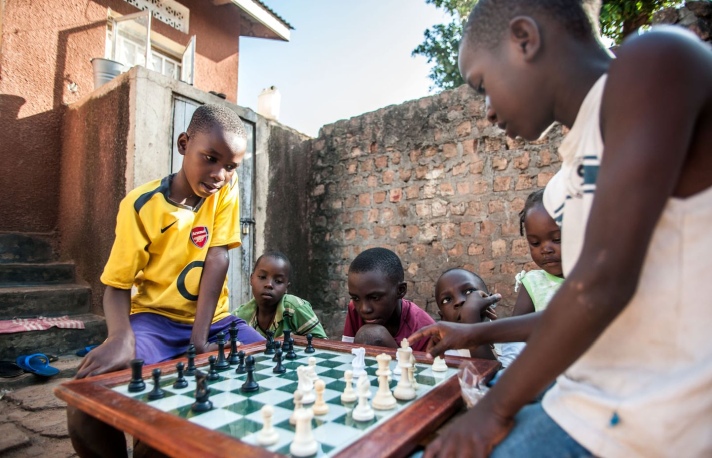
Chess in education, chess for people with disabilities, or the support fund for distinguished chess seniors? Which social project would you like to support? NOW YOU CAN ALSO HELP: http://donations.fide.com/ In connection with the FIDE World Corporate Chess Championship, we have organized a fundraiser. All participant companies have been asked to make a donation towards one of these 3 social projects. But you can also contribute, and your help would be more valuable now than ever before. You can make a donation using this link: https://give.softgiving.com/FIDE Right after entering your name, you will find a drop-down menu where you can choose what project do you want to support with your money. We are preparing some gifts and exciting surprises to be raffled off among all those who contribute with a donation, as a recognition of your generosity. But more importantly: whichever project you choose, you will be supporting a worthy cause. FIDE Social projects for 2021 For the International Chess Federation, organizing chess competitions is not the only mission. Like every other sports association, the competitive aspects are just a means to achieve higher goals. Below you will find information about three social projects we are currently implementing. Chess a tool that helps to make people smarter – through a game that is fun to play. Particularly for children, it allows them to develop their intellectual skills. Chess is also a great equalizer: it helps every child to reach their full potential, regardless of their background. The game can also make a huge impact in the lives of people with physical disabilities, by providing them with an activity in which they can compete on absolutely equal terms, boosting their self-esteem. Chess can also improve the lives of our senior citizens since the game has proven benefits in preventing cognitive ageing and general brain decline. CHESS IN EDUCATION FIDE needs to develop learning materials and prepare teachers to develop the potential of chess as a tool for education. Our program of seminars has to be expanded where the demand is increasing, Asia, Africa, and the U.S. Lectures and conferences have to be intensified in those countries where there is untapped potential. Chess helps us to identify talent. FIDE must nurture this talent and help brilliant children to achieve their potential. Some poor countries can’t afford to send representatives to the World Youth Chess Events. We must work to ensure that no one is left out, especially for economic reasons. CHESS FOR PEOPLE WITH DISABILITIES In 2020, FIDE successfully launched the First Online Chess Olympiad for People with Disabilities, in which more than 400 athletes from 45 countries took part. We have ambitious plans to expand this competition further and make chess even more accessible to everyone. We are currently developing an online platform that will allow people with a 100% visual impairment to play chess games online. The goal is that this platform gives them access to all functionalities and possibilities that you would normally find available at any other online chess club. The potential of chess in this area is huge, not only in terms of leisure or sport, but also in terms of meeting the need for communication, cognitive development, and expanding communication capabilities of people with impairments. FIDE CHESS VETERANS SUPPORT PROGRAM In 2013, FIDE decided to introduce a contribution towards giving back a little to those who, having devoted their entire life to chess, find themselves now in an unstable financial situation. Since then, almost 200 distinguished chess veterans from over 40 different countries have benefitted from this program. Among the recipients, there are individuals representing all bodies and categories: players, coaches, and arbiters. The pandemic has made the situation of our seniors much more challenging since this age group is particularly vulnerable. As a result, many have lost their source of income. Donations to the FIDE Chess Veterans Support program will help prominent chess figures that have contributed enormously to the growth of our sport over time, a support that is much needed in these difficult times.
FIDE Council approves CSR guidelines

The fund-raiser that is organized alongside the World Corporate Championship connects perfectly with a recent decision by FIDE. Last week, the FIDE Council approved our Corporate Social Responsibility guidelines, a document that has now been incorporated into the FIDE Handbook. Essentially, CSR is a self-regulating business model that incorporates social and environmental concerns into a company’s planning and operations. The goal is to ensure that all of its activities positively affect society as a whole. This management concept goes beyond a company’s legal obligations, and it aims at making a company socially accountable to itself, its stakeholders, and the public. In recent years, the notion of Corporate Social Responsibility (CSR) has become increasingly prevalent, also in the field of sports. By definition, sports federations already play a social role, bringing positive effects to society. However, their professionalization and growing commercialism make necessary the establishment of mechanisms of self-regulation from a social perspective, to ensure that they stay loyal to their foundational values. FIDE, established as a non-profit sports organization, will now have these core values more present than ever before. A task force will oversee this area of work, thanks to an initiative impulse by our treasurer Zhu Chen. “The initial idea of bringing CSR to FIDE is to care for all the stakeholders in the chess world and improve the chess ecosystem. And I wish that CSR is a small step towards approaching HSR (human social responsibility). In the long term, the intention is to improve the imperfect system that humanity evolved through the long history, to be kind to human, every living creature, and nature”.
Tribute to Liu Wenzhe
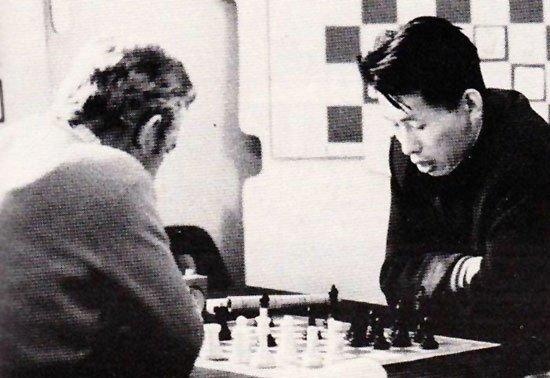
A couple of weeks ago, the FIDE Trainers Commission (TRG) announced the awards for 2020 and 2021. The categories have now been expanded to 10 so that every licensed trainer now has the opportunity to win an award and be recognized by their peers. One of the newly created awards bears the name of Liu Wenzhe (1940-2011), the pioneer and leader of China’s chess over four decades. Liu, born in Harbin, was from childhood a Xiangqi and Go player, but in his late teen years, he took a serious interest in Western chess, something that was very uncommon in that period. He soon rose to achieve the consideration of China’s leading player, and in 1961 he also established himself as a chess coach, so he could train others in the game that had captivated him. Already in his international chess debut in 1965, in a friendly match between China and the Soviet Union, he became the sensation. His victory against Nikolai Krogious was the first victory of a Chinese player against a grandmaster – at least in an official game. But it was only at the Buenos Aires Olympiad in 1978 with his spectacular crush of Nederland’s Jan Donner (a miniature named “The Chinese Immortal”) that the whole world took notice of his talent. Liu Wenzhe – Jan Hein Donner (Buenos Aires, 1978) 16. Qxg6!! Kxg6 17. Bh5+ Kh7 18. Bf7+ Bh6 19. g6+ Kg7 20. Bxh6+ 1-0 In 1980, he was awarded the International Master title, the first FIDE title of any kind for a Chinese player. Liu won the National Championship in 1980 and 1982, and he continued to be the main force of the Chinese team in 1978, 1980, and 1982 Olympiads. In 1986, he was named the first-ever head coach of the national team. From that moment on, Liu Wenzhe retired completely from competitive chess to focus on developing the system explained in his book “The Chinese School of Chess”, of which he is considered to be the founder. That school would eventually take his country to the top of world chess: Liu Wenzhe still lived when China won the first silver medal at a chess Olympiad (Turin, 2006), but unfortunately, he passed away before China’s sensational gold at Tromsø 2014.
Armenian Championships kick off in Yerevan
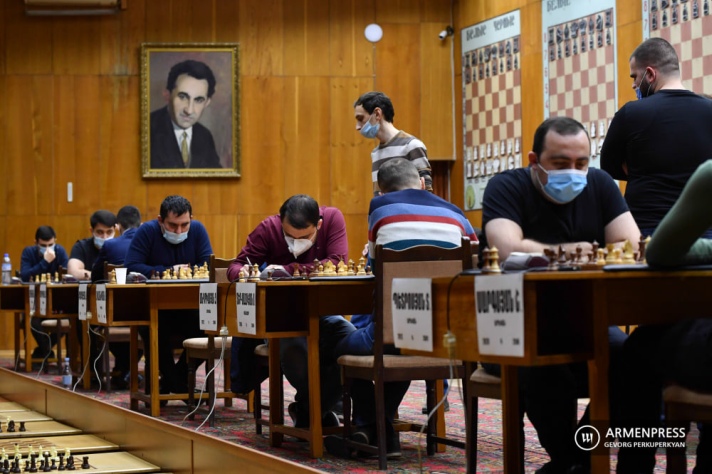
The Armenian Championship (so-called the Highest League) is taking place from 16-28 February 2021 in the capital of the country Yerevan. The 81st open event is a 12-player round-robin with the time control of 90 minutes for 40 moves followed by 30 minutes to the end of the game, plus a 30-second increment starting from move one. The winner qualifies for a spot in the national team. The opening ceremony and the playing rounds are held in the Tigran Petrosyan Chess House. Although the top-5 rated Armenian players are not participating, the event can boast of an impressive line-up with eleven grandmasters taking part. In Round 1 two highest-rated players Robert Hovhannisyan (2642) (pictured above) and Samvel Ter-Sahakyan (2640) scored confident victories with white pieces and took the lead. The 76th women’s championship is a 10-player round-robin tournament in which the highest-rated Maria Gevorgyan and Siranush Ghukasyan are considered to be the main favorites. Photo: Gevorg Perkuperkayn (ARMENPRESS)
Arkady Dvorkovich: FIDE promotes chess solidarity
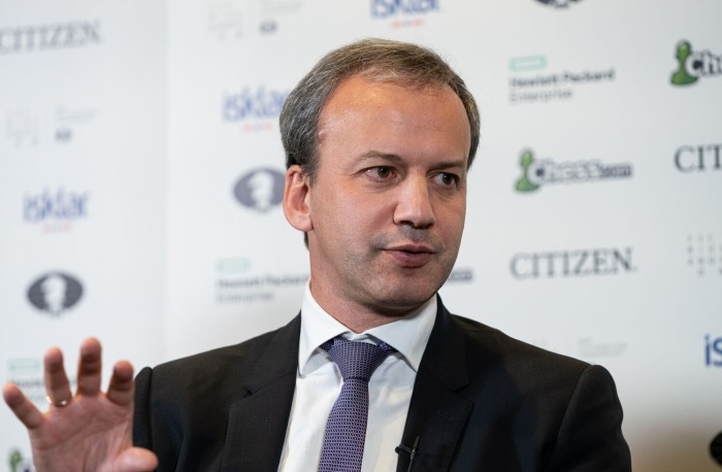
Mr. Dvorkovich, what is the mission and vision of FIDE? The mission of FIDE is the diffusion and development of chess among all nations of the world, as well as the raising of the level of chess culture and knowledge on a sporting, scientific, creative, educational and cultural basis. The vision of FIDE is to support close international cooperation of chess devotees in all fields of chess activities, thereby also aiming to improve harmony and promote peace among all peoples of the world. FIDE especially encourages and supports: – the education of youth through chess sport and culture; – the promotion of women in all chess activities and events; – the promotion of ethics and any effort aimed to ensure that, in chess, the spirit of fair play prevails; – any effort aimed to improve the inclusion of disabled or differently-abled persons in chess events; – any effort aimed to improve the inclusion of refugees and migrants in chess events; – any efforts of private organisations and public authorities aimed to provide for the social and professional future of chess players; – any effort aimed to improve good governance in all chess organisations. FIDE promotes chess solidarity to carry out development programs and bridge socio-economic divides among individuals and countries regarding access to chess activities. Next question, what is the organisational culture of FIDE? FIDE’s organisational culture is consistent with its original motto, “Gens Una Sumus”, which means “We Are One Family”. Globally it is based on the efforts of hundreds of chess lovers contributing to the activities of national, zonal and continental federations as well as FIDE commissions. On a central level, there is a group of full-time professionals providing for strategic and operational governance, marketing and event management. There is a small headquarter in Lausanne surrounded by other international sports federations and neighbouring the International Olympic Committee. The other management team members are spread all around the world working on distance, so the COVID-19 pandemic did not create any catastrophic complications for day-to-day management itself, while making it impossible to run traditional over-the-board chess activities. Daily management is structured normally in a horizontal way, where project teams are being formed for each particular project and have a high degree of autonomy, whereas the FIDE President is permanently overseeing their activities and takes strategic decisions. How about the recruitment practices of FIDE? The highest FIDE body – FIDE Council – consists of elected members (including FIDE President, Treasurer and Vice-Presidents) serving a 4-year period. Day-to-day operations are run by the Management Board appointed by the FIDE President upon the approval of the FIDE Council. The appointments are based on a personal judgement of FIDE President and depend on a combination of professional and personal skills required to manage global chess activities. Regular 360-degree assessments are instrumental in verifying the efficiency of FIDE human capacity. As of today, most of FIDE higher management are chess players of various levels having additional skills in the related management fields (public governance, marketing, PR, finance, IT, event management). There is a selection of former parliament/government members, marketing professionals from other sport federations, journalists, members of the organising team of the FIFA 2018 World Cup in Russia. There were a couple of instances when staff members had been hired following a public announcement and a formalised selection procedure (example – Marco Verdoia, FIDE Marketing Director), but in most cases, hiring is done on ad hoc basis. Gender equality and other important non-discrimination factors are playing more and more significant role in FIDE’s recruitment practices. What is the training and development of FIDE like? A strategic training session has been organised once for Management Board members (lecturer – Pekka Viljakainen, Skolkovo Ventures). It helped in setting common goals and team building. An agreement was reached with FIFA to organise a series of training sessions based on FIFA’s best practices in marketing, finance and regional development, but the COVID-19 pandemic led to shifting those to 2022. So, most of FIDE’s staff professional development is done in learning-by-doing manner. A contract to provide an online training course for FIDE staff has been signed in June 2021 to be delivered before the end of the year. How about rewarding employees of FIDE? Intrinsic rewards for FIDE employees are normally in the form of people being aware both themselves and by recognition from the higher management that they achieved something special whether by organising a high-quality international chess event, or by successful fundraising in the interest of FIDE, or by improving an internal organisation of FIDE. Extrinsic rewards are based on the assessment of annual performance and done in monetary form (annual bonuses). What do you think of employees’ satisfaction and engagement with FIDE? Most people working for FIDE are real chess lovers, and their satisfaction – to a high degree – is based on continuing success stories in international chess. Also, regular attention from FIDE President and other FIDE Council members is highly appreciated. Individual initiative is always welcome in the implementation of various projects and rewarded accordingly. What can you say about performance management and its contribution to FIDE’s competitive advantage? Each FIDE employee has a clearly identified role and functional description in the overall management framework of FIDE. It is FIDE President’s role to make sure that Management Board members fully understand their medium-term, annual and shorter-term priorities. Key FIDE management team members have clearly established KPI’s related to their functional roles. Principle examples include FIDE marketing team members who are entitled to bonuses upon reaching fundraising targets with minimum bonuses for budgeted targets and higher bonuses for exceeding budgeted targets) Also, it is critical to ensure permanent feedback from FIDE constituencies, chess players and the broader chess community. That helps to adjust the day-to-day priorities and implementation practices. Such an approach has proved to be effective in improving both the institutional capacity of FIDE, its transparency, visibility and actual performance vis-à-vis other international sports federations, especially during the year of COVID-19 pandemic. Last question, Mr. Dvorkovich. What do
FIDE resumes the Candidates Tournament
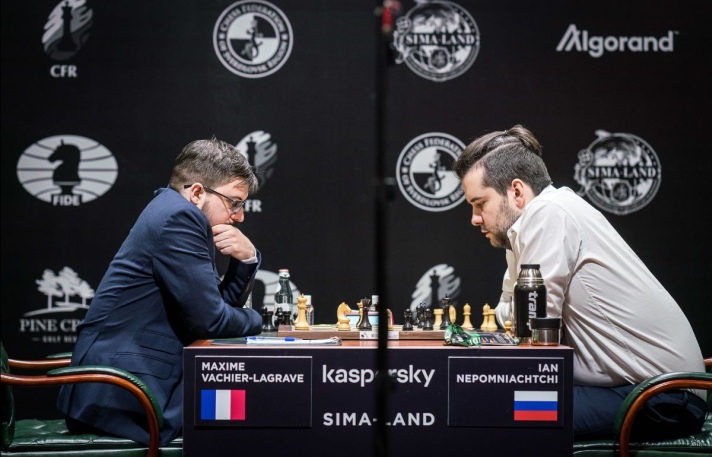
The Candidates Tournament, the biennial 8-player event that decides who will be the Challenger for the World Chess Championship title, will resume on the 19th of April in Yekaterinburg, Russia. This double round-robin tournament kicked off on March 16, 2020. However, it had to be abruptly stopped 11 days later when the Russian government announced the closure of air traffic with other countries, amid a rapidly escalating coronavirus pandemic. The sudden crisis left hanging this prestigious event, one of the oldest traditions in the world of sports. Since half the rounds had already been played, this interruption created an unprecedented situation, as the regulations stipulate that the results obtained until that point must stand – rather than having the tournament re-started from scratch. When the tournament was interrupted, the French Maxime Vachier-Lagrave and the Russian Ian Nepomniachtchi were in the lead with 4½ points after seven games. Fabiano Caruana (USA), Anish Giri (Netherlands), Wang Hao (China) and Alexander Grischuk (Russia) are in the chasing pack, all with 3½ points. After a long wait, the challenger to Magnus Carlsen’s throne will be finally known by the 28th of April. This is the detailed schedule for the second half of the tournament, to which all players have agreed on and expressed their readiness to take part in: 19th April 2021, Round 820th April 2021, Round 921st April 2021, Round 10(22nd April 2021, rest day)23rd April 2021, Round 1124th April 2021, Round 12(25th April 2021, rest day)26th April 2021, Round 1327th April 2021, Round 1428th April 2021, tie-breaks (if required) The eyes of the entire chess world will be on this tournament, which is expected to receive massive coverage. The recent surge of interest towards chess and the special circumstances around the event guarantees the biggest number of spectators for any Candidates Tournament in chess history. Standings after Round 7: Player Points Rating 1 Maxime Vachier-Lagrave 4½ 2767 2 Ian Nepomniachtchi 4½ 2774 3 Fabiano Caruana 3½ 2842 4 Anish Giri 3½ 2763 5 Wang Hao 3½ 2762 6 Alexander Grischuk 3½ 2777 7 Liren Ding 2½ 2805 8 Kirill Alekseenko 2½ 2698 Pairings for round eight: Fabiano Caruana (USA) – Maxime Vachier-Lagr. (FRA) Hao Wang (CHN) – Liren Ding (CHN) Ian Nepomniachtchi (RUS) – Anish Giri (NED) Kirill Alekseenko (RUS) – Alexander Grischuk (RUS) About the Candidates Tournament The current format of the Candidates Tournament was established in 1950 as the best way to determine who should be the World Champion Challenger. Currently, it is fought under the format of a double round-robin tournament (14 rounds), with the eight best players on the planet- except the champion himself. The selection process from which the World Chess Challenger emerges is probably one of the toughest of any sport. The scarcity of opportunities to ascend this summit makes any mistake more tragic, increasing the epic nature of the struggle. About the World Chess Championship The winner of the Candidates Tournament will be Carlsen’s rival in the World Championship Match, a face-off between two contenders where they play to the best of 14 games. The 2021 World Championship match will take place 24 November – 16 December 2021 as one of the highlights of the Expo 2020 Dubai. The two players will compete for a prize fund of 2 million euros.
Superb turnout for FIDE World Corporate Championship
We couldn’t have dreamed of a better welcome for the inaugural edition of the FIDE Online World Corporate Chess Championship that will be played next weekend (February 19-21). With 284 teams registered from 78 different countries, the event will bring together 1,467 players. This turnout widely surpassed all our estimations, and we would like to thank our partners at Chess.com and the Chief Arbiter, Alex Holowczak, for the extra effort they are making to accommodate all the participants. However, quality is even more important than quantity, and here is where things get really exciting. Most of the top companies in the world have joined the competition. So much so, that it would be just easier to name the ones that did not! The list of participating teams includes giants like Amazon, Samsung, Ford, Microsoft, Gazprom, Facebook, Siemens, Dell Technologies, Bosch, Airbus, IBM, Boeing, Sony, Intel, ArcelorMittal, Equinor, HP, Twitter, Goldman Sachs, Morgan Stanley, Vodafone, Sberbank, American Express, Deutsche Bank, UBS, Oracle, Credit Suisse, and Airbnb – just to name a few prominent names from the Fortune Global list. And the line-ups are no less impressive, with none other than the World Champion himself topping the list! Magnus Carlsen will defend the first board for Kindred Group (which encompasses Unibet, the company that sponsors him), while Anish Giri will play for Optiver, a Dutch trading firm that has supported him during the past five years of his career. Companies are allowed to have just one invited player for the event, so we also find Ian Nepomniachtchi playing for Sberbank, Vladislav Artemiev playing for Aeroflot, and Salem Saleh playing for Emirates Airlines, among many others. In total, 204 titled players will take part in the competition, including 36 Grandmasters. We hope that some of these collaborations will turn into long term sponsorship agreements for many of these players. We also find top executives playing for their teams, like Bernhard Spalt, CEO of Erste Group Bank, and Tomislav Topic, who is now the CEO of a telecom company in Ecuador, Telconet. However, the strongest executive is the two-time French Champion and former top-player Joel Lautier, a Member of the Supervisory Board of Sovcombank, who will make a temporary comeback to play in the championship. There was no entry fee of any kind for this competition. However, FIDE is organizing a fund-raiser in cooperation with the platform Softgiving, and participant companies are encouraged to donate towards one of three social projects currently being developed by FIDE: Chess in Education programs for underprivileged children, Chess for people with Disabilities, and the FIDE veterans support program. If you also want to contribute, you can do it through this link: https://give.softgiving.com/FIDE
#25
Superb turnout for the World Corporate Chess Championship FIDE and CSR World University Online Championships A tribute to Liu Wenzhe Agadmator hits 1 million subscribers Birthdays READ NEWSLETTER
New appointments in FIDE Commissions

The following changes have been approved in FIDE Commissions: Mrs. Ilaha Kadimova to be appointed as the Secretary of Events Commission. Two-time Junior World Champion (1992 and 1993), Ilaha Kadimova became WGM in 1994. For several years she served as a secretary for Commission for Women’s Chess and now has been transferred to the Events Commission where her experience may prove valuable. Mrs. Christelle Jager-Hafstad to be appointed as the Secretary of Commission for Women’s Chess.