

Tata Steel 2021: Firouzja shoots ahead
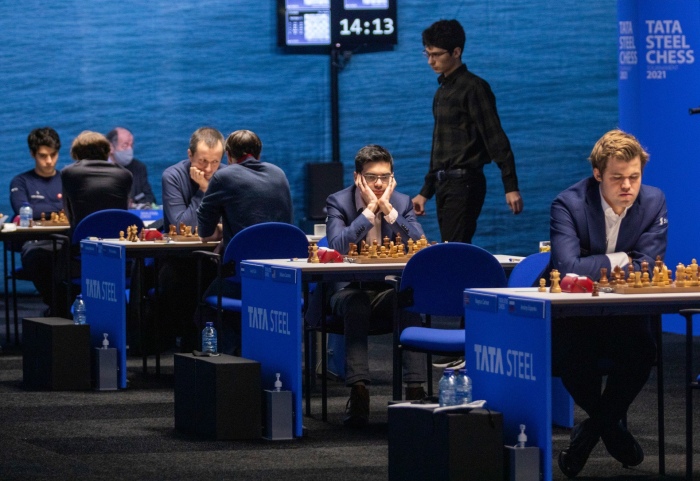
Alireza Firouzja scored his third consecutive victory and got in front of the field with 5½ points out of 8. Andrey Esipenko beat Magnus Carlsen and caught up with Anish Giri, Jorden Van Foreest, and Fabiano Caruana. Magnus Carlsen opted for the Scheveningen variation of the Sicilian Defense against Andrey Esipenko, to which the youngster reacted in a most aggressive way 8.g4, inspired by Keres Attack. With 10.a3 the Russian offered a pawn sacrifice that Carlsen accepted. White obtained more than sufficient compensation and after imprudent 16…Nc6 by Magnus Andrey found a nice sequence with a temporary knight sacrifice, won a pawn and got an overwhelming position. Carlsen tried to engineer some counterplay on the queenside but Esipenko was simply unstoppable today and defeated the World Champion on move 38. The last time Magnus lost in Sicilian Defense was almost 10 years ago, back in 2011. The happy winner called it “one of the best days in my life”. Pentala Harikrishna and Alireza Firouzja battled out in the Exchange Variation of the Slave Defense. Despite a symmetrical pawn structure, the opponents reached a very interesting unbalanced position in which Alireza grabbed the initiative. Closer to the time control the players exchanged mistakes with Pentala committing the fatal one (37.Nf4?). Apparently, the Indian GM missed the idea of 37…d4-d3 followed by Bd4+ activating the bishop. Alireza did not convert his advantage optimally but his victory was never in doubt after that. Fabiano Caruana and Anish Giri played a high-quality game in which Black resourcefully maintained the balance and eventually reached a draw. Jan-Krzysztof Duda tried to outwit David Anton in a maneuvering play but ended up in an inferior position. Luckily for him, the Spaniard missed a very strong idea 32…d5! and the Pole escaped with a draw. Radoslaw Wojtaszek comfortably equalized on the black side of Caro-Kann Defense against Nils Grandelius and even got a slight edge. However, White had sufficient defensive potential which Nils exploited to score a half-point. Maxime Vachier-Lagrave and Jorden Van Foreest had an interesting theoretical discussion in the Ruy Lopez. At some point, one may have thought that White got an upper hand but after a brilliant 14…Bh3! Black is at least equal. Moreover, Jorden emerged even slightly better but it quickly fizzled out into a draw. The game between Alexander Donchenko and Arian Tari saw a popular line of the Catalan in which the Norwegian introduced a novelty on move 13 that allowed him to equalize. A draw by repetition was agreed shortly after. Standings after Round 7: 1. Alireza Firouzja – 5½; 2-5. Anish Giri, Fabiano Caruana, Jorden Van Foreest and Andrey Esipenko – 5; 6. Nils Grandelius – 4½; 7-8. Pentala Harikrishna and Magnus Carlsen – 4; 9. Radoslaw Wojtaszek – 3; 10-13. Jan-Krzysztof Duda, Arian Tari, Maxime Vachier-Lagrave and David Anton – 3; 14. Alexander Donchenko – 2. Photo: Jurriaan Hoefsmit – Tata Steel Chess Tournament 2021 Official website: tatasteelchess.com/
Tata Steel 2021: Four in the lead after Round 7
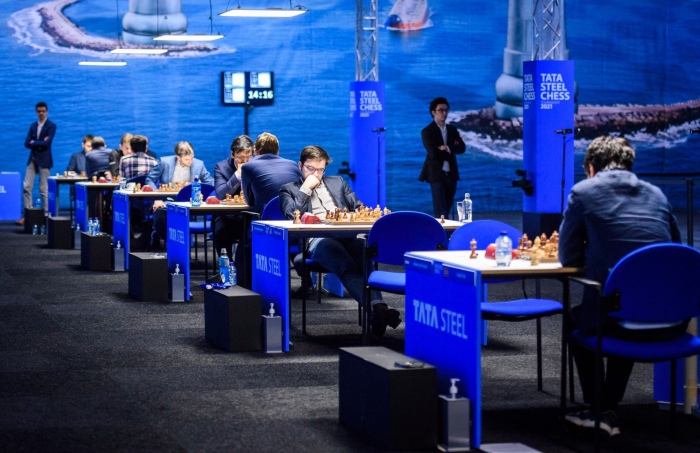
Round 7 of Tata Steel 2021 has been the most exciting one so far with five games producing the decisive outcome. After a huge reshuffle in the top echelon, there are four leaders (Van Foreest, Giri, Caruana, and Firouzja) with 4½ points each and a quartet trailing by a half-point. Anish Giri and Nils Grandelius had a discussion in the Najdorf variation where the Swede played the exact line, recommended by the Dutchman in his online-course. Black was very close to reaching equality, being short on time Nils lost a thread. White sacrificed a pawn but got a potential a-passer which became a decisive factor. The leader after six rounds lost his first game and is now tied for second place with three other participants. Maxime Vachier-Lagrave suffered another painful defeat in his signature Najdorf variation, this time at hands of Fabiano Caruana. The Frenchman introduced a dubious novelty 13…exd5 (or maybe just mixed up the moves) that was refuted by the American in a clinical fashion. It seems after 14.e6 Black is doomed. Jorden Van Foreest went for a rare line on the black side of Ruy Lopez against Arian Tari and obtained a quite promising position. After pushing 19…f5 the Dutchman was optimistic about his chances but hardly expected that things would go so smoothly for him. 20.Bc2? appears to be a decisive mistake after which there is no escape for White. Indeed, eleven moves down the road Tari threw in the towel. Jan-Krzysztof Duda mishandled the London system with Black against Alireza Firouzja and by move 17 found himself an exchange down. To his credit, the Pole managed to coordinate his pieces and engineer some serious counterplay. Alireza returned an exchange several moves later hoping for an endgame with an extra pawn, but Jan-Krzysztof sacrificed a bishop and snatched several white pawns. Most likely Black had sufficient compensation for a draw but Duda played somewhat passively and eventually, his king fell into a mating net. Andrey Esipenko scored a victory with Black which, according to him, is a rare occurrence in his practice. Radoslaw Wojtaszek tried a sharp line with 4.f3 in the Nimzo-Indian but the young Russian demonstrated good preparation and made White work hard for equality. The Pole went astray just one step from reaching safety – after 25. Rb1 followed by 26.b3 White holds the position. After Radoslaw opted for an immediate 25.b3 Andrey emerged a pawn up in an endgame and converted his advantage with great confidence. David Anton got an upper hand against Alexander Donchenko, but probably underestimated Black’s chances on the kingside. The game transposed into an equal rook endgame and the opponents split a point on move 35. Magnus Carlsen put some pressure on Pentala Harikrishna but the Indian GM was defending with great precision and held the World Champion to a draw. Standings after Round 8: 1-4. Anish Giri, Fabiano Caruana, Jorden Van Foreest and Alireza Firouzja – 4½ 5-8. Nils Grandelius, Pentala Harikrishna, Magnus Carlsen and Andrey Esipenko – 4; 9. Radoslaw Wojtaszek – 3; 10-13. Jan-Krzysztof Duda, Arian Tari, Maxime Vachier-Lagrave and David Anton – 2½; 14. Alexander Donchenko – 2. Photo: Jurriaan Hoefsmit – Tata Steel Chess Tournament 2021 Official website: tatasteelchess.com/
Tata Steel 2021: Grandelius maintains the lead
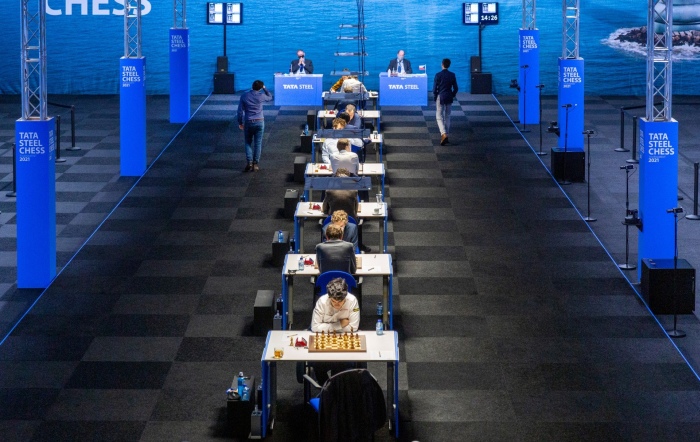
Nils Grandelius continues to lead Tata Steel 2012 with 4 out of 6. Van Foreest and Firouzja joined a big group of players sitting on 3 ½ that is chasing the leader. Alexander Donchenko and Alireza Firouzja had an interesting discussion and double-edged Noteboom Variation of the Slav Defense. The German played a new move 18.Bb3 that did not change much the evaluation of a very unbalanced position. Alireza offered a pawn sacrifice with 19…e5 which should not have been accepted. Alexander, however, snatched the pawn and Black obtained a very promising position. Then it was Firouzja’s turn to err as he missed 25…a3 and allowed the opponent to grab the initiative. In the following complications, both youngsters did not play optimally – the evaluation changed several times – but it was Alexander who made the last mistake by capturing Black’s pawn with a wrong piece. After 33.Bxb2 White had all the chances to hold. However, Alexander opted for 33.Qxb2 which fails to 33…Rab8 and Black penetrated White’s camp. The game between Jan-Krzysztof Duda and Magnus Carlsen saw another instance of Giuoco Pianissimo in which White opened the center but did not achieve much. Moreover after 17.Qf3 Bxd4! Black got an edge. Probably the World Champion did not use all his chances as the game was drawn in a rook endgame. Arian Tari solved all the opening problems on the black side of Gruenfeld Defense against Maxime Vachier-Lagrave and could have set a more ambitious goal than a half-point, but it seems that the Norwegian was OK with a draw. Jorden Van Foreest outplayed David Anton in the Ruy Lopez, broke through in the center but still had some work to do. The game ended abruptly as the Spaniard blundered a piece. Radoslaw Wojtaszek made his sixth draw in a row, this time against Pentala Harikrishna. The Indian GM emerged slightly better on the White side of the Queen’s Gambit but was unable to turn it into something substantial. Andrey Esipenko and Anish Giri played a very solid positional game. Since neither of the players had any advantage throughout the encounter, a draw came as a logical outcome. Fabiano Caruana was slightly better throughout the game with Nils Grandelius but the leader held his ground and scored a half-point. Standings after Round 6: 1. Nils Grandelius – 4 2-7. Pentala Harikrishna, Magnus Carlsen, Anish Giri, Fabiano Caruana, Jorden Van Foreest and Alireza Firouzja – 3½; 7-8. Andrey Esipenko, Radoslaw Wojtaszek – 3; 10-12. Jan-Krzysztof Duda, Arian Tari, Maxime Vachier-Lagrave – 2½; 13. David Anton – 2; 14. Alexander Donchenko – 1½. Photo: Jurriaan Hoefsmit – Tata Steel Chess Tournament 2021 Official website: tatasteelchess.com/
Tata Steel 2021: Grandelius regains the lead
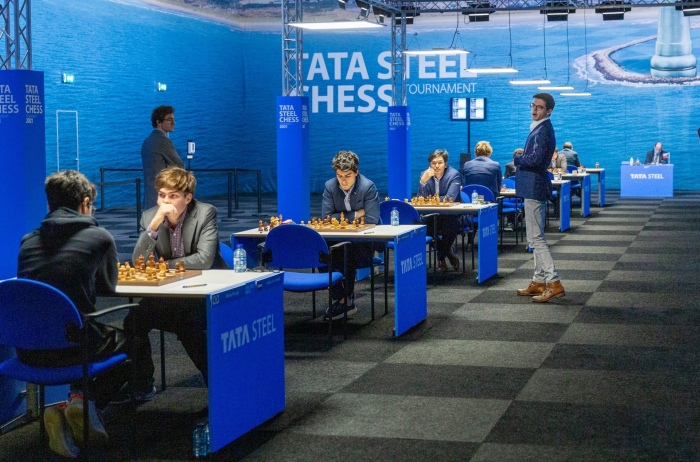
It was another relatively peaceful round at Tata Steel 2021 with just one decisive outcome – Nils Grandelius beat Maxime Vachier-Lagrave and grabbed the sole lead again. A group of four players that includes Carlsen, Giri, Harikrishna, and Caruana is a half-point behind. The Swedish GM challenged the Frenchman on the opponent’s home turf, the Najdorf variation of the Sicilian Defense, and was rewarded for his resolve. After Nils introduced a logical novelty on move 15 (the first line of Stockfish 12) Maxime reacted precisely up to some point but did not find an important subtlety 15…Nh5 and found himself a pawn down in an inferior position. Although Grandelius’s conversion was not optimal (in his own words), he gradually coordinated his pieces and launched a crushing attack on Black’s king. Although it did not result in a checkmate, Maxime capitulated facing further material losses. Magnus Carlsen tested his young opponent Alexander Donchenko in an endgame that emerged from a rare line of Najdorf variation. The young German passed the test and held the World Champion to a draw, although it seems that on move 36 Magnus could have posed more serious problems. Carlsen sacrificed a piece to advance his d-pawn and even won an exchange but it still was not enough to score a full point. Alireza Firouzja desperately tried to convert his two bishops and a slightly better pawn structure into something tangible but did not succeed. His opponent, Jorden Van Forest maneuvered with great accuracy and comfortably reached a draw. David Anton breached the Berlin Defense of Arian Tari (17…f6 looks dubious) and got a winning position but failed to finish the job. Apparently, the Spaniard underestimated Black’s defensive idea of sacrificing an exchange on e5 that eventually saved the Norwegian a half-point. After giving up his rook for Black’s b-pawn Anton still had an upper hand in a very interesting position with three pawns for a bishop but missed the best continuation one more time (45.Kf2? instead of 45.a4!). The drama did not end there as pushing for a win in a drawn position David went too far and played a fatal 52.Kf4?? However, Arian returned the favor by playing 54…c2 with an immediate draw whereas after 54…Bb5 White would have lost due to an imminent zugzwang. Andrey Esipenko faced Fabiano Caruana with Black and was up to the challenge. The last year winner’s attempts to gain any advantage were skillfully thwarted by the young Russian. Anish Giri and Pentala Harikrishna had a discussion in one of the lines of Queen’s Gambit Accepted, in which White introduced a novelty on move 8. Anish got some edge in subsequent maneuvering play revolving around Black’s d3-pawn but after erroneous 25.Bc3? he let Pentala equalize immediately and offered a draw that was accepted. In the Polish duel, Jan-Krzysztof Duda and Radoslaw Wojtaszek quickly traded most of the pieces and agreed on a draw by repetition on move 27. Standings after Round 5: 1. Nils Grandelius – 3½ 2-5. Pentala Harikrishna, Magnus Carlsen, Anish Giri, Fabiano Caruana, – 3; 6-9. Jorden Van Foreest, Andrey Esipenko, Alireza Firouzja, Radoslaw Wojtaszek – 2½; 10-13. Jan-Krzysztof Duda, David Anton, Arian Tari, Maxime Vachier-Lagrave – 2; 14. Alexander Donchenko – 1½. Photo: Jurriaan Hoefsmit – Tata Steel Chess Tournament 2021 Official website: tatasteelchess.com/
FIDE President Arkady Dvorkovich on Hybrid Format
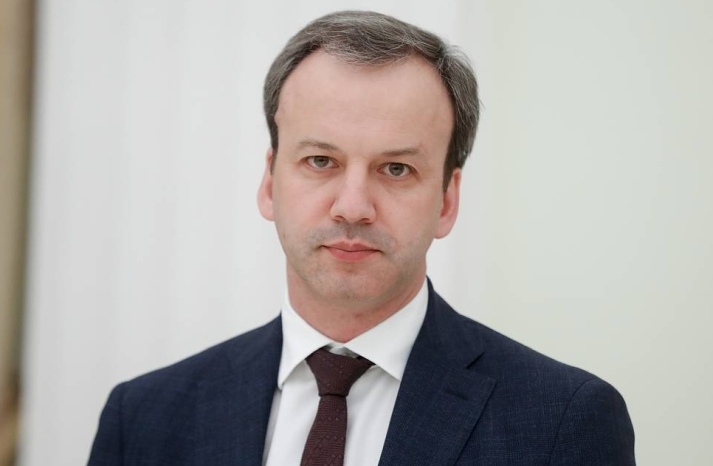
Dear chess friends, I would like to clarify FIDE’s intentions and goals regarding the introduction of the newly adopted regulations for Online Chess, and in particular, for what we have named “Hybrid format”. First, there was an unambiguous demand for a coherent set of guidelines regarding running online chess competitions, based on our experience throughout 2020. FIDE delivered, by setting clear technical requirements, recommendations for arbiters, and anti-cheating provisions. Second, the Online Chess Regulations do not contain any provision for ratings and titles. Those are being regulated by rating rules developed and implemented by the FIDE Qualification Commission. QC is generally not against rating and giving titles based on hybrid competitions, but firmly believes that it requires both testing (which we intend to do) and a very cautious implementation. The FIDE Council fully agrees with this approach. Third, a number of national, zonal, and continental federations are exploring the option of holding their championships under a hybrid format, in particular for the purposes of qualification for the FIDE World Cup due to take place in July 2021. It is now their right to do so. However, FIDE will be monitoring those projects closely, to make sure the events are in full compliance with the Online Chess Regulations. Any decisions regarding ratings and titles shall be taken separately, on an individual basis. Fourth, we are fully aware of the anti-cheating challenges related to the hybrid chess format. It is both about qualification and independence of arbiters, meeting technical requirements, and behavioral aspects playing online. While having improved substantially FIDE anti-cheating algorithms and allowing the use of statistical analysis as proof of alleged cheating, we believe it would still require a reasonable amount of time to make cheating in chess a high-risk and non-tolerable thing. Finally, we are in agreement that online (including hybrid) competitive chess is not entirely the same kind of a sports game as “over the board” chess. It lacks the same kind of emotional component and psychological pressures that are experienced when playing face-to-face. At the same time, it requires slightly different technical skills and attitude. Although it is acceptable to use it when circumstances do not allow us to continue with OTB activities, or in order to provide better connectivity of the global chess world, it is not intended as a full-scale substitute for traditional chess, which we are committed to supporting. As a matter of fact, FIDE has just adopted a new program of support for classical chess opens, which details will be announced shortly. There are many other things to discuss as well (time formats, better visibility of chess for a global audience, and many more) and we are willing to continuing this dialogue on a permanent basis. Arkady DvorkovichFIDE President
FIDE will provide aid packages to Open Tournaments
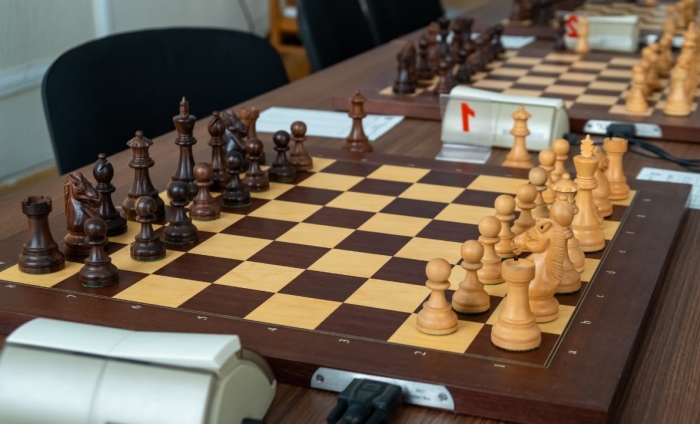
The COVID-19 pandemic has impacted many important spheres of chess life – and the one that suffered most is open tournaments. Most of these events have been canceled during 2020, and FIDE’s concern is that if this situation does not improve soon, many of them might never be able to make a comeback. FIDE acknowledges the importance of supporting OTB events during this crisis and recognizes the crucial role that open tournaments play. We believe that, by helping them, we would be indirectly supporting many other segments of the chess community, including young players, professionals, and even beginners. In view of this, FIDE has approved the following initiative from the Global Strategy Commission (GSC): 1. To allocate an amount of € 100,000 to support the holding of open tournaments in 2021. 2. To assign the distribution of the specified amount to the President, on the basis of a list proposed by GSC. This list will be elaborated taking into account the application of the following criteria: a) Priority is given to traditional open tournaments that have taken place for at least three consecutive years. b) A geographical criterion is applied to maximize the countries and regions that will receive support. c) The recipient of assistance must present the tournament budget with a detailed breakdown, including reasonable prizes for women, veterans, and youth. d) The tournament will establish the lower fees (or absence of fees) for the agreed categories of participants (veterans, youth, women, representatives of developing countries), to ensure that FIDE sponsors can be reasonably represented at the tournament. The aid package allocated for one tournament should not exceed 20% of the total budget of the tournament (including all costs) and will be limited to a maximum of €15,000 per event. “Open tournaments represent a very important integral part of the entire chess community eco-system. It helps young players to grow, it provides bread – and sometimes butter – for hundreds of 2500-2700 players, and it represents a very important part of professional life for women players 2300-2500”, explained Emil Sutovsky, on behalf of the GSC. “It also helps local chess clubs and communities, and it is oftentimes an important link between chess and city hall or region. We must do our utmost to preserve it – as there is a real danger for many of the events. And we shall act quickly – as organizers are about to decide if they are going to stage their event this spring/summer.” With the good sponsorship prospects, particularly in connection with the upcoming World Championship match, the Global Strategy Commission is hopeful that this support fund might be increased in the near future. This possibility would be a joint decision of the President and the FIDE Treasurer. More detailed regulations will be published at the end of January. In the meantime, organizers of chess opens are invited to submit their inquires to GSC: gsc@fide.com
Tata Steel 2021: All draws in Round 4
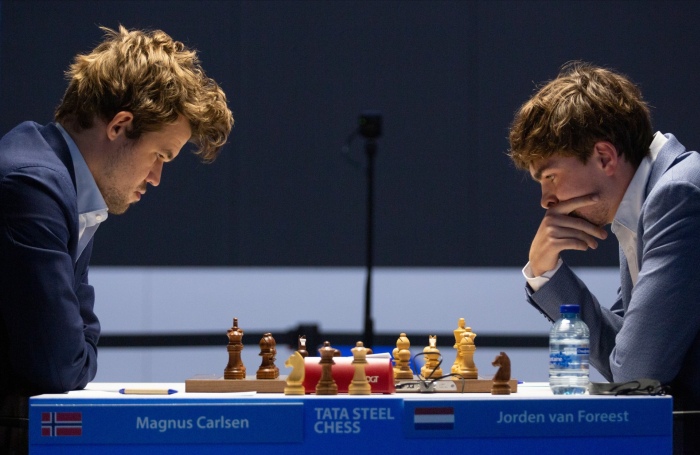
All seven games in Round 4 at Tata Steel 2021 were drawn, although at least two encounters could have ended decisively. All the participants made a half-step forward with the standings remaining intact. Magnus Carlsen was slightly better throughout the game with Jorden Van Foreest and even ended up a pawn up in an endgame but could not reverse a drawish trend. Jan-Krzysztof Duda and Maxime Vachier-Lagrave had a discussion in a topical line of the Gruenfeld Defense in which Black sacrificed a pawn but got some compensation in the form of two bishops and pressure on c3-pawn. White preserved his extra pawn, but Black managed to transpose into a four-rook drawish endgame. The opponents split a point one move before reaching control. Nils Grandelius obtained a very promising position on the Black side of Najdorf variation of the Sicilian Defense against Andrey Esipenko and after White’s slow and somewhat passive maneuvers broke through in the center with 19…d5. After Esipenko’s capturing on d5 his problems were snowballing but Nils failed to find several decisive continuations (40…Rxb2 is the last of them) and let the opponent off the hook. Alireza Firouzja had a great chance to catch up with the leaders, but it was not meant to be. The teenager outplayed Arian Tari in a see-saw tactical battle but did not find a finishing touch 29…Be2! (which is not easy to spot, especially in time-trouble). After Firouzja played 29…Ne2+ a draw was agreed one move later. The game between Pentala Harikrishna and Fabiano Caruana saw a popular line of the Ruy Lopez. The Indian GM introduced a novelty on move 17 but did not get anything out of it. Moreover, Caruana got a slight edge and made White demonstrate accuracy to keep the game in the balance. Pentala was still facing some problems but Black’s 35…Qd4 turned out to be a mistake. Apparently, Fabiano missed 36.Nxg6! after which White had no problem reaching a draw. Alexander Donchenko emerged slightly better with White against Radoslaw Wojtaszek and eventually won a pawn but Black was never in real danger and comfortably sealed a draw. In the longest game of the Round 4 Maxime Vachier-Lagrave vs. David Anton, the evaluation was hovering around equality all the way. Although White eventually won a pawn, Black’s task of netting a half-point was not that difficult. Standings after Round 4: 1-5. Pentala Harikrishna, Magnus Carlsen, Anish Giri, Fabiano Caruana, Nils Grandelius – 2½; 6-10. Maxime Vachier-Lagrave, Jorden Van Foreest, Andrey Esipenko, Alireza Firouzja, Radoslaw Wojtaszek – 2; 11-13. Jan-Krzysztof Duda, David Anton, Arian Tari – 1½; 14. Alexander Donchenko – 1. Photo: Jurriaan Hoefsmit – Tata Steel Chess Tournament 2021 Official website: tatasteelchess.com/
Lubomir Kavalek (1943-2021)

It is with the deepest sadness that we learned about the passing of chess legend Lubomir Kavalek at 77. He was one of the greatest personalities of Czechoslovak and American chess. Lubomir (Lubosh) Kavalek was born in Prague, Czechoslovakia. He studied communication and journalism at Charles University. Lubomir won the national championship of his home country for the first time at the age of 19 (1962). Kavalek claimed his second title in 1968, in one of the strongest tournament in the history of Czechoslovakia championships. After the Soviet invasion of Czechoslovakia, he first moved to Germany, and shortly after to the US, where he settled and won the national championship three times. He also represented the US at the Chess Olympiads, winning one gold and five bronze medals with the American team. In 2001 he was inducted into the U.S. Chess Hall of Fame. Kavalek was a second for Bobby Fischer during his famous 1972 match against Spassky and collaborated with Nigel Short between 1990-93. Lubomir was also a very active chess journalist, having worked briefly for “Voice of America”, and later on as a columnist for “The Washington Post”. FIDE extends its sincere condolences to Lubomir’s family, friends, and loved ones. Photo: Thomová Judita
Tata Steel 2021: Five-way tie on the top after Round 3
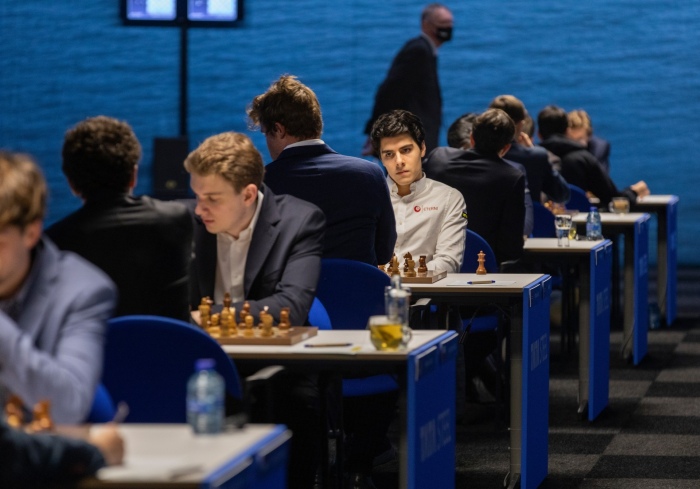
In Round 3 the sole leader after two rounds at the Tata Steel 2021 Nils Grandelius suffered his first defeat at hands of Pentala Harikrishna and allowed four players to catch up with him. Pentala Harikrishna comfortably solved all his opening problems on the Black side of the French Defense against Nils Grandelius but nothing foreboded the leader’s defeat. However, 25. Bc1 played by the Swede turned out to be a serious mistake. After the exchange of the dark-squared bishops, the Indian built up pressure with natural and strong moves and quickly won White’s a2-pawn. Black’s b-passer became unstoppable and Grandelius toss in the sponge. David Anton was confidently holding his ground in the game with Alireza Firouzja but a misstep on the control 40th move, allowing White’s knight on g6, cost him dearly. Alireza did not miss his chance to breach the defensive perimeter, scored a full point, and returned to the 50% mark. Fabiano Caruana and Jan-Krzysztof Duda arguably played the most riveting tactical game of the round. Both demonstrated deep calculation in an extremely sharp position with opposite-side castling. The American found a very strong sequence (the first line of Stockfish 12) and emerged up an exchange for two pawns. Chess engines are very optimistic about White’s chances but one inaccuracy by Fabiano (38.Re1 instead of immediate 38.a4) was enough for Jan-Krzysztof to escape with a draw. In the Norwegian duel, Magnus Carlsen was unable to break through Arian Tari’s accurate defense and had to settle for a draw. Radoslaw Wojtaszek got a clear edge with White against Jorden Van Foreest but erroneously traded all the rooks (23.Rc7, keeping one pair of rooks on the board looks much stronger) and let the Dutchman gradually equalize. The opponents shook hands on move 40. Andrey Esipenko opted for 4.Qxd4 in the Sicilian Defense to avoid Maxime Vachier-Lagrave‘s trademark Najdorf variation and very soon the opponents stepped into uncharted territory. On move 17 the Frenchman was forced to sacrifice his queen but got sufficient positional compensation. It seemed that both opponents had no desire to take extra-risks as a draw by repetition was agreed on move 33. Alexander Doncheko broke his losing streak and made a comfortable draw with Black facing Anish Giri. It is a very important result for the young German whose confidence might have been shaken after two straight defeats. Standings after Round 3: 1-5. Pentala Harikrishna, Magnus Carlsen, Anish Giri, Fabiano Caruana, Nils Grandelius – 2; 6-10. Maxime Vachier-Lagrave, Jorden Van Foreest, Andrey Esipenko, Alireza Firouzja, Radoslaw Wojtaszek – 1½; 11-13. Jan-Krzysztof Duda, David Anton, Arian Tari – 1; 14. Alexander Donchenko – ½. Photo: Jurriaan Hoefsmit – Tata Steel Chess Tournament 2021 Official website: tatasteelchess.com/
Nihal Sarin wins Gazprom Brilliancy Prize
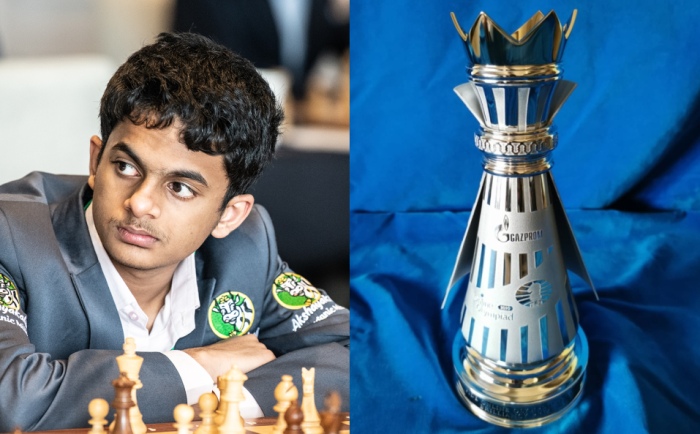
Nihal Sarin became the winner of the Gazprom Brilliancy Prize, a special trophy awarded to the best game from the FIDE Online World Cadets and Youth Championship (December, 20) by the General Partner of the competition. His victory over Francesco Sonis received 5 votes out of 9. One of the most talented players of his generation, Nihal Sarin won not only the Gazprom Brilliancy Prize but also the title in the U18 category, beating Shant Sargsyan in the final. FIDE had invited a panel of 9 popular streamers and YouTubers to be the judges for the Gazprom Brilliancy Prize, asking them to pick a favorite game. Five out of nine judges chose Sarin’s game as their top choice, announcing their votes in their respective channels: Daniel King / Powerplay Chess Nihal Sarin Sagar Shah / Chessbase IndiaNihal Sarin Levy Rozman / Gotham ChessNihal Sarin Fiona Steil-Antoni / FionchettaNihal Sarin Georgios Souleidis / The Big GreekNihal Sarin Maria Emelianova / PhotochessEdiz Gurel Michael RahalD Gukesh James Canty IIIAmirreza Pour Agha Bala Manuel Lopez MicheloneD Gukesh