

Gazprom becomes General Partner of FIDE Online Olympiad
On July 22, 2020, the International Chess Federation (FIDE) and Gazprom PJSC signed a partnership agreement. Under this agreement, Gazprom becomes the General partner of the FIDE Online Chess Olympiad, the largest online chess event in 2020. FIDE Online Chess Olympiad will be held from July 25 to August 30, 2020. This massive tournament is a digital twin of the XLIV World Chess Olympiad, which was postponed to the summer, 2021 (due to the spread of coronavirus infection). Chess matches will be held on the world’s largest online platform Chess.com. 163 teams representing national chess federations – members of FIDE – will take part in the Olympiad. Commentary by chess experts will be conducted in multiple languages, including English, Russian, Spanish, German, French, and Chinese. The FIDE President Arkady Dvorkovich: “Today, when the world is in the epicenter of a crisis caused by a pandemic, events whose mission is to unite people and give hope, are particularly significant. Over the past few months, we have seen explosive growth in interest in chess – tens, and perhaps hundreds of millions of people around the world play at a real or virtual chess board every day. We are very grateful to our partner, Gazprom, for supporting the FIDE Online Chess Olympiad and for the opportunity to bring together chess fans from all over the world at this truly global sporting event.” About Gazprom Gazprom is a global energy company focused on geological exploration, production, transportation, storage, processing and sales of gas, gas condensate and oil, sales of gas as a vehicle fuel, as well as generation and marketing of heat and electric power. Gazprom is the global leader measured by the amount of reserves and volumes of gas production. Gazprom sells gas to Russian consumers and exports gas to over 30 countries within and beyond the former Soviet Union. Gazprom is the biggest gas supplier to Europe. Gazprom is among the top three oil and gas condensate producers in the Russian Federation, ranking number one in Russia in terms of electricity generation among thermal generation companies and in terms of thermal energy generation. More info: www.gazprom.comContact: pr@gazprom.ru About FIDE Founded in Paris in 1924, the International Chess Federation was one of the first sports associations in history, and the first one to organize an official World Championship. With headquarters in Lausanne, FIDE is now one of the largest sporting bodies in the world, with 195 member federations. More info: www.fide.comContact: press@fide.com
Legends of Chess: Boris Gelfand thrashes world number 3
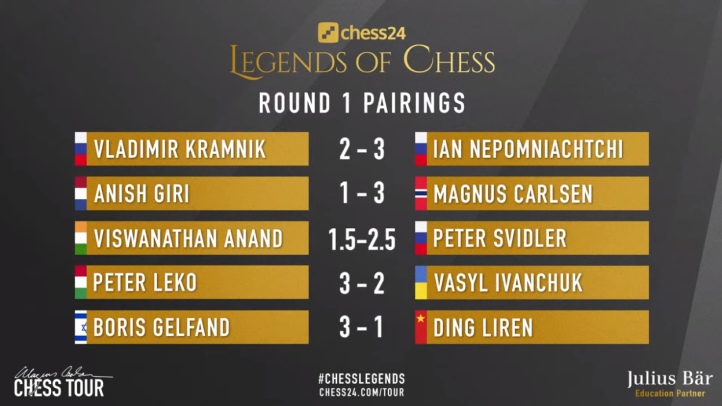
Golden oldie Boris Gelfand rolled back the years today as the chess world welcomed back a host of great players from the past in the chess24 Legends of Chess super-tournament. Gelfand, who was ranked world number 3 in 1990, thrashed the 2020 world number 3 Ding Liren in what was a stunning start to the $150,000 battle of the generations event. The 52-year-old, playing in his first major online tournament, was so dominant he signed off with a 13-move win as fans on social media proclaimed him the “OG” – or “Original Gangster”. Gelfand, nicknamed “Gandalf”, is the most senior in a field of top players from the past and present taking part in the Magnus Carlsen Chess Tour event. He won game 2 after a first game draw and then came very close to beating his 27-year-old opponent outright with a game to spare. That disappointment didn’t stop him though. Game 4 saw Gelfand post his super-swift win to comprehensively end the match 3-1. “Of course it’s great to beat one of the best players in the world,” Gelfand said afterward. “To win against him it’s a really great feeling.” Vladimir Kramnik, the man who conquered Garry Kasparov to become the 14th World Chess Champion, also rattled his younger opponent, Russia’s number 1 Ian Nepomniachtchi, but ultimately fell short. Kramnik, aged 45, took the lead against the world number 4 in game 2 but Nepomniachtchi hit back in the next game. The match went to an Armageddon play-off which the younger player smoothly won. India’s greatest ever player Vishy Anand, 50, and eight-time Russian champ Peter Svidler drew three games in a row before Anand blundered in the final game to hand his opponent victory. Meanwhile, reigning World Chess Champion Magnus Carlsen battered his rival Anish Giri, the Netherlands number 1. Carlsen won the second and fourth games to post a 3-1 score. In his interview afterward, Carlsen confirmed rumors that he has not played on land. “Yeah, I’m on a boat,” he said. “But I’m going back on Thursday so I’ll be playing from home.” Asked about his on-going Twitter exchanges with Giri, Carlsen added: “If [Giri] feels offended by something that wasn’t supposed to happen. It was always friendly banter to me. “I do take pretty serious exception to the notion there’s a PR campaign against him because Team Magnus sees him as a serious threat…” The legends match-up between 2004 world title challenger Peter Leko and Vasyl “Chucky” Ivanchuk finished all square and went to an Armageddon play-off with the Hungarian winning. The event, the fourth leg of the $1 million Magnus Carlsen Chess Tour, runs until August 5 and will carry a $150,000 prize fund. The winner will scoop a top prize of $45,000 and the last of the coveted spots in the tour’s Grand Final in August. Carlsen, Anand and Kramnik are the last three undisputed world champions together in one tournament. Anand is the man Carlsen wrestled his world title from seven years ago, while Kramnik ushered in a new era in chess in 2000. Commentary is provided by Jan Gustafsson, Rustam Kasimdzhanov, and Tania Sachdev and special guests – including more legends to be announced later. The event is also be broadcast in 10 languages by chess24.com. The official tournament social media hashtag is #ChessLegends. Tournament rules and schedule The time control will be a rapid 15m + 10s from move 1 played in the chess24 Playzone. There will be two stages starting with a 10-player round-robin (July 21-29) with each round consisting of 4-game matches and Armageddon tiebreaks if needed. The top four will advance to the knockout semi-finals (July 31-August 2) and two will go through to the final (August 3-5). July 30 is a free day. All sessions will begin at 16:00 CEST. Highlights in English:https://drive.google.com/drive/folders/1Rmx6IFrFYxYPrNhZVtxZbRWTiMAIICvc?usp=sharingNew files at around 23.00 CEST Rough edit highlights:https://drive.google.com/drive/folders/1SItw6DwCyoTsZ0WiVAjw4BkVHEaGQFDI?usp=sharingNew files ready around 02.00 CEST FOR MORE INFORMATION:Leon Watsonleon@chessable.com+447786 078770
International Chess Day celebrated around the world
The recognition by the United Nations, approved in December 2019, has been the final endorsement to the “International Chess Day”, which is now a more than established tradition. This year, FIDE’s campaign consisted of asking chess fans from all around the world to teach one person how to play chess, with the aim to bring new players to the game. The idea received a warm welcome, especially among our friends in Africa and the Americas, and we are confident that there are many more chess players today than a few days ago. A beautiful initiative was the one launched by the Chess Club Hammam-Lif, in Tunisia. Starting on Sunday, they decided to celebrate International Chess Day by offering chess lessons to passers-by at the Hammam-Lif train station, in collaboration with the Tunisian National Railways Company. Another fine initiative was the one by Belarus Chess Federation. In line with FIDE’s campaign, they invited young football players from the Dynamo Brest Academy, and hockey players from BFSO “Dynamo”, to receive a chess course. These young sportsmen learned the importance of concentration, strategic thinking, and mental discipline. The coach also stressed the value of taking responsibility for the decisions they make. We hope they can transfer this knowledge to their daily life and the playing field! New Zeland Chess Federation celebrated International chess day by staging a 6-game blitz match between former NZ Chess Champions FM’s Ewen Green & Martin Dreyer. Following the completion of the ChessAgainstCovid charity drive, everyone involved went back to the humdrum of their lives for a while and one week prior to International Chess Day, GM Kevin Goh roused up the team with the idea of an International Chess Day event for Singaporeans or those who are based in Singapore. To spice things up, he cajoled his friends to sponsor the event and in a good time. The list of prizes included vouchers on popular chess education Chessmood platform, premium Chess24 membership, Modern Chess Master Class Workshop, and various chess books. And to top it all, he revealed that FIDE President Arkady Dvorkovich would grace the event with an appearance on livestream and also, FIDE Director GM Emil Sutovsky would conduct an interactive Q&A session with viewers. The entries came fast and furious. In the space of 2 days, more than 100 applications were submitted. Out of the 109 participants, there were 4 IMs, 1 WGM, 7 FMs as many of the country’s top juniors showing up to test their online blitz skills against fellow Singaporeans. So on International Chess Day (20th July 2020) at 8 pm, the Arena 3 minute (no increment) blitz event began. After two hours of intense arena blitzing (and berserk-ing), it was WGM Gong Qianyun who emerged the champion with 75 points. She had completed 6 hours of chess coaching before the event and said she was ‘dying’ during the games…but that didn’t stop her from besting the other 108 opponents. Second place went to youngster Ethan Poh who had led for most of the event. Third on the virtual podium was clinched by IM Dr. Hsu Li Yang, who scored the highest percentage win rate of 87% (however, he did not try for berserk bonus points). The Associate professor is now the Vice Dean (Global Health) at NUS Saw Swee Hock School of Public Health. The event was covered on livestream by GM Kevin Goh and IM Irene Sukandar: https://www.twitch.tv/videos/685207349 GM Emil Sutovsky, Director General of FIDE explained the importance of keeping the global chess community engaged during this period. He also conducted an interactive Q&A session and spoke on many important topics such as self-improvement in chess, chess in schools as well as The FIDE Online Olympiad. FIDE President Arkady Dvorkovich appeared on livestream and greeted all the participants: “On the part of FIDE, I’m glad to greet all players in Singapore and surrounding countries in the whole region. What we do now…all kinds of online chess activities is another indication that we are one family, we are working together and we are connected around chess and inside chess. We all love this game and are ready to contribute, a lot, each of us in our own positions to contribute to the development of chess and to the promotion of the game. Also, I believe that it is extremely important (to remember) that chess is not as developed as in some parts of Europe, Russia, the United States, China, and India. Also, other countries are starting to engage in important activities to raise the popularity of chess. One of the most important instruments here is educational chess and I very much hope that chess be promoted into schools in all countries in South East Asia, including Singapore and that will improve the educational abilities of kids. Chess can teach them how to think logically and strategically, how to win and lose with pride and respect to your partner. Also, it is vital to teaching the important things that chess can do for kids and juniors. Once again, thank you for all your efforts and please continue playing chess and enjoy.” A lot of people celebrated International Chess Day in its own way, and if you check the hashtag #InternationalChessDay (or #WorldChessDay) you will find plenty of interesting posts. The day was massively followed by museums, libraries, private schools, and radio stations from all over the world. It became one of the hottest “trending topics” of the day in several countries, so some big companies tried to catch the wave and used the hashtag to gain visibility for their brand. Here is a compilation of the nicest posts:
#10
United Nations: “Chess for recovering better” International Chess Day Letter by the IOC President Thomas Bach Anna Ushenina wins the Women’s Speed Chess Championship Anniversaries READ NEWSLETTER
IOC President welcomes FIDE Online Olympiad
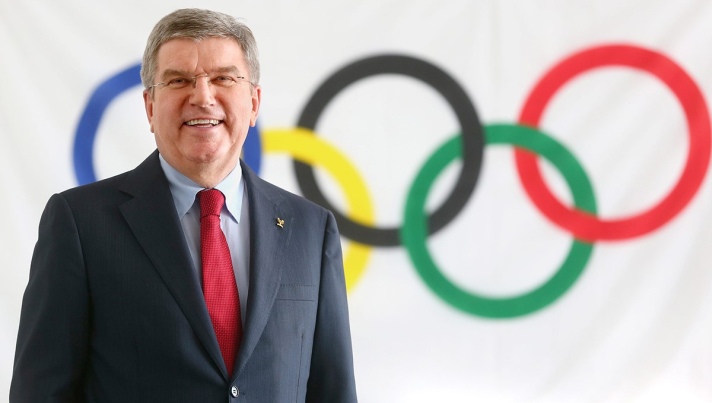
We would like to thank IOC President Thomas Bach for the kind letter he sent to FIDE on the occasion of the International Chess Day and the First Online Chess Olympiad, that we reproduce here in full: Dear President, Dear participants, Please accept my congratulations on the occasion of the first-ever World Chess Day, as recognised by the United Nations. This celebration of one of the world’s most ancient mind sports is also an illustration of the important contribution that sport as a whole brings to society. Let me congratulate the World Chess Federation on launching the FIDE Online Olympiad 2020, which is bringing together the world’s best chess players, promoting the inclusive values of sport, excellence, friendship and respect, while at the same time setting an example of how to organise a competition in innovative and safe ways during this global health crisis. Please accept my best wishes for success to all the participants and organisers of the FIDE Online Olympiad 2020. The post-corona world will need sport, and sport will always build bridges and brings people together in peaceful competition. In this Olympic spirit of excellence, respect and fair-play, I wish you all a successful online competition.
Anna Ushenina wins Women’s Speed Chess Championship

Anna Ushenina (Ukraine) became the winner of the Women’s Speed Championship. In a dramatic Super Final that was decided in the last bullet game, she defeated the reigning European Blitz Champion Alexandra Kosteniuk 14.5-13.5. In this marathon duel full of twists and turns the opponents were worthy of each other. During 5+1 part Kosteniuk was slightly more precise and cool-headed at the critical moments – especially in time scramble – and pulled ahead 5.5-3.5. Known as an expert in faster time controls, Ushenina showed her prowess in the 3+1 portion of the match. The Ukrainian stormed back by winning three straight games and took the lead, but Kosteniuk recovered from the shock and leveled the score going into the final 1+1 stage. The final portion of this clash turned into a real thriller. After Ushenina edged ahead by two points with just about twelve minutes remaining on the clock many may have thought that it was all over for the Russian. However, Alexandra reeled off two straight wins to even the score once again. It came down to the wire in the end as the victory in final see-saw bullet game tipped the scale in favor of Anna Ushenina. “I tried to play solid chess because Alexandra is a very good player. I know that she is very strong in sharp, tactical positions and likes to attack, so I tried to avoid that… I am really happy to win the title” told the champion in a short interview after the match.
FIDE and Anatoly Karpov give masterclass to young players on International Chess Day
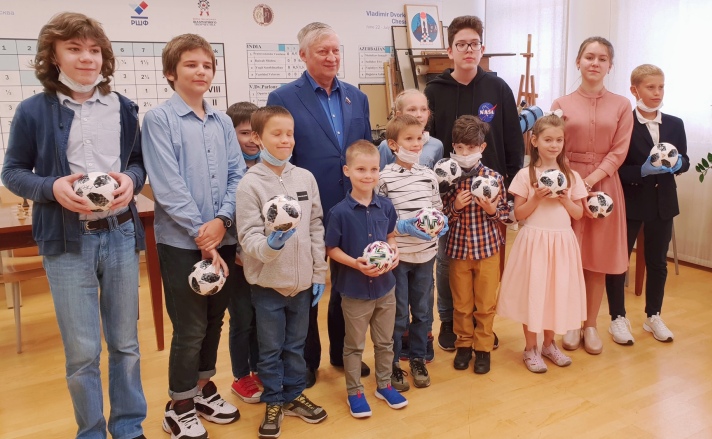
A true chess legend, the twelfth World Champion Anatoly Karpov delivered a lecture and played a simul against a dozen of talented young players. The event was held in Moscow in Chess Parlor named after a renowned arbiter Vladimir Dvorkovich. Anatoly Karpov: “I congratulate everyone on International Chess Day, which we have celebrated since 1966. On 12 December 2019, the General Assembly proclaimed 20 July as World Chess Day to mark the date of the establishment of the International Chess Federation (FIDE). I am glad that this master-class to young players, held in Dvorkovich Parlor where children pursue chess under the guidance of excellent coaches GM Sergey Dolmatov and Mikhail Klichev, became a part of our chess festivities. Chess prepares younger generations for successful work in various spheres as a personality develops along three avenues: science, art, and sport.” The event was honored by FIDE President Arkady Dvorkovich who greeted young players and wished them memorable chess battles and spectacular victories. On the occasion of International Chess Day, young players received souvenir balls signed by Anatoly Karpov and Arkady Dvorkovich.
High-level meeting at the UN: “Chess for recovering better”
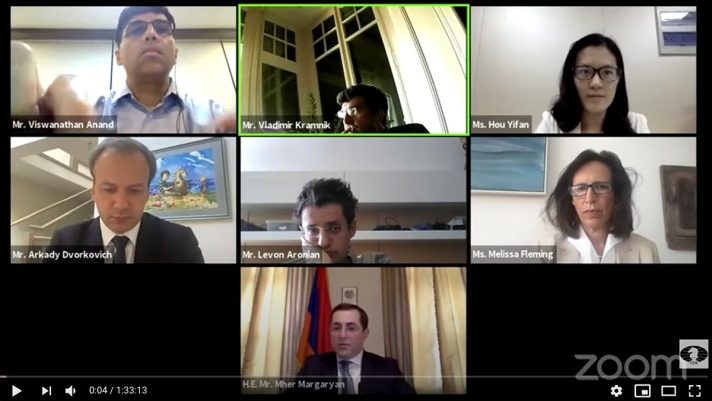
The virtual meeting between the United Nations and FIDE on the occasion of the International Chess Day was held on July 20. Top chess personalities and representatives of the U.N. gathered to exchange views and insights to strengthen the productive collaboration. In his welcoming speech, H.E. Mr. Mher Margaryan, Ambassador and Permanent Representative of Armenia to the United Nations, nodded to the chess movement’s success in Armenia where the game is a part of the schools’ curriculum. “Lessons offered by chess are important in teaching such values as respect for rules and players, fairness, equality, and discipline. Chess is essentially about progress and continuous quest for improvement with effort and decency,” he said. FIDE President Arkady Dvorkovich thanked the United Nations for their support and noted that “together, we can make chess a tool to improve the world and create better societies.” Melissa Ruth Fleming, Under-Secretary-General for Global Communications, was very positive about the opportunities that chess brings to communities and individuals. “Today is the celebration of the intellectual game that for centuries has also managed to entertain, to stimulate and sometimes even to confound billions of us over the world,” she said. Top chess grandmasters present at the meeting, Viswanathan Anand, Hou Yifan, Vladimir Kramnik and Levon Aronian, shared the valuable insights into the abilities and life lessons that chess taught them. Anand dived into the history of chess, while Hou Yifan concentrated on the psychological aspects of the game and women empowerment issues. Kramnik mentioned that scientific studies had proved the benefits of the game for kids. “No matter how good you are at chess, you are going to lose games. The ability to cope with negative emotions is one of the best things I learned from chess,” said Levon Aronian. Various issues and aspects of the development of chess were discussed in a friendly and supportive atmosphere. This meeting laid the foundation for further fruitful cooperation between FIDE and the United Nations. About International Chess Day FIDE has been celebrating the International Chess Day since 1966, following a recommendation of UNESCO. The date marks the establishment of the International Chess Federation, which was founded during the Paris 1924 Summer Olympics. On December 12, 2019, the United Nations General Assembly passed a resolution proclaiming 20 July as “World Chess Day”, as per their own denomination. The resolution was tabled by Armenia and co-sponsored by 52 other countries. Armenia’s delegate Mher Margaryan presented chess as a consensus builder that “can transcend national boundaries and break down racial, political and social barriers.” The impact of COVID-19 on sport Sport is a major contributor to economic and social development. Its role is well recognized by Governments, including in the Political Declaration of the 2030 Agenda, which reflects on “the contribution sports make to the empowerment of women and of young people, individuals and communities, as well as to health, education and social inclusion objectives.” Since its onset, the COVID-19 pandemic has spread to almost all countries of the world. Social and physical distancing measures, lockdowns of businesses, schools and overall social life, which have become commonplace to curtail the spread of the disease, have also disrupted many regular aspects of life, including sport and physical activity. This policy brief highlights the challenges COVID-19 has posed to both the sporting world and to physical activity and well-being, including for marginalized or vulnerable groups. It further provides recommendations for Governments and other stakeholders, as well as for the UN system, to support the safe reopening of sporting events, as well as to support physical activity during the pandemic and beyond. Magnus Carlsen, during a simul at the United Nations in May, 2018
WSCC GP: Alexandra Kosteniuk wins Leg 4
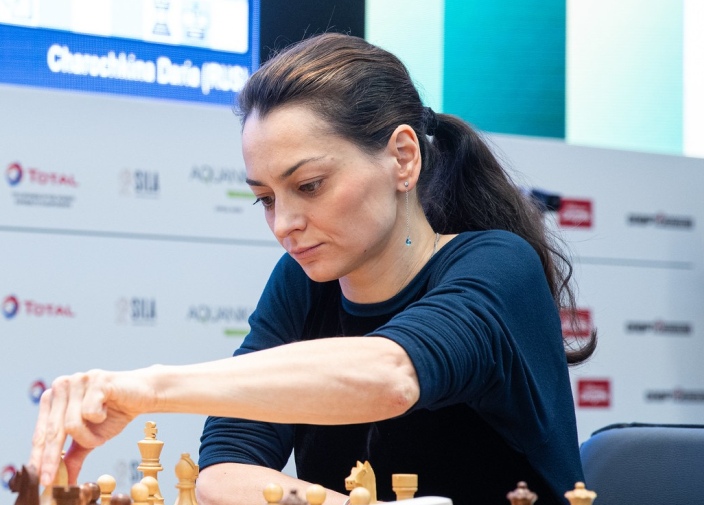
Alexandra Kosteniuk wins the final leg of the Women’s Speed Chess Grand Prix and qualifies for the Super Final match against Anna Ushenina. Kosteniuk dictated the proceedings in the final match against Humpy Koneru. She took the lead in the 5+1 minute games, however, Koneru bounced back in 3+1. The former world champion won the final game of this portion to enter the bullet stage with a minimal lead 4.5-3.5. Alexandra won two bullet games, sealed the victory (7-5) and claimed 12 GP points. In the match for third place, Hou Yifan defeated Sarasadat Khademalsharieh 7,5-3,5. The Super Final match for the overall winner of 2020 Women’s Speed Chess Championship between Kosteniuk and Ushenina will take place tomorrow, on July 20. Watch it live on our YouTube channel.
FIDE Online Olympiad 2020: Registration is over
July 18, 2020 163 teams registered for the FIDE Online Olympiad 2020. The list of registered teams and divisions is here Full team line-ups More information, including group lists for the Base Division, is to follow. IMPORTANT INFORMATION: Dear members of the National Federations, We would like to inform you that the International Chess Federation has decided to extend the registration deadline for the upcoming FIDE Online Olympiad until July 16 by midnight (Lausanne time). That day FIDE will also announce the Continental nominations. All seeded divisions’ teams will be announced on July 18, 2020. Please remember that an invitation email with unique passwords and logins was sent to each one of the Presidents of all National Federations. You must register as at https://olymp.fide.com using these log in details. Should you need any further information, please do not hesitate to contact us at reg.olympiad@fide.com. UPDATE The registration for FIDE Online Olympiad 2020 is open now. The invitation with unique passwords and logins were sent to the Presidents/Executives of all national federations. Please register for FIDE Online Olympiad 2020 using your unique login and password. Please note that the registration deadline is July 13th, 2020. The Continental nominations will be announced on July 16, 2020. All seeded divisions’ teams will be announced on July 18, 2020. The International Chess Federation is pleased to announce a new major competition: the FIDE Online Olympiad 2020, to be held between July 22nd and August 30th, 2020. The Online Olympiad is a national teams event in which all federations affiliated to FIDE have the right to participate. Each team will consist of six players, in a mixed format with a minimum of three female players and two junior players. Specifically, each team must include: – at least 1 player U-20 (born in 2000 or later)– at least 2 women– at least 1 girl U-20 (born in 2000 or later) The teams may have up to six reserves, plus a team captain. The time control for this event will be 15 minutes + 5 seconds increment per move. The event will consist of two main stages: the “Divisions stage”, and the Play-offs stage, from Round of 16 to the final. Since the Online Olympiad is a mixed event, for pairing purposes the ranking will be established in accordance with the final standings of the last “Gaprindashvili Cup”, which combines the results in the open and women’s sections at the Batumi Chess Olympiad 2018. FIRST STAGE: Divisions All the teams-participants will be divided into 5 divisions ranked from “Base Division” to “Top Division”. Base Division unifies registered teams placed in the bottom part of the final standings of the Gaprindashvili Cup. Base Division’s tournament system depends on the number of participating teams. The top fifteen teams of the Base Division qualify to Division 4. Base Division composition and tournament’s system as well as all divisions seeded team’s composition are announced on July 18th. Each pool is played within three days, three rounds per day. The exact dates and times for each pool tournament in each Division are announced two days prior to the beginning, teams’ time zones are taken into consideration. Division 4 is composed of 35 seeded registered teams ranked higher than teams of Base Division in Gaprindashvili Cup and 15 teams qualified from Base Division. 50 teams are divided into 5 pools (from A to E), 10 teams each, of approximately equal strength determined as the average rapid rating of six main players according to July FIDE rating list. Each pool plays a round robin of 9 rounds. The top three teams of each pool qualify for Divisio 3. Division 3 is composed of 35 seeded registered teams ranked higher than teams of Division 4 in Gaprindashvili Cup and 15 teams qualified from Division 4. 50 teams are divided into 5 pools (from A to E), 10 teams each, of approximately equal strength. Teams qualified from the same pool of Division 4 cannot be placed in the same pool again. Pool winners of Division 4 cannot be placed in the same pool. Each pool plays a round robin of 9 rounds. The top three first teams of each pool qualify for Division 2. Division 2 is composed of 35 seeded registered teams ranked higher than teams of Division 3 in Gaprindashvili Cup and 15 teams qualified from Division 3. 50 teams are divided into 5 pools (from A to E), 10 teams each, of approximately equal strength. Teams qualified from the same pool of Division 3 cannot be placed in the same pool again. Pool winners of Division 3 cannot be placed in the same pool. Each pool plays a round robin of 9 rounds. The top three first teams of each pool qualify for Top Division. Top Division is composed of 5 seeded registered teams placed on the top of Gaprindashvili Cup, 5 teams nominated by each of the four Continents (according to each Continent’s criteria, see Article 3.3) and 15 teams qualified from Division 2. 40 teams are divided into 4 pools (from A to D), 10 teams each, of approximately equal strength. Teams qualified from the same pool of Division 2 cannot be placed in the same pool again. Pool winners of Division 2 cannot be placed in the same pool. Each pool plays a round robin of 9 rounds. The top three first teams of each pool qualify for Stage 2 – Play-off SECOND STAGE: Play-off Twelve teams qualified from Stage 1 play a knock-out tournament. Each duel consists of two matches, alternating which team has white on the first board (and subsecuently, on the rest of even-numbered boards). Preliminary Round Duel I: Runner-up of Top DIVISION pool A vs Third place of Top DIVISION pool B Duel II: Runner-up of Top DIVISION pool B vs Third place of Top DIVISION pool A Duel III: Runner-up of Top DIVISION pool C vs Third place of Top DIVISION pool D Duel IV: Runner-up of Top DIVISION pool D vs Third place of Top DIVISION pool C Quarter-finals Duel V: Winner of Top DIVISION pool A vs