

WSCC Leg 3: Khademalsharieh knocks out Ju Wenjun
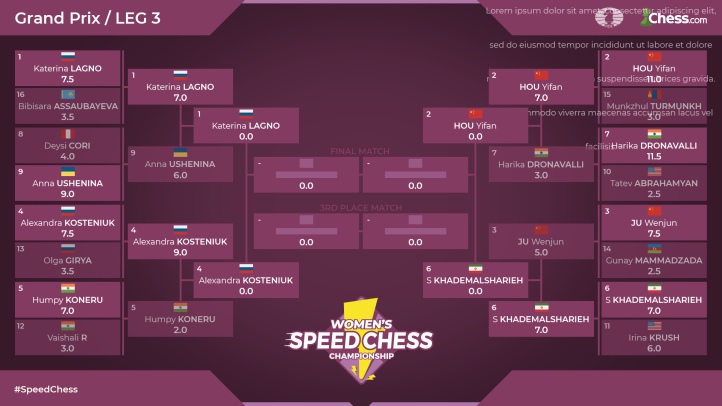
The Women’s Speed Chess Championship Grand Prix continues on chess.com – Leg 03 quarterfinals were played today. The matches of the first playing session were lopsided affairs: European Blitz Champion Alexandra Kosteniuk somewhat surprisingly clobbered Humpy Koneru 9-2, whereas #1 in women rating Hou Yifan convincingly outplayed Harika Dronavalli 7-3. On the contrary, both matches of the second session came down to the wire. The match between Kateryna Lagno and Anna Ushenina had it all – a disconnection, missed chances, and even a dramatic threefold repetition in a queen vs. rook ending in the ultimate bullet game. The outcome of this duel was decided in Armageddon won by Lagno who goes further to the semis. The match Ju Wenjun – Sarasadat Khademalsharieh brought the major upset of the quarterfinals. The Chinese pulled ahead after the slowest portion of the match but Sarasadat showed her prowess in faster time controls, stormed back, and eliminated the Women’s World Champion. The semifinal matches will start on July 10 one hour earlier than usual, at 13:30 CEST.
WSCC Leg 3: Favorites advance to quarterfinals
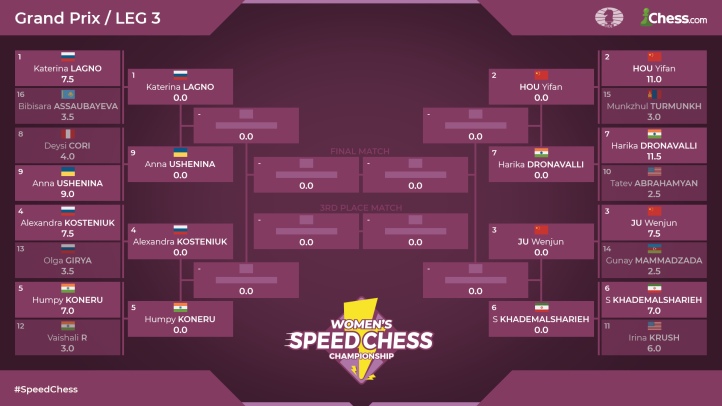
FIDE Chess.com Women’s Speed Chess Championship continues as Leg 3 that started today with the Round of 16. Seven matches ended in a confident win by one of the sides. The only exception was the match between Sarasadat Khadamalsharieh (Iran) and Irina Krush (USA) which went all the way to Armageddon. Sarasadat had a three-point lead in blitz 5-2, but in bullet, Irina made a huge comeback and it seemed that the momentum shifted her way as the match was tied at 6-6. The Iranian player chose Black in the ultimate game, pulled herself together, and won it to claim a spot in the quarterfinals. “In the previous leg, Irina was also my opponent and I won the match in the bullet games, so I think I kind of underestimated her. I stopped paying attention and was blundering everything. She played much better in bullet,” said Khadamalsharieh in a post-match interview. Photo: Lennart Ootes “In my previous Armageddon against Ushenina I was White and felt a lot of pressure pressing to win, so I thought it is easier to play with Black,” she added. Full Round of 16 results: Kateryna Lagno 7.5-3.5 Bibisara Assaubayeva Humpy Koneru 7-3 Vaishali R Hou Yifan 11-3 Munkzhul Turmunkh Ju Wenjun 7.5-2.5 Gunay Mammadzada Anna Ushenina 9-4 Deysi Cori Alexandra Kosteniuk 7.5-3.5 Olga Girya Harika Dronavalli 11.5-2,5 Tatev Abrahamyan Sarasadat Khadamalsharieh 7-6 Irina Krush
“Game Changer” wins the Averbakh-Boleslavsky Award 2019
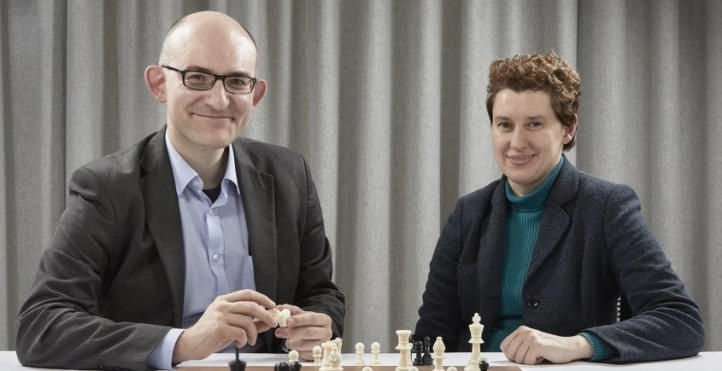
The acclaimed book “Game Changer”, by Matthew Sadler and Natasha Regan, is the winner of the Averbakh-Boleslavsky Award to the best book of 2019. We give the word to Artur Jussupow, who sent us these comments on behalf of the jury: “First of all, we would like to say that it was a great pleasure to read all the three books of the finalists. Each one was different, and we are sure that all these books will find their happy readers. After a final vote, we had a clear winner: “Game Changer” by Matthew Sadler and Natasha Regan (New in Chess), which received two first and one second places in the votation. Some words about the other shortlisted titles: An excellent quality work by Sam Shankland “Small steps 2 Success” (Quality Chess) gives many tips for the readers who want to deal with the topics of passed pawns A lot of new material and an exciting author. The surprising book by Davorin Kuljasevic “Beyond Material” (New in Chess) unites classical chess literature with fresh ideas and analysis. “Game Changer” is a unique project that combines human achievements with remarkable development in AI and opens a new approach to our beloved game. We could not choose a more deserving winner for the best book award of 2019.” It took AlphaZero only a few hours of self-learning to become the chess player that shocked the world. The artificial intelligence system, created by DeepMind, had been fed nothing but the rules of the Royal Game when it beat the world’s strongest chess engine in a prolonged match. The selection of ten games published in December 2017 created a worldwide sensation: how was it possible to play in such a brilliant and risky style and not lose a single game against an opponent of superhuman strength? For Game Changer, Matthew Sadler and Natasha Regan investigated more than two thousand previously unpublished games by AlphaZero. They also had unparalleled access to its team of developers and were offered a unique look ‘under the bonnet’ to grasp the depth and breadth of AlphaZero’s search. Sadler and Regan reveal its thinking process and tell the story of human motivation and the techniques that created AlphaZero. Game Changer also presents a collection of lucidly explained chess games of astonishing quality. Both professionals and club players will improve their game by studying AlphaZero’s stunning discoveries in every field that matters: opening preparation, piece mobility, initiative, attacking techniques, long-term sacrifices and much more. The story of AlphaZero has a wider impact. Game Changer offers intriguing insights into the opportunities and horizons of Artificial Intelligence. Not just in solving games, but in providing solutions for a wide variety of challenges in society. With a foreword by former World Chess Champion Garry Kasparov and an introduction by DeepMind CEO Demis Hassabis.
Medical security policy and protocol for upcoming over-the-board events

FIDE continues to closely monitor the coronavirus disease (COVID-19) pandemic which was first reported in Hubei, China on December 31, 2019. In view of the danger posed by the COVID-19 pandemic, FIDE, through its Medical Commission, has developed a medical security policy and protocol which is aimed at minimizing chances of transmission of the Novel Coronavirus in the future over-the-board chess events during 2020 and beyond. Going forward, FIDE will continue to monitor the Covid-19 pandemic and respond accordingly. The following measures shall be put in place at upcoming over-the-board chess events, to prevent the possible spread of the Novel Coronavirus and protect the participants against infection: OBLIGATION Organizers, players, arbiters, and other officials should comply with their respective national legislation on COVID-19 crisis management of the country in which the chess event takes place. RECOMMENDATIONS In view of the still ongoing Covid-19 pandemic in several parts of the world, it is recommended to restart chess activities at Regional Level with small scale events with limited participants. This shall make it easier to manage the risk of transmission of the Novel Coronavirus and allow for larger events to be held in the future as the risk of transmission continues to go down with the diminishing pandemic. Playing halls shall not be overcrowded and there shall be sufficient physical separation (social distancing) between people (at least 1 meter). Tables shall also be at least 1 meter apart. This shall minimize the chances of possible transmission of the COVID-19 virus between participants. There shall be No (preferably) or very few spectators allowed in the playing halls. Players shall leave the playing hall by the end of their game. This is meant to minimize the risk of transmission of the Novel Coronavirus by minimizing the number of people in close proximity with each other in the playing venue. All Chess sets (boards, pieces, and clocks), tables, and chairs shall be cleaned (with clean water and soap or sanitizer or disinfectant) beforehand and after each round. Studies have shown that the Novel Coronavirus can survive on surfaces for many hours. Cleaning the chess sets, tables and chairs shall minimize the possible transmission of the Novel Coronavirus There shall be easy access to facilities for participants to wash hands with clean running water and soap or alcohol-based hand sanitizer. Upon entering and exiting the playing hall and during the breaks, participants must wash or disinfect their hands. Participants shall frequently wash their hands with clean running water and soap or alcohol-based hand sanitizers in order to reduce the chances of infection with the Novel Coronavirus. All players, arbiters and officials shall wear masks. Participants must use masks to avoid the possible spread of the Novel Coronavirus. It should be noted that masks are effective only when used in combination with frequent hand-cleaning with alcohol-based hand rub or soap and water. If you wear a mask, then you must know how to use it and dispose of it properly. Before putting on a mask, clean hands with alcohol-based hand rub or soap and water. Cover mouth and nose with mask and make sure there are no gaps between your face and the mask. Avoid touching the mask while using it; if you do, clean your hands with alcohol-based hand rub or soap and water. To remove the mask: remove it from behind (do not touch the front of mask). The playing halls shall have a proper and well-functioning ventilation and air circulation with fresh air intake. It is not recommended any tournaments in rooms without proper ventilation. Outdoor chess activities are recommended. This measure will ensure that the air in the playing halls is fresh and that the playing halls have rapidly circulating air at all times to minimize the risk of transmission of the Novel Coronavirus. During coffee/lunch breaks and communal meals, special measures shall be put in place to minimize overcrowding and to avoid too much close personal contact between participants. This shall also minimize the likelihood of the spread of the Novel Coronavirus. In the toilet facilities, adequate cleaning and disinfection of the premises and constant ventilation must be ensured. Participants should move in such a way that a distance of at least 1 meter is observed at all times. It is recommended that players sign a declaration about the absence of respiratory signs. In the declaration, the player should also declare that he/she is aware of the possible risk of transmission of the novel coronavirus during the chess event but they are willing to participate nonetheless. In addition to the above measures, events participants (players/officials/press/spectators) are encouraged to practice the following personal protection behaviors in order to protect themselves and others from infection with the Novel Coronavirus. HOW TO PROTECT YOURSELF AGAINST THE NOVEL CORONAVIRUS (COVID-19) Wash your hands frequently Wash your hands frequently with soap and water or use an alcohol-based hand rub if your hands are not visibly dirty. Why? Washing your hands with soap and water or using alcohol-based hand rub eliminates the virus if it is on your hands. Practice respiratory hygiene When coughing and sneezing, cover mouth and nose with flexed elbow or tissue – discard tissue immediately into a closed bin and clean your hands with alcohol-based hand rub or soap and water. Why? Covering your mouth and nose when coughing and sneezing prevent the spread of germs and viruses. If you sneeze or cough into your hands, you may contaminate objects or people that you touch. Maintain social (physical) distancing Maintain at least 1metre (3 feet) distance between yourself and other people, particularly those who are coughing, sneezing, and have a fever. Why? When someone who is infected with a respiratory disease like 2019-nCoV, coughs, or sneezes they project small droplets containing the virus. If you are too close, you can breathe in the virus. Avoid handshakes, hugs, kisses on the cheek and other close personal contacts with fellow players/officials and other persons present Why? Covid-19 is spread via coming into contact with infected droplets and the above actions can
USA and UK prodigies clash in online match
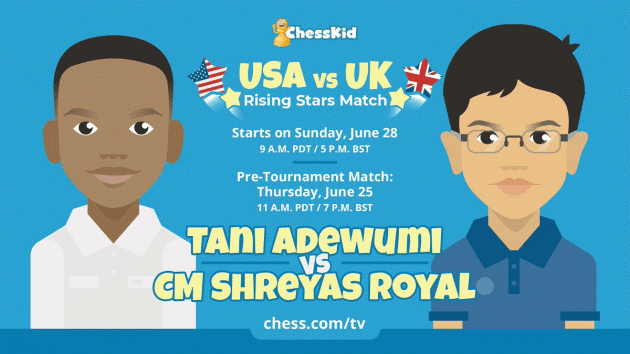
This article was originally published on the FIDE newsletter #9 (July 06, 2020). If you want to receive this biweekly publication directly in your inbox, please subscribe here. Not long ago, two young prodigies hit the headlines worldwide, not only for being two of the most gifted chess players in their generation but also because of their personal stories. Shreyas Royal, who lived in the UK since he was 3 years old, was on the edge of being expelled from the country in September 2018, when his father’s work visa came to an end. Only the last-minute intervention and “personal decision” of the Home Secretary Sajid Javid allowed Shreyas to stay in the UK. One year later, the inspiring story of Tani Adewumi (pictured below) went viral. His family escaped persecution from Boko Haram in Nigeria and settled into a New York City homeless shelter. They were struggling to start a new life. But barely one year after their arrival to the States, the 8-year-old refugee would become state champion, winning a trophy that also meant a new life for him and his family, after the media got interested in his story. The two chess prodigies faced off on June 25, both proudly representing their respective countries of adoption. Their match was a prelude of the “UK vs. USA Rising Stars Chess Match“, organized by ChessKid and Chess in Schools and Communities. This is a continuation of Malcolm Pein’s joint project with CSC and ChessKid to get one million kids in the UK playing chess. The main event took place on Sunday, June 28, 2020, and UK and USA tied 10-10, which means USA wins thanks to the “draw odds” earned by Tani when he defeated Shreyas in the tie-break of their match. As Mike Klein put it, “the two may live thousands of miles apart but they share one common thread: they are both immigrant success stories thanks to their chess acumen”. According to Nicholas Kristof, one of the New York Times star columnists, what makes the stories of these kids exceptional and inspiring is that “they overcome one of life’s basic truths: talent is universal, but opportunity is not”. Nicholas, who is a two-time Pulitzer Prize winner, devoted two lengthy articles to the success of Tani: “This 8-Year-Old Chess Champion Will Make You Smile” and “Our Chess Champion Has a Home“.
Ennio Morricone: legendary composer and avid chess fan dies at 91
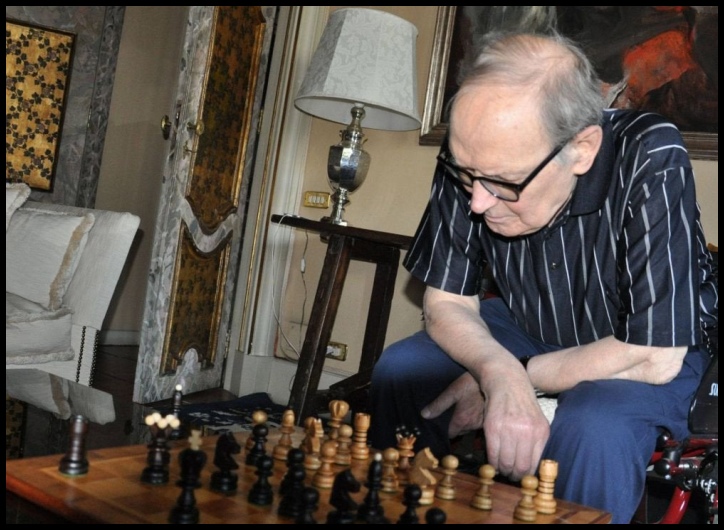
Ennio Morricone, the legendary Oscar-winning composer of more than 500 film scores, has died today, at the age of 91. He played competitive chess in the mid-50s, and he took it very seriously: in an effort to improve, he even trained with the twelve-time Italian champion, IM Stefano Tatai. His passion for chess began by pure chance, when he came across a chess book when he was a boy, and ended up organizing a chess tournament with some other kids who lived in the same building. But his father noted that chess was interfering with his music studies, so he put an end to this new hobby, and Morricone would not play again until he was already a consecrated musician. “Had I not become a composer, I would have wanted to be a chess player, but a high-level one, someone competing for the world title”. He definitely had the talent, and he even drew in a game against Boris Spassky in what he describes in his memories as the peak of his chess career. “He started with a King’s Gambit, a terrible move and a difficult one for me. Thanks to this he took the initiative, but on my fifth move I tried a Bobby Fischer invention (a move by his historical rival), and I managed to force a triple repetition”. Morricone also had the chance to play against chess giants, the likes of Kasparov and Karpov, “and I lost dreadfully. I also played against Judit Polgar, who was pregnant at the time, and Peter Leko in Budapest. Those were great occasions. Leko was kind enough to offer me a rematch after I made a beginner’s mistake in my opening move. I lost anyway, but in a decidedly more honorable way”. “I have always admired Ennio Morricone”, posted Judit Polgar earlier today on Twitter. “I was fortunate to meet him, he challenged me in two rapid games in 2004 at the Hungarian Academy of Rome. I will always remember him and continue listening to his music as his artwork and compositions were one of a kind”, she concludes. Not surprisingly, Morricone made friends with another chess-musician, Mark Taimanov. And he often cited Mikhail Tal and Bobby Fischer as his favorite players. “I have often met players with whom I have nothing in common, but they turn out to be sensational chess players. Spassky, for instance, seemed like a very laid back, easygoing person, but on the chessboard, he was fiercely determined”.
#09
FIDE presents the Online Olympiad 2020 Main decisions of the FIDE Council meeting Changes in the FIDE Commissions Do you have any questions about the Laws of chess? Swiss-Manager manual and online course Ushenina and Gunina lead the Women’s Speed Chess GP Rising Stars Match Anniversaries READ NEWSLETTER
Correspondence between FIDE and Iranian Chess Federation

08-06-2020 Dear Mr. Nikoukhesal, I’d kindly remind you, that FIDE rejects any kind of discrimination against a country, private person or group of people on account of race, skin colour, ethnic, national or social origin, citizenship, birth, age, status, wealth, disability, language, religion, sex, gender identity or expression, pregnancy, sexual orientation, political opinions, or any other reason. This rule is strict, determined as one of the basic principles of FIDE, and explicitly spelled in the FIDE Charter (Article 4.4). At the same time, in recent years, there have been repeated cases where athletes from Iran refused to participate in games with Israeli citizens. In some cases, comments were even received, that such games were ignored intentionally for political and ideological reasons. It is important for FIDE that everyone abides the Charter, therefore we ask Iran’s Chess Federation to confirm in writing its position on the admissibility of the mentioned games (between Iranian and Israeli players). Failure to give such confirmation will force FIDE to discuss the compliance of Iran’s Chess Federation’s values with the principles of FIDE and the IOC. Sincerely yours, FIDE PresidentArkady Dvorkovich 22-6-2020 To the President of FIDE Dear Mr. Arkady Dvorkovich Hope this email finds you well. Following your letter dated 6 June 2020, I would like to inform you that the Chess Federation of Islamic Republic of Iran has been constantly working in compliance with the rules and efforts of FIDE, and adhere to FIDE’s statutes. As you are aware, Chess is a popular sport discipline in Iran and especially the young generation took a favorable attitude toward it. The names of around 44,000 Iranian Chess players have been recorded in FIDE, which demonstrates the level of importance of this sport in our country. The Chess Federation of Iran has been in permanent adhere to Olympic Charter. Since you have been informed in previous correspondences; at the International and Open tournaments, the athletes make the decision to participate at any types of events and they carry out the registration process themselves; therefore, this is the athlete who determines about the types of event to participate in, without rendering any advisory opinion. Hence, the responsibilities of all decisions should be shouldered by the athletes themselves. Moreover, considering the efficient cooperation among FIDE and the Chess Federation of Iran, I would like to invite you to pay a visit to our country, sports equipment and the capacity of our country at your earliest desirable convenience. We are ready to any kind of cooperation for the development and growth of this sport within FIDE’s framework. Sincerely yours, Acting President of Iran Chess FederationFarhad Nikoukhesal
Titles approved by Q2 2020 FIDE Council Online
FIDE publishes the list of titles approved by the 2020 Q2 FIDE Council Online. GRANDMASTER GM 5040299 Akash, G IND GM 4901266 Munkhgal, Gombosuren MGL GM 4900774 Nasanjargal, Urtnasan MGL GM 1046730 Schoppen, Casper NED INTERNATIONAL MASTER IM 8609950 Pang, Tao CHN IM 26028999 Gatineau, Yovann FRA IM 25034430 Audi, Ameya IND IM 35028600 Pranesh, M IND IM 4901606 Agibileg, Uurtsaikh MGL IM 1195360 Baum, Jonasz POL IM 1113380 Lewicki, Miroslaw POL IM 1232622 Banzea, Alexandru-Bogdan ROU IM 960047 Budisavljevic, Luka SRB IM 925799 Panic, Nenad SRB IM 1721003 Pantzar, Milton SWE IM 14113406 Borsuk, Konstantin UKR IM 14129558 Roshka, Yevgeniy UKR WOMAN GRANDMASTER WGM 13702971 Dauletova, Gulmira KAZ WGM 1130790 Warakomska, Anna POL WOMAN INTERNATIONAL MASTER WIM 8608709 Ren, Xiaoyi CHN INTERNATIONAL ARBITER IA 411450 Elwin, Adrian G ENG IA 32015283 Martinez Martinez, Pedro Jose ESP IA 12917648 Mutschelknaus, Yves GER IA 4245199 Kontini, Angelina GRE IA 5088526 Chavan, Deepak IND IA 25708651 Gourav Kumar Ray IND IA 25649833 Sandesh, Nagarnaik IND IA 5087872 Sunil, Soni IND IA 12518948 Oliazdeh, Pedram IND IA 5300444 Shamieh, Jamal LBN IA 1601962 Wolfinger, Dominik LIE IA 22000712 Al Hinai, Hamdan Hamood OMA IA 14320142 De Winnaar, Benjamin RSA IA 24100498 Biryukov, Mikhail RUS IA 24129275 Druzhinina, Natalia RUS IA 1708260 Naslund, Mikael SWE IA 2005832 Brownscombe, Thomas USA FIDE ARBITER FA 7501587 Hermann, Martis AHO FA 3201791 Feldman, Vladimir AUS FA 3204081 Hardegen, Andrew AUS FA 3203360 Kordahi, Nicholas AUS FA 1605992 Wadsack, Winfried AUT FA 13400835 Dibirova, Ruhangiz AZE FA 2634120 Wan, Corina CAN FA 2634139 Wan, Karen CAN FA 6505694 Nunez Gonzalez, Joshebeth Elena CRC FA 353507 Drahotsky, Lubos CZE FA 514608 Tiiva, Eetu FIN FA 13604635 Kekelidze, Nino GEO FA 12915750 Born, Jonathan GER FA 24693316 Goettel, Tobias GER FA 16238460 Kawelke, Anton GER FA 705012 Jakobetz, Andras HUN FA 5063434 Aishwarya IND FA 25058657 Balasubramanian A IND FA 5097983 Chandan Kumar Prasad, Jharkhand IND FA 35046349 Makadiya, Atul IND FA 25631071 Meena, R IND FA 35070576 Murukaananth, A IND FA 46681434 Muthukumarasamy J IND FA 5012066 Ramesh, Kumar N IND FA 25125737 Shraddha, Vinchwekar IND FA 2252519 Golshani Poor Komeleh, Soghra IRI FA 12505366 Khalesi, Vahid IRI FA 12540889 Pakgohar, Mahdi IRI FA 2500256 Harding, Tim D IRL FA 11607327 Gertners, Gunars LAT FA 5706696 Sabri, Shamsuddin MAS FA 5704421 Syed Hussin, Syed Iskandar Shah MAS FA 16504615 Obrovic, Pavle MNE FA 13002864 Thandar, Aye Win MYA FA 1056069 Van de Krol, Sernin NED FA 3809277 Altamirano Porras, Ricardo PER FA 3827836 Llave Escobedo, Elia Emma PER FA 3801160 Soto Dextre, Elmer PER FA 3812731 Velarde Munante, Gloria Isabel PER FA 1936069 Lopes, Bruno Ricardo POR FA 24166308 Zhdanov, Alexander D. RUS FA 5700779 Lim, Chin Lee SGP FA 938114 Markovic, Miroslav R SRB FA 14000407 Bayramsahedov, Serdarguly TKM FA 10000631 Kimera, Innocent UGA FA 14129388 Timoshenko, Irina UKR FA 30910633 Buklis, William USA FA 2064545 McGreen, Maya USA FA 30962030 Reed, Louis USA FA 3903133 Romero Gonzalez, Jose Gregorio VEN INTERNATIONAL ORGANIZER IO 7501587 Hermann, Martis AHO IO 7501595 Martis, Vladimir AHO IO 13522361 Tamkovich, Maria BLR IO 304689 Pisk, Peter CZE IO 1400789 Stuhr, Finn DEN IO 803731 Luciani, Valerio ITA IO 10802150 Sembei, Mutua KEN IO 15000192 Stojcevski, Zoran MKD IO 9311769 Alnuaimi, Ahmed M. UAE CONDITIONAL ON RATING GM 14001128 Atabayev, Yusup TKM CONDITIONAL ON INFO IM 11602988 Reimanis, Ritvars LAT IO 941328 Tomic, Goran MNE Arbiters’ Titles (from Seminars) approved by the 2020 Q2 FIDE Council Online Trainers’ Titles approved by the 2020 Q2 FIDE Council Online
Valentina Gunina wins Leg 2 of WSCC Grand Prix
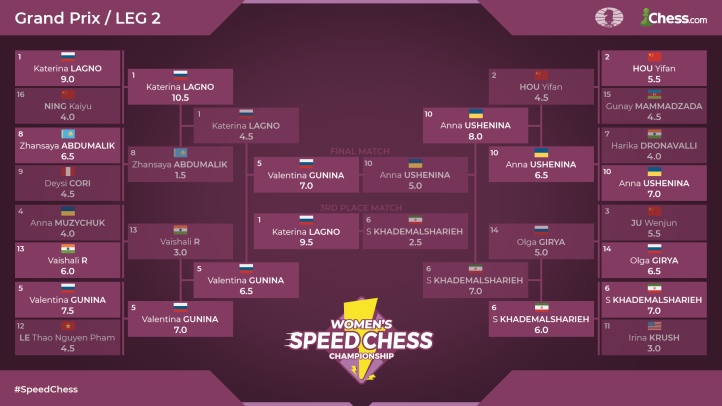
Valentina Gunina emerged as the winner of the second leg of the Women’s Speed Chess Championship Grand Prix and picked up 12 GP points. In the final match, she took revenge on Anna Ushenina, to whom she had lost the previous Leg 1 final match. Ushenina earned 8 points for her runner-up finish and tied for the overall lead in the series with Gunina. Going into the bullet portion of the final match against Ushenina, Gunina who was playing at a higher tempo, had the lead 4.5-3.5. Most likely the Russian GM was quite optimistic about her chances as she is known for her prowess in the fastest time controls. The Ukrainian GM was close to bouncing back in the first bullet game as was up an exchange but missed a perpetual check. In the next game, Anna went from bad to worse as she blundered a queen. Valentina extended the lead to 6-4 with just 4 minutes to go. A smashing attack by Gunina in the next game pretty much decided the match in her favor as there was no comeback from 4-7. However, Ushenina scored a consolation goal in the last game to finish it on 5-7. “For me, the final match was just like one minute. I even can’t remember what was going on… I like how I played all these matches and I am really happy to win in the final because I lost the previous match. I am really, really happy.” Valentina said in a short interview after the final. In the match for third place, Kateryna Lagno did not give any chance to Sarasadat Khademalsharieh, convincingly defeated her opponent 9.5-2.5, and collected 6 GP points. For her efforts, Sarasadat received 5 GP points. FIDE Chess.com WSCC Grand Prix – Standings after Leg 2