

Statement by the FIDE Council regarding the Chess Olympiad

Dear members of the chess community, As you know, the Chess Olympiad is the most popular FIDE event, attended by thousands of people, including players, coaches, officials, and spectators. The mission of Chess Olympiads is not only to determine the sportive results but also to popularize our game and unite chess lovers around the world in this truly global sports festival. At the same time, FIDE is deeply concerned about the growing COVID-19 pandemic and its impact on people’s lives. Taking into account the reports from the World Health Organisation (WHO) indicating the constant increase in the number of cases worldwide, and given today’s IOC statement regarding the Tokyo 2020 Olympic games, FIDE has decided to postpone the 44th Chess Olympiad (including the competition for players with disabilities) and the FIDE Congress. These events, to be held in Moscow and Khanty-Mansiysk during the summer of 2020, are rescheduled to the summer of 2021 at the same locations. FIDE will continue to work hard in order to support various chess activities, at the same time caring first and foremost about the health and well-being of the entire chess community. FIDE CouncilMarch 24, 2020
Vachier-Lagrave catches up with Nepomniachtchi
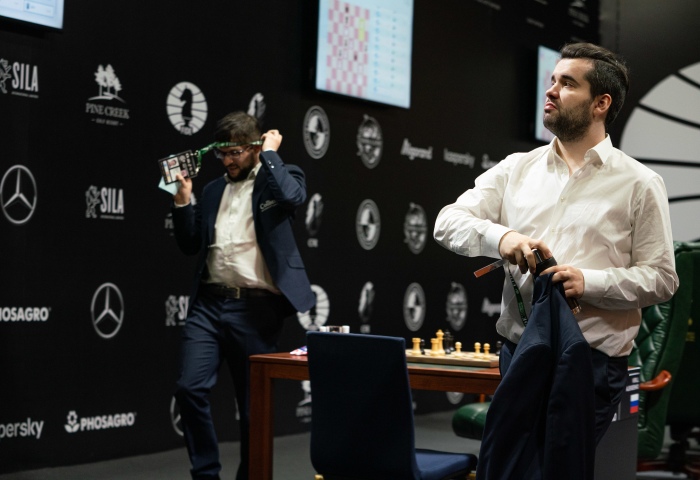
Halfway through the 2020 Candidates, there has been a change at the top as France’s Maxime Vachier-Lagrave defeated the leader after Round 6 Ian Nepomniachtchi in a duel for first place. Both players are now tied for the lead with 4.5 each. A group of four players is a full point behind them. The race is now wide open again as at least six players have a chance for first place. The game between Maxime Vachier-Lagrave (France) and Ian Nepomniachtchi (Russia) was a centerpiece of the day. The Russian started Round 7 with a whole point ahead of his closest rival and was hoping to keep his leading position. Before this round, the two met 13 times and the score is clearly in favor of the Frenchman: seven draws, one loss and five victories. However, Nepomniachtchi won their last game before the Candidates (Jerusalem 2019) in which the place in the Candidates 2020 was at stake. The position was sharp from the very opening, with Nepomniachtchi opting for the French Defence for the second time in this event. Commenting on the game, British Grandmaster Daniel King pointed out that the line, which Black chose to play, was very sharp, suggesting it was a very brave but risky decision of Nepomniachtchi. It seemed it was more the latter than the former as the Russian gradually got into time trouble under White’s pressure. First, the Frenchman started active operations on the queenside, since Black’s rook got stuck at the opposite flank, then he foiled Ian’s attempts to block the position and finally launched an attack in the center and the kingside. Black’s defense collapsed and Ian signed his capitulation just two moves after reaching the time control. Nepomniachtchi now might be regretting his opening choice of a very sharp line. Luck favors the brave, but not always. After the game, Vachier-Lagrave said that he was satisfied with how the tournament was going for him. “Apart from the game with Wang Hao, I played reasonably well [at the tournament]. I hope to continue this trend and to be able to stay on this journey”, the Frenchman said. After this victory, Maxime Vachier-Lagrave joined Nepomniachtchi at the top of the standings as both players now have 4.5 points out of seven games. Despite the two having the same amount of points, Vachier-Lagrave has better tiebreaks thanks to winning their direct encounter. Both Fabiano Caruana (USA) and Wang Hao (China) were on 50% before this round. Caruana, the winner of the 2018 Candidates had to pick up speed if he wanted to be in the race for the first place. However, he was facing Wang Hao, a dangerous and uneasy opponent who already had a good record against the World #2 – five victories, four draws, and no defeats. Still, the majority of the games were played seven or more years ago. Since 2013, the two faced each other just once, in the Isle of Man Grand Swiss in October 2019 (the game was drawn). After Caruana opened with 1.e2-e4 Wang Hao responded with his trusted Petrov Defence. The opponents castled on the opposite sides, presumably signaling a sharp game ahead, but on move 13 the queens left the board. Fabiano launched his g-pawn towards the Black king’s fortress, but this aggression was met with a classical counterattack in the center. The position quickly transpired into an endgame (as Caruana said in the post-game interview, he could not remember all the lines so opted to simplify). Black was slightly better but not enough to convert this tiny advantage into more than a half-point. The two agreed on a draw on move 41. With 3.5 points out of seven games, both players are still in the race for the top spot and hoping to kick into high gear in the second part of the tournament. Alexander Grischuk (Russia) continues to be the king of draws at the 2020 Candidates. The Russian split a point in all his games, including the Round 7 encounter with Anish Giri (The Netherlands). The two have played 14 times before this game with Giri leading by 2:1 (plus 11 draws). The game saw a relatively rare line of the English Opening bearing the name of Paul Keres. As in all previous games, Grischuk spent a lot of time in the opening but for a good reason, as he obtained quite a comfortable position. Like in Caruana – Wang Hao game the opponents castled on opposite sides, but after White’s breakthrough in the center and massive exchanges on d5-square, the game steered into an equal endgame in which the conflict was quickly exhausted. The opponents shook hands in a drawing endgame right after reaching the time control. In the post mortem, Giri said that Grischuk played well and managed to find the most sophisticated moves in the opening, holding the position. The Dutchman confessed to an unusual conflict of interest in this game, saying that although he “obviously wanted to win” he also wanted a series of draws by his opponent to continue. Both players have chances to fight for the first place as they are just one point behind the leaders (on 3.5 points after seven games). Ding Liren (China) drew as White with Kirill Alekseenko (Russia). Both players were on two points after six rounds and were at the bottom of the board before Round Seven. This was a duel between the Chinese pre-start favorite and the Russian wild-card. The two played twice before and both games ended in a draw. A popular Russian comedian Andrey Rozhkov, Yekaterinburg’s native, made the first ceremonial move in the game and seemingly raised players’ spirits. Black quickly managed to equalize in the Catalan Opening and got a flexible position. Ding Liren was not at his best in the middle game as at some point Alekseenko’s ambitions might have gone farther than just making a draw with Black. However, the Chinese never crossed the line in this game and the opponents sealed a draw by repetition in a rook ending. Both players were not enthusiastic about the outcome in
Candidates 2020: In-form Nepomniachtchi stretches the lead
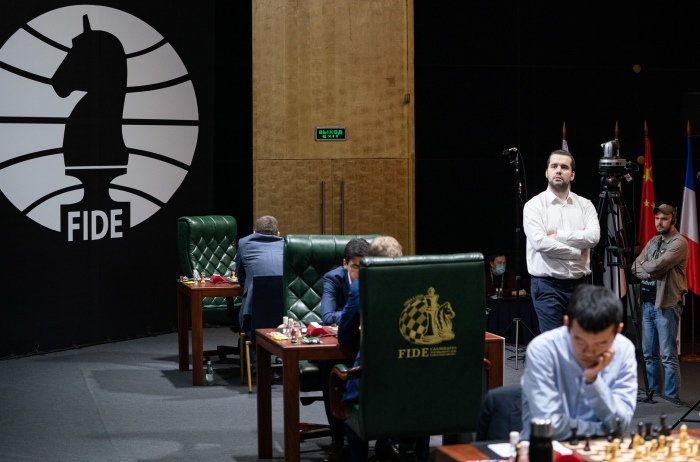
Russia’s Ian Nepomniachtchi increased his lead at the 2020 Candidates to a whole point after defeating China’s Ding Liren. The 29-year-old goes into the rest day with 4.5 points after the first six rounds (+3) and is now a very strong favorite to become the challenger to Magnus Carlsen for the title of the World Champion. Behind him, on 3.5/6 is Maxime Vachier-Lagrave, followed by a pack of four players with three points each. Round 6 saw the longest game of the tournament so far: after an epic seven-hour battle and 98 moves, Anish Giri defeated the Russian wild-card Kirill Alekseenko in a tense and draining endgame. It was a day of long and double-edged play in Round 6 of the 2020 chess Candidates in Yekaterinburg. 1.e2-e4 was played on three out of four boards with the Black responding with solid 1…e7-e5. As a result, two Ruy Lopez and one Italian appeared on the boards. Only China’s Wang Hao opened with 1.d2-d4 and tested his opponent in the Gruenfeld Defense. The game between Ian Nepomniachtchi (Russia) and Ding Liren (China) was a battle between the tournament leader (Nepomniachtchi) and one of the favorites before the event (Ding Liren). Prior to this game, the two played each other nine times, winning one game each and drawing seven. The last decisive outcome between the two was last year, at the Zagreb Grand Chess Tour (Ding Liren won). The leader of the tournament demonstrated an excellent opening preparation as White. The grandmasters commenting on the game pointed out that Ding Liren was repeating lines he previously had played, suggesting that he is open to a risk of walking into his opponents’ preparation.n. It seems that this is what happened in this game as Ding Liren spent considerably more time in the opening. After exchanges in the center, White created a passer on the b-file and quickly advanced it towards the promotion-line. Ding Liren responded with engineering some counterplay on the kingside creating potential mating threats. It was a double-edged game, but it seemed that Nepomniachtchi had better control over the proceedings. The key moment came on move 33 – first Ian made a natural move 33. Qc6 (an in-between 33.f3 was much better) allowing Black escape with a brilliant 33…Rxb6!!, but the Chinese missed this golden opportunity. After the Russian mercilessly put his queen behind Black’s lines Ding Liren gave up a piece and put an end to his suffering on move 40. After this game two things are clear: Ian Nepomniachtchi has positioned himself as a very strong favorite to challenge Magnus Carlsen for the world chess crown, while the pre-event favorite, Ding Liren, seems to be giving up on his hopes as he is on the bottom of the scoreboard with 2/6. Nepomniachtchi did not beat about the bush in the post-game interview: “In this tournament, only the result counts, nothing else”. With 4.5/6, he made his point clear. The game between the Russian wild-card Kirill Alekseenko and Anish Giri (The Netherlands) was the longest of the day and the tournament so far. After more than seven hours of play and 98 moves, the Dutchman forced the Russian to resign. Previously, the two met once, in 2008 – when both were kids – and it was Giri who came victorious. Alekseenko opted for the Italian game where both sides usually develop slowly without many exchanges. Giri was showing more confidence and better preparation as he spent less time but obtained a quite comfortable even a slightly better position with Black. After several exchanges in the center, the game transpired to a queen and knight endgame where Black had a better pawn structure. White pressed on, understanding that if he wishes to stay in the game he cannot afford to be passive. Giri responded with careful, preventive moves but maybe proceeded too cautiously. Kirill broke through in the center and was very close to reaching complete equality but played unthinkable 38.Qd7 instead of a more than natural 38.Qxb7. Eventually Black managed to get hold of an extra pawn, but his 2:1 pawn majority on the queenside transformed into a 3:2 pawn advantage on the kingside in a knight endgame. Commentators noted that the position on the board was similar to a 2019 game where World Champion Magnus Carlsen managed to convert an extra pawn against Visvanathan Anand. Alekseenko was doing his best, carefully maneuvering his knight and king thwarting Black’s attempts for quite a long time but got cracked on move 89 after playing 89.Nd3? instead of 89.Nh1+. Ten moves down the road Alekseenko threw in the towel. After this victory, Anish Giri got back on 50% and joined the pack of three other players with 3/6. This defeat left Kirill Alekseenko on 2/6 – he is sharing the last place with Ding Liren. Alexander Grischuk (Russia), the most experienced player of the event, was late for his game against Fabiano Caruana (USA). This has become something of a tradition in the Candidates as the Russian was late for every single game so far. Somehow, it seems that this goes hand in hand with his time troubles, which Grischuk is known for. The game saw an aggressive, double-edged Archangelsk variation of the Ruy Lopez. While Caruana was blitzing out his moves (suggesting good opening preparation), Grischuk was somewhat struggling: on move 13 he spent nearly 15 minutes pondering on what to chose. Caruana offered a repetition early on but after a further half-hour of thinking, Grischuk decided to continue the battle. Eventually, the Russian sacrificed a pawn but got full compensation in a dynamic position. Then it was Caruana’s turn to make an offering as he left his knight up for grabs on a7. Grischuk thought another 13 minutes and refused the poisonous gift. The position was tense and required a lot of precise and detailed calculations, which demanded time. This is exactly what Grishuk did not have as he was down to two and a half minutes for eight moves to reach the first time control. Grischuk managed to do it regaining a pawn along the way. He is
Candidates 2020: Nepomniachtchi emerges as a clear leader
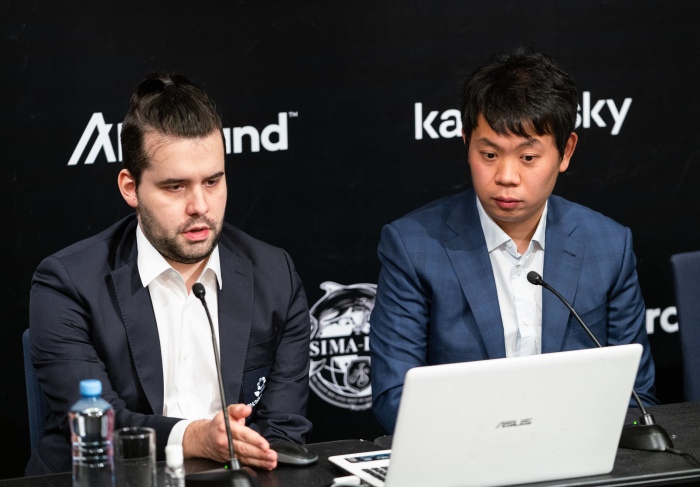
After five rounds of play, Russia’s Ian Nepomniachtchi emerged as a clear leader in the 8-player 2020 Candidates, having defeated Wang Hao of China. With 3.5/5, he is half a point ahead of second-placed Maxime Vachier-Lagrave who drew with Russian wild-card Kirill Alekseenko. On other boards, American Fabiano Caruana was lucky to escape with a draw against Anish Giri, while the game between Grischuk and Ding Liren finished last with the two splitting a point after a long battle. After a day of draws (Round 4) came a day of sharp lines and edgy play at the 2020 Candidates. Finally, one player managed to rise above the rest – Ian Nepomniachtchi, as he defeated Wang Hao of China. This was a battle between two leaders (Nepomniachtchi, Wang Hao and Vachier-Lagrave were tied for the first place after four rounds). Before this game, the two met four times and the score was even: one win each and two draws. The last time they faced each other in a game with classical time control was at the Danzhou super tournament in 2016. That encounter ended in a draw. Not this time, however! After 1.e4 Wang Hao opted for the Petrov Defence as Black. White quickly started pushing his h-pawn towards the black king’s fortress. The move is considered a novelty and became a cause for Black to go into deep calculations. Commentators – including world champion Magnus Carlsen – noted that pushing the h-pawn has become more common at the top level as a clear sign of how AlphaZero (the powerful chess computer, which patented the idea behind the move) was influencing the game. Both players demonstrated a high level of preparation and the position was mostly balanced. Although Ian was persistently looking for opportunities, a draw remained the most likely outcome. However, Wang Hao first allowed Ian’s queen to infiltrate into his camp and then committed a fatal error with 32…Qd7? (a bold 32…Nxd4 with the idea of launching a counterattack on the light squares was sufficient for a draw). Nepomniachtchi was quick to capitalize on the opponent’s misstep and after a forced sequence Black had to give up a piece and resigned immediately. The complexity of the game was shown later in the post-mortem – both players spent well over 10 minutes in live commentary analyzing the lines suggested by chess engines. Wang Hao did not seem disappointed after the game, while Nepomniachtchi (currently ranked as the fifth strongest player in the world and the only one at the top to have a better score against world champion Magnus Carlsen), was very calm and reserved about his lead, saying it’s still early days. One of the favorites Fabiano Caruana is counting his lucky stars after he managed to escape with half a point in the game with Anish Giri. From the very opening, Anish Giri (who played as White) pushed and came down hard on his opponent. The American later confessed that he didn’t remember the right line after Giri surprised him in the opening and was forced to improvise. The improvisation, however, led to Giri’s achieving a dominating position, making Black feel quite uncomfortable (“I was borderline lost”, said Caruana after the game). However, it is the resilience and the will to ‘bugger on’ at even the toughest of times that sets the best from the rest. Caruana kept defending well and hoping for his luck to turn. Then came a turning point in the game: despite obtaining a better position – deemed by some as almost winning – Anish Giri made several substandard moves and let his advantage disappear. After Caruana managed to reach the time control and equalized position a draw was called. This was not the first lucky escape the American had facing Anish Giri: the Dutchman was completely winning with White vs. Caruana in Candidates 2016 in Moscow, but – as now in Yekaterinburg – Giri missed his chances in a sharp position and then tried to break through for 96 moves to no avail. In the interview after the game, Anish Giri gave the following assessment of the outcome: “I was better, but… I cannot say I saw a win but there were options there”. This game leaves one of the top favorites to win the event – Fabiano Caruana – “only” on 50 percent after a third of the games played! In one of the most exciting duels of the day between Kirill Alekseenko (Russia) and Maxime Vachier-Lagrave (France), a double-edged Najdorf Sicilian was played. For quite a long time the opponents followed the footsteps of Magnus Carlsen and Vachier-Lagrave himself (the game was played in London back in 2019) and diverted only on 16th move when Black introduced a very important novelty 16…g6. Then the game reached its crescendo when White (Alekseenko) sacrificed a rook for a pawn on the kingside, which was immediately met by Black’s sacrificing an exchange on c3. Both players were very well prepared, but the number of tactical lines available forced less experienced Alekseenko to spend an hour more than his opponent did. Interestingly, this was the second time in this tournament that Vachier-Lagrave experienced his opponent spending almost an hour on a single move (in the fourth round Grischuk spent almost an hour for an obvious move). The Frenchmen later commented that if this happens to him again, that he will ask the Chief Arbiter “to bring some board games out” so he could amuse himself. However, in the game between Kirill Alekseenko and Vachier-Lagrave – all the excitement was there at the board as both needed to make sure not just that they calculate correctly but also, not to forget any of the relevant lines that were possible. This put higher pressure on the Russian wild-card Alekseenko who was in serious time trouble. To his credit, the Russian managed to find the right moves just in time and the two agreed on a draw. In the interview which followed, both players noted that sharp positions demand that the players remember the lines clearly. “I try to remember the main
Candidates 2020: A day of draws in Yekaterinburg
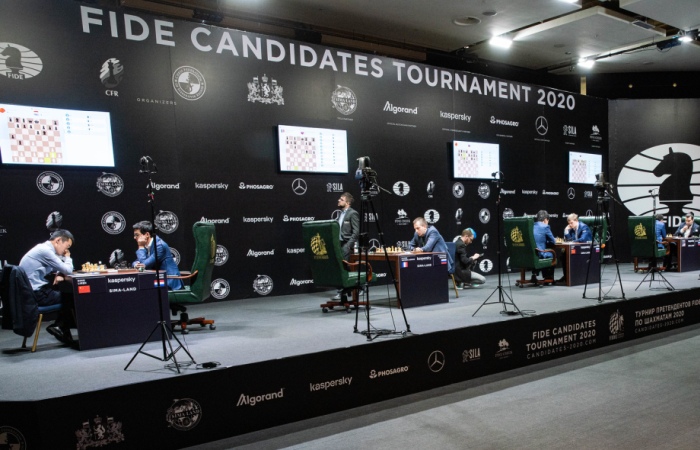
There has been no breakthrough at the 2020 Candidates Tournament as all four games of Round Four ended in a draw. Maxime Vachier-Lagrave of France was closest to scoring a full point but he missed his chances against Alexander Grischuk, despite the Russian being in severe time trouble. The longest game of the day was between American Fabiano Caruana and Russian Ian Nepomniachtchi which also ended in a draw. Altogether, there is no clear leader at the 2020 Candidates, as three players have 2.5/4 – Ian Nepomniachtchi, Maxime Vachier-Lagrave and Wang Hao Round 4 started – and finished – with the Candidates tournament being wide open. Thanks to Ding Liren’s comeback in Round 3, when he delivered a blow to Fabiano Caruana, all players entered the fourth round with a chance to make a significant step forward. The round started with ceremonial moves made on all four boards. In the Game Caruana – Nepomniachtchi, the first move was made by Nikolay Karpol – legendary women’s volleyball coach and President and Head coach of the VC Uralochka-NTMK Yekaterinburg. Andrey Simanovsky, President of the Chess Federation of the Sverdlovsk region opened the game Wang Hao – Kirill Alekseenko. Viktor Shepty, First Deputy Chairperson of the Legislative Assembly of the Sverdlovsk region, did the honors in the encounter Maxime Vachier-Lagrave – Alexander Grischuk. Finally, Albert Stepanyan, Executive Director of the Chess Federation of the Sverdlovsk region made the first ceremonial move in the game between Ding Liren and Anish Giri. The most exciting game of the day was between Maxime Vachier-Lagrave and Alexander Grischuk (the only player to draw all his encounters). The Frenchmen opened with 1.e4 and Grischuk responded with the Berlin Defence in the Ruy Lopez. The game progressed quickly until one point: Grischuk spent 53 minutes on his 19th move before deciding to put his knight to e7. This was unusual, as the move seemed natural and had been played before (between Maxime Vachier-Lagrave and Hikaru Nakamura). On move 20, the Frenchmen sacrificed his c3-pawn and put some pressure on Black’s position. After 24 moves, White had the initiative as Black’s king got stuck in the center and his a8 rook was cut-off from the action. The computer said the position was equal, however – Grischuk had under 10 minutes on his clock which suggested serious time trouble. By move 26, Grischuk had just two and a half minutes to make 14 moves! Then, unsurprisingly, Alexander made a serious mistake by taking White’s pawn on a4, offered by Vachier-Lagrave. However, instead of 30.Re4 with the decisive advantage for White, the Frenchmen rushed with 30.Ba3+. (In an interview after the game, Maxime said he forgot about the 30.Re4 move. Even the greatest players make errors). The game then transposed into a four-rook ending in which White had an advanced pawn on e6 and more active rooks. Nevertheless, after surviving major scare on 30th move, Grischuk safely reached the time control break and then confidently made a draw. In an interview after the game, Alexander said that he “made a very stupid thing” by spending an hour thinking about an obvious move. Talking about the endgame, Grischuk said: “The position was extremely tactical despite it being an endgame. It could have gone either way.” This was a fourth consecutive draw for Grischuk in the 2020 Candidates. The game between Fabiano Caruana (white) and Ian Nepomniachtchi (black) developed quickly. After 1.d4 Nepomniachtchi went for Gruenfeld defense, his main weapon with Black. Caruana was blitzing his moves, launching his h-pawn towards the black king’s fortress. The American secured his control over the center and advanced his pawn further to h6 hampering Black. Commenting on the game, Magnus Carlsen suggested that Nepomniachtchi is taking many risks. After exchanges in the center, Nepomniachtchi then offered to trade queens on move 26 but Caruana preferred to continue with the most powerful pieces on the board. The American pinned his hopes on his d5-passer but Nepomniachtchi was defending accurately and patiently. Still White had some pressure but Fabiano made an inaccuracy with 31.Qf3, apparently overlooking the sequence 31…Qe1+ and 32…f5 after which Black was out of any danger, to say the least. After the exchange of queens, Ian tried to find some chances in the bishop endgame but Caruana did not give him any – a draw was called on move 55, after five hours of play. In their first duel ever, Wang Hao and Kirill Alekseenko agreed to split a point. Alekseenko obtained a solid position with Black and reached equality. Although Alekseenko was playing very carefully making sure he prevents White from activating his play – Peter Svidler, Alekseenko’s second – noticed that his compatriot tends to overthink his positions sometimes thus creating needless complications. This was the case when Kirill played 13…Ra6 and found himself in an inferior position. In the following tense game with a lot of fine maneuvering, Alekseenko was defending with great accuracy and neutralized all White’s active ideas. The opponents sealed a draw on 41st move. Ding Liren – who got back into the tournament after defeating Fabiano Caruana in Round 3 – drew as White against Anish Giri. Both had a slow start to the tournament, with one point out of three. The opponents had a discussion in the Catalan Opening. White got a slight edge but there was no real way to make progress without serious missteps from Black’s part. Naturally, Anish refused to cooperate – he demonstrated a very interesting idea of pushing his h-pawn and solved all his little problems. After massive exchanges, the game steered into an equal rook and bishop vs rook and bishop endgame in which a draw was a natural outcome. Judit Polgar on the 2020 Candidates: An extraordinary situation but a great opportunity for chess Joining the official commentary today (via Skype) was Judit Polgar – the strongest female chess player of all time. She reflected on the circumstances in which this tournament is being played: “This is an extraordinary situation for the players. It is psychologically very tough. There are a lot of strange things happening. In the games, you could see
Call for submissions: FIDE launches veterans support program

The International Chess Federation is pleased to announce the continuation of its support to chess veterans. A number of stipends for a total amount of 20,000 Euro will be awarded next month to distinguished players and trainers aged 65+. Anyone over this age, who has contributed to the development of chess and who is in an unstable financial situation, is eligible to receive this support. We invite federations, clubs, and players themselves to send their applications, including a CV of the nominee, to the FIDE Secretariat: office@fide.com. The deadline for submissions is April 5, 2020.
Rating Analytics: The biggest rating gains of 2019
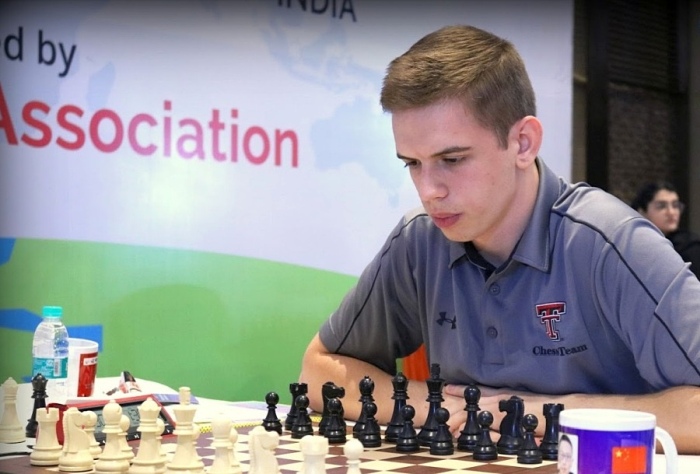
Kaspars Migla is the creator and founder of a chess website chessratings.top. In his column, he analyzes FIDE standard rating changes, career-highs, rating distribution by country, continent, region, and other rating-related statistics. In this edition, he looks back at the biggest rating gains in 2019, made by players in various categories. Chessratings.top analyzed the biggest FIDE rating gains over the year 2019 and broke them down into different categories. Generally speaking, the higher the rating, the lower the rate of its change. Consequently, the lower the rate of the rating change, the more difficult to improve one’s rating. The more difficult to improve one’s rating the more significant every gain. With this in mind, let’s start with GMs. Evgeny Shtembuliak (UKR) born in 1999 (pictured above) made the biggest progress among grandmasters – over the period from March 2019 (when he was awarded his GM title) to January 2020 he improved his rating by 109 points and reached the 2625 mark. His gain is only 4 points bigger than one by a chess wunderkind from Iran Alireza Firouzja who made a huge jump from 2618 to 2723. Ironically, in 2018, when Alireza had lower rating (consequently, it was easier to earn rating points) his progress was also quite big, but not that impressive – from 2549 to 2618, i.e. 69 points. A young Chilean (born in 1996) Cristobal Henriquez Villagra rounds out the top-3 in this category after hitting the mark 2603 with a 99-point increment. It is nice to see a lady in the top-20 GMs making the biggest progress – Aleksandra Goryachkina (2578) boosted her rating by 60 points. Another gifted player from Iran Parham Maghsoodloo made roughly equal increments in 2018 and 2019 and increased his rating by 107 points over a two-year period moving up from 2572 to 2679 mark. TOP-20 biggest rating gains among GMs: The biggest gains are registered among IMs, which is hardly surprising given their lower rating comparing to GMs. The top spot in this nomination belongs to Mahfoud Oussedik from Algeria who picked 118 points and for the first in his career broke the 2400 barrier (2423). Jonas Buhl Bjerre from Denmark (born in 2004) really stands out in this list as he made an impressive leap from 2422 to 2535, passing the GM mark (2500). Jonas Buhl Bjerre Back in 2018, Wilson Guillermo Palencia Morales was the IM to make the biggest progress after improving his rating by 120 points from 2211 to 2331. TOP-20 biggest rating gains among IMs: Let’s talk about seniors. After retiring from competitive chess many of them have more time to spend on the game, which in turn has a beneficial effect on their level of play and rating, especially if it was not particularly high. Two players managed to increase their rating by 300 points and more thanks to a so-called low base effect. The age difference among the players on this list is striking. It is also noticeable that there is not a single player having an international title. TOP-20 biggest rating gains among seniors (all titles): Since juniors chess rating is calculated with the greatest coefficient (К=40), in the table below we see the biggest gains among all the players. Usually, Indian players dominate junior rating lists but this particular case the first three positions are occupied by the representatives of other counties. The first place in this list belongs to Reja Neer Manon from Bangladesh (born in 2010), one of the world leaders in the U-10 category. In 2019 his rating rose from 1486 to 2206 (720 points). Reja’s achievement is even more significant given that he had the highest starting rating among all the players on this list. Reja Neer Manon The #2 in our top-20 is quite a different story. Matteo Calvigioni from Italy (born in 2001) got his first international rating only in 2018. As of January 01, 2019, it was equal to 1130 points. Starting from this mark Matteo moved only up and by the end of the year he ramped it up to 1821! Back in 2018, the leader in this nomination Milan Gagic from Serbia (born in 2005) improved his rating by 654 points – from 1335 to 1989. TOP-20 biggest rating gains among all young players: Since youngsters took all the positions in this TOP, we analyzed the best achievements of juniors (players born in 1999 and 2000) separately. Predictably, the players with initial low ratings are among the leaders. For example, Dominik Zilkay (SVK) started the year with 1238 points and finished on the 1683 mark. TOP-20 biggest rating gains among U-20 (1999, 2000): Probably the broadest and the most diverse category in chess is adults, i.e. players born in 1999 and older. It is hard to find a well-known player in this list with a wide range of age – there is a player, born in 1947 in this top. As we all know, chess unites players of different ages not only over boards but also in rating lists. TOP-20 rating gains among adults (born in 1999 and older) When it comes to female WGM, IM, and GM we see a totally different picture: young players and juniors play second fiddle. Indeed, there is only one (!) U-18 player – WGM Aleksandra Maltsevskaya (RUS) WGM Katarzyna Toma (ENG) made the biggest progress (108) after increasing her rating from 2173 to 2281. It is worth noting though, that this rating-jump happened after a real slump in October of 2018 when she dropped 114 points in the course of two tournaments. If we present rating progress as a linear chart, that of IM Bhakti Kulkarni stands out from the rest and looks like a wave curve. Back in November 2018, her rating was 2256 but ten months later in August 2019 it reached 2429 points. Katarzyna Toma In 2018 WGM Gulrukhbegim Tokhirjonova from Uzbekistan topped the list. She made an impressive jump from 2329 to 2446 (117 points) breaking her personal record along the way. TOP-20 biggest gains among women (GM, IM, WGM): It comes as no surprise that youngsters are the absolute leaders among all female players when it comes to the biggest rating gains. TOP-20 biggest gains among all women: The young generation dominates all regional tops. Out of 80 players you
Candidates 2020: Ding Liren beats Caruana to make a comeback
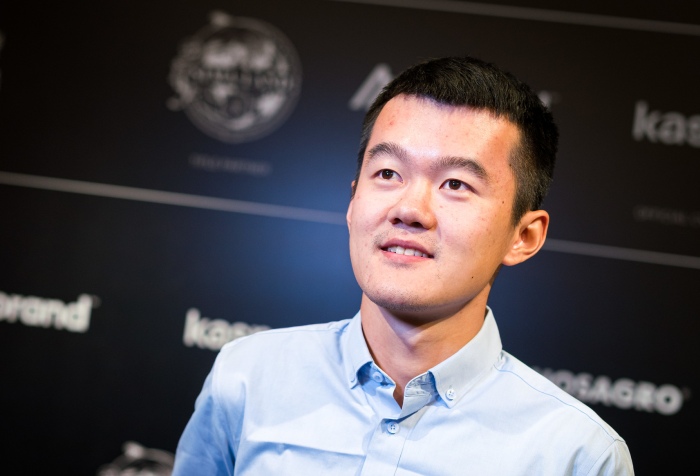
In a duel between the two favorites China’s Ding Liren – who started with two losses – made a comeback in the third round and defeated the #2 player in the world, Fabiano Caruana. This was the only game with a decisive outcome on the third day of the 2020 Candidates and it made the tournament wide open again A day before the first break at the eight-player 2020 Candidates Tournament, there are three players in the lead – Ian Nepomniachtchi (Russia), Maxime Vachier-Lagrave (France) and Wang Hao (China), all on 2/3. American Fabiano Caruana and Russian Alexander Grischuk are a half-point behind with 1.5/3. Anish Giri (The Netherlands), Kirill Alekseenko (Russia) and Ding Liren (China) have one point after three rounds. Every game in the Candidates is critical, but this was especially the case for Ding Liren in Round 3. The first two days were challenging for the Chinese player: seen as one of the favorites, he surprisingly lost two games in a row. A few minutes before the third round, he was sitting in his chair, staring at the board, completely oblivious of his opponent who quietly set across. After the Chinese player opened with d4 Caruana opted for the Slav Defence, an unlikely choice for him. A few moves down the line the first interesting moment of the game occurred: Caruana played a novelty 9…e5, sacrificing a pawn. The American made this move fast (suggesting it was pre-prepared) and left the board. The Chinese player got into a deep think. As a result, he managed to find an accurate sequence of moves and preserved an extra pawn. To keep the initiative, Black (Caruana) sacrificed another pawn, hoping to expose the white king. Ding Liren, however, was up to the task – he gradually neutralized Black’s threats and consolidated his material advantage. Caruana kept on playing, hoping to create some chances, but to no avail. The Chinese player – although in time trouble – steered his ship with a firm hand forced the opponent to resign. This game was an important milestone for Ding Liren, whose confidence will be bolstered after this victory against the second player in the world. In the interview following the game, he said he hopes to recover to his top form and get back to the top of the scoreboard. The game between Anish Giri (The Netherlands) and Maxime Vachier-Lagrave (France) ended in a draw. Vachier-Lagrave predictably played his trusted Grünfeld Defence against 1.d4 and quickly proceeded to simplify the position. The ensuing endgame was slightly better for White but provided the Frenchman with enough defensive resources to hold his ground. The opponents agreed on a draw and shook hands on move 30. This was the first game of the day to finish. Alexander Grischuk (Russia) made his third consecutive draw in the tournament, this time against Wang Hao (China). After White played 1.e4, the Chinese player opted for the Petrov Defence. The Russian obtained a slightly better position with two bishops and superior pawn structure although Wang Hao’s pieces were very active. After the exchange of dark-squared bishops, Grischuk gradually advanced his kingside pawns and got an upper hand. The Chinese GM was resourceful in defense and eventually reached a draw but not without some help from Grischuk. Being in time trouble Alexander missed 34…Ne4+ which allowed Wang Hao to equalize. Ironically Grischuk had seen this idea long before but completely forgot about it on the move 34. Wang Hao is now on 2/3, while Grischuk – with three consecutive draws – is on 1.5/3. Kirill Alekseenko (Russia) faced his compatriot Ian Nepomniachtchi. This was the first time the two played against one another. Somewhat surprisingly, Nepomniachtchi went for the French Defence. The last time we saw the French Defence in the Candidates was back in 2007 in Elista in the game Leko – Gurevich (and the last time Black scored a victory in the Candidates in French Defence was in the game Sokolov – Yusupov, in Riga in 1986!). The position on the board after the opening was mostly even but full of life: Black put some pressure on the queenside, while White had his chances on the opposite flank. On the move 20 Alexeenko sacrificed an exchange and got compensation but the position remained about equal. Later on, though Kirill missed an opportunity when Black played 25…g6. The Russian wild card had a chance to take the g6-pawn (26. Bxg6) and launch a forceful attack on Black’s king, which would have been difficult to defend against. Explaining why he did not go for the g6-pawn, Alekseenko said that he was struggling with time and was not able to calculate everything until the end. Ten moves down the road White’s queen penetrated Black’s kingside and the youngest participant of the competition forced a draw by perpetual check. Ian Nepomniachtchi is now on 2/3 while Kirill Alekseenko has one point after three rounds. A Japanese bow instead of the “elbow-shake” In light of the concerns regarding the coronavirus, traditional handshakes have been dropped in the tournament. Players decide between themselves if and how they wish to acknowledge one another. Dutch player Anish Giri suggested that there should be a new code agreed between the players when it comes to handshakes, arguing it is very confusing as some people offer handshakes and some refuse. Anish also said he was not a great fan of “elbow-shakes”. “I think it would be much more elegant to do a bow as the Japanese do. I think they do that in shogi and it would make a lot of sense. This ‘elbow-shake’ is very creepy. From all the possible ways to show respect to each other, this is the creepiest”, Giri said. Friday is a rest day at the 2020 Candidates. Round Four of the 2020 Candidates Tournament starts at 4 PM local time on March 21. The pairings for the fourth round are: Fabiano Caruana (USA) – Ian Nepomniachtchi (Russia)Wang Hao (China) – Kirill Alekseenko (Russia)Maxime Vachier-Lagrave (France) – Alexander Grischuk (Russia)Ding Liren (China) – Anish Giri (The Netherlands) Standings after Round 3: 1-3. Ian Nepomniachtchi, Maxime Vachier-Lagrave, and Wang Hao – 24-5. Fabiano Caruana and Alexander Grischuk –
Candidates 2020: Four in the lead as Ding Liren suffers a second loss
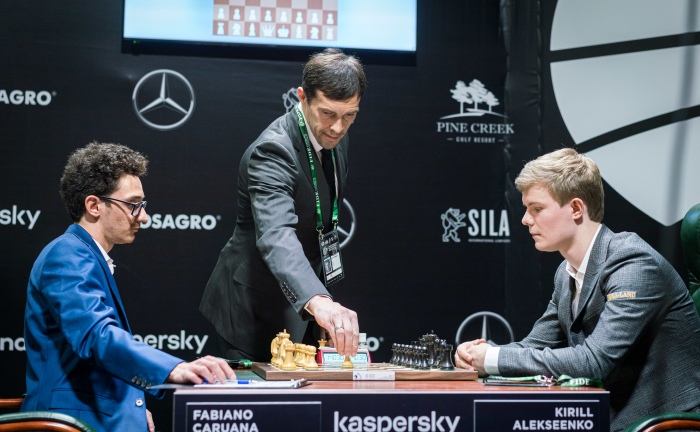
Four players are in the lead after the second day of the 2020 Candidates tournament in Yekaterinburg. Fabiano Caruana, Ian Nepomniachtchi, Maxime Vachier-Lagrave, and Wang Hao are all on 1.5/2, followed by Alexander Grischuk with one point, and Alekseenko and Giri with half a point. In the last place, alone, is one of the favorites to win the tournament, Ding Liren, who lost again today Pavel Datsyuk, a Russian professional ice hockey player, opened the second round with a symbolic first move in the game between Fabiano Caruana (USA) and Kirill Alekseenko (Russia). The former contender for the title of World Champion and World #2 surprised his opponent by playing 1.d4 instead of his usual 1.e4. The game saw a double-edged line of the Nimzo-Indian. It seemed that something went wrong with Alekseenko’s opening preparation – he spent a lot of time thinking but ended up missing key moves. Caruana quickly took advantage of his opponent’s hesitation, pinning Black’s pieces and preventing him from getting any activity. It was a tense, tactical battle in which Caruana played with great precision. Although Alekseenko got seemingly sufficient compensation for a sacrificed knight, the American quickly coordinated his pieces for a deadly final attack and went on to win the game. The game between compatriots Ian Nepomniachtchi (Russia) and Alexander Grischuk (Russia) ended in a draw. Instead of a traditional handshake, the players greeted each other with an “elbow-shake” at the beginning. Grischuk opted for the Berlin Defense in the Ruy Lopez and after Ian’s inaccuracy 24.Bc1 probably could hope for more than just equality. However, in his usual time trouble, Alexander relieved the tension by exchanging the knights, which led to an equal ending with opposite-colored bishops. A second draw for Grischuk who is now on one point, while Nepomniachtchi is on 1.5/2. Maxime Vachier-Lagrave (France) defeated Ding Liren (China), delivering a second blow in a row to the Chinese favorite. The Frenchman started to press from the very beginning and created a strong position in the middlegame. At one point Black had to give up a pawn and tried to compensate with aggressive play on the kingside. This approach, however, backfired. Eventually, Ding’s uncoordinated pieces were unable to withhold White’s pressure and the Chinese GM had to resign on move 37. A second loss in a row for the Chinese who ahead of the tournament was considered as one of the favorites to win the Candidates. Unlike for Ding Liren, the tournament started well for the Maxime Vachier-Lagrave (1.5/2) despite getting a spot at the event at the very last moment (after Teimour Radjabov pulled out). The longest game of the day was played between Wang Hao (China) and Anish Giri (The Netherlands), lasting almost six hours. In Round 1 Wang Hao defeated his compatriot and one of the favorites, Ding Liren, while Giri started with a loss (to Nepomniachtchi). White tried to grab the initiative straight out of the English opening and eventually obtained a slightly better endgame with some pressure on Black’s isolated d-pawn. Wang Hao gradually shifted his focus on the queenside, outmaneuvered his opponent and won a pawn. Being better on time, Giri put up a stubborn resistance, which eventually yielded dividends. Wang Hao failed to find the right path to victory and – after almost six hours of play – the two called it a draw. Wang Hao is now on 1.5/2 while Giri is on half a point. There are 12 more rounds to go in Yekaterinburg and a significant number of decisive outcomes in the first two rounds suggest a lot of excitement ahead. Questions are being asked about whether Ding Liren will be able to make a comeback, especially as he is due to face Fabiano Caruana in the next round. Still, the tournament is in its early days and many things can change and likely will. Round 3 of the 2020 Candidates Tournament starts at 4 PM local time on March 19. The pairings for the third round are: Ding Liren (China) – Fabiano Caruana (USA)Anish Giri (The Netherlands) – Maxime Vachier-Lagrave (France)Alexander Grischuk (Russia) – Wang Hao (China)Kirill Alekseenko (Russia) – Ian Nepomniachtchi (Russia) Official website: www.en.candidates-2020.com FIDE website: www.fide.com Chess Federation of the Sverdlovsk Region: www.ural-chess.com Press inquiries: press@fide.com Text: Milan Dinic Photo: Maria Emelianova and Lennart Ootes About the partners: Sima Land – Title sponsor of the FIDE Candidates Tournament Algorand – Official blockchain partner Kaspersky – Official cybersecurity partner PJSC PhosAgro – General partner of the CFR Mercedes-Benz Russia – Official Auto Partner Pine Creek Golf Resort – Partners SILA International Lawyers – FIDE legal partner You can find more information about the partners at www.en.candidates-2020.com/partners
4th FIDE World Junior Chess Championship for Players with Disabilities postponed

4th FIDE World Junior Chess Championship for Players with Disabilities New Dates! June 28 – July 5, 2021 Denver, Colorado, USA Keeping our Junior Players safe. Dear Junior Players, Chess Families, and Members of the International Chess Community: In light of recent developments surrounding COVID-19, the health risks, travel restrictions and quarantines being enforced around the world, we are heeding the advice of public health experts, the World Health Organization (WHO) and the Center for Disease Control (CDC). With this in mind, out of an abundance of caution and concern for the well-being of Junior Players with Disabilities, our team and chess families, we have decided to postpone this year’s event in an attempt to minimize the players’ exposure to the virus. Nothing is more important to us than the health and safety of the Junior Players and we take seriously our responsibility as the organizers of this wonderful event. During this difficult time, we believe that chess has the ability to keep us connected, and we encourage you all to embrace and support our chess communities beyond the tournament halls. If you have any questions, don’t hesitate to contact us at info@worldjuniorchess.org. We look forward to seeing you in Denver, Colorado, USA in 2021! Yours for Chess,IO Beatriz Marinello Event OrganizerOn behalf of the Organizing Committee