

WGP Round 4: Goryachkina and Dronavalli win and lead in Lausanne
The participants of the Lausanne Women’s Grand Prix are clearly in full strength mode. All games featured hard battles and three of them ended with decisive results The symbolic first move was played on Thursday by Simon Fellus, General Secretary of the World Bridge Association. In the subsequent interview, he drew comparisons between the two mind games and praised FIDE for promoting the activity of women in chess. Two of the five leaders were pitted against each other in Round 4. Nana Dzagnidze tried a different version of the London System which had brought her success in round two. The outcome of the opening was clearly less satisfactory, as Harika Dronavalli quickly got a pleasant position. The Indian was ready to torture her opponent for a long time when Dzagnidze blundered a Rook and resigned on move 27. Dronavalli felt sorry for her opponent afterward and admitted that she is always reluctant to win in such an abrupt way. Another leader managed to win her game and keep pace with Dronavalli. Aleksandra Goryachkina admitted after the game that she was unhappy with her play overall, as she felt that she should have gained a definite advantage against Antoaneta Stefanova’s treatment of the Pirc Defence. Indeed, the game was about equal around move 15, and only the 23rd move by the Bulgarian paved the way to her demise. The tournament is not going well for Alexandra Kosteniuk, as she lost her third game in a row and is the clear last. The opening was a Ruy Lopez, where Zhansaya Abdumalik obtained a closed and balanced position. The key moment came on move 20 when Kosteniuk spurned 20.Ndc4, thus allowing Black to open the center with d5. The young Kazakhstani seized the initiative and did not look back. Her attack flowed and she eventually forced Kosteniuk’s resignation on move 37 due to imminent checkmate. Two draws were particularly exciting with both games finishing quite late in the evening. Alina Kashlinskaya tried a bold knight sacrifice on g7 and felt that the attack was decisive. However, Pia Cramling has seen all sorts of offensives from formidable opponents in her rich career. She remained calm, unimpressed, and repelled all White’s threats. The Russian should be praised for keeping as much tension as possible after that. As fatigue grew, Cramling failed to show the best technique and had settle for a half-point. Just like in Round 2, Ju Wenjun failed to demonstrate anything convincing against the Grunfeld Defense. The commentator Mikhail Gurevich opined that she should have played 11.e5, as after 11.Bd3, Anna Muzychuk quickly got a nice position. Shortly after, the Ukrainian went for the typical positional exchange sacrifice on f3. Was it really necessary? Did she think that Black would be better after this? In any case, the game remained in a dynamic balance until the endgame, where both players agreed to a draw. The encounter between Marie Sebag and Mariya Muzychuk followed the opening line of the second-round game between the French and Dronavalli. Black improved with 7…Bb7 and the position remained fairly equal throughout. Sebag sacrificed a pawn, but her activity was only sufficient for a draw. The 5th round on Friday features the battle of the leaders, as Harika Dronavalli will have white pieces against Aleksandra Goryachkina. Results of round 4: Alina Kashlinskaya (RUS) – Pia Cramling (SWE) ½-½Marie Sebag (FRA) – Mariya Muzychuk (UKR) ½-½Ju Wenjun (CHN) – Anna Muzychuk (UKR) ½-½Nana Dzagnidze (GEO) – Harika Dronavalli (IND) 0-1Aleksandra Goryachkina (RUS) – Antoaneta Stefanova (BLG) 1-0Alexandra Kosteniuk (RUS) – Zhansaya Abdumalik (KAZ) 0-1 Standings after round 4: 1-2. Harika Dronavalli (IND) and Aleksandra Goryachkina (RUS) – 3 points3.-4. Anna Muzychuk (UKR) and Alina Kashlinskaya (RUS) – 2½ points.5.-8. Pia Cramling (SUE), Mariya Muzychuk (UKR) Nana Dzagnidze (GEO) and Zhansaya Abdumalik (KAZ) – 2 points9.-11. Ju Wenjun (CHN), Antoaneta Stefanova (BUL) and Marie Sebag (FRA) – 1½ points.12. Alexandra Kosteniuk (RUS) – ½ point. Program of round 5, 6 March at 3 pm: Zhansaya Abdumalik (KAZ) – Alina Kashlinskaya (RUS)Antoaneta Stefanova (BLG) – Alexandra Kosteniuk (RUS)Harika Dronavalli (IND) – Aleksandra Goryachkina (RUS)Anna Muzychuk (UKR) – Nana Dzagnidze (GEO)Mariya Muzychuk (UKR) – Ju Wenjun (CHN)Pia Cramling (SWE) – Marie Sebag (FRA) Follow all the action live with commentary by grandmasters Mikhail Gurevich and Keti Tsatsalashvili on the tournament website http://wgp2019.fide.com. Pictures in high resolution are available for the press at our official Flickr account. Text: Yannick PelletierPhotos: David LladaContact: press@fide.com
FIDE Trainer Awards for 2020 announced

FIDE Trainers’ Commission (TRG) is pleased to announce the FIDE Trainer Awards for 2020, which will recognize and celebrate the outstanding achievements of the training industry. The FIDE Trainer Awards will be given in the following six categories, five for trainers and one for book authors: Mikhail Botvinnik Award to the best achievement by trainer(s) in Open Section competitions Vakhtang Karseladze Award for the best achievement by trainer(s) in women’s and/or girl’s competitions Mark Dvoretsky Award for the best achievement by trainer(s) in junior competitions Yuri Razuvaev Award for best contribution to grassroots education Yuri Averbakh/Isaac Boleslavsky Award for instructional material in a book Tigran Petrosian Award for special achievement/trainer education An important change is that the Razuvaev Award, which in previous years was awarded “for Contributions to Trainers Education”, will now go to a grassroots trainer. We believe that this role is extremely important and too often it doesn’t receive the recognition it deserves, so we would like to contribute to changing that. There are also some novelties regarding the panel of judges, which again we tried to keep as diverse as possible with all continents represented, and keeping a balance between both experienced players and trainers. For the Trainers Award, Vladimir Kramnik, Antoaneta Stefanova and Alonso Zapata repeat in their roles, but they are now joined by Ahmed Adly, Maia Chiburdanidze, Ramachandran Ramesh, and the World Champion’s trainer, Peter Heine Nielsen. It must be noted that when a coach is made a member of the panel, that means he is automatically out of the race for the award. That is one of the main reasons for this rotation. The awards must be for achievement in the year of the award 2019, but earlier achievements may be mentioned to strengthen a nomination. Eligible to nominate are FIDE Presidential Board members, Continental and National Chess Federations, TRG Commission members, Principals of FIDE Endorsed Academies, FIDE Senior Trainers and past winners. All Nominations must be sent to TRG Secretary Peter Long via email at trainers@fide.com and received by 1st April. The Averbakh/Boleslavsky Award for “Book of the Year” is again judged separately. Nigel Short and Artur Yusupov repeat as judges, being joined on this occasion by John Donaldson. Nominations will be made by leading chess book publishers by 31st March with the shortlist published by 1st July and the winner will be declared on 21st July. The trophies will be awarded at the Moscow Olympiad, along with the Svetozar Gligoric Award for Fair Play. Books nomination formTrainers nomination formRegulations for the Annual FIDE Trainer Awards 2020
WGP Round 3: The World Champion stumbles in Lausanne
Harika Dronavalli dominates Ju Wenjun and moves to shared first place with four other players. Every loss by a World Champion makes headlines and we shall not go against this rule. White’s position did not look that promising at first sight, but as Harika Dronavalli explained in her post-game interview, she had small elements to play for. Having the better Bishop, she maneuvered skillfully in order to get rid of her doubled pawns on the kingside. Her technique worked wonders as she managed to create a passed pawn, after which Ju Wenjun could only resign. With hindsight, it is hard to pinpoint any real mistake by the Chinese. Anna Muzychuk scored an easy victory after Marie Sebag erred in the opening. The decisive mistake came as early as on move 14, after which the French could not avoid material losses. The third winner of the day is Alina Kashlinskaya, who overcame her countrywoman Alexandra Kosteniuk. The latter appeared much better prepared, as witnessed the respective time consumption of both players in the opening phase. It is unclear whether Kosteniuk forgot the details of her preparation or got surprised by the exchange on g5 followed by 18…f6. In any case, it seems as if retreating the Bishop all the way to c1 in order to disrupt the later defensive resource Ne7 would have been better than 19.Bd2. Kashlinskaya took over and never looked back. The three winners of the day join Nana Dzagnidze and Aleksandra Goryachkina, who drew their games. The Georgian ventured upon a bold exchange sacrifice against Antoaneta Stefanova, which set the board on fire. The fight became very complicated with inevitable inaccuracies coming from both opponents. Nevertheless, one gets the impression that Dzagnidze is the one who got closer to a win. Zhansaya Abdumalik made a quick draw with White. She seemed surprised, perhaps even disappointed, that her opponent Aleksandra Goryachkina chose the Berlin Defense in Ruy Lopez. After her loss on the previous day, the youngest participant in Lausanne decided to play it safe and settled for a theoretical draw by repetition. The encounter between Mariya Muzychuk and Pia Cramling was fairly balanced, and both players agreed to a draw on move 45. Results of round 3: Alexandra Kosteniuk (RUS) – Alina Kashlinskaya (RUS) 0-1Zhansaya Abdumalik (KAZ) – Aleksandra Goryachkina (RUS) ½-½Antoaneta Stefanova (BLG) – Nana Dzagnidze (GEO) ½-½Harika Dronavalli (IND) – Ju Wenjun (CHN) 1-0Anna Muzychuk (UKR) – Marie Sebag (FRA) 1-0Mariya Muzychuk (UKR) – Pia Cramling (SWE) ½-½ Standings after round 3: 1-5. Dronavalli Harika (IND), Nana Dzagnidze (GEO), Anna Muzychuk (UKR), Aleksandra Goryachkina (RUS) and Alina Kashlinskaya (RUS) – 26.-8. Pia Cramling (SWE), Mariya Muzychuk (UKR) and Antoaneta Stefanova (BUL) – 1½9-11. Zhansaya Abdumalik (KAZ), Ju Wenjun (CHN) and Marie Sebag (FRA) – 112. Alexandra Kosteniuk (RUS) – ½ Program of Round 4, 5 March at 3 pm: Alina Kashlinskaya (RUS) – Pia Cramling (SWE)Marie Sebag (FRA) – Mariya Muzychuk (UKR)Ju Wenjun (CHN) – Anna Muzychuk (UKR)Nana Dzagnidze (GEO) – Harika Dronavalli (IND)Aleksandra Goryachkina (RUS) – Antoaneta Stefanova(BLG)Alexandra Kosteniuk (RUS) – Zhansaya Abdumalik (KAZ) Follow all the action live with commentary by grandmasters Mikhail Gurevich and Keti Tsatsalashvili on the tournament website http://wgp2019.fide.com. Pictures in high resolution are available for the press at our official Flickr account. Text: Yannick PelletierPhotos: David LladaContact: press@fide.com
WGP Round 2: Two leaders emerge in Lausanne
The second round of the Women’s FIDE Grand Prix witnesses two decisive games, so that Vice-World Champion Aleksandra Goryachkina and Nana Dzagnidze lead with 1,5 points. The symbolic first move of the day was made by Gérald Béroud, Executive Vice-President of the Swiss-Chinese Association. To celebrate the 70th anniversary of the diplomatic relationship between Switzerland and China, the sinologist was naturally asked to execute the starting move for Ju Wenjun. The World Champion indicated 1.d4, the opening which Mr. Béroud used to prefer in his youth when playing chess actively. Despite this lucky hand, Ju Wenjun did not manage to put real pressure on Antoaneta Stefanova’s Grunfeld and even had to find some precise moves to hold a draw. The first victory in this tournament came from Nana Dzagnidze, who beat newcomer Zhansaya Abdumalik after launching a mating attack. According to the Georgian, her opponent committed the lethal mistake quite early on. Indeed, 13..a6 allowed Dzagnidze to place her Bishop on the dangerous diagonal b1-h7, which later paved the way for the white Queen to h7. The other decisive game of this round occurred in the Russian duel between Aleksandra Goryachkina and Alexandra Kosteniuk. The vice-World Champion obtained some pressure from the opening, but things only became clear after Kosteniuk blundered with 23…Rc4. This allowed Goryachkina to exchange Black’s powerful e4-knight, after which the Kosteniuk’s position collapsed. The remaining encounters all ended in draws. Alina Kashlinskaya did not manage to cause any problems to Mariya Muzychuk. Queens came off the board early on and the game remained balanced until both players agreed to a draw on move 30. Marie Sebag got a definite advantage in her opening against Harika Dronavalli and won a pawn on move 13. Unfortunately for her, the multiple French champion blundered her exra pawn back with 25.b4, after which the draw was inevitable. The longest game of the day featured a 5-hour battle between Pia Cramling and Anna Muzychuk. The advantage slowly shifted toward the Ukrainian, who won a pawn on move 34. But the Swedish legend defended well – by sacrificing a second pawn Pia transposed into an endgame with opposite-colored bishops in which she secured a draw. Results of Round 2: Alina Kashlinskaya (RUS) – Mariya Muzychuk (UKR) ½ – ½Pia Cramling (SWE) – Anna Muzychuk (UKR) ½ – ½Marie Sebag (FRA) – Harika Dronavalli (IND) ½ – ½Ju Wenjun (CHN) – Antoaneta Stefanova (BLG) ½ – ½Nana Dzagnidze (GEO) – Zhansaya Abdumalik (KAZ) 1-0Aleksandra Goryachkina (RUS) – Alexandra Kosteniuk (RUS) 1-0 Standings after round 2: 1-2. Aleksandra Goryachkina (RUS) and Nana Dzagnidze (GEO) – 1½ points3-10. Ju Wenjun (CHN), Harika Dronavalli (IND), Antoaneta Stefanova (BLG), Anna Muzychuk (Ukr), Alina Kashlinskaya (RUS), Mariya Muzychuk (UKR), Pia Cramling (SUE) et Marie Sebag (FRA) – 111-12. Alexandra Kosteniuk (RUS) and Zhansaya Abdumalik (KAZ) – ½ Program of Round 3, 4 March at 3 pm: Alexandra Kosteniuk (RUS) – Alina Kashlinskaya (RUS)Zhansaya Abdumalik (KAZ) – Aleksandra Goryachkina (RUS)Antoaneta Stefanova (BLG) – Nana Dzagnidze (GEO)Harika Dronavalli (IND) – Ju Wenjun (CHN)Anna Muzychuk (UKR) – Marie Sebag (FRA)Mariya Muzychuk (UKR) – Pia Cramling (SWE) All the action can be followed live with commentary by grandmasters Mikhail Gurevich and Keti Tsatsalashvili on the tournament website http://wgp2019.fide.com. Pictures in high resolution are available for the press at our official Flickr account. Text: Yannick PelletierPhotos: David LladaContact: press@fide.com
Prague welcomes World Senior Team Chess Championship
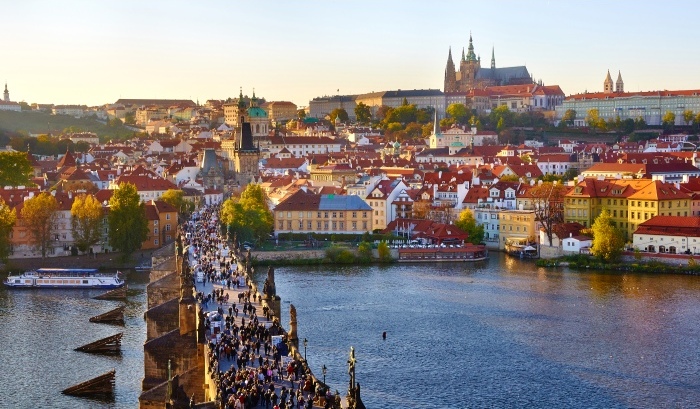
World Senior Team Chess Championship starts in Prague on March 5. The competition is held in two age categories: 65+ with 61 registered teams and 50+ with 57 teams. Last year’s champions in the elder section, the Russian team is the rating favorite with 2452 average. GMs Yuri Balashov and Evgeny Sveshnikov (who just celebrated his 70s anniversary) are the leaders of this squad. Photo: Mark Livshitz The defending champion and the rating favorite (2536) in the 50+ category is bringing to Prague its winning lineup. All the players are 2500+ grandmasters: Alexander Shabalov, Gregory Kaidanov, Larry Christiansen, Joel Benjamin, and Igor Novikov. Photo: https://new.uschess.org The tournament’s list of participants boasts of such legendary names as John Nunn, Ulf Andersson, Anatoly Vaisser, Vlastimil Hort, Alexander Graf, Artur Jussupow, Tamaz Giorgadze, Jonathan Speelman, Zbynek Hracek, and Lubomir Ftacnik to name a few. Although this event does not have a separate women’s section, it traditionally attracts a perceptible number of female players. The 50+ team of Scotland has Ketevan Arakhamia-Grant at its helm; Russia, Mongolia, England, Germany, and the Czech Republic brought teams made up entirely of women. The Russian women’s team put the former world senior champion Galina Strutinskaia on board one. Recently FIDE has made several important steps towards supporting senior chess: starting in 2019, all veteran fees were waived and the championships’ prizes were increased. Official website: http://www.wstcc2020.net/#chess #SeniorChess #ChessForAll #Prague
WGP Lausanne Round 1: A peaceful start
The first round of the Lausanne Grand Prix witnesses six balanced encounters, which all end in a draw. The event is gaining in popularity worldwide. The third leg of the Series is taking place in the Mövenpick Hotel in Ouchy, a beautiful area by the lake in Lausanne. Quite a few spectators gathered at the venue for the start of the first round, but the organizers are particularly enthusiastic about the growing interest which arouses from the online broadcast. Live commentary, interviews with guests and players, everything is made to satisfy the audience online. The games of the inaugural round were mostly tense, even though all of them ended in a draw. World Champion Ju Wenjun played the Berlin Defense against newcomer Zhansaya Abdumalik. In spite of the symmetrical pawn structure which appeared early on, things were anything but clear. The talented Kazakhstani got a slight initiative at the cost of misplacing her rook on the f file. The strategic battle turned around this awkward piece, and it slowly looked as if the Chinese would be able to outplay her young opponent. Yet, Abdumalik sensed the right moment to simplify and offer a draw. Aleksandra Goryachkina, the other proclaimed favorite of the event, played an interesting game with white pieces against her countrywoman Alina Kashlinskaya. She could have secured an edge with 21.Bb5, with the idea to use her passed pawn later on. She simplified instead and had to suffer a little to make a draw. The first ceremonial move in the game Kosteniuk – Dzagnidze was made by Renato Frick, Vice-President and General Secretary of the Liechtenstein Chess Federation. The winner of the second Grand Prix leg in Monaco, Alexandra Kosteniuk, somewhat misplayed the opening. The Russian soon lagged in development, and Nana Dzagnidze might have played in a more forceful way to try and use her initiative. After the exchange of some pieces, the game dried up and both players agreed to a draw on the move 42. The encounter between Harika Dronavalli and Pia Cramling was quite balanced. True to her typical classical style, the Swedish legend got a solid position with the black pieces. The apparent passivity was compensated for by the long-term asset of the two bishops. As both grandmasters played with care, none of them managed to outfox the other and the game ended peacefully. In hindsight, Marie Sebag regretted accepting her opponent´s draw offer. It is true that Antoaneta Stefanova kept some pressure throughout the game, but after simplifications, the French suddenly emerged with a better ending. As usual, the Muzychuk sisters opted not to fight in a classical tournament game and quickly repeated moves after the opening. Results of the first round: Aleksandra Goryachkina (RUS) – Alina Kashlinskaya (RUS) ½-½Alexandra Kosteniuk (RUS) – Nana Dzagnidze (GEO) ½-½Zhansaya Abdumalik (KAZ) – Ju Wenjun (CHN) ½-½Antoaneta Stefanova (BLG) – Marie Sebag (FRA) ½-½Harika Dronavalli (IND) – Pia Cramling (SWE) ½-½Anna Muzychuk (UKR) – Mariya Muzychuk (UKR) ½-½ Program of round 2, 3 March at 3 pm: Alina Kashlinskaya (RUS) – Mariya Muzychuk (UKR)Pia Cramling (SWE) – Anna Muzychuk (UKR)Marie Sebag (FRA) – Harika Dronavalli (IND)Ju Wenjun (CHN) – Antoaneta Stefanova (BLG)Nana Dzagnidze (GEO) – Zhansaya Abdumalik (KAZ)Aleksandra Goryachkina (RUS) – Alexandra Kosteniuk (RUS) All the action can be followed live with commentary by grandmasters Mikhail Gurevich and Keti Tsatsalashvili on the tournament website http://wgp2019.fide.com . Pictures in high resolution are available for the press at our official Flickr account. Text: Yannick Pelletier Photos: David Llada Contact: press@fide.com
Women’s Grand Prix launched in the Olympic Museum in Lausanne
The third leg of the FIDE Women’s Grand Prix 2020 is officially open. The tournament, running until March 14 at the Mövenpick Hotel in Lausanne features the strongest female chess players in the world. The event has been launched on the evening of March 1st on the premises of the prestigious Olympic Museum, on the shore of Geneva Lake. The same venue had already hosted the FIDE Knockout World Championship Final 1998 between Anatoly Karpov and Viswanathan Anand. The opening ceremony was attended by some prestigious guests, such as Lausanne Mayor Grégoire Junod and Andrew Hoffer of the International Olympic Committee. In his speech, FIDE President Arkady Dvorkovich expressed his gratitude to the Olympic Museum and stressed the importance of presenting chess in world-famous places such as this one. Barely a year after settling into Lausanne, the International Chess Federation stages one of its major events in the Olympic Capital. The President of the Swiss Chess Federation Peter Wyss stated that the Women Grand Prix was a worthy addition to the long list of historic chess tournaments held in the country. Lausanne is the third of the four-event Grand Prix Series. The leader of the race, Indian grandmaster Humpy Koneru, has a rest during the Swiss leg. This will certainly allow her nearest pursuers to close in and position themselves advantageously before the final event in Sardinia in May. Two qualifying places for the Candidates Tournament are stake in Women’s Grand Prix. Out of contention for qualification are of course the reigning World Champion Ju Wenjun and her challenger Aleksandra Goryachkina, who appear in Lausanne as the two clear favorites. The first round starts on March 2 at 3 pm at the Mövenpick Hotel. Round 01 pairings: Aleksandra Goryachkina (Rus) – Alina Kashlinskaya (Rus)Alexandra Kosteniuk (Rus) – Nana Dzagnidze (Geo)Zhansaya Abdumalik (Kaz) – Ju Wenjun (Chn)Antoaneta Stefanova (Bul) – Marie Sebag (Fra)Harika Dronavalli (Ind) – Pia Cramling (Swe)Anna Muzychuk (Ukr) – Mariya Muzychuk (Ukr) All the action can be followed live with commentary by grandmasters Mikhail Gurevich and Keti Tsatsalashvili on the tournament website http://wgp2019.fide.com. Pictures in high resolution are available for the press at our official Flickr account. Photo: David Llada Contact:Press officer: Yannick Pelletier+35 2691760922press@fide.com
March rating list: Koneru overtakes Ju Wenjun
Photo: Austin Fuller FIDE March 1 rating listAll Top-100 listsAll rating lists – download February was a quiet month for the top players as most of them are intensively preparing for the upcoming Candidates tournaments in Yekaterinburg. As a result, the top-10 Open remained almost the same. There were some up and down movements in the middle and lower echelons of the top-100 Open though caused by the Gibraltar Masters (the results of this tournament were calculated only in February), Prague International Chess Festival and Aeroflot Open. OPEN TOP-10 1.Magnus Carlsen – 2862 (0)2. Fabiano Caruana – 2842 (0)3. Ding Liren – 2805 (0)4. Alexander Grischuk – 2777 (0)5. Ian Nepomniachtchi – 2774 (0)6. Levon Aronian – 2773 (0)7. Wesley So – 2770 (0)8. Maxime Vachier-Lagrave – 2767 (-3)9. Teimour Radjabov – 2765 (0)10. Shakhriyar Mamedyarov – 2764 (-6) Shakhriyar Mamedyarov lost 6 rating points in Gibraltar and slid down to 10th position. It allowed Maxiam Vachier-Lagrave and Teimour Radjabov to move up one notch. Out of all the Candidates, only Kirill Alekseenko and Wang Hao opted to play in Gibraltar Masters most likely with training purposes. The former picked up four rating points whereas the latter lost the same amount. Biggest gains David Paravyan – 2653 (+24)Andrey Esipenko – 2672 (+18)Pavel Eljanov – 2672 (+16)Jorden Van Foreest – 2678 (+11)Rauf Mamedov – 2654 (+11)Rinat Jumabayev – 2654 (+11)Sam Shankland – 2691 (+8)Karen Grigoryan – 2662 (+8)Vladimir Fedoseev – 2678 (+7)Francisco Vallejo Pons – 2710 (+6)Pentala Harikrishna – 2719 (+6)Ferenc Berkes – 2661 (+6)David Anton Guijarro – 2703 (+6) The winners of Gibraltar Masters David Paravyan and Andrey Esipenko are two biggest stars in this category (within the top-100 Open) gaining 24 and 18 points respectively. After the event in Gibraltar Andrey turned in a decent performance in the Challengers tournament at the Prague International Chess Festival where he tied for the second place. Subsequently, Esipenko moved up in the top-100 Juniors list where he occupies 4th position. Photo: John Saunders Pavel Eljanov picked up 16 points playing for two Israeli teams in the local championship and PRO League and mounted to 67th position in the top-100 Open. Despite a slow start in the Prague Challengers Jorden Van Foreest won the event, accumulated 11 rated points and continues his ascending in the rating list. Photo: Vladimir Jagr Rauf Mamedov and Rinat Jumabaev tied for first place in Aeroflot Open 2020 and synchronously netted 11 rating points each. The winner of the event, 14-year old whizz-kid Aydin Suleymanli is still way beyond the top-100 Open but it’s safe to say that we will see him there in the nearest future. Photo: Eteri Kublashvili Vladimir Fedoseev came by 7 rating points after his good run in Bundesliga, whereas Karen Grigoryan got rewarded with 8 rating points for his victory in the Santiago Masters (Santiago de Campostella, Spain). Sam Shankland and David Anton Guijarro picked up some points in the Prague Masters. Welcome to top-100 It is no coincidence that all our three newcomers did well in the “Biggest gains” category. Rauf Mamedov is no stranger to the top-100, whereas David Paravyan and Rinat Jumabayev are making their debut in this elite club. Photo: John Saunders The Cairns Cup 2020 became the centerpiece in women’s chess February calendar. The event saw another triumph of Humpy Koneru, who won or tied for the first place in three elite tournaments in a row. Consistency at the very high level always pays off – the Indian GM overtook the reigning World Champion Ju Wenjun and now sits on the second position in the top-100 Women rating list. Photo: Austin Fuller This year the Aeroflot Open became a real breeding ground for young players. Indeed, two youngsters really shined at the end of February in Moscow. Aydin Suleymanli not only took the title but also improved his rating by a whopping 38 points. This substantial increase means 31 positions up in the top-100 Juniors. Meanwhile, Bharath Subramaniyam finished one point behind the winner but also netted impressive 35 points.
90th FIDE Congress in Abu Dhabi: Days 2-3, Live updates
Update: February 29, 08:30 GMT Yuri Averbakh, Khalifa Mohammed Al-Hitmi, and Maya Chiburdanidze have been elected FIDE honorary members, as a recognition to their career and their outstanding contributions to chess. Update: February 29, 07:40 GMT Regarding the 2024 Chess Olympiad, the FIDE President reports that Hungary and Argentina/Brazil (jointly) have expressed their interest in hosting this event. They haven’t submitted a bid yet but they sent a delegation to Abu Dhabi to gather information. Update: February 29, 07:15 GMT Day three at the 2020 FIDE Extraordinary General Assembly Agenda and Executive Board Agenda begins with the Report of the FIDE Treasurer and the Financial Statements for 2018. The financial statements for 2019 won’t be available until late March since they have to be first audited by Ernst & Young The FIDE budget for 2020 is available in the following link: https://doc.fide.com/docs/90%20Congress%20Agenda%20and%20Annexes/Annex%203.5.pdf Update: February 28, 17:00 GMT FIDE General Assembly in Abu Dhabi approved the new FIDE Charter by an overwhelming majority. Only two delegates did not support a new legislation. Update: February 28, 09:00 GMT Spain has chosen chess as one of the main themes for its Pavilion at the World Expo 2020. In cooperation with Chess24, they are also organizing a World Online School Chess Tournament for players under 16. FIDE President Arkady Dvorkovich took the chance to meet with the Spanish ambassador in Abu Dhabi, Antonio Alvarez, to express his support to this initiative. Update: February 28, 08:05 GMT The FIDE family keeps growing: today we have confirmed Cayman Islands, Chad, Equatorial Guinea, Grenada, St. Lucia, and St. Kitts and Nevis, new member federations. That brings total membership to 195, making FIDE the 4th largest sports federation by the number of member countries. Update: February 28, 07:25 GMT His Highness, Sheikh Sultan Bin Khalifa Al Nehyan: “It is an honor for me to welcome you all to the 90th FIDE Congress here in Abu Dhabi – my home. UAE and chess share a long association. Chess is a passion shared by all of us, including myself.” FIDE Congress – Live video broadcast
Aydin Suleymanli wins Aeroflot Open 2020
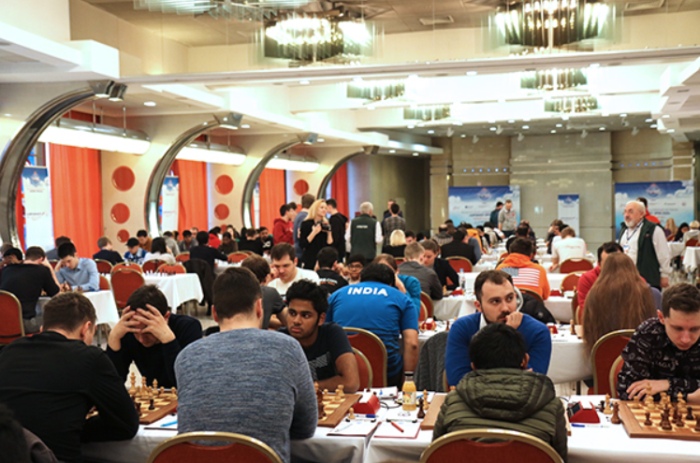
From February 19 until February 27, 2020, Kosmos Hotel in Moscow hosted one of the most prestigious Swiss tournaments in the word Aeroflot Open with the total prize fund of €120,000. The tournament A that brought together 97 players (mostly GMs) saw a sensational triumph of the Juniors U-14 Champion Aydin Suleymanli (Azerbaijan) The young talent who doesn’t have the GM title yet was just 71st rated player in the starting list. Nevertheless, he went through the tournament unbeaten and shared the first place with Rinat Jumabayev (Kazakhstan), Rauf Mamedov (Azerbaijan) and Aravindh Chithambaram (India). Moreover, thanks to better tiebreaks Aydin Suleymanli became the winner of the event. In early rounds, another rising star, 12-year old (!) Bharath Subramaniyam from India started with three victories in four games defeating among others the “second-seeded” Gabriel Sargissian. In Round 5 he clashed with Rauf Mamedov – the more experienced player won confidently and took the lead. Although after the setback the Indian youngster was out of the race for the title, he finished with an excellent score 5.5/9 especially given his age and rating. Suffices it to say that he improved his live-rating by 35 points. With 4.5 points after 5 games, Mamedov turned into a real favorite but by drawing his four last encounters he allowed three pursuers to catch up with him. His 14-year old compatriot was the first – playing in a highly original and entertaining style in the penultimate round, Suleymanli downed a young but already extremely strong Iranian GM Parham Maghsoodloo and reached a 6/8 mark. After the Azerbaijani leaders drew their last round game Aravindh and Jumabayev scored very important victories and joined them at the top of the final standings. The players tied for the first place are ranked in the following order: Suleymanli, Jumabayev, Mamedov, Chithambaram. The key tiebreak indicator, used in Aeroflot Open is the number of games with black. The prize fund is divided according to the Hort system. Thus, Aydin Suleymanli received €13,875 for his first place. Many experts agree that this is one the most unexpected outcome of a Swiss tournament in recent years. The event will be remembered for its tough field and fierce competition throughout. Take as an illustration the performance by the only 2700+ rated player in the tournament Vladislav Artemiev – the rating-favorite did not take part in the battle for the main prizes and finished with a modest 5/9 score. Tigran Harutyunian (Armenia), Nikita Afanasiev (Russia) and Stanislav Bogdanovich (Ukraine) tied for the first place in the tournament B with 7.5/9 each. Erdenepurev Boldoo (Mongolia) and Maksad Sapaev (Uzbekistan) shared the victory in the tournament C. The next day after the completion of Aeroflot Open, a traditional blitz tournament with the prizes, established by the company group Region, was held. The participants of the Swiss tournaments A, B, and C were joined by the Russian chess stars, real blitz-experts Ian Nepomniachtchi, Sergey Karjakin, and Daniil Dubov. As many expected, all three were among the main contenders for the first place. Eventually, it all boiled down to a two-round showdown of Ian Nepomniachtchi and another rising star, 15-year old Nodirbek Abdusattorov (Uzbekistan). In the penultimate round, Nepomniachtich won his key micro-match against Karjakin 1.5:0.5 but Abdusattorov crushed Baadur Jobava 2:0 and caught up with Ian – both had 12.5/16. In the final round, the leaders met over the board and drew both games but their competitors failed to draw up with them. As a result, Ian and Nodirbek had to play a tiebreak which was dominated by Nepomniachtchi – he won both games and took the title. Nodirbek Abdusattorov is second; Baadur Jobava, Vladislav Artemiev, and Adhiban B. tied for third place. Karjakin and Dubov finished in a large group of players just a point behind the winners. Aeroflot Russian Airlines is one of the oldest chess sponsors in the world. FIDE hopes that the cooperation between Aeroflot and the tournament organizers will continue for many years to come helping to discover new chess stars from all around the world. Photo: Eteri Kublashvili