

Candidates in Ethics Commission election

FIDE announces herewith the names and profile details, as well as the curriculum vitae (CV’s), of all candidates in the elections to be held during the General Assembly meeting on Friday, 28 February 2020 to fill the vacancy or vacancies in the FIDE Ethics Commission. The list of candidates can be found here. Please click CV for downloading. Essoh J.M.C. Essis CV (Cote d’Ivoire) Arun Muthusamy CV (England) Ralph Alt CV (Germany) Yoram Sabary CV (Israel) Yumiko Hiebert CV (Japan) Milan Turpanov CV (Kyrgyzstan) Arthur Schuering CV (Netherlands) Casto Abundo CV (Philippines) Jose Claudio Vinas Racionero CV (Spain) Johan Sigeman CV (Sweden) Abby Edah Ndjelle CV (Togo) Khaled Arfa CV (Tunisia) David Hater CV (USA) Yuliya Levitan CV (USA)
FIDE Chess Olympiad 2020, Competition for Disabled: Selected Federations
The first Chess Olympiad 2020, Competition for disabled will take place from July 28 until August 5, 2020, in Khanty Mansiysk, Russia. According to the Regulations, thirty (30) federations are entitled to participate in the FIDE Chess Olympiad 2020, Competition for Disabled. FIDE is happy to announce that the selection based on the rating system is over. The entire process is covered in detail in the Regulations. The host country is entitled to have one team: 1. Russia Europe will be represented by 9 teams: 1. Poland 2. Israel 3. Hungary 4. Croatia 5. Germany 6. Czech Republic 7. Belarus 8. Romania 9. Montenegro Asia will be represented by 7 teams. 1. Kazakhstan 2. India 3. Philippines 4. Iran 5. Bangladesh 6. Uzbekistan 7. Kyrgyzstan America will be represented by 6 teams. 1. Cuba 2. Venezuela 3. Colombia 4. Brazil 5. USA 6. Panama Africa will be represented by 5 teams. 1. Egypt 2. Zambia 3. Uganda 4. Zimbabwe 5. Kenya Two teams will be nominated by the FIDE President.
Rating analytics: True chess grinders of 2019
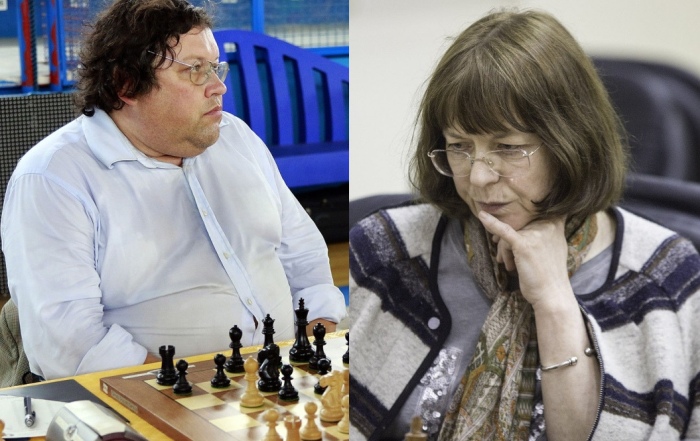
Kaspars Migla is the creator and founder of chessratings.top. In his column, he analyzes monthly FIDE standard rating changes, career-high ratings, rating distribution by country, continent, region, and other rating-related statistics. In this edition, he identifies the most active players of 2019, who can be called true chess grinders. According to data, collected by FIDE and chessratings.top in 2019 for the first time in history the number of classical games surpassed the 3,000,000 barrier (the sum of individual games by all the players). Last year 174,363 players played at least one game, whereas the total number of games reached 3,009,829. In 2018 this number was equal to 2 882 235 games, in 2017 – 2 785 460, in 2016 – 2 629 460. Since any chess game is played by two people we can estimate the total number of games – 1,500,000. It is a very rough estimation because only games played by rated players in classical chess are taken into account. Consequently, on average more than 4,100 games played daily and roughly 170 games every hour. Impressive, isn’t it? And those are only games with classical time control! The portal chessratings.top also identified the most active players. Let’s start with professionals. In 2018 Igor Naumkin (RUS, 2417) and Oleg Korneev (ESP, 2505) shared the top position with 233 games each, but a year later the former became the undisputable #1 with even more impressive figure of 258 games, played in 41 tournaments in 10 different European countries. Two Ukrainian players Vitaly Sivuk (2557) and Vitaliy Bernadskiy (2615) occupy second and third positions with 227 and 223 games respectively. TOP-20 most active GMs Nhat Minh To (2368) the most active IM from Hungary has played at least one game a month for 28 months in a row. As chess life in his home country runs high, Nhat Minh To climbed to the top position barely leaving Hungary. TOP-20 most active IMs In the TOP-20 the most active juniors we see a quite repetitive picture as all the players in the list represent India. Although Spanish players are the most active overall (in all age groups), when it comes to individual statistics their Indian colleagues have the upper hand. The list includes two GMs; overall, the range of ratings and titles is very wide. TOP-20 most active juniors As the table below demonstrates, seniors are very active players. At least for the second time in a row, the most active senior player in the world is Subramanian T.V. from India (born in 1934!). In 2018 he played 246 games, but a year later Subramanian ramped it up to 290. Somewhat sadly, this sheer increase in the number of games did not translate into his rating improvement. In 2007 his rating was 2052 but now dropped to 1167 mark. TOP-20 most active seniours In 2019 Subramanian, T.V. became the absolute leader among active players in all age groups. Back 2018 the #1 in the list was IM Balasubramaniam Ramnathan (IND, 1971), who did not qualify for the top ten after playing “mere” 213 games. Interestingly enough, there are 8 GMs in the top 20 and all of them are from Europe. Maxime Lagarde (FRA, 2659) became the most active member of the top-100 Open after playing 144 games. TOP-20 most active players (all age groups) When analyzing the activity of female chess players with titles of WGM and higher, it is easy to notice that men are roughly twice as active. Anda Safranska (2001) who was born and gained her WGM title in Latvia, but currently represents France, tops our list of the most active female players. One particular player really stands out in this list, namely Pia Cramling (SWE, 2470) holding the second position. The experienced Swede from Women’s top-100 plays a lot but manages to maintain a high rating. Back in 2018, the first position belonged to WGM Bhakti Kulkarni (IND) with 173 games played. Last year she was not as active though, sitting over the board only 117 times. TOP-20 most active female players (WGM, IM, and GM) Three things strike immediately when we run through in the list of all active female players: domination of Indian players, no GM in the top echelon, and players’ age. Take a look at CM Wiktoria Smietanska (POL, 1661), for example. Last year she played 168 games, although she was not even 10 years old. Indeed, a road to the top is never easy – one should not only work hard on his or her game but also play a lot. TOP-20 all active women Looking at the geographic distribution, we see no surprises. The most active players live in Asia (mostly India) followed by Europe, America, and Africa. Africa has great growth potential – its TOP-20 players are rated nearly twice as low as their colleagues from Asia and Europe. TOP-20 most active players from Asia TOP-20 most active players from Europe TOP-20 most active players from America TOP-20 most active players from Africa
90th FIDE Congress in Abu Dhabi: Day 1
Update: February 28, 08:05 GMT The FIDE family keeps growing: today we have confirmed Cayman Islands, Chad, Equatorial Guinea, Grenada, St. Lucia, and St. Kitts and Nevis, a new member federations. That brings total membership to 195, making FIDE the 4th largest sports federation by number of member countries. Update: February 28, 07: 25 GMT His Highness, Sheikh Sultan Bin Khalifa Al Nehyan: “It is an honor for me to welcome you all to the 90th FIDE Congress here in Abu Dhabi – my home. UAE and chess share a long association. Chess is a passion shared by all of us, including myself.” https://t.co/paqcMPTGBu?amp=1 Update: February 27, 12:05 GMT The Planning and Development Commission (https://pdc.fide.com) organized a federation management workshop. Marco Verdoia, who recently joined FIDE’s marketing department, gave a brief speech in which he highlighted the importance of brand-building. The workshop also included some guidelines for how to pitch potential partners with an event sponsorship proposal. Update: February 27, 11:05 GMT The Presidential Board meeting started at 15:00 local time (GMT+4). Update: February 27, 10:45 GMT FIDE’s Executive Director Victor Bologan presented to the attendants the “Chess-ID” project, aimed at uniting all chess players, officials and other stakeholders involved in chess activities around the world, under one/unique FIDE umbrella. This project is FIDE’s response to a serious issue: the lack of big data and global figures. The chess community needs to tackle this problem in order to access new sources of funding. Update: February 27, 10:20 GMT The President of the International Chess Federation Arkady Dvorkovich addressed the attendees of the 2020 FIDE Extraordinary General Assembly. He thanked the Federations for their work, highlighting that FIDE is about to reach the 200-member federations milestone. Update: February 27, 09:30 GMT The 2020 FIDE Extraordinary General Assembly and Executive Board kicks off Abu Dhabi with the Final Report from the Planning and Development Commission, led by Sonja Johnson. 77 Federations have already benefited from this funding program, totaling $ 1,1 million. February 27, 09:05 GMT The 90th FIDE Congress has just started in Abu Dhabi with the participation of 195 delegates from 195 countries, organized by the Asian Chess Federation.
90th FIDE Congress: Final list of those entitled to vote in Ethics Commission Elections
FIDE publishes the final list of those entitled to vote in ETHICS COMMISSION Elections. FINAL LIST OF THOSE ENTITLED TO VOTE IN ETHICS COMMISSION ELECTIONS (pdf)
Introducing Candidates: Anish Giri
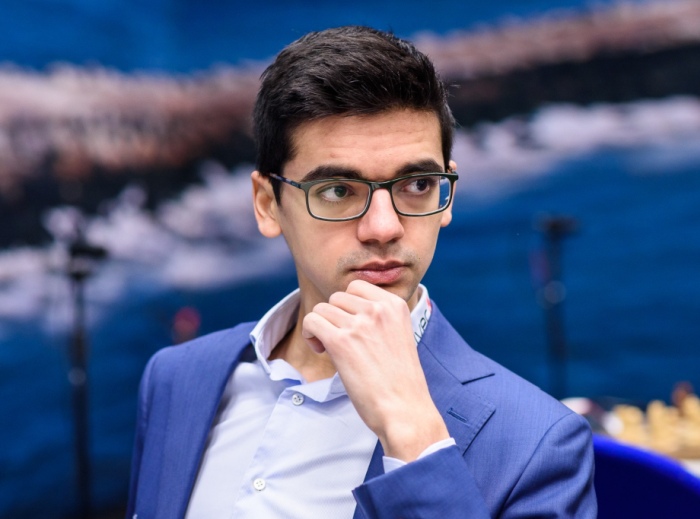
(Photo: Alina l’Ami) Anish Giri (Netherlands)Born July 28, 1994Rating 2763Qualified for the second Candidates Tournament in his career as the player with the highest rating over 12 rating periods Anish Kumar Giri was born in Saint Petersburg to a Russian mother, Olga, and a father of Nepalese descent, Sanjay. The chess career of little Anish started in the local Children’s and Youth Sports School #2 (DYUSH-2) where he was trained by Assia Kovaleva and Andrei Praslov. Although he didn’t win many titles in children’s tournaments, his rating rose fast, bespeaking the great potential of the young player. In 2002, when Anish was still a kid, his family made a radical change and moved to Japan. Just six years later, they picked up again, this time to the Netherlands. Here, in the country of tulips and windmills, his chess career really took off – at the age of 14 years and 7 months, Giri became the youngest grandmaster at that time. In 2009, he won the Dutch Championship and a year later got a unique experience as a member of Vishy Anand’s team during the World Championship match. Shortly afterward, with the help of his coach Vladimir Chuchelov, Anish embarked on his own quest for the chess crown. His ascent to the chess elite started in 2010. Within one year he improved his rating by 100 points and came very close to the 2700 mark. At his debut appearance in Tata Steel 2011, Anish knocked out the leader of the rating-list, Magnus Carlsen, in just 22 moves with Black and proved that he can measure swords with the best of the best. In 2012, Giri won the Reggio Emila tournament; in 2014 he tied for second in Tata Steel. By the end of the year, he broke into the top-10 and has been maintaining his elite status ever since. Probably his most notable tournament result came in Tata Steel, 2018, in which he shared first place with Carlsen but lost to the World Champion on the tiebreak. Giri’s solid, ‘bullet-proof’ positional style (his 14 draws in 14 games in the 2016 Candidates Tournament became proverbial) makes him an invaluable team player. Indeed, throughout his career, Anish has played for numerous teams and has won the Euro Team twice with SOCAR and Siberia. Anish is fluent in Russian, Dutch, and English and can speak Japanese and Nepali. He enjoys a great deal of support from his wife, WGM Sopiko Guramishvili. Giri made his Candidates debut in Moscow, 2016, for which he qualified as the player with the highest rating over 12 rating periods. The Dutch GM scored 50% by drawing all his games. Now, four years later, Anish has a second chance, once again having punched his ticket to the prestigious event thanks to high rating. Giri – Bartel (EU-Cup 2013, Rhodes) 19. Bxf7!! Ne5 (19… Kxf7 20. Ng5+ Kf8 21. Qe6 +-) 20. Rxe5! Bxe5 21. Bb3 Re8 (21… Bxa1 22. Qc5+! Ke8 23. Qxc6+ Ke7 24. Qb7+! Nd7 25. Qe4+ Kd6 26. Bf4+ Kc5 27. Qd5+ and it’s mate in four) 22. Be3 b4 23. Bf4 1-0
Zhansaya Abdumalik will replace Zhao Xue at WGP in Lausanne
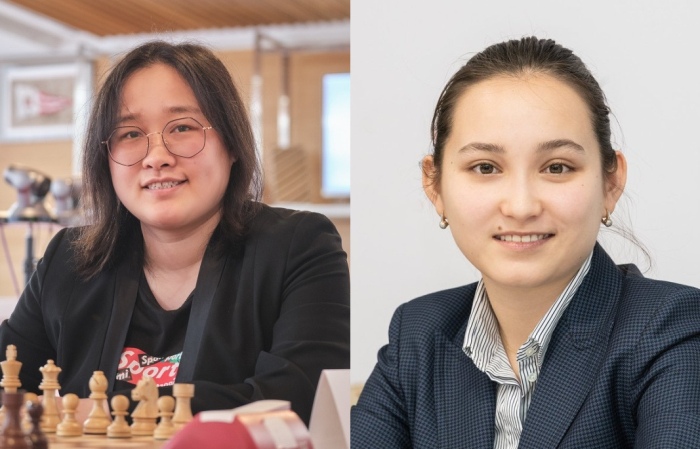
Due to the recent developments in the coronavirus crisis and the increasing travel restrictions affecting Chinese citizens, Zhao Xue won’t be able to play in the Women’s Grand Prix tournament in Lausanne. Zhao Xue, 8th seed in the tournament with a 2486 rating, will be replaced by another Asian representative: the Kazakhstani Zhansaya Abdumalik (2471). A former prodigy, Zhao dominated her generation: she won the Gold medal in the girls’ U12 World Championship in 1997, the Girls’ U14 World Championship, and then she went on to win the World Junior Girls Championship in Goa 2002, surpassing the local star, Humpy Koneru. She was the 24th Chinese person to achieve the GM title, in 2008. We are very sorry that a player of this caliber will be forced to miss this tournament due to such unfortunate circumstances. We believe Zhansaya is a worthy replacement, and we are hopeful that we will be able to have Zhao Xue playing in one of our top events very soon. The travel restrictions won’t affect the World Champion Ju Wenjun, who left China several weeks ago, before the crisis worsened.
Medical Security Policy and Protocol for the 90th FIDE Congress
FIDE continues to closely monitor the corona virus disease (COVID-19) outbreak which was first reported in Hubei, China on 31st December, 2019. As of 20th February, 2020, there have been 75 748 confirmed cases globally with 2129 deaths. Outside China, 1073 cases have been reported by 26 countries with only 8 deaths. The epicenter of the outbreak remains the Hubei province, China with a relatively lower but increasing transmission risk elsewhere around the world. In view of the danger posed by the COVID-19 virus epidemic, FIDE, through its Medical Commission, has developed a medical security policy and protocol which is aimed at minimizing chances of transmission of the COVID-19 virus at the upcoming 90th FIDE Congress and General Extraordinary Assembly in Abu Dhabi from 26th February to 1st of March, 2020. The protocol was reviewed and approved by the FIDE Management Board. This protocol shall be shared with all congress attendees as well as with all FIDE affiliated national federations and the congress hosts (UAE). The protocol shall also be published on the FIDE e-magazine. The following measures shall be put in place at the 90th FIDE congress, to prevent the possible spread of the COVID-19 virus and protect the participants against infection: 1. There shall be screening stations for all congress attendees, manned by nurses.• At these stations, attendees shall be screened for symptoms of Covid-19 disease, including having a body temperature check as well as a recent travel history to determine the risk of Covid-19 infection (attendees are therefore advised to carry their passports at all times) 2. Bottles of alcohol-based hand sanitizer shall be distributed to all congress attendees.• Attendees are encouraged to use these hand sanitizers frequently to clean their hands in order to reduce the chances of infection with the COVID-19 virus. 3. N95 masks shall be distributed to all conference attendees. All the participants are requested to bring their own masks since they are out of stock in UAE.• Conference attendees who are coughing or sneezing are especially encouraged to use these masks to avoid possible spread of the COVID-19 virus. • It should be noted that masks are effective only when used in combination with frequent hand-cleaning with alcohol-based hand rub or soap and water.• If you wear a mask, then you must know how to use it and dispose of it properly.• Before putting on a mask, clean hands with alcohol-based hand rub or soap and water.• Cover mouth and nose with mask and make sure there are no gaps between your face and the mask.• Avoid touching the mask while using it; if you do, clean your hands with alcohol-based hand rub or soap and water.• To remove the mask: remove it from behind (do not touch the front of the mask). 4. The congress meeting rooms shall have a proper and well-functioning ventilation and air circulation with fresh air intake.• This measure will ensure that the air in the meeting rooms is fresh and that the meeting rooms have rapidly circulating air at all times to minimize the risk of transmission of COVID-19 virus. 5. Meeting rooms shall not be overcrowded and there shall be sufficient physical separation between people.• This shall minimize the chances of possible transmission of COVID-19 virus between meeting attendees. 6. During coffee breaks and communal meals, special measures will be put in place to minimize overcrowding and to avoid too much close personal contact between attendees.• This shall also minimize the likelihood of the spread of the COVID-19 virus. In addition to the above measures, congress attendees are encouraged to practice the following personal protection behaviors in order to protect themselves and others from infection with the coronavirus (COVID-19) HOW TO PROTECT YOURSELF AGAINST CORONAVIRUS (COVID-19) 1. Wash your hands frequentlyWash your hands frequently with soap and water or use an alcohol-based hand rub if your hands are not visibly dirty.Why? Washing your hands with soap and water or using alcohol-based hand rub eliminates the virus if it is on your hands. 2. Practice respiratory hygieneWhen coughing and sneezing, cover mouth and nose with flexed elbow or tissue – discard tissue immediately into a closed bin and clean your hands with alcohol-based hand rub or soap and water.Why? Covering your mouth and nose when coughing and sneezing prevent the spread of germs and viruses. If you sneeze or cough into your hands, you may contaminate objects or people that you touch. 3. Maintain social distancingMaintain at least 1 meter (3 feet) distance between yourself and other people, particularly those who are coughing, sneezing and have a fever.Why? When someone who is infected with a respiratory disease, like 2019-nCoV, coughs or sneezes they project small droplets containing the virus. If you are too close, you can breathe in the virus. 4. Avoid handshakes, hugs, kisses on the cheek and other close personal contacts with fellow conference attendees and other persons presentWhy? COVID-19 is spread via coming into contact with infected droplets and the above actions can expose you to infection with COVID-19 if your close contact is infected. 5. Avoid touching eyes, nose and mouthWhy? Hands touch many surfaces that can be contaminated with the virus. If you touch your eyes, nose or mouth with your contaminated hands, you can transfer the virus from the surface to yourself. 6. If you have fever, cough and difficulty breathing, seek medical care earlyTell your health care provider if you have traveled in an area in China where 2019-nCoV has been reported, or if you have been in close contact with someone who has traveled from China and has respiratory symptoms.Why? Whenever you have fever, cough, and difficulty breathing it’s important to seek medical attention promptly as this may be due to a respiratory infection or other serious condition. Respiratory symptoms with fever can have a range of causes, and depending on your personal travel history and circumstances, 2019-nCoV could be one of them.
The Olympic Capital welcomes FIDE Women’s Grand Prix
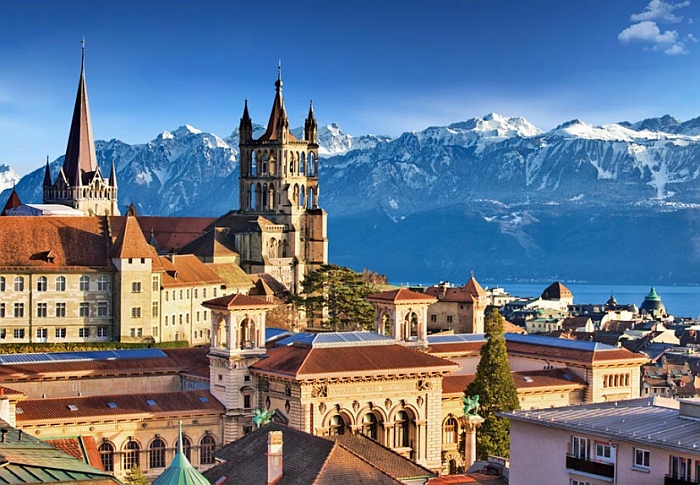
The third leg of the Women’s Grand Prix starts on March 1 in Lausanne. This tournament ranks as one of the most prestigious chess events ever held in the Olympic Capital, alongside the final match of the FIDE KO World Championship between Anatoly Karpov and Viswanathan Anand at the start of 1998, and the Young Masters Tournaments held between 1999 and 2006. Barely a year after moving its headquarters back to Lausanne, FIDE is staging a major event in this beautiful city on the shores of the Geneva Lake. The third and penultimate leg of the Women’s Grand Prix 2019-20 could already prove decisive in the fight for one of the two qualifying spots for the Candidates Tournament. Since each of the sixteen WGP players participate in three of the four tournaments, Lausanne is the last stop for some leading names on the leaderboard. To add some spice in the race, Humpy Koneru, dominator of the Grand Prix so far, does not take part in the third leg. Thus, all eyes will be turned on Ju Wenjun and Aleksandra Goryachkina, who will meet again two months after their fascinating match for the World Championship title. It should be noted, however, that both are pre-qualified for the next stage of the cycle and therefore out of contention for the two qualifying spots. Photo: David Llada For Alexandra Kosteniuk, winner of the Monaco Grand Prix in December, there is a lot at stake. Having scored poorly in the first event, she is doomed to perform well in her last tournament if she intends to qualify. Kosteniuk will certainly be supported in her effort by the home crowd, as she is half-Swiss and regularly plays in the national league. Photo: Karol Bartnik Harika Dronavalli has to consider Lausanne as a sort of match point. Anything but the victory would leave the Indian with barely any chance to qualify. As she recently noted in an interview, she often performs well in top tournaments but has never won any. Will she make it happen on this crucial occasion? Photo: Karol Bartnik Pia Cramling also takes part in her third and last Grand Prix, but her chances to qualify for the Candidates Tournament are close to zero. Nevertheless, it is always a pleasure to watch such a champion over the board. One should not forget that the living legend was the number one in the world when most of her opponents were even born! Photo: David Llada The Muzychuk sisters are potential winners in any tournament. In view of their average performances in their first GP appearance in Monaco, the pressure on their shoulders certainly grows. The former World Champion Mariya is the third seed in Switzerland, just ahead of Anna. All remaining participants will also take part in both final Grand Prix legs and therefore have theoretical chances to make it to the top two if showing great results. With the former World Champion Antoaneta Stefanova and talents such as Nana Dzagnidze, Marie Sebag, Alina Kashlinskaya and Zhansaya Abdumalik, everything is possible. Photo: David Llada Lausanne does not just stage this top event during those two weeks, as some side activities are on the program as well. Local organizers join forces with FIDE to hold two rapid events on a weekend. The “1st FIDE rapid open of the Olympic Capital” takes place on Saturday, March 7, while a rapid tournament for girls under 18 years old is scheduled for March 8. Both events are held in the FIDE premises at the “Maison du Sport International”. Technical details: Venue: Hôtel Mövenpick, Avenue de Rhodanie 4, 1007 Lausanne. Official website: https://wgp2019.fide.com GP Lausanne Chief Arbiter’s Information (pdf) Schedule: 1 March, 17h: Opening ceremony at the Olympic Museum2 March, 15h: Start of the 1st round3 to 7 March, 15h: Rounds 2 to 68 March: Rest day9 to 12 March, 15h: Rounds 7 to 1013 March, 11.30 h: 11st and last round; 18h Closing ceremony 14 March: departure Full pairings and regulations Side events: Saturday 7 March, 10-18 h: “1er Open FIDE d’échecs rapides de la capitale olympique” at the “Maison du Sport International”; adress: 54 Avenue de Rhodanie, 1007 Lausanne.Sunday 8 March, 10-16h: Rapid chess tournament for girls (under 18 y.o.) at the “Maison du Sport International”; adress: 54 Avenue de Rhodanie, 1007 Lausanne. Participants: Ju Wenjun, China, 29 years old, (2583) Aleksandra Goryachkina, Russia, 21 years old, (2579) Mariya Muzychuk, Ukraine, 27 years old, (2552) Anna Muzychuk, Ukraine, 30 years old, (2539) Harika Dronavalli, India, 29 years old, (2518) Nana Dzagnidze, Georgia, 33 years old, (2515) Alexandra Kosteniuk, Russia, 36 years old, (2504) Alina Kashlinskaya, Russia, 26 years old, (2484) Zhansaya Abdumalik, Kazakhstan, 20 years old, (2471) (she replaced Zhao Xue) Pia Cramling, Sweden, 56 years old, (2470) Antoaneta Stefanova, Bulgaria, 41 years old, (2469) Marie Sebag, France, 34 years old, (2443) Grand Prix standings after 2 tournaments: 1. Humpy Koneru, India (293 points; 2 events) 2. Aleksandra Goryachkina, Russia (253 points; 2 events) 3. Kateryna Lagno, Russia (180 points; 2 events) 4. Alexandra Kosteniuk, Russia (178 points; 2 events) 5-6. Ju Wenjun, China (120 points; 1 event) 5-6. Harika Dronavalli, India (120 points; 2 events) 7. Elisabeth Paehtz, Germany(95 points; 2 events) 8. Valentina Gunina, Russia (85 points; 2 events) 9. Anna Muzychuk, Ukraine (80 points; 1 event) 10. Pia Cramling, Sweden (70 points; 2 events) 11. Mariya Muzychuk, Ukraine (60 points; 1 event) 12. Alina Kashlinskaya, Russia (45 points; 1 event) 13-14. Nana Dzagnidze, Georgia (35 points; 1 event) 13-14. Zhao Xue, China (35 points; 1 event) 15-16. Antoaneta Stefanova, Bulgaria (25 points; 1 event) 15-16. Marie Sebag, France (25 points; 1 event) Contact: The press officer of the event is Yannick Pelletier. +352691760922 pelletieryannick@gmail.com
Prague Chess Festival: Firouzja overtakes Vidit in a dramatic finale

The final round of the Prague International Chess Festival turned into a real thriller. With the games Duda vs. Vidit and Shankland vs. Vitiugov finishing with the decisive results, and Firouzja surviving against Anton, there was a 5-way tie for the 1st place. Despite losing to Duda, the tournament leader Vidit Gijrathi had the best tie-break and he was to play against Alireza Firouzja. The Indian lost the play-off with 2-0, which harldly come as a surprise since it was already very difficult to play after losing two final games. What could have been one of the best performances of his life, in the end, turned out to be a horror ending for Vidit, who could not keep up with the pressure. After starting with 5 draws, Jorden Van Foreest (Netherlands) scored 3.5 out of the last four rounds and became the clear winner of the Challengers tournament. In the final round, he defeated Hannes Stefansson and with 6.5 points won the event, and more importantly, qualified for the next edition of PICF Masters tournament. There was a tie for the second place between Nijat Abasov and Andrey Esipenko. Thanks to the tie-break, the top seed from Azerbaijan finished second and the 17-year-old Russia came third. This year besides the regular prizes, the organizers of the Prague ChessFestival included one special trophy. The Vugar Gashimov Prize for Fair Play was awarded in person by the brother of late Azerbaijani Grandmaster, Mr. Sarkan Gashimov. The prize in the Challengers went to Mateusz Bartel, while in Masters section the winner was Grandmaster David Navara. A local hero Vaclav Finek triumphed in the Futures tournament, the newest addition to the Prague Chess Festival. He defeated Roy Vagman from Israel, while the tournament leader, Ediz Gurel from Turkey lost to Mongolian Chinguun. They both ties for the 1st place with 6 points, but Finek had better tie-breaks. The third place went to another Czech player Jachym Nemec with 5 points. Text: Official site Official site: https://praguechessfestival.com/ Photo: Petr Vrabec and Vladimir Jagr Final standings Masters *Tiebreak Vidt Santosh Gujrathi – Alireza Firouza: 0-2 Final standings Challengers Final standings Futures