

Full WGP Monaco Pairings

Women’s FIDE Grand Prix Series Monaco pairings are published. The tournament will take place in Monaco 2-15 of December. FULL PAIRINGS: Round 1 on 2019/12/03 at 15:00 GM Harika Dronavalli (2518) – GM Dzagnidze Nana (2502) IM Paehtz Elisabeth (2484) – GM Zhao Xue (2485) GM Cramling Pia (2443) – GM Kosteniuk Alexandra (2483) GM Goryachkina Aleksandra (2575) – GM Lagno Kateryna (2549) GM Gunina Valentina (2509) – GM Koneru Humpy (2577) GM Muzychuk Mariya (2552) – GM Muzychuk Anna (2543) Round 2 on 2019/12/04 at 15:00 GM Dzagnidze Nana (2502) – GM Muzychuk Anna (2543)GM Koneru Humpy (2577) – GM Muzychuk Mariya (2552)GM Lagno Kateryna (2549) – GM Gunina Valentina (2509)GM Kosteniuk Alexandra (2483) – GM Goryachkina Aleksandra (2575)GM Zhao Xue (2485) – GM Cramling Pia (2443)GM Harika Dronavalli (2518) – IM Paehtz Elisabeth (2484) Round 3 on 2019/12/05 at 15:00 IM Paehtz Elisabeth (2484) – GM Dzagnidze Nana (2502)GM Cramling Pia (2443) – GM Harika Dronavalli (2518)GM Goryachkina Aleksandra (2575) – GM Zhao Xue (2485)GM Gunina Valentina (2509) – GM Kosteniuk Alexandra (2483)GM Muzychuk Mariya (2552) – GM Lagno Kateryna (2549)GM Muzychuk Anna (2543) – GM Koneru Humpy (2577) Round 4 on 2019/12/06 at 15:00 GM Dzagnidze Nana (2502) – GM Koneru Humpy (2577)GM Lagno Kateryna (2549) – GM Muzychuk Anna (2543) GM Kosteniuk Alexandra (2483) – GM Muzychuk Mariya (2552)GM Zhao Xue (2485) – GM Gunina Valentina (2509) GM Harika Dronavalli (2518) – GM Goryachkina Aleksandra (2575)IM Paehtz Elisabeth (2484) – GM Cramling Pia (2443) Round 5 on 2019/12/07 at 15:00 GM Cramling Pia (2443) – GM Dzagnidze Nana (2502) GM Goryachkina Aleksandra (2575) – IM Paehtz Elisabeth (2484) GM Gunina Valentina (2509) – GM Harika Dronavalli (2518) GM Muzychuk Mariya (2552) – GM Zhao Xue (2485) GM Muzychuk Anna (2543) – GM Kosteniuk Alexandra (2483) GM Koneru Humpy (2577) – GM Lagno Kateryna (2549) Round 6 on 2019/12/08 at 15:00 GM Dzagnidze Nana (2502) – GM Lagno Kateryna (2549)GM Kosteniuk Alexandra (2483) – GM Koneru Humpy (2577)GM Zhao Xue (2485) – GM Muzychuk Anna (2543)GM Harika Dronavalli (2518) – GM Muzychuk Mariya (2552)IM Paehtz Elisabeth (2484) – GM Gunina Valentina (2509)GM Cramling Pia (2443) – GM Goryachkina Aleksandra (2575) Round 7 on 2019/12/10 at 15:00 GM Goryachkina Aleksandra (2575) – GM Dzagnidze Nana (2502) GM Gunina Valentina (2509) – GM Cramling Pia (2443)GM Muzychuk Mariya (2552) – IM Paehtz Elisabeth (2484) GM Muzychuk Anna (2543) – GM Harika Dronavalli (2518) GM Koneru Humpy (2577) – GM Zhao Xue (2485)GM Lagno Kateryna (2549) – GM Kosteniuk Alexandra (2483) Round 8 on 2019/12/11 at 15:00 GM Dzagnidze Nana (2502) – GM Kosteniuk Alexandra (2483) GM Zhao Xue (2485) – GM Lagno Kateryna (2549)GM Harika Dronavalli (2518) – GM Koneru Humpy (2577)IM Paehtz Elisabeth (2484) – GM Muzychuk Anna (2543)GM Cramling Pia (2443) – GM Muzychuk Mariya (2552)GM Goryachkina Aleksandra (2575) – GM Gunina Valentina (2509) Round 9 on 2019/12/12 at 15:00 GM Gunina Valentina (2509) – GM Dzagnidze Nana (2502)GM Muzychuk Mariya (2552) – GM Goryachkina Aleksandra (2575)GM Muzychuk Anna (2543) – GM Cramling Pia (2443)GM Koneru Humpy (2577) – IM Paehtz Elisabeth (2484)GM Lagno Kateryna (2549) – GM Harika Dronavalli (2518)GM Kosteniuk Alexandra (2483) – GM Zhao Xue (2485) Round 10 on 2019/12/13 at 15:00 GM Dzagnidze Nana (2502) – GM Zhao Xue (2485)GM Harika Dronavalli (2518) – GM Kosteniuk Alexandra (2483)IM Paehtz Elisabeth (2484) – GM Lagno Kateryna (2549)GM Cramling Pia (2443) – GM Koneru Humpy (2577)GM Goryachkina Aleksandra (2575) – GM Muzychuk Anna (2543)GM Gunina Valentina (2509) – GM Muzychuk Mariya (2552) Round 11 on 2019/12/14 at 11:00 GM Muzychuk Mariya (2552) – GM Dzagnidze Nana (2502)GM Muzychuk Anna (2543) – GM Gunina Valentina (2509)GM Koneru Humpy (2577) – GM Goryachkina Aleksandra (2575)GM Lagno Kateryna (2549) – GM Cramling Pia (2443)GM Kosteniuk Alexandra (2483) – IM Paehtz Elisabeth (2484)GM Zhao Xue (2485) – GM Harika Dronavalli (2518)
World Youth U-16 Chess Olympiad started in Çorum, Turkey
An ancient Turkish city Çorum is hosting 2019 FIDE World Youth U-16 Chess Olympiad from October 20 to November 6. Forty eight teams from all around the world will play 9 rounds (Swiss system) with the time control 90 min for the whole game with a 30-sec increment from the first move. Each squad consists of five players, including one girl. November 2 is scheduled as a free day. The event is held in the playing hall of the five-star Anitta hotel, which offers accommodation to all participants. Azerbaijan tops the list of rating favorites, followed by Russia and Ukraine. Top-5 rated teams: 1. AZERBAIJAN (2412)2. RUSSIA (2408)3. UKRAINE (2394)4. TURKEY (2386)5. GREECE (2370)
Euro Team Championship reaches midpoint
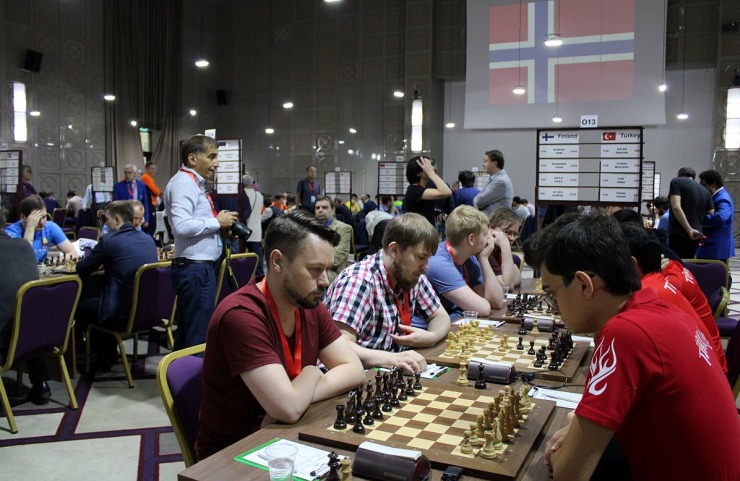
The European Team Championship in Batumi crossed a half-way mark. With four more rounds to go the participants are enjoying the day off. Although many teams did not manage to bring their best players, there are nine GMs with a rating over 2700 in the Open section, with Anish Giri (Netherlands), Shakhriyar Memedyarov (Azerbaijan) and Levon Aronian (Armenia) at the top of the list. Despite the absence of its leaders, the Russian team in which the star of Grand Swiss Kirill Alekseenko took over Vladislav Artemiev at the very last moment entered the competition as the rating-favorite. Since four team members arrived in Batumi right from the Isle of Man, a slow start – a draw 2:2 with Denmark (Matlakov and Alekseenko suffered defeats) hardly came as a surprise. However, after a hiccup in the first round, the Russian squad picked up momentum and won the next four matches, including a key clash with Armenia without losing a single game. Dmitry Andreikin is giving an excellent performance (4 out of 5); Daniil Dubov is making up for his poor result in Grand Swiss (3.5 out of 4 on the fourth board); Nikita Vitiugov is demonstrating very solid chess (3 out of 4). After 5 rounds Russia is tied for the first place with Ukraine with its unchallenged leader Vassily Ivanchuk at the helm. Ivanchuk won in the first two rounds and then drew his games with Mamedyarov, Aronian, and Adams. Thanks to his efforts and a very strong performance by Yuriy Kuzubov (who had nearly beaten Magnus Carlsen on the Isle of Man) Ukraine conceded just one matchpoint. The key match of the entire tournament is coming on Wednesday – Russia, and Ukraine will face each other. Germany and the tournament sensation – the Slovenian team with Jure Borisek shining on the second board – are sharing the third position. Anish Giri found himself in the spotlight – the Dutch GM has enough rating points to qualify for the Candidates tournament, but can’t afford to lose many. Thanks to his brilliant victories in the second and third rounds Anish has preserved his rating, unlike one of his potential competitors Shakhriyar Mamedyarov, who has not scored a single victory yet and is 5 points down in the live-rating. On the other hand, the GM from Azerbaijan has a chance to secure the slot in the Candidates Tournament through the Grand Prix Series. Before the start of the women’s tournament, there were no doubts about the favorites: Russia and Georgia enlisted their best. The leaders faced off as early as in the fourth round – Valentina Gunina beat Meri Arabidze and supplied a winning point to the Russian team (all other games were drawn). Russia won all five matches and has two matchpoints lead over its competitors. Georgia, Azerbaijan, and Serbia scored four victories in five matches. The Serbian team caused surprise by taking down a traditionally strong Ukrainian squad, which is third in the rating list despite the absence of the Muzychuk sisters. In the sixth round, Azerbaijan will try to stop Russia, whereas the team Georgia is taking on the Serbian squad. In conjunction with the European Team Championship, the Annual European Chess Union General Assembly took place on October 26, with 40 European Federations participating. The key items on the agenda were the innovative ECU projects developing in 2019, updating the tournament regulations, standardization of the European Championships conditions and the venues of 2021 official events. The tournament will resume on Wednesday, October 30 Official site
Wesley So wins Fischer Random Championship
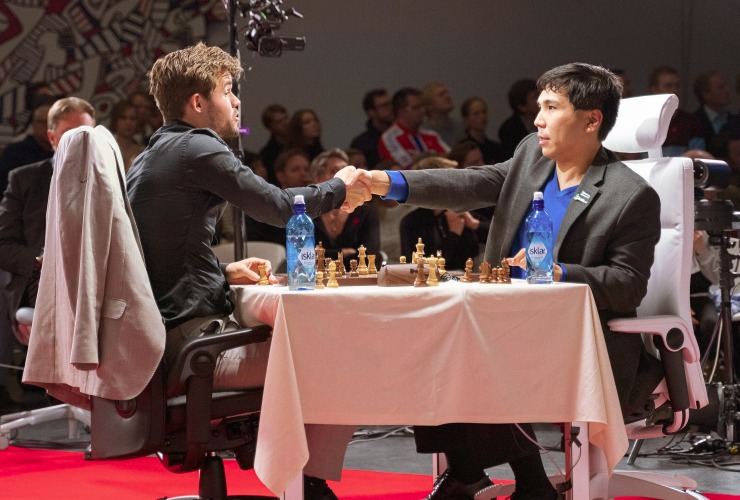
UPDATE Final Wesley So – Magnus Carlsen: 13½ – 2½ After a hard-fought draw in the first slow rapid game with black, the American GM scored three victories in a row and created an almost insurmountable lead. On the final day, Wesley drew the first fast rapid game, won the second one and became Fischer Random World Champion. Match for third place Ian Nepomniachtchi – Fabiano Caruana: 12½ – 5½ After the opponents traded blows on the first day, Nepomniachtchi prevailed the third game and made a draw in the fourth encounter. On the final day, Ian kept pushing – he scored two victories in three games and secured the third place. The first official FIDE World Fischer Random Chess Championship is in the final stretch. The event, officialized by FIDE for the first time in history, is a joint effort of Dund (the organizer of the unofficial Fischer Random match between Classical chess champion Magnus Carlsen and Hikaru Nakamura in 2009) and Chess.com. The semifinals and the finals of the event are held from October 27 till November 2 in Norway, at the Henie Onstad Art Center located just outside Oslo. After the massive qualifying open tournaments that run from April to August, the Championship reached the elimination phase during which 84 qualifiers + 12 invited players squared off in six knockout brackets (16 players each), in 2 games mini-matches with a time control of 15+2. Six winners of those brackets, namely Ian Nepomniachtchi, Alireza Firouzja, Vidit Gijrathi, Peter Svidler, Vladimir Fedoseev and Wesley So joined Hikaru Nakamura and Fabiano Caruana in the 3-day quarterfinal stage with a guaranteed prize fund of $10,000. The draw produced the following quarterfinal pairs: Hikaru Nakamura – Wesley So Ian Nepomniachtchi – Alireza Firouzja Vidit Gujrathi – Vladimir Fedoseev Fabiano Caruana – Peter Svidler On October 4 four quarterfinal matches were played, with the winners going directly into Day 3. Each duel consisted of two “slow rapid” games (45 min for first 40 moves, 15 min for the rest of the game) with victories worth 3 points, two “fast rapid” encounters (15+2 time control) with wins equal to 2 points, and a couple of blitz games (just one point for a victory). Gujrathi and Fedoseev exchanged blows in slow rapid, but in the rapid games the Russian’s high-voltage, very entertaining style earned him two victories and an early qualifying for Day 3. Hikaru Nakamura and Wesley So also did not need all six games to determine the winner. After Hikaru’s winning a slightly better endgame with the opposite-colored bishops and rooks in the first encounter, Wesley blundered the rook in the second one, making his task virtually impossible to accomplish. Peter Svidler took a slow start in his match with Fabio Caruana, but after winning the second rapid game he came very close to forcing armageddon. The Russian GM obtained a very promising position with black in the second blitz game but terrible blunder derailed his comeback. The match Nepomniachtchi – Firouzja was the only one that day that saw armageddon. Interestingly enough, the rating favorite Yan Nepomniachtichi was on the verge of elimination in blitz games, but after losing the first encounter he convincingly leveled the score in the second one. The Iranian prodigy won the coinflip and chose white in armageddon. In the middlegame, Ian forced Alireza to sacrifice a pawn to avoid repetition and converted extra material in the ensuing sharp skirmish. The next day those who had suffered defeats were given a second and the last chance to continue their quest for the final stage in Norway. Wesley So and Alireza Firouzja grabbed this opportunity and after defeating Peter Svidler and Vidit Gujrathi respectively, made it to Day 3. Finally, on October 6, six players competed for three slots in the semifinals: Hikaru Nakamura – Fabiano Caruana Wesley So – Vladimir Fedoseev Ian Nepomniachtchi – Alireza Firouzja Surprisingly, all three matches were one-sided and did not require blitz games to determine the winners. In the American derby Nakamura – Caruana the native of Italy dominated both slow and fast rapid games skillfully applying the centralization strategy he had revealed in one of his earlier interviews. When it came to blitz encounters Fabio already had an overwhelming lead. By a twist of fate Nepomniachtchi and Firouzja squared off for the second time in the span of three days. This time around the Russian GM quickly took the lead after winning the first slow rapid game and drawing the second one. Alireza kept up the tension by scoring a nice victory in the first fast rapid encounter and narrowing the gap, but Ian crushed his hopes with a spirited attack right in the next game. The outcome of So – Fedoseev clash was to a great extent determined by a terrible blunder the Russian GM made after reaching a drawing position in the second slow rapid game. Vladimir did not pack it in and put up some fight in the fast rapid games, but the opponent was just better. Thus, Magnus Carlsen, who enters the competition at the semifinals stage, Fabiano Caruana, Wesley So and Ian Nepomniachtchi will meet over the board in Norway on October 27 and play it down to the winner. The first official Fischer Random champion will be crowned on November 2. Photo: Maria Emelianova and Lennart Ootes Official site Live broadcast (from Sunday, Oct 27)
World Junior Championship: Shtembuliak and Shuvalova win titles
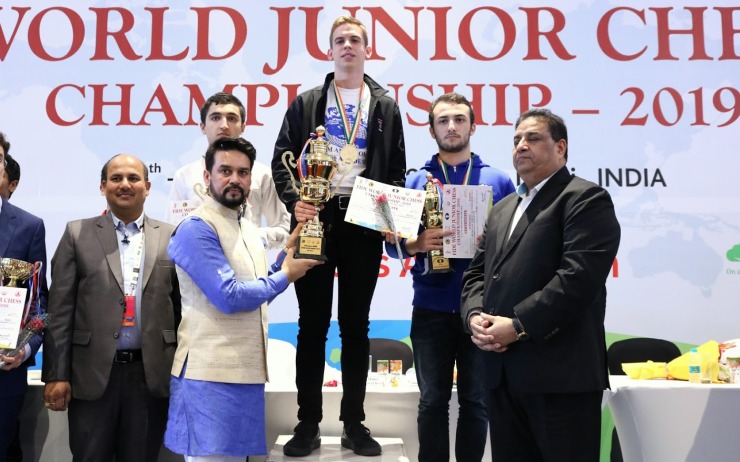
FIDE World Junior Championship U20 is concluded in New Delhi, India. The event brought together the strongest teenagers from all around the world. The open section of the tournament mobilized 94 players, including 15 grandmasters. The girls’ section attracted 95 participants. After 10 rounds in the open section a student of Texas Tech University, Evgeny Shtembuliak (Ukraine, 2577) was a half-point ahead of Aram Hakobyan (Armenia, 2561), Miguel Santos Ruiz (Spain, 2560) and Shant Sargsyan (Armenia, 2580). In the final 11 round, the leader beat Volodar Murzin and took the title with an excellent score 9 out of 11, whereas Sargsyan prevailed in the key game with Santos Ruiz and became second. In the girls’ section two-time World U18 Girls Youth Championship winner Polina Shuvalova (Russia, 2412) reeled off four victories in a row in the second part of the event and by the final round created a full point margin from her main competitor Mobina Alinasab (Iran, 2239). By making a draw with black in the final round Polina secured gold. The Iranian won her final game and finished a half-point behind the champion. Final standings: Open: 1. Evgeny Shtembuliak (UKR) – 9.02. Shant Sargsyan (ARM) – 8.53. Aram Hakobyan (ARM) – 8.04. Miguel Santos Ruiz (ESP) – 7.55. Murali Karthikeyan (IND) – 7.56. Wang Shixu B (CHN) – 7.57. Aravindh Chithambaram Vr. (IND) – 7.58. Mihnea Costachi (ROU) – 7.59. Praggnanandhaa R (IND) – 7.010. Volodar Murzin (RUS) – 7.0 Girls: 1. Polina Shuvalova (RUS) – 9.52. Mobina Alinasab (IRI) 9.03. Elizaveta Solozhenkina (RUS) – 8.04. Mariia Berdnyk (UKR) – 8.05. Aakanksha Hagawane (IND) – 8.06. Song Yuxin (CHN) – 7.57. Li Yunshan (CHN) – 7.58. Stavroula Tsolakidou (GRE) – 7.09. Bibisara Assaubayeva (KAZ) – 7.010. Dinara Dordzhieva (RUS) – 7.0 Photo: Niklesh Jain ChessBase India
Grand Swiss: A look beyond the individual games and results
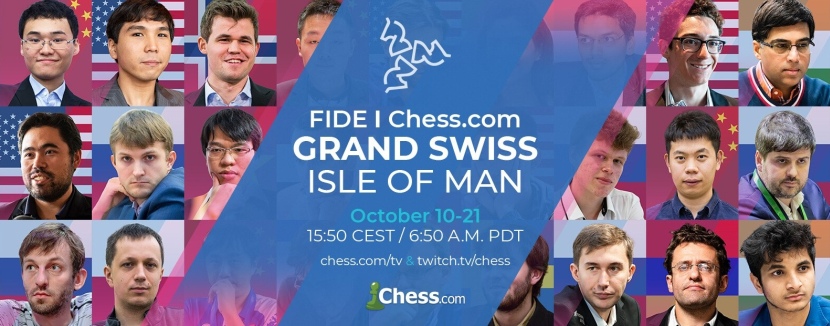
The FIDE Chess.com Isle of Man Grand Swiss was a tournament like no other before: it was the first time that such a large number of top world players gathered for a Swiss competition. For 12 days the world chess elite – led by the World Champion Magnus Carlsen and World No 2 Fabiano Caruana, accompanied by a number of top world players – were battling in the Isle of Man for a $430,000 prize fund and (save for the World Champion and World No 2) for one place in the 2020 Candidates tournament. The tournament ended with a Chinese victory, after GM Wang Hao defeated GM David Howell of England in the ultimate round, securing 8 points – the same as the World No 2 Fabiano Caruana – but winning first on better tiebreaks. The second place was taken by US GM Fabiano Caruana while six players tied for the third place (including the World Champion Magnus Carlsen), with Russian Kirill Alekseenko coming as the top among them. Looking beyond individual results and games – what did the tournament show and bring to the chess world? The approach to the games There has been a large number of draws in this tournament – 441 out of 840 (52.5%), while 263 (31.3%) ended in a victory for White and 136 (just over 16%) were won by Black. Some interesting statistics provided by Arno Eliëns help us to see a broader picture. There are many factors impacting the structure of the results: the ambitions of the players, how they felt on a particular day, how the positons developed, pairings, and also, the tournament system. In informal comments during the event, the prevailing view among the players was: the first three rounds were important to advance towards the top boards as much as possible, see how things develop in the middle and then either play safe or go into the games hard until the end. On a few occasions, games ended in a quick draw (with this option being limited by FIDE rules) and the number of quick draws was somewhat more noticeable among those players in the upper part of the standings who were not directly fighting for top places. Interestingly, the number of draws was lowest in rounds two and three (below 50%), reflecting the comments shared by the players about their approach. The tournament was extremely strong, so there were no “lesser” opponents, even though the elite had to face players who were below their rating range. According to GM Aleksander Colovic who analysed the games for the British Chess Magazine, “this led to different approaches: some didn’t mind playing in the same way, thus making a lot of draws (Wesley So being a typical example), while others like Carlsen and Grischuk took risks and were on the verge of losing several times (in Grischuk’s case he even lost twice)”. The format of an open tournament forces most of the elite players out of their comfort zone as it imposes the extra pressure to “have to win” when playing lower-rated opponents and this gives these lower-rated opponents their chances. The second part of the tournament saw an increase in the number of draws as the players were becoming more cautious. “Generally speaking in modern times the tendency to avoid risks in the last rounds is notable. Petrosian was famous to make draws in the last rounds no matter what the tournament situation was and it worked for him. Today it appears as if all of them are like Petrosian”, noted Colovic. This can be attributed to the bigger importance of the prize money, a draw securing a good prize, which is preferable to the risk or playing for glory and first place but then losing and getting nothing. “Perhaps the young players should be reminded of the famous quote by Lasker on what a champion must have: “The passion that whips the blood when great stakes can be gained by resolute and self-confident daring”, argued GM Aleksandar Colovic. Despite the fact that players had 100 minutes each for first 40 moves, followed by 50 minutes for the next 20 moves, followed by 15 minutes for the rest of the game, with an increment of 30 seconds per move from the start, each round saw a number of games in which players ended in time trouble, especially towards the top boards, which, for most players and the media and the wider audience was a source of great excitement. Given the structure of the contestants (especially looking at the top tier of participants), we have seen players demonstrate extremely high levels of preparation, often finishing well after the 20th move. The chess.com live commentary and analysis, which was provided alongside the games, has shown that in the majority of cases, especially on the top 20 boards, players did play similar to the levels of top computers. With 840 games played in what is arguably the strongest Swiss event ever held in chess history, the FIDE Chess.com Grands Swiss will be an abundant resource for chess theory and further game and play analysis. The players Altogether 154 players from 42 countries took part, most notably – Russia (26), India (15), United States (12) and Ukraine (10). When it comes to tiled players, there were 133 GMs, two women GMs, and 16 IMs. With the world’s No 1 and No 2 present and with some of the strongest top players in the world, the tournament had the average ELO of 2630. The tournament has seen a great number of players complete norms, including two countries getting their youngest GMs ever: Vincent Keymer (14) of Germany and Jonas Buhl Bjerre (15) of Denmark. The youngest player to achieve his final GM norm was the 13-year-old Indian Raunak Sadhwani. At 13 years, nine months and 26 days, Sadhwani became the ninth youngest player in the world to reach the GM title and India’s 65th GM. Altogether, 18 women players took part in the event. Indian GM Harika Dronavalli was the most successful female participant, having achieved 5.5 points out of 11 games all played with GMs.
European Team Championship gets underway in Batumi
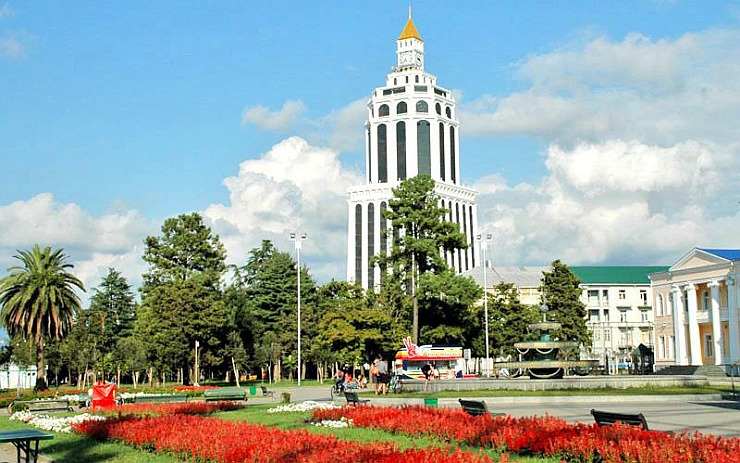
European Team Chess Championship 2019 kicked off in Batumi, Georgia. Stretching over 10 days, the event takes place 23rd October – 3rd November in the 5-star Hotel Sheraton. Forty teams in Open section and thirty-two squads in Women section will play 9 rounds (Swiss system), with the time control of 90 minutes for 40 moves + 30 minutes for the rest of the game, with 30 seconds increment for every move played, starting from the move one. October 29 is a free day. Each team consists of five players (four main and one reserve player). The defending champion Azerbaijan did not manage to bring the strongest lineup (the World Cup champion Teimur Radjabov opted not to play) but still is among the top contenders. Despite not enlisting its top players the Russian team is entering the competition as the rating-favorite (average rating 2722) and will try to repeat its success from four years ago in Reykjavik. In the Women section, the champion of the last two events Russia recruited all the best and tops the list of the rating favorites followed by Georgia and Ukraine. Top-5 rated teams: Open 1. Russia (2722)2. England (2690)3. Poland (2688)4. Azerbaijan (2679)5. Armenia (2676) Women 1. Russia (2529)2. Georgia (2451)3. Ukraine (2419)4. Poland (2397)5. Azerbaijan (2383)
Chess competitions held as part of the 2019 International Parliamentary Games
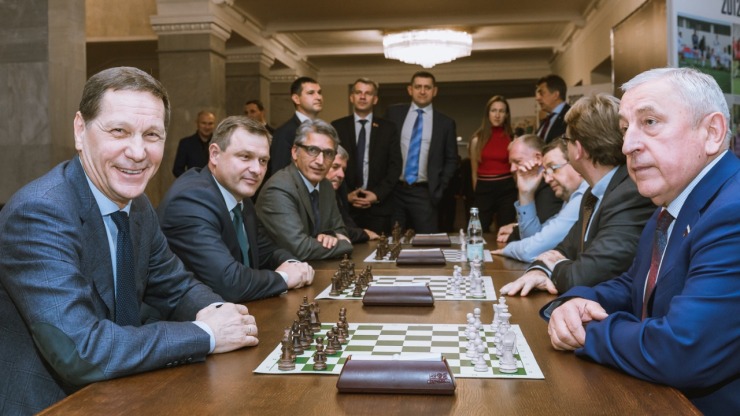
From October 17 to 21st Moscow hosted the International Parliamentary Games, with parliamentarians from around the world competing in various disciplines. The history of the international parliamentary games began in 2009 when the first edition of European parliamentary games took place in the capital of Russia. Despite the fact that this year’s competition was held for the tenth time, the objectives of the event did not change – strengthening of friendly ties between parliamentarians of different countries and promoting sports and healthy lifestyle. Traditionally, the program of the international parliamentary games includes sports, official and cultural parts. The sports program included chess, billiards, mini-football, tennis, table tennis, and badminton tournaments. The culmination of the sports part was a friendly gala football match between the national team of Russian parliamentarians and the team their colleagues from the rest of the world. The chess tournament brought together the parliamentarians from 8 countries. In the individual competition saw the triumph of Moldavian parliamentarian Victor Bologan (8); the second place was taken by Alexander Zhukov from Russia (6.5); David ROS (6) representing France rounded out the top three. The team competition was won by the team France (16.5), the team Russia came second (14.5), the team Belarus (12) finished third. The parliamentary tournaments were preceded by children’s competitions, in which the students of the chess school named after M. M. Botvinnik took part. In the “tournament of champions” Rudik Makaryan (6) took the first place, whereas Savva Vetokhin (5.5) and Nikita Voynikonis (5.5) finished just a half-point behind the winner. In the “candidates’ tournament” Igor Prokudin (6) turned out to be the strongest, Vorona Eva got the silver, and Prokhorov Klim ended up with the bronze (4.5). The opening of the international parliamentary games was attended by several honored guests, including the multiple world chess champion, State Duma Deputy Anatoly Karpov, first Deputy Chairman of the State Duma Alexander Zhukov, three-fold Olympic champion, State Duma Deputy Vyacheslav Tretyak, Chairman of the State Duma Committee on Sports Mikhail Degtyarev, President of the Moscow Chess Federation Sergey Lazarev. The Ambassador Extraordinary and Plenipotentiary of the Republic of India to the Russian Federation Mr. D. B. Venkatesh Varma who visited the event as a special guest, not only welcomed all the participants but also launched the chess tournament, making a symbolic first move in the first round. All participants received awards and prizes; the Moscow Chess Federation prepared special gifts for the winners of children’s tournaments. The Co-Chairman of the Games Organizing committee Dmitry Svishchev noted that such competitions have a unique format, with many advantages over more traditional, official meetings. Every year this international project has attracted more and more participants. “We are united by the desire to win and a sense of belonging to the team. And this is an excellent starting point for strengthening relations between the countries,” – the parliamentarian added. The information is provided by the assistant of the Deputy of the State Duma, member of the Organizing Committee of the Games Ekaterina Kirsanova
Wang Hao wins the FIDE Chess.com Grand Swiss
The final day of the Isle of Man Grand Swiss turned out to be decisive in determining the winner. The round started with World No 2 Fabiano Caruana being the leader (7.5/10) a half-point ahead of seven players (all of which, save the World Champion, were fighting for the spot in the 2020 Candidates tournament). Caruana drew his game with Hikaru Nakamura and, with 8 points, secured at least a tie for the first place. The game that changed everything was played on board three where Wang Hao of China faced David Howell of England. After the Englishman blundered in an even position and was forced to resign, the Chinese GM secured the top spot (thanks to a better tiebreak than Caruana, who was pushed to the second place) and the slot in the Candidates Tournament. Six players tied for the third place, with Russian Kirill Alekseenko coming on the top among them, again thanks to a better tiebreak. The best-performing women players of the tournament are Harika Dronavalli of India and Dinara Saduakassova of Kazakhstan who both finished on 5.5/11. The key games of the final round On board one Hikaru Nakamura played as White against Fabiano Caruana, who was before the round the sole leader of the tournament. The Petrov Defense was played in which Nakamura chose a side-line with 7.h3 aiming to get off the beaten theoretical paths. Caruana, however, wasn’t caught out unprepared and continued to develop his pieces. (Photo: John Saunders) Both players were fighting for control in the center but the position remained balanced. After an exchange of the queens on move 23 the opponents were heading to an even endgame. Nakamura could not avoid further simplifications in the center and soon two players agreed to split a point. This was the first game to finish among the top eight of the tournament. With even positions on all other boards, it seemed that Caruana will be the sole winner, half a point ahead of everyone else. But things were about the change… Carlsen sets a new unbeaten record It was a make or break moment for Levon Aronian who was playing against the World Champion Magnus Carlsen on board two. It was Aronian’s last realistic chance to qualify for the Candidates and the opportunity to take down Magnus Carlsen. The only way to do this was to defeat the World Champion in the last round of the Isle of Man Grand Swiss. Carlsen, for his part, also had a lot on the line (and it wasn’t just a spot at the top, or the prize money): the World Champion was on the verge of setting a new world record – 101 games without a loss. It all started with a sharp line of the Nimzo-Indian. The game quickly developed into a very dynamic position with both sides creating threats. White sacrificed a pawn in the center for the initiative, trying to exploit black’s lag in development, but Carlsen managed to mobilize his queenside pieces and emerged with an extra pawn. In the following complications, Aronian event won a knight but soon had to return his extra piece to reach an even rook endgame, in which the opponents sealed a draw. (Photo: Maria Emelianova/Chess.com) The last top game to finish Board three saw a Russian derby between Nikita Vitiugov and Kirill Alekseenko. The game was last to finish among the top boards. In a complicated battle in the Italian Game White (Alekseenko) pushed in the center and, after an exchange of rooks, ended up with a dangerous passer on d6. Black, however, had a passing pawn of his own on b6. Vitiugov sacrificed his e5-pawn for some activity which was enough for maintaining equilibrium. However, White managed to exchange queens and preserved his extra pawn in the knight endgame. Alekseenko might not have used all his chances but we have to give credit to Vitiugov, who put a stubborn defense and saved a half-point. After 56 moves and six hours of play, the two players agreed to a draw. The game to determine the tournament winner The key result of the round and maybe of the whole tournament was registered on board four. Wang Hao of China was playing against David Howell of England. (Photo: John Saunders) Wang had a very strong tournament, constantly playing on the top-boards as one of the leaders. In his final game of the tournament, Wang had the advantage of white pieces, but more importantly – the best tiebreak score among all other players with seven points, which meant that he was in the best position to secure a place in the Candidates, even with a draw. He was facing David Howell, the English GM who by the first half of the tournament had only 50 percent and then scored an impressive 4.5/5 in the second part. Out of all of the other top players with seven points after 10 rounds, Howell had the worst tie-break. This meant that – if the Brit wanted to get in a chance to challenge Carlsen for the World Champion title – he needed a victory. Howell played the Grünfeld Defense, but Wang pushed for an exchange of pieces in the center which suggested he was going for a draw. The symmetrical position emerged, with White being slightly better developed. On move 14 Howell went into a deep think – spending more than 25 minutes on the crossroads: to follow the line of simplifications and draw or, to risk it all and go for a win. Howell played 14…Be6 which led to further exchanges, with both white and black pawns falling on the queenside. Howell was, however, worse on time. After over two and a half hours of play, the top two boards drew. This meant that Wang needed a draw to qualify and a win to take the tournament. Then, on move 18, Howell committed a terrible blunder: he moved his bishop on d5, apparently overlooking a simple pin with 19.Rd1. In the next two moves he had to give up his queen for a rook and a bishop, but Black’s position was absolutely hopeless. The game lasted until move 37 when
Grand Swiss: Caruana finally alone at the top
Round ten was a day of decisive games on the top ten boards in the Isle of Man Grand Swiss, with seven wins and three draws. The top players clearly knew there was no more point in holding back anymore and if they wanted to do something in the tournament, then penultimate round was a crucial milestone. After sharing the lead for 9 rounds of the tournament, World No 2 Fabiano Caruana finished round 10 as the sole player on the top. He defeated the Spaniard David Anton as White and enters the final round with a half-point ahead of the other top players. Chasing Caruana is a pack of seven GMs, which includes the World Champion Magnus Carlsen who, after victory in round nine, has also achieved his 100th game without losing. The final round of the Isle of Man Grand Swiss will see eight top players deciding who will be the winner of the $70,000 first prize and, also, who will win the race for the place in the 2020 Candidates’ tournament. On the first board, Fabiano Caruana was playing as white against David Anton of Spain. In the English opening after a quick exchange of queens, a roughly even position emerged on the board. In 20 moves the opponents reached an endgame with a rook and a knight and seven pawns each. Caruana had a slight edge as of his pieces were more active and positioned more naturally, compared to Anton who had doubled pawns on the c and f-files. The World No 2 opted for a push on the kingside, leaving Black to counterattack on the left flank. Caruana obtained a much better position, making it quite uncomfortable for the Spaniard who offered a move repetition but was refused. As the game progressed Caruana was slightly worse on time, but confidently secured his advantage reached the first time control. With his knight firmly planted on e5, and a pawn on c4 (blocking the progress of black’s c5-b6-c7 pawns), Caruana was freer to engage on the kingside. With his advanced pawns, an active king and a rook and knight who were all threatening the black monarch, Caruana seemed on a path to victory. (Photo: Maria Emelianova/Chess.com) The next few moves brought about the exchange of knights and Black winning a pawn, but at a price of his king being further pushed away from White’s passing pawns. With cutting the board in two with his rook on e6, White could effortlessly advance his pawns supported by the king without any serious threats to them. At this point, Black had just one option at his disposal – to push his own pawns on the queenside and hope for a wonder. In the moves that followed, David Anton finally gave up his rook for White’s pawn on g7, putting everything on the queen promotion of his pawns on the queenside. Caruana was, however, one step ahead – although Black did promote a queen as well, white had the decisive check which was a prelude to a deadly attack. The Spaniard resigned and was, effectively, kicked out of the race for the top. With this win, Fabiano Caruana (who is on 7.5/10) became the sole leader of the tournament with just one round to go. The battle of the slow-starters The board two saw a clash in the Rui Lopez between two slow-starters in the tournament: Hikaru Nakamura and Levon Aronian. Black (Aronian) quickly castled on the kingside and launched an attack in the centre, while White’s king was still on the e-file. This was, however, followed by an exchange of pieces in the centre, including the queens, leaving Aronian with an isolated pawn on d6. The two sides were even: Aronian’s position seemed more natural while Nakamura had a bishop on a3 which was somewhat out of action due to his pawns being in front (a4, b4, and c3). On move 16 Levon Aronian thought for over ten minutes, although the position was pretty forced. Further exchanges of pieces in the centre ensued and the two entered a four-rook endgame. The position was slightly better for white but hardly more. The game ended with both players splitting a point after two and a half hours of play. Carlsen achieves a 100-game streak without a loss The World Champion Magnus Carlsen had a somewhat odd tournament: in the beginning, he was very fortunate to escape loses not without help from his opponents missing winning moves; in the second part he picked up speed and found his rhythm, but his top competitors managed to hold him to a draw. The World Champion was always lurking in the background but was missing a key breakthrough to the very top. In the round 10 game against the 2017 European Champion, Maxim Matlakov, history repeated itself: the two met in the Tata Steel tournament in 2018 when Carlsen also had white pieces and played a very long game in which the World Champion managed to edge a win in the very end. Their encounter in the Isle of Man Grand Swiss followed a somewhat similar scenario. (Photo: Maria Emelianova/Chess.com) Carlsen achieved – according to the computer – a completely winning position well before the 40th move, but Matlakov managed to squeeze out and play on. The game started with a complicated position in the Semi-Slav defence which opened up at one point. Matlakov spent significantly more time, which suggests that he walked into a good preparation by Magnus Carlsen. Black managed to create a protected passed pawn on c3 but had only 12 minutes on his clock with 17 moves to the first time control. With a series of precise moves Carlsen obtained a very comfortable position: he opened up the f-file, directly aiming for the black’s weak spot on f7, and centralized his rooks (on d6 and f4). The situation seemed desperate for Black – with less than two minutes on his clock, Matlakov pushed his c3-pawn forward, but Carlsen took on c2 and then progressed with pressing on black’s weak spot on f7. White then took on f7