

Workshop for International Arbiters concluded in Sochi
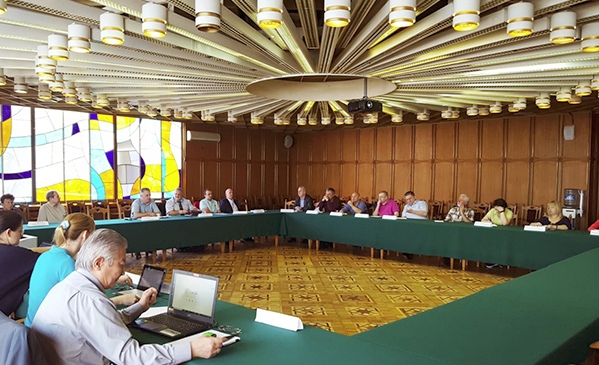
А Workshop for International Arbiters, the fourth event in the FIDE & CFR Pilot Project for Training and Certification of the International Arbiters for the 2020 World Chess Olympiad, took place in Sochi, October 11-14. The Project’s objective is to train and to certify a cadre of IAs, especially female arbiters, who are on top of all recent changes in the Laws of Chess and the FIDE Competition Rules and able able to communicate in English efficiently to be integrated into multinational arbiter teams at the top-level FIDE events, culminating in the Chess Olympiads 2020 and 2022. The Principal Lecturer, IA/IO/FL Alexander Tkachev (RUS), the CFR Technical Director, opened the Workshop by summarizing lessons learned from previous Pilot Project events in Moscow, Tashkent, and Baku. Mr. Tkachev proceeded with a refresher on Anti-Cheating Guidelines, then IA Vladimir Makhnev gave a crash course on the use of a modern metal detector. During a group discussion on the FIDE Competition (Tournament) Rules, the workshop attendees shared their opinions on a wide range of issues that challenges of modern life bring into the chess world. Pharmacology’s impact on chess competitions, anti-doping measures, use of metal detectors on players with pacemakers or artificial limbs, dress code limitations, upcoming brain prosthetics, general standards for electronics used in tournaments, the priority of the host nation’s laws were discussed. The Guest Lecturer, IA/IO Vadim Tsypin (CAN) gave a refresher on the chess terms glossary in English, then led the participants in a practice of using English in typical tournament situations. On the second day, Mr. Tsypin proceeded by presenting real-life chess game situations that sharpened the attendees’ analysis and communication skills. IA Elena Polovina and IA Vera Penzina helped to animate a group discussion. For the first time in history, an examination test featured an equal number of questions in Russian and English. An experienced IA/FL Alexander Shaab obtained the best exam score. A post mortem discussion allowed participants to see their marked tests, to review difficult questions with the Lecturers, and to provide feedback on the Workshop. Several IAs asked to extend such events to three full working days. The next Pilot Project IA Workshop in the Russian Federation will be held in Moscow in January 2020. Please, check for updates.
Grand Swiss: Fabiano Caruana’s miracle
Day five of the Isle of Man Grand Swiss saw World No 2 Fabiano Caruana barely avoiding a loss at the hands of the Englishman Luke McShane in a spectacular game which lasted for over six and a half hours. On the second board, China’s Wang Hao split a point with the Junior World Champion Parham Maghsoodloo in a game full of twists and turns. On board 11, World Champion Magnus Carlsen scored a confident victory, getting back to the top pack. Candidate hopeful Alexander Grischuk won against Ivan Cheparinov. Aronian and Nakamura drew their games while World No 8, Wesley So, scored his first victory of the tournament. After five rounds, seven players are sharing the first place, with four points each: Wang Hao, Caruana, McShane, Fedoseev, Grischuk, Shirov and Maghsoodloo On board one, England’s Luke McShane was playing against Fabiano Caruana. The Englishman had a great start to the tournament, scoring three consecutive wins after a draw in the first round. On day five, it was Caruana’s turn to ‘do a Carlsen’ from round four, and pull off the impossible. For the second game in a row, McShane played with white pieces. After Caruana weakened his king’s castle with h6, McShane moved his king to h1 (a novelty) and started preparing the advance of his g-pawn directly at the black king’s defence. Caruana quickly responded by throwing his c8-bishop into the game and including the queenside rook, launching a counter-attack. McShane had two knights (one of them back on d1) against two bishops. Caruana managed to create a slightly better position, with more time on the clock. After black’s imprecision on move 21 (according to the computer), Luke McShane launched his g-line attack, but also managed to secure an extra pawn along the way (which later grew to two pawn advantage), and activating his pieces. McShane was, however, lagging on time: he had just under eight minutes for 13 moves, while Caruana was on 30 minutes. The Englishman, however, pulled it off: by move 40, Caruana was in a considerably weaker position. McShane pushed 41.d6, which was an introduction to a dominating advantage in which his queen and knight were setting up a clean kill. Then, an unbelievable thing happened: after the exchanges of pieces, the position unravelled into a rook vs bishop ending with White having a more active king. It still seemed like a clear victory for white, but the World No 2 put on an incredible defence and managed to prevent McShane from getting into a simple winning position. By move 74 – with the computer showing that White is winning – McShane was on three and a half minutes while Caruana had 10 minutes more. McShane then went for an exchange of pawns, but with black having an active g-pawn he was out of trouble. After six and hours and 40 minutes of play and 85 moves, the game ended in a draw. Hao and Maghsoodloo draw in a game full of twists and turns The game on board two, between China’s Wang Hao and the World Junior Champion, 19-year-old Parham Maghsoodloo, was full of turns. In the earlier stages of the game, Wang Hao sacrificed a pawn but pushed Black’s pieces to the back-lines. However, this situation should have been approached with caution: in many of Maghsoodloo’s games, he plays a lot from the back-ranks ready to counterattack. One thing played into the hands of the Iranian – he was consistently better on time. The game took an interesting turn in move 23 when, instead of accepting an exchange of queens, Wang Hao sacrificed an exchange to exploit black’s weak squares around his king. Maghsoodloo broke out with a brave march of his f-pawn and in a tense fight between time, tactics and material, the Iranian seemed to have managed to erase the compensational advantage the Chinese player had for his sacrifice. What followed was a dynamic tussle between a marvellous attacker (Hao) and an excellent defender (Maghsoodloo). At one point Maghsoodloo blundered – on move 45 he moved his king to g7, exposing the black monarch to a lethal check. Then, however, Hao returned the favour and missed an opportunity. After several turns and chances being on both sides, the game ended in a draw. Grischuk, Fedoseev and Shirov push forward Boards three to ten were reserved for 14 players who, after four rounds, had three points each. Former contender for the title of World Champion, Sergey Karjakin played as black against David Anton Guijarro of Spain. In the neo-Catalan accepted variant of the English opening, White managed to push his pawn to e5, pinning the centre and pressing Black. The position was playable, but the Spaniard offered a draw which was accepted. Both players are on 3.5 out of five which still gives them solid chances. Alexander Grischuk is one of the players hoping to secure a spot at the Candidates’. He achieved a slightly better position as white against Ivan Cheparinov on board three but was constantly behind on time. The opening led to a King’s Indian reverse, where black was two tempi down. By move 20, Cheparinov had weak pawns on a7 and c5. Grischuk went on to win the pawn on h6 and then transformed the game to a rook endgame where he was significantly stronger and forced Cheparinov to capitulate. Grischuk is now on four points. Vladimir Fedoseev last year’s Isle of Man winner, Radoslaw Wojtaszek played a sharp line in Nimzo-Indian. It looked like White was in danger as Fedoseev’s king got stuck in the center while Black seemed much better developed. However, other positional factors proved to be much more important. Gradually it became clear that Russian GM was outplaying his dangerous opponent. Wojtaczek tried to complicate the issue by sacrificing two pawns, but Fedoseev seemed unfazed and took every pawn and piece that was offered to him. Polish GM resigned on move 47 allowing Fedoseev to catch up with the leaders. On board five, Levon Aronian (who made a statement with his red shirt and red shoes) squared off against Ukrainian GM Yuriy Kryvoruchko. Aronian played one of his favourites, the Marshal Gambit, and
Grand Swiss: Four take the lead as Carlsen barely escapes defeat
The fourth round of the Isle of Man Grand Swiss almost brought a shock: the World Champion, Magnus Carlsen, was facing an imminent defeat (after 438 days of not losing a game), only to be saved by his opponent’s time trouble. The board-one clash between the World No 2, Fabiano Caruana, and China’s Wang Hao ended in a draw. The two have been joined at the top by the World Junior Champion Parham Maghsoodloo and England’s Luke McShane. Round four also saw an upset: the experienced GM Sergei Movsesian lost on board 70 to 21-year-old Antenaina Rakotomaharo Fy, an IM from Madagascar. Kovalev vs Carlsen: Saved in the nick of time Among the top boards of the Grand Swiss, the most dramatic game of the day was that between Magnus Carlsen and Vladislav Kovalev of Belarus. The World Champion was lucky to escape with half a point after his opponent (who is 215-points lower-rated!) got into serious time trouble and missed several winning moves. Kovalev, who played as White, took the initiative early on. After 20 moves, he pushed his pawn to d6 and dominated in the centre with the queen and knight. With all of his pieces activated and well-positioned and a completely safe king, it seemed there was no hope for Magnus Carlsen. By move 26 the World Champion was completely lost. The expression on Carlsen’s face reflected the gloomy atmosphere of what was mostly a rainy day on the Isle of Man. The scene was set for a dramatic event: the World Champion Magnus Carlsen was at the brink of losing and ending his streak of 93 games and 438 days without a loss. Carlsen had only one thing going for him: Kovalev was in serious time trouble – he had under two minutes to make 14 moves to reach the first time control. Still, World Champions are great not just because they are good at winning but, also, because they are skilled at defending. Appearing completely calm, Carlsen played the most precise moves which his position required. The tension was high and a large number of GM spectators further electrified the intense atmosphere on the board. At one point, Azeri GM Rauf Mamedov passed by, looked at the position and the clock and disapprovingly shook his head and mumbled something. The 25-year-old Vladislav Kovalev (who won the strong Aeroflot open in 2018 and this January scored 10/13 in the Tata Steel B-tournament), was starting to panic: his look frantically shifting between the clock and the board. The Belarusian was down to his final seconds. His feet dug into the carpet, leaning on the side of the table trying to keep his legs still, but his body was shaking. Carlsen then offered a repetition of moves, but Kovalev wanted to go for the win. In the next couple of moves, however, he missed everything he could. He did reach the time control but at the price of losing his pawn on d7 and exchanging the queens, which led to a drawish rook ending. After this, Carlsen got up for a good walk. When he came back, his opponent was still shaking his head in disbelief, trying to come to terms with a lost opportunity. Kovalev still had a passed pawn on the a-file, but the position was not winning anymore. The players agreed to draw. This was the closest the World Champion came to defeat for a long time. The Carlsen’s unbeaten run continues and is now on 94 games and 439 days. The World Champion is struggling, but he is still just one point away from contending the top place. A very instructive interesting comment about this game was published by GM and FIDE Director-General, Emil Sutovsky on his Facebook page: “Once Yussupov taught us, the young students of Polugaevsky chess school: when you are clearly winning – pick one move, focus on it and calculate till the end. Do not compare. But to Magnus’ luck, Kovalev did not attend that lesson… Carlsen escapes, though he is yet to find his play.” The Russian Game in an American – Chinese showdown While the drama between Carlsen and Kovalev was unfolding, on the top board Fabiano Caruana was leading white pieces against Wang Hao. By the beginning of day four, the two were the only players out of 154 to have a maximum score after three rounds. Petrov’s Defence (also called The Russian Game) was played. Caruana secured a small advantage after the opening, having a 2:1 pawn advantage on the queenside. After a lot of strategical manoeuvring, Caruana started to push his pieces forward. Black’s coordinated his knights to create a solid defence, supported by rooks, with the a-rook equally active in defending and also threatening white with back-rank intrusions. Caruana couldn’t find a way forward and, eventually, offered a draw which was accepted. Four players in the lead The Russian duel on board two ended in a draw where Alexander Grischuk (as black) had to sacrifice a whole rook to get a perpetual check against Kiril Alekseenko and both are now on three points. Board three saw an interesting clash between Ivan Cheparinov (as white) and Nikita Vitiugov. The game took a wild turn at move 17 when black’s king set off on a walk. Cheparinov attacked, but the Black king quickly reached safety. Moreover, a few moves down the road, Vitiugov managed to align his pieces for an attacking formation. After a tactical struggle, the Black emerged completely winning but missed 32…Qh6, mating black in a few moves. Cheparinov found a way to escape and then transposed into an endgame with opposite-coloured bishops. The game ended in a draw. On board four, reigning World Junior Champion, Parham Maghsoodloo of Iran defeated India’s Santosh Gujrathi Vidit. After a miscalculation in the middlegame, black ended up in a worse position, with weak pawns. Maghsoodloo then pushed his king forward to help block black’s pieces. White, however, needed to play precisely until the end as Black skilfully freed his king. A pawn race to the final line was launched by both sides, but White had a clear advantage. In desperation, Vidit sacrificed a
Happy Anniversary, Nana Alexandria!
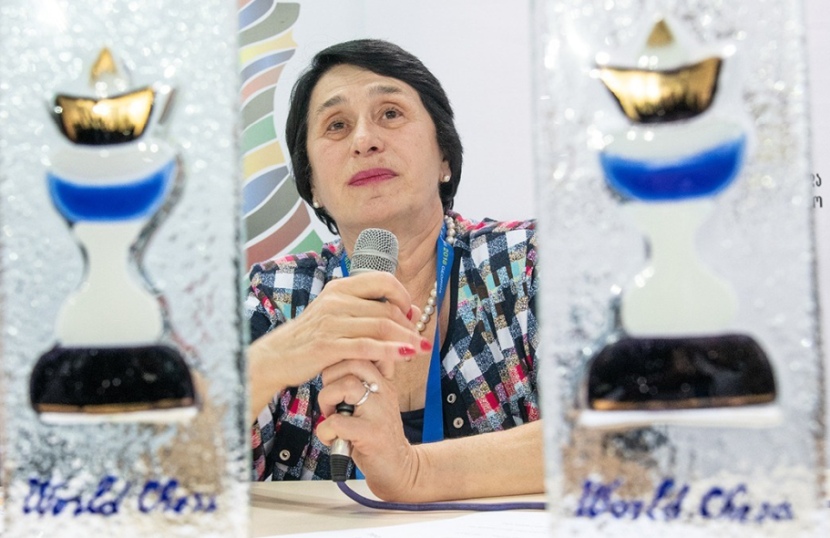
Times flies, they say – Nana Alexandria celebrates her 70th birthday. Born in Poti, Georgia, she learned chess at the age of four and six years later became the champion of Tbilisi among girls. Her rise to fame was meteoric: by the age of 20, she won three USSR Women’s Championships titles (1966, 1967 and 1969) and established herself as a frontrunner for the women’s champion crown. In 1973-1975 Nana went through all the stages of the World Championship cycle and challenged the reigning champion Nona Gaprindashvili. Despite suffering a painful defeat in the Women’s World Championship match (+3 =1 −8), Alexandria managed to regroup and made all the way up again. In 1981 she became much closer to the coveted title but drew the World Championship match with Maia Chiburdanidze (+4 =8 −4), with the champion retaining her title. As a member of the Soviet Union squad, Alexandria participated in six Chess Olympiads (1969, 1974, 1978, 1980, 1982 and 1986) making significant contributions in the team’s winning gold every time. From 1986 to 2001 Alexandria was the chairperson of the FIDE Women’s Commission. The winner of 20 international tournaments, a talented journalist, one of the most determined advocates of women’s chess and bewitchingly charming person, Nana enjoys a great deal of respect in the chess world. It is no coincidence that Alexandria was appointed deputy arbiter at the Carlsen – Caruana match (2018). On the occasion of her 70th birthday, we congratulate Nana Alexandria and wish her the finest things in professional and personal life.
Grand Swiss: Caruana and Wang Hao take the lead
Round 3 started with five players with a perfect score. By the end of day three – there were two. After only three days of play, the American Fabiano Caruana and the Chinese Wang Hao are the only ones among 154 players who have the maximum score at the Isle of Man Grand Swiss. In a game with a lot of turns, Fabiano Caruana got the better of Alexei Shirov, while Wang Hao defeated Bu Xiangzhi. On board four, the World Champion Magnus Carlsen allowed Rustam Kasimdzhanov to squeeze out of a weaker position, with the game ending in a draw. The top two players are followed by a pack of ten GMs with two and a half points out of three. On the third day of the Isle of Man Grand Swiss, it was Fabiano Caruana’s turn to take the seat at the top board. He was facing Alexei Shirov, the world No 2 from 20 years ago. The opening developed into a very complicated position. The shadow of uncertainty hung over both sides for much of the game. Caruana did manage to block white’s progress on the kingside, forcing Shirov to move his c-pawn forward in an attempt to find another way of breaking Black’s defense. White, however, ended in serious time trouble, with 30 seconds for ten moves to reach the first time control. Fortunately for Shirov, Caruana missed some good options and both players ended in a somewhat even position after 40 moves. Caruana, however, managed to pin his pawn on d3 which helped gradually force the collapse of White’s defense. This win secured Caruana the leading place on the score-board, joined by only one other player.The game between the two Chinese GMs on board two ended with a victory for Wang Hao, who outplayed Bu Xiangzhi after achieving a more comfortable position in the opening. Wang Hao was the first player in the tournament to reach 3/3. The big excitement ahead of round four The most anticipated duel of Round 4 of the Isle of Man Grand Swiss will be that between the American Fabiano Caruana and Chinese Wang Hao, the only two players to have three points after three rounds. The World No 2, however, does not have a great history with the Chinese player: in their eight classical games so far, the score is 6.5:1.5 for Wang Hao! More precisely, five wins, three draws and zero (!) loses for the Chinese. However, in seven of the eight games, Wang Hao had white pieces, and the last game the two played was back in 2013. It is said that every time the history repeats, the price goes up. The stakes for both players are now much higher than when they last met six years ago. Both have a lot to gain, but also a lot to lose, which suggests a tough battle on board one.Another strong performance from Alexey Sarana, as Kasimdzhanov escapes Carlsen’s grip On board three Radoslaw Wojtaszek won a pawn early on in the game against Baskaran Adhiban. Although Wojtaszek did have a slight advantage, the position seemed drawish. After simplifications, the game ended in both players sharing a point. On board four the World Champion Magnus Carlsen took the initiative as White against former FIDE World Champion Rustam Kasimdzhanov. Despite ending in a slightly worse position, Kasimdzhanov managed to shake off Carlsen’s grip before passing the 40-move mark. Although taking control of the game, the World Champion, however, missed a few chances in the middlegame. His disappointment was visible afterwards. In the end, Carlsen was a pawn down but able to easily maintain a draw. For the last decade, Rustam Kasimdzhanov has been a key figure behind the preparation of chess stars such as Anand, Karjakin and Caruana – in particular, their matches for the world title. This fact gives the game between Kasimdzhanov and Carlsen a different context.On board five Alexey Sarana, who in the first two games at the FIDE Chess.com Grand Swiss, demonstrated excellent play against the senior and current world champion, had a very tough duel with Chinese GM Yu Yangyi. After securing a 2:1 pawn advantage on the queenside, Yu confidently pushed them forward until creating a loose runner on the a-file. Sarana sacrificed a bishop but in return managed to stop the a-runner and get some compensation with 2:1 pawns on the kingside, with one of them advancing on the f-file. Although Yu Yangyi had an advantage, the Russian carefully moved his pieces to avoid potential traps and the game ended in a draw. So far, the 19-year-old Russian has proven to be a surprise of the tournament. The Russians vs the rest, and Aronian’s first victory Boards six to ten saw Russians playing against the rest of the world: seven Russians, one Armenian, one Greek and one American (Nakamura)! The only decisive matches, however, were those played between the Russians themselves: Grischuk beat Oparin (after a tiring rook and pawn vs rook endgame; one of the last games to finish) and Vitiugov defeated Motylev. On board eight Nakamura drew by repetition on move 21. Rinat Jumabayev achieved a strong position and was playing for a win against Sergey Karjakin. The Russian at one point offered a move repetition which Jumabayev refused and, later on, got into serious time trouble. With only seconds left, the Kazakh player reached move 40 but was by that point completely lost. The Russian is now on 2/3. On board 39 Levon Aronian – who started with two draws – dominated in the Queen’s gambit the young Russian GM Andrey Esipenko. The Russian sacrificed a pawn for the attack Black’s king, but the Armenian (who became GM before Esipenko was born!) defended well, launching the pawns in front of his castled king and grinding white’s attack to a halt. For the greater part of the game, the position was balanced, but after c5 in the 28th move, Black was better. It seems that Aronian is getting into his game and is now – with two points out of three games – showing that he is picking up the pace!Wesley So drew against Volokitin in 27 moves. After three draws in three rounds, So is now
World Youth Championship: India and Russia reign supreme
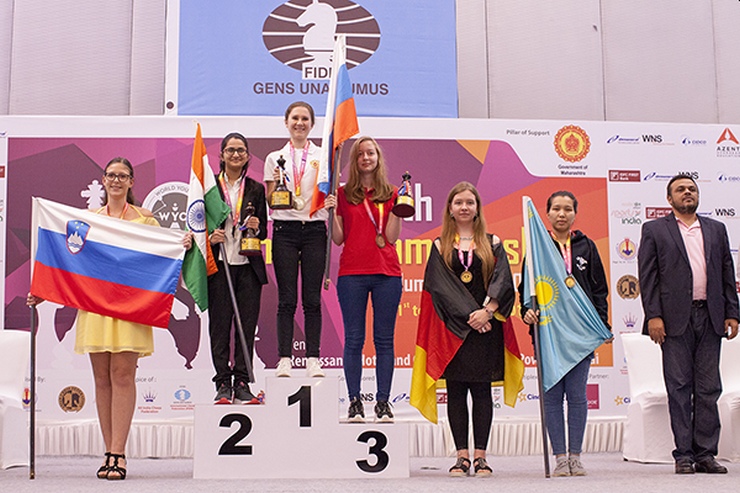
The World Youth Chess Championship held in the Renaissance Mumbai Convention Centre Hotel in Mumbai, India is in the books. Youngsters from 66 countries were competing in the Girls U14, Open U14, Girls U16, Open U16, Girls U18, and Open U18 categories. The championship ended on a high note for India. The home team won 7 medals (more than any other country) including one gold in the Open U18 category taken by the 14-year old prodigy Praggnanandhaa. Red-hot from this event the Indian teenager is heading to New Delhi to participate in the U20 Championship that starts on October 14.Russia netted 5 medals, producing 3 champions. It is worth mentioning that Polina Shuvalova successfully defended her title in the Girls Under 18 category and became the two-fold champion. Leya Garifullina scored an equal amount of points with Nazerke Nurgali but won gold thanks to better tie-breaks in the Girls U16 category. Final standings: Open U18: 1. Praggnanandhaa R (IND) – 9 points out of 11 2. Shant Sargsyan (ARM) – 8.5 3. Artur Davtyan (ARM) – 8 Girls U18: 1. Polina Shuvalova (RUS) – 8.5 2. Agrawal Vantika (IND) – 8 3. Alexandra Obolentseva (RUS) – 7.5 Open U16: 1. Rudik Makarian (RUS) – 8.5 2. Stefan Pogosyan (RUS) – 83. Ghosh Aronyak (IND) – 8 Girls U16: 1. Leya Garifullina (RUS) – 8.5 2. Nazerke Nurgali (KAZ) – 8.5 3. Anousha Mahdian (IRI) – 8 Open U14: 1. Aydin Suleymanli (AZE) – 9 2. Srihari L R (IND) – 8 3. Sreeshwan Maralakshikari (IND) – 8 Girls U14: 1. Meruert Kamalidenova (KAZ) – 8.5 2. Deshmukh Divya (IND) – 8 3. Ravi Rakshitta (IND) – 8
5th Global Chess Festival goes big in Budapest
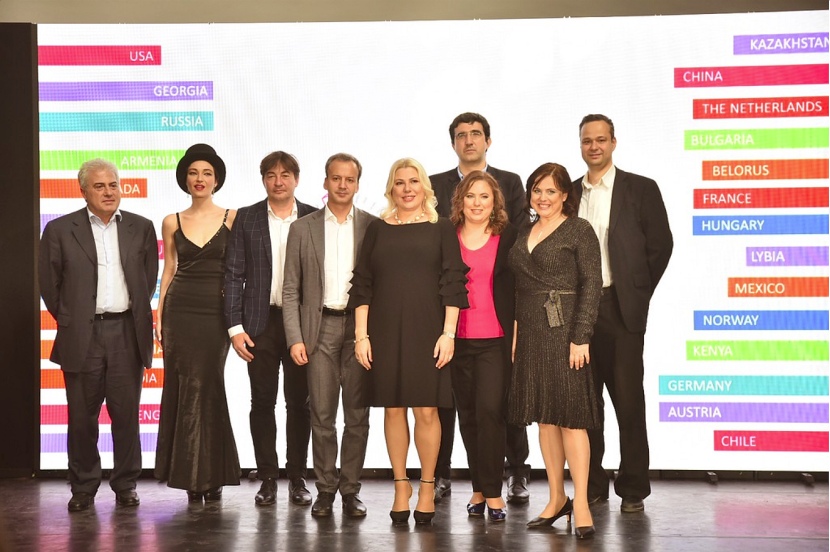
The fifth edition of the Global Chess Festival founded by Judit Polgar to celebrate the diversity of chess kicked off on October 12 in Hungary’s magnificent capital city Budapest. This year the festival is held in a very special venue, the Hungarian National Gallery, located in the castle district of the city. The festival is free of charge for all participants. The organizers aim to bring friends and families together to have a memorable experience while playing, learning, and enjoying the rich cultural atmosphere the event provides. One of the main objectives of the festival is to highlight the diverse nature of chess in four main ways: Chess as a Sport, Chess as a Science, Chess as an Art and Chess as an Educational Tool.Participants will even have the opportunity of playing in a simultaneous exhibition against the Polgar Sisters on the day of the Future Champions of Europe event. For the first time at the Chess Connects conference, lecturers provided insight on how science influences modern chess, including chess as an educational tool in the 21st century and the challenges modern chess presents within the context of sport. Global Chess Festival includes numerous programs (Morgan Stanley Chess Café, Chess Playground, Chess Palace, Promenade, Sweet Art and Craft, Chess Shop, Magical Paintbrush, etc) and several tournaments (Inspiration Cup, Chess Palace Cup, Future Champions of Europe and Chess Challenge). As always, a number of very special guests are in attendance this year, including FIDE President Arkady Dvorkovich and former World Champion Vladimir Kramnik. Arkady Dvorkovich delivered a speech in which he shared his impressions of the festival: “What I saw on the floors here, in the Hungarian National Gallery is amazing and very exciting. Different kids of different ages, with different abilities and interests doing all kinds of things together… Here it is a real combination of art, sport, education, and science and that is what makes it a special, huge event.” Official site
World Youth Championship is in the books
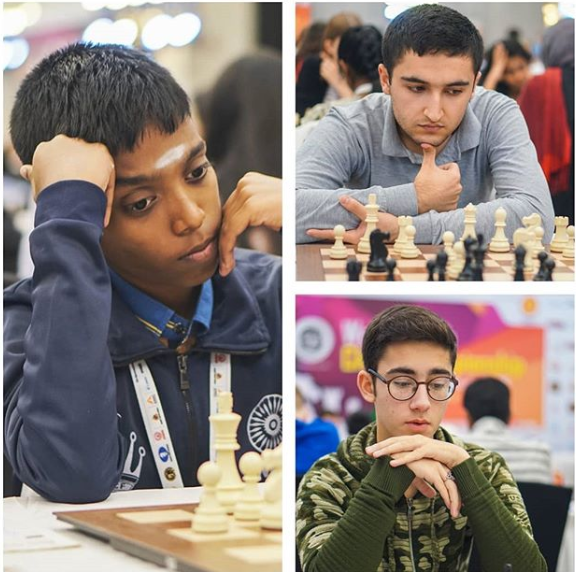
Six new World Champions will be crowned today in Mumbai (India) in the World Youth Chess Championship finishing at the Renaissance Convention Centre Hotel . Youngsters from 66 countries are competing in the Girls U14, Open U14, Girls U16, Open U16, Girls U18, and Open U18 categories. Here are the standings after Round 10 & key pairings for the last round that is now underway: Girls U14 1. Bat-Erdene Mungunzul (MGL) – 8 2-4. Eline Roebers (NED), Ekaterina Nasyrova (RUS) & Meruert Kamalidenova (KAZ) – 7½ Mungunzul – Ravi Rakshita (IND, 7) 0-1Kamalidenova – Roebers 1-0Diviya Deshmukh (IND, 7) – Nasyrova 1-0 Meruert Kamalidenova is the new champion Open U14 1. Aydin Suleimanli (AZE) – 82-6. L R Srihari (IND), R Abinandhan (IND), Alex Kobay (USA), Marc Morgunov (AUT), Vo Pham Thien Phuc (VIE) – 7½ Sultan Amanzhol (KAZ, 7) – Aydin Suleimanli 0-1Vo Pham Thien Phuc – L R Srihari ½ – ½Morgunov – Kobay ½ – ½Abinandhan – Sreeshwan Maralakshikaru (IND, 7) 0-1 Aydin Suleimanli (AZE) is the new champion Girls U16 1. Nazerke Nurgali (KAZ) – 8½2. Leya Garifullina (RUS) – 87 players are tied for 3rd with 7 points Govhar Beydullaeva (AZE, 7) – Nurgali 1-0Garifullina – Svitlana Demchenko (CAN, 7) ½ – ½ Leya Garifullina is the new champion (better tiebreaks) Open U16 1. Rudik Makarian (RUS) – 82-4. Ghosh Aronyak (IND), Stefan Pogosyan (RUS), Arash Daghli (IRI) – 7½ Pogosyan – Makarian ½ – ½Daghli – Aronyak ½ – ½ Rudik Makarian is the new champion Girls U18 1. Polina Shuvalova (RUS) – 82. Agrawal Vantika (IND) – 7½3-5. Alexandra Obolentseva (RUS), Zala Urh (SLO), Assel Serikbay (KAZ) – 7 Serikbay – Shuvalova ½ – ½Obolentseva – Vantika ½ – ½Urh – Honorata Kucharska (POL, 6½) ½ – ½ Polina Shuvalova defended her title Open U18 1. R Praggnanandhaa (IND) – 8½ 2. Shant Sargsyan – 83. Aryan Gholami (IRI) – 7½ Praggnanandhaa – Valentin Buckels (GER, 7) ½ – ½Kalyan Arjun (IND, 7) – Sargsyan ½ – ½Artur Davtyan (ARM, 7) – Gholami 1-0 R Praggnanandhaa is the new champion Official site Final report to follow…
Grand Swiss: Only five scored 100 percent
Round two of the Isle of Man Grand Swiss was marked by two events. First, the World Champion, after a difficult struggle, drew on board one against the excellently prepared 19-year-old Russian Alexey Sarana. Secondly, after just two rounds, in the field of 154 top-class chess players, only five have a maximum score of two out of two! The 100% group is led by the world No 2, Fabiano Caruana, who is at the top joined by Baskaran Adhiban of India, Wang Hao and Bu Xiangzhi of China, and Alexei Shirov of Spain. On the top board, the game between Magnus Carlsen and the 19-year-old Russian Alexey Sarana progressed very fast, with most pieces being exchanged within the first 50 minutes of play (by move 26, after a massive exchange). The Russian created a strong position, threatening Carlsen’s king who, in return, had a passing pawn on the queenside. Sarana obtained such an advantage that Carlsen was pushed to play very precisely in order to secure a draw. The dynamic and intriguing pace of the game between Carlsen and outsider Sarana attracted an unusually large number of GM spectators in the hall. After a large exchange of pieces, the Russian continued to press the World Champion towards a very tough endgame. Eventually, Carlsen had to let go of his bishop so he could find a way to a rook and knight vs rook endgame. Usually, it could be said that Magnus Carlsen gave away half a point, but in the case of the game against Sarana (their first-ever duel), it would seem more appropriate to say that the World Champion was fortunate to save half a point. Interestingly, what appeared a very dynamic and spontaneous game, with developments promising excitement, was, actually – all part of Sarana’s deep preparation, which went all the way to move 22!Young Indian prodigy pushes former World Champion challenger towards a fast draw The first game of the day to finish was that between former contender for the title of World Champion, Sergey Karjakin, and the 13-year-old Indian prodigy Raunak Sadhwani. The key moment of the duel was on move 18 when Black managed to build a stable position, creating a blockade in the middle and preventing White from advancing. After an exchange on the a-file, both players were left with a bishop and seven pawns each. Soon afterwards the bishops were exchanged and an even pawn endgame arose. A good start for the Indian prodigy who at the last year’s Isle of Man tournament also played a much-noticed game in which he almost defeated Viswanathan Anand after a spectacular attack.Top players mostly showed confidence in round two, as Vishy Anand bounces back Board two saw a big duel between two American players: Sam Sevian playing Fabiano Caruana. The latter managed to secure a pair of bishops and made a push on the kingside. Throughout the game, Caruana enjoyed the advantage of better time control which he used in the finish to find the precise way to trap the black king. Sevian tried to save the day with a stalemate trick, but Caruana saw straight through that. After five hours and 20 minutes of play, with one step away from promoting a pawn but facing a checkmate, Sam Sevian resigned.One tiny detail might have impacted Sam Sevian though: before the game, he realised he entered the playing room without his ID card and seemed somewhat uncomfortable about that until the arbiters gave him a temporary pass. One of the most serious hopefuls for the last place in the Candidates’, Levon Aronian played as white against Nijat Abasov of Azerbaijan (despite a rating of 2632, is not a member of his country’s Olympic team). While Aronian did secure the advantage, he was struggling to find the right path to break black’s defence. After a draw in round one, Aronian, however, again had to give half a point away. It will be interesting to see how Aronian plays in the coming rounds. This tournament is his last chance to qualify for the Candidates’ so – assuming he is aiming for that – he must come down hard on his upcoming opponents. One of the chess crowd’s favourites, Hikaru Nakamura scored a victory which boosted his chances but, maybe even more importantly, his confidence. Nakamura highlighted that he hasn’t played well recently, so all he wants at this tournament is to get his game going. Round two saw an interesting performance by Alexei Shirov, who with black pieces beat Erwin L’Ami and is in the small group of players with a maximum score after just two rounds. Shirov built a strong position, secured an extra pawn and then delivered a decisive blow with an excellent bishop to a4, attacking a pawn on b3.The defending Isle of Man champion, Radoslaw Wojtaszek scored a point against Aryan Tari of Norway and is now on 1.5 out of two. His wife Alina Kashlinskaya, however, was out of luck for the second game in a row. She faced David Howell of England who – as always, dicing with time trouble – secured an advantage and won. Ruslan Ponomariov, who celebrated his 36th birthday today, drew against Turkish GM, Mustafa Yilmaz. The former World champion is now in the middle of the pack, with one point out of two. After a shocking loss in the opening round, Viswanathan Anand – playing on board 62 (!) – bounced back defeating the Israeli GM Tal Baron.A double upset by two women players A big upset happened on board 74 as Indian GM S.P. Sethuraman (2624) lost to Elina Danielian, who is more than 250 points lower-rated. Playing the French Defence, Danielian sacrificed a pawn in the middlegame to activate her pieces and launch a forceful attack on the white king. As it usually the case in the life of a chess-player, S.P. Sethuraman refused an offer to repeat moves and draw, going for a win but eventually – lost the game. S.P. Sethuraman blundered badly in the 36th move and had to sacrifice his queen to avoid checkmate. Another notable game for the women players on the Isle of Man was that of Antoaneta Stefanova who
Grand Swiss started with an upset
Round one of the FIDE Chess.com Grand Swiss opened with a big surprise: Vishy Anand, one of the favorites for the first place at this event, suffered a loss to Evgeniy Najer in only 30 moves. World Champion Magnus Carlsen and No 2 Fabiano Caruana won their games and confirmed their lead starting positions in the tournament, while the fifth-seated Yu Yangyi is now third after securing a victory in the opening round. Altogether, 30 out of 154 players have won their first game at the Grand Swiss. The first day of the Isle of Man tournament was marked by a surprising defeat of India’s Viswanathan Anand in just 30 moves. Following a strong attack in which Russian GM Evgeniy Najer sacrificed a piece, Anand was struggling and eventually conceded defeat. After the game Najer said that he wasn’t fully sure how his move choices would play out, adding that he followed his intuition more. “The first moment I knew I was winning was just after the handshake”, Najer said after the game. There was almost another upset of Round 1, on the first board where the World Champion Magnus Carlsen, who was playing white, struggled against Ukrainian GM Yuriy Kuzubov. Although after the opening Carlsen had a more comfortable position, however, as the game developed it got worse. In a very direct game, Kuzubov managed to advance his pawn all the way to d2 and at one point had strong prospects of winning. The Ukrainian, however, ended in time trouble as he couldn’t find the right approach to breach Carlsen’s blockade. In the end, the World Champion got the better of the Ukrainian and won. [photo: Maria Emelianova] The top 20 boards: 10 decisive games and 10 draws On the second board, World No 2 Fabiano Caruana (who has already qualified for the Candidates’) played China’s Zhang Zhong. Caruana secured an extra pawn early in the opening and went on to win. What is interesting about this game is that until move 16 Caruana had seven of his pawns which did not move from their original position. One of the last games to finish among the elite was that of Sergey Karjakin who tried to edge a victory over Nijat Abasov of Azerbaijan. Abasov, however, managed to withstand the pressure from the Russian and after 90 moves the game ended in a draw. Fifth seated Yu Yangyi, who is now marking a decade since becoming a GM, defeated the Argentinian GM Sandro Mareco, after securing an extra pawn in a rook ending. Current European champion and 10th seated at the Isle of Man, Vladislav Artemiev won against Venezuela’s Eduardo Iturrizaga. Round One saw a slow start for last year’s Isle of Man winner, Radosław Wojtaszek (2748), who – after more than six hours and 79 moves, drew with 120-points lower-rated Axel Bachmann (2629). Also, among the other top dogs, a slower start for Welsey So, Alexander Grischuk, Levon Aronian and Hikaru Nakamura who all drew their games. Overall, on the top 20 boards, ten games ended in a draw, while white was victorious in seven, and black in three games. [photo: David Llada] A day of firsts for Jobava and Howell Interestingly, day one on the Isle of Man was a round of firsts for Baadur Jobava and David Howell (who – when asked to describe himself as a player in one word, said: “trixter”). It was the first time the two played against one another, which is hard to believe given their place in the chess elite! The game between them ended in a victory for the Georgian but had a very unusual start, with Jobava opening with b3, followed by h3 in move four, which was met by Howell’s h6. At one point in the middle-game Howell refused to repeat moves as he had a better position, but almost instantly he blundered which led to Jobava securing two pawns on his Kingside, forcing Howell to throw in the towel on move 54. [photo: David Llada] The highest-rated woman player starts with a draw In one of the last games of Round One, the highest-rated woman player, Harika Dronavali (2495), drew with Hungarian GM Ferenc Berkes, after 95 moves. The World’s Senior champion and Czech chess legend, Vlastimil Jansa, lost to the young Russian GM Alexey Sarana. Somewhat surprisingly, the Under-20 World Champion, Parham Maghsoodloo (2664) drew with German IM, Elisabeth Paehtz (2489) who is rated lower by almost 200 points. Narrowing the gap Overall, Round one of the Isle of Man Grand Swiss has shown that having about 100 rating points or more above your opponent does not guarantee a victory, with many of the top players conceding to a draw with the rating-underdogs. This could be a sign that the quality gap at the top 100+ in the chess world is narrowing and the Isle of Man Grand Swiss thus might be one of the toughest challenges for the world’s chess elite in history. The hero of the day: Evgeniy Najer “When you are playing with such a great GM as Anand, you can’t relax at any moment” Evgeniy Najer’s victory over Vishy Anand in Round One was the most interesting event on the opening day of the Isle of Man Grands Swiss. In an interview for chess.com after the game, Najer said that he realized the game was won “just when he [Anand] shook my hand. Not before”! When asked by FIDE was he expecting Anand to offer his hand at the point when he did, or carry on, Najer had this to say: “Honestly, at the final stage I didn’t see any good moves for Vishy. But, when you are playing with such a great GM as Anand, you can’t relax at any moment”. In his analysis of the game, Najer said that when he entered into the attacking combination which led to his victory, he followed his intuition more instead of having calculated everything clearly. “This was a tiring day for me because it was a very complicated game. When you play such a strong player like Vishy, you have other feelings, especially the feeling of big tension about the game. But after the big tension and the big win, comes