

FIDE Announces 2025 as the Year of Social Chess
At the FIDE General Assembly in Budapest, FIDE President Arkady Dvorkovich, alongside Dana Reizniece-Ozola and André Vögtlin, proudly announced that 2025 would be dedicated as the “Year of Social Chess.” This groundbreaking initiative will leverage the power of chess to address some of the world’s most pressing social issues, promoting inclusivity, education, and mental well-being. A Year for Global Impact The Year of Social Chess aims to bring chess to diverse communities and settings, from prisons and refugee camps to elderly care homes and addiction recovery centers. By focusing on chess as a tool for social good, FIDE will champion projects that foster cognitive development, community building, and rehabilitation. “Our goal is to make chess a force for positive change,” said FIDE President Arkady Dvorkovich. “With the Year of Social Chess, we will bring chess to the forefront of social innovation, connecting people across the world and making a real difference in their lives.” Key Initiatives Throughout 2025, FIDE will host a series of events and initiatives, including: ● January: A worldwide online social chess event, engaging players globally, to kick off the year. ● March: “Chess for Protection” projects in refugee camps and underserved communities. ● May: The “Chess for Freedom Conference” in Georgia, highlighting the role of chess in prison rehabilitation programs. ● July: Initiatives focused on using chess as a therapeutic tool in addiction recovery and psychiatric care. ● October: An Intercontinental Online Championship for prisoners, connecting inmates from across the globe through chess. ● December: The year will conclude with a Social Chess Documentary Film Festival, showcasing the stories of chess changing lives around the world. FIDE invites chess federations, players, and organizations worldwide to join the movement. With fundraising efforts, research initiatives, and various programs, 2025 will be a year when chess transforms lives. To learn more about upcoming events and how to get involved, visit the official Social Chess website, launching later this year. Let’s unite for a year of social change—through the power of chess.
Olympiad qualification spots for 2025 World Cup and Women’s World Cup announced
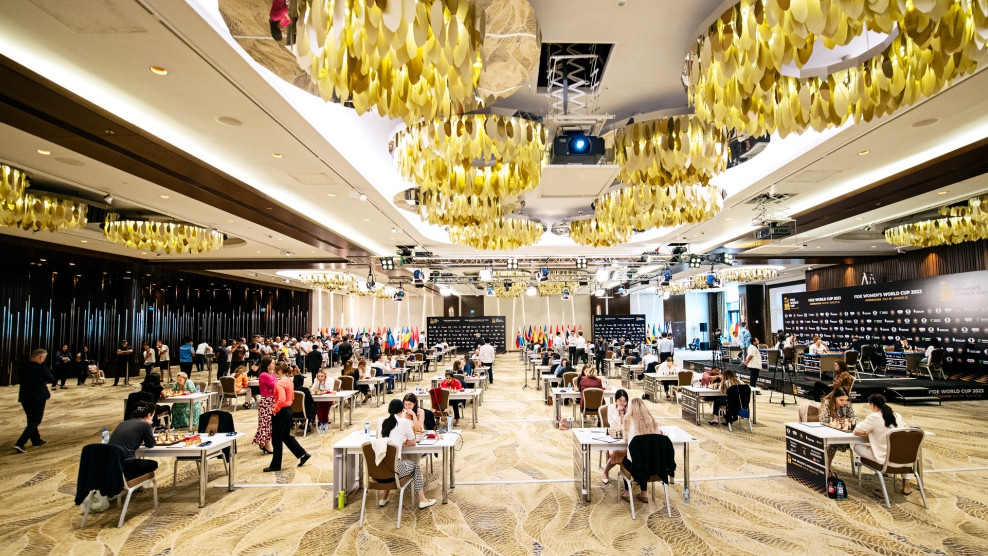
FIDE announces the allocation of Olympiad spots for 2025 World Cup and Women’s World Cup through the 45th Chess Olympiad performance FIDE is pleased to announce the allocation of qualification spots for the 2025 FIDE World Cup and Women’s World Cup, based on the results of the 45th Chess Olympiad, held in Budapest. These prestigious tournaments will showcase top players who earned their spots through exceptional showings at the Olympiad, as well as through other qualification paths. Key Points: 100 spots will be distributed based on final rankings from the Open section of the 45th Chess Olympiad. 50 spots have been awarded to federations in the Women’s section. No federation can claim more than one spot, even if they fielded multiple teams. Continental cap: No more than 40 federations from any single continent can receive spots in the Open section. Spot transfers to Continental Events In total, 80 national federations from the Open section and 35 federations from the Women’s section have secured places for the 2025 World Cup and Women’s World Cup, respectively. These Olympiad-based slots will go to the top-performing national teams, ensuring that the cream of the crop from the Olympiad will be competing on chess’s biggest stage. FIDE World Cup / Women’s World Cup regulations allow each continent to transfer allocated Olympiad spots to continental events. This gives continental federations more flexibility in offering World Cup qualification through local competition. Before the Olympiad, both Europe and the Americas chose to exercise this option, transferring a portion of their Olympiad-earned spots to upcoming continental tournaments. This adjustment provides added opportunities for players to qualify regionally and encourages even stronger competition at the continental level. FIDE World Cup 2025 Rg FED TEAM 1 IND India 2 USA United States of America 3 UZB Uzbekistan 4 CHN China 5 SRB Serbia 6 ARM Armenia 7 GER Germany 8 AZE Azerbaijan 9 SLO Slovenia 10 ESP Spain 11 HUN Hungary 12 TUR Turkiye 13 GRE Greece 14 NOR Norway 15 FRA France 16 UKR Ukraine 17 ROU Romania 18 CZE Czech Republic 19 GEO Georgia 20 ENG England 21 NED Netherlands 22 POL Poland 23 MDA Moldova 24 TKM Turkmenistan 25 VIE Vietnam 26 IRI Iran 27 BUL Bulgaria 28 LAT Latvia 29 KAZ Kazakhstan 30 SWE Sweden 31 COL Colombia 32 AUT Austria 33 CRO Croatia 34 CAN Canada 35 BRA Brazil 36 ARG Argentina 37 MEX Mexico 38 EGY Egypt 39 CHI Chile 40 LTU Lithuania 41 MNE Montenegro 42 ITA Italy 43 SUI Switzerland 44 AUS Australia 45 CUB Cuba 46 URU Uruguay 47 BIH Bosnia & Herzegovina 48 PER Peru 49 SGP Singapore 50 ZIM Zimbabwe 51 PHI Philippines 52 MGL Mongolia 53 TJK Tajikistan 54 KGZ Kyrgyzstan 55 RSA South Africa 56 JPN Japan 57 NZL New Zealand 58 ALG Algeria 59 INA Indonesia 60 BAN Bangladesh 61 IRQ Iraq 62 MAS Malaysia 63 THA Thailand 64 PLE Palestine 65 ANG Angola 66 SRI Sri Lanka 67 NGR Nigeria 68 ZAM Zambia 69 PAK Pakistan 70 TUN Tunisia 71 MAR Morocco 72 NAM Namibia 73 KOR South Korea 74 UAE United Arab Emirates 75 TPE Chinese Taipei 76 MAD Madagascar 77 AFG Afghanistan 78 HKG Hong Kong, China 79 LBA Libya 80 KSA Saudi Arabia FIDE Women’s World Cup 2025 Rg FED TEAM 1 IND India 2 KAZ Kazakhstan 3 USA United States of America 4 ESP Spain 5 ARM Armenia 6 GEO Georgia 7 CHN China 8 UKR Ukraine 9 POL Poland 10 BUL Bulgaria 11 ARG Argentina 12 UZB Uzbekistan 13 ISR Israel 14 HUN Hungary 15 AZE Azerbaijan 16 MGL Mongolia 17 GRE Greece 18 FRA France 19 SUI Switzerland 20 CAN Canada 21 VIE Vietnam 22 PHI Philippines 23 TKM Turkmenistan 24 MAS Malaysia 25 AUS Australia 26 IRI Iran 27 PER Peru 28 SRI Sri Lanka 29 NZL New Zealand 30 EGY Egypt 31 UAE United Arab Emirates 32 INA Indonesia 33 ANG Angola 34 HKG Hong Kong, China 35 TJK Tajikistan Olympiad spots transferred to Continental Events in accordance with decisions of Continental federations What’s next for Federations? Each federation that has earned a spot must now decide which player will represent them, selecting one of their team members from the 2024 Olympiad. However, if all team members qualify for the World Cup via another pathway or decline the opportunity, the federation has the discretion to allocate the spot to another player of its choosing. Federations are expected to confirm their representatives between June 1 and June 10, 2025. FIDE is eager to see how these Olympiad qualifiers perform in the 2025 World Cup and Women’s World Cup and remains committed to supporting the continued global growth of chess talent. For further details, refer to the official qualification guidelines: World Cup Qualification Regulations Women’s World Cup Qualification Regulations For any questions or additional information, please contact the Global Strategy Commission at gsc@fide.com.
FIDE World Senior Team Championship 2025: Registration is open
FIDE, the Czech Chess Federation and AVE CHESS agency invite all FIDE member federations and eligible teams to participate in the 2025 World Senior Team Chess Championship. The competition will take place in Prague (the Czech Republic) from February 16 (arrival) to February 27, 2025 (departure). There will be two categories: Open age 50+ and Open age 65+ with separate events for women. The player must have reached or reach the required age during the year of competition. Teams can register only through their national chess federations. Separate Women’s Championship(s) will be held if there are at least ten teams registered from at least two continents. Otherwise, women’s teams will play in Open competition. The deadline for the registration is January 1, 2025. FIDE Senior Teams Championship official website will be launched during the first week of October. Official website: worldseniorteam2025.fide.com Email: worldseniorteam@fide.com WSTCC 2025 Invitation Letter and Regulations (PDF)
Key Decisions from the 2024 FIDE General Assembly
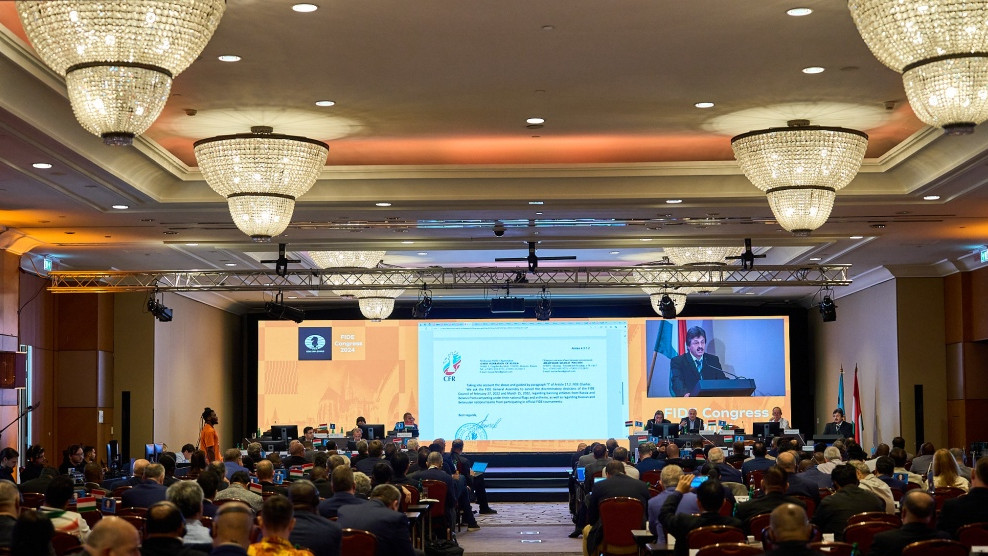
On 21/22 September, FIDE conducted its General Assembly meeting in Budapest. The meeting, broadcast live and open to the public, saw votes on new members for the Constitutional Commission, Ethics and Disciplinary Commission, and Verification Commission, alongside decisions on proposals from member federations The General Assembly began with FIDE President Arkady Dvorkovich presenting a report on the work of his team. Dvorkovich highlighted that, since the previous General Assembly in 2023, FIDE’s focus had been on three main pillars: the organization and enhancement of top-level events; social activities, including the celebration of FIDE’s centenary; and administrative support for federations and FIDE operations. He emphasized the successful execution of all FIDE events during this period, adding that “95% of events for next year have already been determined,” covering everything from the event programs to logistics, including organization and accommodation. FIDE Treasurer Zhu Chen reported that in 2023, the organization achieved the largest revenue ever and had a stable financial situation. However, a decline in sponsorship revenue was flagged as a concern. This issue was echoed in the report by the head of the Verification Commission, Allen Priest, who called on FIDE to pursue alternative revenue streams to compensate for declined sponsorship. Overall, in 2023, FIDE had a net income of 1,044,592 euros and, at the end of the year, had 6.9 million euros in bank accounts. A detailed breakdown of FIDE’s financial situation is available in the Audit Report by Ernst & Young and the Verification Commission’s Report. The elections for three FIDE Commissions In accordance with the FIDE Charter and the FIDE Electoral Rules, the elections of the Chairpersons and members of the Verification Commission, Ethics and Disciplinary Commission and Constitutional Commission took place at the FIDE General Assembly on September 21/22, in Budapest, Hungary. On the first day of the General Assembly, due to technical issues with the electronic voting system, which is managed by an independent Hungarian company, chosen and hired by the local organizers, FIDE switched to the traditional ballot box method. Although all pre-event tests, including one at the start of the General Assembly, had been successfully completed, an issue arose during the main vote, prompting FIDE to adjust the election process. Constitutional Commission Roberto Rivello (Italy) was re-elected as Chairman of the Constitutional Commission, running unopposed. In line with FIDE tradition, as there were no objections, Rivello’s re-election was confirmed by applause. For the position of the FIDE Constitutional Commission members (four places), the following were elected based on the votes of 161 delegates who took part in the voting. The results, in order of votes received, were: Erald Dervishi (Albania) – 78 votes; Ian Wilkinson (Jamaica) – 75 votes; Marouane Tabti (Algeria) –74 votes Jorge Arias Bouzada (Uruguay) –73 votes Ivy Claire Amoko (Uganda) –70 votes Yanori Morera Campos (Costa Rica) –60 votes To assure gender balance inside FIDE elected Commissions, FIDE regulations force that both genders must be represented among elected members of these Commissions, meaning that “if all the most voted candidates are of the same gender, the less voted of them will not be elected, and the most voted candidate of the other gender will be elected” (art. 24.10. of the FIDE Electoral Rules). Based on this provision, Ivy Claire Amoko from Uganda was elected as the fourth member instead of Jorge Arias Bouzada from Uruguay. Verification Commission In the elections for the Chairman of the Verification Commission Allen Priest (USA) was elected as the only candidate. In the elections for the members of the Verification Commission (four places), 161 delegates voted and the results were: Gulmira Dauletova (Kazakhstan) – 85 votesEric Bopala (Canada) –77 votesMalcolm Powell (Cayman Islands) – 76 votesPanu Laine (Finland) –68 votesAlexander von Gleich (Germany) –60 votesRajai Al Susi (Palestine) – 58 votesKen Koort (Estonia) – 49 votes Ethics and Disciplinary Commission In the election for Chairman of the Ethics and Disciplinary Commission, Yolander Persaud of Guyana won after the second round. In the first round of the election for FIDE EDC chairman, Yolander Persaud (Guyana) had 77 votes, while Daniel Florea (Romania) got 59 votes. Babur Tolbaev (Kyrgyzstan) was eliminated after coming in third (with 27 votes). In the second round, of the 161 delegates who voted, the results were: Yolander Persaud (Guyana) – 86 votesDaniel Florea (Romania) – 75 votes Next, the election for the six members of the Ethics and Disciplinary Commission took place. Following the rule 24.4. which states that “a defeated candidate for a position of chairman may accept nominations for the position of member of the same commission, submitting his or her candidacy before the beginning of the procedures for these elections,” Babur Tolbaev placed forward his candidacy as a member of the Ethics and Disciplinary Commission. Altogether, 150 delegates voted with one abstention, with eight candidates running. The results were as follows: Khaled Arfa (Tunisia) – 103 votesDavid Hater (USA) – 95 votesOlga Baskakova (Kazakhstan) – 79 votesRavindra Dongre (India) –79 votesAlan Borda (Bolivia) –78 votesAli Nihat Yazici (Turkey) – 73 votesYanori Morera Campos (Costa Rica) –56 votesBabur Tolbaev (Kyrgyzstan) – 48 votes Other notable decisions FIDE also voted to support the proposal from Kazakhstan’s chess federation president, Timur Turlov, to make The International School Chess Federation (ISCF) FIDE’s Affiliated organization. In his speech to the General Assembly, Timur Turlov explained that the mission of the ISCF would be to unite national school chess associations and support the global integration of chess into school curricula. Additionally, FIDE approved the formation of the Turkic-speaking Countries’ Chess Association as an affiliated organization. The application, presented by Azerbaijan and supported by several Turkophone states, seeks to develop chess in nations with shared linguistic and cultural ties. Gunnar Bjornsson, president of the Icelandic Chess Federation, presented the application from the Greenlandic Chess Federation, which applied to become an Affiliated Member of FIDE. “Chess, while very new in its organized form, has a surprisingly long connection to Greenland. The famous Lewis chessmen, a collection of medieval chess pieces, have been definitively proven to be crafted from
Triumphant moments: Celebrating the winners of 45th Chess Olympiad
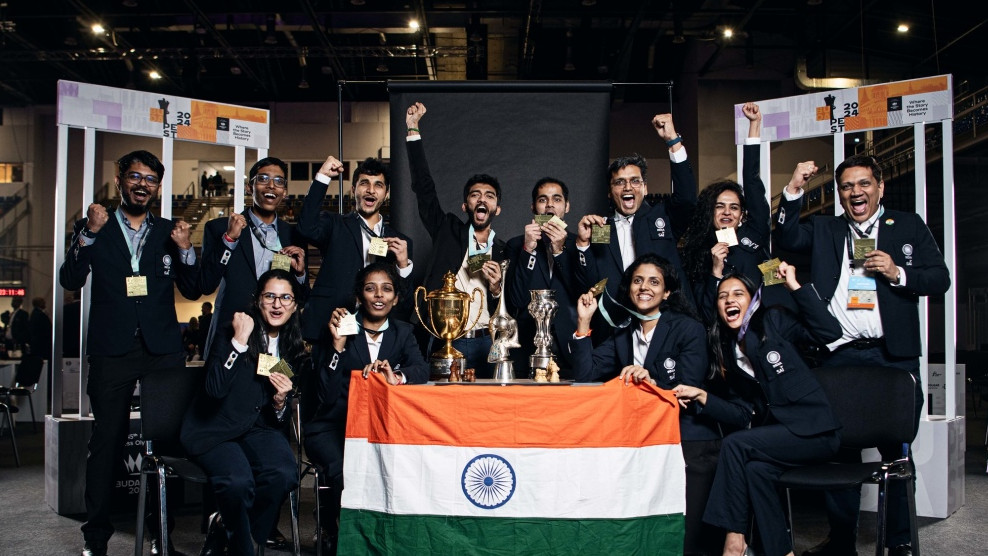
The Closing Ceremony of the 45th Chess Olympiad was held at the BOK Sports and Conference Centre, the event’s main venue. The stage was set, transforming the tournament’s playing hall into a celebratory space. Before the ceremony began, players, officials, and guests took their seats while the final press conference was held in the Olympiad’s press center. Members of the victorious Indian teams participated, including Srinath Narayanan, Captain of the Indian Open Team; Gukesh D, Board One of the Indian Open Team; Arjun Erigaisi, Board Three of the Indian Open Team; Abhijit Kunte, Captain of the Women’s Team; Harika Dronavalli, Board One of the Indian Women’s Team; and Divya Deshmukh, Board Three of the Indian Women’s Team. The atmosphere was light-hearted, with players shedding the seriousness and pressure of the tournament and all smiling. Gukesh D: “It was a very nice experience for me personally and for the team. I am super happy with how I played and how we performed together as a team. Right now, I feel a bit tired since the adrenaline is out, but I am super happy with how things went. This was a dream.” Divya Deshmukh: “It started off quite well, but in the middle, we had a few setbacks. I am really proud of how we handled it. We fought back with resilience, and finally, we are here with the gold medal. I am overwhelmed with emotions.” Harika Dronavalli: “For me, it is much more emotional than for the others. I’ve been playing for 20 years to see a gold medal, and I am glad that finally, I see India on top of the podium. I am happy and proud of the girls. The youngsters came up on the team, and they did extremely well.” At the conclusion of the press conference, the participants moved to the award ceremony hall together with the journalists. Welcome speeches were delivered by Zoltán Polyánszky, President of the Hungarian Chess Federation, and Arkady Dvorkovich, FIDE President. Arkady Dvorkovich said: “Over the past two weeks, we’ve witnessed history being made here in Budapest. From all corners of the globe, top players, living legends, and future champions have competed for the most prestigious team title in our sport – the title of Chess Olympiad Champions. Among the nearly 200 nations that participated, one country stood a step ahead of the rest. I want to extend my heartfelt congratulations to India for their remarkable achievement of winning Olympic gold in both the Open and Women’s competitions!” The FIDE President thanked the teams and their captains, the Hungarian Chess Federation, the local organizing team, the FIDE team, the arbiters, fair play officers, the appeals commission, the broadcast teams, and every single person who worked behind the scenes to ensure that both the Olympiad and the General Assembly ran smoothly. And with that, the Chief Arbiter Ivan Syrovy and Deputy Chief Arbiter Sabrina de San Bicente entered the stage, and the award ceremony started. This Olympiad became the biggest in history, with 188 teams in the Open and 169 teams in the women’s section. Not all of them contested for the highest places, but to mark their achievements, special prizes in rating categories were awarded. Tshepiso Lopang, President of the African Chess Confederation, and Jose Antonio Carrillo, President of the Confederation of Chess for Americas, were invited to the stage to award the prize-winning teams in categories E, D, and C. Timur Turlov, President of Kazakhstan Chess Federation, awarded the teams in categories B and A. Open, Group A: China, Serbia, ArmeniaWomen, Group A: Spain, Armenia, GeorgiaOpen, Group B: Turkmenistan, Latvia, KazakhstanWomen, Group B: Philippines, Montenegro, LatviaOpen, Group C: Ecuador, Zimbabwe, TajikistanWomen, Group C: Turkmenistan, Malaysia, Sri LankaOpen, Group D: Sri Lanka, Liechtenstein, PakistanWomen, Group D: Hong Kong, China; Thailand, MozambiqueOpen, Group E: Myanmar, Qatar, EswatiniWomen, Group E: Cameroon, Cayman Islands, Netherlands Antilles A dance performance combining Hungarian folk dance heritage and youthful energy marked the transition to the next part of the closing ceremony. The Chess Olympiad is a vibrant mosaic of styles, colors, and designs, and it has become a tradition to choose the best chess uniforms worn by the teams. The special jury had a tough job selecting the winners, and here are the awardees: Women’s section, best classic team uniform: CAYMAN ISLANDS Open section, best classic team uniform: ESWATINI Women’s section, best sport team uniform: BARBADOS Open section, best sport team uniform: ST. LUCIA Women’s section, best original team uniform: ETHIOPIA Open section, best original team uniform: VANUATU The awards were given by Dana Reizniece-Ozola, Deputy Chair of the FIDE Management Board. The ceremony continued with a captivating performance by Juga, a Chilean singer and songwriter renowned for her chess-inspired songs and videos. She sang “Colorblind,” an ode to chess, and later delighted the audience with one of her most popular pieces, “Oh, Capablanca.” The Chess Olympiad is a team event, but the best individual performances are also highly valued and awarded with medals. Let’s celebrate all the winners, the best players on their boards who were the driving forces of their teams! Open – Board 1: Gold: Gukesh D, IndiaSilver: Nodirbek Abdusattorov, UzbekistanBronze: Magnus Carlsen, Norway Women – Board 1: Gold: Zhu Jiner, ChinaSilver: Sarasadat Khademalsharieh, SpainBronze: Nana Dzagnidze, Georgia Open – Board 2: Gold: Nguyen Thai Dai Van, Czech RepublicSilver: Toni Lazov, North MacedoniaBronze: Ediz Gurel, Turkiye Women – Board 2: Gold: Carissa Yip, USASilver: Elisabeth Paehtz, GermanyBronze: Song Yuxin, China Open – Board 3: Gold: Arjun Erigaisi, IndiaSilver: Yu Yangyi, ChinaBronze: Le Tuan Minh, Vietnam Women – Board 3: Gold: Divya Deshmukh, IndiaSilver: Sabrina Vega Gutierrez, SpainBronze: Elina Danielian, Armenia Open – Board 4: Gold: Shamsiddin Vokhidov, UzbekistanSilver: Levon Aronian, USABronze: Alan Pichot, Spain Women – Board 4: Gold: Vantika Agrawal, IndiaSilver: Alice Lee, USABronze: Anna M. Sargsyan, Armenia Open – Reserve Board: Gold: Frederik Svane, GermanySilver: Benjamin Gledura, HungaryBronze: Velimir Ivic, Serbia Women – Reserve Board: Gold: Dana Kochavi, IsraelSilver: Nodira Nadirjanova, UzbekistanBronze: Lu Miaoyi, China Former world champions, grandmasters Zhu Chen and Xie Jun, awarded the winners on the reserve board and board four. Hungarian chess legends Sofia and Susan Polgar presented the
India triumphs at 45th Chess Olympiad, winning both Open and Women’s competitions
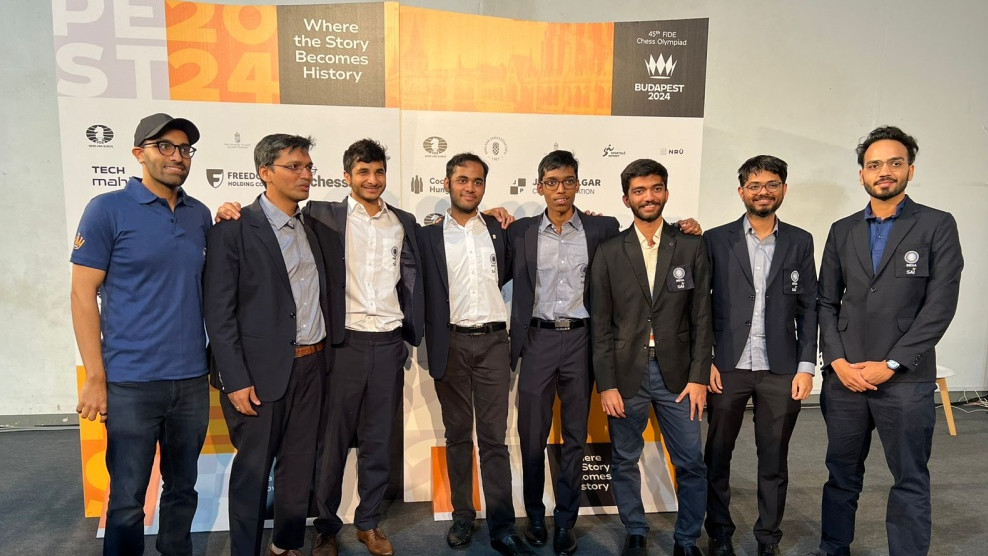
India has come a long way since Vishy Anand paved the way for the new generation of chess players. Young talents have emerged and grown to become some of the top players in the world. Gukesh D triumphed at the Candidates Tournament earlier this year, and now India has completely dominated the 45th Chess Olympiad. The team of Gukesh D, Praggnanandhaa R, Arjun Erigaisi, Vidit Gujrathi, and Harikrishna Pentala, with Srinath Narayanan as the captain, led throughout the tournament, winning 10 matches and drawing just one. Before the last round, they were 2 points ahead of China. In the final round, India only needed a draw to clinch the gold medals or for China not to win their match. However, India continued to press for a win and defeated Slovenia 3.5-0.5. Gukesh played a phenomenal tournament, scoring 9 points in 10 games and earning the individual gold medal on the top board. Arjun Erigaisi was also a hero of the team, scoring 10 points in 11 games and winning individual gold on board three. Both significantly improved their FIDE ratings and are close to clearing the 2800 bar. In fact, Erigaisi is only a couple of points short of this feat. The women’s team had a very strong start, leading the event after 7 rounds, having won all their matches. They stumbled in round 8, losing to Poland and then drawing with Team USA, but made a strong finish. Going into the final round, India was tied for first with Kazakhstan, and the race for the medals was down to the wire. The team of Harika Dronavalli, Vaishali R, Divya Deshmukh, Vantika Agrawal, and Tania Sachdev, with Abhijit Kunte as the captain, demonstrated excellent composure and delivered, winning the final match against Azerbaijan 3.5-0.5. At the same time, Kazakhstan only drew with the USA 2-2, making India the sole winners of the event. 18-year-old Divya Deshmukh, a new addition to the team, was unstoppable throughout the event. She played all games, scored 9.5 points, and secured the crucial victory in the final match. Individual gold on board three is a well-deserved award for her. The fight for silver and bronze medals was fierce in both sections. Five teams tied for second place. Team USA, the event’s rating favorite, defeated China in a hard-fought final round to join them at 17 points. Defending champions Uzbekistan narrowly beat France, Serbia triumphed over Ukraine 3.5-0.5, and Armenia narrowly defeated Iran, all to join the pack at 17 points. The tiebreaks favored the USA, which claimed silver, and Uzbekistan, taking bronze. In the women’s section, Kazakhstan delivered a strong performance throughout the event, fighting for gold until the very end, and ultimately claimed silver. Four teams – USA, Spain, Armenia, and Georgia – tied for third place, but the tiebreaks favored team USA, which claimed the bronze medals. Results of the top matches in the final round: Open: (16) Slovenia 0.5-3.5 India (19)(17) China 1.5-2.5 USA (15)(15) Spain 2-2 Hungary (15)(15) Uzbekistan 2.5-1.5 France (15)(15) Serbia 3.5-0.5 Ukraine (15)(15) Armenia 2.5-1.5 Iran (14) Women: (17) Kazakhstan 2-2 USA (16)(17) India 3.5-0.5 Azerbaijan (15)(16) Poland 0.5-3.5 Georgia (15)(15) Hungary 0.5-3.5 Spain (15)(15) Armenia 3-1 Germany (14) Final standings of the top teams: Open: India – 21 USA – 17 Uzbekistan – 17 China – 17 Serbia – 17 Armenia – 17 Germany – 16 Azerbaijan – 16 Slovenia – 16 Spain – 16 Women: India – 19 Kazakhstan – 18 USA – 17 Spain – 17 Armenia – 17 Georgia – 17 China – 16 Ukraine – 16 Poland – 16 Bulgaria – 16 Full results: Chess-results.com – 45th Chess Olympiad Written by WGM Anna Burtasova Photos: Michal Walusza, Mark Livshitz and Maria Emelianova See more Round 11 photos on FIDE Flickr Official website: chessolympiad2024.fide.com
Women & chess: FIDE’s mission to bridge gender gaps

During the 45th Chess Olympiad in Budapest, the Women’s Commission hosted the “Women & Chess & Balance” conference—a gathering dedicated to exploring how chess can drive gender equality and empower women both on and off the board The event brought together experts, advocates, and chess professionals from around the globe, tackling the multifaceted challenges women face in the chess world while also offering forward-thinking solutions that extend beyond the game. Leontxo García, the renowned Spanish chess commentator and author, hosted the conference, guiding an audience through an intense day of presentations, panels and discussions. Dana Reizniece-Ozola, Deputy Chair of FIDE’s Management Board, opened the conference with a powerful message on FIDE’s commitment to supporting women in chess and beyond. Reizniece-Ozola, who also served as Latvia’s Minister of Finance, spoke candidly about her experiences navigating male-dominated fields. “I see it as my personal mission and very much FIDE’s mission to improve women’s chess… We want to encourage young women chess players not to stop their active chess careers”. Reizniece-Ozola emphasized FIDE’s mission to enhance opportunities for women in chess, notably focusing on increasing female participation in the Olympiads and reducing the prize gaps between open and women’s events. Anastasia Sorokina, Chair of the Women’s Chess Commission, added to this by highlighting efforts to integrate more women into chess roles outside of playing—encouraging participation as organizers, arbiters, and even media professionals. The National Female Team Initiative TrisAnn Richards, President of the Saint Lucia Chess Federation, introduced the National Female Team Initiative, aimed at increasing the number of female teams participating in major chess events. The initiative was launched to tackle disparities between male and female representation in the Olympiads, citing a 2022 statistic where only 151 female teams competed compared to 188 male teams. By identifying structural issues like funding and lack of female players, the initiative seeks to secure more investment in women’s chess, elevating its status worldwide. Managing your mate: Aruna Anand’s view Aruna Anand, wife and former manager of five-time World Chess Champion Vishy Anand, shared personal insights about the unique challenges of managing both a family and a world chess champion. An advertising professional by education, she was the manager of her husband and five-time world champion, Vishy Anand. Her reflections on balancing personal and professional life resonated deeply with attendees, showcasing how even in the fast-paced world of professional chess, family support is pivotal. ChessMom: A game-changer for female players with children For the first time ever at a chess Olympiad, mothers of newly born/young children were able to bring them, alongside with an accompanying person, to be with them during the competition. This is thanks to the ChessMom project launched last year, initiated by Cruz Arce, Francisco J. (Puerto Rico) who explained how a team member from his country ended up missing an event because she had a child. “I thought – how many players have we lost because of this… We want to mitigate the impact on female players – so they have an accompanying person with them. These five players who came to the Olympiad [in Budapest] are a message we are sending. “What’s next? We want this to increase and not be limited only to the chess Olympiad. We want the federations to be involved as well. America is the first one to do it. In November, we have the female continental tournament, and we want to spread the word and have other nations join this effort”. Round table on work-life balance Judit Polgar, the strongest female chess player in history, shared her experiences during a round table discussion on balancing family life and a professional chess career. Speaking about her challenges as a mother and a chess player, Polgar explained how becoming a parent impacted her chess career and life: “Everything changed when my son was born. We wanted him very much. I started to play more relaxed [after that]. In the first tournament after having a baby, I understood that a chess tournament can be a relaxation. “Priorities completely changed, but I felt much better – like a complete person. Chess was very important for me but not as before. When I was not cooking and dealing with the kids, then I was focusing more on chess. I became more efficient, I guess”, Polgar said. Gender equality and the “motherhood penalty” in chess Australian Grandmaster David Smerdon, an economist and FIDE WOM member, shed light on the existing gaps in chess performance between men and women. Citing scientific papers and research data, Smerdon pointed out that the gap between women and men in event participation is narrowing but noted a high-performance gap. The reasons for this, according to research cited by Smerdon, are – social stereotypes, differences in attitudes towards risk between men and women but, also, the “motherhood penalty” – where the data showed that women chess players lose ELO when they give birth, while the ELO remains the same for male players who have just become parents. Smerdon said that there is “a lot of research in the field” and that there are still many unanswered questions in this field. Chess for peace: Empowering refugees through the game Ukrainian WGM, photographer, commentator, and journalist Anastasia Karlovich shared moving insights into her work with refugees from Ukraine and the Kakuma camp in Kenya, focusing on how chess has provided solace and empowerment to girls affected by war. She emphasized that chess, beyond being a game, became a therapeutic tool, offering a sense of control and mental discipline during times of chaos. In particular, five participants from Ukraine who came to Hungary for the event shared their stories. These girls spoke of how chess gave them not only a mental escape but also a source of strength and confidence in an uncertain world. Written by Milan Dinic Photos: Denis Burko
How chess is transforming lives: 2024 #SocialChess Conference in Budapest
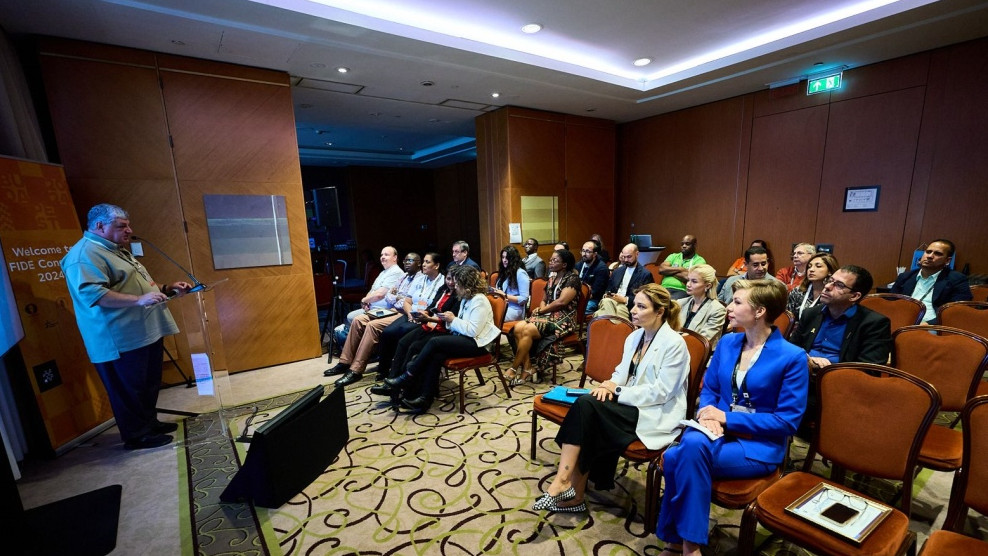
On September 21, 2024, Budapest hosted the #SocialChess conference, a gathering of FIDE officials, Social Commission members, and project leaders dedicated to leveraging chess for societal good. The event underscored FIDE’s commitment to using chess as a transformative tool across various social initiatives worldwide, with the announcement of 2025 being declared as the “Social Chess Year.” The conference was opened by Dana Reizniece-Ozola, Deputy Chair of the FIDE Management Board, who stressed the importance of collective action in bringing positive change through chess. “This meeting allows us to share ideas, updates, and plans for the future,” she said. Reizniece-Ozola invoked a poignant quote from Imants Ziedonis, a renowned Latvian poet: “You can gain by taking, but you can also gain by giving. And those things that you give away, nobody can take from you.” She suggested this could serve as a guiding motto for the Social Commission, affirming that “this is just the beginning. We are helping people change lives with a wonderful tool we have in our hands—chess.” 2025: The Year of Social Chess André Vögtlin, Chair of the FIDE Social Commission, introduced the central theme of 2025 as the “Year of Social Chess.” In line with FIDE’s 10 goals for the next 100 years, he emphasized that social impact stands as a crucial objective. Vögtlin invited federations, organizations, and individuals involved in social outreach through chess to collaborate with FIDE in advancing this mission. Project highlights Several major initiatives spearheaded by the Social Commission were showcased during the conference, revealing the profound influence chess can have in different social contexts. – Chess for Protection: Sonja Johnson, a FIDE Social Commission member, presented updates on this initiative, particularly its work in Kenya’s Kakuma refugee camp. Partnering with UNHCR, FIDE has been teaching chess to children, offering them a valuable educational and social tool. Despite the camp’s challenging conditions, Johnson reported that 1,350 primary school students and 350 secondary students are now involved in the program. She also shared the success of increasing female participation and the inspiring story of students transitioning into facilitators. A documentary is in production to raise awareness and attract new partners for the project’s future growth. The initiative is also set to expand to the Americas, including the US-Mexico border and Panama. – Chess for Freedom: Mikhail Korenman, FIDE Social Commission Councillor, reported on the success of this project aimed at rehabilitating inmates through chess. Initially launched at Cook County Jail in the U.S., the project has shown significant behavioral improvements among inmates who participated in chess coaching for six months or longer. Korenman shared plans for expansion, including increasing the number of participating countries and correctional institutions, with aspirations to elevate the current intercontinental tournament to a full-fledged world championship for inmates. – Infinite Chess: Maria Tamkovich, the project’s coordinator, delivered a presentation on using chess to assist children with ASD. Since its inception in 2021, the project has grown to involve 19 countries. A handbook for teaching chess to children with ASD, now available in multiple languages, has been a crucial resource. Tamkovich also provided insights from recent research, highlighting chess’s positive impact on cognitive and behavioral development in children with ASD. Testimonials from project facilitators and therapists accompanied her presentation. – Chess for elderly and Chess for life: PD Dr. Prabhita Urwyler, who leads this initiative, discussed how chess can play a vital role in improving cognitive health and social engagement among the elderly as well as among those suffering from addiction and addictive behaviour. Dr. Urwyler explained that the project targets retirement homes, community centers, and care facilities across different countries, with a focus on non-competitive, social chess. Examples from Turkey, Switzerland, Spain, and Sweden illustrated how cultural considerations are integrated into each program. “Healthy Chess” in Menorca and Stockholm’s intergenerational “Let’s Play Chess for Everyone” program were particular highlights. The project also seeks to explore the therapeutic potential of chess in combating addiction, particularly in the context of substance abuse recovery. – Chess and Cancer (Project 2C): In one of the most moving sessions of the conference, Susana Gonçalves, co-founder of Chess2All, spoke about Project 2C, which brings chess to cancer patients. Launched in Portugal, this initiative aims to provide emotional support and cognitive stimulation to those undergoing cancer treatment. Gonçalves shared how chess trainers are specially trained to work with patients, ensuring the approach is both ethical and compassionate. The project plans to launch the Queen’s RISE initiative in March 2024, focused on supporting women with breast cancer through chess as part of their therapy. A unified mission for 2025 and beyond The final message of the conference was one of unity and action. As FIDE prepares for 2025, the Year of Social Chess, the call for global participation was clear: chess is not just a game but a powerful tool for social change. By connecting communities, empowering the vulnerable, and offering second chances, FIDE’s Social Commission is actively shaping a brighter future. Written by Milan Dinic Photos: Hungarian Chess Federation
45th Chess Olympiad: India dominates open; women’s event goes down to the wire
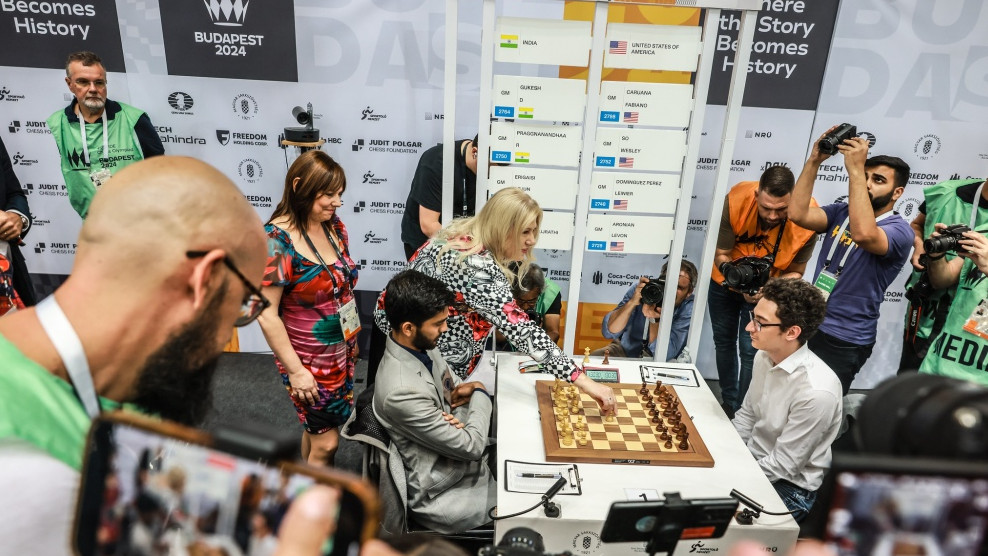
India is unstoppable! The crucial match of the Chess Olympiad, India vs. USA, ended in a 2.5-1.5 victory for India, marking their ninth win. The first ceremonial move in this important encounter was made by Hungarian legends Susan and Sofia Polgar. Wesley So opened the scoring for the USA by defeating Praggnanandhaa R, but this was merely a consolation for team USA. By the time this game ended, two prodigies of the Indian team, Gukesh D and Arjun Erigaisi, were already winning their games against Fabiano Caruana and Lenier Dominguez, respectively. Vidit Gujrathi secured a draw with Black against Levon Aronian. Gukesh was the first to finish the job, triumphing over Fabiano Caruana. Speaking about the game on the FIDE broadcast, Gukesh said: “It was crazy. He surprised me in the opening with his move order, and we reached an initially equal position. His problems started from Ne7.” Reflecting on the later stages of the game, he added: “Arjun was completely winning, so I thought even a draw would be fine, but I kept finding all the good moves.” Commenting on his own incredible performance at this Olympiad, he said: “I am glad, but the main thing was to perform as a team!” China defeated Uzbekistan in a close and tough match. Ding Liren was much better but could not convert his chances against Nodirbek Abdusattorov. Shamsiddin Vokhidov prevailed over Wang Yue, but China struck back with wins by Yu Yangyi against Javokhir Sindarov and Wei Yi against Nodirbek Yakubboev. China is now trailing India by two points. If India loses in the final round and China wins, the two teams will share first place. The tiebreaks will then decide the outcome, and although India has a much better tiebreak at the moment, there is still a slim chance China can prevail. Slovenia is a surprise of the tournament as they beat the Netherlands, thanks to Matej Sebenik defeating Benjamin Bok. Now, the team of Vladimir Fedoseev, seeded 27th, is in sole third place with 16 points and is facing India in the last round – an incredible achievement. The first move in the match between Hungary and Serbia was made by legendary Hungarian grandmaster Lajos Portisch. He played 1.e4 for Richard Rapport, and the leader of the Hungarian team didn’t take it back, as often happens, but started the game with this move. Unfortunately for the local fans, this inspiration didn’t convert into a match victory. A 2-2 draw means Hungary is in a big group of teams on 15 points sharing fourth place. Timur Turlov, President of the Kazakhstan Chess Federation and CEO of Freedom Holding Corp., made the first ceremonial move in the top women’s match in the presence of Mr. Abzal Saparbekuly, Ambassador of the Republic of Kazakhstan to Hungary. Kazakhstan, the sole leader in the women’s section, faced the mighty team of Georgia. With three games drawn, Alua Nurman saved the day for Kazakhstan. She held a draw, saving a losing position against Bella Khotenashvili on the fourth board, and secured a 2-2 tie in the match. Meanwhile, India beat China 2.5-1.5 thanks to Divya Deshmukh’s defeating Ni Shiqun. All other games ended in draws. Divya is having an amazing event. With 8.5 out of 10, she’s the main contender for individual gold on board three. After leading for most of the event, India stumbled with a loss to Poland and then a draw against the USA, but they are gaining momentum back. Before the final round, they are sharing first place with Kazakhstan. The fight for medals is very much open in the women’s section as the USA and Poland trail the leaders only by a single point. Position of the day: Javokhir Sindarov (Uzbekistan, 2677) – Yu Yangyi (China, 2703) Put yourself in Sindarov’s shoes. Where do you go, Kh1 or Kh2? Sindarov opted 30.Kh1 and this was a grave mistake. After 30…Nh5 31.Nf3 Ng3+ 32.Kh2 Nf1+ 33.Kh1 Ne3, Black’s position became totally winning. Instead, 30.Kh2 could keep the balance as Black has to deal with Nxf7 threat. Results of the top matches: Open: (17) India 2.5-1.5 USA (15)(15) Uzbekistan 1.5-2.5 China (15)(14) Hungary 2-2 Serbia (14)(14) Ukraine 2-2 Armenia (14)(14) Slovenia 2.5-1.5 Netherlands (13) Women: (14) Georgia 2-2 Kazakhstan (16)(15) India 2.5-1.5 China (14)(14) Poland 2.5-1.5 Germany (14)(14) USA 2.5-1.5 Ukraine (14)(14) Spain 2-2 Armenia (14)(14) Vietnam 1.5-2.5 Hungary (13) Top standings after 10 rounds: Open: 1. India – 192. China – 173. Slovenia – 16 Women: 1-2. India, Kazakhstan – 172-4. USA, Poland – 16 Full results: Chess-results.com – 45th Chess Olympiad Written by WGM Anna Burtasova Photos: Michal Walusza, Mark Livshitz, Maria Emelianova and Gergő Kapás See more Round 10 photos on FIDE Flickr Official website: chessolympiad2024.fide.com
45th Chess Olympiad: USA sets up clash with India; Kazakhstan grabs the lead in women’s event
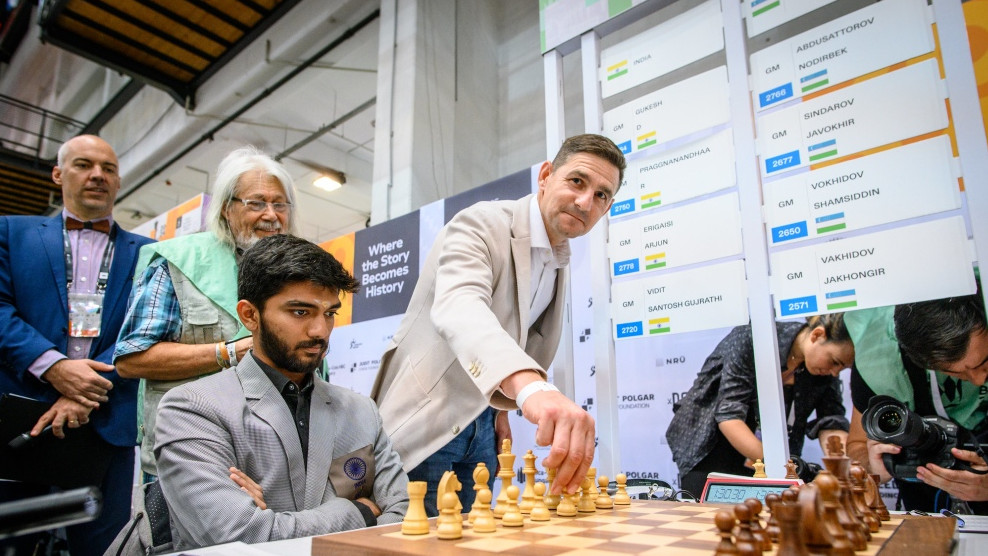
The highlight of the day was the game between Gukesh D and Nodirbek Abdusattorov on board one of the India vs. Uzbekistan match. Both young prodigies have impressive track records, competing for the individual gold medal on the top board. Gukesh had 6.5/7 with a 3085 performance rating, while Abdusattorov stood at 7.5/8 with a 3021 performance rating. The first ceremonial move was made by Zoltán Gera, a former professional Hungarian football player. Unfortunately, the game ended in an uneventful draw due to a threefold repetition on move 32. This set the tone for the whole match, as all other games were also drawn, resulting in a 2-2 tie. The result was disappointing for India, as Arjun Erigaisi missed a chance to score against Shamsiddin Vokhidov when the latter blundered on move 37. It was the case of mutual oversight, as Erigaisi also failed to find the winning continuation and played differently, missing his opportunity. Team USA triumphed over Hungary thanks to Leinier Dominguez’s defeating Sanan Sjugirov and leapfrogged their opponents in the tournament standings. We are now set for a thrilling USA vs. India clash in the penultimate round of the competition. If Fabiano Caruana’s team wants a shot at gold, they must do their best to win this match. China narrowly defeated Iran, with Wei Yi beating Amin Tabatabaei. The score could have been more convincing had Ding Liren converted a decisive advantage against Parham Maghsoodloo, but it was not meant to be. In round 10, China will face Uzbekistan in one of the key matches of the event. Vladimir Fedoseev, playing on the first board for Slovenia, achieved the seemingly impossible by defeating Magnus Carlsen in the endgame. During the live broadcast, Vladimir reacted to the commentators’ observation that they couldn’t lure a smile out of him: “It’s hard to smile after such a game, simply no emotions left.” Slovenia prevailed over Norway 3-1, practically shattering Norway’s hopes for medals. In the women’s section, the top match between Kazakhstan and Poland saw the ceremonial first move made by Tahir Taghi-Zadeh, Ambassador of Azerbaijan to Hungary, in the presence of Mahir Mamedov, FIDE Vice President and President of the Azerbaijan Chess Federation. The three games on the top boards ended in draws, leaving the outcome to be decided by the game between Alicja Sliwicka and Alua Nurman. Whoever won would secure victory for their team and lead the women’s event. Before move 40, things looked promising for Sliwicka, but after the time control, Black slowly outplayed her opponent. After an excruciating 86-move battle, 17-year-old Nurman gained the upper hand and pushed team Kazakhstan to the top of the standings. The match between former leaders India and the tournament’s #7 seed, USA, ended in a fighting draw. Gulrukhbegim Tokhirjonova defeated Vaishali R on the top board, and with draws on boards 2 and 4, the match looked promising for the USA. However, Irina Krush blundered in time trouble, and Vantika Agrawal seized her chance to level the score. India is now trailing the leader by one point. Position of the day: Arjun Erigaisi (India, 2778) – Shamsiddin Vokhidov (Uzbekistan, 2650) Black just terribly blundered with 37…Nd6-e8. White to play. With 38.Bxf7! White could have won this game, resulting in a match victory for India: 38…Qxf7 39.Qd4 Nf6 40.Qd8+ Qe8 41.Qxc7. Erigaisi missed this opportunity and played 38.Re3 instead. The game and the match ended in a draw. Results of the top matches: Open: (16) India 2-2 Uzbekistan (14)(13) USA 2.5-1.5 Hungary (14)(13) China 2.5-1.5 Iran (13)(12) Norway 1-3 Slovenia (12)(12) Armenia 2.5-1.5 Germany (12) Women: (14) Kazakhstan 2.5-1.5 Poland (14)(13) USA 2-2 India (14)(13) Ukraine 2-2 Armenia (13)(12) France 0.5-3.5 Georgia (12)(12) China 3-1 Turkiye (12) Top standings after 9 rounds: Open: 1. India – 172-4. USA, Uzbekistan, China – 155-9. Slovenia, Ukraine, Serbia, Hungary, Armenia – 14 Women: 1. Kazakhstan – 162. India – 153-11. China, Armenia, Poland, USA, Spain, Germany, Ukraine, Georgia, Vietnam – 14 Full results: Chess-results.com – 45th Chess Olympiad Written by WGM Anna Burtasova Photos: Michal Walusza, Mark Livshitz and Maria Emelianova See more Round 9 photos on FIDE Flickr Official website: chessolympiad2024.fide.com