

Opening ceremony of the 2025 FIDE World Cup dazzles in Goa

The Dr. Shyama Prasad Mukherjee Indoor Stadium in Goa hosted this afternoon the 2.5-hour-long opening ceremony of the 2025 FIDE World Cup, marking the official start of one of the world’s most prestigious chess events. A vibrant mix of India’s leading music and film industry artists delighted an audience of over a thousand players, officials, and guests with a series of breathtaking performances interwoven with inspiring speeches from dignitaries and chess leaders. At 4:30 p.m. sharp, the evening’s presenters welcomed everyone to the ceremony, noting that 206 top players from around the world will compete for the USD 2 million prize fund in what promises to be the toughest intellectual battle ever, focused on strategy, determination, and motivation. After the audience stood for the Indian national anthem, the dignitaries performed the traditional lighting of the lamp a symbolic act representing blessings, greatness, and positivity. The distinguished guests included Dr. Mansukh Mandaviya, Union Minister of Youth Affairs and Sports; Dr. Pramod Sawant, Chief Minister of Goa; Dr. Ramesh Tawadkar, Minister for Art & Culture, Tribal Welfare and Sports & Youth Affairs of Goa; FIDE President Mr. Arkady Dvorkovich; and AICF President Mr. Nitin Narang. A curtain-raising video followed, celebrating The Spirit and Story of Chess, and concluding with the stirring line: “Where strategy meets spirit and champions are born.” The Hormuzd Khambata dance company then took the stage with a dazzling performance paying tribute to Goan color and culture. Among the evening’s speeches, two stood out. Mr. Nitin Narang, President of the All India Chess Federation, read a recorded message from Prime Minister Narendra Modi, who expressed his hope that the FIDE World Cup would inspire a new generation of players. He emphasized that “the event offers a special opportunity not only to showcase talent but also to motivate the youth ” and with these words, he declared the FIDE World Cup 2025 open. FIDE President Arkady Dvorkovich followed, reminding everyone that the tournament is among the most important and dramatic in the FIDE calendar. Of the 206 players participating, only three will qualify for the 2026 Candidates Tournament, the gateway to the world championship match. Dvorkovich described Goa as “not just a coastal paradise, but the Colosseum of Chess” where legends are forged and new champions born. He concluded by wishing all players good luck and fair play, adding: “While we cannot yet say who will be the winner in Goa, two things are certain: this will be a great event, and the players will experience the full breadth of Indian hospitality, which is difficult to match.” As Dvorkovich ended his remarks, the audience rose for the FIDE anthem, followed by an energetic live performance of The Spirit of Goa by Hema Sardesai and her band. Then came a special moment: GM Divya Deshmukh, the recent 2025 Women’s World Cup Champion and the only female player in this event, joined the presenters on stage to conduct the drawing of lots. By selecting black for Gukesh, the top seed, it was determined that all odd-numbered players will start their first games with the black pieces. Divya shared her excitement: “Playing on home soil and representing India gives me an extra sense of pride and motivation.” A flute and beatbox performance by the Qudrot Duo followed, before the dignitaries reunited on stage to unveil the Viswanathan Anand World Cup Trophy – a magnificent brass and gold-plated creation, symbolizing passion, precision, and performance. A final video screening of the official World Cup song – It’s Your Move – preceded the night’s closing performance by the legendary Usha Uthup band, who brought the house down with powerful renditions including Skyfall from the James Bond film of the same name. Round 1 begins on November 1 at 3 PM local time. The action can be followed live on the FIDE YouTube Channel, featuring expert commentary by GMs Evgenij Miroshnichenko and Jan Gustafsson. To watch the games in person, tickets can be purchased [HERE] Official website: worldcup2025.fide.com/ Written by Michael Rahal Photos: Michal Walusza
Preview: FIDE World Cup 2025 – Goa, India
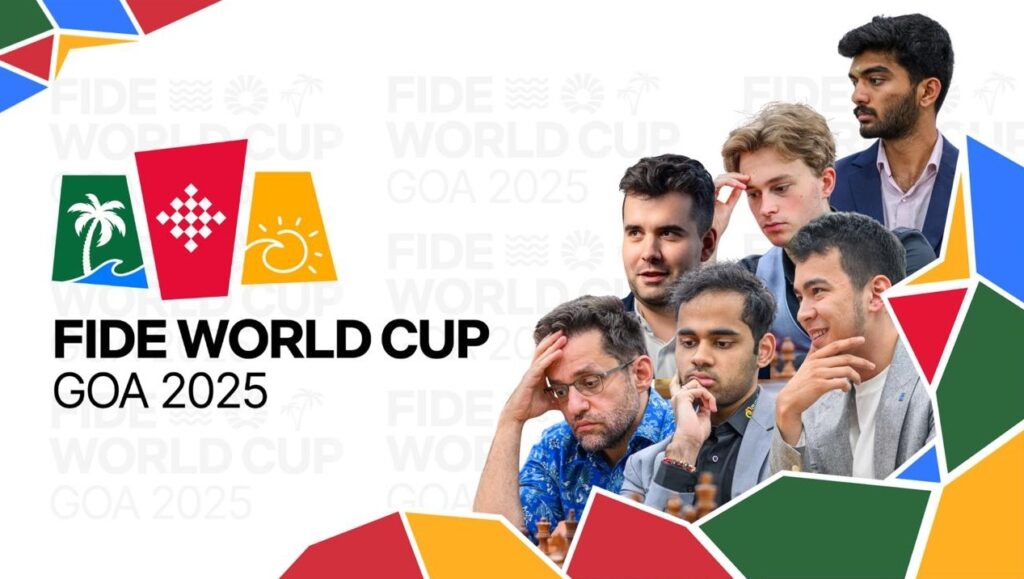
Two hundred and six of the world’s best chess players from more than 80 countries will descend on Goa, India, this week for the 2025 FIDE World Cup, arguably the most important individual chess event of the year. From October 30 to November 27, players will battle through a gruelling knockout format for a share of the USD 2 million prize fund and, more importantly, the three coveted qualification spots for the 2026 FIDE Candidates Tournament — the gateway to the next World Championship match. “India is not just the ancient home of chess; it is a global modern powerhouse. This World Cup is being held here because India is now a central pillar in the global structure of our sport. For the next four weeks, Goa will not just be a coastal paradise; it will be the Colosseum of Chess. This is where legends are forged and broken, and new champions born – a process that has been dramatically enriched by the incredible new generation of Indian stars,” said Arkady Dvorkovich, FIDE President The structure of the World Cup is unique within elite chess. It’s an eight-round, single-elimination knockout event, where each match consists of two classical games played under standard time controls. If the score is tied after those, the players return on the third day for a series of rapid and blitz tie-breaks to decide who advances. The top 50 seeds — comprising many of the world’s highest-rated grandmasters — receive byes into the second round, while the remaining 156 competitors begin their campaigns on the afternoon of November 1st. All games will take place in the Resort Rio, Goa’s largest convention hall and a five-star luxury venue just moments from Baga Beach, offering a fittingly grand stage for one of the most prestigious tournaments on the chess calendar. “I’m really excited and looking forward to playing in the World Cup. Anywhere in India is great of course, but I have some nice memories of Goa as I played some junior events there,” declared Gukesh D, current World Champion, one of the favourites, seeded straight into round two. For the first time since 2002, the FIDE World Cup returns to Indian soil. On that occasion, Viswanathan Anand, the legend from Chennai, defeated Rustam Kasimdzhanov in the two-game final held in Hyderabad, a victory that helped cement India’s emergence as a major force in world chess. More than two decades later, India hosts the event from a position of unprecedented strength. The country now boasts D. Gukesh, the reigning World Champion; Olympiad team titles in both the Open and Women’s sections; and Divya Deshmukh, the current Women’s World Cup winner and the only female participant in this year’s World Cup. Add to that a remarkable generation of rising stars — Arjun Erigaisi, R. Praggnanandhaa, Nihal Sarin, and others — and India’s chess renaissance will be on full display in Goa. At the top of the starting list stand the three Indian superstars, who will be playing on home soil and must be considered the main favourites for the title. Top seed D. Gukesh arrives in Goa in scintillating form, fresh from a 2927 performance at the European Club Cup 2025, where he won gold on board one and played a decisive role in his team’s overall victory. Arjun Erigaisi, though dropping a few rating points in the same event, has been one of the most consistent elite players this year and will be eager to reaffirm his status among the very best. Meanwhile, R. Praggnanandhaa opted to skip the European Club Cup, choosing instead to rest and prepare after a demanding Grand Chess Tour final in Brazil, ensuring he comes to Goa fully recharged. Among the international contenders, Germany’s Vincent Keymer stands out as a major threat. Currently world number four on the live rating list, he gained 18 rating points across the European Club Cup and European Team Championship, where he secured silver on board one, just behind Gukesh. Another clear favourite is Anish Giri, the recent Samarkand Grand Swiss winner. In superb form and with his Candidates qualification already secured, Giri enters the World Cup relaxed but motivated — looking to extend his streak after taking bronze at the European Team Championship. “I’m looking forward to playing the World Cup. It’s a great event and a lot of fun. I’ve played a lot of them, and I was actually very near to qualifying once. Although I played very well that year, I still remember losing a semi-final to Peter Svidler. It’s definitely a very tricky qualification path,” Giri said, after winning in Uzbekistan. The American duo of Wesley So and Levon Aronian can never be ruled out in an event of this nature. Wesley So arrives in Goa on the back of a second-place finish at the U.S. Championship, completing an eleven-game unbeaten run. Renowned for his composure and strength in rapid and blitz formats, So’s consistency and knockout experience make him a formidable contender. Levon Aronian, the 2017 World Cup winner, has also enjoyed a resurgent 2025, collecting multiple titles in prestigious events and finishing third — also unbeaten — at the U.S. Championship. Few players in the field can match his combination of creativity, resilience, and experience under pressure. Among other 2700+ players to watch are China’s Wei Yi, India’s Nihal Sarin, and Hungary’s Richard Rapport. All three have delivered impressive performances in recent months, with Wei Yi continuing his steady return to top form, Nihal showing growing maturity and consistency on the elite stage, and Rapport producing dynamic results throughout October. Each will be eager to make a deep run and claim one of the three coveted qualification spots for the 2026 Candidates Tournament. With such a large field, some strong players will begin their campaigns early and face stiff opposition right from Round One, while the top seeds will enter in Round Two. Excelling in classical chess remains essential, but in this knockout format, tie-breaks — rapid and blitz games played
2nd FIDE Olympiad for People with Disabilities nears its grand finale
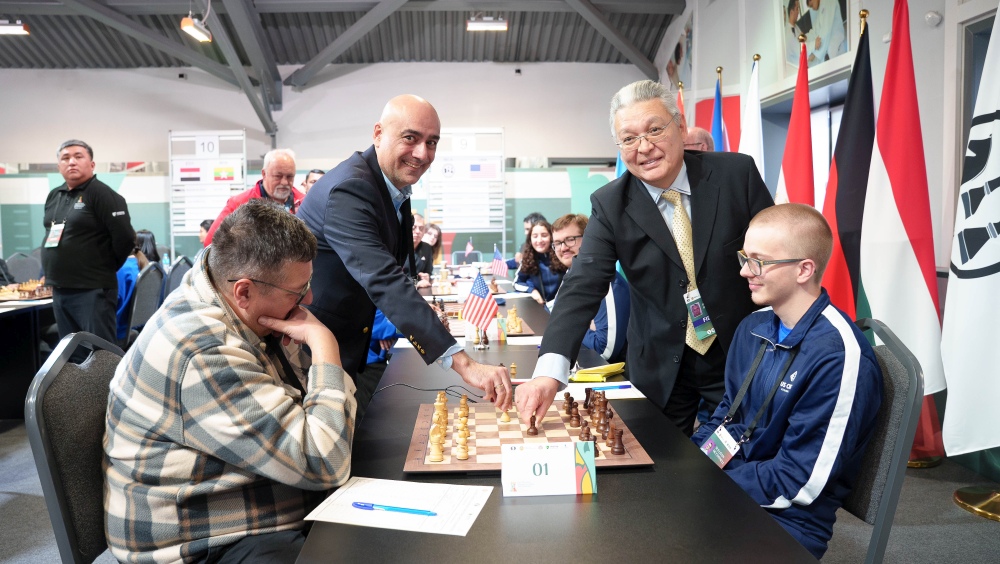
The fifth day of the 2nd FIDE Chess Olympiad for People with Disabilities began with “Inspiration Talks” featuring WGM Dana Reizniece, Deputy Chair of the FIDE Management Board, and GM Thomas Luther, Chair of the FIDE Commission for People with Disabilities. The motivational meeting, held at the New Generation School, brought together children with special needs. The event was jointly organized by FIDE, Kazchess, and the International School Chess Federation (ISCF), with support from the Ministry of Education of Kazakhstan. The speakers shared their personal journeys and insights into how chess can teach resilience, discipline, and creativity. An open discussion followed, where the children asked questions and shared their enthusiasm for the game. GM Thomas Luther said: “It was a wonderful experience to meet so many motivated children. Chess is more than a game – it teaches imagination, concentration, respect, and how to handle both victory and defeat.” Celebrating United Nations Day As play resumed for Round 5, the first ceremonial move was made by: Philip Gardner, President of the International Committee of Silent Chess (ICCD), Berik Balgabaev, Advisor to the FIDE President, Sukhrob Khodzhimatov, Deputy Resident Representative of the United Nations Development Programme (UNDP) in Kazakhstan, and Ardak Yeleussizov, Director of Freedom Bank Astana. The visit of Mr. Khodzhimatov was especially symbolic, coinciding with United Nations Day. He shared:“This movement is truly meaningful. For UNDP, our guiding principle is to leave no one behind. People with disabilities must be treated as full members of society – we must value their power, energy, and initiative. I was deeply impressed by this facility and the happiness of the participants – this is truly a place for everyone.” Young Stars of the Olympiad The Olympiad also celebrates its youngest participants, whose enthusiasm and spirit continue to inspire everyone in Astana. Thirteen-year-old Mikhail Dzenisenia from FIDE Team 2 (pictured below) spoke confidently about his ambitions: “I started playing chess when I was four. Now I want to become a FIDE Master and one day win the World Championship for players with disabilities.” The youngest boy at the Olympiad, 12-year-old Ben Kaufmann from Germany, expressed his joy at playing alongside his father: “It’s very special to be here. We show that everyone is perfect. I play with my dad every day, and chess is a big part of our life.” His father, Thorsten Kaufmann, captain of the German team, added: “Here, everyone is equal on the board – there are no disadvantages. This tournament shows that all people are special, and you should never give up.” Twelve-year-old Celine Atassi from the USA, the youngest girl at the Olympiad, shared what chess means to her: “Chess plays a huge role in my life. I study for several hours every day, and I hope to become an International Master or even a Grandmaster one day.” On the boards At the top tables, Poland and FIDE 1 drew their crucial match, trading blows on boards two and four. Both teams remain in the lead with 9/10 team points. Just behind them are IBCA and IPCA, both on 8/10 points, keeping the race for gold wide open before the final round. Standings after Round 5 can be found on Chess-Results. Position of the Day Today’s instructive position came from the game between Griffin McConnell (USA) and IM Piotr Dukaczewski (IBCA), showcasing the power of active defense and creative counterplay. In a position where White’s rook and two minor pieces should normally overpower the queen, Black found a brilliant idea: 23… b3!! – a dynamic pawn thrust, threatening a double attack after …Qa5. White tried 24. Bd5 Qa5 25. c3, but then came another stunning move: 25… c4!, creating multiple threats. After 26. Bxc4 d5!, White’s bishop was trapped, and the balance tipped decisively in Black’s favor. The rest was a smooth sailing for Black. As the Olympiad reaches its final stages, excitement and tension are rising. The players remain fully focused, yet the atmosphere of team spirit continues to define this unique event. Tomorrow, the final round will decide who takes home the gold – but here in Astana, every participant has already become a winner through their spirit, courage, and love for the game. Official website: dis-olympiad2025.fide.com/
2nd Olympiad for People with Disabilities, Day 4: Inspiration, inclusion, and the power of chess
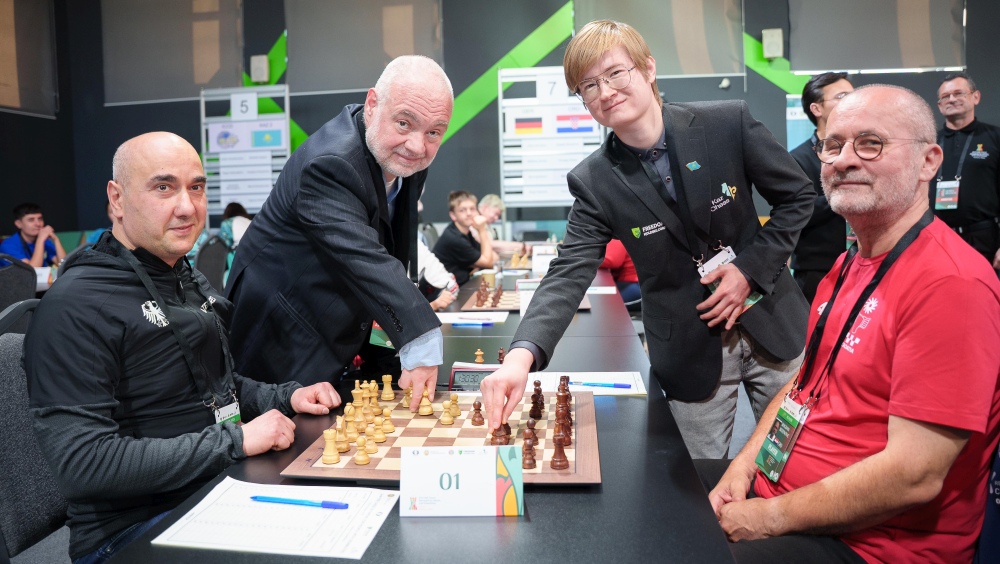
The fourth day of the 2nd FIDE Chess Olympiad for People with Disabilities began with a heartwarming initiative. GM Alisher Suleymenov of Kazakhstan, a bronze medalist at the Asian Championship, hosted a simultaneous exhibition on 12 boards for local children with disabilities at the Paralympic Training Centre. The event was organized by the International School Chess Federation (ISCF), which brought together young players with disabilities to enjoy an inspiring day of chess. “It was a great day! I was very excited to give a simultaneous exhibition against 12 very talented young stars,” said GM Suleymenov. “The games were quite interesting, and I hope this experience helps them grow. I wish them all the best in their chess journeys.” ISCF also organized a friendly online match between children with hearing impairments from Kazakhstan and South Africa — demonstrating how chess can connect and inspire across continents. Following the simul, the fourth round began with the ceremonial first move made by GM Thomas Luther, Chairman of the FIDE Commission for People with Disabilities; Diyar Seitov, Sports Director of the National Paralympic Center; and GM Alisher Suleymenov, fresh from his exhibition. “Inclusive sport is very important – in Kazakhstan and around the world,” shared GM Suleymenov. “I’m really happy to see this movement grow and to meet so many strong players and young talents here.” GM Thomas Luther emphasized the broader meaning of the event: “This Olympiad shows how the world of sports should be – inclusive and open. Every edition grows, and that’s our ambition.” “This beautiful venue shows how chess belongs to both the Olympic and Paralympic families,” he continued. “Chess removes barriers. It’s one of the few sports where everyone – regardless of background or physical condition – can play together on equal ground.” “Even if life gives you challenges, don’t be sad. Keep progressing. Today’s world gives everyone a chance – whether to become a chess master or succeed in any other field. That’s the message of this Olympiad.” Stories of Strength and Resilience Behind every participant stands a story of perseverance, courage, and love for the game. Prince Musokeri from Zimbabwe shared his powerful journey: “I started playing chess as a little boy. I come from a poor background, and this is my first time playing abroad. I’m so happy to finally be here,” he said. “Some years ago, during COVID, I struggled, got addicted to drugs, and lost my way – I was almost killed and even lost my memory. But chess gave me another chance to rebuild myself. Now I play for Zimbabwe, and my dream is to become a Grandmaster and teach others. Chess saved my life.” Jesús Osorio from Panama, who also played in the inaugural Olympiad in Serbia, expressed his deep emotions about returning: “For me, it feels like a dream come true every time. This isn’t just a tournament – it’s a celebration. Win, lose, or draw, everyone is happy, everyone is celebrating chess.” “Chess is everything to me. It’s how I prove myself, how I show I can be equal or even stronger. And it’s a universal language – here we come from all continents, yet we understand each other perfectly.” Jesús also shared a touching detail: “My wife is my lucky charm. She travels with me everywhere and even keeps my lucky pen – the one I used when I held a draw against a FIDE Master in round 1. She takes care of everything, and I’m so grateful for her strength.” These stories capture the essence of the Olympiad – a place where courage meets community, and every move on the board reflects a life story of determination. Standings after Round 4 With two rounds remaining, the race for gold is heating up. Poland and FIDE 1 are leading the standings with a perfect 8/8 team points. Just behind them, the teams from Israel, USA, Philippines, Cuba, IBCA, and IPCA are within striking distance with 6/8 points each. Tomorrow promises thrilling clashes at the top as Poland faces FIDE 1 in a key matchup. You can find the standings after Round 4 and pairings for the next round on Chess-Results. Position of the Day: The beauty of sacrifice Round 4 featured many tense battles, but one game stood out – between Lin Htet Naung (Myanmar) and Arias Cano Iliak Omar (Panama). After a tense middlegame, White achieved a completely winning position and found a brilliant finishing combination: White sacrificed the queen with 27. Qxf6!!, delivering a beautiful checkmate after 27…Bxf6 28. Rxh6+ Nh7 29. Nf7#. The 2nd FIDE Chess Olympiad for People with Disabilities continues to inspire everyone who witnesses it – on and off the board. Every move played is more than strategy; it’s a statement of strength and unity. Official website: dis-olympiad2025.fide.com/
2nd FIDE Olympiad for People with Disabilities reaches its midpoint
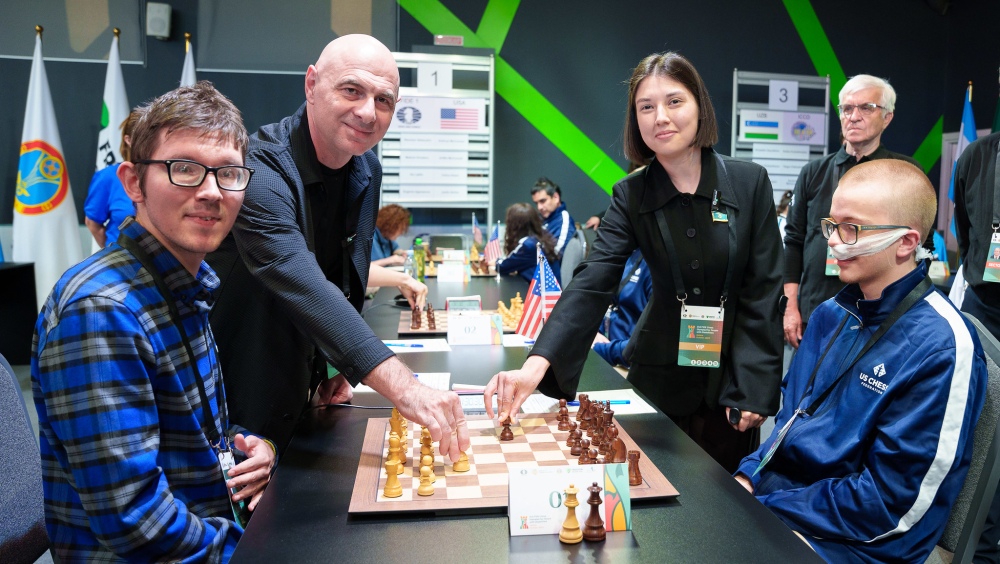
The 2nd FIDE Chess Olympiad for People with Disabilities in Astana has reached its half-way mark – the equator of this inspiring event. With Round 3 underway, the excitement and determination in the playing hall grow stronger each day. The first ceremonial move of the round was made by Dinara Naumova, Member of the Parliament of Kazakhstan, together with Akaki Iashvili, FIDE Special Tasks Director. “Before the first move, I spoke with the contestants – they were positive and confident. The atmosphere is wonderful, and the team spirit is inspiring,” said Dinara Naumova. “It’s an honour for Kazakhstan to host this event. I wish every player success and the strength to never give up. Team spirit makes us stronger.” Her words perfectly captured the spirit of the event – one of unity, resilience, and shared joy. The strength and spirit of the players Every participant at this Olympiad has a remarkable story. For them, every move on the board represents persistence, focus, and the triumph of the human spirit. Luisa Molina, from Team Colombia, shared her joy at being part of this inclusive event: “This Olympiad for People with Disabilities has been one of the best experiences we’ve ever had! This isn’t your usual event – it provides a space for inclusion.” Aryan Joshi from India, a first-time participant, was full of enthusiasm and optimism: “Feeling amazing – this is my first Olympiad for people with disabilities. Despite disabilities, despite the challenges on and off the board, everyone here is giving their best. Everyone is very friendly and very happy. Disability is not something that makes us less – we are differently able, not disabled.” Niloy Chakraborty, a coach for players with hearing impairments and an accompanying person at the event, emphasized the importance of opportunity: “I’ve worked with disabled students for a long time. I’ve shown them tournaments, helped them find opportunities, and organized many events for differently able teams. Here, everyone can participate – and they do, as equals.” Eugenio Campos, representing the IPCA team, coming from Angola, shared how chess became part of his life from a very young age: “This is a well-organized event; it gives us, players with disabilities, the opportunity to play against others from different countries. I thank IPCA, FIDE, and the Kazakhstan Chess Federation. I started chess when I was five – my cousin taught me, and since then, chess has meant a lot to me. Most of my life, I’ve played chess – it’s everything to me.” Another remarkable player of IPCA team is IM Igor Yarmonov from Ukraine, a five-time IPCA World Champion and International Master of both chess and chess composition. His wife and accompanying person, Galina Yarmonova shared: “We are grateful to all the organisers, volunteers, and staff for the wonderful atmosphere in Astana, for the excellent conditions for the players and their companions – everything is of the highest standard! This is our first time at such an Olympiad, and we thank the referees and volunteers for their kind, individual approach to each player.” “Throughout Igor’s life, chess has helped him overcome challenges and see the world – and we are happy to represent this big chess family,” she added. Even after the event, Igor continues contributing to the chess world as a judge for multi-move problems in the FIDE Album – evaluating compositions from around the globe. Inspiration beyond the board Every player finds their own motivation to keep going, and we asked, “Who is your favourite chess player in history?” Answers came quickly and with admiration: Magnus Carlsen, José Capablanca, Garry Kasparov, Anatoly Karpov, Bobby Fischer, and Mikhail Tal were among the most mentioned. But one response stood out. Jesús Osorio from Panama said: “My favourite chess player is not a famous person, but he is a very good chess player – my friend Osvaldo Herrera Graham.” A beautiful reminder that inspiration doesn’t only come from world champions, but also from those who encourage us personally – friends, coaches, and loved ones who share the same passion. The battle for the top Position of the day Today’s Position of the Day came from the exciting battle between Syed Ejaz Husain (Bangladesh) and Ben Kaufmann (Germany). Although Black’s position was slightly worse, they could still defend with 20…Nd6, trading off White’s active knight on f5. Instead, 20…Ne6?? was played, ignoring of White’s mounting kingside pressure. White immediately took advantage with 21. Ne5!, and after 21…Ra6?!, taking no heed of danger, came 22. Qg4 — launching a decisive attack. Black tried 22…Kh7, defeinding h6, but the storm was already breaking. White delivered a stunning blow 23. Nxh6!!, a brilliant sacrifice that ripped open Black’s kingside. After 23…gxh6 24. Qf5+ Kg8 25. Qxf7+ Kh8 26. Ng6#, it was checkmate. This brilliant finish reminds us of one of the great lessons of chess — and life: sometimes, you must take risks and trust your calculation. Evaluating, understanding, and acting with courage can lead to victory both on and off the board. Looking ahead As the Olympiad crosses its midpoint, the energy in Astana continues to rise. Every player here proves that chess is not only a sport of the mind, but a triumph of spirit, inclusion, and shared humanity. The standings after Round 3 and pairings for Round 4 can be found here: Chess Results – 2nd FIDE Chess Olympiad for People with Disabilities Official website: dis-olympiad2025.fide.com/
2nd FIDE Chess Olympiad for People with Disabilities, Day 2: A celebration of strength, connection, and power of chess
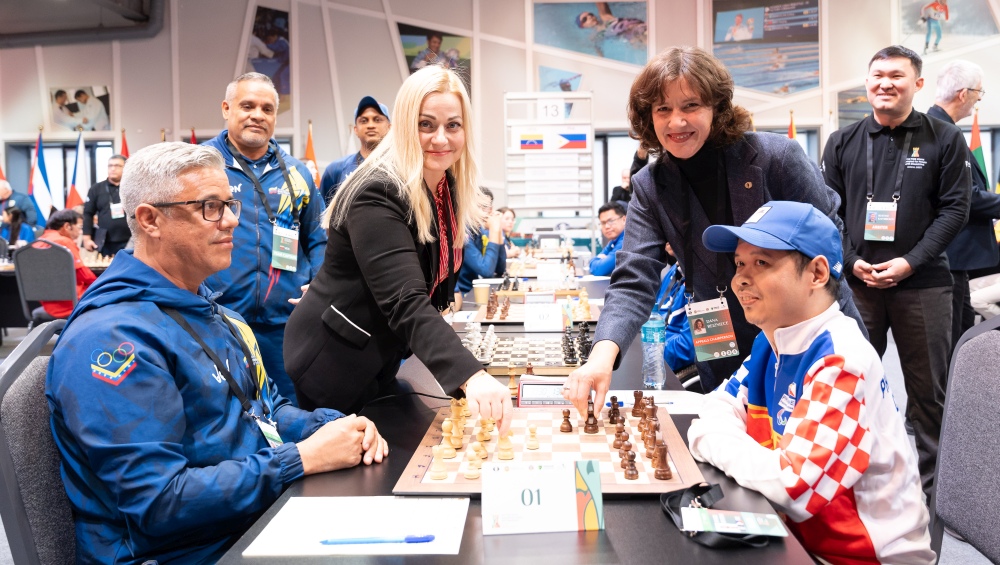
The atmosphere at the Paralympic Training Centre in Astana remains full of energy and inspiration as the 2nd FIDE Chess Olympiad for People with Disabilities continues into its second day. For many players, simply being here is already a victory – a triumph of willpower and perseverance over life’s challenges. Each move made across the chessboards carries a deeper meaning: determination, pride, and unity. Ceremonial first move with a message At the start of Round 2, the ceremonial first move was made by the Ambassador of Venezuela to Kazakhstan, Rosalba Lo Bué Antico, together with FIDE Deputy Chair of the Management Board, WGM Dana Reizniece. Ambassador Lo Bué Antico shared a heartfelt message about the event’s importance: “Today, in this 2nd Paralympiad for People with Disabilities, we see with great promise the possibility that Venezuela can develop major projects to promote chess – not only for people with disabilities, but also through educational programs in Venezuelan schools. Kazakhstan is a worthy example for Venezuela and the world.” Her words reflected the spirit of the Olympiad – an event that transcends competition and aims to make chess a global force for inclusion and opportunity. Dana Reizniece, who also made the ceremonial first move, expressed deep admiration for the players and organizers: “For me, it is not only 34 teams representing countries – for me, it’s 34 teams of people who are champions of their lives. They have a super strong character, and they are very humble. When you speak with them, you see it.” She praised the work behind the event’s organization: “The local organizers here in Kazakhstan made it possible not only with finances – thanks to Freedom Finance, the Kazakhstan Chess Federation, Astana Municipality, and the Government – but also by being brave enough to organize such an event.” Reflecting on the Olympiad’s evolution, Dana Reizniece added: “Many things have been improved. We know that there are many things that we can do even better – for example, invite more teams and provide this opportunity to play for even more countries worldwide.” And on the inclusivity of chess, she concluded: “Chess is, if not the, then one of the most inclusive sports – where people with disabilities or special abilities can play at the same level as professional players who have dedicated their whole lives to the game.” Inside the venue: Focus, friendship, and power of chess The Paralympic Training Centre in Astana – one of the most advanced accessible sports facilities in Central Asia – has become not only the stage for intense chess battles, but also a welcoming home for connection and community. Beyond the playing hall, the resting area offers players a place to relax, analyze games, and socialize. The atmosphere is warm and uplifting – filled with conversation, laughter, and mutual respect. When asked to describe chess in one word, players offered answers that capture the essence of the game:“Life. Love. Luck. Tenacity. Enjoyment. Pressure. Emotion. Equality.” For many, chess has been more than just a sport – it’s been a lifeline. As Roberto Fernando Elías, the Argentinian Chess Champion for the Blind, shared: “I’ve had my disability since the age of six. I believe that chess helped me avoid isolation and dedicate my time to a wonderful sport like chess. I’d like to express my gratitude to FIDE for creating this event.” His words mirror the feelings of many players who see this Olympiad as not only a competition, but a celebration – a place where friendships are formed and the joy of chess shines through. Position of the day: The art of trading pieces Many players believe that trading pieces leads to equality or draws. However, as today’s position of the day shows, every trade must be carefully evaluated. In the game between Axadxon Kimsanboyev (Uzbekistan) and Valeria Simone (Argentina), a critical mome nt arose: Black offered a bishop trade with 21. … Be5? to defend her d6-paw (21…Re5, sacrificing an exchange was a better option). Although logical, this decision proved costly – after the bishops exchange 22. Bxe5 Rxe5 the rook was kicked from the e5 with 23. f4 Re7 while Black’s dark-square became extremely vulnerable. A precise knight jump to f6 – 24. Nf6+ Kg7?, followed by 25. Qc3, sealed the fate of the game and the Argentinean player resigned, facing deadly threats. This instructive moment reminded everyone that in chess – as in life – not all trades are equal. Every exchange carries consequences, and true mastery lies in knowing when to simplify and when to keep the tension. Round 2 results After two rounds, seven teams – Poland, USA, Cuba, Israel, Philippines, IBCA, and FIDE 1 – are in the lead with a perfect 4/4 score. Full results and pairings for Round 3 are available on Chess-Results. A message beyond the board As the 2nd FIDE Chess Olympiad for People with Disabilities unfolds, it continues to highlight the unifying power of chess – a game where every move counts, and every participant inspires. For the players, organizers, and everyone watching, the message is clear: The board has no boundaries – and the spirit of the game belongs to everyone. Official website: dis-olympiad2025.fide.com/
FIDE Olympiad for People with Disabilities, Day 1: A celebration of inclusivity and determination
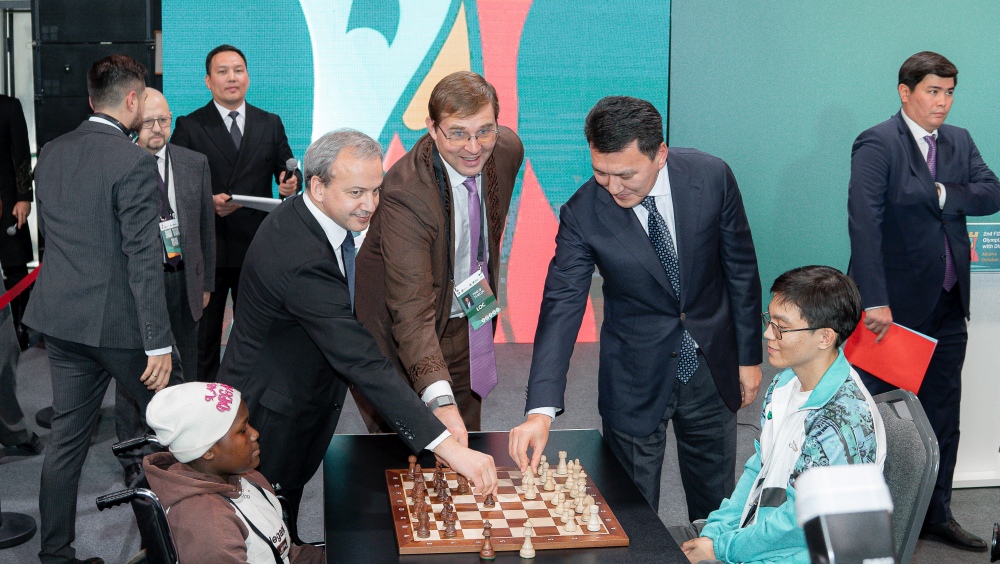
The 2nd FIDE Olympiad for People with Disabilities officially began in Astana, Kazakhstan, bringing together 34 teams from 29 countries. Additionally, eight more nations are represented through the teams of the IPCA (International Physically Disabled Chess Association), IBCA (International Blind Chess Association), and ICCD (International Committee of Silent Chess) — making it a truly global event, with participants from 37 countries in total. The games are hosted at the Paralympic Training Centre, one of the most advanced and accessible sports facilities in Central Asia. With two spacious playing halls, the venue offers perfect and comfortable conditions for all participants, reflecting the Olympiad’s core message of inclusion and equal opportunity. Opening ceremony The opening ceremony was held in a warm and inspiring atmosphere, attended by dignitaries, players, and guests who celebrated the start of this unique event. In the main playing hall, the first ceremonial move was made by Erlan Karin, State Counsellor of the Republic of Kazakhstan; Arkady Dvorkovich, President of FIDE; and Timur Turlov, President of the Kazakhstan Chess Federation. Timur Turlov spoke about the significance of this Olympiad, saying: “Chess is a great symbol of equality and an opportunity to play across the globe. Having differences doesn’t change that – chess unites.” In the second playing hall, the first move was performed by Baglana Musina, President of the Corporate Fund Freedom Shapagat; Oscar Santana Leon, Ambassador of Cuba; and Dmitriy Balandin, Olympic Swimming Champion. FIDE President Arkady Dvorkovich emphasized the importance of inclusivity in chess, noting that this Olympiad stands as a model of equal opportunity: “Chess is inclusive, and we must ensure that everyone has access to top events. The Olympiad for People with Disabilities proves that we are creating those opportunities for all.” He also highlighted FIDE’s broader commitment to social initiatives around the world: “Through projects like Chess for Refugees, Chess for Freedom, and Chess for Children with Autism, we’re showing that chess is truly for everyone. This Olympiad is our flagship event – a reminder that chess is accessible and brings happiness to all who play it.” Voices of the 2nd Olympiad for People with Disabilities The Olympiad is not only about the results – it’s about people and their stories. Every participant brings a story of resilience, courage, and passion for the game. Shantel Panashe Gweshe from Zimbabwe, a social worker and first-time Olympiad participant, shared her experience: “It’s my first time coming all the way from Zimbabwe, participating in this Olympiad. What I have seen here – there’s so much inclusivity for people living with disabilities. When I go back to Zimbabwe, the first thing I’m going to do is empower other people with disabilities to ensure inclusivity and participation.” Meanwhile, Henry Lopez from the Philippines (pictured above), who won a bronze medal at the first Olympiad in Serbia in 2023, reflected on how deeply chess has shaped his life: “Chess for me now is my source of living. I am a national team player in the Philippines, and I receive a stipend from the government. Chess is a universal language – it’s a great equalizer. No matter how old or young you are, or whether you have a disability, you can play. Chess is for everybody.” With determination in his voice, Henry added: “At the previous Olympiad, we got third – this time, frankly speaking, we are aiming for number one.” This is what the FIDE Olympiad for People with Disabilities is truly about – gathering players from all around the world, giving them opportunities to show the power of their minds, and celebrating the unifying strength of chess. Games and results The first round brought exciting games and strong performances by the top teams. Almost all favorites won their matches convincingly. Uzbekistan, India, Venezuela, and FIDE 1 began their campaigns with impressive 4–0 victories. There were, however, two notable ties: North Macedonia held the Czech Republic to a 2–2 draw, and ICCD (International Committee of Silent Chess) also drew with Argentina. You can find all results, pairings, and standings after the first round on Chess-Results: s3.chess-results.com/tnr1276749.aspx?lan=1&art=0&rd=1&SNode=S0 Side events in Astana In addition to the competition, today featured two important milestones for the global chess community. A Memorandum on Declaring 2026 the Year of Chess in Education was signed between FIDE President Arkady Dvorkovich and President of the International School Chess Federation Timur Turlov, who also leads the Kazakhstan Chess Federation. Following the signing, Timur Turlov said: “I hope that it will help a lot of kids to discover themselves better – to train their ability for strategic thinking, to keep concentration, to build clubs, and to make friends across the globe.” FIDE President Arkady Dvorkovich highlighted that this initiative aims to significantly expand chess participation among young people: “Our goal is to double the number of children playing chess worldwide, and our partnership with the International School Chess Federation will help us make that a reality.” Another memorandum was signed between Turkey, Kazakhstan, Uzbekistan, Turkmenistan, and Kyrgyzstan, establishing an Association of Turkic-Speaking Countries. This new initiative aims to bring the work of these nations closer together, strengthening cooperation in chess development and the organization of joint events. A celebration of unity and inclusion The first day of the 2nd FIDE Olympiad for People with Disabilities set the tone for a remarkable event – one that celebrates not only competitive excellence, but also the human values of inclusion, equality, and respect. The Paralympic Training Centre in Astana has become a home for players from all corners of the world, united by one timeless truth: chess is for everyone. Official website: dis-olympiad2025.fide.com/
Norway Chess Launches New World Championship – Approved by FIDE
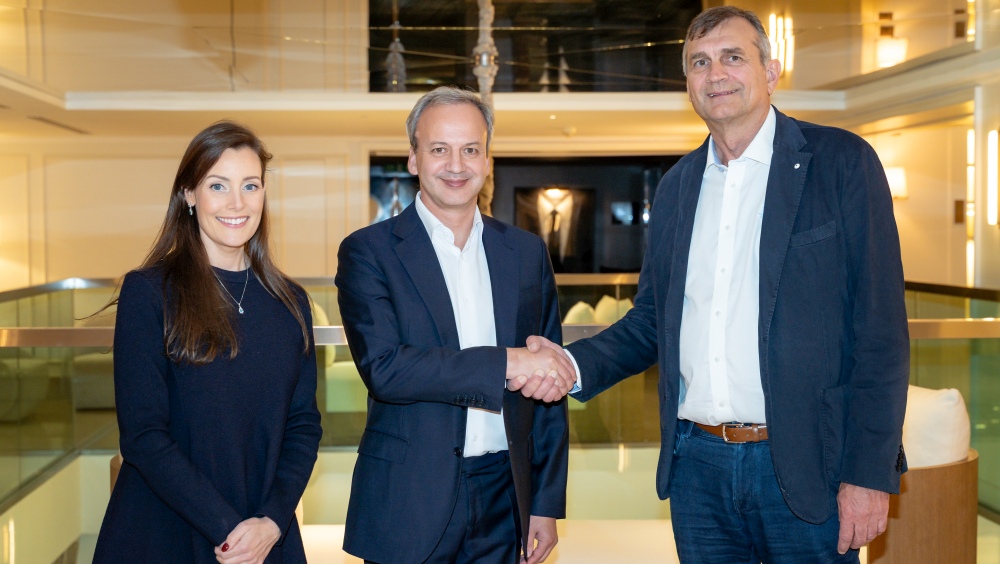
The new championship, titled the Total Chess World Championship Tour, will consist of four events each year and crown a combined champion across three disciplines – Fast Classic, Rapid, and Blitz chess. “We expect this to become one of the most prestigious events in the entire chess Calendar,” says Kjell Madland, CEOof Norway Chess and of the new championship. Key Highlights: A brand-new World Championship format in chess, organized by Norway Chess, has been officially approved by the International Chess Federation, FIDE. The Total Chess World Championship Tour will crown an overall champion across three disciplines: Fast Classic, Rapid, and Blitz. The winner will be crowned FIDE World Combined Champion. The tour will consist of four tournaments per year in various global cities. Minimum $2.7M annual prize pool across the Tour ($750k per event for the first three events; $450k for the Finals), plus performance bonuses. A pilot tournament is planned for fall 2026, with the first full championship season in 2027. The initiative comes from the organizers of the prestigious Norway Chess tournament, and the official World Championship status agreement was signed with the International Chess Federation (FIDE) in early October. The vision of the Total Chess World Championship Tour is to find the player who best masters the disciplines Fast Classic, Rapid and Blitz combined. Fast Classic is an innovation of classical chess, featuring a time limit as short as 45 minutes plus a 30-second increment per move. This will receive rating as classical chess. “We are looking for “The Total Chess Player” – a versatile, tactically intelligent, and technically skilled athlete who seamlessly adapts to multiple time controls,” says Kjell Madland. The tour will take place in various cities across the globe and during the final stop an overall winner will be crowned: the official FIDE World Combined Champion. A one-tournament pilot version will kick off during fall 2026, to test the new tour format, with the full official tournament to follow in 2027. “We want to create an entertaining tournament using cutting-edge technology, innovative and engaging TV and streaming broadcasts, and faster formats to open up the sport of chess to a broader audience than ever before. We expect this to become one of the most prestigious events in the entire chess Calendar. We are very honored by the strong trust FIDE has shown in the project. From the very beginning, the federation has been an active and engaged partner — ensuring the project aligns with FIDE’s vision and standards. We want to thank them, and especially the FIDE President, for their close involvement and support,” says Kjell Madland. Prize Pool and Bonuses The Total Chess World Championship Tour features a robust prize pool: a minimum of $750,000 for each of the first three events. The Finals, which crown the FIDE World Combined Champion, will award at least $450,000 to a four-player field. Additional performance bonuses will be available for the highest point total at each tournament and for the top overall score across the Tour. “For the fans” FIDE President Arkady Dvorkovich expresses strong support for the initiative. “We are always looking for ways to innovate and push the boundaries of what chess can be. Although chess is already one of the most popular games in the world, its growth potential is still enormous. With the Total Chess World Championship Tour, we give players a new title to compete for, and the audience a faster tournament format, and we hope the tournament can captivate both the existing chess fans and new audiences,” says FIDE President Arkady Dvorkovich. “We see this as a great addition to the traditional and prestigious World Chess Championship, where we crown the undisputed champion of classic chess. The championships will complement each other and offer even more excitement for the fans. This is not a short-term initiative, but a long-term agreement between FIDE and Norway Chess,” he added. Norway Chess is now inviting potential host cities, investors, and partners to engage in discussions about joining the Total Chess World Championship. For more details on the tournament format, see the separate document (PDF). https://youtu.be/3annvv6988A Facts about Norway Chess: Founded in 2013, Norway Chess has quickly become a fixture on the elite chess calendar. It’s regarded as one of the world’s most prestigious and innovative international chess tournaments. The event helped professionalize chess, treating it as a modern sport and viable commercial product. Norway Chess introduced the world’s first women’s tournament with prize money equal to the open sections. Facts about FIDE: The International Chess Federation (FIDE) is the governing body of the sport of chess, and it regulates all international chess competitions. It was recognized by the International Olympic Committee as a Global Sporting Organization in 1999. Initially founded in 1924 in Paris under the motto “Gens una Sumus” (Latin for “We are one Family”), it was one of the very first International Sports Federations, alongside the governing bodies of the sports of Football, Cricket, Swimming, and Auto Racing. It is now one of the largest, encompassing 201 countries as affiliate members, in the form of National Chess Federations.
5th FIDE Intercontinental Online Chess Championship for Prisoners set to begin
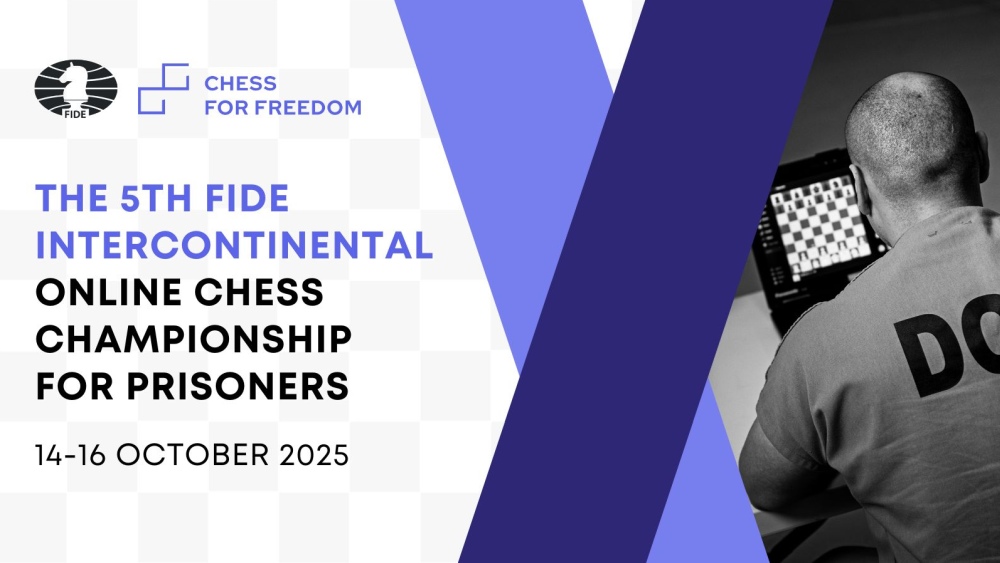
The 5th FIDE Intercontinental Online Chess Championship for Prisoners will take place from October 14 to 16, 2025, bringing together incarcerated men, women, and youth from correctional facilities around the world to unite through the shared language of chess. Organized in collaboration with the Cook County Sheriff’s Office (Chicago, USA), this championship is part of FIDE’s Chess for Freedom initiative, which promotes social inclusion, rehabilitation, and personal growth through the game. Now in its fifth year, it has become one of the world’s most meaningful examples of chess’s power to transform lives. This year marks another record in participation, with 135 teams from 57 countries confirmed. The lineup includes 89 teams in the Open section, 26 in the Women’s, and 20 in the Youth. Several countries will make their debut, among them Eswatini, Guyana, Lesotho, Poland, Aruba, and St. Kitts and Nevis. Each team consists of four players, all currently incarcerated. Matches will be played online on Chess.com with a time control of 10 minutes plus a 5-second increment. The event will be supervised by FIDE arbiters to ensure fair play and smooth coordination across correctional institutions on different continents. Format October 14: Group StageTeams will be divided into groups and play in a round-robin format. Grouping will be based on geographic region and time zone. October 15: Championship StageThe top two teams from each group will qualify for the Championship Round, which will also follow a round-robin format. October 16: Finals and Placement MatchesThe final stage crowns the champions in the Open, Women’s, and Youth categories. Placement matches will determine the overall team rankings. The Group Stage and the Finals will be broadcast live on FIDE’s official YouTube channel with commentary, interviews, and inspiring human-interest stories. The 2025 commentary team includes Michael Rahal, Angelika Valkova, and Charlize van Zyl, who will guide the audience through the action, highlight the impact of the Chess for Freedom program, and share the stories of participants from around the world. The broadcast will also feature guest appearances from chess officials, arbiters, and correctional representatives, offering insights into how chess education is being introduced in rehabilitation systems worldwide. Around the world, teams get ready Preparations are underway across continents as prisons and federations organize training camps, online test matches, and workshops in anticipation of the Intercontinental Championship. In Malawi, the Prison Service has been especially active following the success of hosting the Chess for Freedom Continental Championship and Workshop earlier this year. Prison teams from Zomba, Bvumbe Youth, Maula, and Kachere facilities have been training regularly with support from the Malawi Chess Federation. At Maula Prison, players recently took part in a training session with the team described by officials as “sharp, focused, and ready to take on the competition!” The country has become one of Africa’s most committed participants in the program, placing second in multiple categories at the continental level. Photo: Dadaz Chess Academy and The Gift of Chess Elsewhere in Africa, Zimbabwe, the winner of the recent Continental Championship, enters as one of the continent’s strongest contenders. Kenya continues to expand its “Chess in Prisons” program through the Correctional Service, beginning with Nairobi West Prison. Beyond Africa, new programs are emerging in Guyana, where the national federation has introduced chess training at the Lusignan Prison, and in Aruba, which is fielding a team for the first time. The United States, Paraguay, Croatia, Singapore, and Kazakhstan have also confirmed their participation, showing how correctional institutions worldwide now recognize chess as a valuable tool for education and reintegration. https://youtu.be/OYkCQf5-fMg About Chess for Freedom The Chess for Freedom initiative was launched by FIDE in partnership with correctional institutions around the world to make chess accessible to inmates as an educational and social tool. It promotes critical thinking, emotional control, and teamwork, helping participants gain valuable skills for reintegration into society. Since the first Intercontinental Championship in 2021, the project has grown into a global movement. Thousands of inmates have taken part in regional and international tournaments, workshops, and educational programs across six continents. This year’s edition, the largest so far, reflects the unifying message of the Chess for Freedom initiative: chess transcends walls, borders, and circumstances, offering a bridge to learning, reflection, and hope. The 5th FIDE Intercontinental Online Chess Championship for Prisoners will be held from October 14 to 16, 2025, on Chess.com, with live coverage on FIDE’s YouTube channel.
FIDE World Cup 2025: Round one pairings revealed
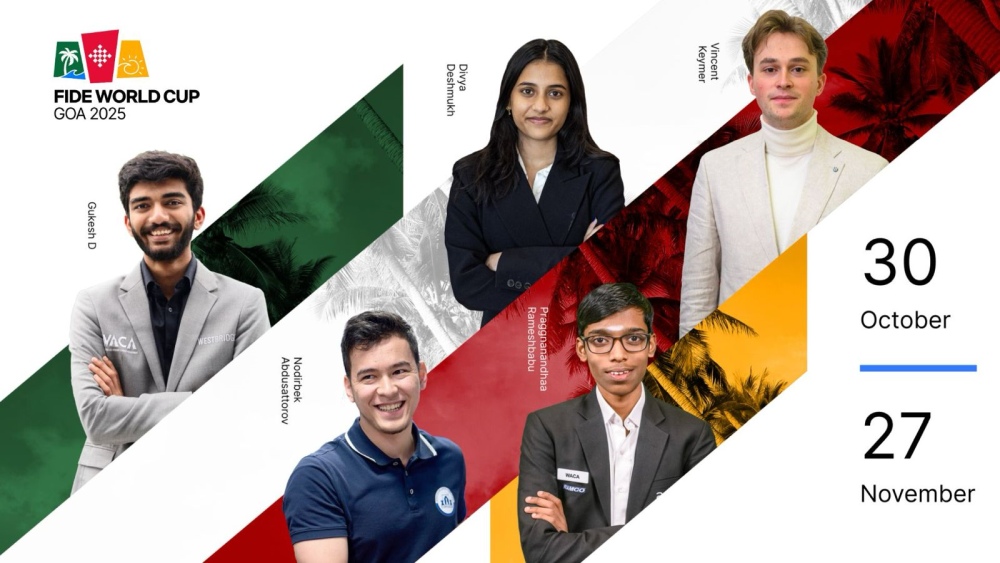
The Round One pairings for the 2025 FIDE World Cup in Goa have been released, unveiling a slate of exciting early matchups. While most top seeds are automatically placed into Round 2, the opening round still promises compelling encounters as 156 players battle to advance in this elite knockout event. The tournament features 206 participants and serves as a crucial qualifier for the 2026 Candidates Tournament. The top three finishers in Goa will earn direct spots in that highly exclusive competition — putting immense pressure on every round. A detailed tournament preview will be published closer to the November 1st start date. However, the full list of wildcards, host nominees, and last-minute replacements already deserves special attention. The inclusion of some fantastic rising stars and replacements, ensures a dynamic and unpredictable start to the championship. President Dvorkovich’s wildcards While wildcard invitations represent a small fraction of the overall field, they often spotlight the future stars of the game. Nevertheless, the wildcards—special invitations granted outside the standard qualification paths—make up only a small fraction of the 206-player field. “FIDE always works hard to find ways to give talented players a chance to improve and make their mark. The decision to award invites to these five players is based on a mix of recent performance, high-level potential and their contribution to the sport,” FIDE President Arkady Dvorkovich said. The wildcard list leans heavily toward youth, featuring promising talents such as GM’s Mishra, Woodward and Oro, and also a very young World Rapid Champion, GM Murzin. By spotlighting young and emerging players, FIDE is clearly using the wildcard system as a developmental tool—investing in future stars and encouraging their continued growth on the world stage. “The World Cup is one of the most difficult and most exciting chess events, given its knockout format, and will be a great opportunity for these players to show their best facing the best,” Dvorkovich added. Let’s take a quick look at the six wildcard invitees—each a rising talent or notable figure who adds depth and intrigue to the 2025 FIDE World Cup line-up. Kirill Alekseenko (Austria) Photo: Mark Livshitz Born in 1997, Kirill Alekseenko is a seasoned grandmaster who began representing Austria in 2023. A GM since 2015, Alekseenko made headlines by breaking into the 2700+ rating club after finishing third in the 2019 FIDE Grand Swiss, a result that earned him a wildcard to the 2020 Candidates Tournament. With a wealth of top-level experience, Alekseenko remains a formidable presence on the circuit. He has recently posted strong performances in several Spanish Open events and is currently one of the highest-rated players not directly qualified for the 2025 World Cup. According to FIDE CEO Emil Sutovsky, Alekseenko was awarded a wildcard because he was unable to participate in the Grand Swiss in Samarkand due to “circumstances beyond his control.” Given his proven calibre, awarding him a spot was seen as a fair and justified decision. Aleksey Grebnev (FIDE) Photo: Vivian Passig Playing under the FIDE flag, Aleksey Grebnev, born in 2006, claimed his place by defeating fellow prodigy, French Grandmaster Marc’Andria Maurizzi, in a two-game classical match held a few days ago in Serbia. The win earned him the last of the six wildcard invitations, all selected by FIDE President Arkady Dvorkovich. Grebnev’s trajectory has been nothing short of meteoric. He captured the World Under-18 Championship in 2023, followed by the Asian Junior title in 2024, and most recently triumphed at the Dubai Open. With a current FIDE rating of 2611, the 19-year-old is poised to make a serious impact in Goa. In Grebnev’s case, the selection recognizes both his consistent results and his potential to challenge the world’s best on the biggest stages. Abhimanyu Mishra (USA) Photo: Michal Walusza / FIDE Born in 2009 in New Jersey, Abhimanyu Mishra is an American grandmaster widely regarded as one of the most exceptional young talents in global chess. Currently rated 2652, Mishra made history in June 2021 by becoming the youngest grandmaster of all time at just 12 years, 4 months, and 25 days, surpassing the long-standing record held by Sergey Karjakin. Mishra continues to break new ground. At the FIDE Grand Swiss in Samarkand last month, he defeated reigning World Champion GM D. Gukesh in a gruelling 61-move classical game—becoming the youngest player ever to beat a sitting world champion in a classical format. That landmark victory, along with a series of strong performances throughout the tournament, propelled Mishra into the FIDE Top 100, underlining his credentials as a genuine contender among the world’s top juniors and a rising force on the elite circuit. Volodar Murzin (FIDE) Photo: Michal Walusza / FIDE Born in 2006 in Nizhny Tagil, Russia, Volodar Murzin has emerged as one of the brightest young chess talents in recent years. He first gained international attention by winning the European Youth U12 Championship in 2018, followed by a national triumph at the 2020 Russian Junior Championship. Murzin earned the grandmaster title in 2022, but his breakout moment on the world stage came in 2024, when he captured the World Rapid Chess Championship in New York, finishing with an unbeaten score of 10/13. Along the way, he defeated elite players such as Fabiano Caruana, Hikaru Nakamura, and Jan-Krzysztof Duda—a feat that cemented his status as a rising star among the game’s elite. With a current classical rating of 2664, Murzin is now approaching the global top 50, and his rapid ascent makes him a player to watch closely at the 2025 FIDE World Cup. Faustino Oro (Argentina) Photo: Michal Walusza / FIDE Born in 2013 in Buenos Aires, Faustino Oro is an Argentine chess prodigy already being hailed as “the Messi of chess.” He began playing in 2020, during the pandemic, and quickly drew global attention by reaching a FIDE rating of 2300 at just 9 years old—the youngest player ever to do so at the time. In June 2024, Oro broke another record by becoming the youngest International Master in history, earning the