

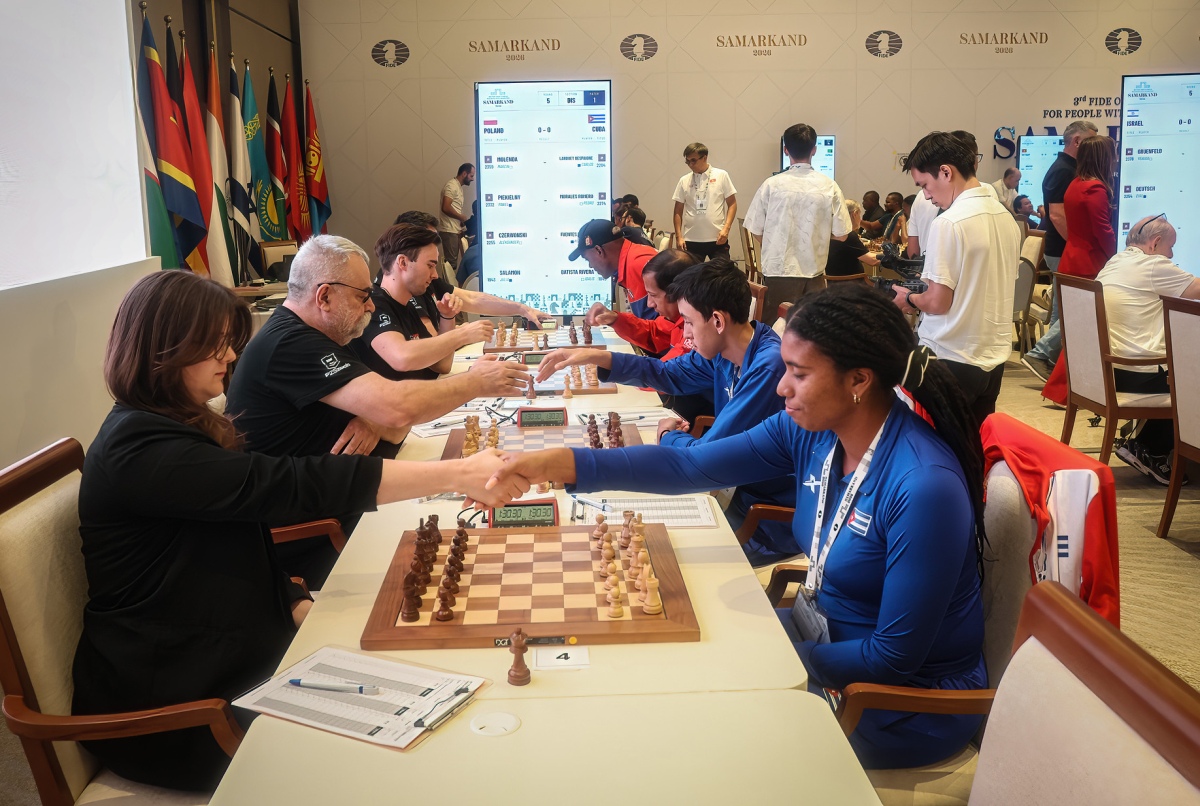
Day 5 of the 3rd FIDE Chess Olympiad for People with Disabilities marked a special moment in Samarkand. While the competition entered its decisive phase, the Opening Ceremony of the 46th FIDE Chess Olympiad also took place today, meaning that the two Olympiads are now officially running alongside each other in the same host city.
Cuba entered the day as the sole leader, but Round 5 dramatically reshaped the standings. Victories for Poland and the Czech Republic left the two teams sharing first place with 9 match points and set up a direct clash between them in Round 6.
The ceremonial first move of Round 5 was made by Victor Bologan, FIDE Executive Director, before another important day of competition got underway.
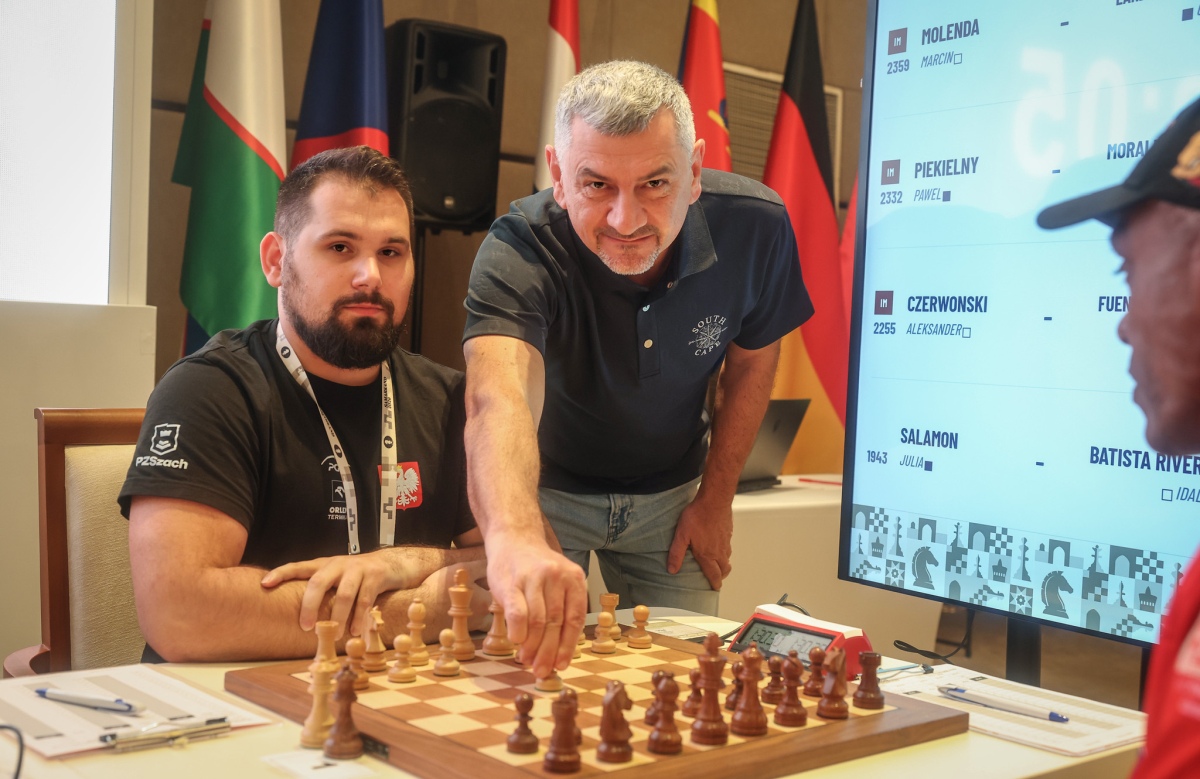
Cuba brought to halt as two teams move to the top
The headline encounter of the round saw sole leader Cuba face top seed Poland in an extremely close match. Marcin Molenda drew Carlos Larduet Despaigne, Aleksander Czerwonski split the point with Hector Luis Fuentes De Feria, while the game between Julia Salamon and Idalis Batista Rivera produced the same result.
The decisive point came on Board 2, where Pawel Piekielny defeated Pedro Morales Romero, sealing a 2½–1½ victory for Poland and handing Cuba its first match defeat of the tournament.
The Czech Republic took full advantage of the opportunity against Israel. Three games ended in draws, but Anna Ryvova’s victory over Aleksandra Aleksandrova on Board 4 secured another 2½–1½ result propelling the Czech team into a shared lead.
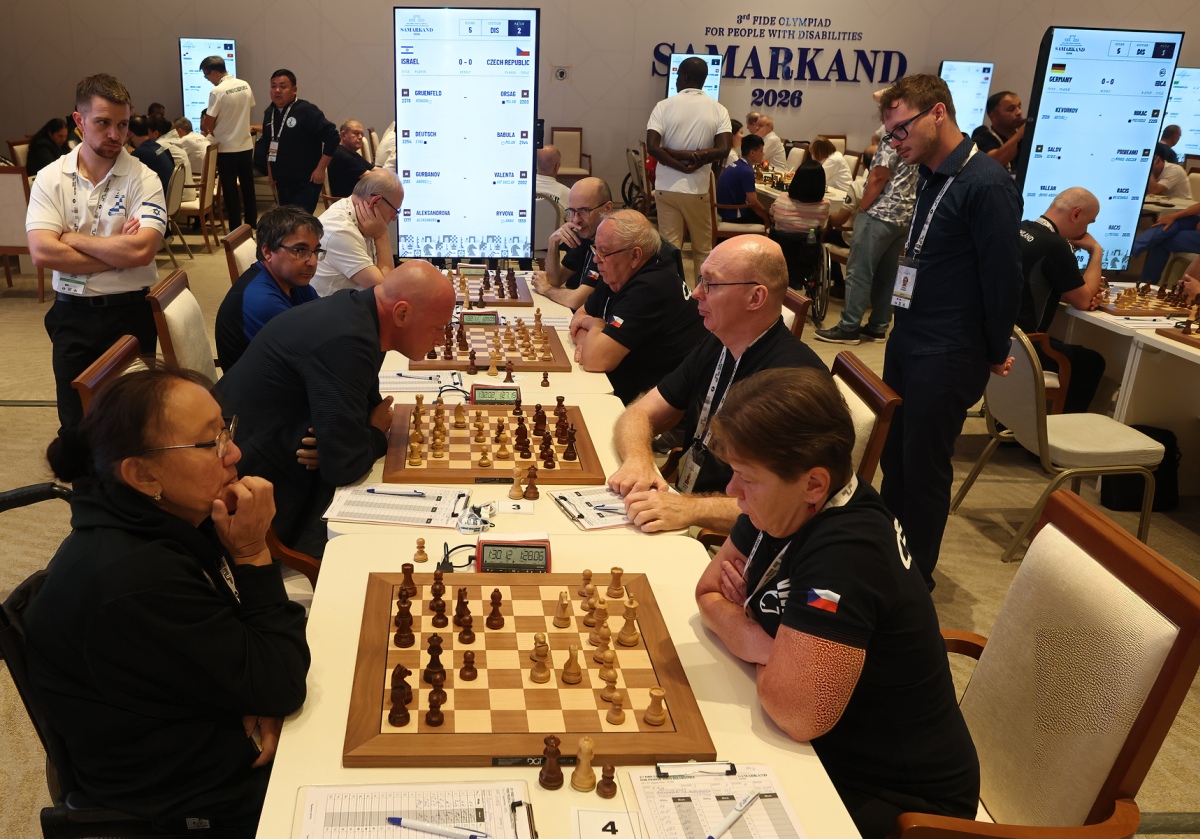
Elsewhere in the leading group, the Philippines defeated Croatia 2½–1½, while IBCA overcame Germany by the same score. The USA beat Argentina 3–1, while Uzbekistan 1 prevailed over Serbia 2½–1½.
India scored a narrow 2½–1½ victory over IPCA; Ukraine defeated Belarus 3½–½, while Kazakhstan recorded the same score against Bangladesh.
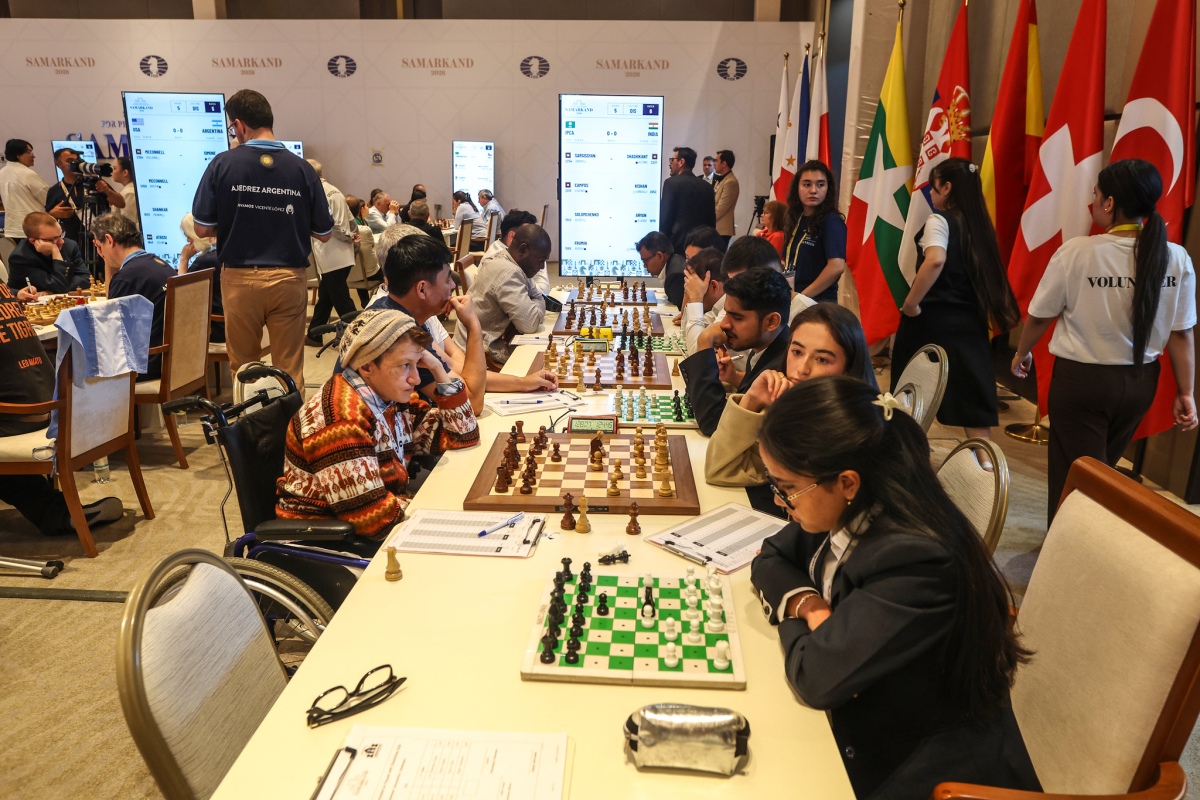
After five rounds, Poland and the Czech Republic lead with 9 match points, closely followed by the Philippines, Cuba and IBCA on 8. USA, Uzbekistan 1 and India are next with 7 points each.
Always there to help
Behind the games, however, is a large group of people whose work can easily go unnoticed.
From assisting arbiters and helping participants to guiding teams around the venue, volunteers are always present and ready to step in wherever they are needed. With the 46th Chess Olympiad now beginning alongside the Olympiad for People with Disabilities, many of them will be supporting both events.
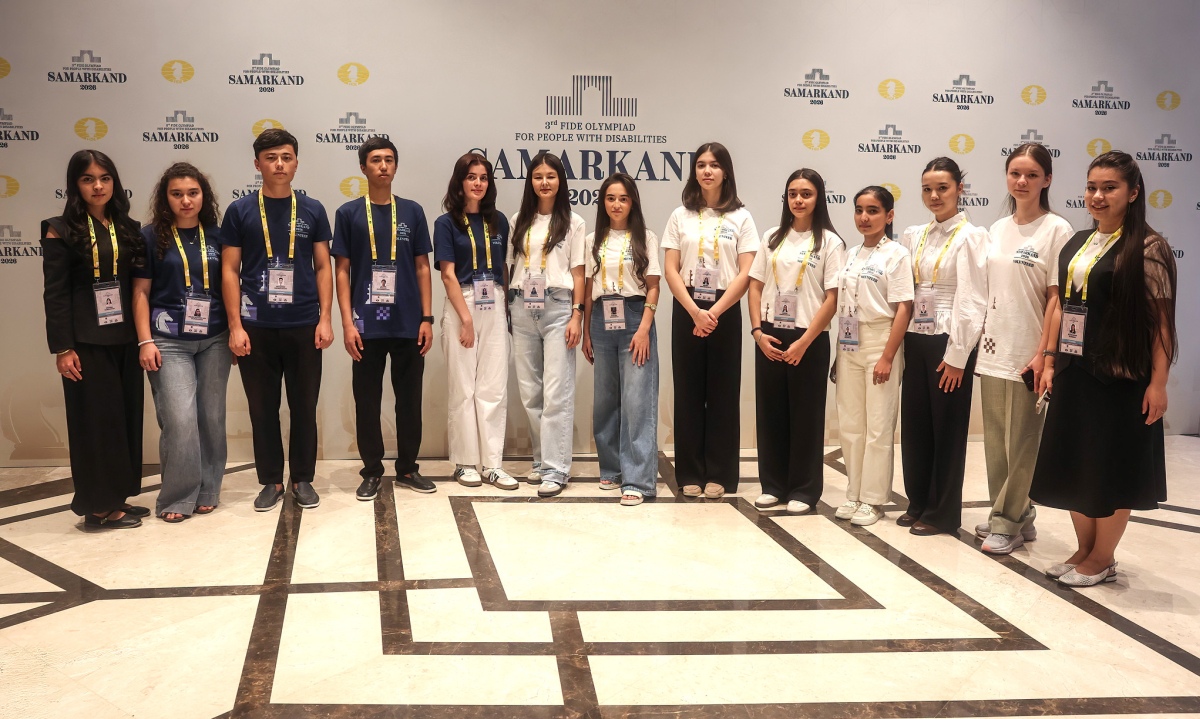
Among them is Shahrizoda, one of the Uzbek volunteers working at the Olympiad for People with Disabilities.
“We are here, as volunteers of Uzbekistan, to help our players,” she said. “The atmosphere is beautiful and really exciting, and it is motivating us, the volunteers, to be patient and dedicated.”
For her, the desire to help others also reflects the hospitality of the host country.
“Helping other people is one of the kindest things for Uzbek people as well.”
Shahrizoda will continue volunteering during the main Olympiad. She also has her own connection to chess, having played the game for around eight years.
“I can’t say I’m a pro, but I can play,” she said with a smile. “Right now, I tried again and I remembered how to play chess.”
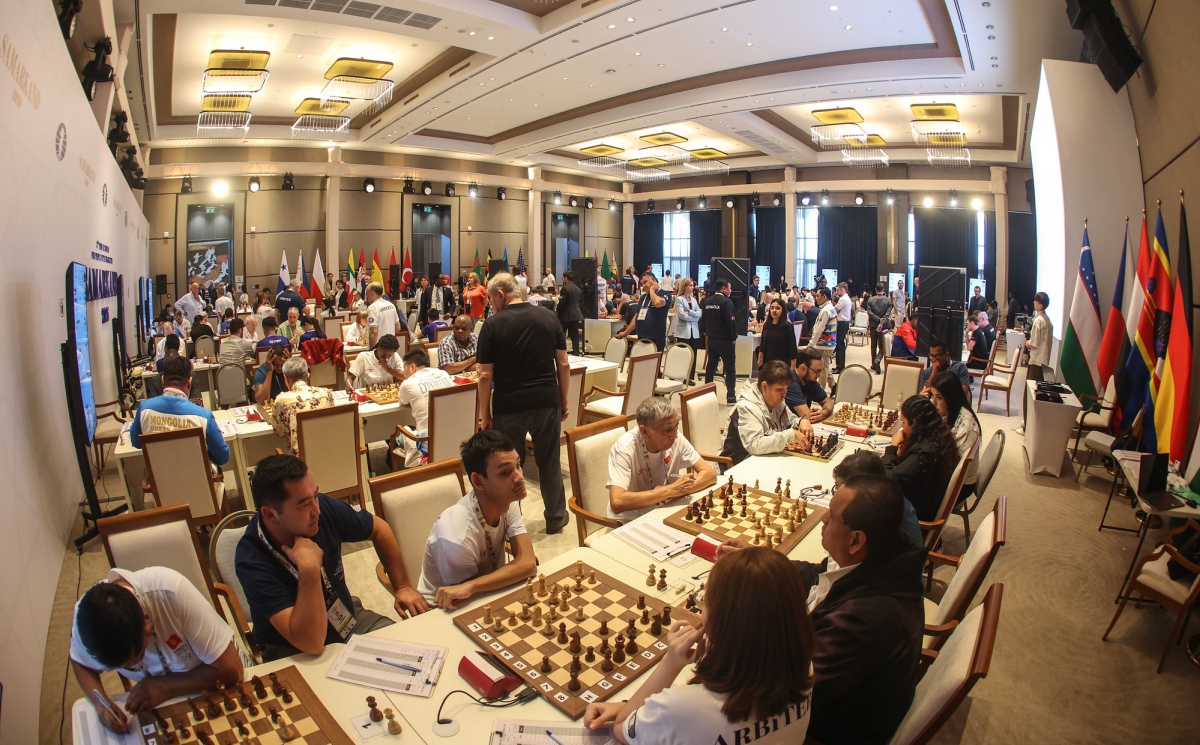
“Something out of this world”
With the Opening Ceremony of the 46th Chess Olympiad taking place on the same day, the presence of the world’s leading players has already created memorable encounters for participants.
For Jesus Camilo Osorio of Panama, the experience has made his third Olympiad for People with Disabilities particularly special.
“Every time is a dream come true for me to play the Olympiad for people with disabilities,” he said. “And this year it has been more special because we have been able to play at the same time with the Open Olympiad and the female Olympiad.”
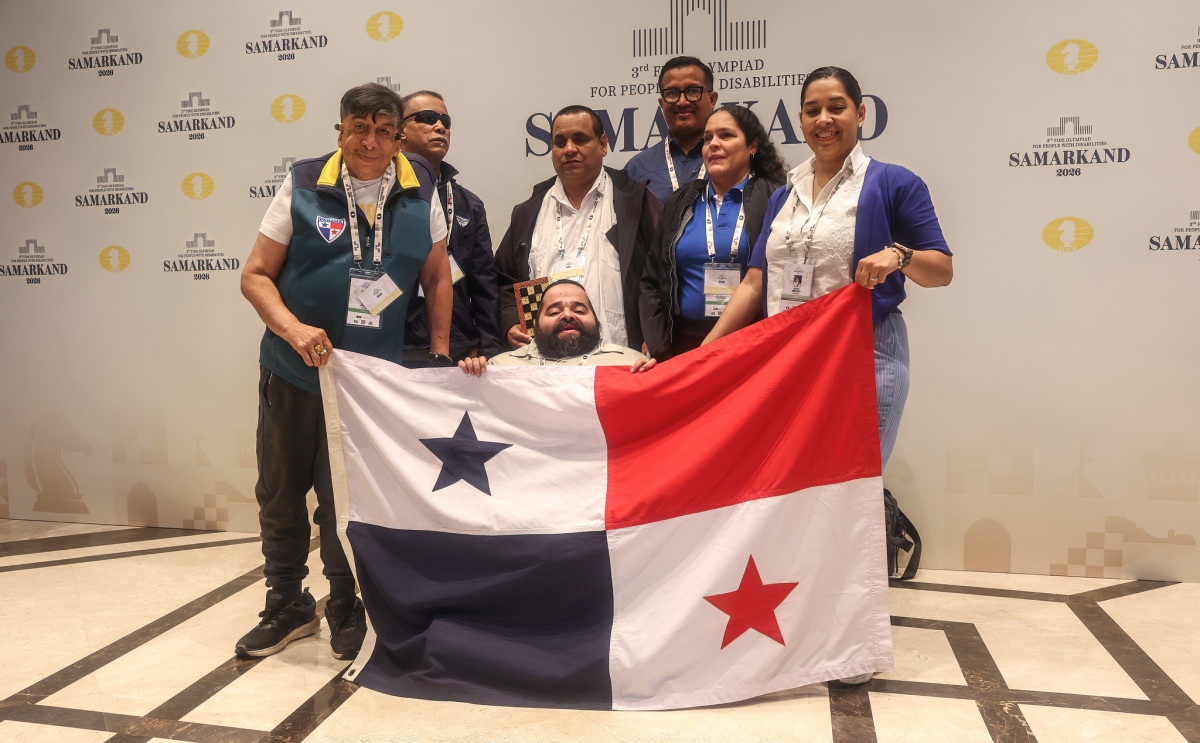
Osorio, 42, has already managed to meet one of his childhood chess heroes.
“First I managed to catch Ivanchuk at the entrance. He was my hero when I was very young, because his chess was so creative.”
Then came an encounter with reigning World Champion Gukesh D.
“I saw through the door that Gukesh, the World Champion, was coming. And I was like, ‘I have to take a picture with this guy.’”
After Osorio took his photo, many others quickly followed.
“He was like Michael Jackson. Everybody wanted to take a picture with him,” he joked.
But for Osorio, the Olympiad is ultimately about much more than meeting famous players.
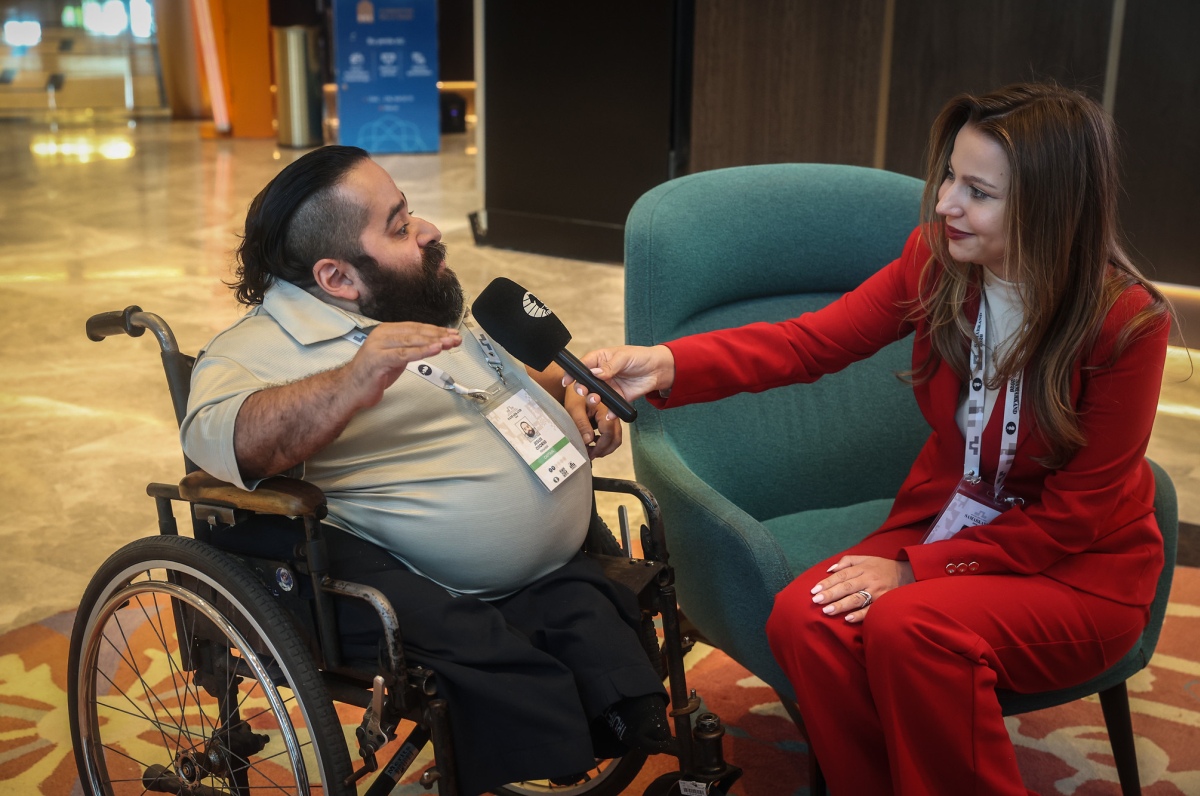
“Every Olympiad is getting better. It’s very good that we have more teams because we are able to meet more people and make connections in different countries. And after the Olympiad, we keep sharing our knowledge and playing online chess and making new friends.”
Chess without barriers
Nurnahar Tonima of Bangladesh, the only female player on her team, offered another perspective on what participation in Samarkand means.
Tonima has a visual impairment and competes using a Braille chessboard. She began playing chess in 2017 under the guidance of her coach Ijaz Hossain, who also has a visual disability.
“It is a very prestigious event for me and my country also,” she said, emphasizing the importance of Bangladesh having a team of players with disabilities competing internationally.
Tonima demonstrated how she distinguishes the squares and pieces through touch.
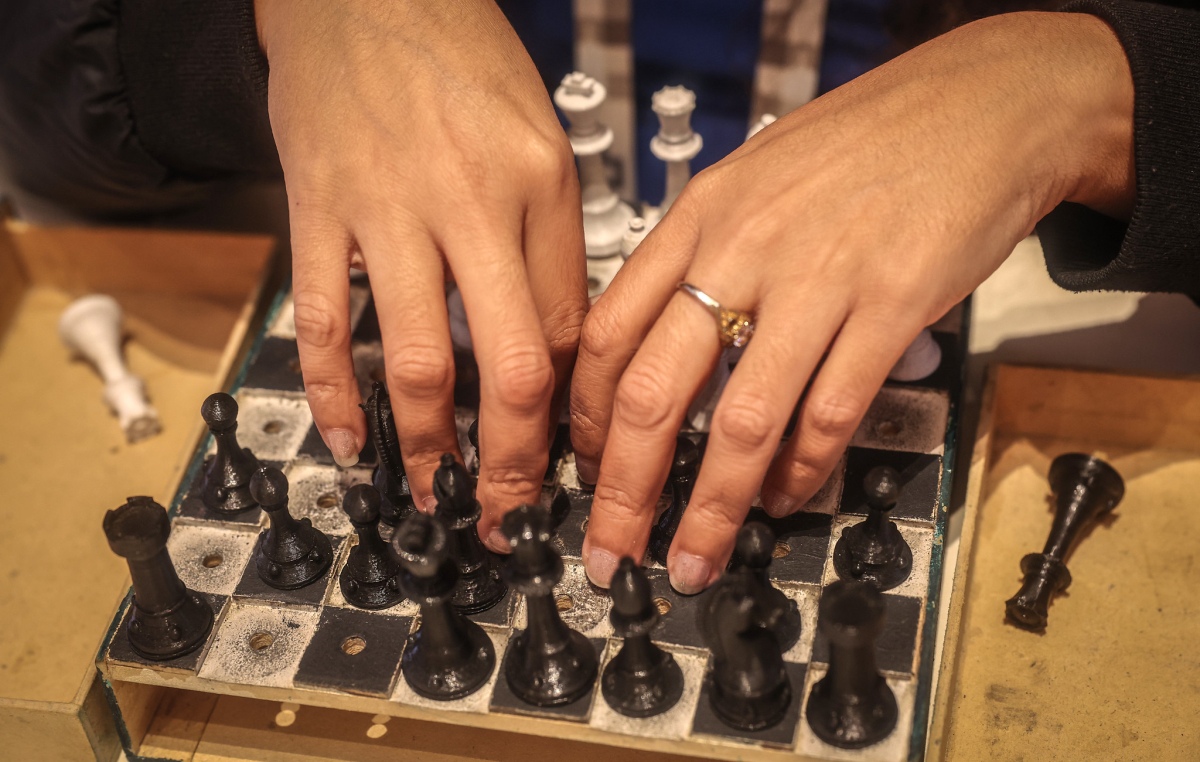
“This is a black square and this is a white square. I touch, and I also know where my pieces are and how I play.”
Once the position is established on the board, the essence of the game remains exactly the same: calculation, ideas and decision-making.
“Chess is very intellectual. It’s not a barrier.”
From champion to arbiter
The Olympiad also brings together officials whose personal stories are closely connected to the players they are helping.
Wilfredo Paulino of the Dominican Republic is working as an arbiter at the event. Having previously attended Olympiads in Azerbaijan in 2016 and Hungary in 2024, he had the opportunity to work at the main Olympiad in Samarkand but chose the Olympiad for People with Disabilities instead.
“I’m very proud to be right here because they invited me to go to the Open, and I decided to go to this one to get more experience because I’m disabled too, and I want to help all these guys.”
Paulino’s chess journey began when he was seven years old, and he went on to become a seven-time national champion in his country. At the same time, he was also a high-level volleyball player.
After severe problems with blood circulation led to the amputation of his leg, his relationship with chess took a new direction.
“I decided to become an arbiter, a chess arbiter.”
Today, that journey has brought him to Samarkand, where his own experience gives additional meaning to his role at the Olympiad.
Leaders meet in Round 6
With only two rounds remaining, the tournament now heads towards a crucial direct encounter.
The two undefeated leaders Czech Republic and Poland, will clash on Board 1 in Round 6. The chasing teams also face important tests: Cuba takes on IBCA, Philippines faces USA, while Uzbekistan 1 meets India.
After a day that began with Cuba alone at the top, the picture has changed completely. With Poland and the Czech Republic sharing the lead and three teams trailing by only one match point the race for the podium remains wide open.
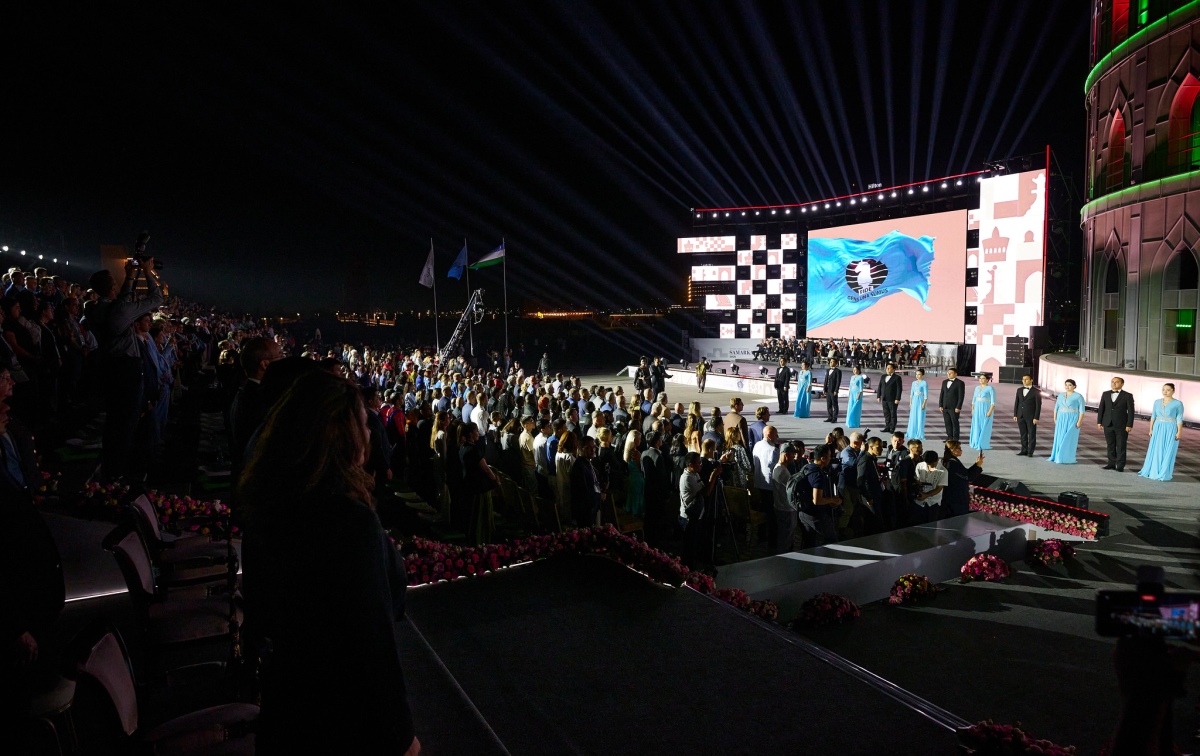
At the same time, the Opening Ceremony of the 46th Chess Olympiad has brought another dimension to the atmosphere in Samarkand. For the first time, the two Olympiads are running alongside each other – bringing players, officials and volunteers together as part of one chess community, just as the Olympiad for People with Disabilities approaches its decisive final rounds.
You can find results of Round 5 and pairings of Round 6 on Chess-results.
Follow the games live.
FIDE Chess Olympiad for People with Disabilities official website: https://dis-olympiad2026.fide.com/
Written by Angelika Valkova
Photos: Mark Livshitz and Rafal Oleksiewicz