Chess for Humanity: Armenia and FIDE champion social change at UN Geneva side event

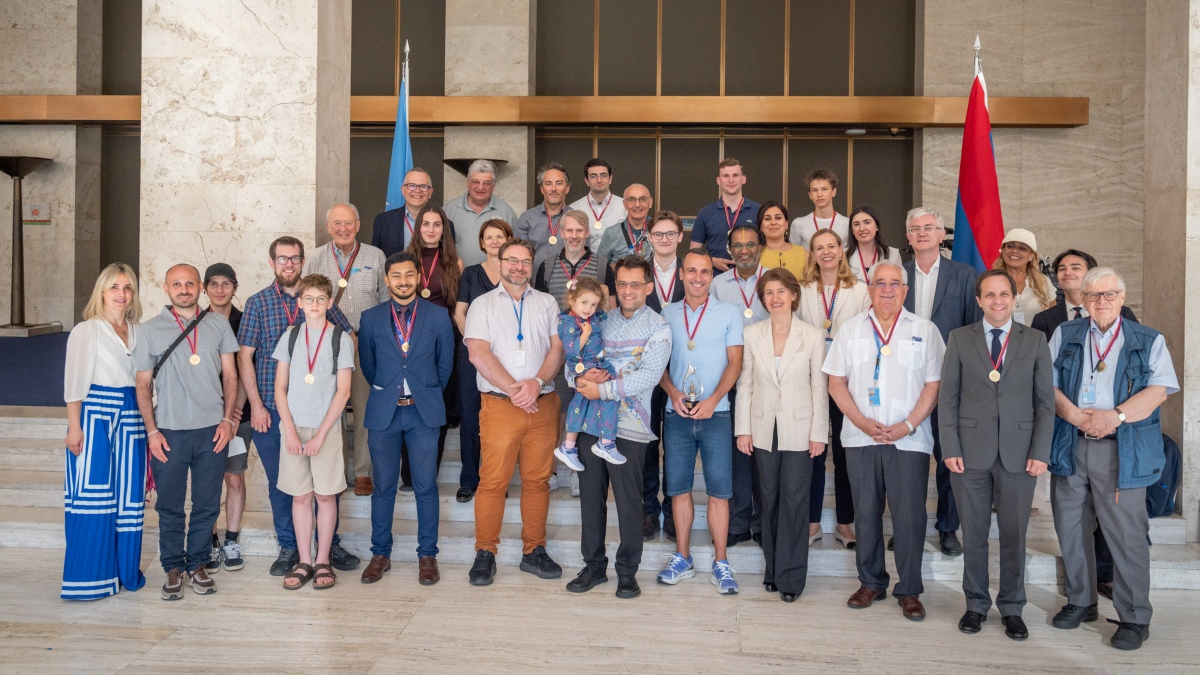
In a landmark celebration of chess as a catalyst for social transformation, the Permanent Mission of Armenia to the United Nations in Geneva, in partnership with the FIDE Social Commission and UNESCO, hosted a prestigious side event on 8 July at Hall XIV of the Palais des Nations, commemorating the upcoming International Chess Day 2026. The gathering transformed the historic UN venue into a vibrant hub of strategy and solidarity, showcasing the profound impact of chess far beyond the competitive arena. The event underscored the game’s unique capacity to bridge divides, empower marginalized communities, and foster cognitive and emotional resilience across the globe. The event was organized in close collaboration with a broad coalition of international and local partners, including the United Nations Office at Geneva (UNOG), UNESCO, the University for Peace, the International Chess Federation (FIDE), the Swiss Chess Federation, and the Geneva BOIS-GENTIL Chess Club. This diverse partnership reflected the shared commitment to advancing chess as a tool for diplomacy, inclusion, and social development. The proceedings opened with welcoming remarks from H.E. Tatiana Valovaya, Director-General of the United Nations Office in Geneva, followed by H.E. Hasmik Tolmajian, Ambassador and Permanent Representative of Armenia to the UN Office in Geneva. Their addresses set the tone for an afternoon dedicated to highlighting chess as an instrument of inclusion and personal reinvention. André Vögtlin, President of the Swiss Chess Federation and Chairman of the FIDE Social Commission, delivered a powerful reflection on the global reach of social chess initiatives. His words resonated deeply with the diplomatic audience: “For centuries, this board has been the same: 64 squares, two colors, equal rules for both sides. No passport required. No language needed. No status. No history. Just the next move.” André Vögtlin detailed the Commission’s work across 60 countries, from the prisons of Malawi to the refugee camps of Kenya, from the youth centers of Mongolia to the correctional facilities of Chicago: “We have placed this board in front of people the world has largely given up on. And something remarkable happens. A man who has spent years reacting – impulsively, violently, without perspective – learns to pause. To think one move ahead. Then two. Then five. A child who has never been treated as an equal sits across from an instructor and, for the first time, the rules are the same for both of them. Fair. Transparent. Unchangeable. A woman in a refugee camp discovers that her mind – which no one has ever invested in – is capable of strategy, of beauty, of depth. This is what we call Social Chess.” The highlight of the afternoon was an exclusive simultaneous chess exhibition featuring Grandmaster Levon Aronian, one of the world’s most celebrated chess talents. The event attracted approximately 70 registered participants, bringing together diplomats and representatives of international organizations based in Geneva. During the exhibition, Grandmaster Aronian played simultaneously against 25 participants – marking the first time such a high-profile simul had been held in conjunction with this specific side event. The demonstration captivated attendees, illustrating the game’s universal appeal and its extraordinary power to unite people across all divides. At the conclusion of the exhibition, Levon Aronian selected five participants to receive commemorative trophies. His selections were based primarily on the quality of play demonstrated by amateur players who particularly impressed him. In a remarkable achievement, one participant succeeded in holding the Grandmaster to a draw – an outstanding feat that drew enthusiastic applause from the audience. The FIDE Social Commission had the distinct honour of presenting its flagship social chess projects to a diplomatic audience, detailing the successes of initiatives that are transforming lives worldwide: Chess for Freedom, presented by project leader and SOC Councilor Mikhail Korenman, which promotes rehabilitation and cognitive development in prison settings. Chess for Protection, supporting refugees and displaced populations, presented by André Vögtlin, Chair of SOC. Infinite Chess, empowering children with autism, presented by Jonathan Chen, project partner and supporter, Founder and President of the Kindness on Board Foundation. Chess for Hope, bringing the game to underserved communities, presented by Prabitha Urwyler, project leader and FIDE SOC Councilor. The event proved to be a significant opportunity to position Social Chess as a leading player on the world stage. The spirit of the gathering was exceptionally positive, with palpable interest from the diplomatic community in the transformative power of these initiatives. H.E. Hasmik Tolmajian not only delivered opening remarks but also played a key role in opening doors to other UN organizations and their sub-organizations. This integration is a crucial step in embedding Social Chess more deeply within the UN framework, paving the way for sustained institutional support. Buoyed by the success and high interest at this year’s event, the FIDE Social Commission is already planning for the future. The consensus, as articulated by André Vögtlin, is clear: “Next year, we must go further – we plan to make social chess the main topic of the event.” The Permanent Mission of Armenia remains committed to making this event an annual tradition and looks forward to welcoming participants again next year. The momentum built at the Palais des Nations has opened new avenues for the Commission to seek representation at future sessions of the UN Human Rights Council, ensuring that the transformative power of chess continues to gain recognition as a vital tool for social development and human dignity worldwide. Photos: © insta:agencypointofviews
Asian Rapid and Blitz Championships 2026: Registration deadline extended

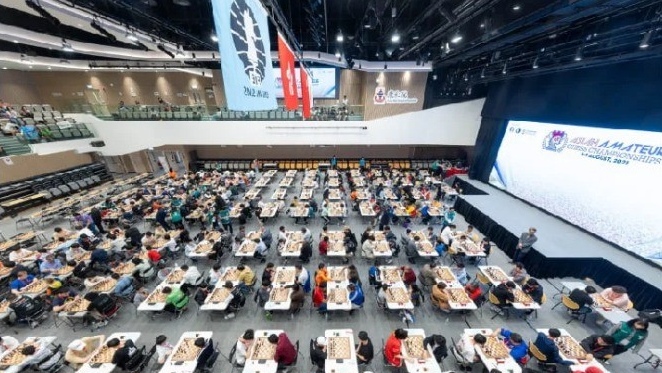
The Asian Chess Federation is pleased to announce that the Asian Rapid & Blitz Chess Championships 2026 (Open & Women) will be held in Hong Kong, China, from July 27 to 31, 2026. The championships are organized by the Hong Kong China Chess Federation Limited (HKCCFL) with the support of the Leisure and Cultural Services Department of the Hong Kong Special Administrative Region Government. The event is open to players from all member federations of the Asian Chess Federation in FIDE Zones 3.1 to 3.8, with no limit on the number of participants each federation may enter. Tournament venue The championships will take place at the modern TWGHs TungPo Centre in San Po Kong, Kowloon, a multi-purpose venue offering excellent facilities and convenient access from all parts of Hong Kong. Format The championships will consist of two separate events: Rapid Championship – 11-round Swiss System Blitz Championship – 13-round Swiss System Time control Rapid: 15 minutes plus a 10-second increment from move one. Blitz: 3 minutes plus a 2-second increment from move one. The latest FIDE Laws of Chess and Asian Chess Federation regulations will apply. Prize fund The championships offer an attractive total prize fund of HKD 150,000 (approximately USD 19,150). Open section 1st Prize: Trophy + HKD 40,000 2nd Prize: Trophy + HKD 20,000 3rd Prize: Trophy + HKD 10,000 Women’s section 1st Prize: Trophy + HKD 20,000 2nd Prize: Trophy + HKD 10,000 3rd Prize: Trophy + HKD 5,000 Additional cash prizes will be awarded through 10th place in each section, together with special prizes for the best Hong Kong player and various rating categories. Schedule 27 July: Arrival of participants 28–29 July: Asian Rapid Chess Championship 30 July: Asian Blitz Chess Championship 31 July: Departure The Players’ Meeting will be held on July 28, at 13:30, followed immediately by the first five rounds of the Rapid Championship. Registration Registration is now open. Registration deadline: July 16, 2026 (12:00 PM) Late entries may be accepted subject to a HKD 400 late registration surcharge. Entry fees Grandmasters (GM), International Masters (IM), Women Grandmasters (WGM), and Women International Masters (WIM): Free entry Other FIDE-rated players: HKD 1,200 Accreditation fee for accompanying persons: HKD 200 Participants are advised to complete their registrations early and arrange accommodation well in advance due to the high demand for hotels in Hong Kong during the summer season. Official website Online registration and complete tournament information are available at: https://arbcc2026.chesstournament.org/ https://asianrbc2026.hkchessevent.com/ For further information, please contact the Organizing Committee at hkchessevent@gmail.com.
South Africa explores historic bid for first African Chess Olympiad

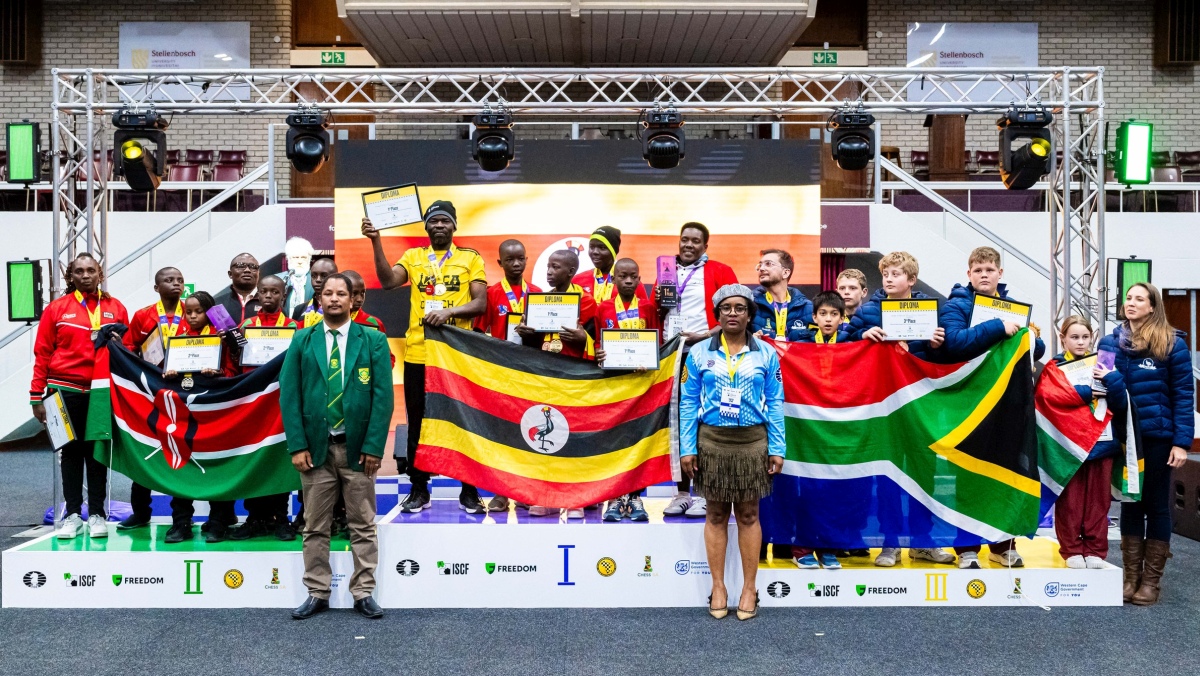
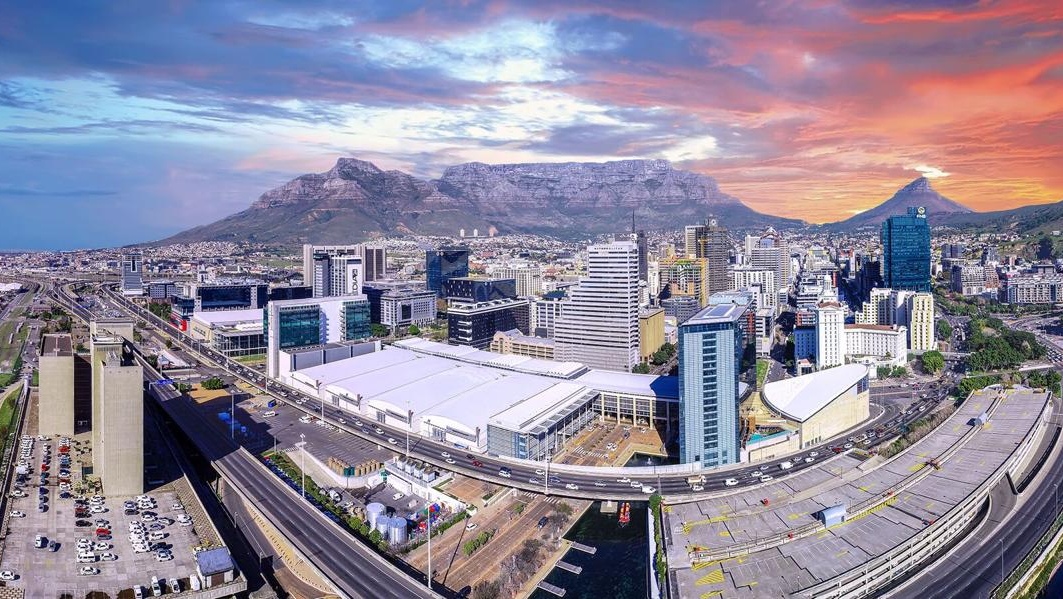
FIDE and South African officials have inspected a potential venue and discussed the possibility of Cape Town bidding for the 2032 Chess Olympiad. A FIDE delegation, led by President Arkady Dvorkovich, visited the Cape Town International Convention Centre (CTICC) as a possible venue for the event. They were joined by Andre Lewaks, President of Chess South Africa; Dr. Lyndon Bouah, Chief Director for Sport and Recreation in the province of the Western Cape; and Kevin Malam, Assistant Director at the Western Cape Government. The CTICC is being considered as a possible venue for what would be the first Chess Olympiad on African soil. Opened in 2003, the complex has a total floor space of 140,855 square meters and can accommodate up to 9,500 people. Its main auditorium can seat about 1,500 people. As one of Africa’s leading convention centers, CTICC has hosted many international conferences and events, including the 2010 FIFA World Cup final draw, the 2023 Netball World Cup (the first Netball World Cup hosted on the African continent), and the 2015 World Economic Forum on Africa. CTICC is part of Cape Town’s international positioning as a conference, exhibition, trade, diplomacy, and major events hub. Located in the Foreshore area, near hotels (more than 5,000 beds available), the V&A Waterfront, and transport links, it offers easy access for visitors and delegations. Its flexibility is also a major strength: it can host exhibitions, congresses, gala dinners, sporting events, political sittings, and multiple concurrent events across its two major halls. In April 2026, FIDE announced that Africa would be given priority to host the 2032 Chess Olympiad as part of a new principle of continental rotation for future Olympiads. “Being here on the continent, we can feel how important this is for the whole African chess community, for all chess players, for all national federations, for everyone who is involved here, for governments as well,” FIDE President Arkady Dvorkovich said. FIDE is now reaching out to countries that could host future Chess Olympiads. “South Africa is a great location. I’m happy that we brought the World Schools Team Championship here. We could see first-hand how capable the local team is and the national federation. A modern venue, prestigious location, and the capacity of local organisers to host big international events are a great combination and we will take this into account when making the final decision,” Dvorkovich added. “We are very excited at the possibility of hosting the Chess Olympiad in Africa, and particularly in South Africa,” said Dr. Lyndon Bouah, Chief Director for Sport and Recreation in the province of the Western Cape. “Chess has been very important to us as a nation. In 2012 the national government took the decision for chess to be one of the priority codes of South Africa. Out of 83 possible codes, only 16 were chosen, and chess was one of them,” Dr. Bouah said. Cape Town is one of Africa’s most internationally recognisable cities and South Africa’s legislative capital. It has political importance, a strong services economy, and global tourism appeal. It is also an important international travel hub, with strong connections to other parts of the world. South Africa’s time zone also works well for a global chess audience. It aligns closely with most of Europe, home to one of the largest chess audiences in the world, making it easier for fans to follow games live. Cape Town also has a strong chess tradition. The first chess club in Africa was established there in 1885. Today, there are 38 chess clubs in the city, which are due to play in a league at the end of this month. The South African National Chess Championships have been held since 1892, making them the oldest national chess championships in Africa. Alongside Morocco, South Africa was also one of the first African nations to take part in the Chess Olympiad in Munich in 1958.