

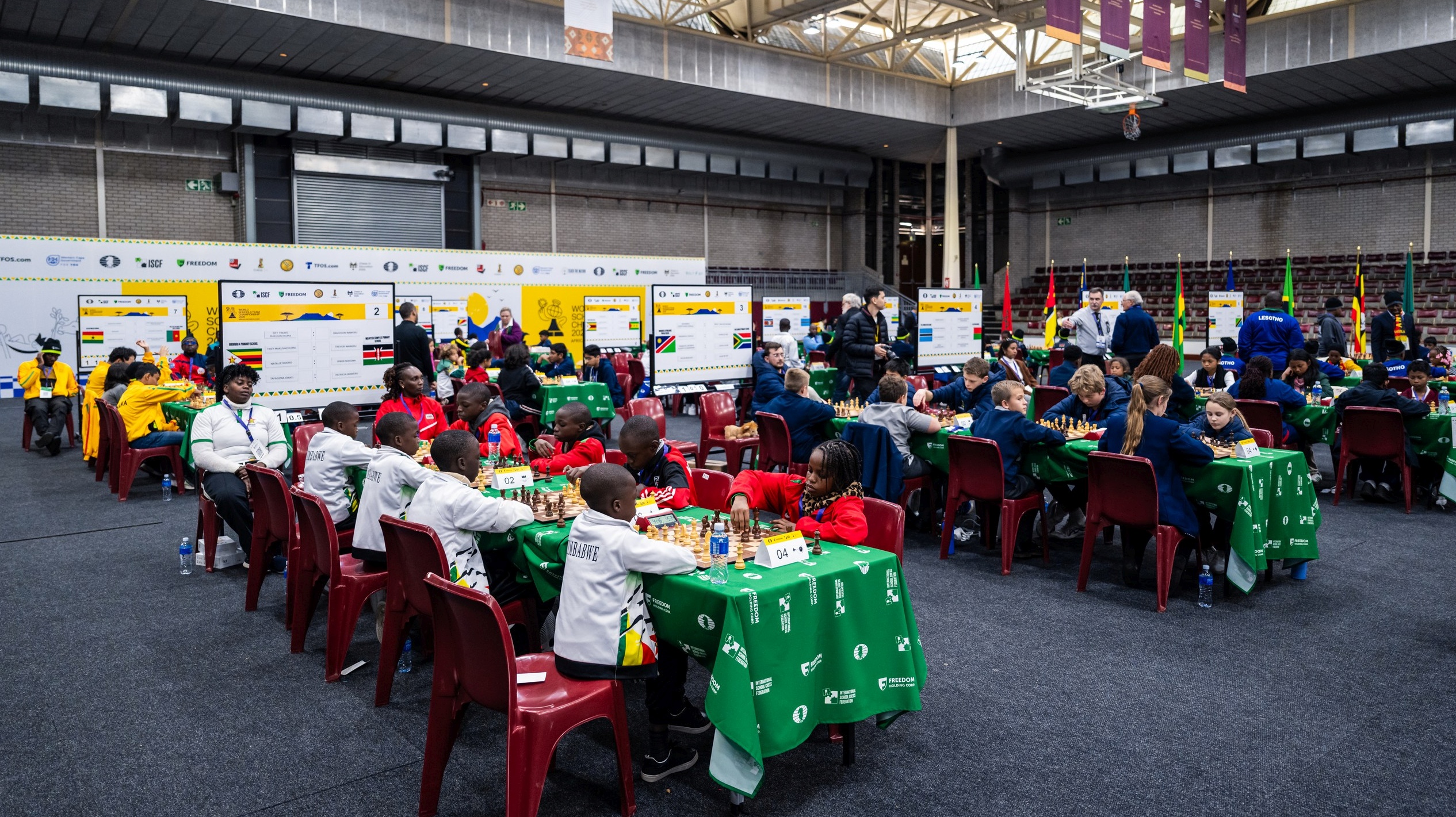
There was a different feeling inside the Coetzenburg Center on Friday morning. The music still played as the players filed in, and the smiles were still everywhere, but beneath it was the awareness that they were doing this for the final time.
The final two rounds remained in Stellenbosch, with the African continental title and three places at the Grand Final in December still to be decided. The day would bring to a close a week that had offered far more than tournament results: new friendships between players from across the continent, evenings filled with masterclasses and workshops, and, for many, a first opportunity to represent their school internationally.
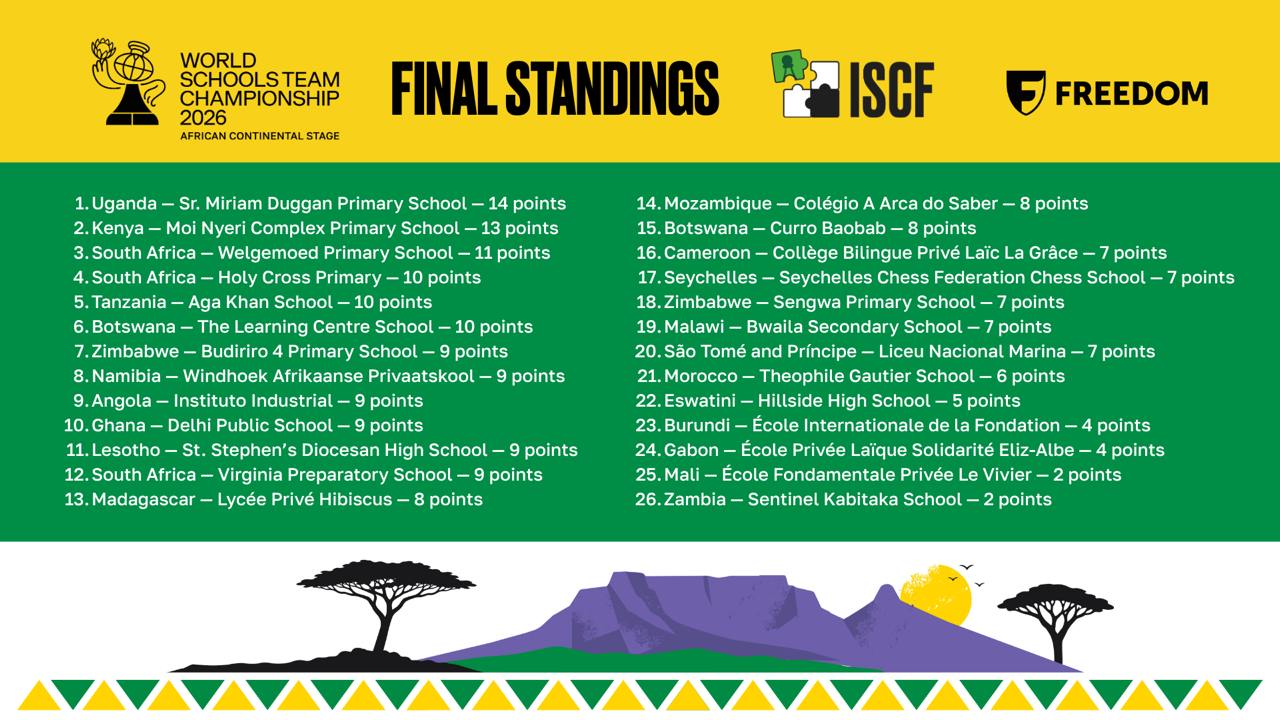
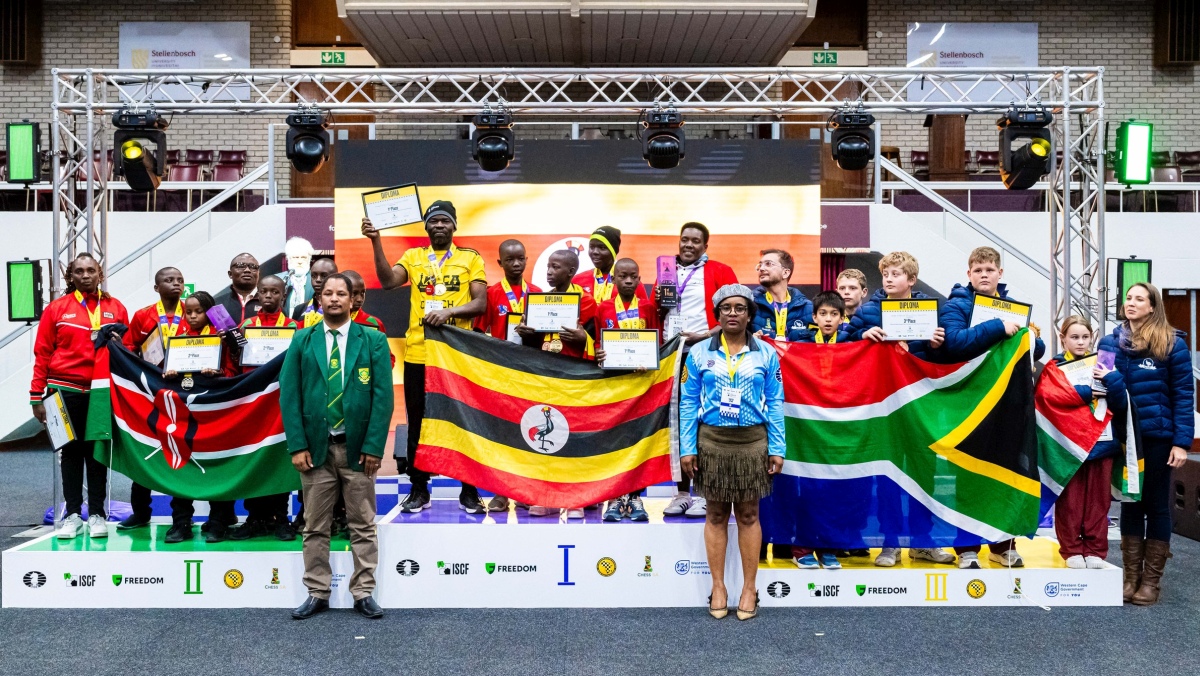
By the end of the day, the top seeds had delivered. Sr. Miriam Duggan Primary School of Uganda were crowned African continental champions after completing the tournament without losing a match. Kenya’s Moi Nyeri Complex Primary School took silver, while the host nation also had reason to celebrate as Welgemoed Primary School secured bronze. All three teams qualified for the Grand Final in December.
Rounds 7 and 8
Uganda’s Sr. Miriam Duggan Primary School and Kenya’s Moi Nyeri Complex Primary School began the final day level on 10 match points, with five teams two points behind. Round 7 kept the two leaders together. Uganda defeated Madagascar’s Lycée Privé Hibiscus 4-0, recording their second clean sweep of the event, while Kenya beat Namibia’s Windhoek Afrikaanse Privaatskool 3-1.
Both teams moved to 12 match points with one round remaining. Having already faced each other earlier in the tournament, they could not be paired again under the Swiss system. The title would therefore be decided in separate matches and, should both teams achieve the same result, on tiebreaks.
Behind them, the contest for the third and final Grand Final place narrowed down to two South African schools. Welgemoed Primary School defeated Angola’s Instituto Industrial 3½-½, while Holy Cross Primary won its all-South African match against Virginia Preparatory School 3-1. With these results both teams notched up 10 match points, two points ahead of a six-team group on eight.
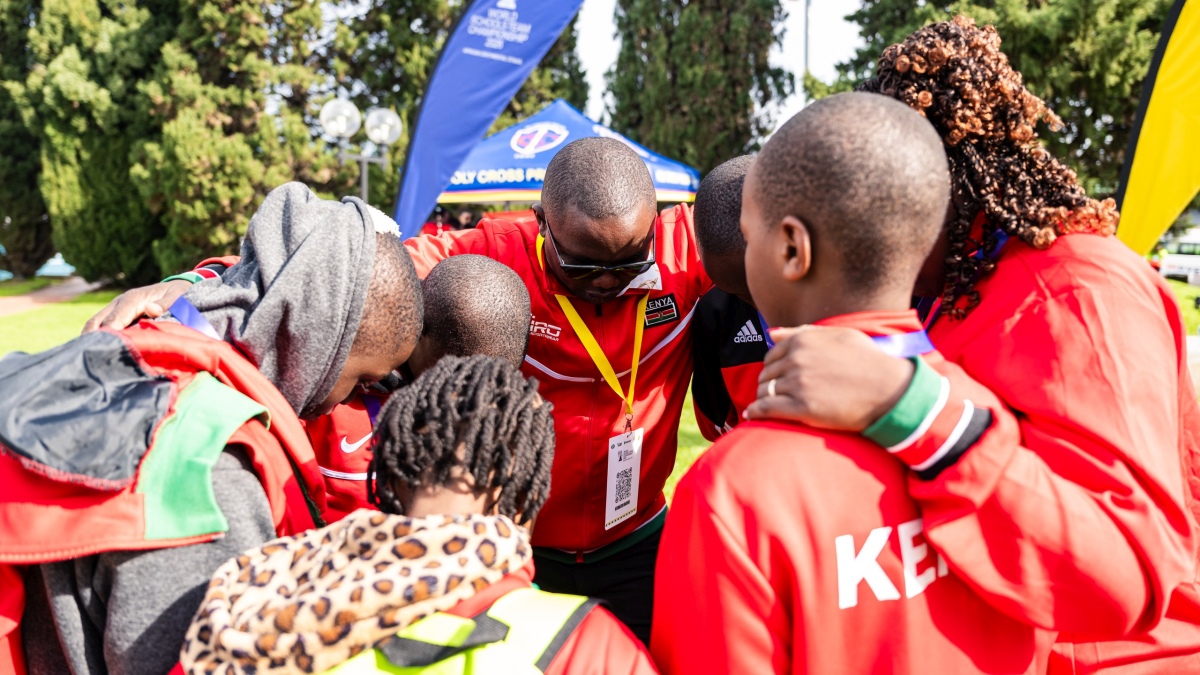
Shortly before the final round, the Kenyan players gathered around their boards for a last talk from their coach. With arms around one another’s shoulders, they listened closely before heading into Round 8 with renewed energy.
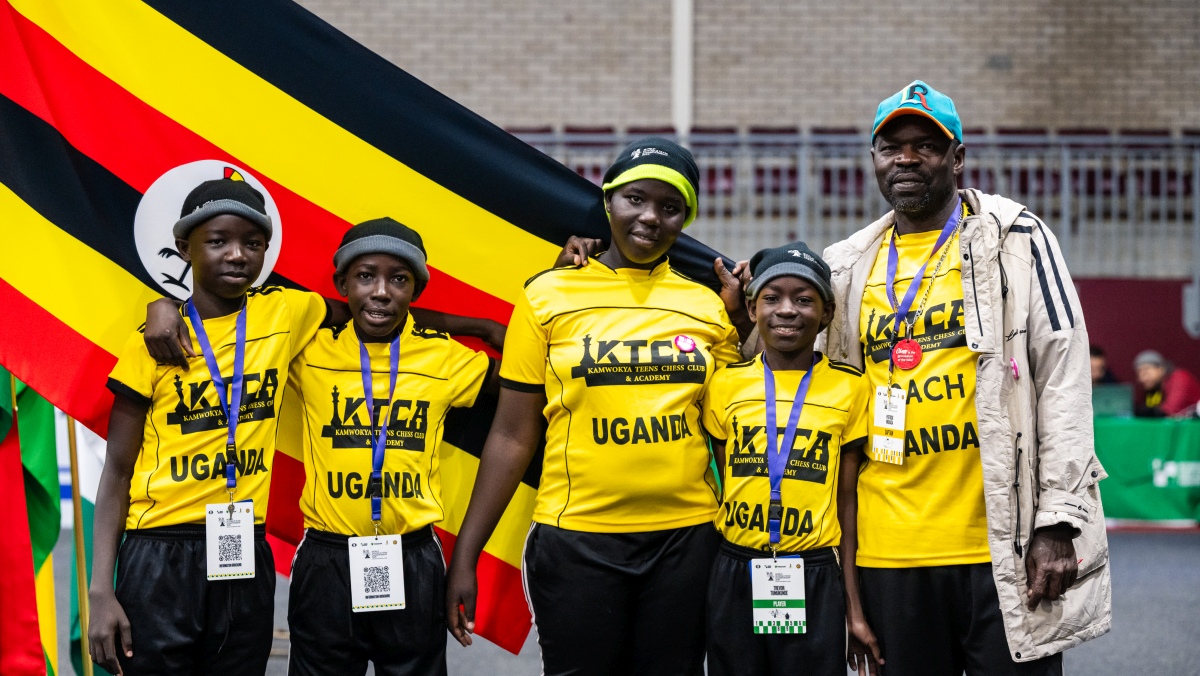
Uganda left no room for doubt. Paired against Holy Cross Primary, the top seeds won 3½-½ to finish on 14 match points from a possible 16. Their final record stood at six match wins, two draws and a tournament-best 24½ game points.
“I’m so humbled for this fantastic performance. I believe in my boys because we are the top seed, the best in the country, the best in the region. These are kids from an academy in the ghetto, disadvantaged kids, vulnerable to all the problems that come with that. I trained them so that they can get the opportunities that come with chess. Chess is improving them, they are moving around the world, and I’m so proud that wonderful brains from such areas can serve our country and the entire world,” said Patrick Mukasa, coach of Sr. Miriam Duggan Primary School and founder of the Kamwokya Teens Chess Club and Academy, where the players train.
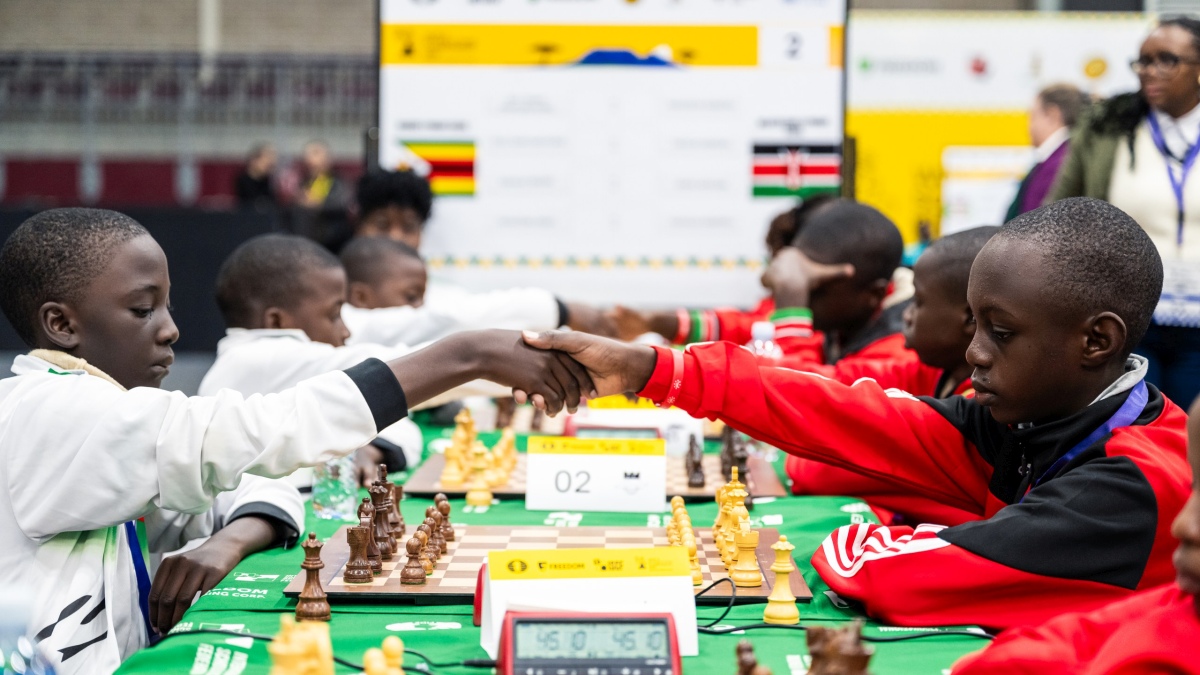
For Kenya, the final round brought considerably more tension. They appeared to have control of their match against Zimbabwe’s Budiriro 4 Primary School, but the momentum shifted and the encounter ended 2-2. The dropped match point proved to be the difference between gold and silver.
There was little disappointment visible afterwards, however. The Kenyan players left the stage smiling, their mood as light as it had been during the morning huddle. For three members of the team, the connection extends beyond the chessboard. Davidson, Trevor, and Patricia Waweru are siblings, and after the match they spoke about learning the game together, improving alongside one another, and enjoying the chance to compete as a family. That shared experience had taken them all the way to Stellenbosch and a silver medal.
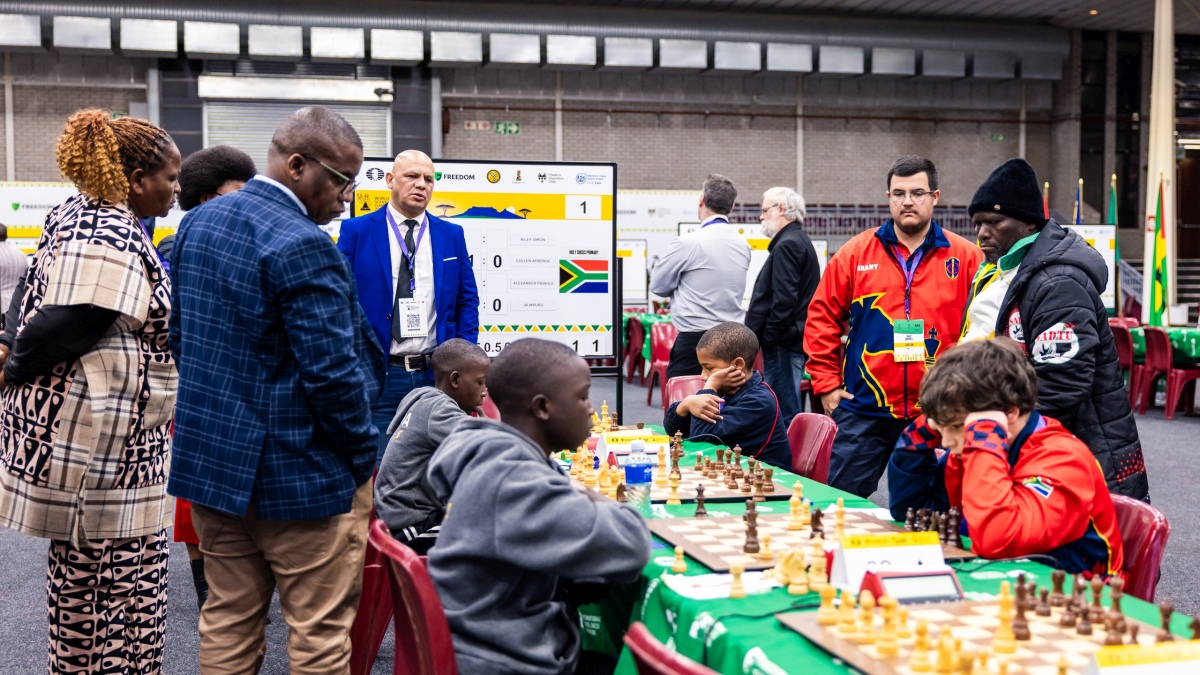
The contest for the third Grand Final place produced another close finish. Welgemoed led Namibia 2-1 with one game still in progress. The final board featured a complicated position, with all three outcomes possible. Welgemoed eventually lost the game, leaving the match tied 2-2 and prompting anxious calculations at the team’s table. Welgemoed finished on 11 match points, one ahead of Holy Cross, to claim bronze and become South Africa’s representative at the Grand Final.
Before the closing ceremony, the final afternoon still belonged to the players, starting with a chess quiz in the Lectorium at 16:00. The activity rooms hosted a drumming masterclass, national and group games, and one final session in the entertainment zone.
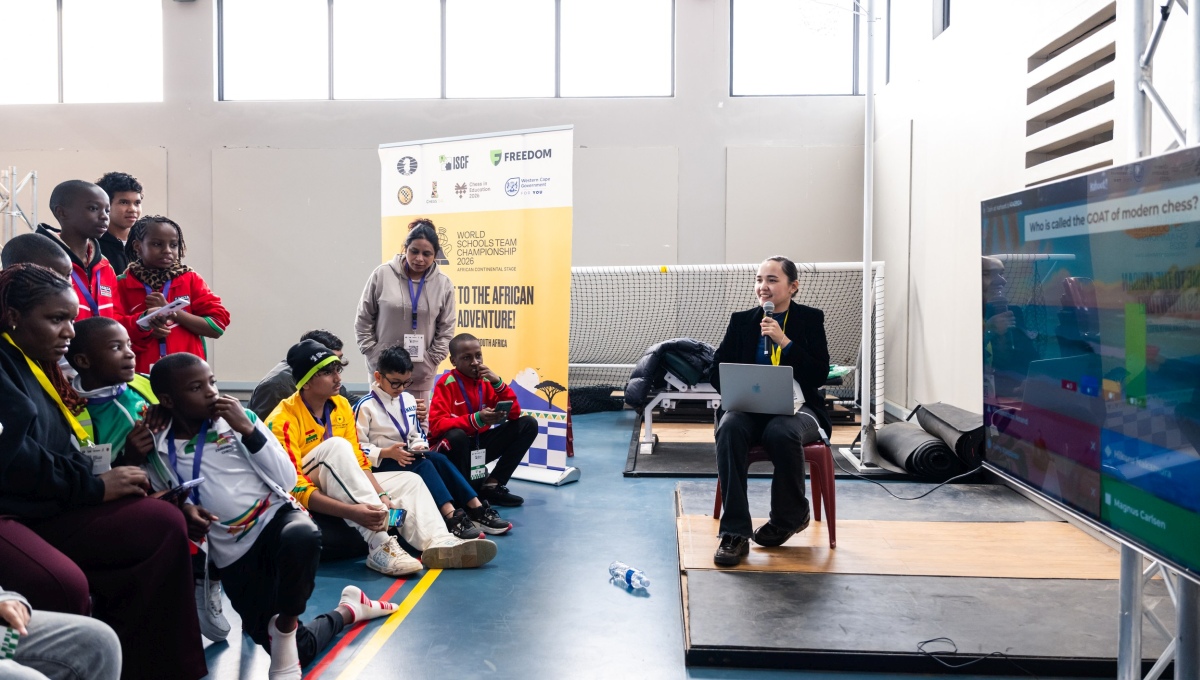
Some players will return home with medals and qualification places. All of them leave Stellenbosch having represented their schools on an international stage and shared the week with young players from across Africa.
A farewell to Stellenbosch
The championship ended as it had begun: with players, coaches, parents, and officials gathered together. At 20:30, they returned to the venue for the official closing ceremony, which opened with gratitude to those who made the week possible. Chief among them was the Freedom Group of companies, the main sponsor of the African Continental Stage and General Partner of the International School Chess Federation, whose backing, alongside that of ISCF President and Freedom Holding Corp CEO Timur Turlov, has carried the championship from an idea to four continental stages reaching young players around the world. Thanks also went to the African Chess Confederation, Chess South Africa, the Department of Cultural Affairs and Sport of the Western Cape Government, Stellenbosch University, and ChessBase, a valued partner who prepared special gifts for every participant.
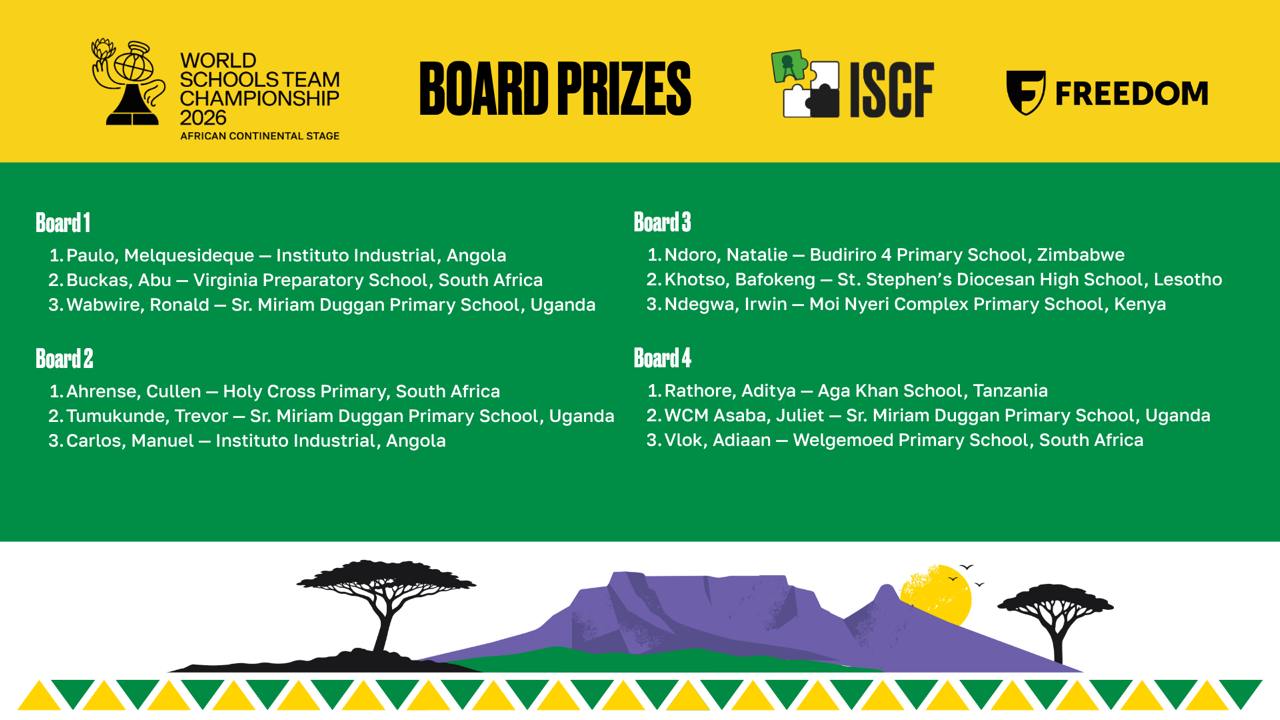
A highlights video looked back on the four days in Stellenbosch before the national anthem of South Africa, performed by Onele Mngameli, and the FIDE anthem. Representatives of the participating federations then presented the individual board awards:
FIDE President Arkady Dvorkovich then delivered a video message declaring the African Continental Stage officially closed before the evening ended with confetti and a dance performance.
What’s next
The World Schools Team Championship 2026 cycle now moves to the American Continental Stage in San José, Costa Rica, from August 11 to 16, before the leading teams from all four continental stages meet at the Grand Final in December.
Written by: Charlize van Zyl
Photos: ISCF