

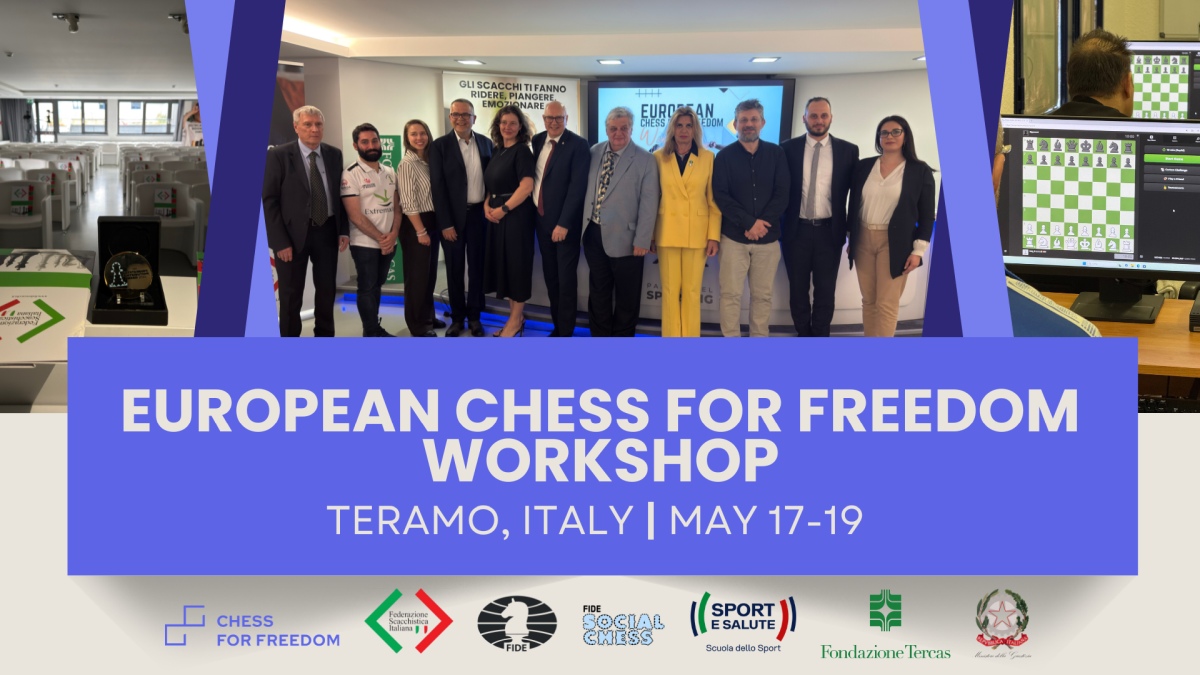
The European “Chess for Freedom” workshop took place in Teramo, Italy, from May 17 to 19, bringing together prison administrators, educators, chess officials, researchers, and social project coordinators to explore the growing role of chess in rehabilitation, reintegration and social inclusion.
Organised with the support of the Italian Chess Federation (FSI), the TERCAS Foundation, and the FIDE Social Commission, the event combined conference sessions, project presentations, international case studies, and a visit to the Teramo prison, where delegates met inmates participating in the 2nd Continental Online Championship for Prisoners.
18 May: International Workshop
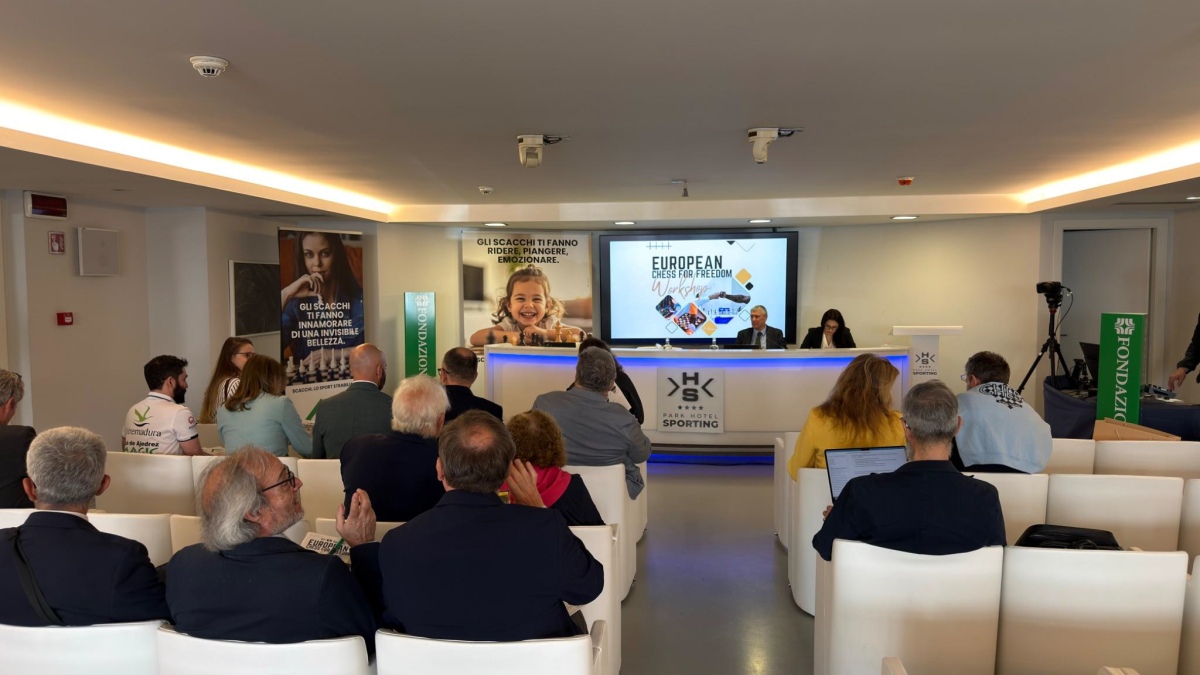
The main conference day on May 18 was moderated by Antonio Amatulli, Secretary of the FSI Social Commission. Institutional greetings were delivered by Vincenzo Piero Di Felice, President of the TERCAS Foundation, followed by FSI President Luigi Maggi and Dana Reizniece, Deputy Chair of the FIDE Management Board. Rossana Ciuffetti, Director of the Scuola dello Sport – Sport e Salute, also addressed participants, while Italian Deputy Minister of Justice Senator Francesco Paolo Sisto joined remotely via video message.
The morning session focused on the work of social chess commissions and prison initiatives.
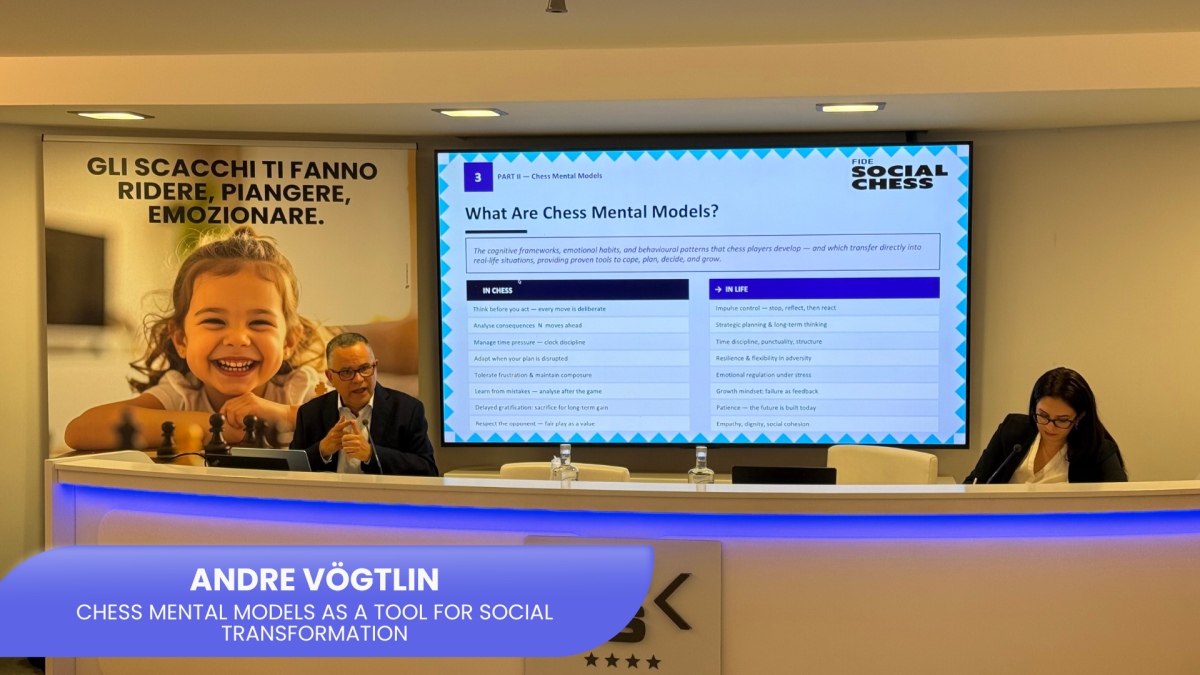
Mirko Trasciatti, coordinator of prison projects for the Italian Chess Federation, presented the work of the FSI Social Commission and its efforts to use chess as a tool for inclusion and reintegration. André Vögtlin, Chairman of the FIDE Social Commission, spoke about the wider impact of social chess initiatives and the role of chess mental models in social transformation. His presentation connected the “Chess for Freedom” initiative with broader educational and social objectives pursued by FIDE Social Chess.
Other presentations included the Italian “Scacco al Tempo” prison project presented by Eulalia Caramanica, which combines chess and music as educational tools for inmates, as well as the Erasmus+ “ICARUS” initiative, presented by Antonia Castellani, CEO of Skill-Up, which uses chess to teach soft skills and support reintegration.
The afternoon session turned toward international experiences within the “Chess for Freedom” movement. Patrizia Bruna Boccia, Head of the Educational and Treatment Area at Teramo Prison, opened the session before journalist and sports administrator Filippo Grassia joined the workshop remotely through Zoom and spoke about the cognitive and social benefits of chess. Stefania Di Padova, Councillor for Social Policies of Teramo, joined the afternoon session to bring the city’s greetings.
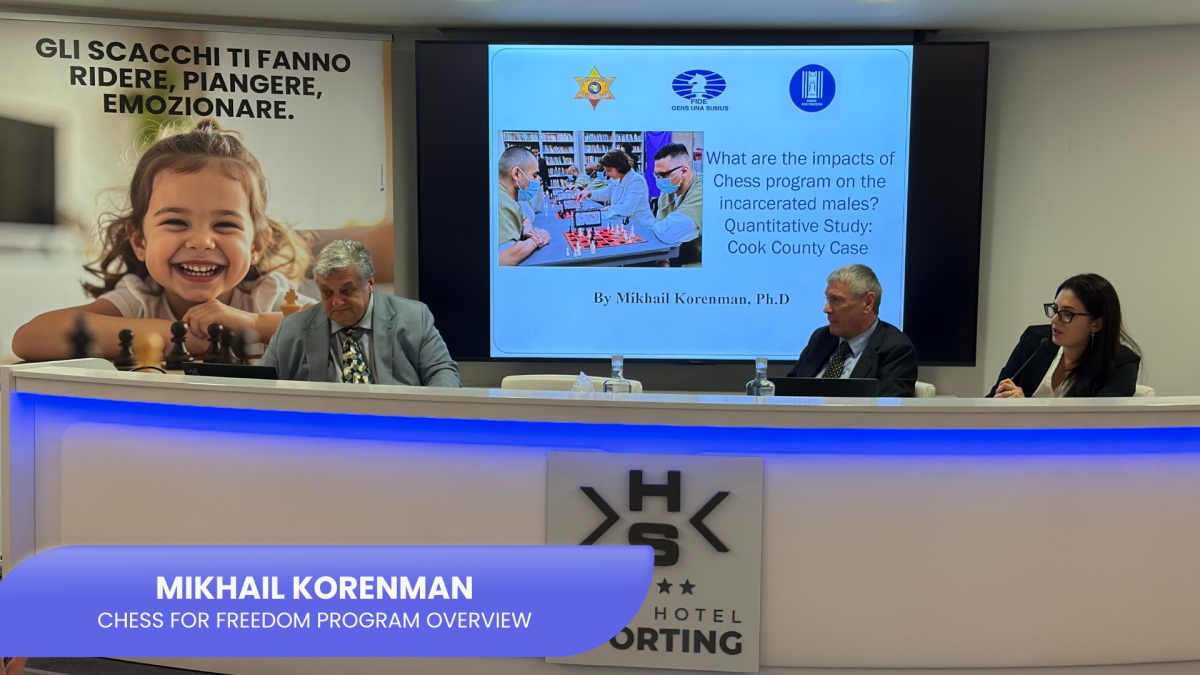
Mikhail Korenman, coordinator of the “Chess for Freedom” program, presented the development of the initiative since its launch in 2021, including the first intercontinental online championship for prisoners and the expansion of prison chess programs worldwide. Korenman also presented research examining the impact of chess programs in correctional facilities. One study from Cook County explored how incarcerated participants associated chess with strategic thinking, patience, and decision-making in everyday life.
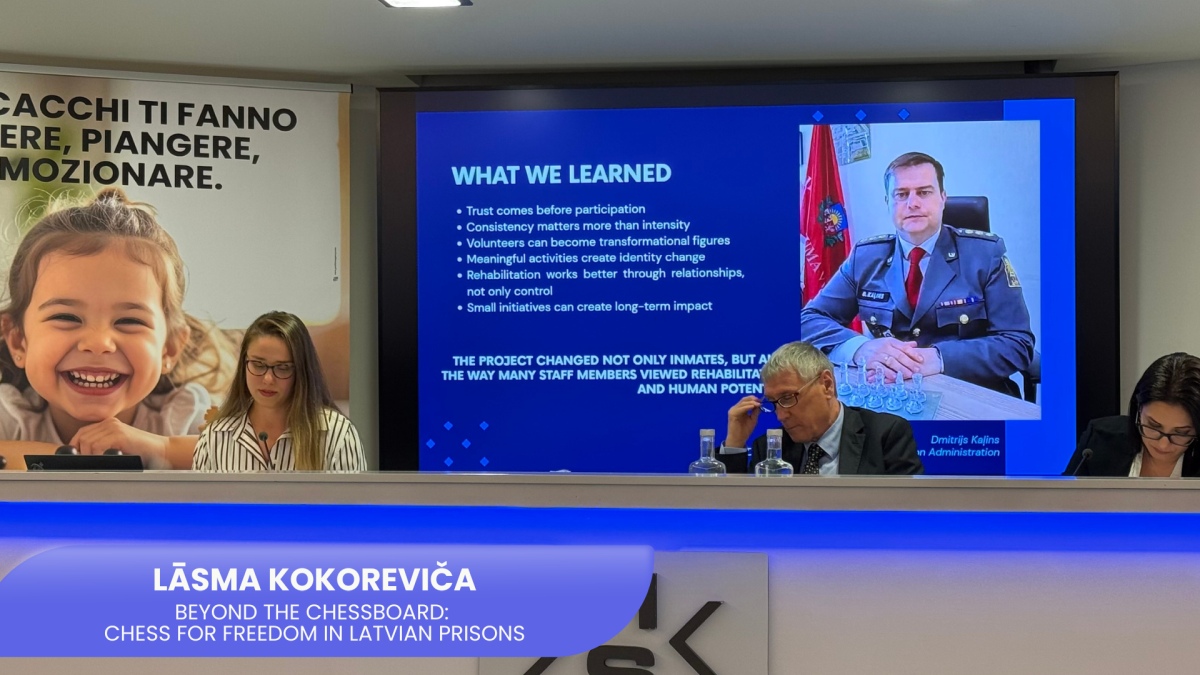
Lāsma Kokoreviča of the Latvian Prison Administration presented Latvia’s evolving rehabilitation-oriented prison model and explained how meaningful activities such as chess programs help reduce tension, improve emotional regulation and strengthen communication skills inside prisons.
Rodrigo Barbeito of Spain’s Club Magic shared the organisation’s long-running prison chess initiatives in Extremadura, including its participation in the first “Chess for Freedom” events and its international cooperation projects connected to ICARUS and FIDE initiatives.
Augusto Caruso, an instructor working in Gorizia Prison, reflected on his personal experiences teaching chess inside correctional facilities. He described how chess lessons helped build trust, dialogue, and mutual respect between instructors and inmates.
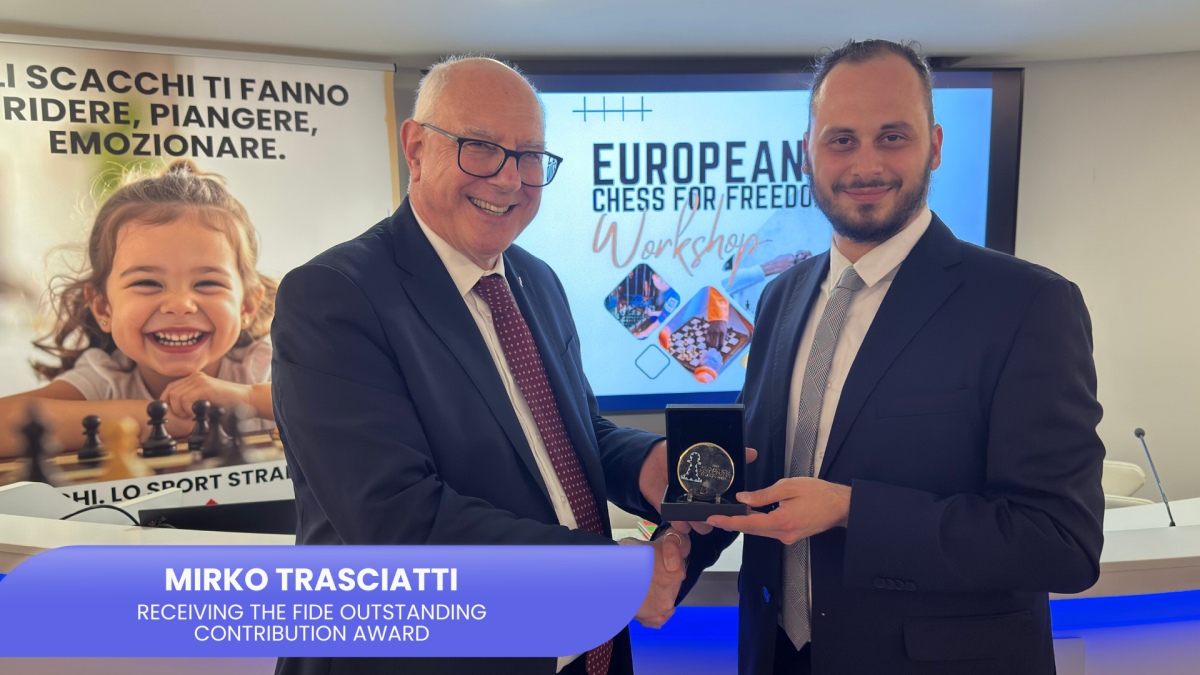
During the workshop, FSI President Luigi Maggi and prison project coordinator Mirko Trasciatti received the FIDE Outstanding Contribution Award in recognition of their work promoting social chess initiatives and prison programs in Italy.
19 May: Prison Tournament & Cultural Visit
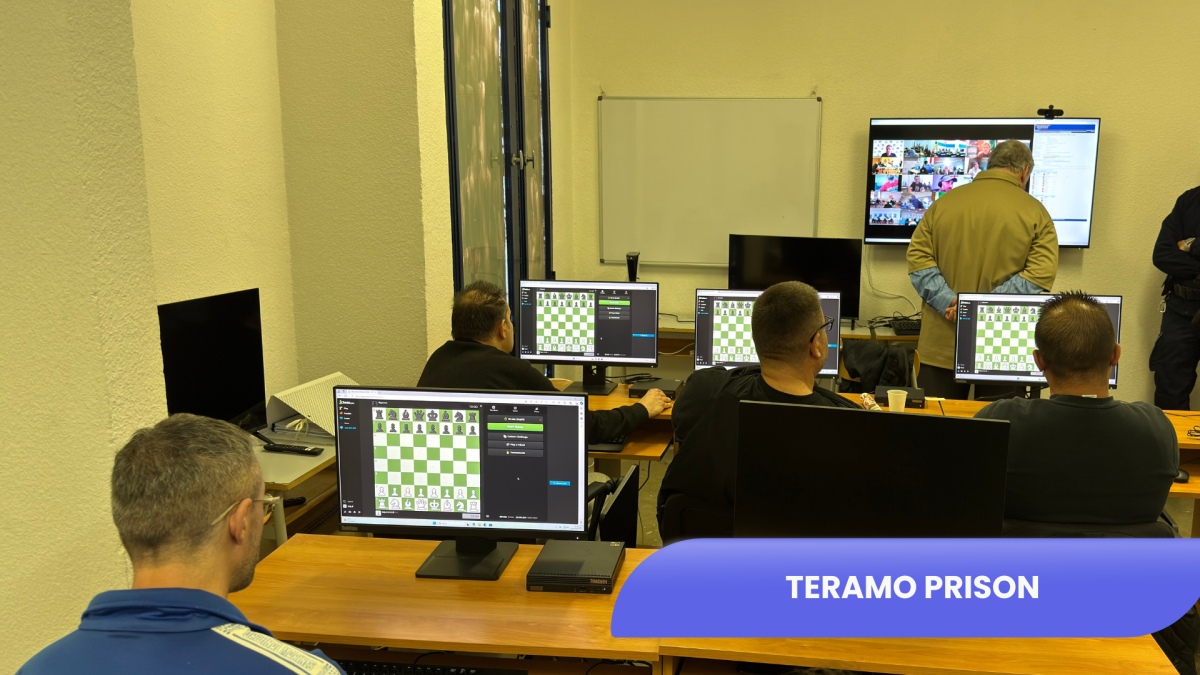
On May 19, delegates visited Teramo Prison to interact with inmates playing in the 2nd Continental Online Championship for Prisoners (Europe).
The tournament created what organisers described as a highly educational and emotional atmosphere, with inmates fully engaged in the competition. Games took place on chess.com, featuring a rapid time control of 10 minutes with a 5-second increment. Italy finished the event with three wins and four losses, placing 17th out of 31 teams. Ukraine topped the standings, winning all of its matches.
Following the prison visit, delegates visited the TERCAS Foundation headquarters at Palazzo Melatino, home to the Civic Museum of Teramo. During the visit, Dana Reizniece presented the official FIDE book as a gift for TERCAS Foundation President Piero Di Felice (who was absent due to work duties).
“Chess has a unique ability to create dialogue, responsibility and hope, even in the most difficult environments,” said Dana Reizniece. “The workshop in Teramo showed how prison chess initiatives are growing across Europe, bringing together educators, prison authorities and chess organisers who believe in rehabilitation through meaningful human connection. Seeing 20 countries represented in the European Chess for Freedom Championship, including new participants such as Belgium and Albania, was a strong reminder that this movement continues to expand and inspire.”
The workshop ended with participants leaving Teramo with new ideas, stronger connections and a shared belief in the value of chess inside prisons. Across the discussions, presentations and prison visit, participants highlighted how chess can encourage discipline, and personal growth while creating opportunities for education and reintegration beyond prison walls.
About Chess for Freedom
The Chess for Freedom initiative was launched by FIDE in partnership with correctional institutions around the world to make chess accessible to inmates as an educational and social tool. It promotes critical thinking, emotional control, and teamwork, helping participants gain valuable skills for reintegration into society.
Since the first Intercontinental Championship in 2021, the project has grown into a global movement. Thousands of inmates have taken part in regional and international tournaments, workshops, and educational programs across six continents.
The 2025 edition, the largest so far, brought together 135 teams from 57 countries. It reflects the unifying message of the Chess for Freedom initiative: chess transcends walls, borders, and circumstances, offering a bridge to learning, reflection, and hope.