

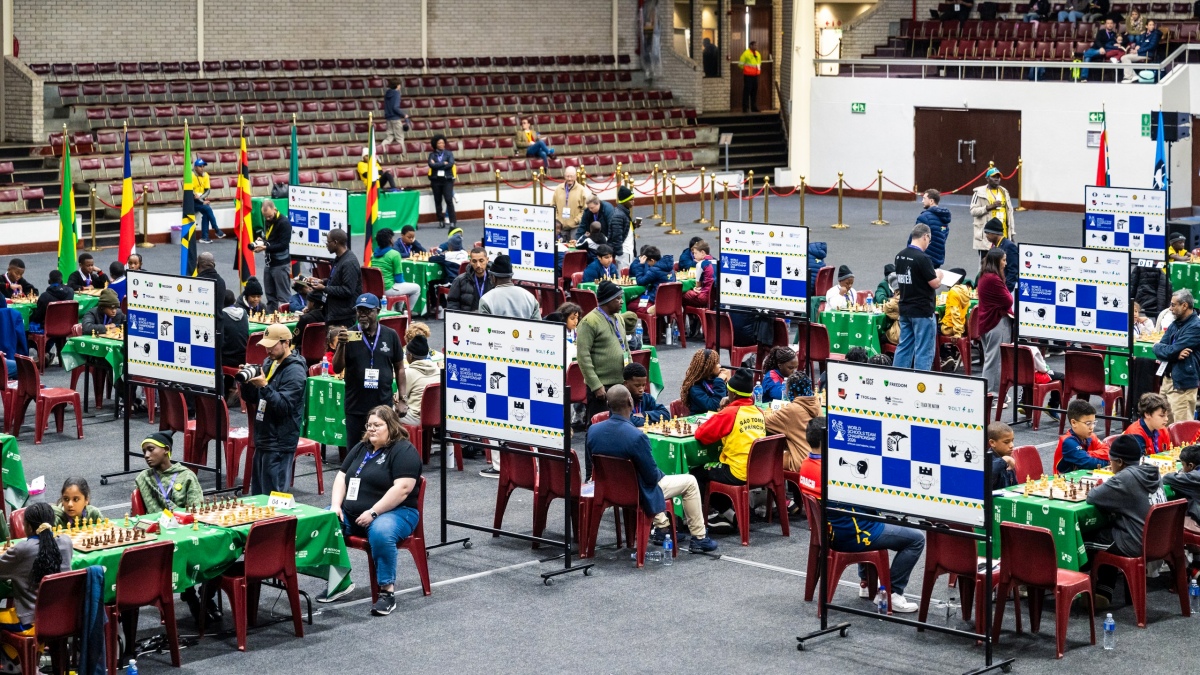
On day two of the African Continental Stage of the FIDE ISCF World Schools Team Championship 2026 Rounds 3 and 4 were played at the Coetzenburg Center in Stellenbosch, reshaping the top of the standings. The event is supported by Freedom Holding Corp., the main sponsor of the African Continental Stage and General Partner of the International School Chess Federation. Its continued commitment helps make both the competition and the wider educational and cultural programme possible.
The two remaining teams with perfect scores, Uganda and Kenya, met in the fourth round and drew. By the end of the day, three teams shared the lead, although the mood inside the playing hall remained anything but heavy.
Energetic music greeted the players as they streamed into the venue, setting the tone for the day. Then, just before round three, Chief Arbiter Gunther van den Bergh made an unusual announcement: he asked everyone to rise for an anthem. The students stood, exchanging confused looks, before the opening notes of Baby Shark rang out across the hall. Laughter erupted, and the arbiters joined the children in performing the familiar dance moves.
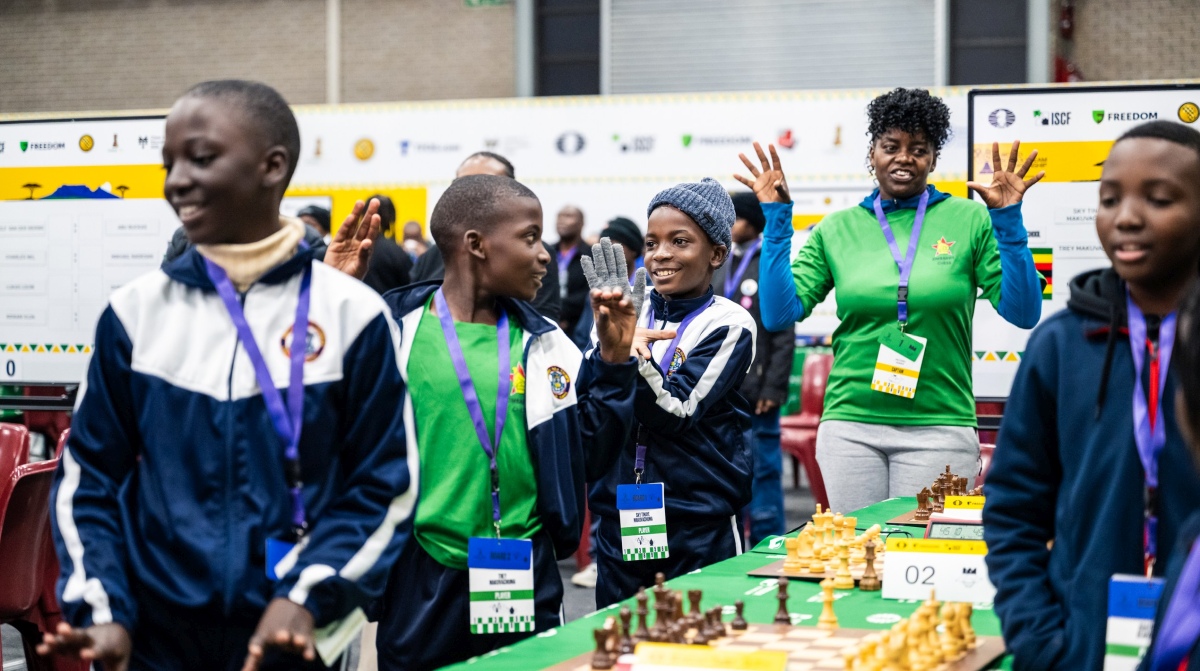
Speaking as the round got underway, Van den Bergh, whose idea it was, explained that he knew how tense the opening minutes of a game could feel and wanted to help the players relax and settle in. He was onto something – when several young players were interviewed before the round and asked how they felt ahead of their games, the most common answer was “nervous”. Watching those same faces laughing and dancing only minutes before the clocks started was a sight to see.
Rounds 3 and 4
Round 3 saw the first clash between teams with perfect scores, and top-seeded Uganda made a statement. Sr. Miriam Duggan Primary School swept Namibia’s Windhoek Afrikaanse Privaatskool 4-0, while fourth-seeded Kenya, represented by Moi Nyeri Complex Primary School, convincingly defeated Ghana’s Delhi Public School 3½-½.
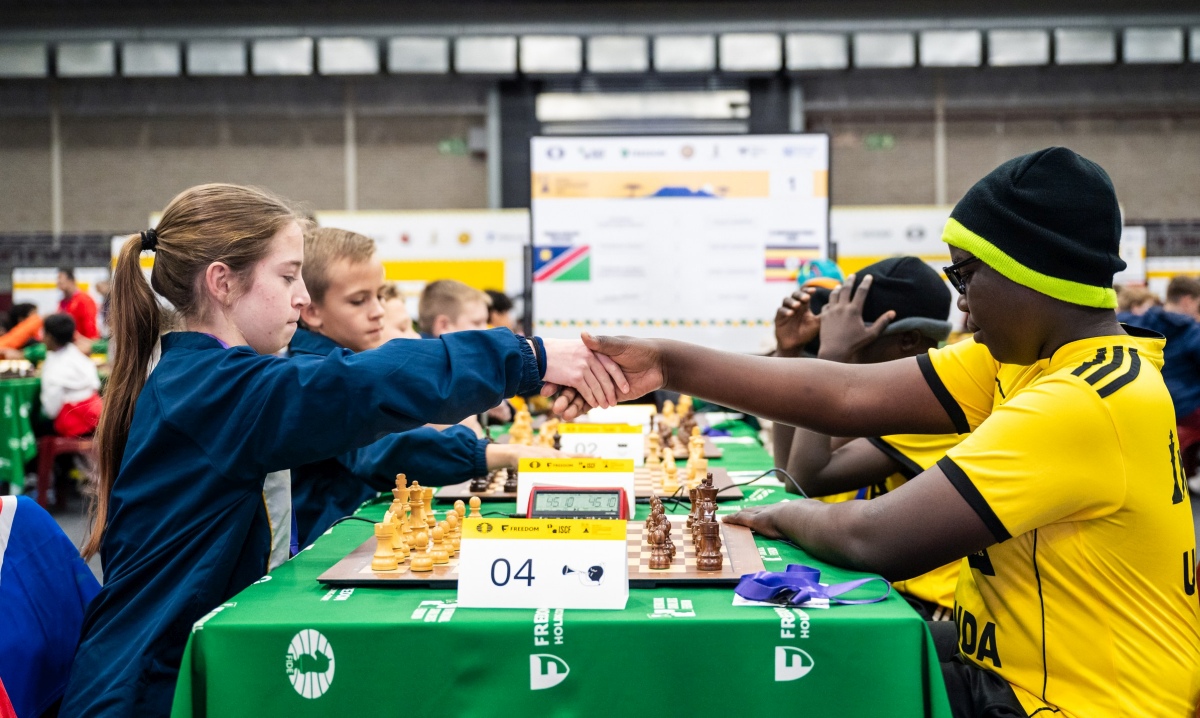
The results left Uganda and Kenya as the only two teams with a perfect six match points, setting up a round-four showdown at the top of the table. The encounter lived up to the billing. Kenya and Uganda traded blows across all four boards before finishing level at 2-2.
Uganda’s highest-rated players delivered on the outside boards, with Ronald Wabwire (2174) winning on board one and WCM Juliet Asaba (1985) prevailing on board four. Kenya’s middle order, however, struck back with two major upsets. Trevor Waweru (1478) beat Trevor Tumukunde (1727) in the battle of the Trevors, while Irwin Ndegwa (1474) took down Daniel Odokonyero (1944).
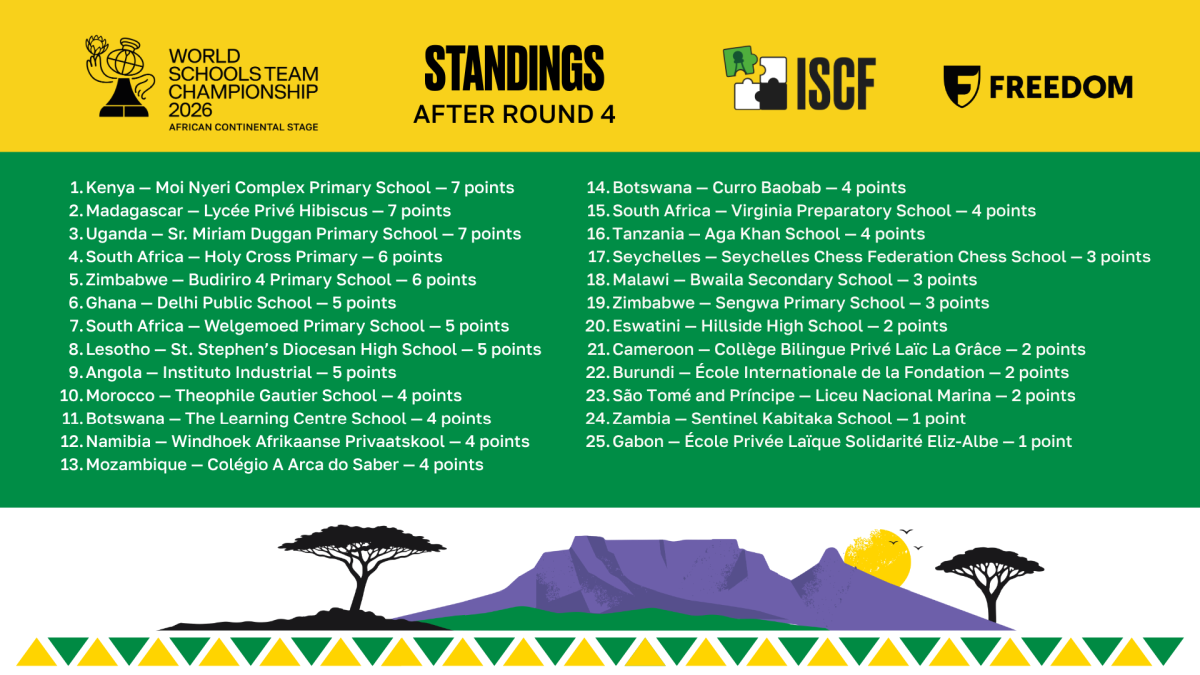
The draw opened the door at the top of the standings, and Madagascar’s Lycée Privé Hibiscus stepped straight through it, defeating Angola’s Instituto Industrial 3-1 to join Uganda and Kenya in the lead on seven match points.
Standings after Round 4
A simul with a twist
The side programme delivered one of its most anticipated events in the evening: a simultaneous exhibition by International Master Henry Robert Steel at the Lectorium of Stellenbosch University.
The format came with an unusual twist. While Steel faced his opponents in the traditional one-against-many setup, one board was played collectively by the audience. Spectators voted on each move, with the majority decision then played on the board.
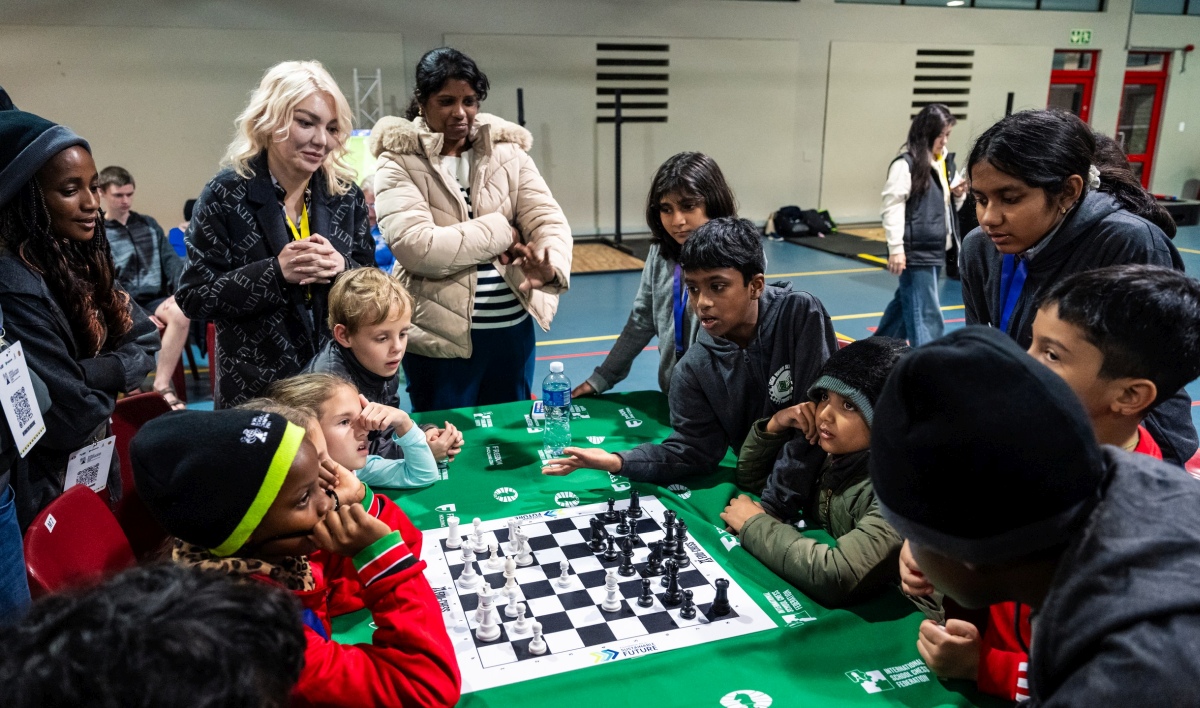
Before the simul, the Lectorium hosted a masterclass by a man whose story many of the players already knew, even if they did not know his name. Robert Katende, founder of the SOM Chess Academy in the Ugandan slum of Katwe, is the coach whose mentorship of Phiona Mutesi inspired the film Queen of Katwe.
His talk, “Chess as a Tool for Life Development”, drew directly on that journey. Katende spoke about chess as a way of teaching children to plan, recover from setbacks, and believe that their circumstances do not determine their future. It was a message that could hardly have found a more fitting audience than the young players at this championship, several of whom come from the very programmes his work helped inspire.
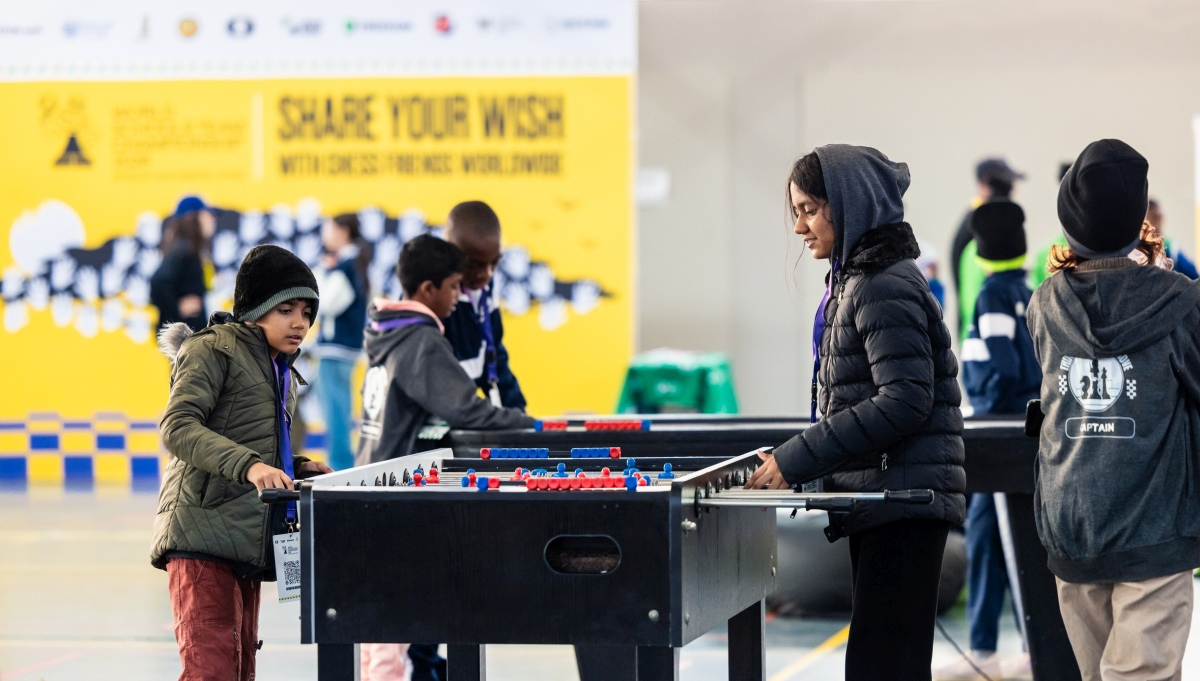
Away from the Lectorium, the entertainment zone maintained its now-familiar buzz. PS5 consoles, air hockey, foosball, table tennis, cornhole, giant chess, and giant Jenga ran from late afternoon alongside badge-making and the national and activity games in Activity Room 2. For many of the players, the hours after the rounds have quickly become as much a part of the championship experience as the games themselves.
Rounds 5 and 6 take place tomorrow, July 9, with the competition and pressure getting tougher as the end draws nearer.
Written by Charlize van Zyl
Photos: ISCF